
Garden sage (Salvia officinalis, )
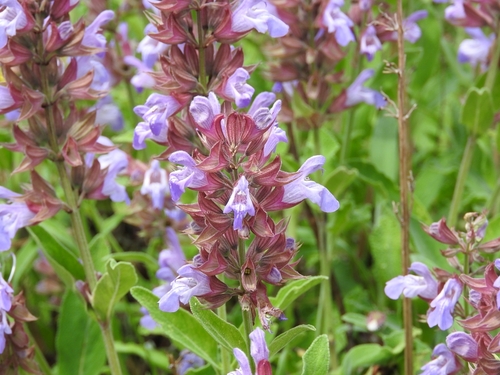
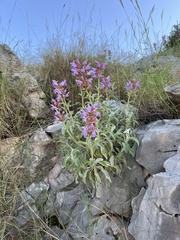
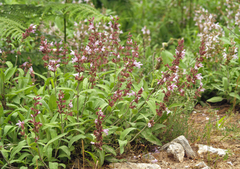
Garden sage (Salvia officinalis) is an aromatic Mediterranean subshrub in the Lamiaceae family, grown in dry, sunny conditions for its gray-green leaves. It has culinary and traditional uses, while medicinal preparations require professional guidance.
Read moreGarden sage, Kitchen sage, True sage and Common sage
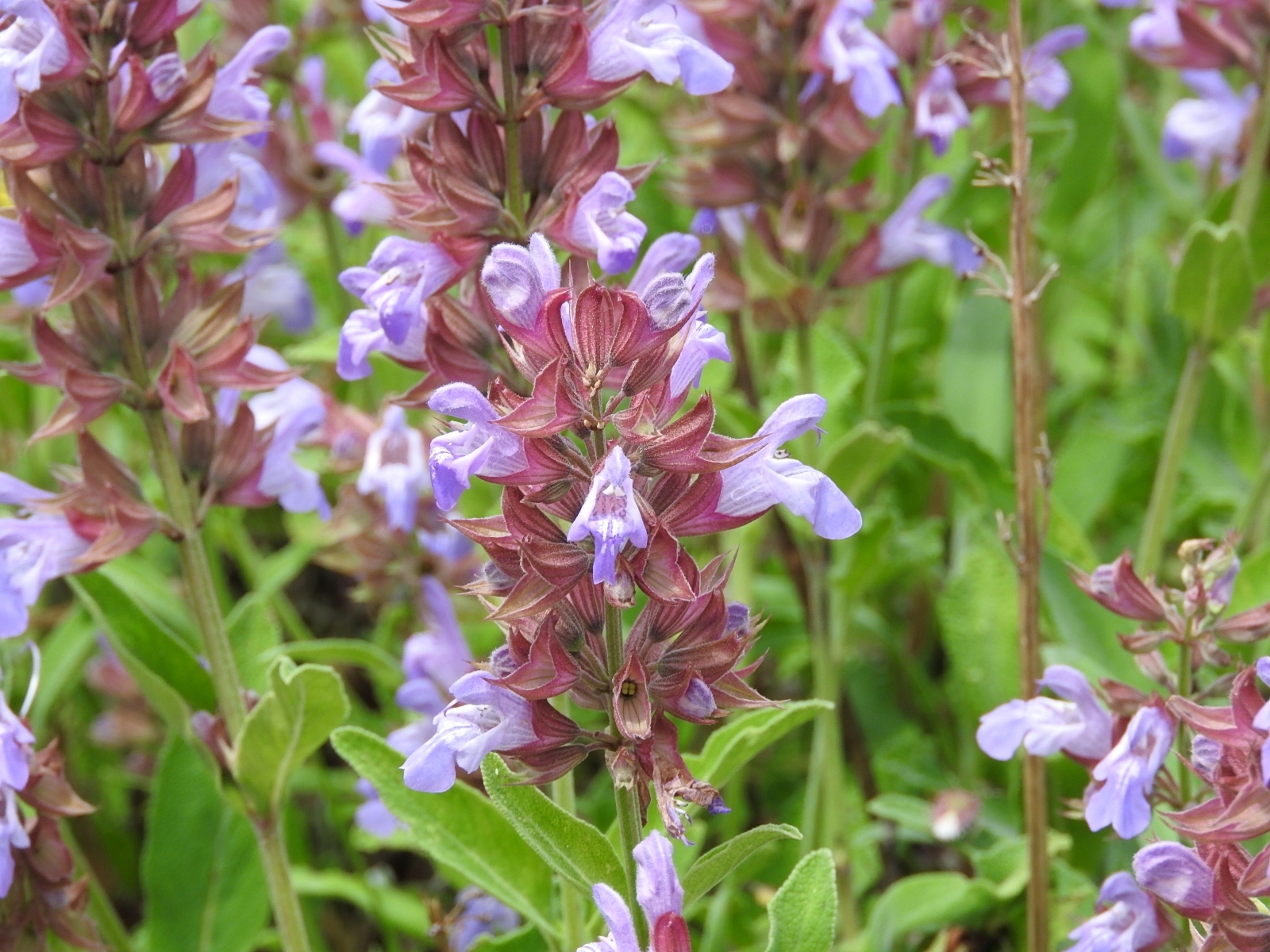


© photo
(c) dittant, some rights reserved (CC BY-NC), uploaded by dittant · cc-by-nc
Mirko Ubović · cc0
Jörg Hempel · cc-by-sa
Taken Dec 1, 2021 by Rober Steve (cc-by-sa)
Taken Nov 29, 2019 by Caroline Bourdillon (cc-by-sa)
Taken Aug 27, 2021 by Jacques Zuber (cc-by-sa)
Taken May 1, 2014 by Tela Botanica − Jean-Claude ECHARDOUR (cc-by-sa)
Taken Aug 29, 2019 by kasper (cc-by-sa)
© copyright of the Board of Trustees of the Royal Botanic Gardens, Kew.




Identity
Garden sage (Salvia officinalis L.) is an aromatic Mediterranean plant with culinary and traditional medicinal uses. Its role in herbal medicine requires particular caution during pregnancy and in people with epilepsy because it contains thujone. 1 8
The accepted binomial is confirmed by POWO, WFO and IPNI. Garden sage belongs to the Lamiaceae family, and the epithet officinalis reflects a long history in pharmacy and herbal practice. That history does not replace medical advice. 2 3 4
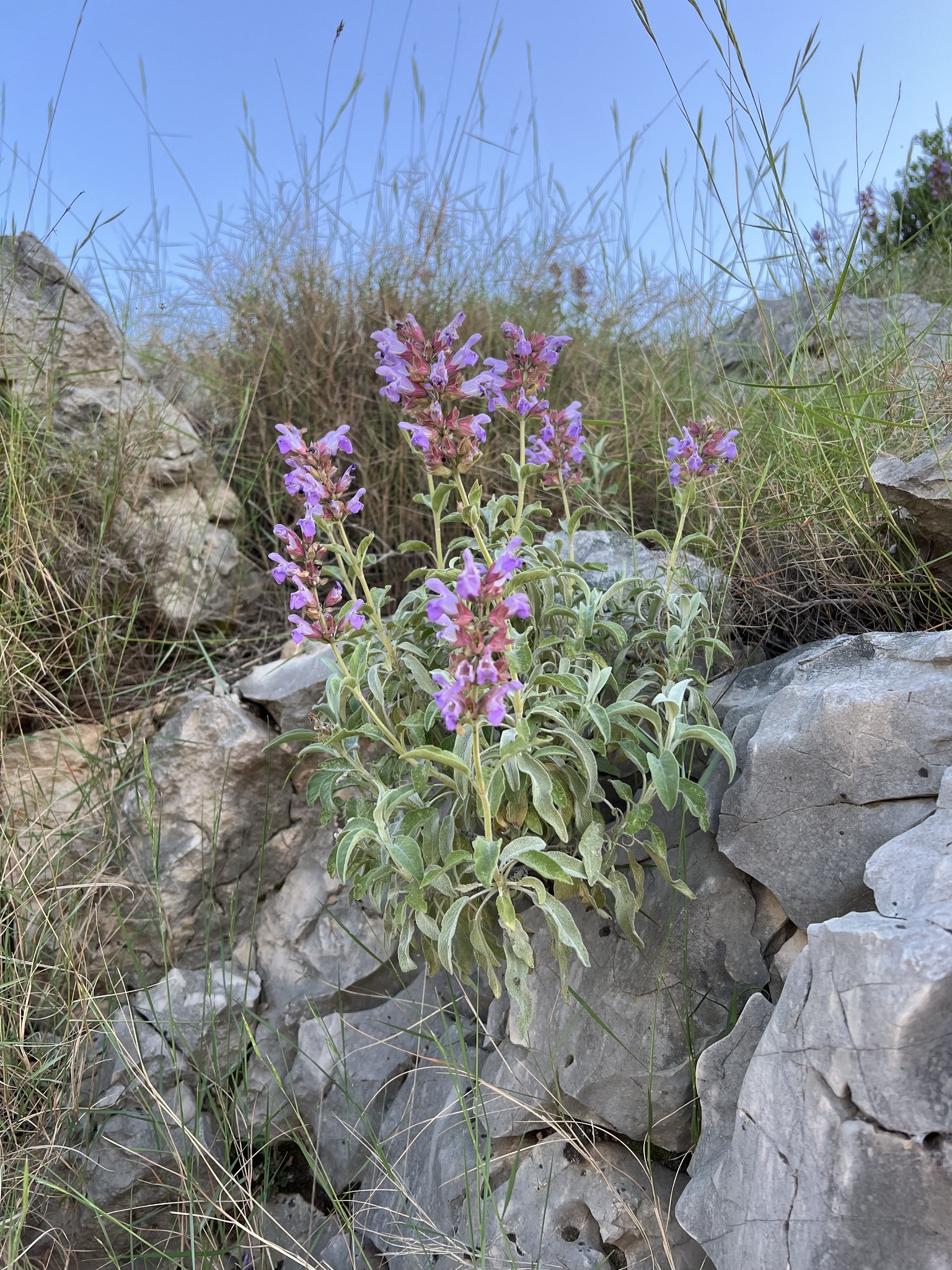
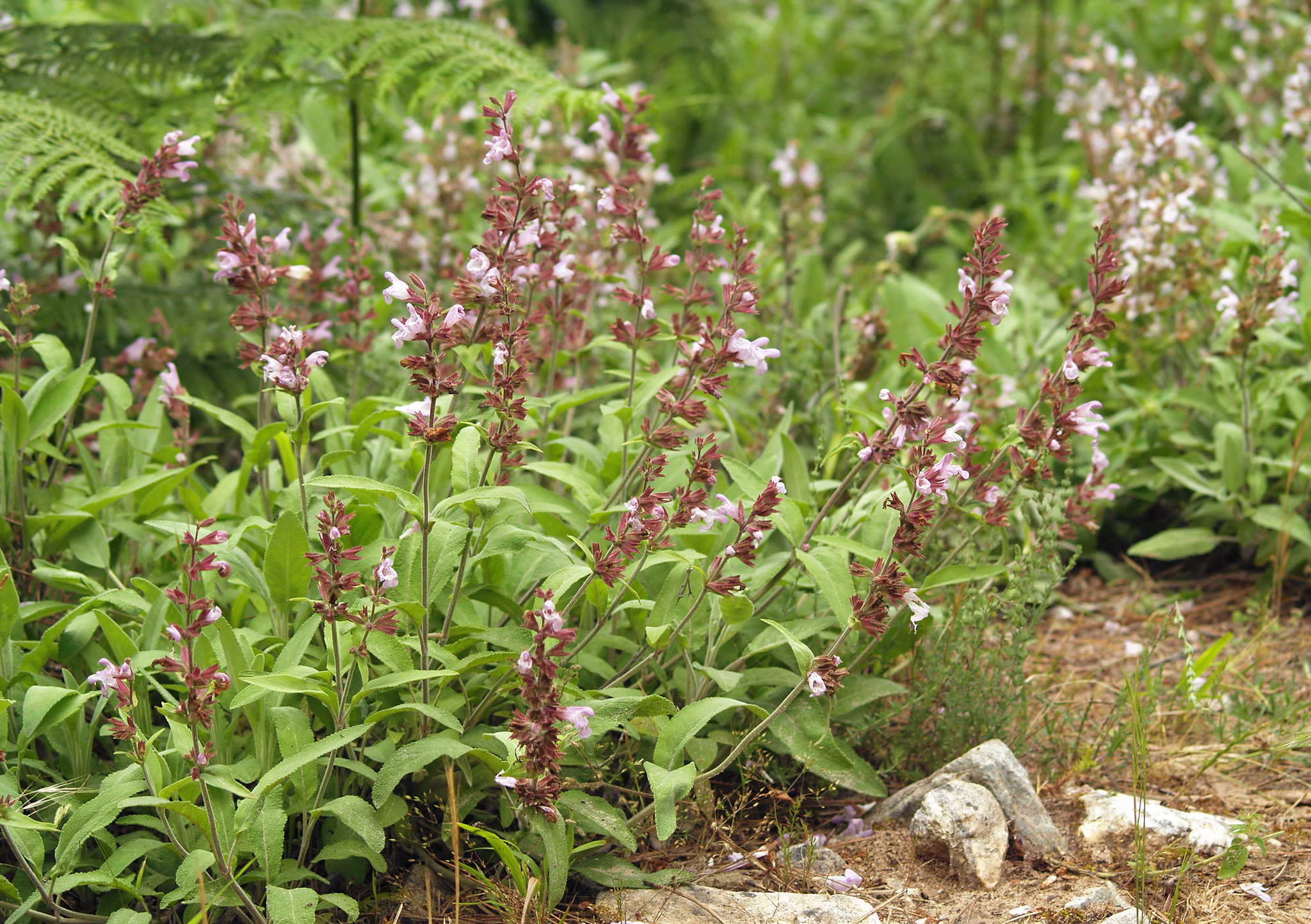
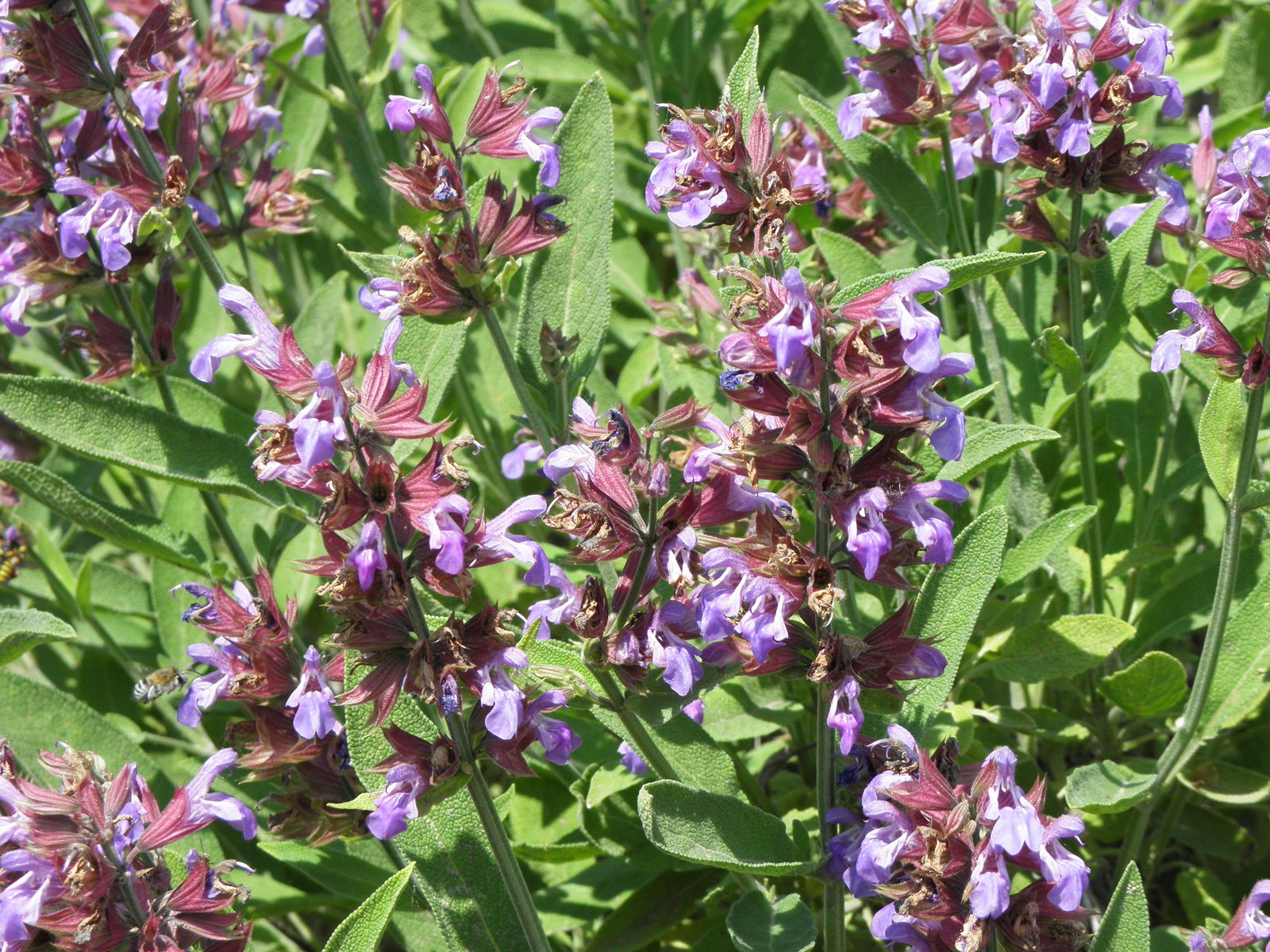
Dry, sunny gardens suit this small subshrub, with its gray-green leaves, blue-purple flowers and strong need for drainage. Its aromatic foliage is as important to its garden character as the flowers that appear above it. 5 6
Traditional use includes a documented association with hot flashes and HMPC monographs. Identifying and growing the plant remains a separate matter from assessing a medicinal preparation, its dose or whether it is appropriate for an individual. 8
Recognition
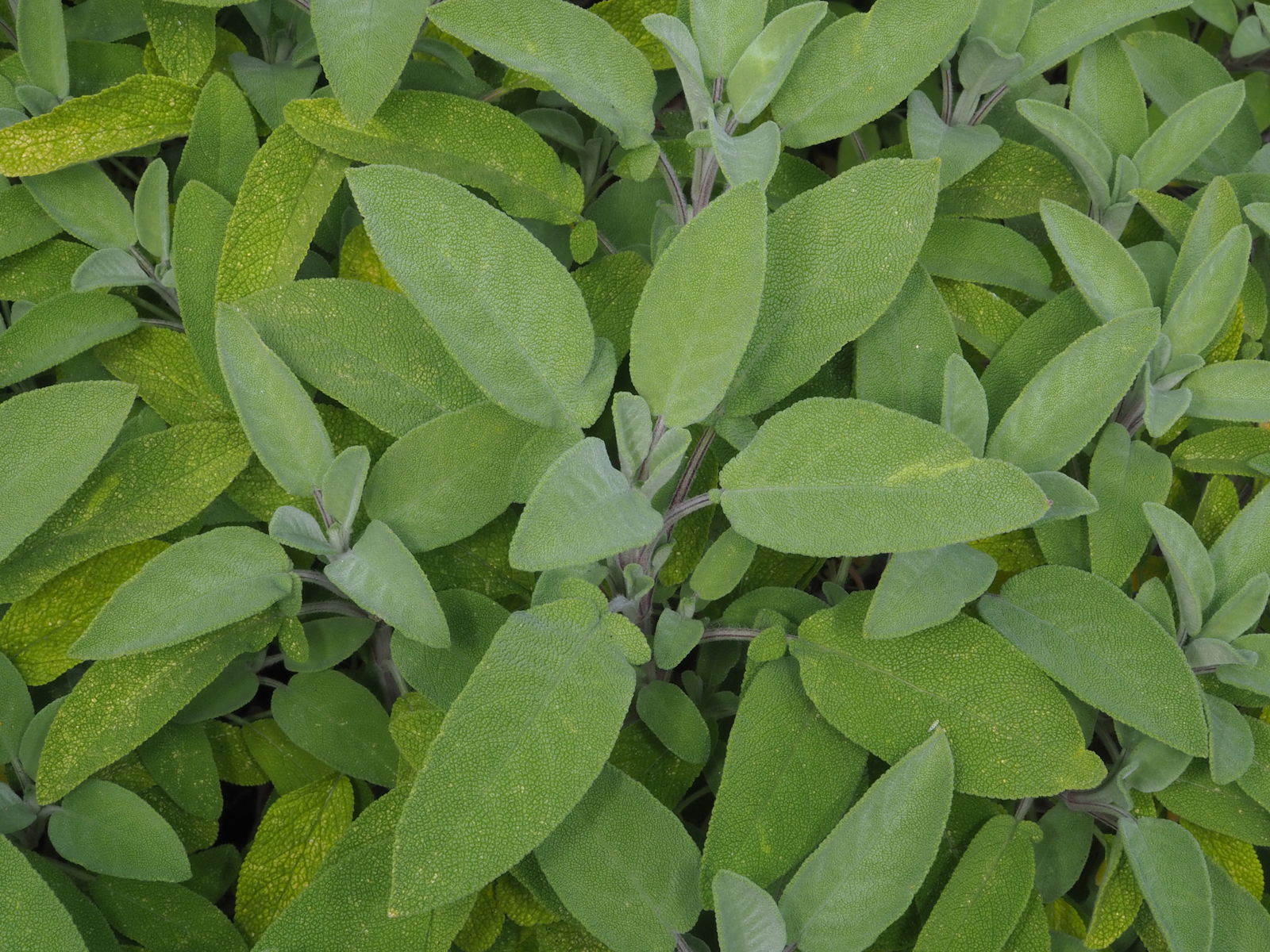
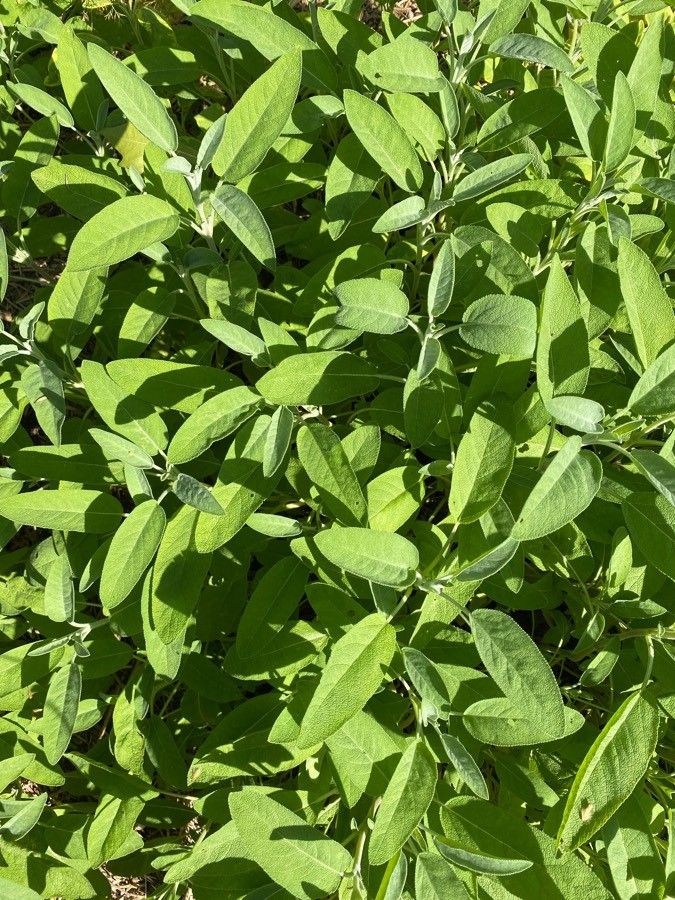
Thick, textured leaves grow in opposite pairs and are often gray-green. Their strong, camphor-like scent has a distinctly culinary character, unlike the foliage of many sages grown purely for their flowers. 5 7
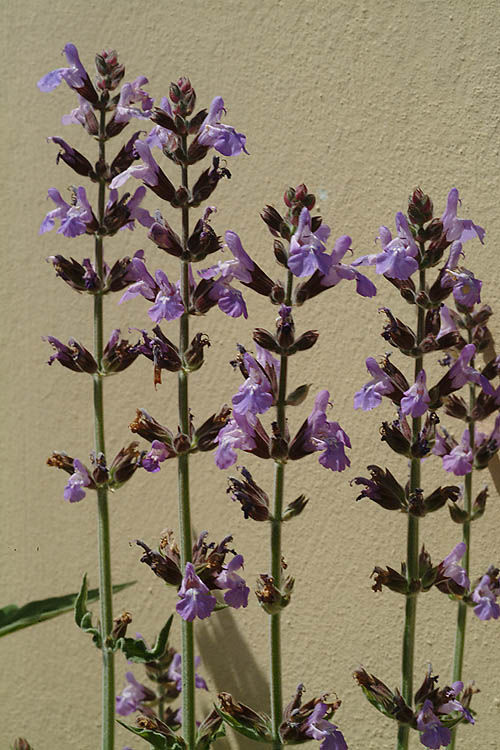
Flowering comes in spring or early summer, with two-lipped blue-purple flowers, sometimes pink or white in particular cultivars. The flowers attract pollinators, although gardeners mainly grow the plant for its foliage. 6
Unpruned plants become bare with age. A well-maintained garden sage retains an open base, avoids an excess of old wood and produces young shoots that can be harvested without leaving the plant stripped. 5
Aromatic evergreen leaves distinguish it from Salvia nemorosa. Its dry Mediterranean character also separates it from Salvia splendens, which is more commonly used as a showy annual bedding plant. 2
Useful taxonomy
For this culinary species, the accepted name is Salvia officinalis L. The full binomial identifies a particular plant rather than a general idea of “sage,” a distinction that matters whenever leaves are harvested for use. 2 8
Many ornamental species belong to Salvia. They are not all culinary herbs or medicinal plants, and their essential oils do not all have the same composition. Membership of the genus alone does not establish an appropriate use. 3 7
Cultivars such as Icterina, Purpurascens and Tricolor differ in leaf color and vigor. Culinary or traditional use requires a correctly identified, untreated plant rather than relying on the appearance or appeal of a nursery label. 6
Correct identification matters especially when medicinal use is being considered. Choosing the wrong species changes more than the appearance of a planting: it can change the intended use, the risks and the contraindications. 8
Cultivation
For compact, aromatic growth, provide full sun and poor to ordinary soil with excellent drainage. Garden sage tolerates drought better than standing moisture, especially during winter when wet soil can undermine an otherwise suitable planting. 5
Prune lightly after flowering or as growth resumes, avoiding cuts into old wood with no buds. This keeps the plant compact and encourages the fresh foliage that makes it useful in an herb garden. 6
Container plants need drainage, a largely mineral growing medium and restrained watering. An overly rich or waterlogged pot produces soft growth that is less fragrant and less durable than a plant grown under leaner conditions. 5
Cuttings provide an easy means of propagation. Seed is another option, but cuttings preserve the characteristics of variegated or purple-leaved cultivars more reliably when those particular foliage colors are wanted. 6
Uses
A dry herb bed is a natural setting for garden sage, alongside thyme, rosemary, lavender, oregano and savory. A warm site allows a few leaves to be gathered while the plant keeps its compact ornamental form. 8 5
Use the leaves sparingly in cooking because their flavor is strong. Light, regular harvesting is preferable to a severe cut that leaves the base bare and removes too much of the plant's useful foliage at once. 7
Its medicinal history falls within a framework of “traditional use.” That term describes the kind of documentation behind the practice; it should not be read as a personalized prescription or as advice about a particular preparation. 8
Gray foliage and a dry texture also give the plant ornamental value. Even without a dramatic floral display, it gives structure to a Mediterranean-style border and contrasts with softer yellow or purple flowers. 6
Precautions
Thujone and concentrated essential oil are the main reasons for caution. Pregnancy and epilepsy are listed as contraindications in the medicinal-use reference, and concentrated oil should never be treated as equivalent to an ordinary culinary leaf. 8
Dogs, cats and horses are listed as safe in the available plant profile, but that does not make the plant suitable for unrestricted chewing. Avoid substantial ingestion by animals or children, particularly when leaves or preparations are within easy reach. 2
Before medicinal use, a health professional should assess interactions, pregnancy, breastfeeding, epilepsy, current medication and dosage. Botanical identification cannot determine whether a medicinal use is suitable for a particular person or situation. 8
These precautions are compatible with straightforward garden cultivation. Keep garden sage as a dry-site herb, harvest a few leaves for cooking and leave some flowering shoots for pollinators. The concerns become greater when preparations are concentrated, dosed or used over a prolonged period. 5 8
Harvesting should remain modest. Young, untreated leaves taken from a correctly identified plant are different from an essential oil or a course of herbal treatment. The distinction between a culinary leaf and a medicinal preparation is central to responsible use. 8 7
Variegated and purple cultivars mainly add decorative interest to beds. Their appearance does not change the precautions: for food or traditional preparations, favor a healthy, familiar plant whose identity and treatment history are clear. 6
Avoid stripping the plant before winter. A few light cuts during the growing season leave enough foliage for the plant to remain vigorous and better withstand cold, damp conditions when active growth slows. 5 6
Dry leaves under clean conditions and keep them separate from garden treatments. Leaves from sprayed, misidentified or diseased plants do not belong in herbal tea or household cooking, whatever the intended recipe or preparation. 8
On a balcony, a deep pot with a mineral growing medium suits it better than a planter filled with thirsty plants. Garden sage prefers somewhat dry conditions rather than sharing the watering needs of basil and mint. 5
Respecting those different moisture requirements prevents many failures in urban container gardens. Matching the planting companions to the same dry conditions helps keep the sage in the conditions it actually needs. 6
The identity of Salvia officinalis links all these uses: it is garden sage, grown under dry conditions and approached cautiously when preparations go beyond ordinary culinary quantities. Its medicinal history does not remove the need for that distinction. 8 2
Main sources
- Wikidata, Salvia officinalis
- Plants of the World Online / Kew, Salvia officinalis
- World Flora Online, Salvia officinalis
- International Plant Names Index, Salvia officinalis
- NC State Extension, Salvia officinalis
- Royal Horticultural Society, Salvia officinalis search results
- Wikipedia EN, Salvia officinalis
- Floralens, medicinal plants
If you are unsure about a plant’s toxicity, ask a botanist or veterinarian for advice.