
Million bells (Calibrachoa, )
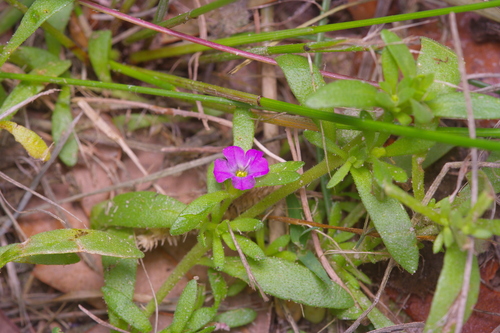
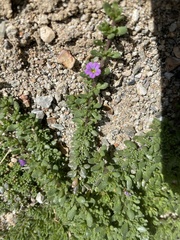

Calibrachoa (Calibrachoa), often sold as million bells, is a South American genus in the Solanaceae family closely related to petunias. Garden plants are almost always trailing hybrids (Calibrachoa × hybrida), grown in hanging baskets and containers for dense displays of small bell-shaped flowers from early summer until frost.
Read moreMillion bells and Mini petunia


© photo
Michelle W. (鍾偉瑋) · cc-by
Perry Grissom · cc-by
Summit Metro Parks · cc-by


Global distribution
Calibrachoa is native to southern and eastern Brazil, Uruguay, northeastern Argentina and more broadly southern South America. Garden plants are horticultural hybrids found only in cultivation. Their wild ancestral range should be distinguished from temperate regions where hybrids are simply grown as annuals.
- Native4
- Brazil
- Uruguay
- Argentina
- Paraguay
Hexagons: regions where the plant occurs. Green dots: native range.1
Identity
Calibrachoa (Calibrachoa Cerv.) is a South American genus in the Solanaceae family, closely related to petunia. In garden centers the name almost always refers to trailing hybrids grouped under Calibrachoa × hybrida, sold in series such as Million Bells and Superbells. 1 2
Cold-sensitive plants grown as annuals in temperate climates, these hybrids produce dense summer displays in hanging baskets and window boxes. Each plant carries dozens of small bell-shaped flowers that are continually replaced. This profusion of little blooms explains the familiar name million bells. 2 5
Recognition
Small flowers provide the first distinction from petunias. Calibrachoa has a funnel-shaped corolla with five fused lobes, generally 2–3 cm (about 1 in) across, much smaller than a typical petunia flower. The throat is often yellow or a darker shade, emphasizing the center of the bloom. 2 3
Slender, branching stems form a low, trailing clump. They reach little more than 8 cm (3 in) in height but can spread and trail for 50 cm (20 in). The leaves are small and medium green, with the slightly sticky feel found in many members of the Solanaceae. 2 3
At the height of summer, flowers can cover so much of the plant that the foliage is almost hidden. Horticultural series include pink, purple, red, yellow, orange, white and blue forms. Despite the abundant flowers, the plants usually have no noticeable fragrance. 5 3
Useful taxonomy
Cervantes described the genus Calibrachoa in 1825, although its species were long classified within Petunia. Chromosomal and molecular studies in the 1980s and 1990s established a distinction between the groups: Calibrachoa has nine chromosome pairs (2n = 18), compared with seven pairs in Petunia (2n = 14). 1 4
Wijsman subsequently transferred the species in the nine-pair group to Calibrachoa, and Stehmann and Semir refined the modern circumscription of the genus in the 1990s. Around thirty wild species are recognized, almost all of them South American. 1
Garden plants are horticultural hybrids, rather than wild species, and are referred to as Calibrachoa × hybrida. Series names such as Superbells and Cabaret are commercial designations, not botanical ranks. They describe groups of cultivated selections rather than additional wild species. 2 3
Habitat and range
Wild Calibrachoa species inhabit open subtropical environments in southern and eastern Brazil, Uruguay, Paraguay and northeastern Argentina. They grow in full light on sandy or rocky soils, often beside roads or on exposed rock outcrops. 1 2
Their preference for full sun accompanies tolerance of summer heat and some drought once established, but waterlogged ground and frost are unfavorable. This ecology helps explain how the hybrids behave in cultivation: they need plenty of sun and are sensitive to excessive water around their roots. 2 3
Beyond the ancestral range, calibrachoas occur as cultivated plants. In countries including France, the United States and Japan, hybrids are planted in baskets and containers in spring and usually lost when cold weather arrives. They do not naturalize in cold temperate climates; this cultivated presence differs from the natural range of wild species. 5
Life cycle and reproduction
A Calibrachoa is botanically a frost-tender perennial. It may persist from year to year in mild climates, but cold temperate winters make it an annual in practice, killed by the first frosts. Flowering begins in early summer and continues without a substantial break until the weather turns cold. 2 3
Ornamental hybrids produce very few fertile seeds and rarely self-sow. They are therefore propagated mainly from stem cuttings with a node, kept warm under light mist. Under these conditions, cuttings can produce plants identical to the parent within two to three weeks. 2
Many commercial series are protected cultivars, so propagation must respect the applicable rights; personal use should not be assumed to create a universal exemption. Seed propagation remains possible for wild species but gives unpredictable results with hybrids, whose offspring do not reliably retain the original flower color. A late-summer cutting kept bright and frost-free can preserve a particular color from one season to the next where propagation is permitted. 5 2
Uses and risks
Hanging baskets, balcony boxes and patio containers are the main settings for Calibrachoa. Its use is entirely ornamental: trailing stems create a curtain of flowers from early summer into fall. With adequate feeding and full sun, it keeps flowering and sheds spent blooms naturally, so routine deadheading is unnecessary. 5 2
The ASPCA does not list Calibrachoa among plants toxic to cats, dogs or horses. This distinguishes it from several other Solanaceae rich in alkaloids. Eating a large amount may still cause mild digestive upset, but the source describes a low-risk ornamental for balconies shared with pets and young children. 6 4
Varieties, look-alikes and related plants
Commercial calibrachoas are usually grouped into hybrid series rather than sold as wild species. Million Bells, Superbells, Cabaret and Calita encompass selections with differing habits and flower colors. For a particular display, the useful distinctions are color, vigor and the health of the plant at purchase. 2 3
The plants most often confused with Calibrachoa include:
- Petunia, with noticeably larger flowers and broader foliage;
- Petunia × hybrida, including trailing surfinia types with much larger corollas;
- Solanum, other ornamental Solanaceae with a somewhat similar habit and foliage.
Small bell-shaped flowers, exceptionally abundant flowering and the self-cleaning habit together provide the most dependable way to distinguish a Calibrachoa from a petunia. A trailing growth habit on its own is less useful because both groups include plants selected for hanging baskets. 2 5
Main sources
- Plants of the World Online / Kew, Calibrachoa Cerv.
- North Carolina Extension Gardener Plant Toolbox, Calibrachoa × hybrida
- Missouri Botanical Garden, Calibrachoa hybrids
- Encyclopaedia Britannica, Solanaceae (nightshade family)
- Royal Horticultural Society, Calibrachoa search results
- ASPCA, toxic and non-toxic plant list for cats
Frequently asked questions
Is Calibrachoa toxic to cats and dogs?
No. The ASPCA does not list Calibrachoa among plants toxic to cats, dogs or horses. Eating a large quantity may at most cause mild digestive upset.
What is the difference between Calibrachoa and petunia?
Calibrachoa has much smaller, more numerous flowers, finer foliage and self-cleaning blooms. Both genera belong to the Solanaceae but differ in chromosome number.
Why does my Calibrachoa have yellow leaves?
Yellowing between the veins often indicates iron chlorosis caused by hard water, or simply too little fertilizer. Soft water and regular flower fertilizer usually restore the color quickly.
Do you need to deadhead Calibrachoa?
No. Unlike petunias, Calibrachoa is self-cleaning: spent flowers drop naturally and the plant keeps blooming without intervention.
Does Calibrachoa come back every year?
It is a frost-tender perennial grown as an annual in temperate climates. It does not recover after a cold winter; plants are propagated from cuttings in late summer or bought again in spring.
How much sun does Calibrachoa need?
Full sun, with at least six hours of direct sunlight, produces the densest flowering. In shade, plants become leggy and flower much less.
Can you take cuttings from a store-bought Calibrachoa?
Stem cuttings with a node are technically possible, but most hybrids are protected. Propagation is subject to applicable cultivar rights; do not assume personal use is always exempt. Seed-grown hybrids give uncertain results.
Similar plants
If you are unsure about a plant’s toxicity, ask a botanist or veterinarian for advice.