
Dalmatian bellflower (Campanula portenschlagiana, )
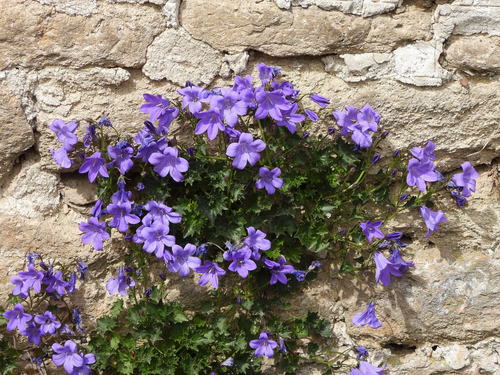
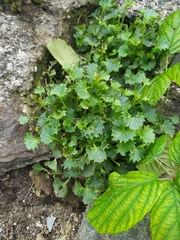
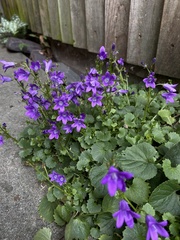
Dalmatian bellflower (Campanula portenschlagiana Schult.) is a small perennial ground cover or low subshrub in the Campanulaceae family, native to the northwestern Balkans. Its evergreen to semi-evergreen cushions carry violet-blue bells on walls, in rock gardens and in sharply drained containers.
Read moreDalmatian bellflower, Wall bellflower, Adria bellflower and Campanula muralis
Place in full sun, with intense direct light all day long.
Full sun to light partial shade; direct light encourages more flowers.
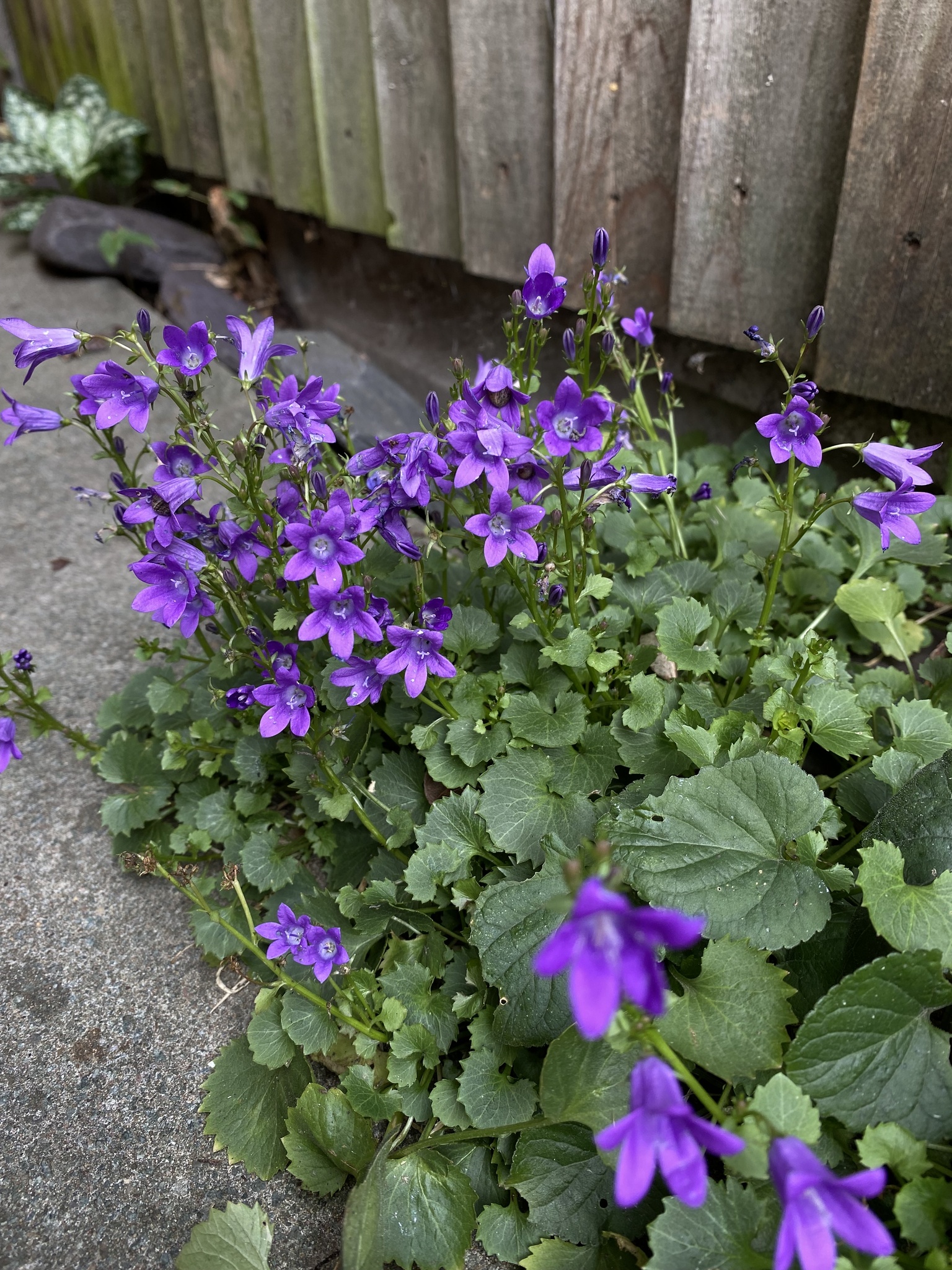


© photo
(c) Chuangzao, some rights reserved (CC BY-NC), uploaded by Chuangzao · cc-by-nc
iNaturalist User · cc0
Florin Feneru · cc-by
Taken Apr 29, 2022 by Dave Flack (cc-by-sa)
Taken Apr 16, 2022 by Brigitte David-Le Coq (cc-by-sa)
Taken Nov 26, 2021 by Jeff B (cc-by-sa)
Taken May 1, 2021 by Paolo Maestripieri (cc-by-sa)


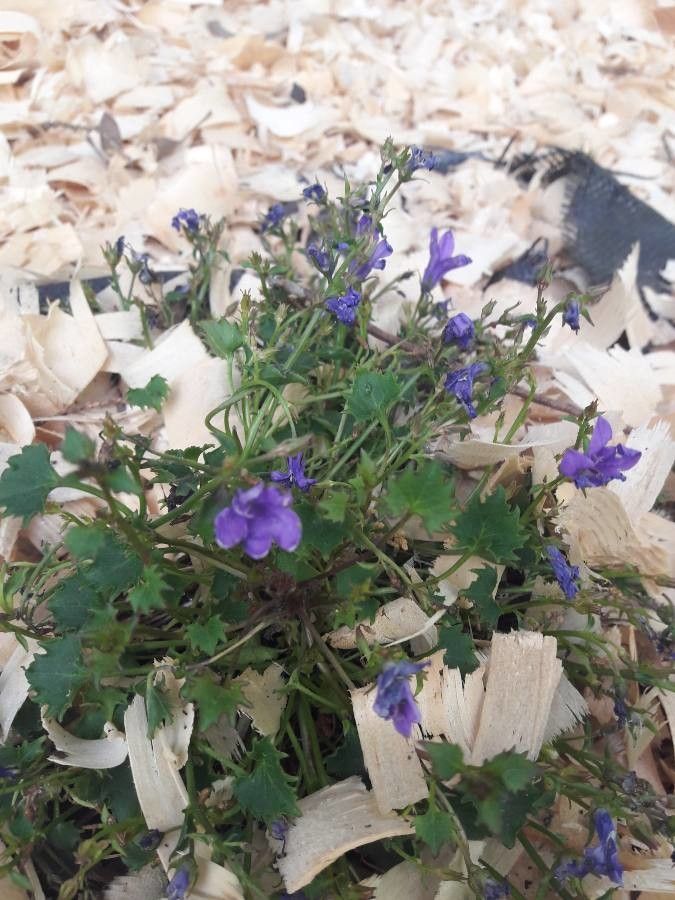


Global distribution
POWO confirms a native range from Croatia to Herzegovina in the northwestern Balkans. The species is also introduced in several European countries, including France, where it remains mainly a garden and wall plant.
- Native2
- Introduced4
- Croatia
- Bosnia and Herzegovina
- Metropolitan France
- Great Britain
- Italy
- Spain
Hexagons: regions where the plant occurs. Green dots: native range.1
Identité
Dalmatian bellflower (Campanula portenschlagiana Schult.) is an accepted species of Campanula in the Campanulaceae family. POWO places its origin in the northwestern Balkans, with a native range from Croatia to Herzegovina. IPNI records its publication in 1819 in the botanical system of Roemer and Schultes. 1 3
Wall bellflower describes the familiar garden role of this small rock-garden ground cover, which settles into well-drained joints. Dalmatian bellflower recalls its Balkan origins. The names refer to the same species, whether it is grown in a wall or spilling over a container. 5 4
The synonym Campanula muralis still appears in catalogs and on older labels. That name belongs with Dalmatian bellflower rather than a separate plant identity: the accepted botanical reference remains Campanula portenschlagiana. 1 2
Recognition
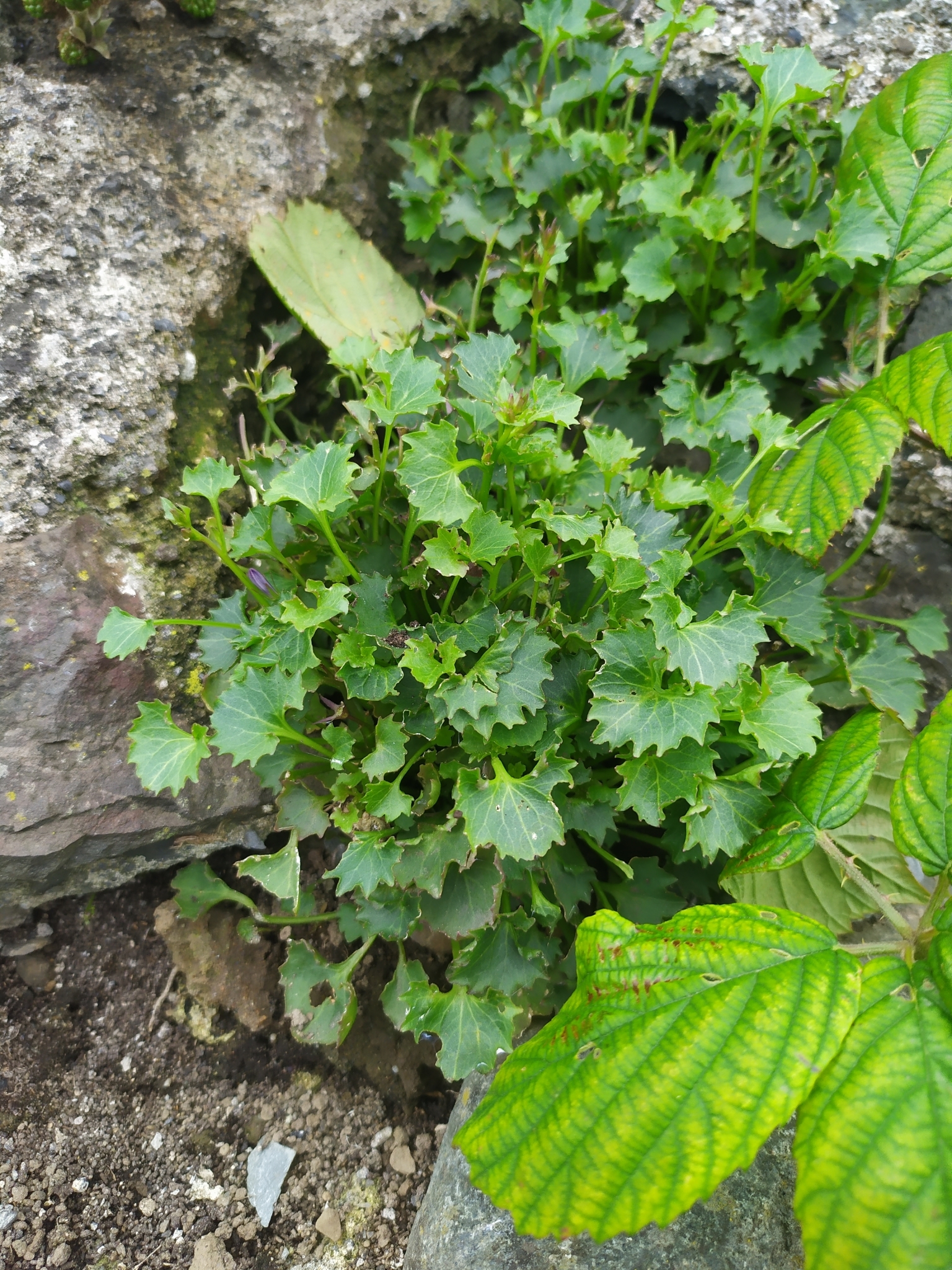
A low cushion, wider than tall, carries numerous rounded to heart-shaped leaves. Wikipedia describes a plant about 10 cm (4 in) tall, spreading to 50 cm (20 in) or more in favorable conditions. This shape suits walls and troughs, where it spills over the edges without becoming tall. 5 4
Open blue to violet bells cover the plant from late spring into summer in temperate Northern Hemisphere gardens. Color alone is insufficient for recognition: the low mat, rounded leaves and dense flowering on stony ground separate it from taller border bellflowers. 5 8
Another rock-garden bellflower, Campanula poscharskyana, can cause confusion. It often spreads more vigorously and has flowers with a more star-shaped outline. The binomial Campanula portenschlagiana therefore identifies a specific plant within any selection of blue or purple flowers. 7 5
Habitat and range
Croatia to Herzegovina is the native range given by POWO, which also records introductions to several European countries, including France, Italy, Spain, Great Britain and Ireland. Balkan in origin, this plant is now familiar in temperate gardens well beyond that region. 1 2
Garden planting can imitate a stony habitat: a rock garden, wall crack, paving edge, trough or dry slope that still retains some moisture. Air around the crown and a growing medium that sheds rainwater are central requirements. 5 4
Rich soil can work against this compact habit. It encourages foliage, retains water and leaves a softer cushion. Poor, gravelly or sandy soil often gives a better balance of compact growth, flowering and persistence over several seasons. 5
Container growing follows the same logic: use a shallow pot with drainage holes, a substantial mineral fraction and restrained watering. Establishing roots must not dry as though this were a desert plant, yet they need air again after rain. This distinction explains success in an old wall and failure in heavy border soil. 4 5
Growing in rock gardens and walls
Light and drainage are the two main growing requirements. Full sun encourages the densest flowering, while light partial shade remains suitable, especially in a warm climate or a small, exposed container. 5 4
Water newly planted cushions enough to establish their roots, then let the medium drain and partly dry. In stony ground, Dalmatian bellflower tolerates a short dry spell better than a waterlogged winter. Containers simply need closer checking during hot weather because their root volume is limited. 5
A light trim after flowering helps keep the cushion dense. Remove faded flowers and stems that splay outward rather than cutting the plant hard during drought stress. Division in spring or early fall, adjusted to local conditions, rejuvenates older clumps. 4
Winter hardiness depends strongly on drainage. Wikipedia gives a tolerance down to USDA zone 3. In practice, winter losses often follow saturated small containers rather than dry cold alone, so the condition of the root zone matters alongside the temperature. 5
Look-alikes and related names
Bellflowers belong to a large and varied genus, Campanula. The common name covers annuals, biennials, upright perennials, alpine plants and ground covers. Use the scientific name when distinguishing several bellflowers in a garden collection or a plant reference. 2 7
Campanula portenschlagiana has the proportions of a stone-border plant, rather than a tall border perennial or a cut-flower bellflower. It softens a low wall, covers the rim of a trough, cascades from a low pot or marks the front of a rock garden. 5 4
Older labels reading Campanula muralis remain useful clues, but the accepted binomial is the clearer reference. POWO and WFO place this old name within the synonymy of Campanula portenschlagiana, rather than recognizing a separate species. 1 2
Safety and uses
Dalmatian bellflower is grown as an ornamental, rather than a food crop. Ordinary growing references do not place it in the same caution category as toxic bulbs or vines containing cyanogenic compounds. Avoiding ingestion by children and animals remains a sensible precaution. 4 5
Excess water around the crown is the main practical garden risk, along with compacted soil, pots without holes and mulch holding moisture against the stems. Yellowing in the center often points to poor drainage before it suggests a nutrient deficiency. 5
For accurate identification, Campanula portenschlagiana should refer to this exact species. The explicit binomial distinguishes it from the broader genus Campanula and from other wall bellflowers, even where their common names overlap. 1 3
Main sources
- Plants of the World Online / Kew, Campanula portenschlagiana Schult.
- World Flora Online, Campanula portenschlagiana
- International Plant Names Index, Campanula portenschlagiana
- Royal Horticultural Society, Campanula portenschlagiana
- Wikipedia EN, Campanula portenschlagiana
- French Wikipedia, Campanula portenschlagiana
- Wikidata, Campanula portenschlagiana
- Wikispecies, Campanula portenschlagiana
Frequently asked questions
Is Campanula portenschlagiana the same as Campanula muralis?
POWO treats Campanula muralis as a synonym of Campanula portenschlagiana. Older nursery labels may therefore use it, but Campanula portenschlagiana remains the accepted name.
Can Dalmatian bellflower grow in shade?
It tolerates light partial shade but flowers better in sun. Dense shade often produces weak stems and few flowers.
Can I plant it in a wall?
Yes, provided the joints hold some well-drained growing medium. Avoid constantly waterlogged walls and gaps with no capacity to retain water.
Does it need much watering?
No. Water helps it establish and supports container plants during hot weather, but the soil must drain between waterings.
Is it invasive in France?
It can spread in a favorable garden, but it is not treated here as an invasive nonnative plant in metropolitan France.
How does it differ from Campanula poscharskyana?
Campanula poscharskyana is often more trailing, with more star-shaped flowers. Dalmatian bellflower forms a low wall cushion with violet-blue bells.
Similar plants

If you are unsure about a plant’s toxicity, ask a botanist or veterinarian for advice.