
Silver thistle (Carlina acaulis, )
Silver thistle (Carlina acaulis) is a lime-loving Asteraceae perennial native to dry grassland and mountain pastures in central and southern Europe. Its silvery flower head often sits directly on a spiny leaf rosette, opening in sunshine and closing in damp weather. This earned it the shepherd’s barometer nickname. Its carlina-oxide-rich root has a long history in folk medicine, while young flower heads are cooked like small artichokes.
Read moreSilver thistle, Dwarf carline thistle and Silberdistel
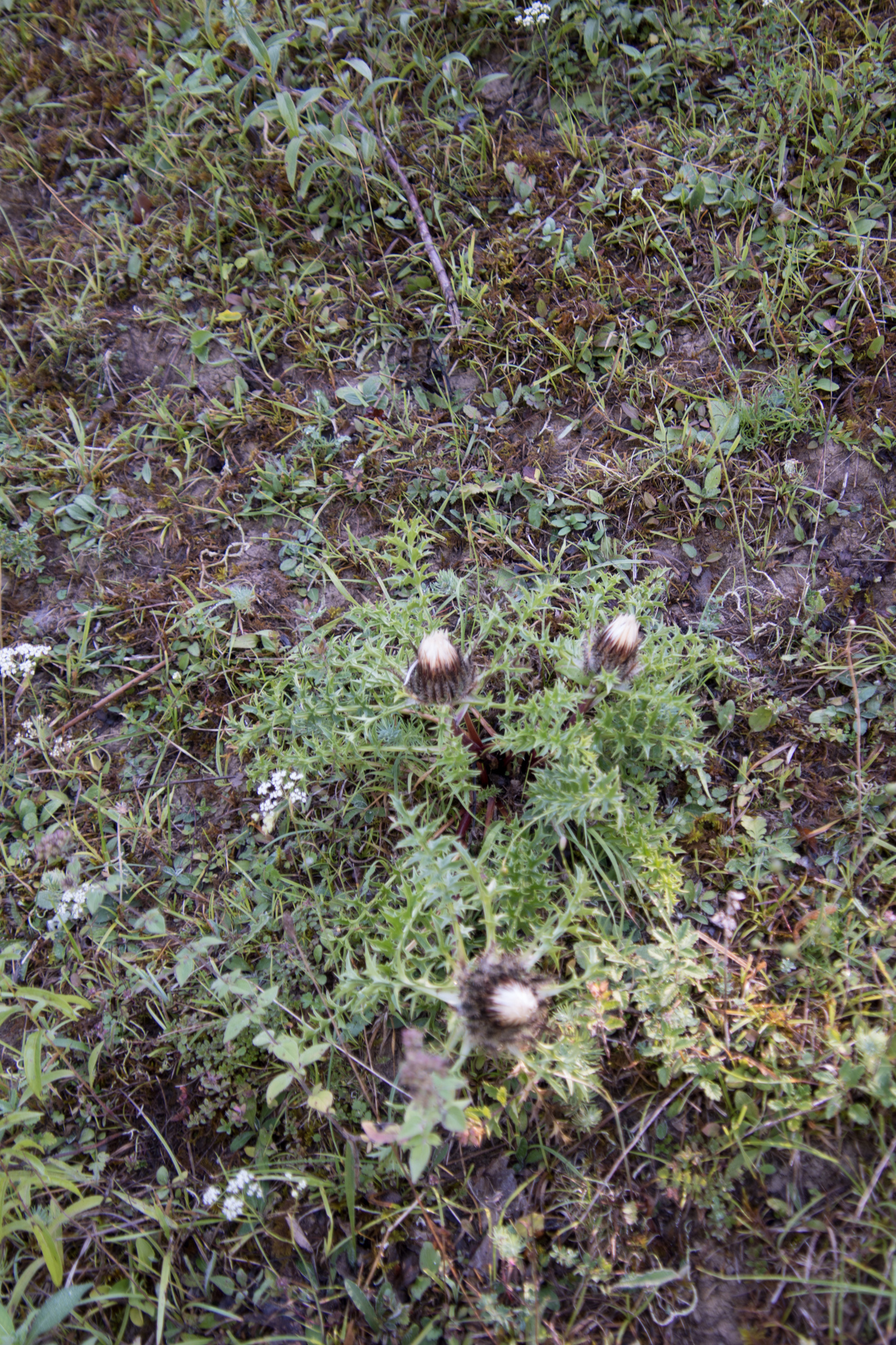
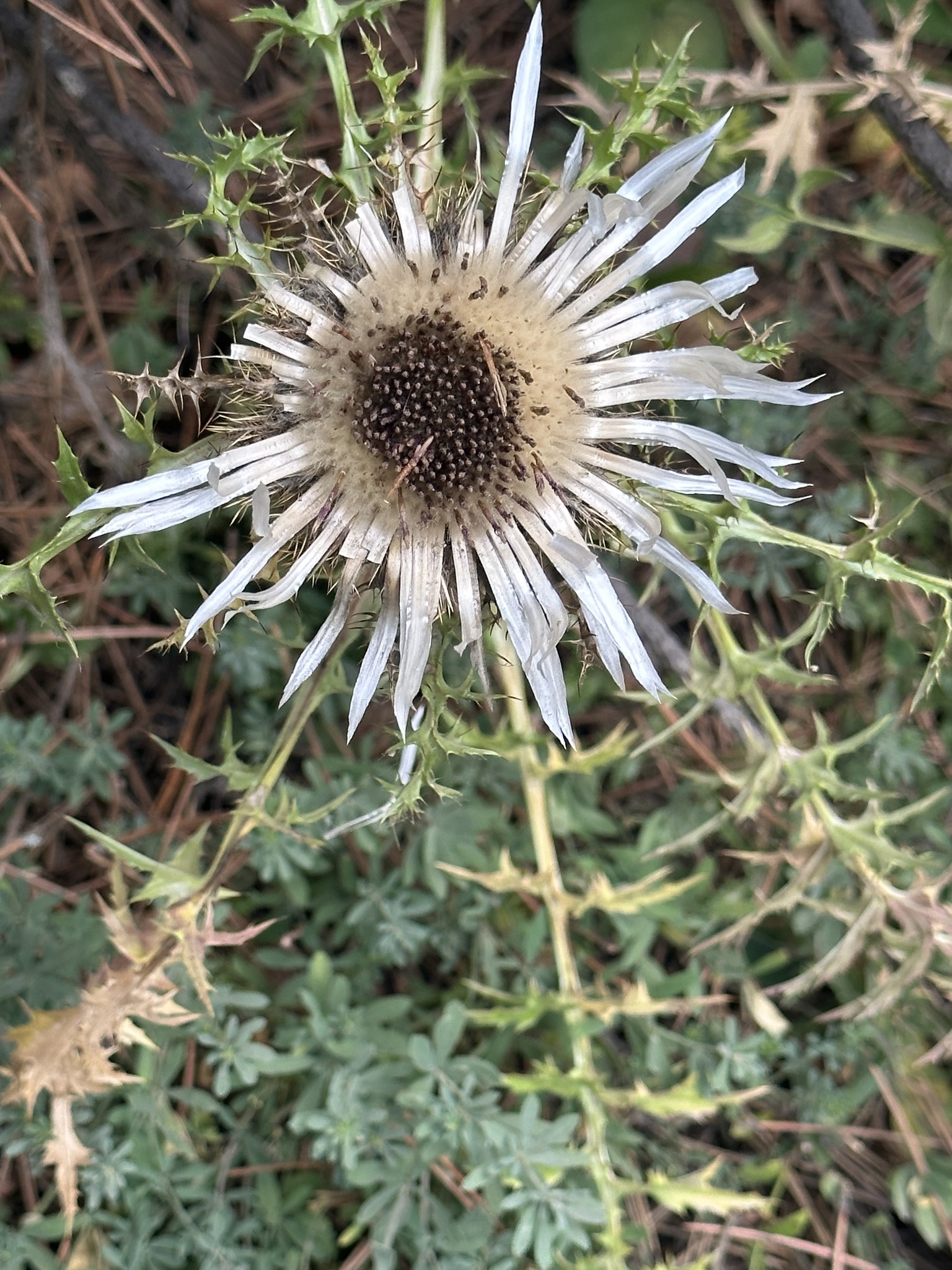


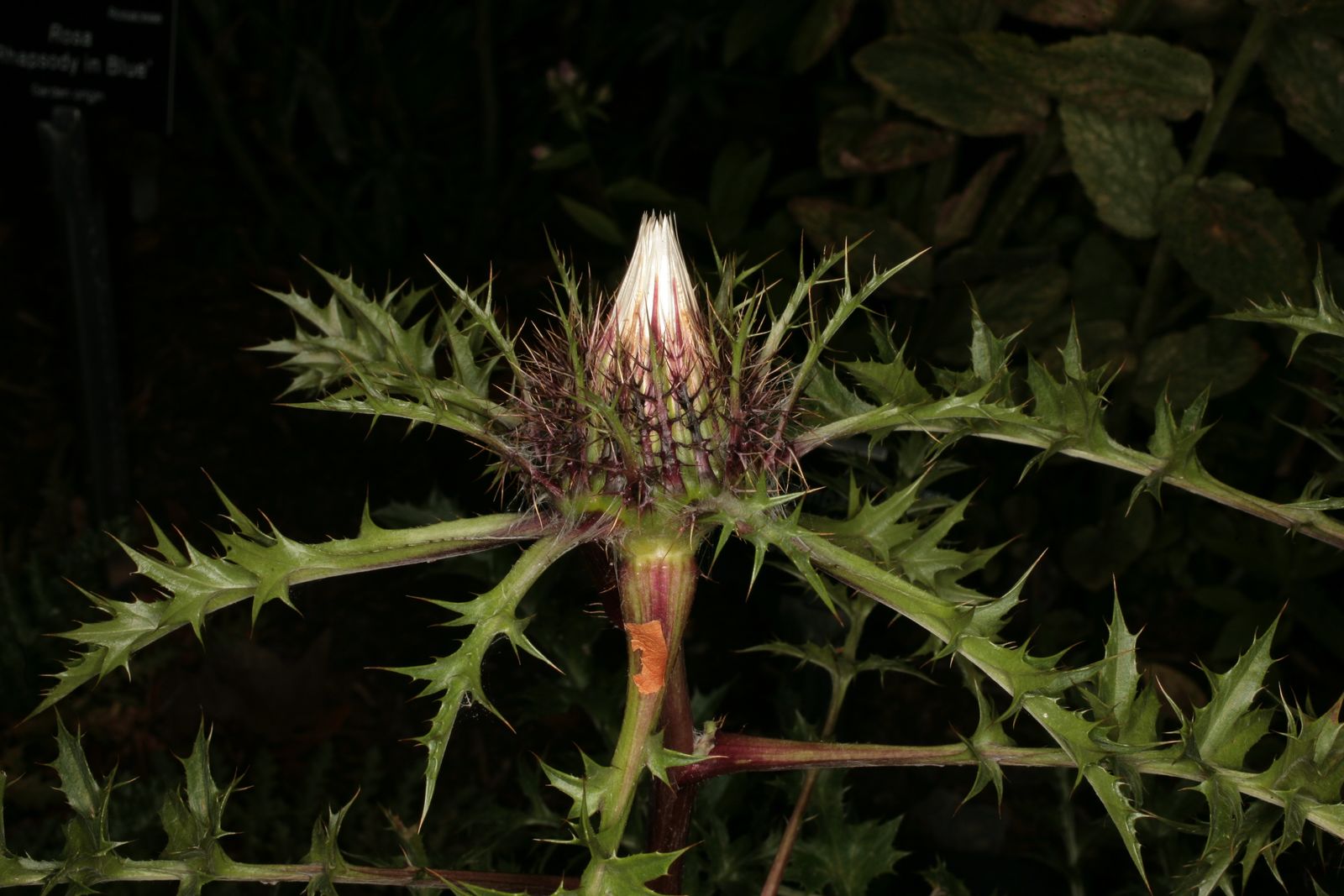
© photo
(c) Udo Schmidt, some rights reserved (CC BY-SA) · cc-by-sa
Felicia Seichter · cc0
Chuck Wilson · cc0
Taken Jul 22, 2022 by Sylvain Piry (cc-by-sa)
Taken Aug 26, 2020 by Alain Bigou (cc-by-sa)
Taken Aug 12, 2021 by Pietro Brignoli (cc-by-sa)
Taken Jul 29, 2021 by Alain Bigou (cc-by-sa)
© copyright of the Board of Trustees of the Royal Botanic Gardens, Kew.


Global distribution
Carlina acaulis is native to central and southern European mountains, from Spain to the Carpathians and, according to POWO, the Caucasus. Elsewhere it is chiefly cultivated in rock gardens in northern European alpine gardens, with no invasive behavior reported.
- Native7
- France
- Switzerland
- Italy
- Spain
- Austria
- Germany
- Romania
Hexagons: regions where the plant occurs. Green dots: native range.1
Identity
Silver thistle (Carlina acaulis L., 1753), also called stemless carline thistle or dwarf carline thistle, is an herbaceous perennial in the Asteraceae genus Carlina. Linnaeus first described it in 1753 under the binomial still used today. Latin acaulis means “stemless,” describing the flower head resting directly on the leaf rosette. 1 2
A legend connects the genus name with Charlemagne. While seeking a cure for plague, the emperor supposedly dreamed of an angel instructing him to shoot an arrow into the sky. The plant it struck would provide the remedy; its root was then distributed to the population to drive back the epidemic. 2
Recognition
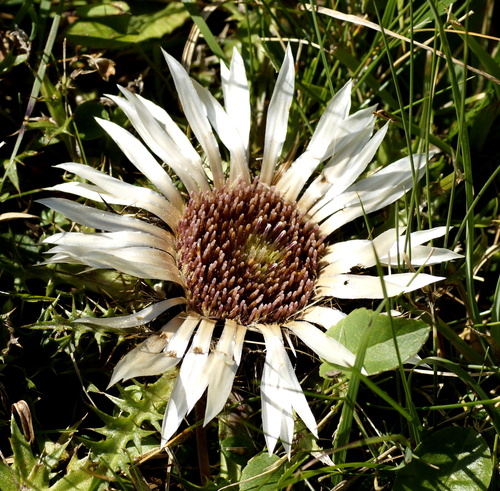
A rosette of deeply divided, spiny leaves measures about 20 cm (8 in) across and lies flat against the ground in the typical subspecies. A single central flower head, sessile or borne on a short stem depending on subspecies, reaches 10 cm (4 in) across. 2 3
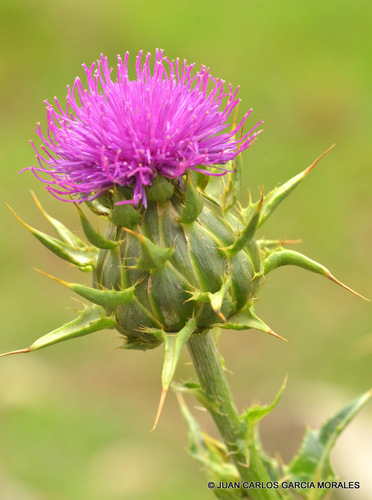
Flower-head color readily separates it from the frequent look-alike Cirsium acaule, another dwarf thistle of dry grassland: silver in Carlina acaulis, purple in Cirsium acaule. This contrast distinguishes the two species without examining the foliage.
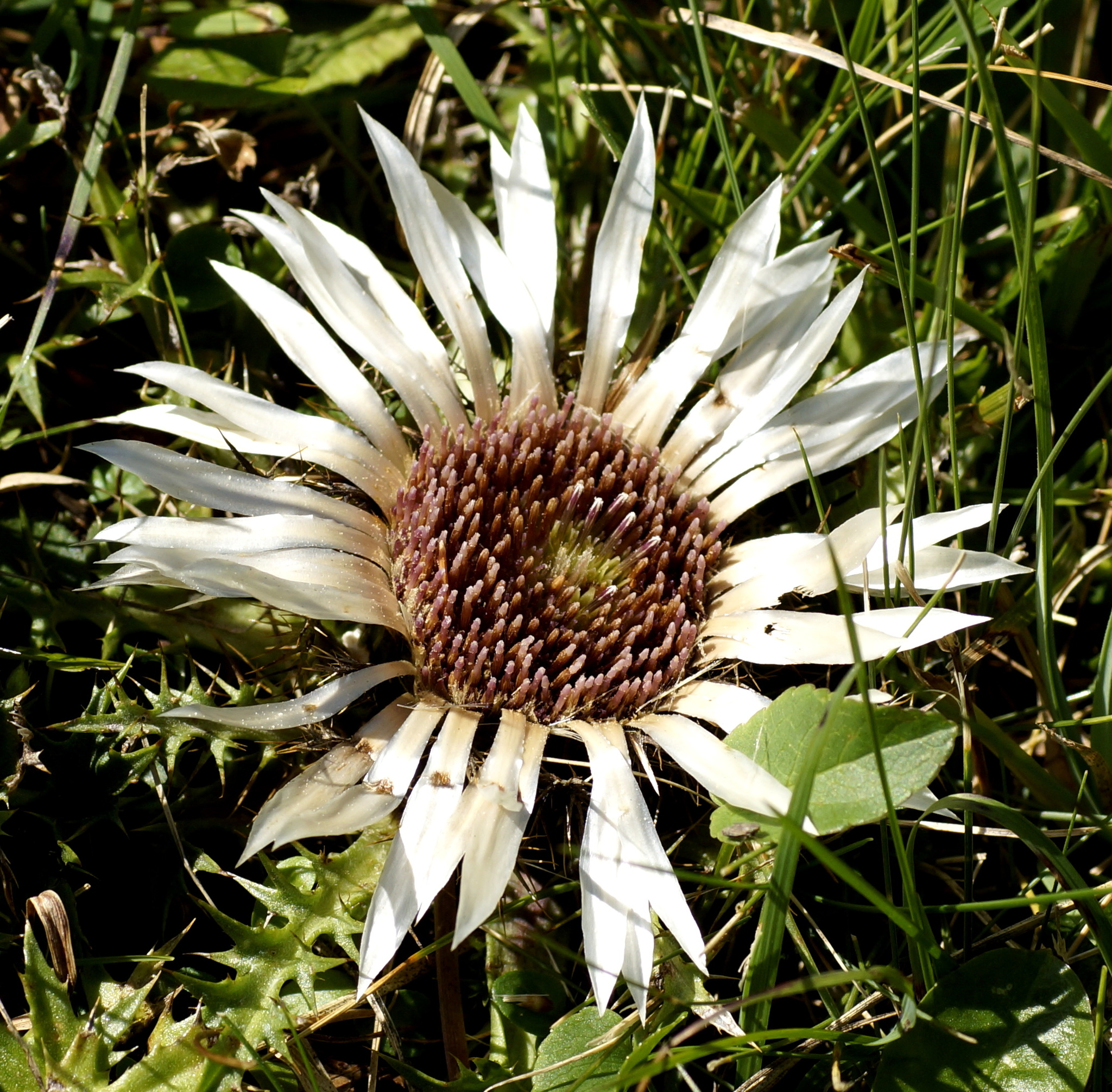
Broad silvery involucral bracts spread like a star around a central disk of brownish-yellow tubular florets. Their petal-like appearance makes the head visible to pollinators from a distance. These bracts are hygroscopic, closing in damp weather or at night and reopening in sunshine, hence the shepherd’s barometer nickname. 2
Flowering spans about four months, from early summer to early autumn in its European range, varying with elevation; lowland populations flower earlier than mountain ones. A thick, deep taproot anchors the plant in stony ground and reaches water during dry summers. 3
Useful taxonomy
Within Carlina acaulis, POWO/WCVP recognizes two accepted subspecies:
- Carlina acaulis subsp. acaulis, with the sessile head directly on the rosette;
- Carlina acaulis subsp. caulescens (Lam.) Schübl. & G.Martens, with a short flowering stem reaching 5–40 cm (2–16 in).
Several historical names remain in botanical synonymy. They should not be confused with subsp. caulescens, the only subspecies sold by nurseries:
- Carlina subacaulis DC., a historical synonym;
- Carlina acaulis subsp. simplex (Waldst. & Kit.) Nyman
- Carlina acaulis var. alpina Jacq.
The accepted name Carlina acaulis L. remains the reliable reference. It is the only member of the genus widely distributed across the Alps and neighboring mountain ranges. 1
Habitat and range
Central and southern European mountain ranges form its native range, from Spain to the Carpathians and, according to POWO, the Caucasus. Stemless carline thistle inhabits dry grassland, calcareous pasture and rocky ground from lowlands to 2,800 m (9,200 ft). 1 2
A strict lime-loving plant, it establishes and flowers poorly on acidic or overly rich soil. In Switzerland it occurs across elevations from the Jura to the central Alps, with varying protection among cantons. In France, regional prefectural orders, notably in Alsace, regulate collection. 5 4
Beyond its native range it is grown in rock gardens in northern European alpine gardens, notably in the United Kingdom, with no invasive behavior reported. 2
Life cycle and reproduction
A seed with a feathery pappus germinates in spring. The rosette then develops for three years or more before its first flowers, explaining why a young nursery plant often has leaves but no visible head. 3
After summer-to-autumn flowering, the dry head closes and retains its pappus-bearing achenes for a long time before they disperse in the wind. The dried head remains almost intact through winter, explaining its traditional use as a decoration hung on farmhouse doors. 2
Uses and risks
Young heads harvested before fully opening are cooked and eaten like small artichokes. The fleshy receptacle and root are also edible cooked, a practice behind the Alpine nickname hunter’s bread. 3
The root contains essential oil rich in carlina oxide, an antibacterial compound long used in folk medicine as a diuretic and cold remedy. Isolated and concentrated, carlina oxide has shown laboratory toxicity: one study measured an LC50 of 10 µg/mL in zebrafish embryos, with malformations and cell death at low concentrations in cultured human cells. The authors concluded that extracts intended for therapeutic use should be free of carlina oxide. 7
These results concern isolated carlina oxide tested in cultured human skin cells and zebrafish embryos. They do not establish whole-plant safety for people or pets. 7
Varieties, look-alikes and related plants
Nurseries chiefly offer subsp. caulescens, sold as silver thistle or weather thistle, and its selection 'Bronze', with bronze-tinged bracts and a stem reaching 40 cm (16 in), grown for rock gardens and drying. The typical wild subsp. acaulis is seldom sold as such. 6
Two look-alikes commonly cause confusion in the field:
- Cirsium acaule also forms a low rosette, but its flowers are purple, never silver;
- Carlina acanthifolia, chiefly found in the Balkans and Pyrenees, has a frequently larger head and more robust leaves.
The decisive visual feature remains flower-head color: silver in Carlina acaulis, never in these two look-alikes. This contrast avoids the need to examine foliage, which often appears similar among the three species in the field.
Main sources
- Plants of the World Online / Kew, Carlina acaulis L.
- Royal Horticultural Society, Carlina acaulis - alpine thistle, Charlemagne's thistle
- Plants For A Future, Carlina acaulis
- INPN / MNHN, Carlina acaulis L., 1753
- Info Flora, Carlina acaulis L.
- Info Flora, Carlina acaulis subsp. caulescens
- PMC, Toxicity of Carlina Oxide from Carlina acaulis roots, in vitro and in vivo study
Frequently asked questions
Is stemless carline thistle poisonous?
Isolated carlina oxide showed laboratory toxicity in cultured human skin cells and zebrafish embryos. The study does not establish whole-plant safety for people or pets.
Why does the flower head close?
The broad silvery bracts are hygroscopic. They close in humid weather or at night to protect pollen, then reopen in sunshine. This mechanism gave the plant its shepherd’s barometer nickname.
Can stemless carline thistle be picked in the wild?
Collection is regulated in several regions, including Alsace in France and some Swiss cantons where it is protected. Check the applicable local rules before collecting it.
How do subsp. acaulis and subsp. caulescens differ?
Subsp. acaulis has a sessile head sitting directly on the rosette, while subsp. caulescens develops a short stem reaching 40 cm (16 in). The latter dominates horticultural sales.
Can stemless carline thistle be eaten?
Yes. Young heads harvested before opening fully are cooked like small artichokes; the fleshy receptacle and root are also edible cooked.
What plants resemble stemless carline thistle?
The most frequent look-alike is Cirsium acaule, another dwarf rosette thistle, but its flowers are purple, never silver. The larger, more robust Carlina acanthifolia also causes confusion in the Balkans and Pyrenees.
Why does it grow in poor, calcareous soil?
It is a strict lime-loving species whose deep taproot reaches water in stony ground. Rich or wet soil instead encourages soft foliage and rotting of the rosette.
Similar plants
If you are unsure about a plant’s toxicity, ask a botanist or veterinarian for advice.