
Milk thistle (Silybum marianum, )
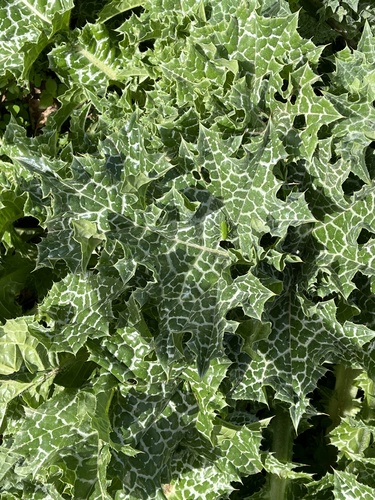
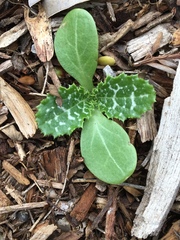
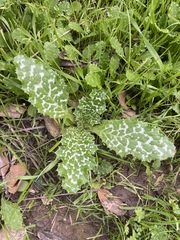
Milk thistle (Silybum marianum (L.) Gaertn., 1791) is a biennial in the Asteraceae family, native from the Mediterranean to Central Asia, India and Ethiopia. Its glossy green leaves have white marbling, and its solitary purple flower heads carry sharp spines. The seeds provide silymarin, a flavonoid complex studied for liver protection; the rest of the plant has no documented toxicity.
Read moreMilk thistle, Blessed milkthistle, Marian thistle, Mary thistle, Saint Mary’s thistle and Variegated thistle
Place in full sun, with intense direct light all day long.
Full sun is essential for best flowering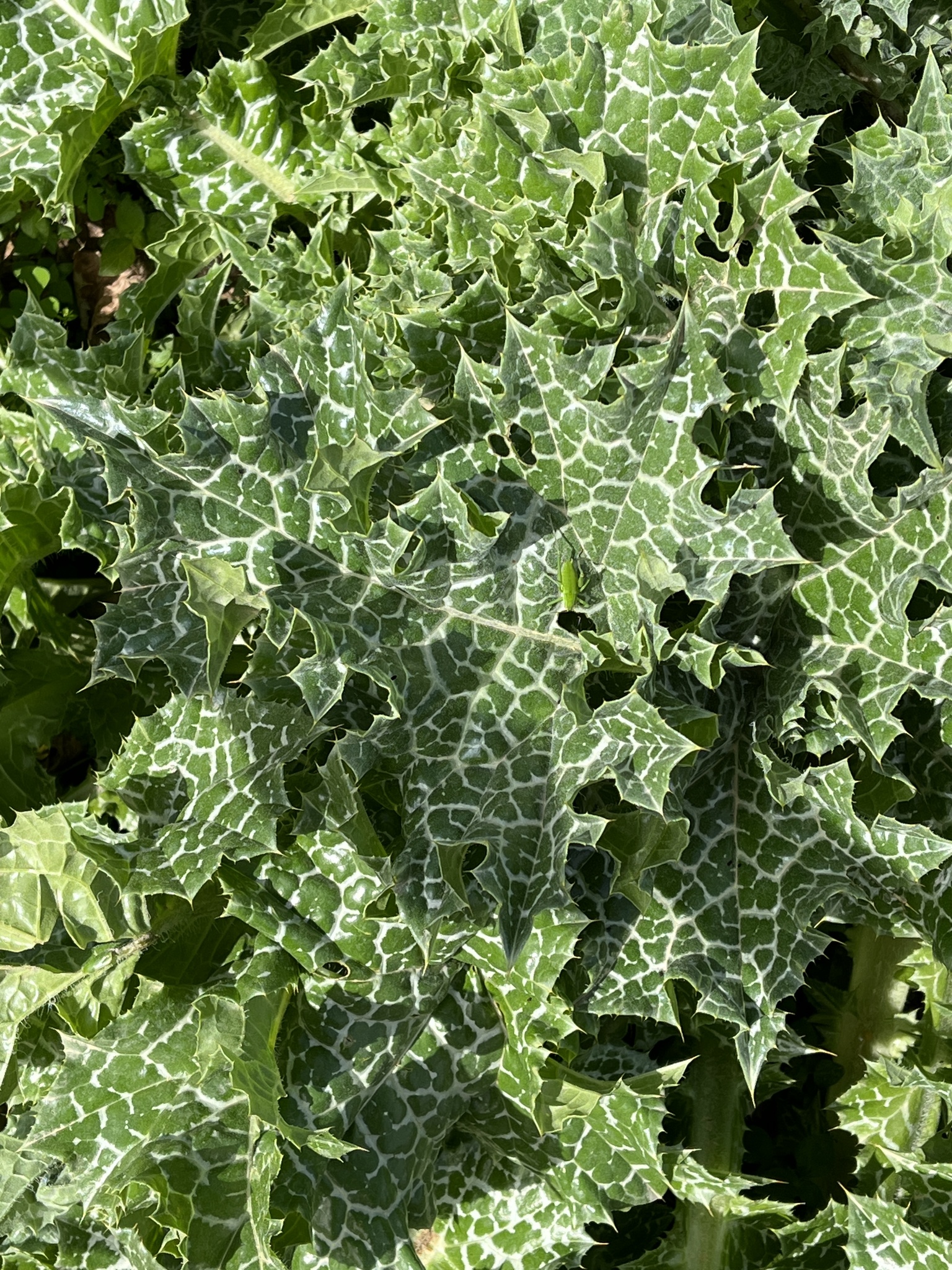
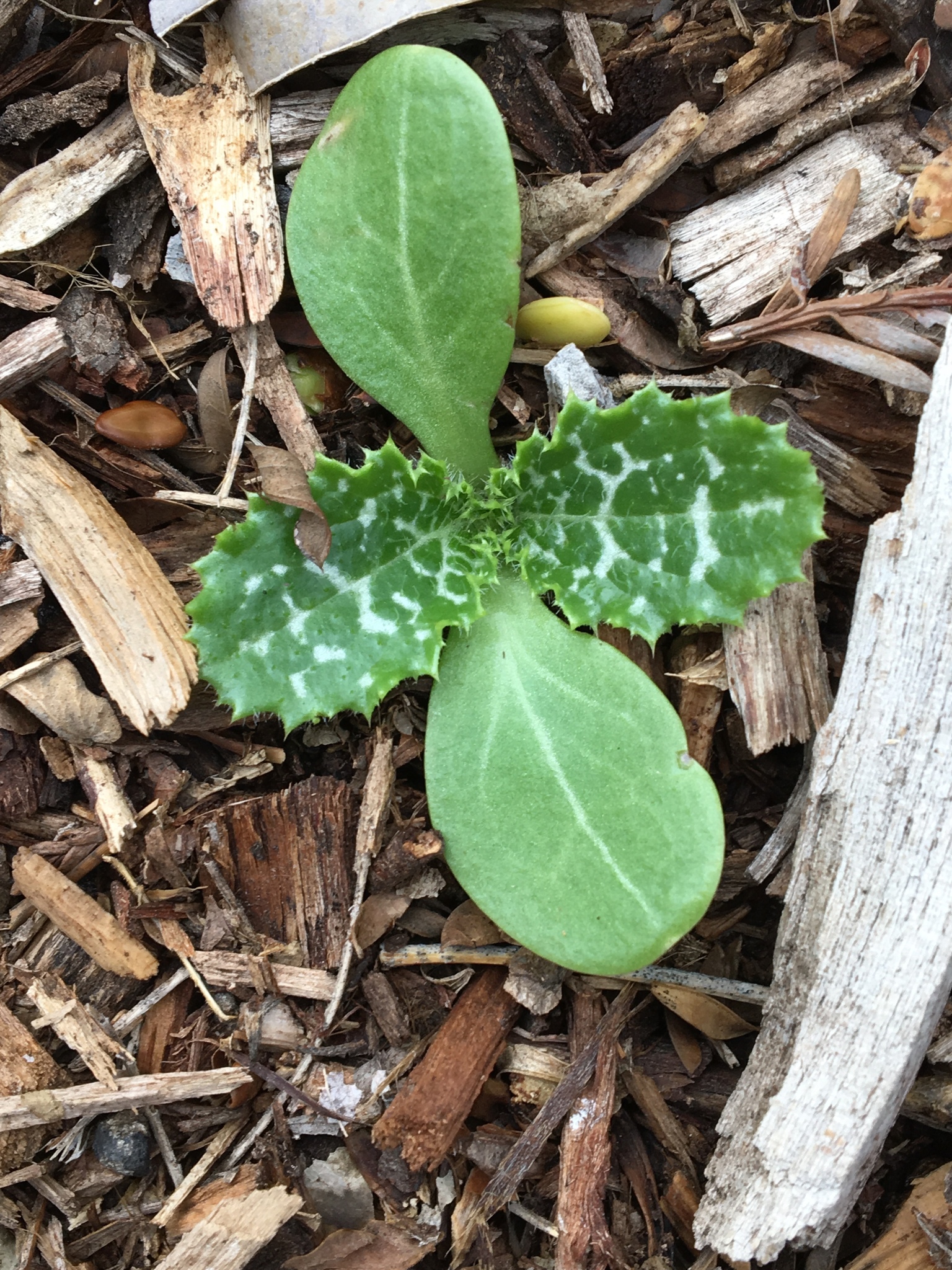
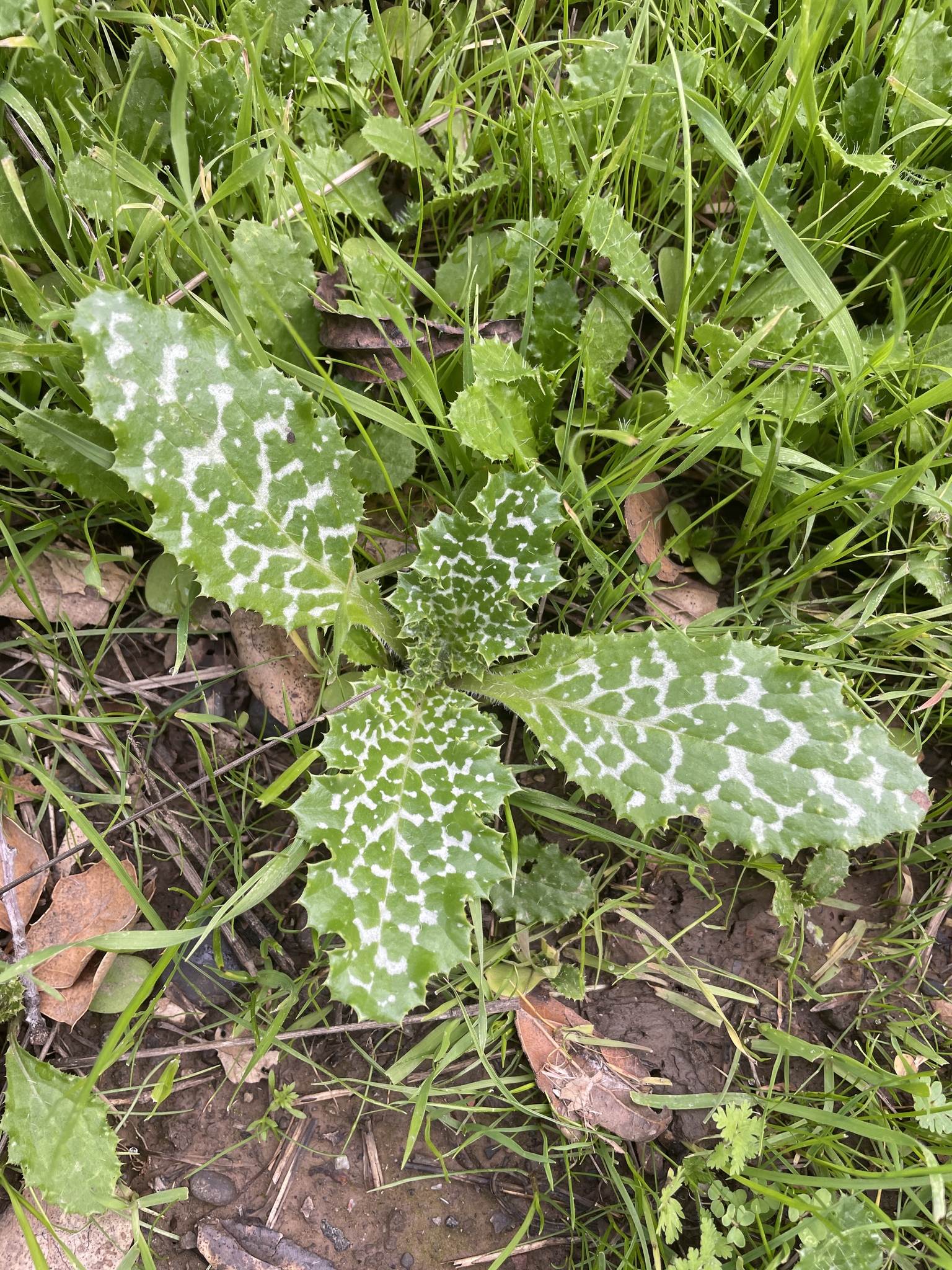


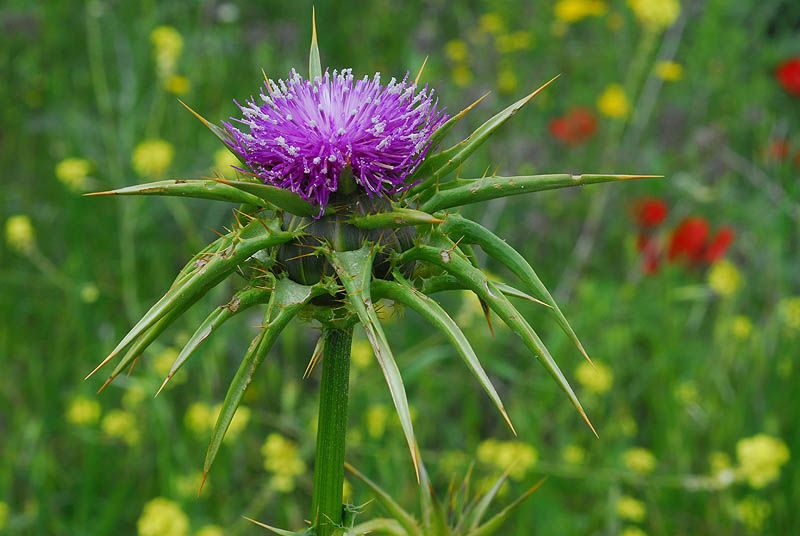
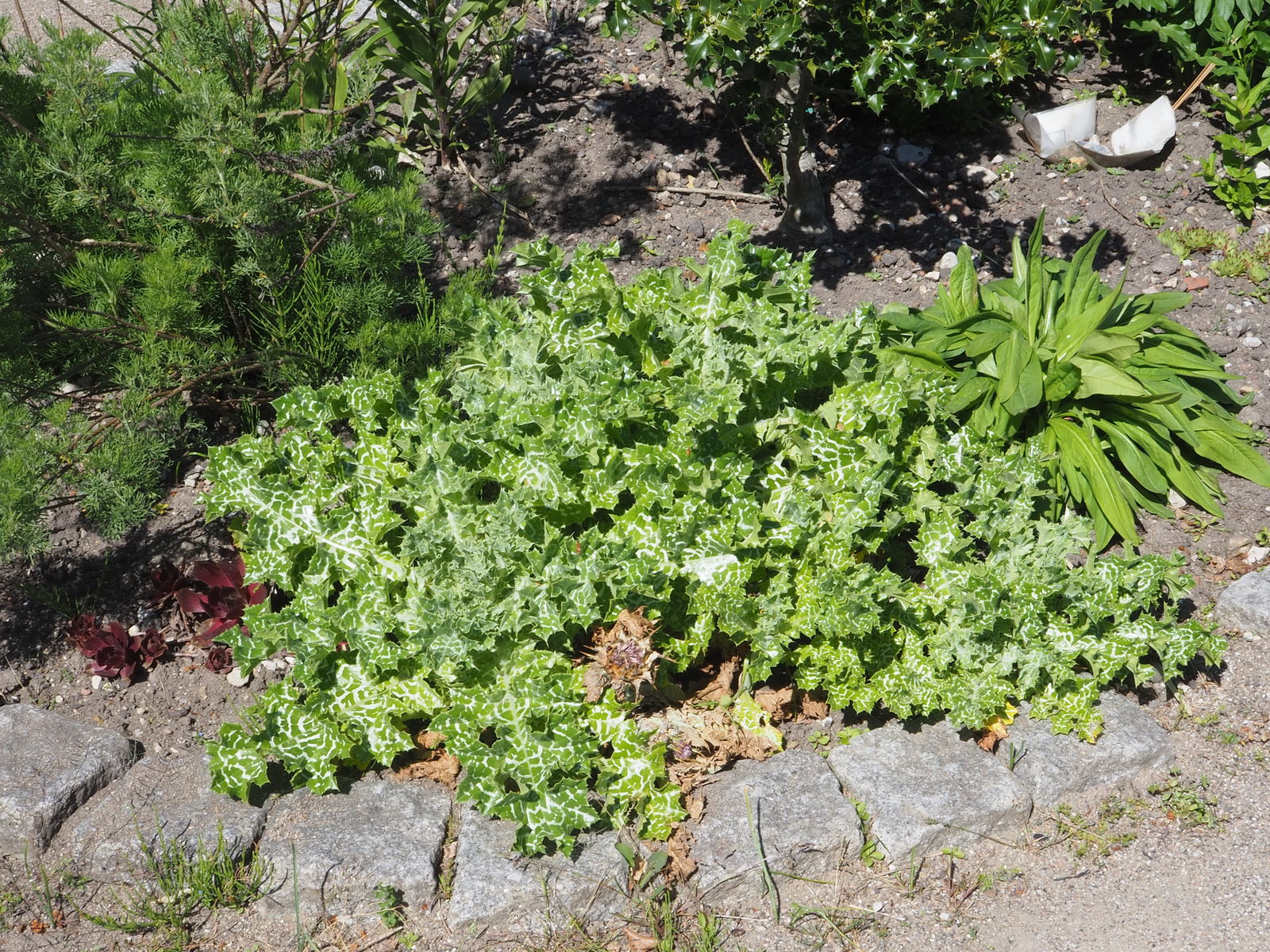
© photo
Bob Walker · cc0
iNaturalist User · cc0
Daniel Das · cc0
Taken Nov 20, 2021 by Magalie Delalande (cc-by-sa)
Taken Jun 10, 2021 by El Mojito (cc-by-sa)
Taken Mar 3, 2021 by Marco Urbinati (cc-by-sa)
Taken May 16, 2020 by Vincent-bdr (cc-by-sa)
Taken Dec 4, 2019 by spera susianum (cc-by-sa)
© copyright of the Board of Trustees of the Royal Botanic Gardens, Kew.




Global distribution
Silybum marianum is native from the Mediterranean and Macaronesia to Central Asia, India and Ethiopia, on nitrogen-rich, sunny soils. It is native in France, especially in the south, becoming rarer north of the Loire. Widely introduced elsewhere, it ranges from an unobtrusive naturalized plant to a regulated weed.
- Native7
- Introduced2
- Invasive1
- France
- Spain
- Italy
- Greece
- Morocco
- Ethiopia
- India
- United States
- South Africa
- Australia
Hexagons: regions where the plant occurs. Green dots: native range.1
Identity
Milk thistle (Silybum marianum (L.) Gaertn., 1791), also called blessed milkthistle or Marian thistle, is a biennial in the genus Silybum, within the Asteraceae family. Carl Linnaeus described it as Carduus marianus in 1753; Joseph Gaertner transferred it to Silybum in 1791, the name now accepted by Plants of the World Online. 1
The epithet marianum recalls a Christian legend: the Virgin Mary is said to have sheltered beneath a thistle during the flight into Egypt, leaving drops of milk on its leaves. These supposedly produced the white marbling along the veins. The same image underlies the English name milk thistle and names such as Mary thistle, Saint Mary’s thistle and variegated thistle. 8
Recognition
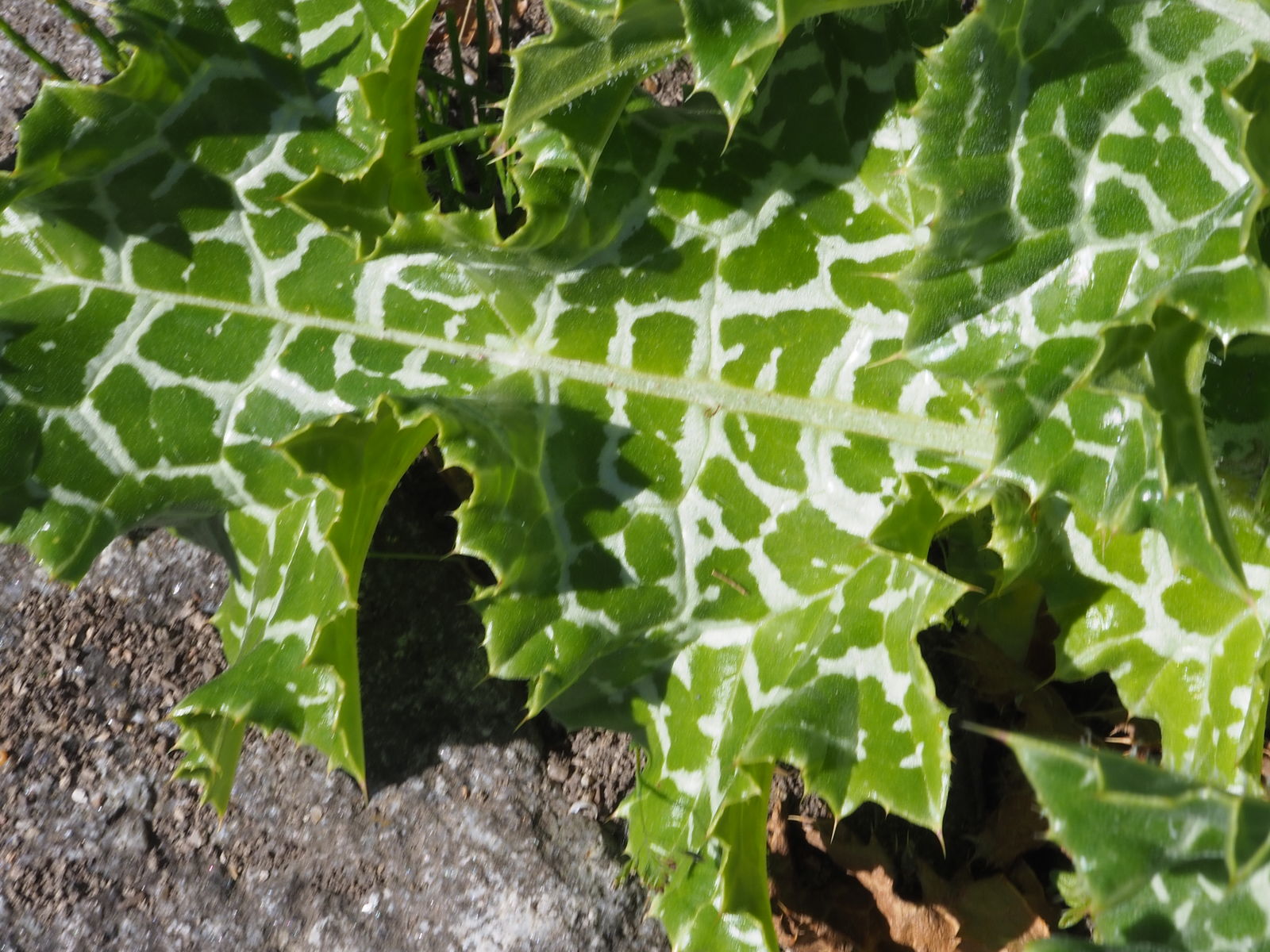
White-streaked veins run across the glossy green leaves of a basal rosette. Tela Botanica describes deeply lobed leaves with strongly spiny margins. In the first year, the rosette has no flower stalk; in the second, it sends up a grooved stem that can exceed 1.5 m (5 ft). 7 2
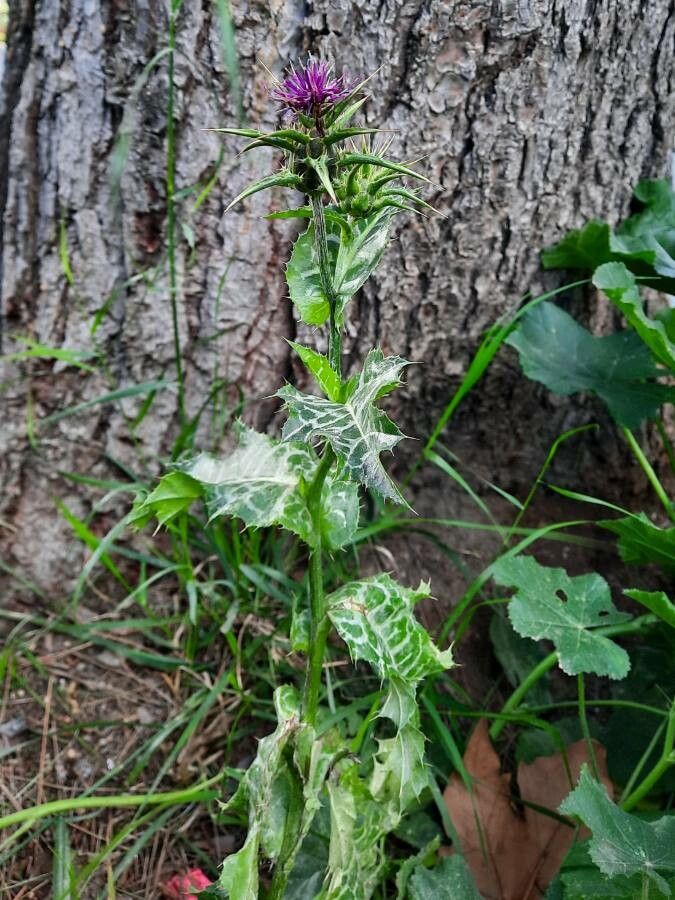
Each stem bears one or more solitary purple to reddish-purple flower heads, 4–6 cm (1.5–2.5 in) across, surrounded by spiny bracts curving outward. Missouri Botanical Garden places flowering in midsummer in its temperate Northern Hemisphere setting. 3
A shiny brown to black achene develops after flowering, topped by a silky white pappus that carries it on the wind. A rosette without a flower stalk is therefore not necessarily a misidentified young plant: it is simply milk thistle in its first year. 2
Useful taxonomy
The combination Silybum marianum (L.) Gaertn. was published in 1791, based on Carduus marianus L., 1753. The genus Silybum contains only two recognized species: Silybum marianum and Silybum eburneum Coss. & Durieu, the latter distinguished by ivory-white flower heads. 1
Older labels and some horticultural references use several other names:
- Carduus marianus L., the historical basionym;
- Silybum marianum var. albiflorum Eig, a white-flowered form;
- Silybum marianum subsp. anatolicum Meriçli.
Common names can be less precise than the binomial. French names meaning “silver thistle” or “wild artichoke,” for example, also refer to other spiny thistles of the same habitats. Only Silybum marianum unambiguously identifies this particular species. 1
Habitat and range
Mediterranean and Macaronesian populations form part of a native range extending to Central Asia, India and Ethiopia. Milk thistle grows in exposed places on nitrogen-rich soils. 1
Within France, waste ground, rubble and roadsides in the southern half of the country are its main habitats; it becomes rarer north of the Loire. Introductions have also taken it widely across North America, Australia and southern Africa, where its behavior ranges from quiet naturalization to closely monitored spread. 8
Outside its native range, Washington State in the United States classifies milk thistle as a Class A noxious weed, reflecting its abundant self-seeding on disturbed soil. USDA PLANTS records naturalized populations in almost every US state, often along roads and the edges of cultivated land. 3 6
Life cycle and reproduction
A typical milk thistle completes a biennial cycle: germination and a leaf rosette occupy the first year, followed by a flower stalk and flowering after winter vernalization in the second. Plants For A Future notes that spring sowing can also produce flowers in the same season. 4
Every mature head releases dozens of achenes carried by their silky pappus. Without harvesting or removing heads before this stage, the plant readily seeds itself from year to year. This explains both its invasive reputation and its ability to colonize bare soil quickly. 3
Uses and risks
Milk thistle seeds contain silymarin, a complex of flavonolignans including silibinin, silicristin and silidianin, isolated in 1968 and studied for liver-protective effects. The US NCCIH cautions that clinical trials vary in quality and provide no strong evidence of effectiveness against hepatitis or cirrhosis. 5 8
No toxicity is documented for ingestion by humans or pets in these accounts; the main risk is physical injury from the sharp spines on leaves and bracts. Plants For A Future also advises caution for people with diabetes because silymarin may affect blood glucose. 4
Traditional food uses include young leaves stripped of spines and eaten like spinach, stems prepared like asparagus, and immature heads used as an artichoke substitute. Roasted seeds have served as a coffee substitute, while the boiled root has been prepared like salsify. 4
Varieties, look-alikes and related plants
Widely distributed horticultural cultivars are absent from the milk thistle trade. Seeds sold under the common name almost always represent the typical species, grown for medicinal use rather than a selected ornamental feature. 4
Several spiny thistles of disturbed ground can cause confusion:
- Onopordum acanthium has gray, woolly leaves without white marbling;
- Cirsium vulgare develops spiny wings running down the length of the stem;
- Silybum eburneum, the other species in the genus, produces ivory-white flower heads.
White leaf marbling separates milk thistle from all three of these related thistles, which lack this marking. It is a more useful identification feature than the general spiny appearance they share. 2
Main sources
- Plants of the World Online / Kew, Silybum marianum (L.) Gaertn.
- Royal Horticultural Society, Silybum marianum - milk thistle
- Missouri Botanical Garden Plant Finder, Silybum marianum
- Plants For A Future, Silybum marianum - Milk Thistle
- National Center for Complementary and Integrative Health, Milk Thistle
- USDA PLANTS Database, Silybum marianum plant profile
- Tela Botanica / eFlore BDTFX, Silybum marianum
- Reader file from Wikipedia FR, Chardon-Marie
Frequently asked questions
Is milk thistle toxic to cats and dogs?
No toxicity from ingestion is documented in pets or humans. The main risk is physical injury from the spines on the leaves and flower bracts.
Why are milk thistle leaves marbled white?
This is a normal feature of the species, visible even in the rosette stage. Christian legend links the markings to drops of the Virgin Mary’s milk, an image behind the name milk thistle.
Is milk thistle edible?
Yes, some parts are. PFAF reports that young leaves with their spines removed can be eaten like spinach, stems like asparagus and immature flower heads as an artichoke substitute.
Why has my milk thistle not flowered in its first year?
Milk thistle usually has a biennial cycle. It forms a rosette without a flower stalk in its first year; flowering follows winter vernalization in its second year.
How can I stop milk thistle spreading in the garden?
Cut off the flower heads as they turn brown, before the white pappus opens and carries the achenes away on the wind. This is enough to contain self-seeding.
How do I distinguish milk thistle from other thistles?
The most reliable feature is the white leaf marbling. Onopordum acanthium has gray, woolly leaves without these markings, while Cirsium vulgare has spiny wings running down the stem.
Does milk thistle silymarin really protect the liver?
The US NCCIH acknowledges laboratory research on liver-protective effects, but emphasizes that clinical trials vary in quality and provide no strong evidence of effectiveness against hepatitis or cirrhosis.
Similar plants
If you are unsure about a plant’s toxicity, ask a botanist or veterinarian for advice.