
Common wormwood (Artemisia absinthium, )
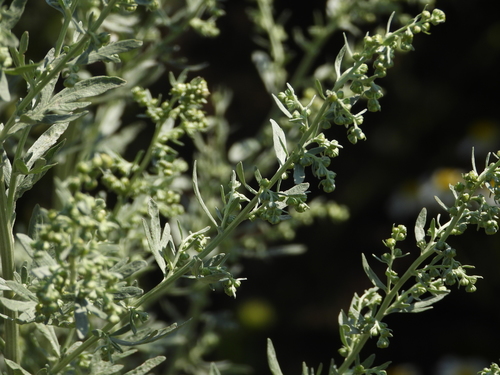
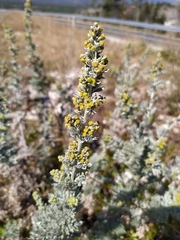
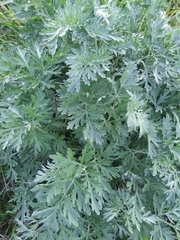
Common wormwood (Artemisia absinthium L.) is an aromatic perennial in the Asteraceae, native across a broad Eurasian and North African range that includes metropolitan France according to POWO. Its silvery-gray leaves are strongly scented and intensely bitter, and its small yellow flower heads nod downward. Famous for its role in absinthe drinks, it requires strict caution because of thujone, essential oil and medicinal uses.
Read moreCommon wormwood, Wormwood and Absinth wormwood
Place in full sun, with intense direct light all day long.



© photo
(c) Татьяна Губина, some rights reserved (CC BY-NC), uploaded by Татьяна Губина · cc-by-nc
iNaturalist User · cc0
Laura Holloway · cc0
Taken Sep 24, 2019 by Milflores Milhojas (cc-by-sa)
Taken Jan 1, 1800 by Tela Botanica − Daniel MATHIEU (cc-by-sa)
Taken Aug 13, 2020 by Medesima Me (cc-by-sa)
Taken Sep 27, 2021 by Camille Maravat (cc-by-sa)
Taken Jul 14, 2021 by Manū (cc-by-sa)
© copyright of the Board of Trustees of the Royal Botanic Gardens, Kew.




Global distribution
POWO recognizes a broad native range from Europe and North Africa to temperate Asia, including France among native regions but Corsica among introduced regions. The species is not classed as invasive in France; local concerns include notable wild populations and rules governing essential oils and drinks.
- Native4
- Introduced3
- Metropolitan France
- Continental Europe
- North Africa
- Temperate Asia
- Corsica
- North America
- New Zealand
Hexagons: regions where the plant occurs. Green dots: native range.1
Identity
Common wormwood (Artemisia absinthium L.) is an aromatic perennial in the Asteraceae. POWO accepts this name and traces it to Linnaeus's publication in Species Plantarum in 1753. Tela Botanica uses the same accepted name in its French botanical reference. 1 2
English horticultural and North American sources use wormwood and absinth wormwood for the same species. French references also list absinthe, grande absinthe and armoise amère among its names. These vernacular terms need to be read alongside the scientific name to establish which plant is meant. 2 7
The living plant, medicinal preparations and the alcoholic drink called absinthe require separate consideration. Their names overlap, but the risks, doses and regulations differ. Growing a plant does not make an unmeasured preparation equivalent to a regulated product. 8 11
Recognition
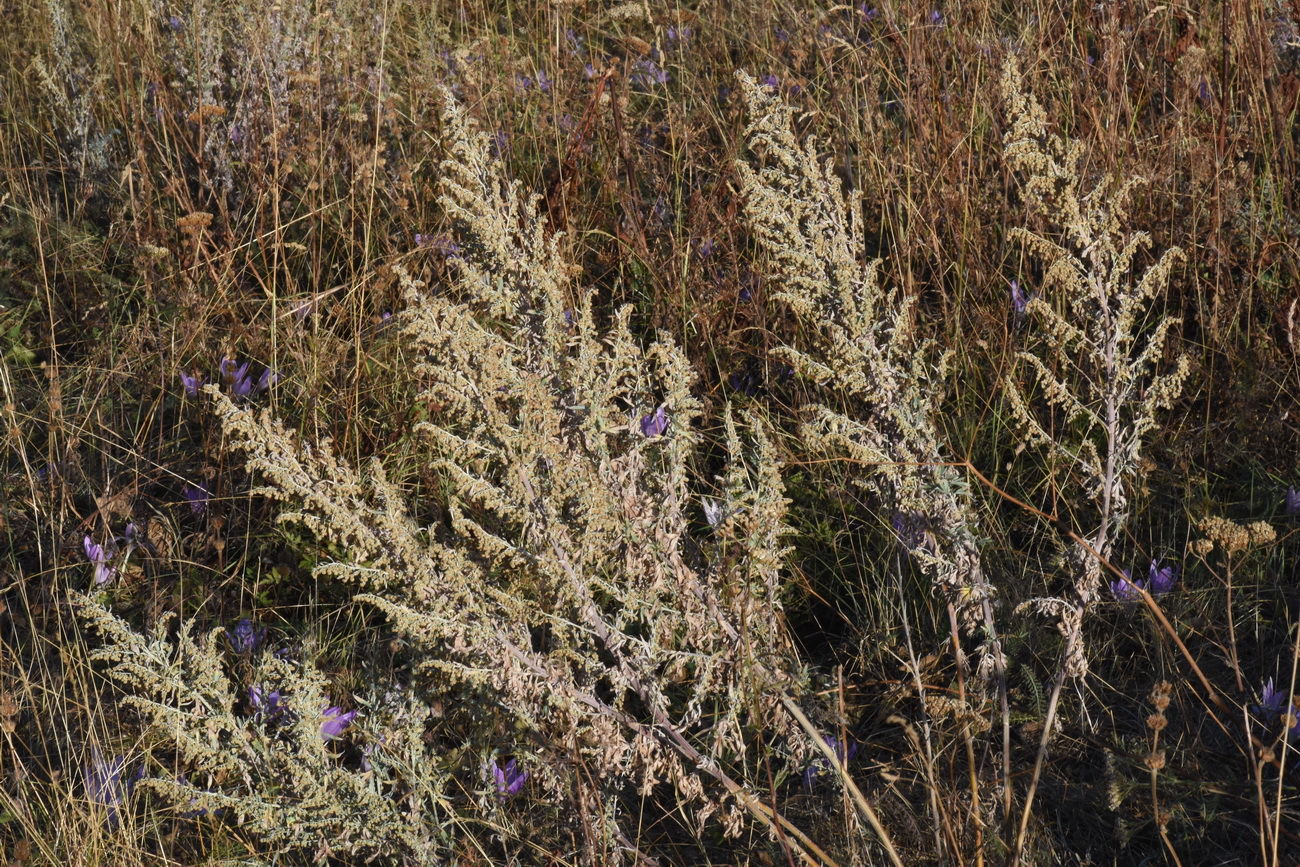
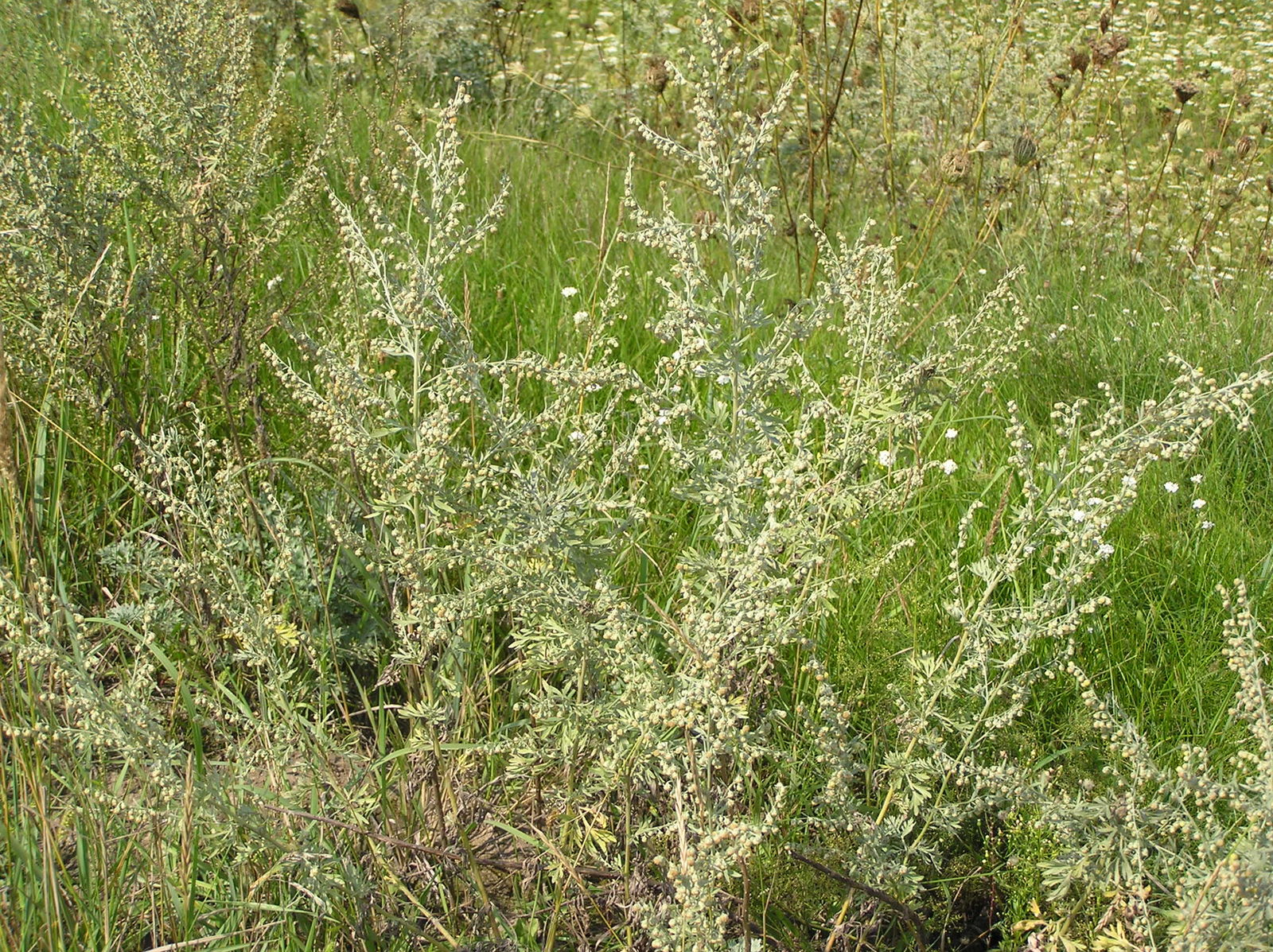
An upright clump, sometimes slightly woody at the base, carries grooved, whitish stems. Tela Botanica describes a strongly scented perennial around 40 to 60 cm (16 to 24 in) tall. The RHS describes a deciduous, bushy perennial with highly aromatic gray-green foliage. 2 4
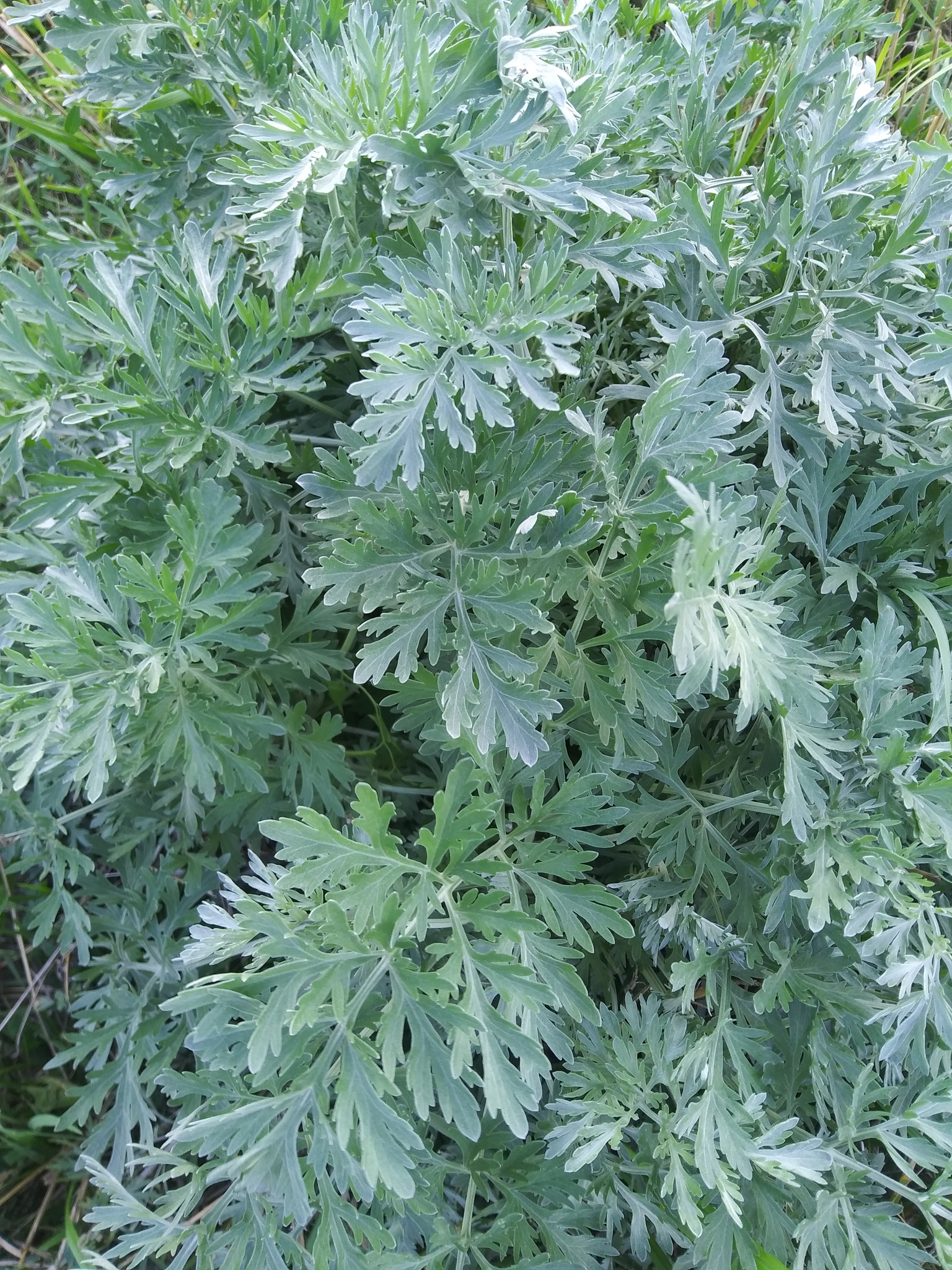
Alternate leaves have stalks toward the base of the plant and are deeply divided and silky. Their undersides are white, while the upper surfaces range from greenish to silvery-gray. Before flowering, this is a valuable clue: a plain green Artemisia with little silkiness or no whitish underside needs closer checking. 2 5
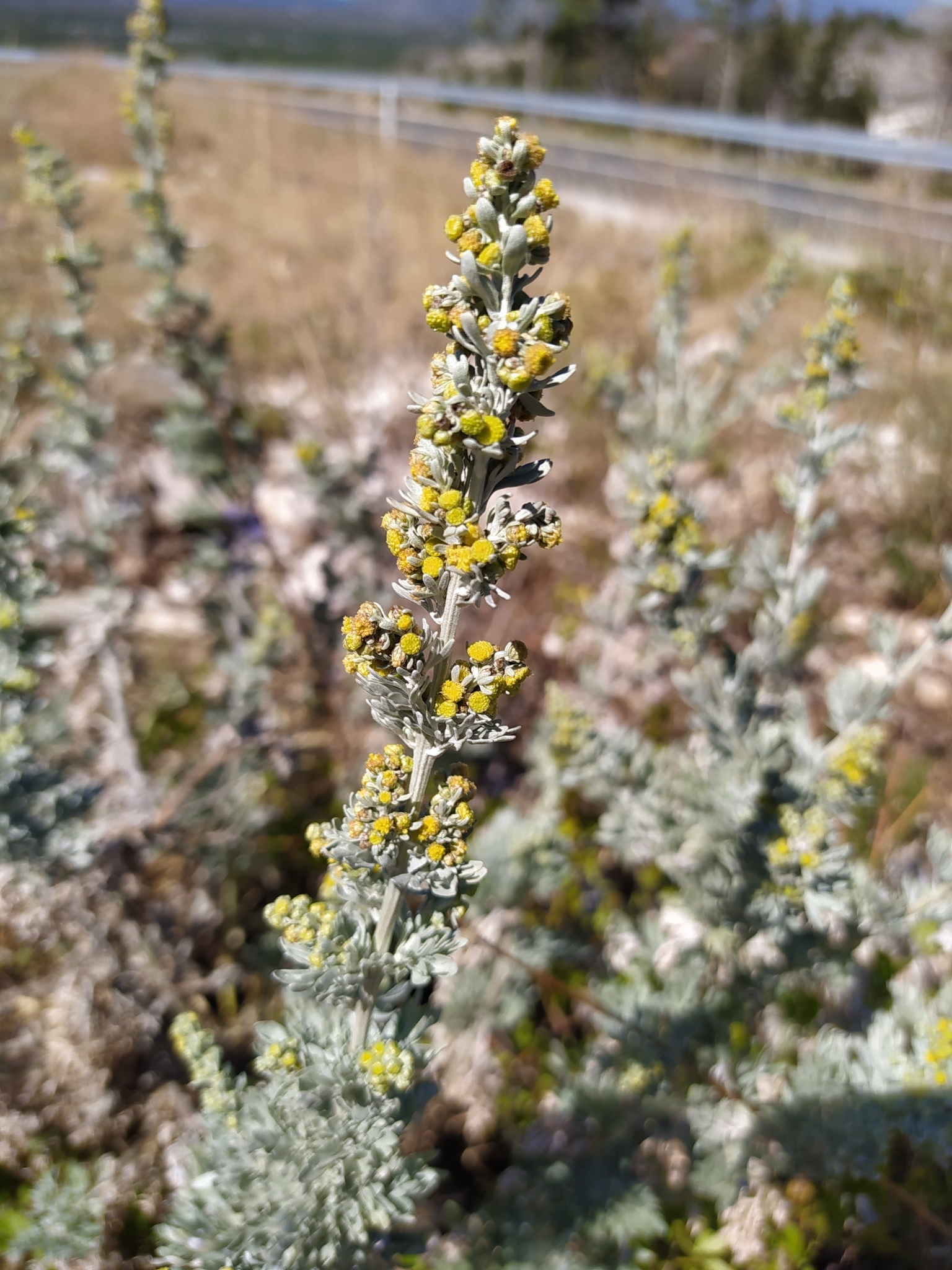
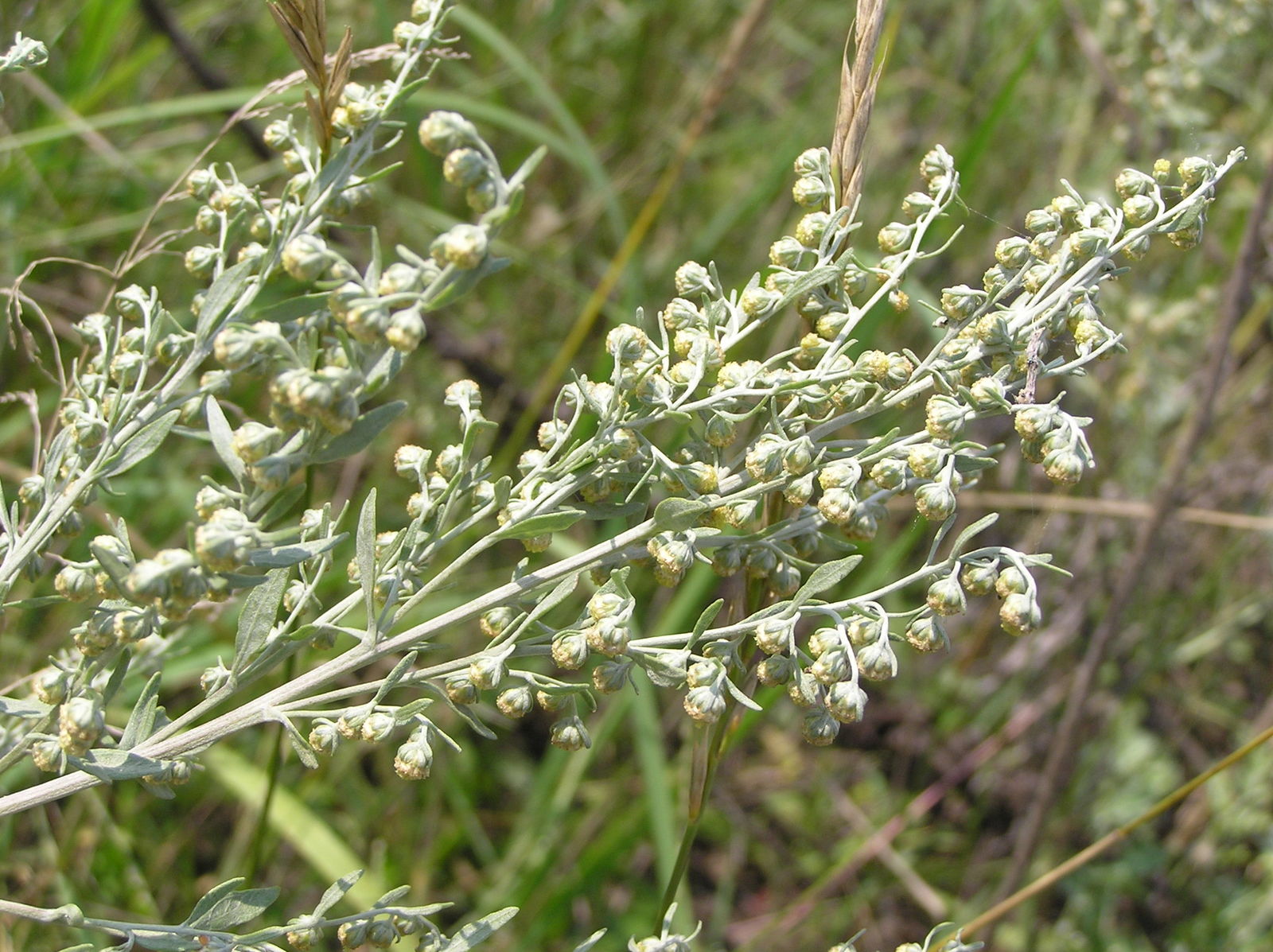
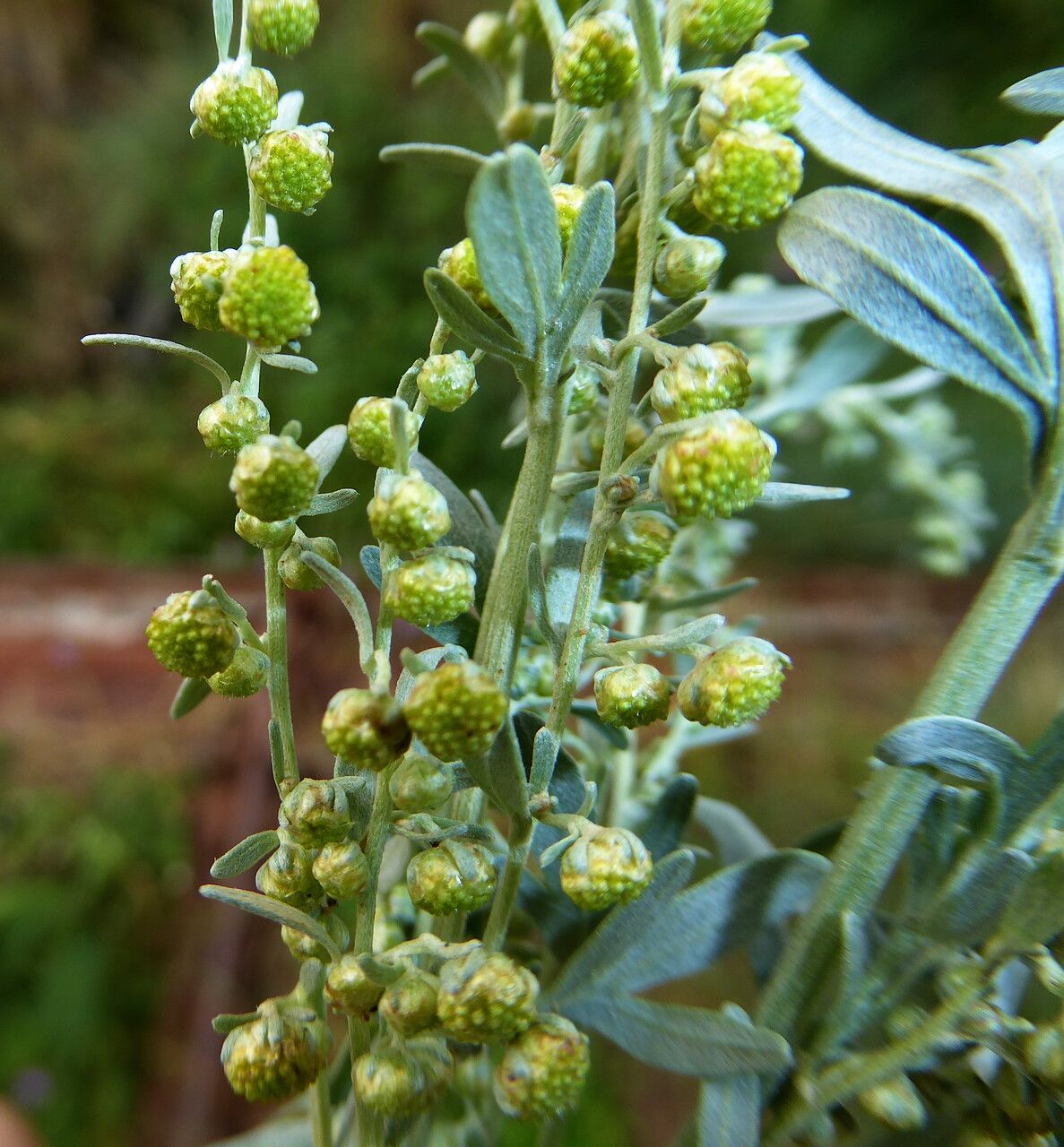
Instead of daisy-like blooms, common wormwood produces small, spherical, yellow to pale yellow flower heads, often nodding, in a leafy panicle. Tela Botanica gives a head diameter of 3 to 4 mm (0.12 to 0.16 in) and a July-to-September flowering period in its French context. Flora of North America also describes small, egg-shaped, drooping heads. 2 5
Taxonomy and names
Taxonomic references POWO, GBIF and Tela Botanica agree on Artemisia absinthium L. as the reference name. Historical synonyms recorded in these resources include Absinthium officinale, Absinthium vulgare and Artemisia pendula. 1 3 2
- Absinthium officinale Brot. (historical synonym)
- Absinthium vulgare Lam. (historical synonym)
- Artemisia pendula Salisb. (historical synonym)
- Artemisia rhaetica Brügger (historical synonym)
Other members of Artemisia are the principal source of mistaken identity. Common mugwort, Artemisia vulgaris, is greener and has a different habit. Roman wormwood, Artemisia pontica, also occurs in beverage traditions but is a different species. Silvery garden forms and hybrids such as 'Powis Castle' need a full label check; scent alone is insufficient. 2 4
Habitat, range and status in France
Europe, North Africa and temperate Asia fall within the broad native range recognized by POWO, which includes France among native regions. The same source lists Corsica as introduced. Even within France, the distinction between native and introduced therefore depends on the territory. 1
Tela Botanica records common wormwood in waste ground, stony places and along riverbanks in France, with naturalization in several regions. It is not treated as an invasive alien species in metropolitan France. Local flora and collection of wild plants are more relevant concerns in that setting. 2
Beyond Eurasia, common wormwood may occur as a naturalized plant or weed. The US Forest Service describes its introduction to North America and subsequent naturalization across the northern United States and Canada. That account concerns North America and does not establish the plant's status elsewhere. 6
Cultivation and life cycle
Sunshine and drainage are the main garden requirements. The RHS recommends fertile but well-drained soil in full sun and warns that heavy, poorly drained soil can cause dieback. 4
In a temperate seasonal cycle, fresh growth emerges from the crown in spring, develops into a silvery clump and flowers in summer. Cutting back to young basal growth in mid- to late spring maintains a more compact shape and reduces dry stems. 4
Propagation options include sowing in a cold frame in local spring or fall, or taking young tip cuttings in early summer. Watch developing flower heads if self-sown seedlings would be unwanted in a dry garden. 4 2
Uses, alcohol and regulation
Flavoring the spirit absinthe is the plant's most familiar historical use. The Fédération Française des Spiritueux describes the association between Artemisia absinthium, anise and spirits, along with France's 1915 prohibition and later regulation of production. 14
European Union law regulates thujone in flavored foods and drinks. Regulation (EC) No. 1334/2008 specifies maximum levels for alcoholic drinks made from Artemisia species. The older consolidated French decree also uses a threshold of 35 mg/kg when defining Artemisia-based alcoholic drinks considered similar to absinthe above that level. These are jurisdiction-specific rules. 11 13
French law imposes a further restriction on common wormwood essential oil: the Public Health Code lists oil from Artemisia absinthium L. among essential oils whose sale to the public is reserved for pharmacists. This rule concerns the oil rather than banning the garden plant, and underlines why concentrated extracts require care. 12
Toxicity, thujone and medical precautions
Homemade recipes, tea doses, alcoholic macerations and essential-oil applications are unsuitable uses to improvise from the plant. The EMA defines Absinthii herba as the leaves or leafy flowering tops of Artemisia absinthium L. Its guidance concerns specific traditional medicinal products rather than household self-medication. 8 9
The EMA monograph describes traditional indications for temporary loss of appetite and mild digestive complaints, subject to clear limits. Use is not recommended below age 18 or during pregnancy and breastfeeding. Bile duct obstruction, cholangitis and liver disease are contraindications. 9
Thujone is the major safety concern. The EMA identifies it as neurotoxic, favors chemotypes low in thujone, requires the product's thujone content to be specified and sets a maximum daily exposure for the medicinal products covered by its guidance. 9 10
For pets, the warning concerns thujone and concentrated extracts rather than a confirmed veterinary toxicity specific to Artemisia absinthium. The regulatory treatment of essential oils nevertheless supports keeping the plant, dried flowers, extracts and alcoholic preparations out of reach of children and animals. 9 12
Main sources
- Plants of the World Online / Kew, Artemisia absinthium L.
- Tela Botanica eFlore, Artemisia absinthium L.
- GBIF Backbone Taxonomy, Artemisia absinthium L.
- Royal Horticultural Society, Artemisia absinthium
- Flora of North America, Artemisia absinthium
- US Forest Service FEIS, Artemisia absinthium
- EPPO Global Database, Artemisia absinthium
- European Medicines Agency, Absinthii herba
- EMA HMPC, European Union herbal monograph on Artemisia absinthium L., herba
- EMA HMPC, public statement on herbal medicinal products containing thujone
- EUR-Lex, Regulation (EC) No 1334/2008, thujone maximum levels
- Légifrance, French Public Health Code, Article D4211-13
- Légifrance, Decree No. 88-1024 on liqueurs similar to absinthe
- Fédération Française des Spiritueux, aniseed spirits and absinthe
Frequently asked questions
Is common wormwood banned in France?
The garden plant is not treated here as banned. France regulates essential oils and Artemisia-based drinks: common wormwood oil appears on the list reserved for sale by pharmacists, and drinks are subject to thujone limits. These are French rules, not a statement of the law everywhere.
Can you make wormwood tea?
Homemade wormwood tea is not recommended. EMA guidance covers specific medicinal preparations with contraindications and thujone limits; unmeasured home use is not equivalent.
Why is thujone a concern?
Thujone occurs in Artemisia essential oils. The EMA identifies it as neurotoxic and requires daily exposure to remain below a limit in medicinal products.
Is common wormwood toxic to animals?
Keep pets and livestock away from it, especially concentrated extracts. This caution concerns thujone rather than a species-specific ASPCA entry for Artemisia absinthium.
How can you distinguish common wormwood from mugwort?
Common wormwood looks more silvery-gray, with silky leaves that are white beneath and nodding, spherical flower heads. Mugwort is often greener on the upper leaf surface and differs in its overall shape and flower clusters.
Similar plants
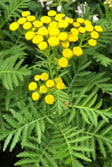
If you are unsure about a plant’s toxicity, ask a botanist or veterinarian for advice.