
Golden shower (Cassia fistula, )
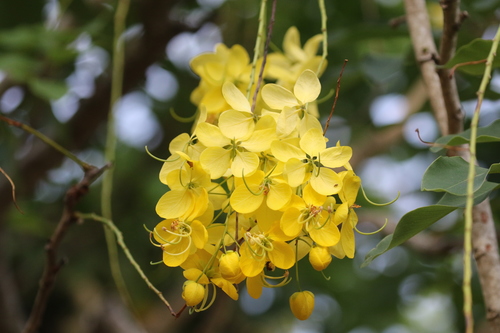
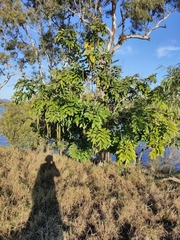
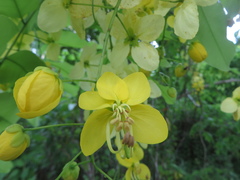
Golden shower (Cassia fistula) is a deciduous tree in the Fabaceae family, native to the Indian subcontinent and Sri Lanka. Hanging clusters of golden-yellow flowers and long cylindrical pods that turn black at maturity distinguish this tree, which is Thailand’s national tree and is called ratchaphruek there.
Read moreGolden shower, Golden shower tree, Purging cassia, Indian laburnum and Pudding-pipe tree



© photo
(c) Robin Gwen Agarwal, some rights reserved (CC BY-NC), uploaded by Robin Gwen Agarwal · cc-by-nc
Tony van Kampen · cc-by
Ben Machado · cc-by-nc
Taken Jul 20, 2021 by Trap Hers (cc-by-sa)
Taken Dec 19, 2019 by Pierre Bonnet (cc-by-sa)
Taken Jul 22, 2022 by Plantae Curacao (cc-by-sa)
Taken Dec 29, 2020 by rajasekhar pandrangi (cc-by-sa)
Taken Jun 26, 2014 by Thomas Delhotal (cc-by-sa)
© copyright of the Board of Trustees of the Royal Botanic Gardens, Kew.


Global distribution
Cassia fistula is native to the Indian subcontinent and Sri Lanka, in dry deciduous lowland forests. Ornamental cultivation has spread it widely through Southeast Asia, East Africa and many tropical and subtropical regions, without a documented invasive status on a broad scale.
- Native2
- Introduced3
- India
- Sri Lanka
- Singapore
- Taiwan
- Kenya
Hexagons: regions where the plant occurs. Green dots: native range.1
Identity
Golden shower (Cassia fistula L., 1753), also known as purging cassia, Indian laburnum or pudding-pipe tree, is a deciduous member of the Fabaceae family. Carl Linnaeus described it in his 1753 Species Plantarum, the foundational text of modern botanical naming. The tree was therefore among the earliest tropical species named under that system. 1 2
The name golden shower tree captures its most striking feature: pendulous clusters appear to pour yellow flowers over branches that still carry few leaves. Older French pharmaceutical names instead refer to the laxative pulp extracted from ripe pods. Those names describe a traditional use rather than the visual effect of the flowers. 5
Recognition
A medium-sized tree, Cassia fistula commonly reaches 10–18 m (33–59 ft) tall and 6–12 m (20–39 ft) wide. Its pinnately compound leaves carry three to eight pairs of oval leaflets. The tree briefly loses this foliage just before flowering, exposing the branches that support the display. 3 5
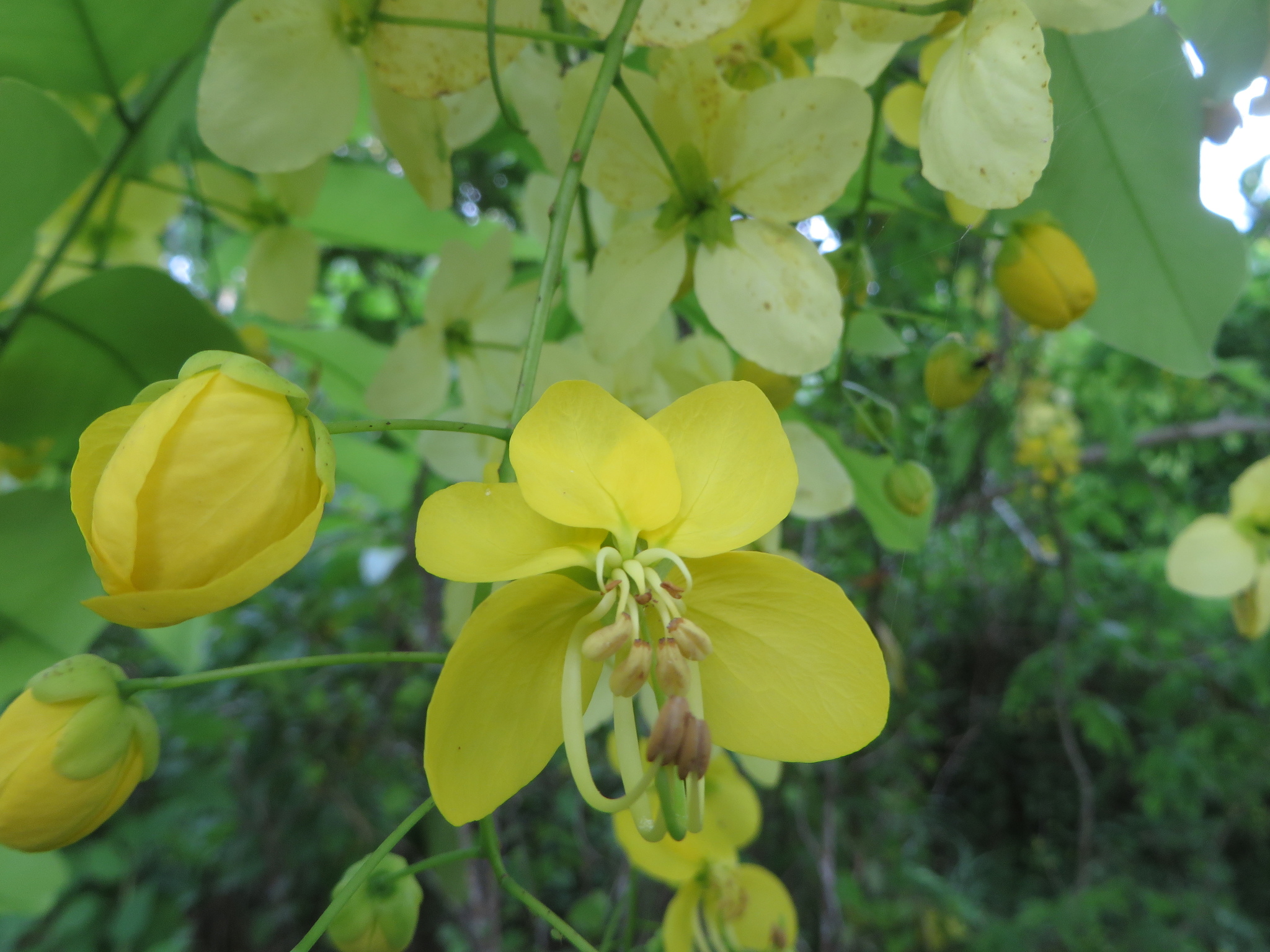
Fragrant flower clusters are conspicuous from a distance. These hanging racemes measure 30–50 cm (12–20 in) and bear golden-yellow flowers with five widely spreading petals. Flowering is reported between April and September, depending on climate; for readers in other hemispheres, local heat and rainfall provide the more useful seasonal guide. 3 5
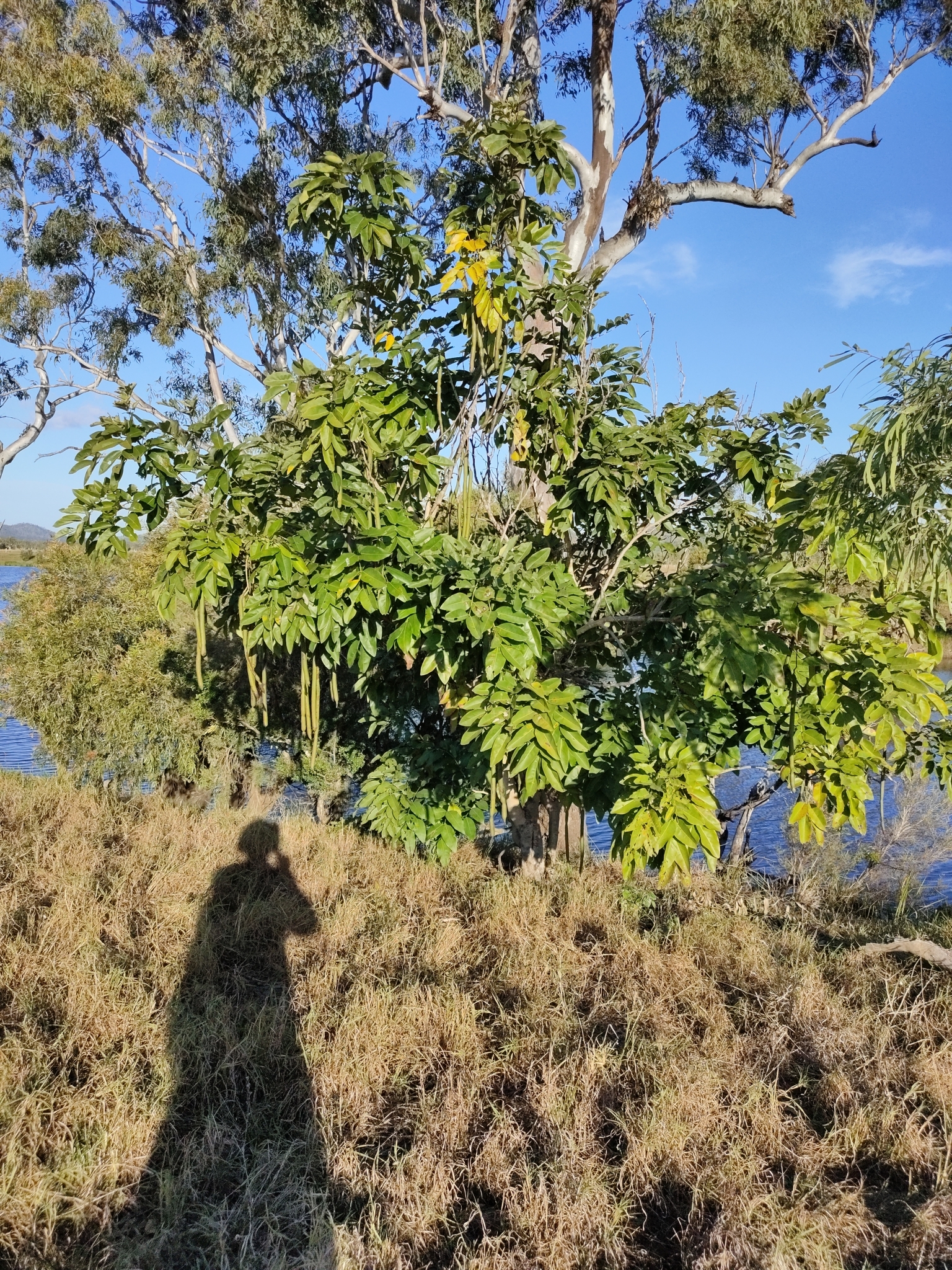
After flowering, cylindrical pods 40–60 cm (16–24 in) long develop, changing from green to black at maturity. Inside, sticky dark-brown pulp is divided into chambers by transverse partitions. The blackened pods remain suspended for months after flowering ends, long after the last petals have fallen. 5 3
Useful taxonomy
The accepted botanical name, Cassia fistula L., provides a stable reference amid its many historical names. The following names have been used for the same species and are now treated as synonyms:
- Cathartocarpus fistula (L.) Pers. (historical synonym)
- Bactyrilobium fistula (L.) Willd. (historical synonym)
- Cassia excelsa Kunth (historical synonym)
- Cassia bonplandiana DC. (historical synonym)
- Cassia fistula var. ovata DC. (historical synonym)
This naming distinction matters when buying a tree. Trade names such as golden shower tree and golden chain can cause confusion with Laburnum anagyroides, a European plant belonging to a different genus. Checking the botanical name helps separate the tropical Cassia from the European laburnum. 1 2
Habitat and range
In its native Indian subcontinent and Sri Lankan range, Cassia fistula occupies dry deciduous lowland forests, rather than the humid forest layer. It readily grows in wooded savannas, forest edges and sunny roadsides. These open habitats help explain its preference for bright exposure in cultivation. 1 4
Cultivation has carried the tree through tropical and subtropical regions, including mainland Southeast Asia and Laos, East Africa through Kenya, and tropical Mexico. In Thailand it is both the national tree and national flower, known as ratchaphruek. That cultural role supports its widespread planting in towns and cities across the country. 5 4
Conditions in its home range provide a useful climate reference: annual rainfall of 500–2,700 mm (20–106 in), concentrated in one rainy season, and average temperatures of 18–29 °C (64–84 °F). A marked alternation between dry and wet seasons helps synchronize flowering. Previous water stress matters more than a fixed calendar date. 4 8
Life cycle and reproduction
An established tree generally begins flowering at 3–8 years. The display returns each warm season, but its strength depends partly on earlier rainfall. Once formed, the pods take several months to become fully black, so flowers and ripe fruit mark different stages of the annual cycle. 3 5
Each seed has a very hard coat that prevents germination until the barrier is broken. Mechanical scarification or prolonged soaking in lukewarm water can produce seedlings within days. Without this preliminary treatment, germination may take months or fail entirely, making the seed coat a practical consideration in propagation. 4
Uses and risks
Spectacular flowering makes ornamental planting the main use of golden shower. It serves as an avenue tree, street shade tree, specimen or urban park tree across Southeast Asia and tropical gardens worldwide. The hard, dense wood also has local uses for furniture, wheels, posts and mortars, a quieter rural role alongside its much more visible ornamental one. 5 3
Pod pulp and leaves contain hydroxyanthracene derivatives, including rhein and chrysophanol, long used in traditional medicine as mild laxatives. The European Food Safety Authority considers these compounds potentially genotoxic and discourages prolonged use, particularly for children under twelve and during pregnancy or nursing. Traditional use does not make unsupervised consumption appropriate. 6 7
Varieties, look-alikes and related plants
Botanists once grouped many species under Cassia that are now divided among Cassia, Senna and Chamaecrista. Cassia fistula is among the species that retain their original genus name in the current classification. Older books and plant labels may therefore group it with trees now placed elsewhere. 1
These plants most often cause confusion:
- Laburnum anagyroides, European laburnum, has three-part leaves and short, flat pods; the shared trade name “golden chain” often causes mix-ups;
- Cassia javanica has flowers that are more pink than yellow and is sometimes sold under similar trade names;
- Senna siamea is another yellow-flowered tree, with flat pods, that was once placed in Cassia.
Pod shape provides the clearest comparison among these trees. Only Cassia fistula produces such long, black cylindrical fruit; the related plants described here have flatter or markedly shorter pods. This feature remains useful well beyond the flowering season, when flower color is no longer available for identification. 2
Main sources
- Plants of the World Online / Kew, Cassia fistula L.
- Integrated Taxonomic Information System, Cassia fistula
- Missouri Botanical Garden Plant Finder, Cassia fistula
- Plants For A Future, Cassia fistula
- NParks FloraFaunaWeb Singapore, Cassia fistula
- EFSA, safety assessment of hydroxyanthracene derivatives in food
- PMC7009633, review of hydroxyanthracene derivatives in laxative plants
- GBIF Backbone Taxonomy, Cassia fistula L.
Frequently asked questions
Is golden shower really Thailand’s national tree?
Yes. Cassia fistula, called ratchaphruek in Thai, is both the national tree and national flower of Thailand. Its yellow flowers are associated with the Thai monarchy.
How can I tell golden shower from Laburnum?
Golden shower has compound leaves with oval leaflets and black cylindrical pods 40–60 cm (16–24 in) long. European laburnum has three-part leaves and short, flat pods. Similar English names, golden chain and golden shower, often cause confusion.
Are Cassia fistula pods toxic?
The pod pulp contains hydroxyanthracenes traditionally used as mild laxatives. Prolonged food use is discouraged, particularly for children under twelve and during pregnancy or nursing.
Does golden shower flower equally well every year?
It generally flowers annually in the warm season, but the intensity varies with rainfall and heat before flowering. Moderate water stress before the dry season often encourages a heavier display.
How big does a golden shower tree get?
It commonly reaches 10–18 m (33–59 ft) tall with a spread of 6–12 m (20–39 ft). Growth is slow in the early years, becoming stronger once the root system is established.
Can golden shower grow in a pot in a temperate climate?
Only in a large, sheltered container with winter protection in a frost-free cool greenhouse. The species tolerates only very brief, light frost. Planting in the ground is realistic only in warm Mediterranean or tropical conditions.
Similar plants
If you are unsure about a plant’s toxicity, ask a botanist or veterinarian for advice.