
Bay laurel (Laurus nobilis, )
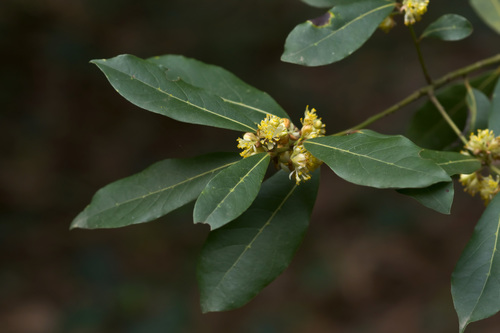
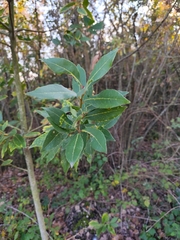
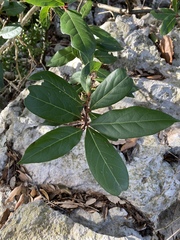
Bay laurel (Laurus nobilis) is an evergreen shrub or small tree in the Lauraceae, native to the Mediterranean basin and western Asia. Separate male and female plants bear small pale yellow spring flowers; pollinated females develop purplish-black fruit in fall. Its aromatic leaves are harvested as a culinary spice.
Read moreBay laurel and sweet bay
Allow a few hours of direct sun per day, preferably morning or evening.
Full sun to light partial shade


© photo
(c) Sarah Gregg, some rights reserved (CC BY-NC-SA) · cc-by-nc-sa
Francesco Santoro · cc-by
Thomas Dreux · cc-by
Taken Jan 30, 2022 by Cyril Piou (cc-by-sa)
Taken Oct 20, 2021 by Jean-René Girardeau (cc-by-sa)
Taken Mar 26, 2022 by Gaël Covain (cc-by-sa)
Taken Apr 3, 2018 by Pep Secem (cc-by-sa)
Taken Apr 8, 2022 by Tristan Jaton-Maria (cc-by-sa)
© copyright of the Board of Trustees of the Royal Botanic Gardens, Kew.




Global distribution
The native range of Laurus nobilis surrounds the Mediterranean basin and western Asia, from southern Europe to North Africa. Widely grown beyond this range for ornament and cooking, it sometimes self-seeds in neglected gardens in mild climates.
- Native6
- Invasive1
- France
- Spain
- Italy
- Greece
- Turkey
- Morocco
- New Zealand
Hexagons: regions where the plant occurs. Green dots: native range.1
Identity
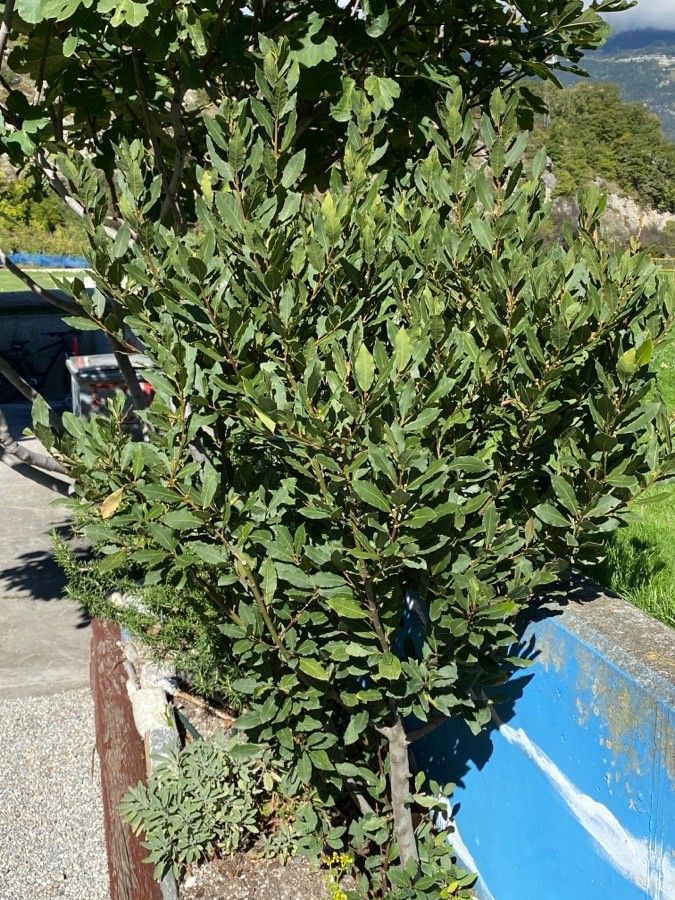
Aromatic leaves have made bay laurel (Laurus nobilis L., 1753), also called sweet bay, a familiar culinary shrub. This evergreen shrub or small tree belongs to Laurus in the Lauraceae. In the ground it develops its mature 3–12 m (10–39 ft) habit in 5–10 years; growth slows markedly in a container, where it seldom exceeds 2 m (6.6 ft). Dried leaves have flavored sauces, stocks and marinades since Mediterranean antiquity. 4 1
In ancient Greece, laurel was sacred to Apollo: winners of competitions and poets received crowns woven from its branches. This symbolism survives in the French words lauréat and baccalauréat, derived from the Latin bacca laurea, the “laurel berry” awarded to scholars and victors.
Recognition
Separate male and female plants make Laurus nobilis dioecious, explaining why some specimens flower every year without ever fruiting. In the ground in a favorable climate it commonly reaches 3–8 m (10–26 ft), with reports up to 12 m (39 ft) for an unpruned tree. In a pot or regularly clipped hedge it often remains below 2–3 m (6.6–10 ft). 2 4
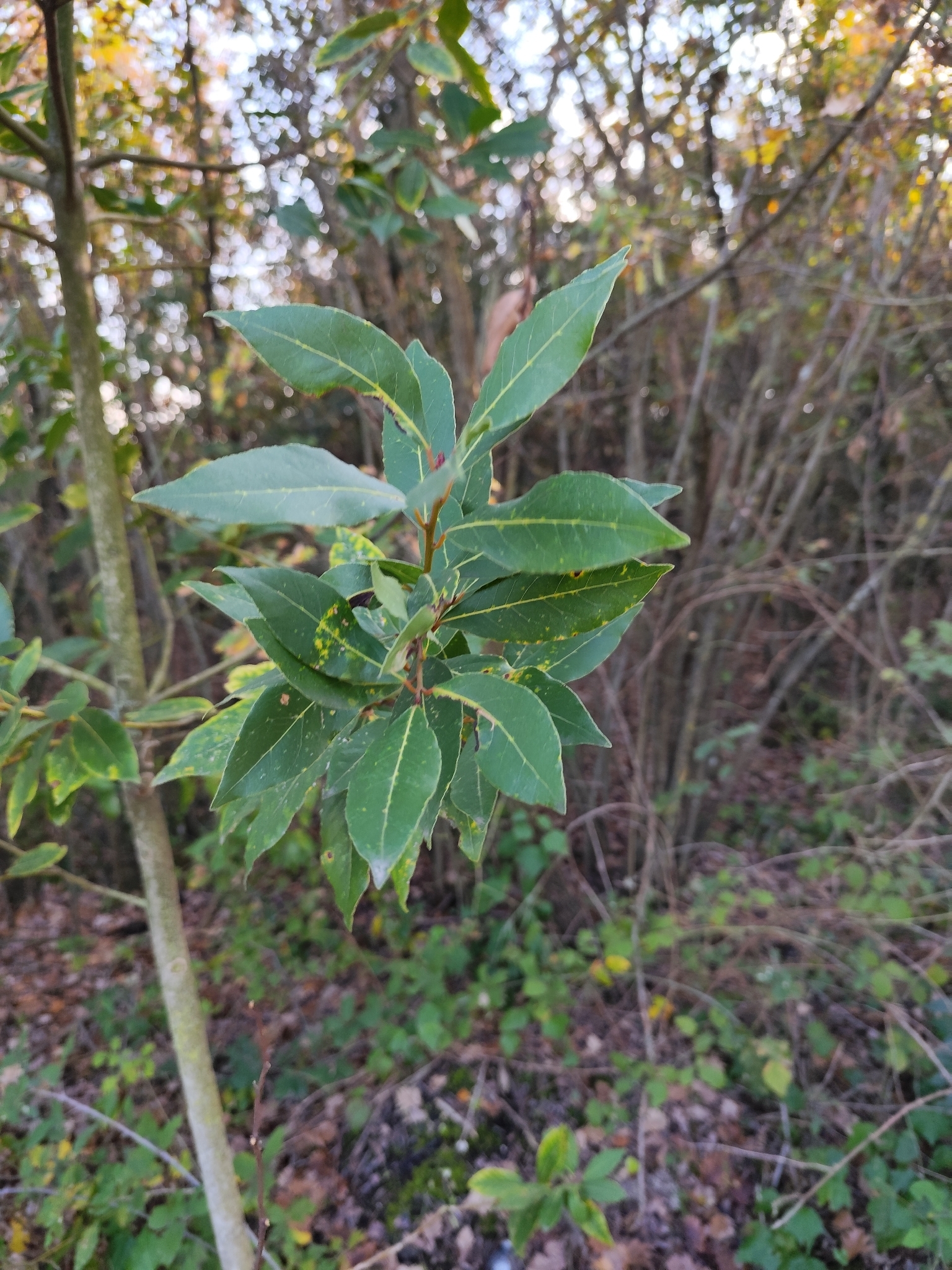
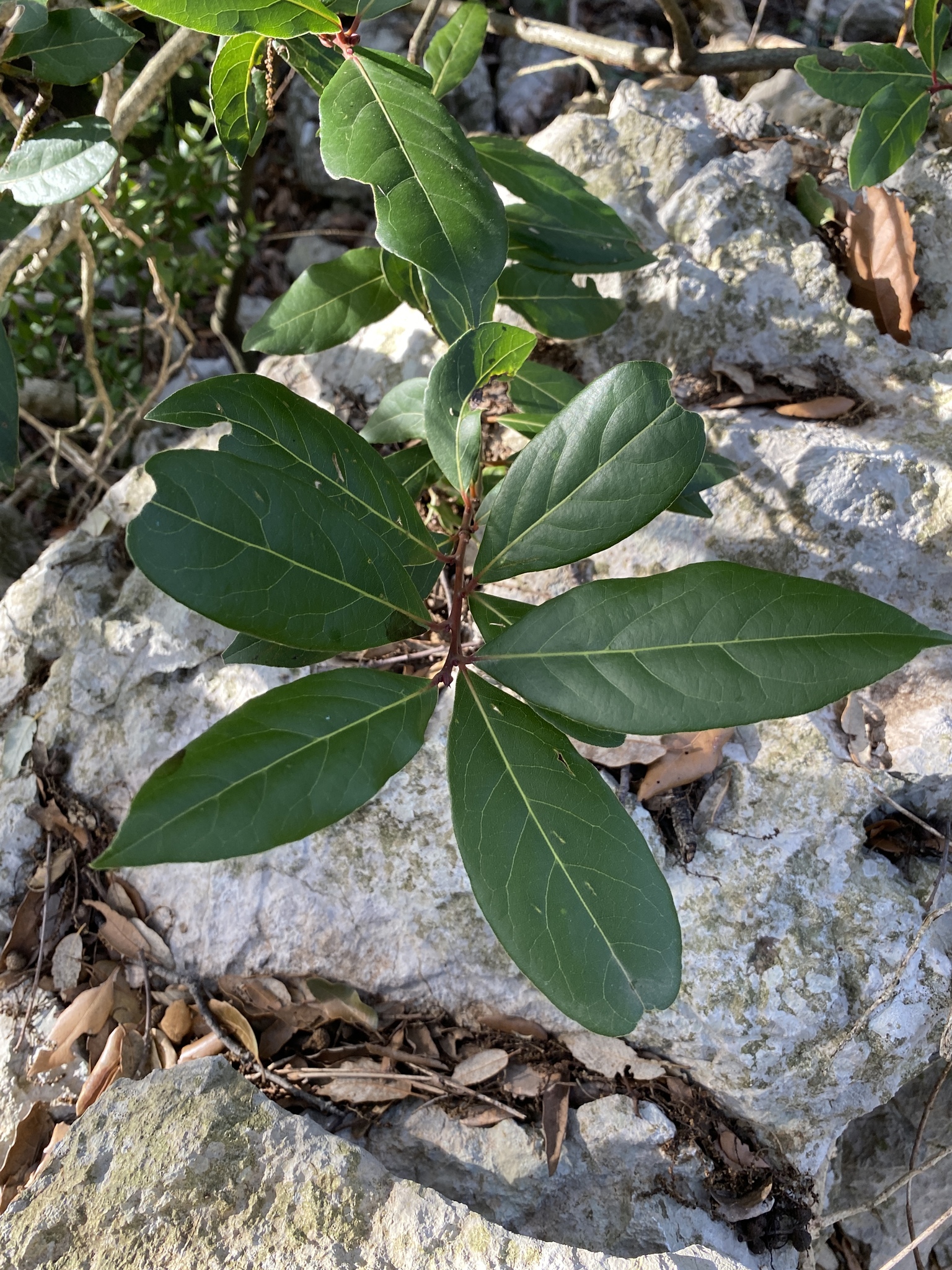
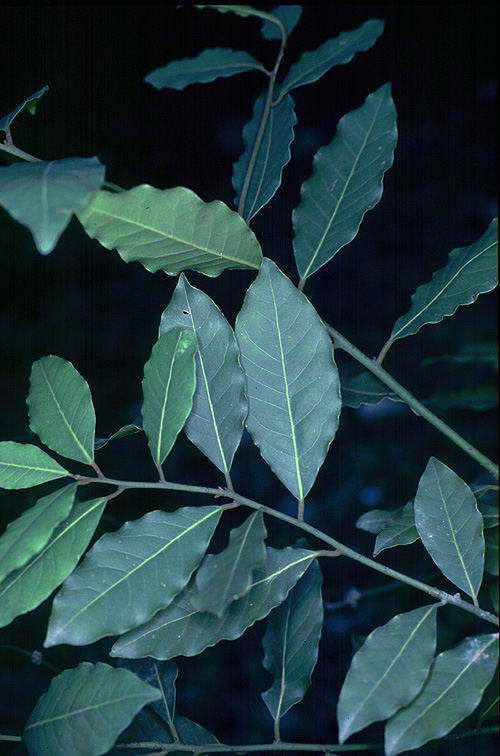
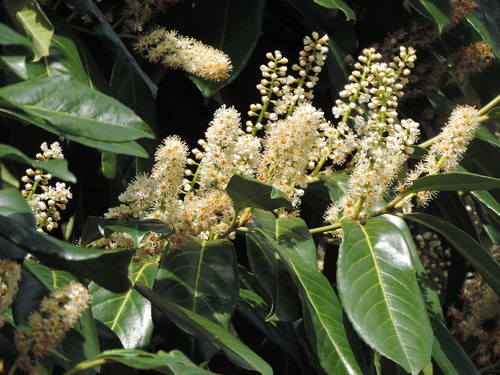
Alternate, lance-shaped, leathery leaves measure 5–10 cm (2–4 in) long. Dark glossy green above and duller beneath, they release a distinct aroma when crushed. This feature alone cannot rule out confusion with the superficially similar cherry laurel or oleander; cherry laurel also releases an odor, described as cherry-like when its leaves are bruised. 3 4 10
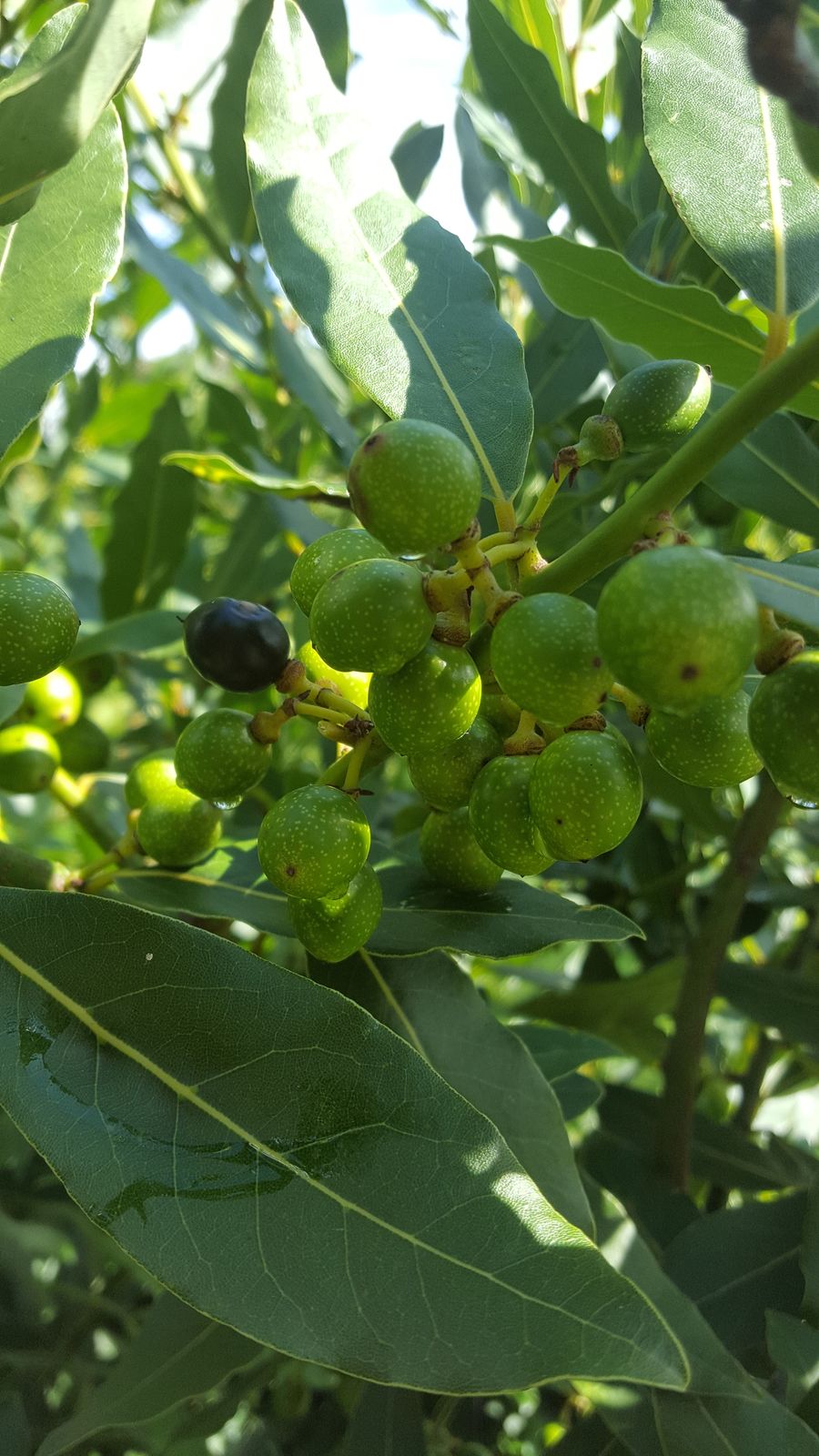
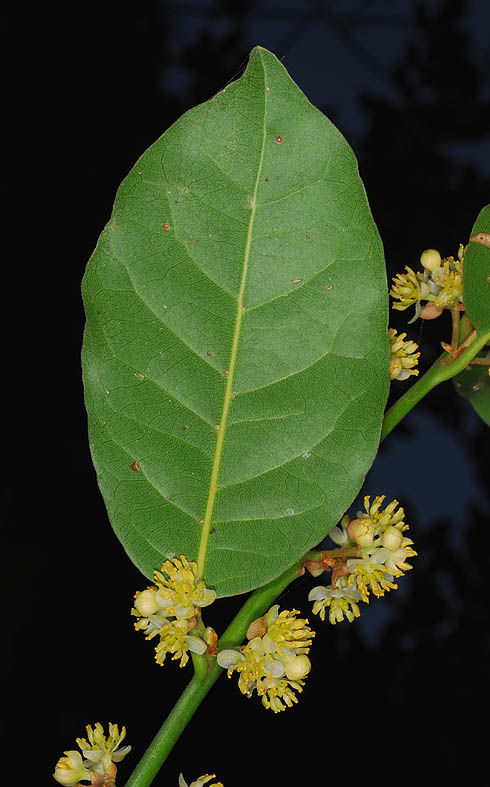
Small pale yellow to cream flowers open in umbels in the leaf axils in spring. On a pollinated female plant they develop into egg-shaped drupes about 1–1.5 cm (0.4–0.6 in) long, initially green and then purplish black when ripe in fall. 2 3
Useful taxonomy
POWO/WCVP accepts Laurus nobilis L., the only member of the genus widely cultivated outside its native range. Botanical literature has described several varieties and forms; many remain synonyms or simple foliage variants without stable horticultural status:
- Laurus nobilis var. angustifolia Nees (historical botanical name)
- Laurus nobilis var. latifolia Risso (historical botanical name)
- Laurus nobilis f. undulata Meisn. (historical botanical name)
- Laurus nobilis var. variegata Radogizky (historical botanical name)
The genus also includes Laurus azorica and Laurus novocanariensis, two close Macaronesian species long included within L. nobilis before being separated. They are still frequently confused in older nursery catalogs. 1
Habitat and range
Its native range follows the Mediterranean basin and western Asia, including Spain, southern France, Italy, Greece, Turkey and North Africa. It occupies moist ravines, shaded rocks, coastal scrub and old walls below 800 m (2,625 ft) elevation. 4 3
IUCN lists Laurus nobilis as Least Concern, reflecting its wide range and generally stable population despite local pressures on some stands. 6
Planting for ornament and cooking has taken bay laurel well beyond its native range. It sometimes seeds itself in neglected gardens in mild climates, with birds eating its black fruits and dispersing the seeds. In New Zealand it is among monitored invasive alien plants, a status distinct from ornamental cultivation elsewhere. 9
Life cycle and reproduction
In its Northern Hemisphere seasonal setting, flowering falls between March and May, depending on climate. Male and female flowers occur on separate plants; without a male nearby, an isolated female can flower annually without producing a single berry. Once set, fruits need several months to ripen, turning purplish black in late summer and fall. 3 2
Propagation chiefly uses seed sown in fall, with slow, irregular germination, or semi-ripe cuttings taken in summer. Harder wood cuttings taken toward the end of the year root more slowly and often need more than a year. In other hemispheres, these seasonal stages provide the guide rather than the named months. 4
Uses and risks
Cooking is its principal use: dried leaves flavor sauces, stocks, marinades and the classic bouquet garni. Remove the leaf before serving. Swallowed whole, it remains tough and may irritate or obstruct the digestive tract. 4 5
Foliage and essential oils rich in eugenol are toxic to cats, dogs and horses. Ingestion causes vomiting and diarrhea, with a risk of obstruction if large quantities of whole leaves are swallowed. 5
Ornamental uses include clipped hedges, container topiary and individual shrubs in Mediterranean gardens. Tolerance of acidic or calcareous soil between pH 5.5 and 8, together with resistance to salt spray, makes it a familiar choice for entrances and sheltered coastal terraces. 2
Varieties, look-alikes and related plants
Two horticultural selections stand out: 'Aurea', with golden foliage more pronounced in winter and spring than midsummer, and f. angustifolia, the willow-leaved form with long, narrow, wavy leaves. Both have received the RHS Award of Garden Merit. 7 8
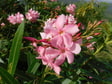
Two plants are regularly mistaken for it: cherry laurel (Prunus laurocerasus), a member of the Rosaceae with leaves toxic through hydrocyanic acid, and oleander (Nerium oleander), a highly toxic member of the Apocynaceae with opposite or whorled leaves. Crushed bay leaves release a distinct aroma, but cherry laurel also releases a cherry odor when bruised. Smell alone therefore does not provide a reliable identification or guarantee that a leaf is suitable for cooking. 10
Main sources
- Plants of the World Online / Kew, Laurus nobilis L.
- Royal Horticultural Society, Laurus nobilis (bay)
- Missouri Botanical Garden Plant Finder, Laurus nobilis
- Plants For A Future, Laurus nobilis
- ASPCA, Bay Laurel toxicity entry
- IUCN Red List, Laurus nobilis assessment (Khela & Wilson, 2018)
- Royal Horticultural Society, Laurus nobilis 'Aurea'
- Royal Horticultural Society, Laurus nobilis f. angustifolia
- New Zealand Plant Conservation Network, Laurus nobilis
- NC State Extension, Prunus laurocerasus
Frequently asked questions
Is bay laurel the same plant as oleander?
No. Bay laurel (Laurus nobilis, Lauraceae) and oleander (Nerium oleander, Apocynaceae) share only a common-name association. Oleander is highly toxic, with opposite or whorled, non-aromatic leaves.
Is bay laurel the same plant as cherry laurel?
No. Cherry laurel (Prunus laurocerasus, Rosaceae) has leaves that are toxic through hydrocyanic acid and release a cherry odor when bruised. Smell alone therefore cannot reliably distinguish the two plants or confirm that a leaf is suitable for cooking.
Is bay laurel toxic to cats and dogs?
Yes. Foliage and essential oils rich in eugenol are toxic to cats, dogs and horses according to the ASPCA, causing vomiting and diarrhea if ingested.
Can bay laurel leaves be eaten?
Leaves flavor food during cooking but should always be removed before serving. Swallowed whole, a leaf stays tough and may irritate or obstruct the digestive tract.
Why does my bay never produce fruit?
Laurus nobilis is dioecious, with male and female flowers on separate plants. An isolated specimen can flower without fruiting; a male and a female need to grow near each other to produce berries.
How does 'Aurea' differ from ordinary bay laurel?
The cultivar 'Aurea' has golden foliage, brightest in winter and spring. Its growing requirements remain those of the typical species; only the foliage differs.
Where does the name bay laurel come from?
Its culinary use explains the French name laurier-sauce: dried leaves flavor sauces, stocks and marinades. The scientific name Laurus nobilis literally means noble laurel in Latin.
Similar plants
If you are unsure about a plant’s toxicity, ask a botanist or veterinarian for advice.