
Olive (Olea europaea, )
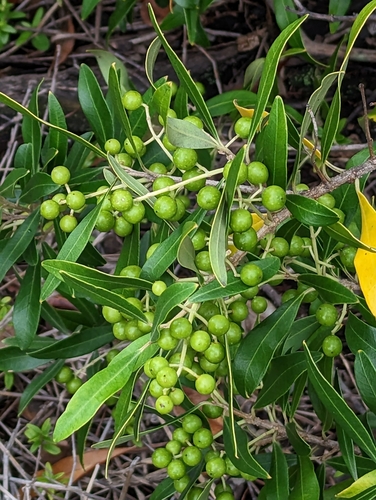
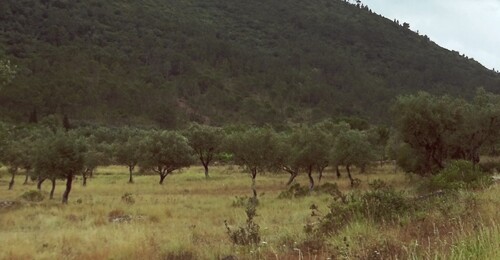
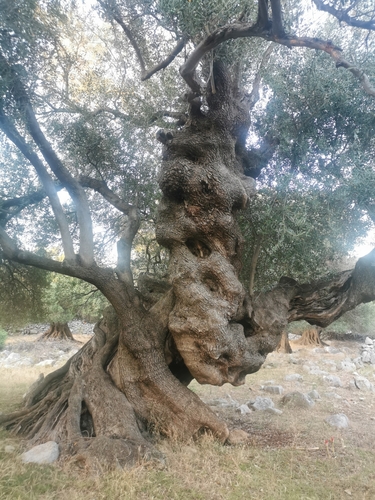
The olive (Olea europaea L.), also called common or European olive, is an evergreen tree or large shrub in the olive family, Oleaceae. In the broad sense the species spans several subspecies from Africa and the Mediterranean Basin to south-central China; in cultivation, most people meet the Mediterranean fruiting olive, selected for its fruit, its oil and its value in the landscape.
Read moreCommon olive, European olive, Cultivated olive and Olive tree
Allow a few hours of direct sun per day, preferably morning or evening.
Global distribution
POWO treats Olea europaea in the broad sense as native to Africa and the Mediterranean Basin east to south-central China. The records for France and Corsica are introductions; no French invasive status has been published.
- Native3
- Introduced3
- Invasive3
- Mediterranean Basin
- Africa
- South-central China
- Metropolitan France
- Corsica
- Hawaii
- Southern California
- Australia
- New Zealand
Hexagons: sourced regions. Green dots: native range. Statuses according to POWO (Kew).
Identity
Olea europaea L. is the accepted name of the olive in POWO/WCVP. Linnaeus published it in Species Plantarum in 1753, and the species belongs to Oleaceae, in the order Lamiales. 1 2
Taxonomic scale is what matters here. Olea europaea in the broad sense covers several subspecies, while the cultivated tree of Mediterranean groves is generally placed in the Olea europaea subsp. europaea complex. This account deals with the species as a whole, but keeps the cultivated tree, the wild forms and the prepared fruit apart throughout. 1 3
Names such as olive, common olive and European olive are handy, yet they can mask that diversity. In English, "olive" may mean the tree, the fruit or the color, which is why many gardeners say olive tree when they mean the plant. For identification or purchase, the binomial Olea europaea plus the cultivar name is more reliable than the common name alone. 4 5
Recognition
A slow-growing evergreen, the olive forms a tree or large shrub. RHS describes a sturdy, much-branched habit reaching roughly 4.5–9 m (15–30 ft), with narrow, leathery leaves that are silvery beneath. NC State gives a similar range in cultivation, about 6–9 m (20–30 ft) tall and 4.5–7.5 m (15–25 ft) wide. 3 5
Leaves are opposite, simple, elliptic to lanceolate, gray-green above and silvery below. Young trunks are gray and smooth; with age the bark becomes fissured, knotted and twisted. That pairing of narrow evergreen foliage and gnarled old wood identifies the olive better than a single fruit does. 5
The flowers are small, white to cream, and usually borne in axillary panicles. The fruit is an oval drupe, green at first, then purple to black when ripe depending on cultivar and harvest stage. NC State gives drupes of about 4 cm (1.5 in); RHS points out that many cultivars have been selected from the species. 3 5
Useful taxonomy
POWO accepts Olea europaea L. as a species and lists seven accepted subspecies, among them subsp. europaea, subsp. africana, subsp. cuspidata, subsp. laperrinei, plus Macaronesian and North African subspecies. The WCVP data consulted show the same overall structure and describe subsp. europaea as a Mediterranean cultigen. 1 2
Direct synonyms of the species in the POWO sense are few, but historical names for varieties and agricultural forms abound. The following may turn up in databases or older literature:
- Olea pallida Salisb.
- Olea sativa Hoffmanns. & Link
- Olea europaea var. sylvestris (Mill.) Lehr
- Olea europaea var. oleaster (Hoffmanns. & Link) A.DC.
- Olea europaea proles sativa Rouy
These names help with reading labels and older texts. They do not turn a garden olive into a different species. In practice the useful hierarchy is usually species, then subspecies or cultivated complex, then cultivar. 1 6
Habitat and range
For Olea europaea in the broad sense, POWO records a very wide native range: Africa, the Mediterranean Basin and Asia east to south-central China. The same source lists introductions in several regions, including France, Corsica, Hawaii, New Zealand and parts of the Americas. 1
Much of that breadth comes from the subspecies. The cultivated Mediterranean olive should not be conflated with every wild African, Saharan, Macaronesian or Asian form included in the species in the broad sense. That explains how the tree can feel so familiar in cultivation while being taxonomically far wider than a single Mediterranean crop plant. 2 4
In the garden, the ecology that counts is simple: full sun, bright open air, very free-draining soil, a hot and fairly dry summer, and a winter that is mild yet cool enough to trigger flowering. NC State notes that olives thrive with hot, dry summers and mild, wet winters, and become drought tolerant once established. 5 3
Life cycle, cultivation and harvest
Although the olive is evergreen, flowering and fruiting hinge on climate, age, cultivar and pollination. NC State reports that it needs about two months of cool temperatures, in the range of roughly 4–10 °C (39–50 °F), to flower, and recommends two varieties when a better crop is the goal. 5
RHS recommends deep, fertile, sharply drained soil in full sun. Under glass or in a large container, the advice is a bright, mineral potting mix, with mostly light pruning to keep the size in check. Propagation is by seed or semi-ripe cuttings, but seedlings do not reliably reproduce a named cultivar. 3
Olives can be picked green or riper, depending on their intended use and preparation. On a patio, an ornamental tree and a productive grove are two different things: a potted specimen can look good without giving a usable crop, especially if it lacks direct sun or a pollination partner. 5 3
Uses, edibility and risks
Two uses dominate: a fruit tree for olives and oil, and an ornamental tree for Mediterranean-type climates. NC State also mentions containers, bonsai and landscape planting, while POWO notes food, social, environmental, fuel and medicinal uses without giving any workable medicinal protocol. No medicinal advice is offered here. 5 1
The fruit is edible, but not in the sense of a raw fruit picked and bitten straight from the tree. The International Olive Council describes the olive as a drupe containing oleuropein, which is very bitter; table olives are processed with brine, rinsing, fermentation or alkaline solutions, depending on the style. 7
Keeping that distinction in mind avoids two mistakes. The tree is not a toxic plant in the usual houseplant sense, but a table olive is a processed food, often salty, sometimes with its pit, herbs or brine. For children and pets, the practical risk comes mainly from the pit, the salt, sauces, the quantity eaten or garden treatments, not from any specific botanical toxin on record. 7 8
Toxicity and invasiveness
Caution, rather than a clean bill of health, is the right stance. Gardeners' World states that no toxic effects are reported for Olea europaea, including for cats, dogs, horses, livestock and people. The ASPCA list consulted under the letter O, however, has no direct entry for "Olive" or Olea europaea, and the ASPCA stresses that its list is not exhaustive. 8 9
In practice, three things need separating: the living tree, the prepared fruit and olive products. Leaves and twigs are not presented as food; table olives should stay an occasional food suited to people; pets should be kept away from pits, salty marinades, garlic, pesticides and large amounts of plant material. 7 9
Cultivated olives are not automatically invasive everywhere. NC State nonetheless reports that the tree can form dense stands and is recorded as invasive in Australia, New Zealand, Hawaii and Southern California. Cal-IPC describes the species as naturalized in California and able to invade grasslands and scrub, and advises caution near natural areas. 5 10
For metropolitan France, the sources used here do not support a national invasive status. No invasive alien species status is recorded there, although POWO and Trefle list France and Corsica among the regions of introduction. 1 4 Elsewhere, check local invasive-plant lists before planting near wild land.
Cultivars, forms and look-alikes
Olive cultivars are agricultural or ornamental varieties, not separate species. RHS cites many selections, including 'Arbequina', 'Picholine', 'Aglandau', 'Frantoio', 'Leccino', 'Manzanillo', 'Picual' and 'Cailletier'. NC State also lists ornamental forms such as 'Swan Hill', which bears neither flowers nor fruit, and the compact 'Little Ollie'. 3 5
Choosing a cultivar decides the use: oil, table olives, a patio tree, a compact form, a heavier cropper or a less messy tree. Next to a patio, a form that fruits little or not at all can make more sense than a productive cultivar whose olives stain paving. 5
The most useful mix-ups to rule out are:
- Elaeagnus angustifolia, Russian olive, which is not an Olea;
- Elaeagnus umbellata, autumn olive, also outside the genus Olea;
- Nerium oleander, oleander, whose name has nothing to do with the olive;
- the wild subspecies of Olea europaea, taxonomically relevant but rarely named in ordinary garden centers.
For identification, planting or diagnosis, check the full label: Olea europaea, the subspecies if given, then the cultivar. The word "olive" on its own can point to the fruit, the tree, a commercial false olive or another species with a similar English name. 4 3
Main sources
- Plants of the World Online / Kew, Olea europaea L.
- Royal Horticultural Society, Olea europaea common olive
- NC State Extension Gardener Plant Toolbox, Olea europaea
- International Olive Council, table olives
- California Invasive Plant Council, Olea europaea profile
- BBC Gardeners' World Magazine, Olea europaea
- ASPCA Toxic and Non-Toxic Plants list, letter O
Frequently asked questions
Is the olive tree toxic to cats or dogs?
No specific toxicity is recorded for Olea europaea, and Gardeners' World reports no toxic effects. Caution is still sensible with pits, brine, salt, garden treatments and any large amount eaten.
Can you eat an olive straight off the tree?
The olive is edible once prepared, but the International Olive Council notes that oleuropein makes it intensely bitter, and table olives are treated, rinsed, brined or fermented.
What is the difference between cultivated and wild olives?
The trade deals mostly in cultivars of the Mediterranean olive. Olea europaea in the broad sense also includes several wild subspecies from Africa, Macaronesia, the Sahara and Asia.
Why is my olive tree not producing olives?
It may lack full sun, a cool winter, age, water at the right time or cross-pollination. NC State recommends planting two varieties for a better crop.
Is the olive invasive?
No invasive status has been published for France. NC State and Cal-IPC, however, report naturalization and local impacts in Australia, New Zealand, Hawaii and Southern California.
Can a potted olive tree live indoors?
Only in a very bright spot that stays cool in winter, ideally a cold greenhouse or a sunroom. A warm, dim living room tends to cause leaf drop and no flowering.
Similar plants
Botanical data compiled from reference sources (RHS, Kew Gardens, POWO). This profile is for guidance only and is not a substitute for advice from a botanist or veterinarian if you have concerns about toxicity.