
Care guide
Olive tree care
Olea europaea
An olive rarely dies of thirst: standing water and cold roots kill it. Give it full sun, free-draining soil and light early-spring pruning. In pots, watch the rootball more than the foliage: roots freeze around −6 °C (21 °F), well before leaves.
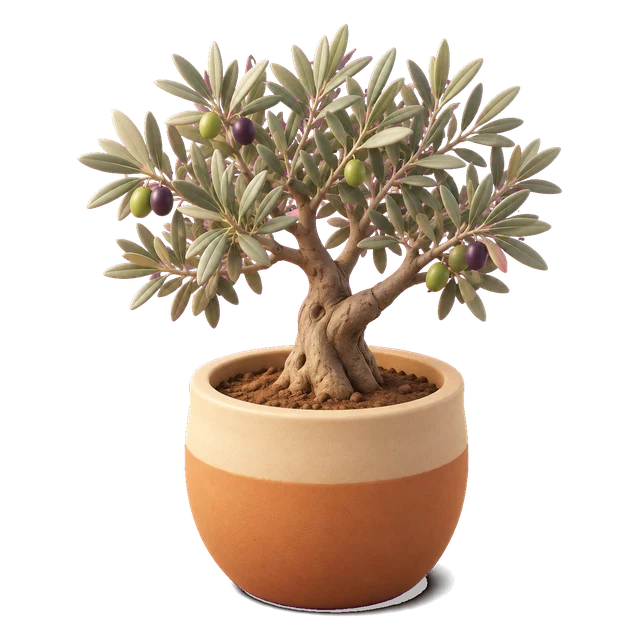
How often should you water an olive tree?
In the ground, an established olive (Olea europaea) needs no watering except in prolonged drought; in pots, water thoroughly once the medium is dry below the surface, never onto an already damp rootball. Olive growers sum it up: olive likes water that passes through, not water that stays
. 1
10 L every 30 days
No watering once established, except during prolonged drought
20 L per plant every 15 days
Water thoroughly as soon as the soil is dry down to one-third of the pot’s height
Check once a week; never water if frost is forecast
Thirst is therefore not the real danger. Standing water causes root suffocation, common in clay soil, and France Olive identifies a classic trap: on this soil, an olive planted in a watered lawn very often receives too much water. 1
- During local active growth, March to September in France Olive’s French seasonal example: roots should be in slightly moist, not waterlogged soil. 1
- Two sensitive periods: spring before flowering and late summer, when olives start making oil. Water shortage then costs the crop. 2
- The planting year: 20 liters (5.3 US gallons) every fortnight in spring and summer until the first fall rains. From year two, roots suffice and these applications stop. 3
How can you tell an olive needs water?
Look at soil, not leaves. In the garden, dig around twenty centimeters (8 in) down in the root zone: moist soil means wait; dry, dusty soil means water. 2 In pots, push a finger into the medium: if dry below the surface, water until it drains through the base, then empty the saucer.
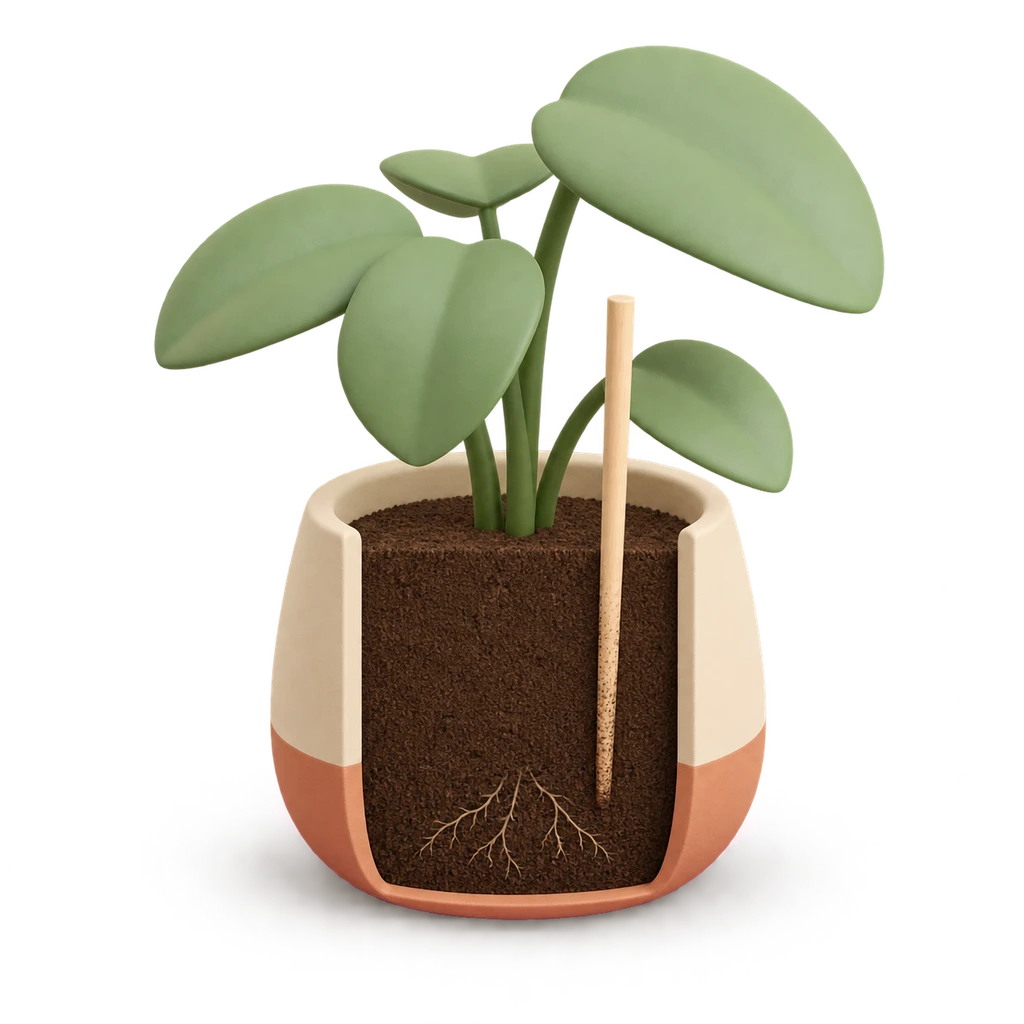
Potting mix dry to 15% of the pot height: still moist
The finger test
In a pot, push your finger one-third of the way down the pot: if it is dry at that depth, water; if it is still moist, wait.
In the RHS’s UK aspect example, a south-facing potted olive drinks much more than one in the ground: in summer, July in that calendar, its rootball may dry in a few days. Place pots on supports so excess water escapes. 4 Seasonal timing is detailed in potted olive care, and signs of wet soil under overwatering.
Where should you put an olive tree?
In full sun, sheltered from cold wind, facing south in the sources’ French and UK growing contexts: this is the only position where olive grows, flowers and fruits. It is sun-loving, and production depends on day length. 5 The RHS specifies full sun, a southerly aspect and shelter. 6
Garden exposure
Choose the side of the house where olive will grow.
| Position | How it suits olive |
|---|---|
| Due south in the source’s UK aspect example, near a sunny wall | Ideal: reflected heat and wind shelter4 |
| East or west, sun for part of the day | Possible for ornament; less light, fewer olives5 |
| Hollow or valley bottom | Avoid: cold air collects on frosty nights7 |
| Heated living room all winter | Avoid: no winter chill, no flowers8 |
Hollows merit more explanation. France Olive advises against planting where cold air descends and stagnates: a dense hedge downhill can worsen risk by blocking its flow. 7
For the rest of a hot garden or terrace, the plants for south-facing positions selection compares hardiness, watering and drainage.
When and how should you plant an olive in a pot or garden?
Plant outside local frosty periods, between mid-March and mid-June in France Olive’s French seasonal example, in fast-draining soil near a sunny wall; stake until well rooted. During the first months after planting, young trees poorly tolerate temperatures below −6 °C (21 °F), explaining the calendar. 9 4
The RHS asks for deep, fertile, very well-drained soil; chalk, clay, loam or sand are suitable if water does not stagnate. 6 Main roots stay within the top 80 centimeters (31 in): a wide hole matters more than a deep one. 5 Backfill to form a basin around 50 cm (20 in) across, then fill it with water to settle soil against roots. 9
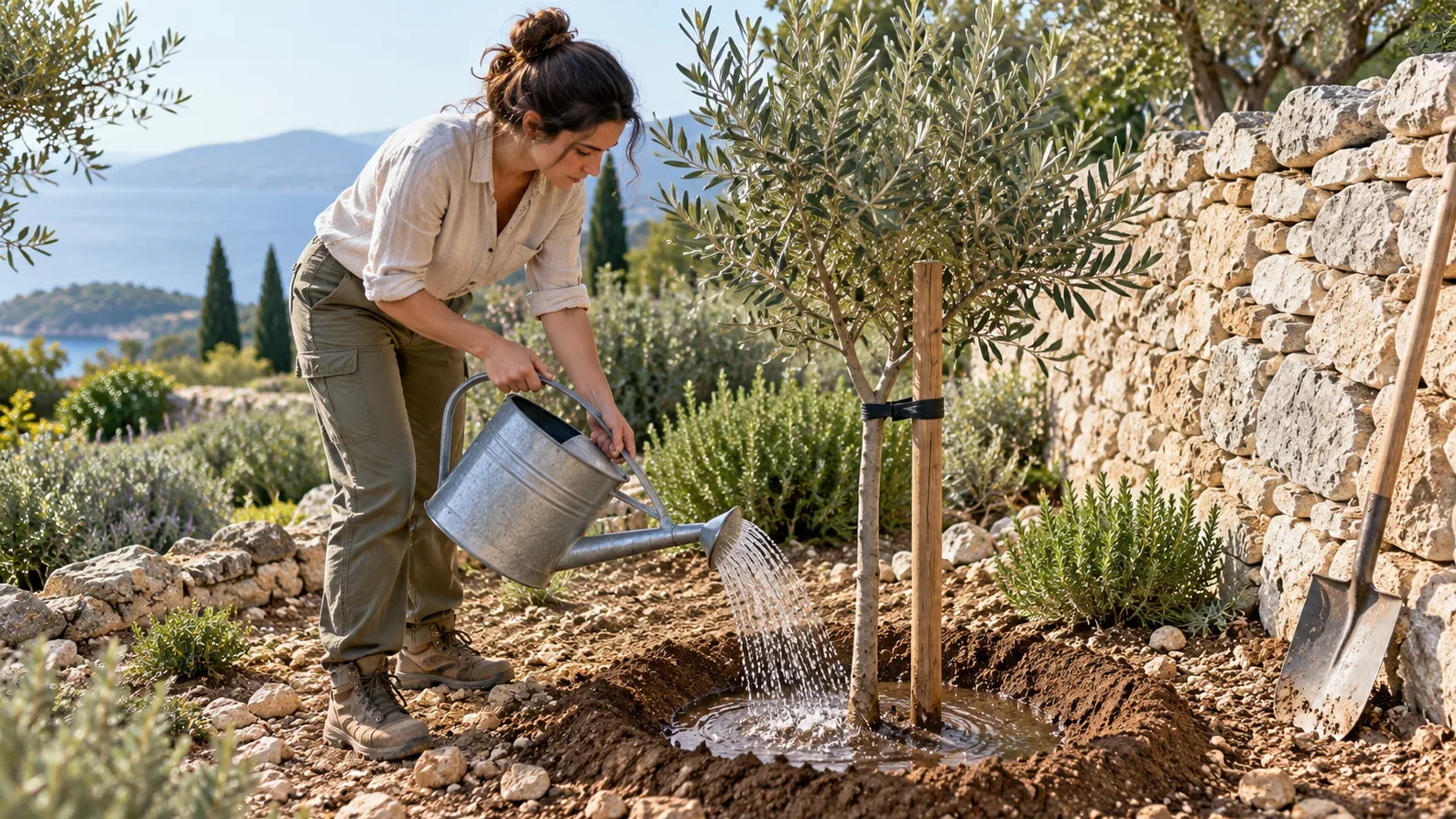
- When removing the pot: if roots circle the rootball, untangle them before planting, otherwise they continue circling. 9
- Early years: prune lightly, limited to the lower third of branches, until the trunk is clear for 60 to 80 cm (24 to 31 in). 3
For pots, the RHS recommends 30 to 35 cm (12 to 14 in) diameter, or room for roots to fit comfortably, filled with gritty loam-based potting mix enriched with slow-release fertilizer. 4
Regional choice follows frost thresholds. Where winter regularly falls below −8 °C (18 °F), a young in-ground olive risks its life each winter. 7 Outside southern France, a pot brought in on frosty nights is safest in early years; RHS reserves cool-climate ground planting for very sheltered urban gardens. 4
Diamètre, terre, arrosage d'été et abri d'hiver : growing an olive tree in a pot demande des gestes que la pleine terre ignore.
Which fertilizer for olive, and when?
In France Olive’s French seasonal example, complete fertilizer (nitrogen, phosphorus, potassium), spread beneath the canopy in late March at packet doses, suffices for a garden olive. Time feeding by local growth. France Olive notes that a well-pruned but underfed tree grows very slowly and yields little: feeding matters as much as pruning. 10
- Fertilizer
- BalancedOrganic soil amendment, slow-release, liquidSource: France Olive
- Feeding
- FebruaryOrganic fertiliser or manure · mid-February, as winter ends in the source’s temperate Northern Hemisphere calendar · in the groundSource: France Olive
- Feeding
- MarchComplete fertiliser · late March in the source’s temperate Northern Hemisphere calendar, beneath the canopy · in the groundSource: France Olive
- Feeding
- In winterCompost or strawy manure · 30–40 kg (about 66–88 lb) per tree, every 4–5 years · in the groundSource: France Olive
- Feeding
- During active growthBalanced liquid fertiliser · in a potSource: Royal Horticultural Society
- No fertilizer
- In winterfrom late summer to mid-spring · in a potSource: Royal Horticultural Society
- No fertilizer
- In autumnNo nitrogen · an autumn application increases vulnerability to frostSource: France Olive
- Frequency
- Once a month during growthin a potSource: Royal Horticultural Society
- Frequency
- Two applications of organic fertiliser a yearolive tree watered in a basin around its base · in the groundSource: France Olive
- Avoid
- Excess nitrogen, exceeding the dose on the label, fresh manureSource: France Olive
- In the garden: complete or organo-mineral olive fertilizer in late March in France Olive’s French seasonal calendar, spread beneath the canopy where roots work, preferably before rain. 10 2
- In winter, every 4 to 5 years: 30 to 40 kg (66 to 88 lb) of compost or straw-rich manure per tree, especially on bare soil. 2
- Young olive: phosphorus-rich fertilizer supports rooting; moderate nitrogen if already vigorous, and leave potash until the first crops. 10
- In pots: balanced liquid feed once a month during growth, since the medium depletes quickly. 4
An olive basin-watered at the base may receive two organic fertilizer applications annually. 2 After spring frost, do not cut off supplies: France Olive asks for continued nitrogen to support new leaves. 7 The French source’s monthly calendar places applications from March to August; use local growth and frost to interpret those months.
Granulés, organique ou liquide selon l'âge de l'arbre : feeding an olive tree se raisonne sur la récolte attendue.
When and how should you prune an olive?
Prune annually in early spring, never removing more than 30% of foliage, and keep 3 to 5 well-distributed main limbs. This is France Olive's guidance for amateur growers. 2 The RHS specifies the same early-spring timing to maintain a neat outline and remove dead or diseased wood. 4
The trap: olive flowers form in leaf axils on one-year-old wood. 5 Shortening all last year's shoots means cutting off next summer's olives. Thin more than you shorten.
- Open the center: remove watershoots from the center and tops of main limbs, creating a “light well”. 2
- Improve airflow: remove crossing branches and old, bare, hanging shoots. 2
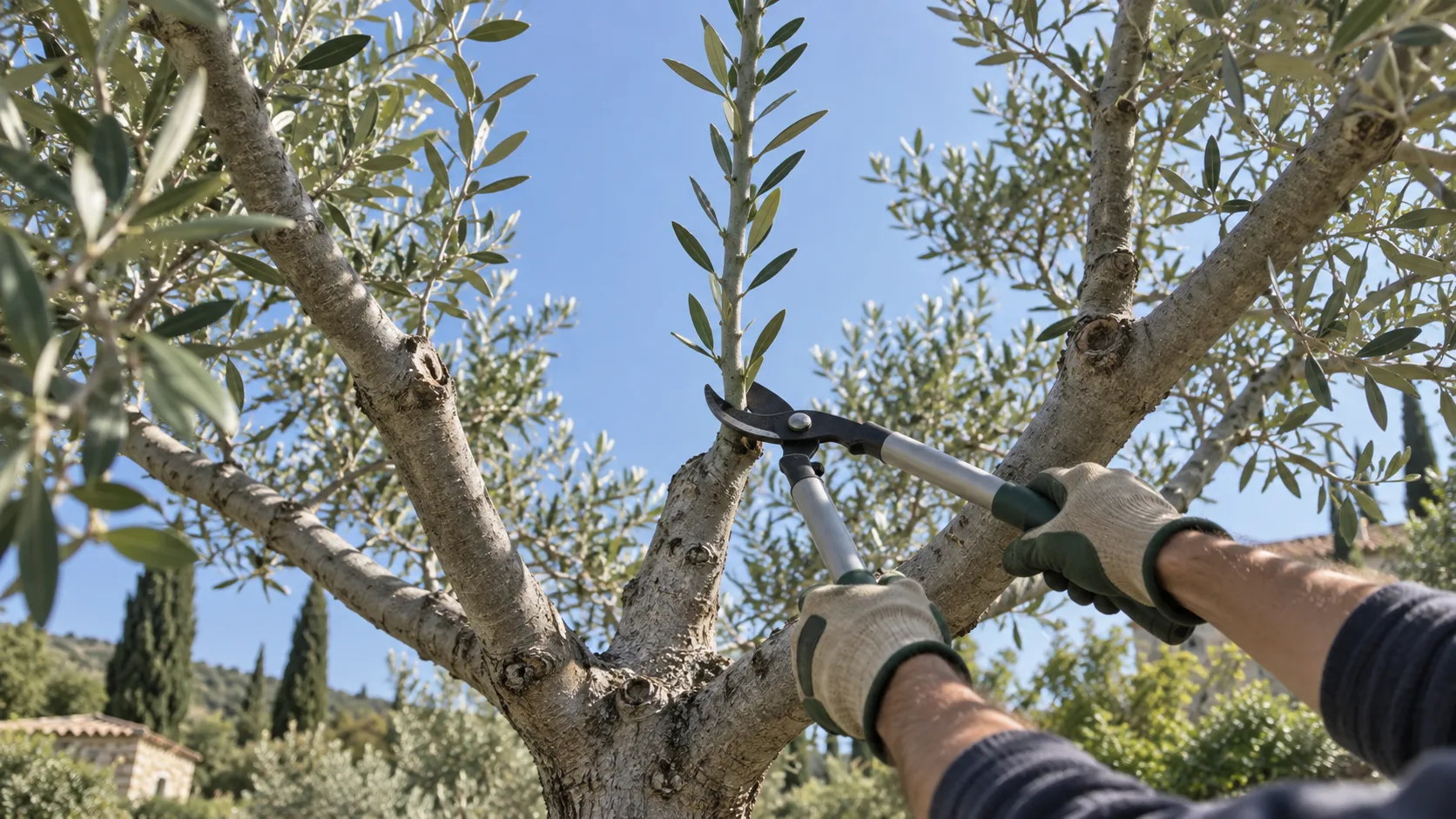
- Do not strip main-limb tops bare: bark suddenly exposed to full sun can scorch. 2
- In pots, shorten main-branch tips annually above a good replacement shoot to contain size. 4
One timing detail: pruned trees restart earlier than unpruned ones. In frost-prone areas, pruning too early exposes young shoots to spring frost; wait until risk has passed. 7 Dead or diseased wood follows sanitation pruning rules.
Taille de formation, d'entretien ou de rajeunissement : pruning an olive tree demande de savoir où couper.
How much cold can olive withstand?
A mature olive loses leaves and buds around −12 °C (10 °F) and main limbs around −16 °C (3 °F); a young plant dies between −6 and −8 °C (21 and 18 °F), and roots tolerate no lower than −6 °C (21 °F). The three organ-specific thresholds are median lethal temperatures (LT50) established by Larcher (2000); France Olive supplies the young-plant threshold. 7
Temperatures for olive
In °C, thresholds given by the sources.
- Main branches and trunk (LT50)-16 °C
- Mature tree: lethal around −15 to −16 °C (5 to 3 °F)-15 °C
- Leaves and buds (LT50)-12 °C
- Roots (LT50)-6 °C
- Young plant: lethal at −6 to −8 °C (21 to 18 °F)-6 °C
- Two months at 4–10 °C (39–50 °F) to flower4 °C
- Tolerated: -7 to 40 °C
- Bring indoors
- Before the first frostsFrost-free room · in a potSource: Royal Horticultural Society
- Move back outside
- After the last frostsin a potSource: Royal Horticultural Society
- Protect
- In winterThick winter fleece · provides about 2 °C (about 4 °F) of extra protection · in a potSource: Royal Horticultural Society
- Protect
- In winterPots grouped against a wall · saucers removed, sheltered from prolonged rain · in a potSource: Royal Horticultural Society
- Protect
- Before the first frostsGrass kept short at the base · dense grass cover intensifies the cold · in the groundSource: France Olive
- Light
- A bright roomSource: Royal Horticultural Society
- Winter watering
- Check once a weeknever water if frost is forecastSource: Royal Horticultural Society
Roots matter most on a terrace: in pots no soil mass insulates the rootball, and roots freeze around −6 °C (21 °F), while the crown tolerates around −12 °C (10 °F). Hence the two RHS options: bring the pot into frost-free shelter, or wrap branches in horticultural fleece, whose thick grades gain around 2 °C (3.6 °F). 4
Olive's RHS hardiness rating is H4, corresponding to minima of −10 to −5 °C (14 to 23 °F): hardy in most of the UK, provided it is sheltered. 6
Two circumstances worsen cold:
- Waterlogged soil: water conducts cold, and freezing saturated ground may kill the root crown. 7
- A sudden cold snap after mild weather: on , Perpignan recorded +12 °C (54 °F), then −8 °C (18 °F) the next day; Montpellier later fell to −17 °C (1 °F). Olives already in growth had no time to harden. 7
Return potted olives outdoors once all frost risk has passed. 4 In France, the popular marker remains the Ice Saints, to . 11 Steps for forecast cold are gathered under protection from temperature shocks.
What should you do after frost?
Scratch the bark before cutting anything. Green beneath means wait for growth before pruning; brown means cut back to green wood. 7 If bark is dead to ground level, a trunk over 10 cm (4 in) across cut at the base often regrows through suckers; below that, France Olive prefers replanting in May in its French seasonal example, after local frost risk has passed. 7
Voile, paillage, local hors gel : overwintering an olive tree se décide selon le pot et la région.
How tall does a mature olive grow?
In the ground, olive reaches 4 to 9 m (13 to 30 ft), taking 20 to 50 years. The RHS gives 4 to 8 m (13 to 26 ft) and 20 to 50 years to mature; NC State measures 6 to 9 m (20 to 30 ft) tall and 4.5 to 7.5 m (15 to 25 ft) wide. 6 8
- Mature height
- 4 to 9 m
- Spread
- 1,5 to 7,5 m
- Growth
- Slow
This slowness changes buying decisions. A 2 m (6.6 ft) garden-center olive takes years to double, and an old gnarled trunk represents decades of growth. In pots, height is set by container and annual pruning: shortening branch tips annually keeps a terrace specimen around head height. 4
When does olive flower, and when are olives harvested?
In France Olive’s French seasonal example, olive forms flower buds in April, flowers in May and is harvested in fall. Local growth and temperatures set the timing. Clusters carry 10 to 30 small white flowers, and pollen travels by wind: olive is wind-pollinated. 2 5
- What triggers flowering
- Winter coldSource: NC State Extension Gardener Plant Toolbox
- Flowering
- Maybuds formed as early as April in the source’s temperate Northern Hemisphere calendarSource: France Olive
| Conditions | January | February | March | April | May | June | July | August | September | October | November | December |
|---|---|---|---|---|---|---|---|---|---|---|---|---|
| Flowering | no flowers | no flowers | no flowers | no flowers | Flowering | no flowers | no flowers | no flowers | no flowers | no flowers | no flowers | no flowers |

Flowering requires around two months at 4 to 10 °C (39 to 50 °F) in winter. 8 An olive kept warm all winter therefore stays sterile. One year's crop starts preparing the previous summer: flower induction begins in July of the preceding year in France Olive’s French seasonal example. 12
Why is my olive not producing olives?
Check these causes in order:
- No compatible partner. Olive is self-incompatible and varieties fall into two groups: a flower can only be fertilized by a variety from the other group flowering simultaneously. 13
- Too young. The juvenile period lasts 1 to 7 years before cropping. 12
- An “off” year. Olive is strongly alternate-bearing: heavy years are followed by light ones, and care cannot erase this rhythm. 12
- Winter too mild or spent indoors: no chill, no flowers. 8
- Pruning removed one-year-old wood, which carries flowers. 5
- Spring frost on developing flower buds: the crop is lost, the tree survives. 7
Harvest is in fall. Green olives must soak several days in salted water to lose bitterness; black olives dry in salt for several weeks before storage in oil or brine. 4 In France Olive’s French seasonal example, avoid leaving fruit on trees beyond 15 December: olive frost risk rises sharply. 7
The month-by-month care calendar
The entire routine follows local growth and weather. The French source’s seasonal example is rest from December to February, feeding and pruning at winter’s end, careful watering from May to August, and fall harvest.
| Task | January | February | March | April | May | June | July | August | September | October | November | December |
|---|---|---|---|---|---|---|---|---|---|---|---|---|
| Watering | reduced | reduced | reduced | moderate | high | high | high | high | high | moderate | reduced | reduced |
| Growth | resting | resting | active | active | strong | strong | strong | strong | active | active | resting | resting |
| Feeding | no | no | yes | yes | yes | yes | yes | yes | no | no | no | no |
| Repotting | no | no | favorable window | favorable window | no | no | no | no | no | no | no | no |
How do you propagate olive?
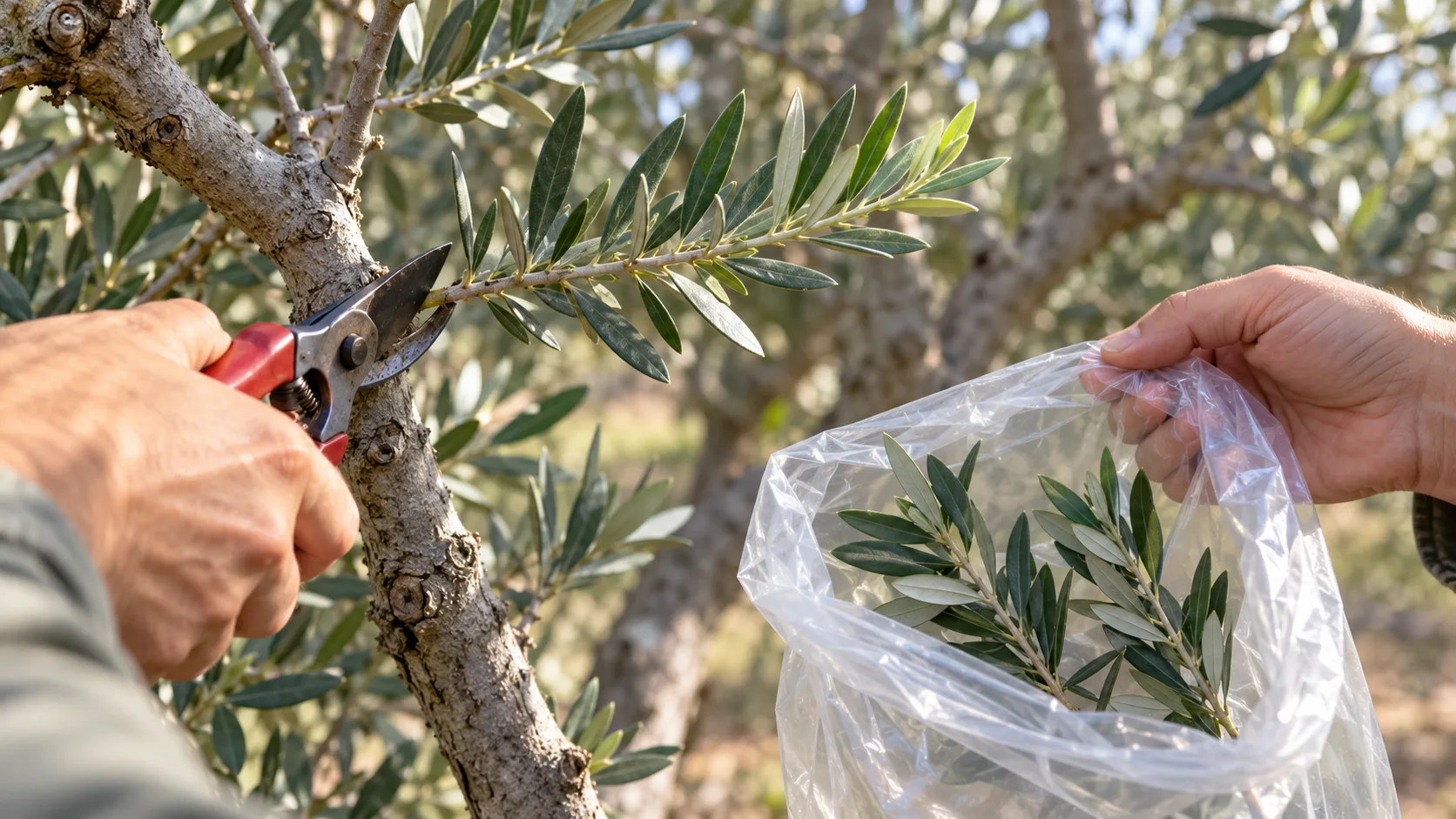
Summer semi-ripe cuttings reproduce a variety faithfully; spring seed gives a tree whose olives differ from its parent's. The RHS specifies spring sowing at 13-15 °C (55-59 °F) and summer cuttings. 6 France Olive confirms that a stone results from crossing two different varieties, and seed is mainly used for rootstocks. 12
- Semi-ripe cutting
- July to SeptemberCurrent season’s shoot · firm at the base, with a tip that is still flexibleSource: Royal Horticultural Society
- Sowing seed
- In springat 13–15 °C (55–59 °F)Source: Royal Horticultural Society
A semi-ripe cutting comes from current-year growth. France Olive includes woody and semi-herbaceous cuttings among techniques that clone cultivars exactly, with division and grafting. 12 Varieties differ: propagation ability varies between cultivars. 14
Nurseries also use grafting and division of basal woody swellings. 12
Prélèvement, substrat et reprise : taking olive cuttings se prépare dès le début de l'été.
Common problems: diagnosis
Most olive problems come from foliage staying wet, sap-sucking insects or drowned roots. The table starts with what you see.
| Symptom | Likeliest cause | Action |
|---|---|---|
| Round brown-purple spots with halos, leaves yellowing and falling | Peacock spot (Venturia oleaginea) | Prune for airflow; preventive copper in late August and late February in France Olive’s French seasonal calendar2 |
| Grayish felt beneath leaves, yellow upper surfaces | Cercospora (Pseudocercospora cladosporioides) | Same strategy as peacock spot15 |
| Dark brown 3 to 4 mm (0.12 to 0.16 in) shells, sticky black coating | Black scale (Saissetia oleae) and sooty mold | Prune infested shoots; ladybugs and lacewings16 |
| Punctured olives falling before ripening | Olive fruit fly (Bactrocera oleae) | Ammonium-phosphate bottle traps, one per tree2 |
| Brown growths on shoots | Bacterial knot (Pseudomonas savastanoi) | Remove affected shoots in dry weather; disinfect tools17 |
| Drying shoots, weak tree in heavy soil | Root suffocation | Space out watering; improve drainage1 |
| A vigorous branch suddenly drying in spring, as if cut | Verticillium wilt (Verticillium dahliae) | Remove declining branch promptly; disinfect tools; no tomatoes beneath18 |
| Wilting, scorched foliage, dry shoots | Xylella fastidiosa | Have it identified before any treatment19 |
Peacock spot and Cercospora, two fungi of wet foliage, are prevented with canopy-opening pruning and copper before late-summer and late-winter rain. 2 Black scale, fruit fly, olive knot and Xylella fastidiosa each have sections with photos, risk months and responses without insecticides.


Pour chaque maladie, le cycle et le bon moment d'intervenir : olive diseases se jouent avant les pluies.
Why is my olive losing leaves?
Heavy leaf fall almost always has an identifiable cause. Check peacock spot and Cercospora, which yellow leaves then shed them and often combine 20 15; scale-related sooty mold 16; frost, yellowing foliage weeks later 7; and oxygen-starved roots in saturated soil, covered under root rot. 1
Quand le feuillage jaunit avant de tomber : yellow olive leaves se lisent selon leur position sur l'arbre.
A spotted or yellowing leaf? Photograph it: Floralens identifies the problem and what to do.
| What you see | Likely cause | What to do |
|---|---|---|
| Soil stays soggy, suffocating roots and causing rot. | OverwateringExternal Factors | Treating Waterlogged Soil |
| The plant wilts and yellows while the soil stays wet. | Root RotDiseases | Treating Waterlogged Soil |
| Small, immobile waxy shells (1–3 mm) on stems and leaves. | Armored ScalePests | Eliminate Armored Scale Insects |
| The plant droops, and leaves turn yellow or brown. | Water StressExternal Factors | Deep Watering |
| Abnormal growths of various shapes on leaves, stems, or roots. | GallsDiseases | Observing and Managing Galls |
Is olive poisonous?
No: no toxic effects are reported for olive, in humans, cats, dogs or horses. 21 Risks lie elsewhere: swallowed stones, salty brine and recent treatments. After substantial ingestion, call a poison center or your vet. Nuances are detailed under toxicity of the tree, olive and stone.

Which olive variety should you choose?
For olives, plant two varieties from different pollination groups; for a terrace tree, compact or fruitless forms avoid paving stains. France Olive has assigned French varieties to two groups, G1 and G2: fertilization is impossible between varieties in the same group. 13

Manzanillo
Stable cultivar
A table olive cultivar cited by olive-growing and horticultural sources.
Arbequina
Stable cultivar
A widely grown Spanish cultivar, cited in local horticultural sources.
Picholine
Stable cultivar
A cultivar name and a style of green olive preparation; interpret it in context.
Aglandau
Stable cultivar
An old Provençal variety cited by RHS for olives and oil.
Frantoio
Stable cultivar
An Italian oil cultivar found in the RHS data consulted.
Leccino
Stable cultivar
A common Italian cultivar, cited in the RHS data consulted.
2 more varieties documented in the botanical profile.
| Variety | Group | Origin appellation |
|---|---|---|
| Picholine | G1 | Nîmes |
| Cailletier | G1 | Nice |
| Salonenque | G1 | Provence, Vallée des Baux-de-Provence |
| Aglandau | G2 | Aix-en-Provence, Haute-Provence |
| Lucques | G2 | Languedoc |
| Tanche | G2 | Nyons |
Pairing Picholine with Aglandau works; two neighboring Picholine do not fertilize each other. 13 For ornament, NC State lists 'Swan Hill', without flowers or fruit, and compact 'Little Ollie'. 8 For frost-prone areas, France Olive recommends late, local varieties suited to the growing area. 7
Frequently asked questions
Can an olive tree stay outdoors in winter?
Yes in the ground in southern France, where mature trees tolerate most winters: leaves and buds suffer only around −12 °C (10 °F). In pots, the rootball decides, since roots freeze around −6 °C (21 °F). Beyond a few nights below 0 °C (32 °F), bring the pot into bright frost-free shelter or wrap branches in fleece.
How can you revive a declining olive?
Find the cause before feeding, starting with water: a permanently saturated rootball starves roots of oxygen, a trap France Olive often sees in watered lawns on clay. Let it dry, check pot drainage, then resume feeding as local growth restarts, late March in France Olive’s French seasonal example, with complete feed in gardens or monthly liquid feed in pots. After frost, scratch bark and wait for growth before any pruning.
What are the signs of an overwatered olive?
Drying shoots, a weak-looking tree and, in extreme cases, extensive dieback: these are France Olive's signs of excess water. The trap is their resemblance to thirst. Before watering a drying olive, dig or push a finger into soil: if damp deep down, excess water is the problem. Let it dry, empty the saucer and check pot drainage.
Can you keep an olive indoors year-round?
Not permanently. To flower, olive needs around two winter months at 4 to 10 °C (39 to 50 °F), which a heated living room never provides. An unheated greenhouse or conservatory suits winter, provided it goes into full sun outdoors after frost has passed.
How long does an olive tree live?
Centuries. France Olive divides its life into four ages: juvenile from 1 to 7 years, coming into production from 7 to 35, adulthood from 35 to 150, then senescence beyond 150. Depending on care, adulthood may extend over several centuries.