
External Factors
Nitrogen deficiency
Older leaves turn uniformly yellow first.
Nitrogen is an essential, mobile nutrient, crucial for producing chlorophyll, the green pigment, and for overall growth. When soil supplies are low, the plant moves nitrogen from older leaves to new shoots to survive, causing progressive yellowing that starts at the bottom. Untreated deficiency completely stops growth, causes leaf drop, and weakens disease resistance.
Signs to check
- Yellowing MUST begin with the lowest, oldest leaves.
- The whole leaf turns uniformly pale yellow, including the veins.
- Growth noticeably slows or stops completely, and new leaves are smaller.
- Stems may look thinner or weaker than normal.
What you may notice
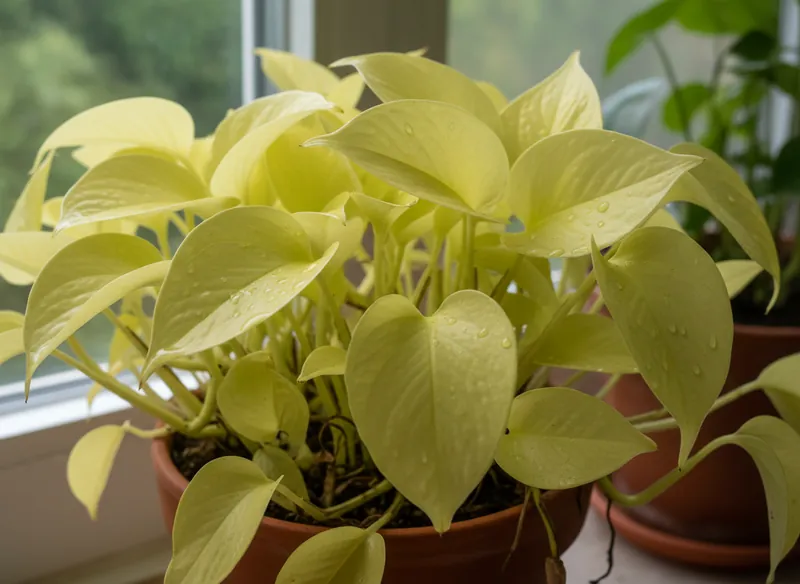
- General leaf yellowing · Pale yellow discoloration spreads through the foliage, often affecting the oldest leaves first.
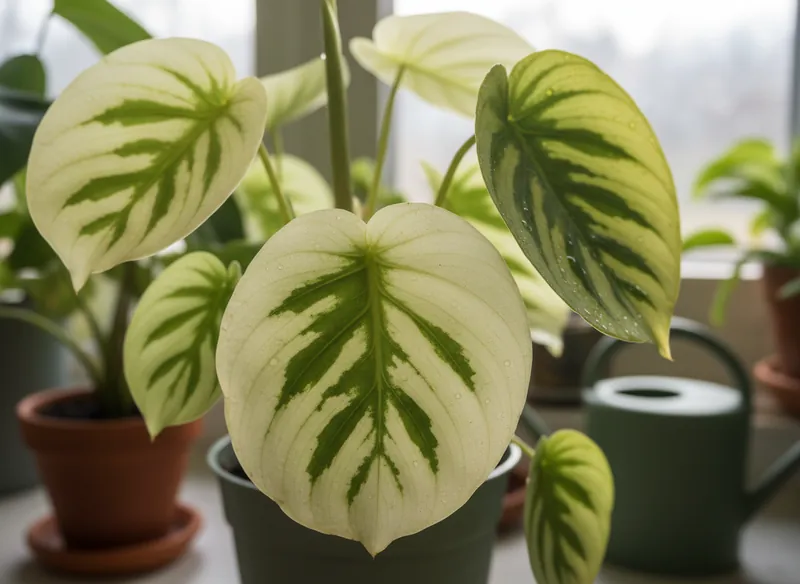
- Leaf discoloration · Leaves lose their normal green color, becoming pale, whitish, or yellowish in small areas or across larger patches.
- Leggy growth · The whole plant has unusually long, weak stems, pale foliage, and widely spaced leaves.
- No flowering · Although mature and in its flowering season, the plant develops no flower buds or flowers.
- Slow stem growth · The plant produces few or no new stems and leaves, and its overall height stays unchanged for weeks or months.
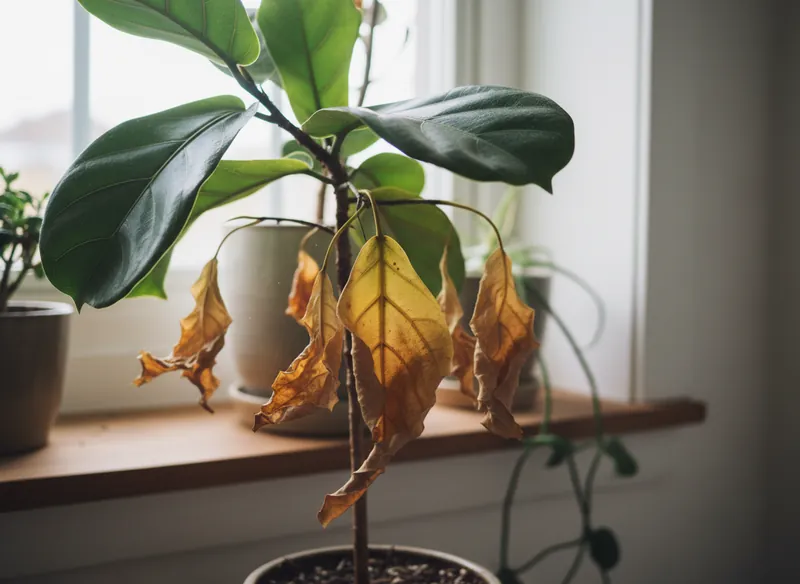
- Yellowing lower leaves · The oldest leaves at the plant's base turn uniformly yellow before drying and falling.
What to do now
Feed with a balanced fertilizer
- Choose an all-purpose or foliage houseplant liquid fertilizer with balanced NPK numbers, such as 10-10-10 or 20-20-20.
- Read the package directions carefully. If in doubt, use half the recommended dose. Too little is better than too much.
- Water your plant with plain water first. Applying fertilizer to dry potting mix can severely burn roots.
- Dilute the fertilizer in a watering can filled with water, following the stated proportions.
- Pour the mixture slowly over the whole surface of the potting mix until water starts flowing from the drainage holes.
- Apply every 2 to 4 weeks, only during active growth. The French reference gives March through September; use your local active growing season rather than fixed dates in other climates.
Prevention
- Fertilize regularly during the growing season, usually spring and summer in temperate climates.
- Stop or greatly reduce fertilizer during fall and winter where these bring slower growth.
- Check leaf color once a month for deficiency signs.
- Repot every 2 years in fresh mix naturally rich in nutrients.