
External Factors
Weather damage
Sudden damage after extreme weather such as frost, a heat wave, or wind.
Weather damage is a plant's physical response to sudden, extreme weather conditions. Direct exposure to frost, scorching sun, or strong wind damages cells in exposed tissue, disrupting photosynthesis and the plant's water balance. If conditions persist, affected parts die, causing leaf and flower drop and halting growth.
Signs to check
- Symptoms appearing immediately after an identifiable weather event, such as a heat wave, frost, or strong wind.
- Dry, brown scorch marks or bleached areas on parts most exposed to sun or wind.
- Wilted, blackened tissue that feels soft after frost, particularly on young shoots.
- Damage stops progressing and spreading once conditions return to normal.
What you may see
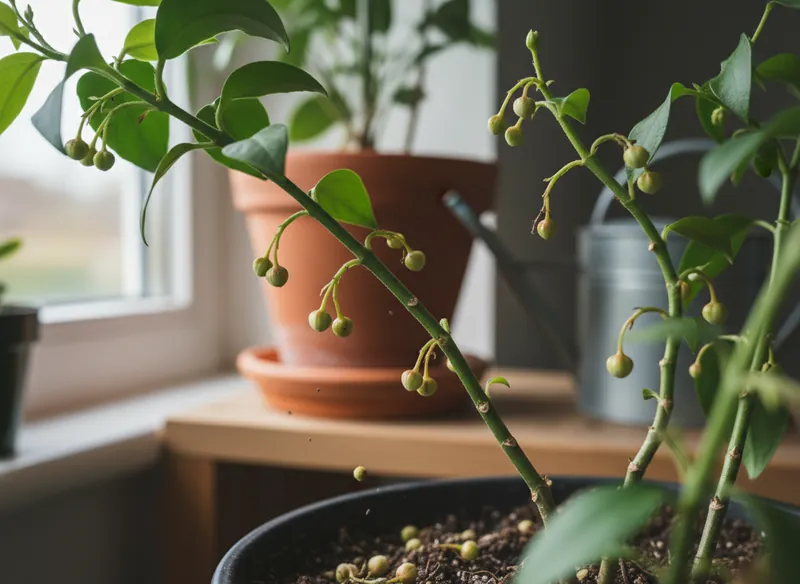
- Flower bud drop · Unopened flower buds dry out or turn yellow, then fall from the plant before they can bloom.
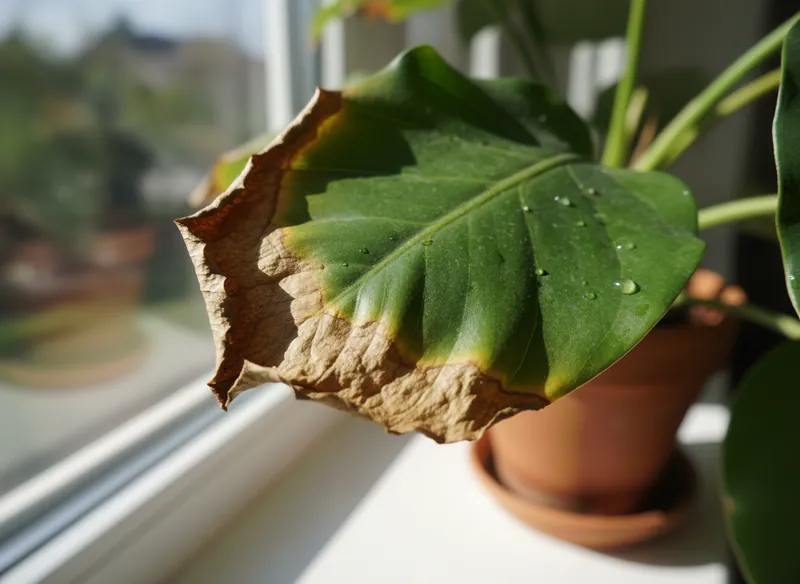
- Brown leaf tips · Leaf tips turn brown, dry, and brittle, with a clear boundary between healthy and affected tissue.
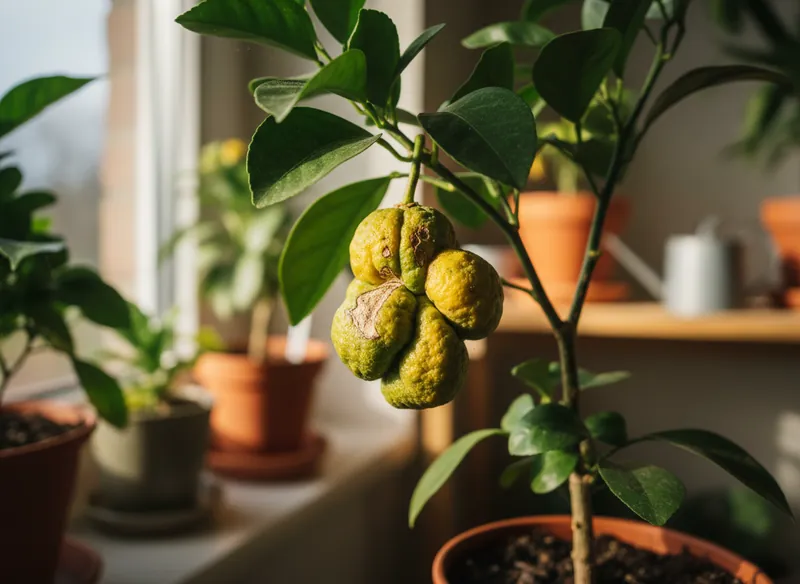
- Distorted or bumpy fruit · Fruit has an irregular shape, with bumps, hollows, or visibly asymmetric growth on its surface.
- Scorched or torn leaves · Pale, scorched, or torn areas appear on leaves, often on the plant's most exposed parts.
- Drying flowers · Flowers or flower buds turn brown, dry, and brittle to the touch, sometimes affecting only petal edges.
- Dry, black fruit end · A dry, sunken brown to black patch develops at the end of the fruit opposite the stem, also called blossom-end rot.
- Leaf curling · Leaves bend or curl in on themselves, upward or downward, while retaining their green color.
- Hanging or drooping flowers · Flowers and their stalks lose firmness, drooping and pointing downward instead of standing upright.
- Corky areas on fruit · Fruit skin develops rough, brown, cork-like areas that spread across its surface in patches or a network.
- Brown spots on leaves · Round or irregular brown spots appear on leaf surfaces, sometimes surrounded by a yellow halo.
What to do now
Protect against temperature shocks
- Identify the source of the problem. Is it a poorly insulated window, a frequently opened door, a radiator, or a ventilation vent?
- Move the plant away from the problem area immediately. A distance of 1 to 2 meters (about 3.3 to 6.6 ft) is often enough to protect it from direct drafts.
- Maintain a stable room temperature, ideally between 18 and 24°C (about 64 and 75°F). Avoid changes of more than 5°C (9°F) in a day.
- Check moisture in the potting mix, but do not water more to compensate for leaf drop. The stress is not related to a lack of water.
- Give the plant 1 to 2 weeks to adjust to its new, stable location before disturbing it again.
Prevention
- Choose a permanent spot away from doors, windows, and radiators.
- In cold winter weather, make sure leaves never touch cold window glass.
- Acclimate new plants gradually over one week, moving them closer to their final location a little at a time.
- Turn the plant a quarter turn each week to avoid exposing only one side to stress.