
Pests
Spider mites
Leaves stippled with pale dots and fine webs underneath? Identify spider mites and the damage they cause.
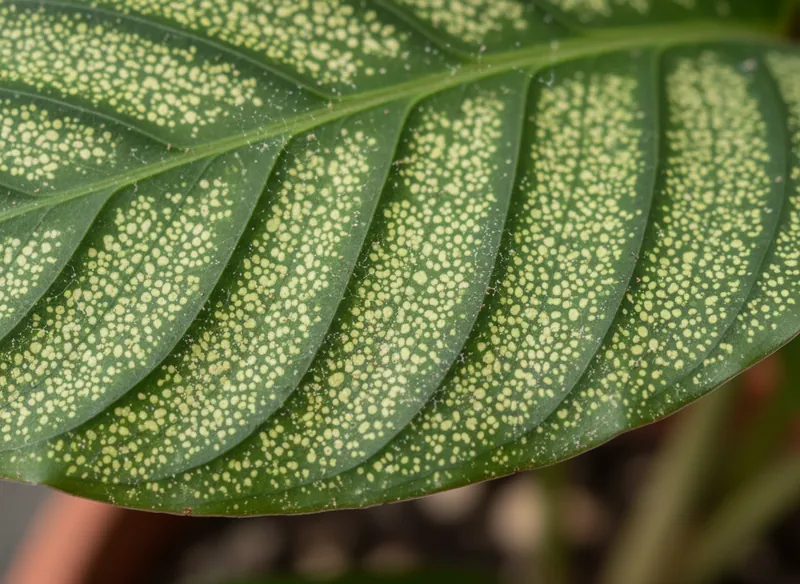
A spider mite is not a spider but a mite, a tetranychid, less than one millimeter (about 0.04 in) long. It pierces leaf cells to suck out their contents, creating numerous tiny yellow or white dots. The spider mite treatment explains how to get rid of them.
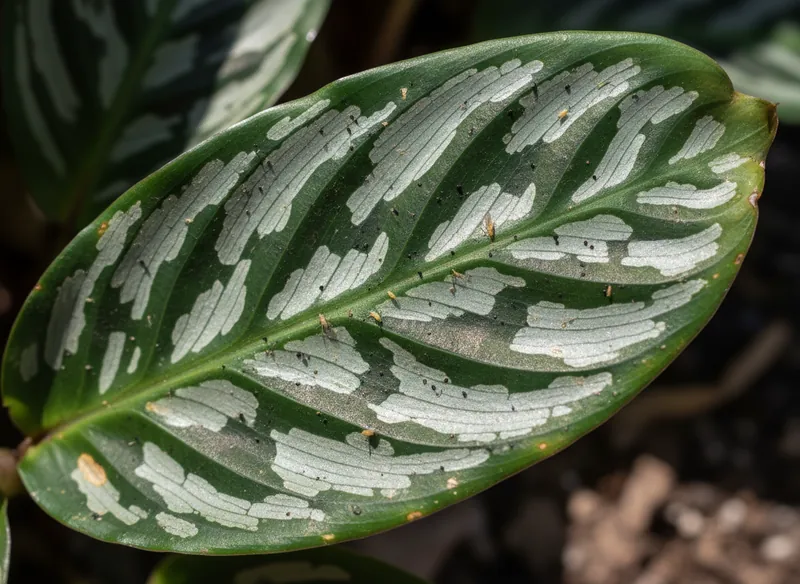
Foliage takes on a mottled, silvery, or bronzed appearance. Without intervention, leaves turn yellow, dry out, and fall, while the colony's fine webs may cover the plant.
Signs to check
- Very fine, dust-like webs beneath leaves and between stems.
- Tiny yellow or white dots on the upper sides of leaves, giving them a stippled appearance.
- Tiny moving dots, red, yellow, or brown and less than 0.5 mm (about 0.02 in) long, visible when a leaf is shaken over a white surface.
- Affected leaves lose their green color, gradually turning yellowish or bronze before drying out.
What you may see
- Yellow stippling and fine webs · Tiny yellow or white dots scatter across leaves, giving them a stippled appearance, often accompanied by fine spider-like webs.
- Silvery patches and streaks · Shiny, silvery marks or patches appear on leaf surfaces, making them look discolored in places.
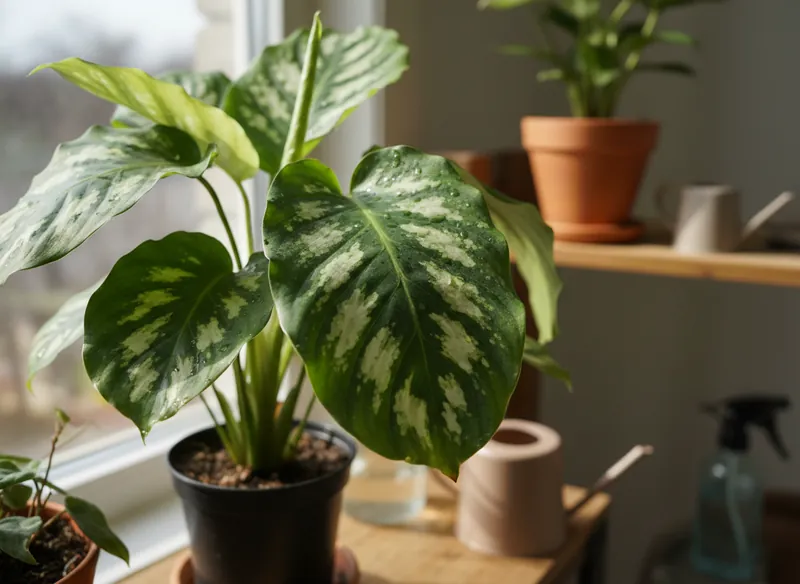
- Diffuse yellow spots · Yellow to pale green areas of discoloration appear on leaves, with blurry, indistinct edges.
What to do now
Spider mite treatment
- Isolate the infested plant immediately to prevent spread to other plants. Spider mites move around easily.
- Give your plant a shower. Use a strong stream of lukewarm water to dislodge as many mites and webs as possible, focusing under the leaves.
- Prepare an insecticidal black soap solution. Mix 5 mL (about 1 measuring teaspoon) of liquid black soap into 1 liter of lukewarm water (about 1.06 US qt).
- Spray the whole plant generously with the solution, making sure to cover the underside of every leaf. The soap suffocates mites on contact.
- Repeat the shower and spray every 5 to 7 days for at least 3 weeks. This schedule eliminates newly hatched mites and breaks their life cycle.
Rinsing foliage
- Place the plant in your shower or bathtub. If it is too large, tilt it outdoors.
- Wrap the base of the pot in a plastic bag to avoid completely soaking the potting mix.
- Set the water to moderate pressure and a lukewarm temperature. Water that is too forceful or too cold could damage the foliage.
- Rinse each leaf thoroughly, focusing especially on the underside, where pests like to hide.
- Do not forget stems and leaf axils, where leaves join the stem.
- Let the plant drain completely for at least 20–30 minutes before putting it back.
- Ensure good air circulation around the plant so leaves dry quickly, helping prevent fungal diseases.
Prevention
- Increase ambient humidity by misting plants 2 to 3 times a week.
- Inspect the undersides of leaves every week for early signs.
- Clean leaves regularly with a damp cloth to remove dust and any mites.
- Always quarantine new plants for 3 weeks.
- Inspect the undersides of leaves once a week for early signs.
- Shower plants that tolerate it once a month to remove dust and any pests.
- Maintain high ambient humidity above 50% to discourage spider mites, which thrive in dry air.