
Diseases
Powdery mildew
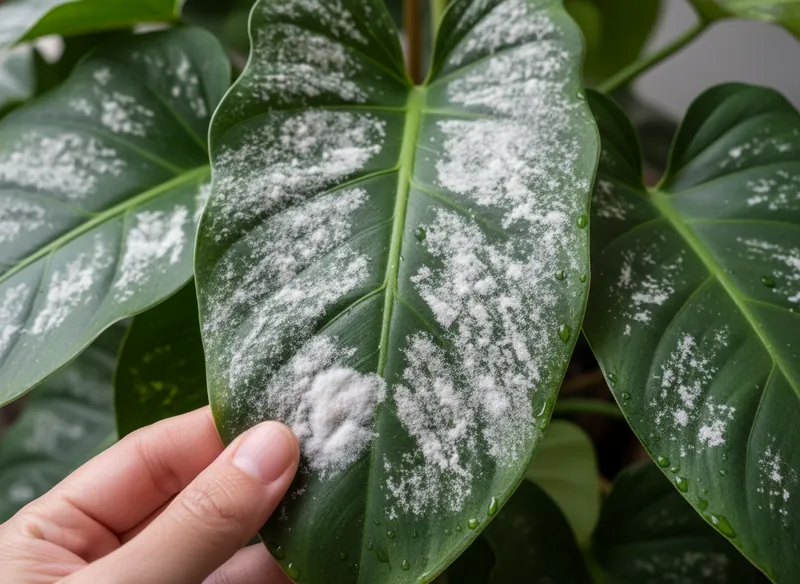
A white, powdery coating covering leaves and stems.
Powdery mildew is a disease caused by a fungus that grows on leaf surfaces, forming a white, flour-like coating. The fungus feeds by piercing epidermal cells and absorbing their nutrients, gradually weakening the plant. Without intervention, the disease spreads, causing yellowing, distortion, and premature leaf drop, compromising photosynthesis and overall growth.
Signs to check
- A white, powdery deposit on the upper leaf surface that rubs off easily with a finger.
- Small, round spots at first, spreading gradually to cover the entire surface.
- Yellowing and distortion of leaves directly beneath the white coating.
- The underside of the leaf remains unaffected early in the infection, unlike downy mildew.
What you may see
- White, cottony coating · White, cottony or felt-like clusters, mainly on the undersides of leaves or in leaf axils.
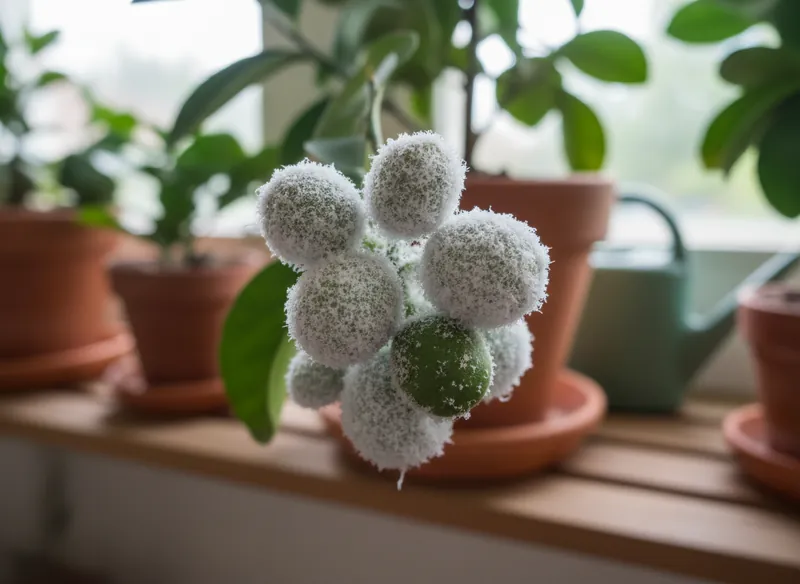
- White coating on fruit · A dense, white, cottony mass develops on the surface of fruit, often near the stalk or a wound.
What to do now
Get rid of powdery mildew
- Isolate the sick plant immediately. Powdery mildew spores are readily airborne and spread easily on air currents.
- Cut off the most affected leaves and stems with disinfected pruning shears. Put them in the trash, never in the compost, to avoid contaminating other plants.
- Gently clean the remaining leaves with a soft, damp cloth to physically remove as much visible white powder as possible.
- Prepare a homemade fungicidal solution. Mix about 5 g (0.18 oz; 1 teaspoon) of baking soda and 5 mL (about 1 measuring teaspoon) of black soap into 1 liter of water (about 1.06 US qt). The soap helps the solution stick to leaves.
- Spray this mixture generously over the whole plant, paying particular attention to both sides of the leaves. Preferably do this in the evening to avoid any risk of sun-related leaf burn.
- Repeat the treatment every 7 to 10 days until no signs of the fungus remain. Consistency is the key to success.
Prevention
- Space plants apart to ensure good air circulation.
- Water the soil directly at the base of the plant, without ever wetting the foliage.
- Inspect the upper sides of leaves once a week for the earliest signs.
- Give plants appropriate light to support vigorous growth.