
External Factors
Iron deficiency
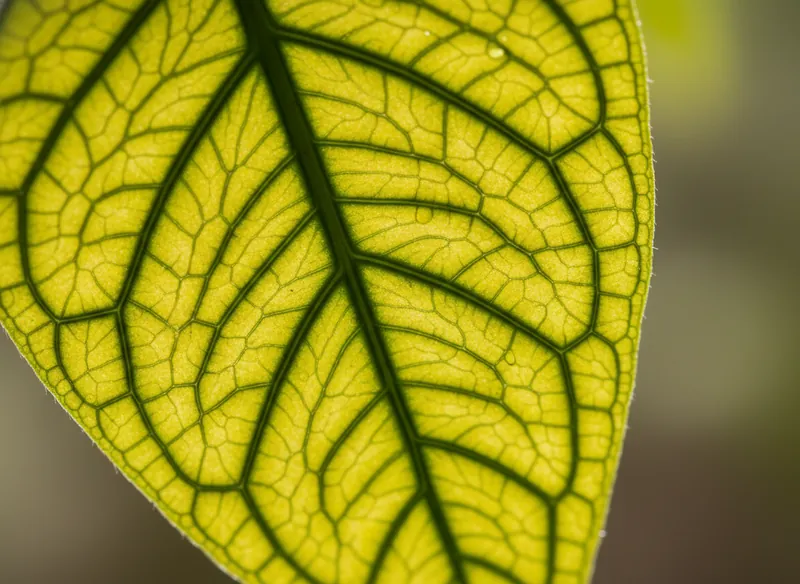
Young leaves turn yellow while their veins stay green.
Iron deficiency, or iron chlorosis, is a nutritional disorder that prevents the plant from synthesizing chlorophyll, the green pigment needed for photosynthesis. It mainly occurs when soil pH is too high, or alkaline, blocking iron uptake by roots even when iron is present in the mix. Without intervention, new leaves become increasingly pale, growth slows sharply, and the whole plant weakens.
Signs to check
- Bright yellowing between veins that stay dark green, known as interveinal chlorosis.
- Symptoms appear first and only on the youngest leaves.
- In severe deficiency, new leaves may become entirely yellow or whitish.
- New shoot growth noticeably slows or stops.
What you may notice
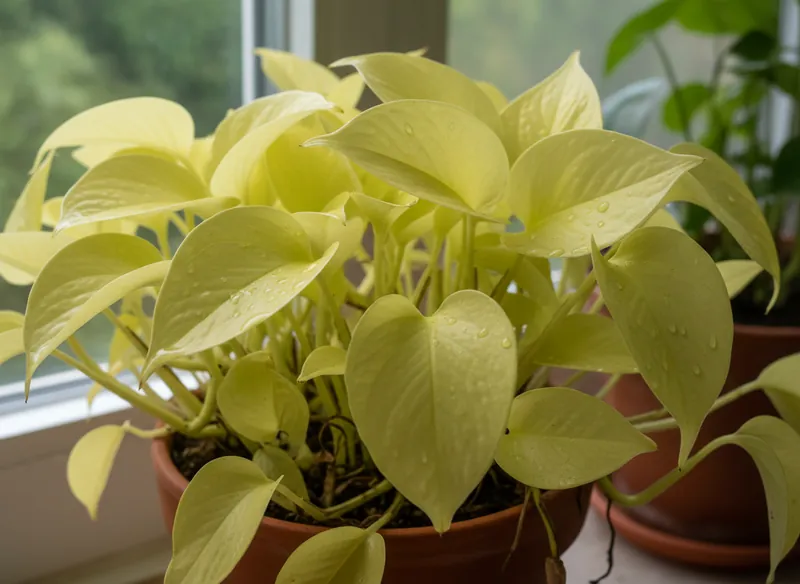
- General leaf yellowing · Pale yellow discoloration spreads through the foliage, often affecting the oldest leaves first.
- Yellow leaves with green veins · Leaf tissue yellows between veins that stay green, creating a contrasting network pattern.
- Leaf discoloration · Leaves lose their normal green color, becoming pale, whitish, or yellowish in small areas or across larger patches.
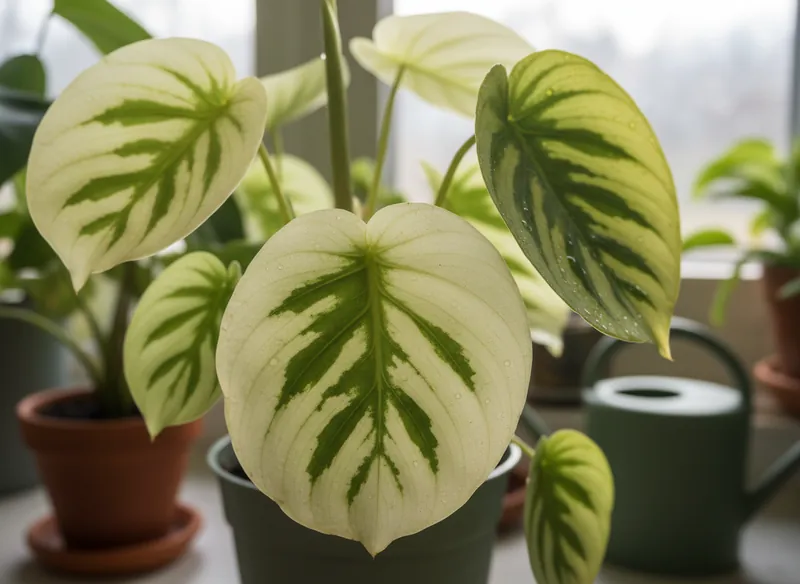
- Diffuse yellow patches · Yellow to pale green areas appear on leaves, with blurred, indistinct edges.
What to do now
Correct iron deficiency
- Choose an iron chelate for maximum absorption. EDDHA or DTPA forms are the most effective because they stay stable and available to the plant even in high-pH soil.
- Prepare a watering solution. Dilute 1 to 2 grams (about 0.035 to 0.07 oz) of powdered iron chelate per liter (about 1.06 US qt) of water. Follow the package doses precisely.
- Water the plant generously with this solution. Soak the entire root ball so all roots can benefit.
- For a quick boost, spray the same solution directly onto the foliage. Leaves absorb iron faster, giving visible improvement within a few days. Avoid spraying in full sun.
- Address the underlying cause: if the potting mix pH is too high, often because of hard irrigation water, consider watering with rainwater or filtered water.
Prevention
- Use potting mix with a slightly acidic pH of 5.5 to 6.5, suited to your plant.
- Prefer rainwater or demineralized water if your tap water is very hard.
- Fertilize once a month during spring and summer growth, where those are the active seasons, with a complete fertilizer containing trace elements, including iron.
- Ensure good pot drainage to prevent oxygen deprivation that limits nutrient uptake.