
External Factors
Low light
The plant stretches, turns pale, and leans toward the window.
Low light prevents the plant from photosynthesizing properly, the vital process that converts light into energy for growth. In response, the plant becomes leggy: stems lengthen abnormally and leaves become paler and farther apart in an attempt to capture more light. Unless exposure improves, the plant weakens, loses lower leaves, and fails to flower, leaving it more vulnerable to disease.
Signs to check
- The whole plant noticeably leans toward the light source.
- Stems lengthen with a large gap between each new leaf.
- New leaves are much smaller and paler than older ones.
- Lower, older leaves turn yellow and drop despite no watering problem.
- A mature plant that should flower produces no flowers at all.
In the garden, the same shortage affects roses in shade: they need at least 4 hours of direct sun a day to flower, and more for a full display.
What you may notice
- General leaf yellowing · Pale yellow discoloration spreads through the foliage, often affecting the oldest leaves first.
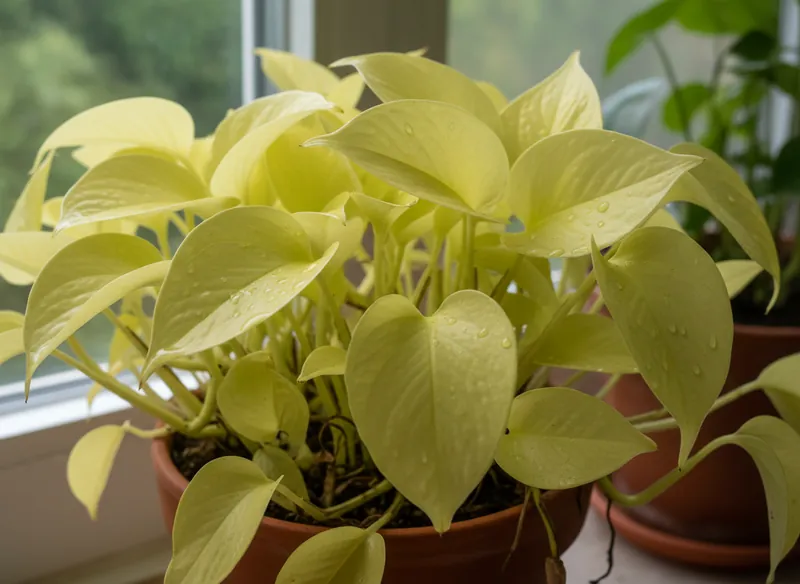
- Leaf discoloration · Leaves lose their normal green color, becoming pale, whitish, or yellowish in small areas or across larger patches.
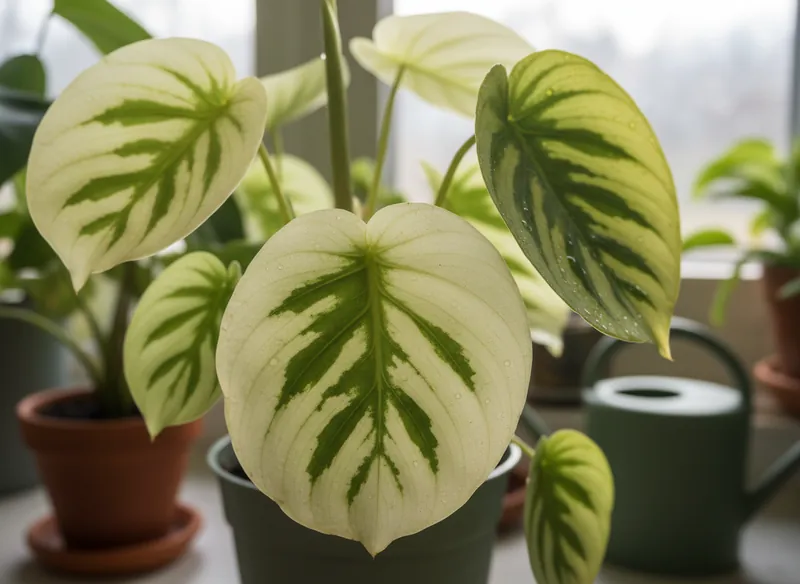
- Leggy growth · The whole plant has unusually long, weak stems, pale foliage, and widely spaced leaves.
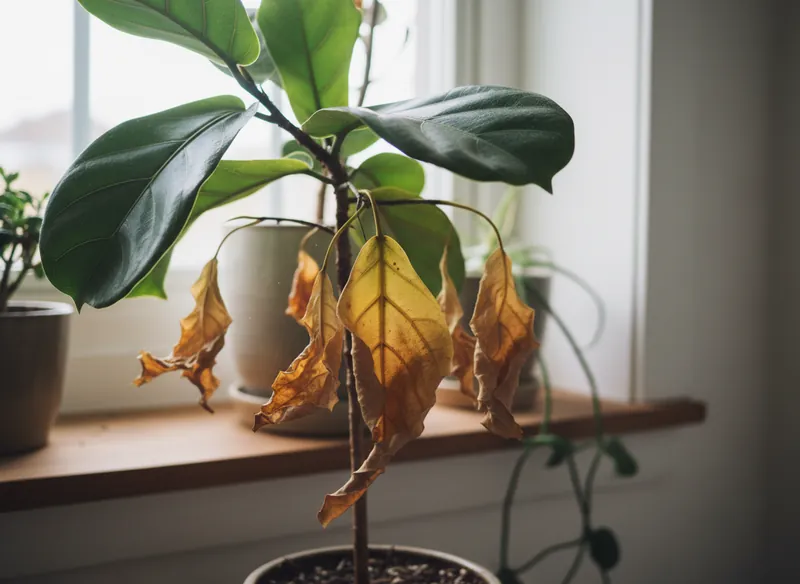
- Widely spaced leaves · Stems have unusually large gaps between leaves, giving the plant a sparse, lanky appearance.
- No flowering · Although mature and in its flowering season, the plant develops no flower buds or flowers.
- Leaning or tilted plant · The main stem or the whole plant leans noticeably in one direction instead of growing upright.
- Slow stem growth · The plant produces few or no new stems and leaves, and its overall height stays unchanged for weeks or months.
- Yellowing lower leaves · The oldest leaves at the plant's base turn uniformly yellow before drying and falling.
What to do now
Increase light
- Immediately move the plant closer to your brightest window, ideally facing {{brightOrientation}}.
- If direct sun hits the leaves for more than 2 hours a day, filter it with a light sheer curtain to avoid scorching.
- If natural light is insufficient, add an LED grow light, full-spectrum or “daylight” 6500K, placed 15 to 30 cm (about 6 to 12 in) above the plant.
- Rotate the plant a quarter turn every week so all sides receive light and growth stays upright.
- Gently dust leaves with a damp cloth every 15 days. Dust acts as a screen and reduces photosynthesis.
- Prune stems that are already long and leggy. This will not reverse their elongation, but encourages new, more compact shoots at the base.
Prevention
- Choose plants suited to the actual light in your home.
- Rotate the plant a quarter turn every week for even growth.
- Clean leaves once a month to maximize light absorption.
- Watch for stretching, especially during winter where days become shorter.