
Diseases
Root rot
The plant wilts and turns yellow while its soil stays wet.
Root rot is the destruction of root tissue by fungi or bacteria. It is caused by excess water that suffocates the roots, creating an oxygen-free environment where pathogens develop and prevent the plant from taking up water and nutrients. Without intervention, rot reaches the base of the stem, causing the plant to collapse and die.
Signs to check
- Brown or black roots that feel soft and slimy.
- A musty or rotten-soil smell coming from the pot.
- A softened or blackened stem base just above the soil.
- Leaf wilting that does not improve after watering.
What you may see
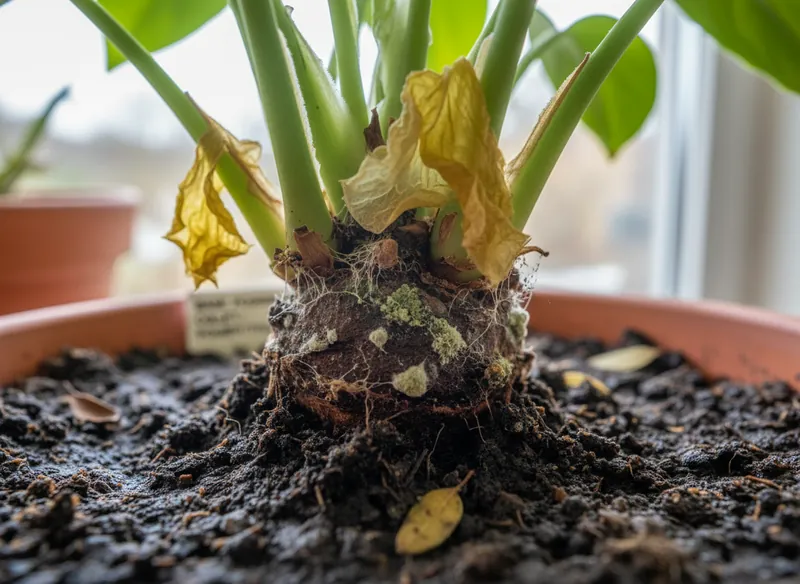
- Rotten stem base · The stem base at soil level becomes soft, turns brown or black, and may collapse.
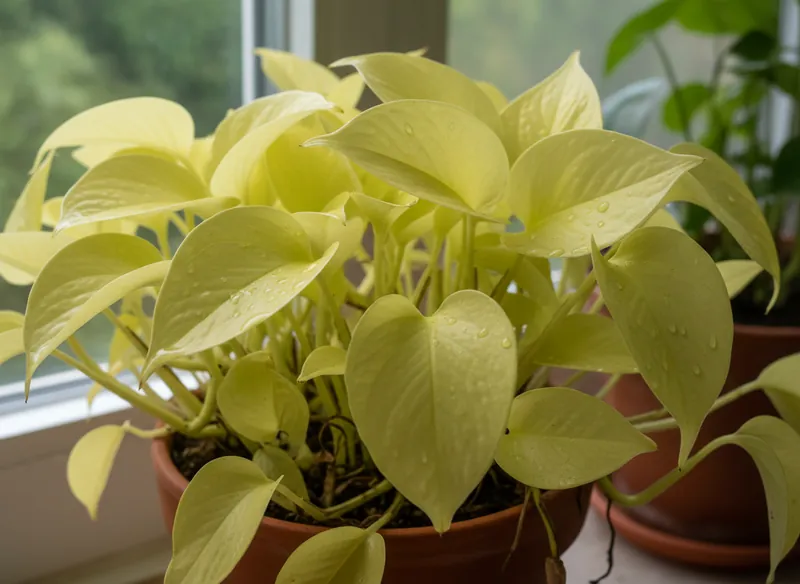
- General leaf yellowing · Pale yellow discoloration spreads across the foliage, often affecting older leaves first.
- Stem tip dieback · The upper tips of stems or branches dry out, turn black, and die, with damage then progressing toward the base of the plant.
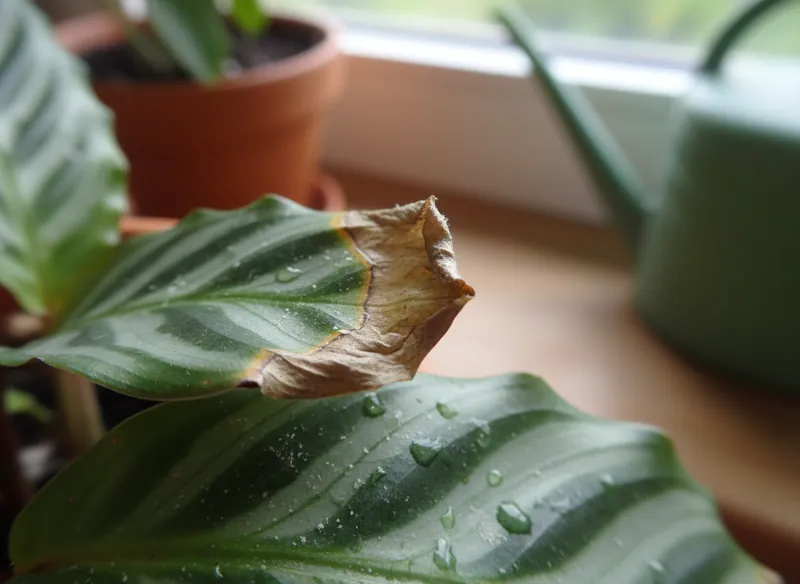
- Drying branches and stems · Stem or branch tips turn brown, dry out, and die progressively downward toward the base of the plant.
- Entire plant dry and brittle · The entire plant, including stems and leaves, is dry and brittle to the touch, with uniform brown or yellow coloring.
- Wilting leaves · Leaves and stems lose their firmness, become limp, and visibly droop, giving the whole plant a tired appearance.
- Soft, drooping stems · Stems lose their firmness, bend, and hang downward instead of standing upright and firm.
- Fruit rot · Soft, discolored, and often sunken areas develop on fruit and may become covered in mold.
- Soft, rotten roots · Roots lose their firmness, turn brown or black, and break apart easily when touched, sometimes with a musty smell.
- Yellowing lower leaves · The oldest leaves at the base of the plant turn uniformly yellow before drying out and falling.
- Unpleasant potting mix odor · The potting mix gives off a sour, sulfurous, or rotten smell, especially just after watering or when disturbed.
What to do now
Treat waterlogged potting mix
- Stop all watering immediately. Do not add another drop.
- Gently remove the plant from its pot to inspect the roots. This is the most important step.
- Examine the root system: healthy roots are white and firm, while rotten roots are brown, black, and soft and come away easily.
- Use clean, disinfected pruning shears or scissors to cut off all rotten roots without hesitation. Keep only the healthy part of the root system.
- Discard the old, waterlogged potting mix and clean the pot with hot, soapy water to kill the fungi and bacteria responsible for rot.
- Repot the plant in fresh, dry, well-draining potting mix. Choose a pot only slightly larger than the volume of roots remaining.
- Wait at least 3 to 5 days before the first very light watering. The plant needs time to heal and form new rootlets.
Repot urgently to improve drainage
- Phase 1: Preparation (15 min)
- Act immediately; every hour counts. Prepare a clean new pot with drainage holes, fresh, very well-draining potting mix with perlite or bark, and scissors or pruning shears disinfected with alcohol.
- Phase 2: The procedure (45–90 min)
- Gently remove the plant from its pot. If it resists, squeeze the sides of the pot or slide a blade around the inside edge.
- Gently remove all old potting mix from around the roots. Rinse them under a trickle of lukewarm water so you can see their condition clearly.
- Inspect the roots. Healthy roots are firm and white or light-colored. Cut off every single root that is brown, black, soft, or mushy.
- Repot the plant in the new pot with completely dry potting mix. Make sure the crown (the base of the stem) is at the same level as before.
- Phase 3: Recovery (several weeks)
- DO NOT water immediately. This is crucial. Wait 5 to 7 days before the first very light watering. This forces roots to seek water and encourages healing.
- Place the plant somewhere bright, but out of direct sun, to reduce stress during recovery.
Prevention
- Always check the potting mix with your finger 5 cm (about 2 in) deep before watering.
- Always use pots with drainage holes.
- Empty the saucer 30 minutes after each watering so roots do not sit in water.
- Adjust watering frequency to the seasons: reduce it significantly in fall and winter where growth and water use slow down.
- Always check that the top 3 to 5 cm (about 1.2 to 2 in) of potting mix is dry before watering.
- Use only pots with drainage holes.
- Empty the saucer 30 minutes after watering to prevent standing water.
- Adjust watering frequency to the season, using less water in winter where water use decreases.
- Choose an airy potting mix containing materials such as perlite, pumice, or bark.