
Diseases
Plant galls
Abnormal growths of various shapes on leaves, stems, or roots.
A gall is a distorted growth of plant tissue, comparable to a benign tumor. It develops when the plant responds to an outside organism (an insect, mite, fungus, or bacterium) that manipulates its growth hormones to create shelter and a food source. Although often harmless, large numbers of galls can weaken a plant by diverting nutrients and reducing photosynthesis, slowing growth.
Signs to check
- A solid swelling or growth that is part of the plant and does not come off when touched.
- Widely varying shapes: round, elongated, pointed, or hairy, ranging from a few millimeters (fractions of an inch) to several centimeters (an inch or more).
- Growths on any plant organ, most often leaves and stems, sometimes roots.
- Variable color (green, reddish, or brown), which may differ from the original tissue.
What you may see
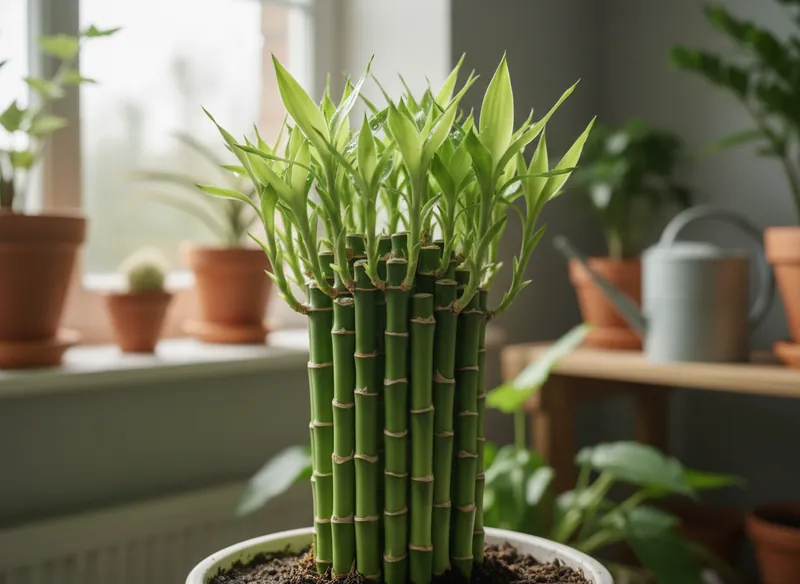
- Witches' broom · A dense mass of small, disorganized stems and twigs grows from a single point on a larger branch.
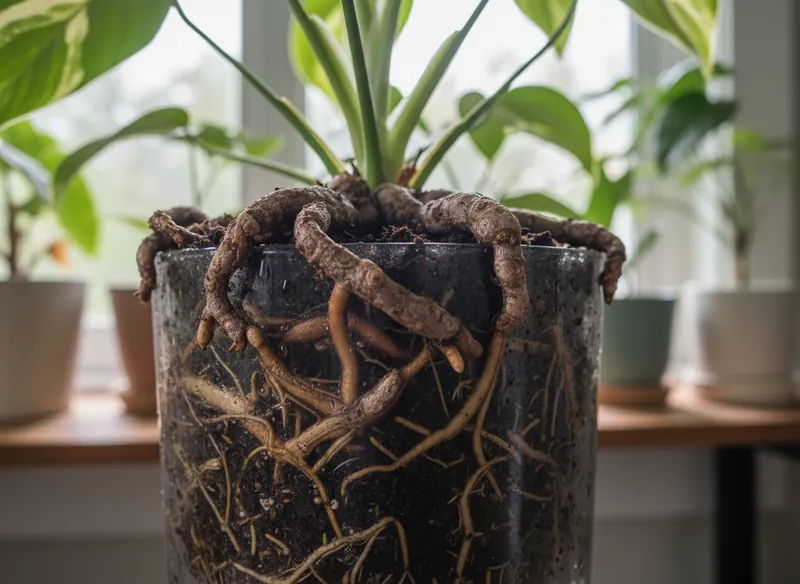
- Swollen or knotted roots · Roots develop swellings, galls, or abnormal growths that disrupt their smooth, regular shape near the crown.
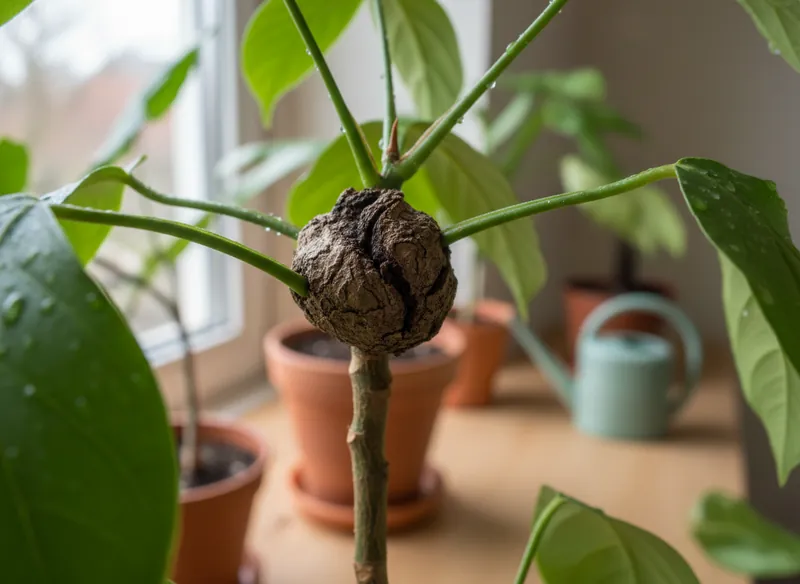
- Gall or swelling on a stem · An abnormal growth, varying in shape and size, develops directly on the surface of stems or branches.
- Leaf galls or growths · Growths or swellings of varying shapes and colors appear directly on the tissue of leaves, stems, or veins.
What to do now
Observe and manage galls
- Inspect the whole plant carefully to assess the number of galls. One or two are not a problem.
- Cut off the most affected leaves or sections of stem cleanly with disinfected pruning shears. This is the most effective method because it removes the organism before it reaches adulthood.
- Discard the cut material immediately in the trash, rather than your compost, to prevent larvae from completing their life cycle and spreading.
- Watch the plant closely for the next 2 to 3 weeks for new galls.
- Avoid any chemical treatment. Insecticides are ineffective because the gall fully protects the pest inside.
Prevention
- Inspect every new plant carefully before bringing it into your home.
- Maintain good air circulation around your plants to discourage flying insects.
- Check the undersides of leaves and new growth regularly, as these are preferred egg-laying sites.
- Keep plants healthy with appropriate watering and light to make them more resistant to attack.