
Diseases
Sooty mold
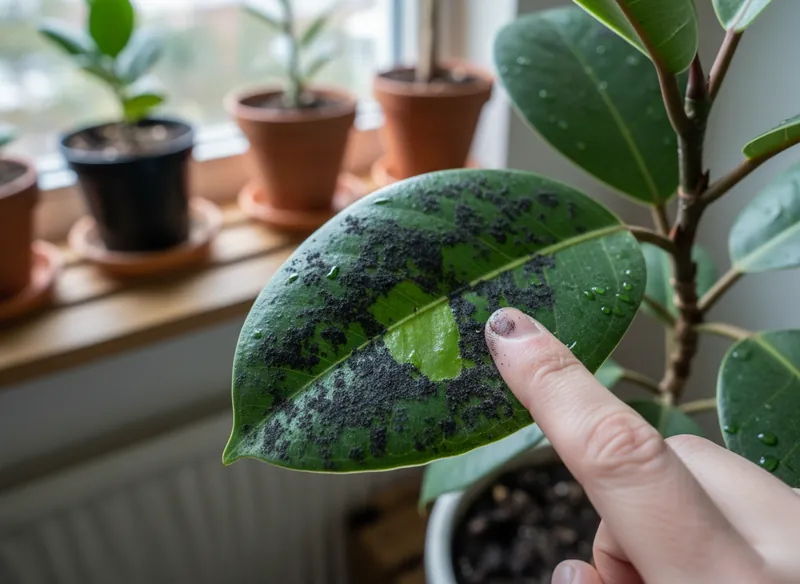
A black, soot-like coating covering leaves.
Sooty mold is a fungus that grows on honeydew, a sticky, sugary substance excreted by piercing-sucking insects such as aphids or scale insects. The fungus does not directly parasitize the plant but forms a black surface coating that blocks light. If untreated, this layer prevents photosynthesis, weakening the plant and causing yellowing and premature leaf drop.
Signs to check
- A black, powdery, soot-like coating that rubs off with a damp cloth.
- A sticky substance on leaves (honeydew), often visible before the black coating appears.
- Frequent occurrence beneath and around areas infested with aphids, scale insects, or whiteflies.
- Foliage beneath the black coating is often still green and intact, although weakened.
What you may see
- Black coating (sooty mold) · A dry, powdery black coating resembling soot forms on the surface of leaves and stems.
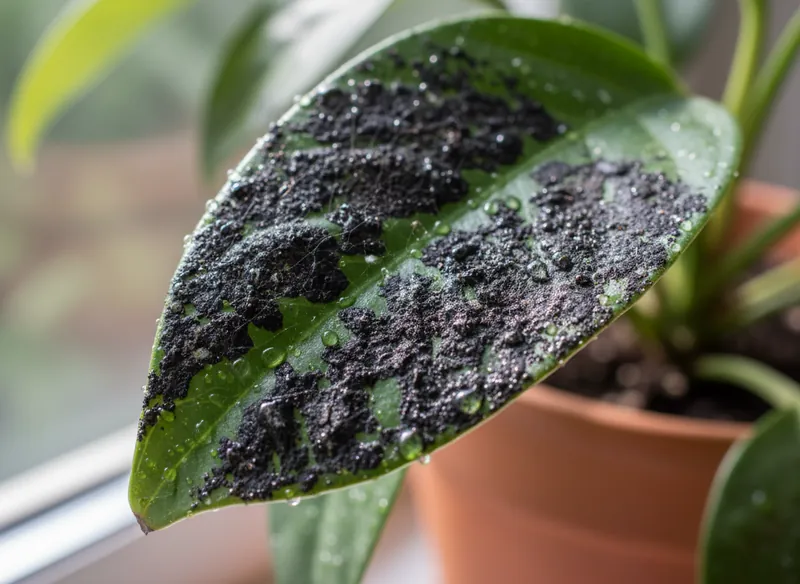
- Black, sooty deposit · A black, powdery, soot-like layer develops on the surface of stems and sometimes leaves.
What to do now
Clean off honeydew and address its cause
- Prepare a cleaning solution. Mix 15 mL (about 1 measuring tablespoon) of liquid black soap into 1 liter of lukewarm water (about 1.06 US qt). Lukewarm water helps the soap dissolve completely.
- Spray the solution generously over all sticky areas. Do not forget the undersides of leaves, a favorite refuge for pests.
- Leave it on for 5 to 10 minutes. The soap will soften the honeydew and sooty mold, making them easier to clean off.
- Gently wipe each leaf with a soft sponge or microfiber cloth. The aim is to physically remove honeydew, sooty mold, and some of the insects.
- Rinse the plant with clean water to remove soap residue. You can place it in the shower or use a spray bottle filled with water.
- Identify and treat the insect responsible. Once the plant is clean, apply a targeted treatment, such as neem oil, alcohol, or a suitable insecticide, to eliminate the source of the problem and prevent honeydew from returning.
Prevention
- Inspect the undersides of leaves and leaf axils every week for pests.
- Wipe dust off leaves with a damp cloth once a month.
- Quarantine every new plant for 2 to 3 weeks before placing it near the others.
- Ensure good air circulation around your plants to make the environment less welcoming to pests.