
Pests
Aphids
Small green, black or yellow insects clustered on young shoots? Identify aphids, their damage and the honeydew they leave behind.
An aphid is a sap-sucking insect measuring 1 to 4 mm (about 0.04–0.16 in) that lives in colonies on tender tissues: young shoots, buds and leaf undersides. The natural aphid treatment explains how to get rid of them using soft soap.
By sucking sap, it weakens the plant and can transmit diseases. Excess sugar is excreted as honeydew, a sticky substance that encourages a black fungus, sooty mold, and limits photosynthesis.
Signs to check
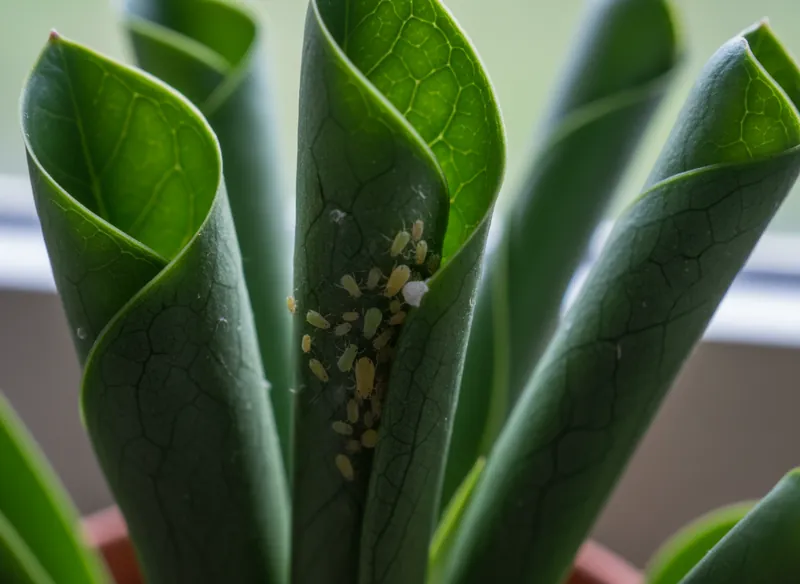
- Pear-shaped green, black or yellow insects measuring 1–4 mm (about 0.04–0.16 in).
- Clusters of motionless insects on stems, young leaves or leaf undersides.
- Leaves and stems sticky to the touch because of honeydew.
- A black soot-like coating (sooty mold) on leaves.
- Distorted or curled young leaves and buds.
What you may notice
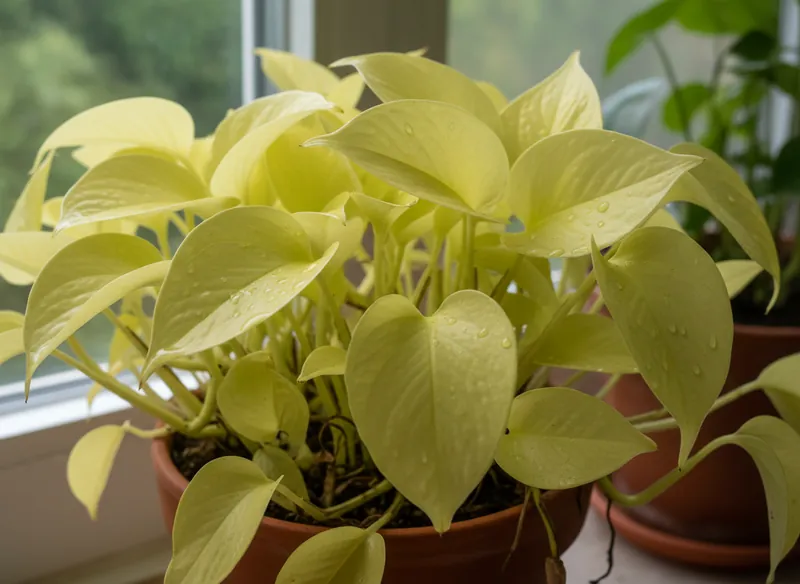
- General leaf yellowing · Pale yellow discoloration spreads across the foliage, often affecting the oldest leaves first.
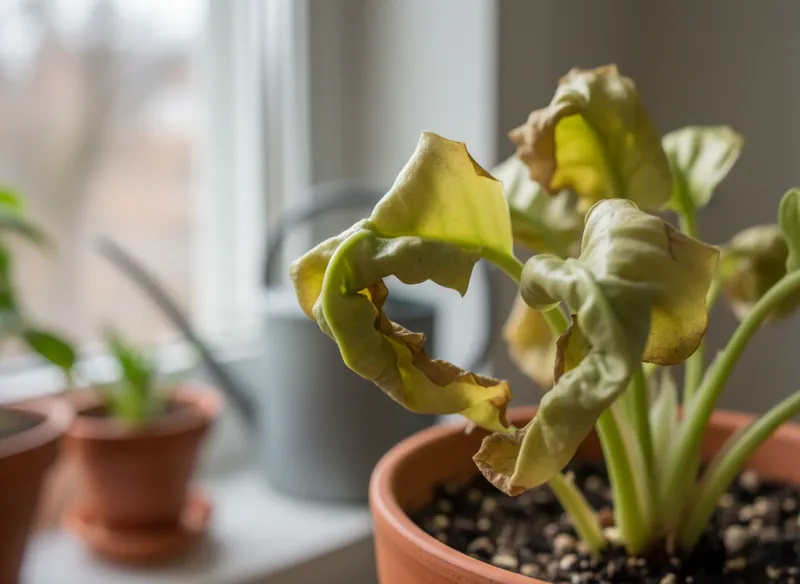
- Distorted or twisted leaves · Leaves grow abnormally, appearing curled, blistered, twisted or unusually small on the plant.
- Curled or rolled leaves · Young leaves become distorted and roll inwards, often downwards or towards the center, creating a blistered appearance.
- Black coating (sooty mold) · A dry, black, soot-like powdery coating forms on leaf and stem surfaces.
- Black sooty coating · A black, powdery, soot-like layer develops on stems and sometimes leaves.
What to do now
Natural aphid treatment
- Isolate the infested plant immediately. Aphids, especially winged forms, spread very quickly.
- Put the plant in the shower. Thoroughly rinse every part with a stream of lukewarm water to physically dislodge as many insects as possible.
- Prepare a soft soap solution. Dilute approximately 15 to 30 mL (1 to 2 US tablespoons) of liquid soft soap in 1 liter (about 1.06 US qt) of lukewarm water. The soap works on contact by blocking aphids' breathing passages.
- Spray the solution generously over the whole plant. Do not forget leaf undersides and stems, where they like to hide.
- Leave it on for 20 to 30 minutes, then rinse with clean water to remove soap residue that could block leaf pores.
- Repeat every 3 to 4 days for 2 weeks to eliminate new generations that may hatch in the meantime.
Rinsing foliage
- Put the plant in your shower or bath. If it is too large, tilt it outdoors.
- Wrap the base of the pot in a plastic bag to avoid completely soaking the potting mix.
- Set the water to moderate pressure and a lukewarm temperature. An excessively strong jet or cold water could damage foliage.
- Rinse every leaf thoroughly, concentrating on the undersides, where pests like to hide.
- Do not forget stems and leaf axils (the junctions where leaves meet stems).
- Let the plant drain completely for at least 20–30 minutes before returning it to its place.
- Ensure good air circulation around the plant so leaves dry quickly, preventing fungal diseases.
Prevention
- Inspect leaf undersides and young shoots once a week.
- Quarantine every new plant for 2 to 3 weeks before placing it near others.
- Avoid excessive nitrogen fertilizer, which makes young shoots tender and highly attractive to aphids.
- Clean leaves regularly to remove dust and any pests.
- Inspect leaf undersides once a week for early signs.
- Shower plants that tolerate it once a month to remove dust and potential pests.
- Maintain high ambient humidity (above 50%) to discourage spider mites, which love dry air.