
Monstera diseases and other problems: symptom guide
Monstera diseases and other problems: symptom guide
On a monstera (Monstera deliciosa), the same symptom can have five different causes. What distinguishes them is almost never the color of the leaf: it is where the symptom appears on the plant and the condition of the potting mix when you notice it.
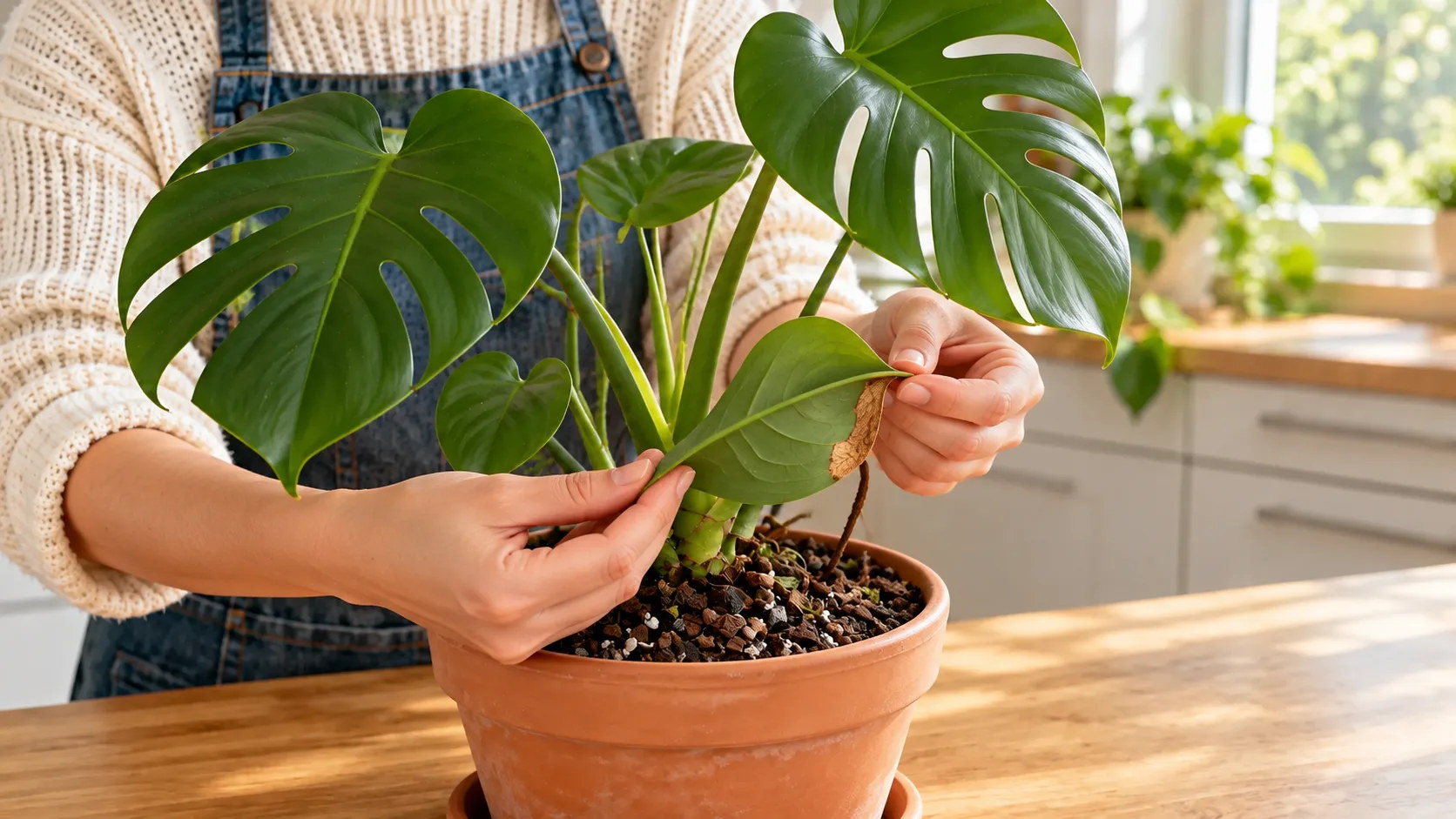
Three questions to ask before treating
Before looking for a disease, check three things: where the symptom appears, how wet the potting mix is and the texture of the damaged area.
Location first. Damage to the lower leaves points to aging or a root problem. Damage to new leaves comes from light, a pest or too much fertilizer.
Next, the potting mix. Push a finger 5 cm (about 2 in) into it: if it is waterlogged a week after watering, suspect overwatering; if it is dry and has pulled away from the sides of the pot, suspect underwatering.
Finally, texture. Dry and brittle means water stress or scorching. Soft and wet means fungus or bacteria. These two groups of problems need entirely different responses.

Yellow leaves
One or two lower leaves slowly turning yellow are normal. Monstera sacrifices its oldest leaves to feed the new ones, particularly after a growth spurt. This specific case is covered on our page about yellowing lower leaves.
What is not normal is yellowing that affects several leaves at once or moves up the plant. The causes, in order of frequency:
- Overwatering. Potting mix still wet after a week, uniform soft yellowing, sometimes a sour smell from the pot. This is by far the leading cause in indoor monsteras. See overwatering.
- Established root rot. Yellowing comes with soft stems at the base and brown roots that fall apart between your fingers when you remove the plant from its pot. See root rot.
- Prolonged lack of water. Here, yellowing comes with dry edges and potting mix that has pulled away from the sides. See underwatering.
- Insufficient light. Pale, diffuse yellowing, stems reaching towards the window and unusually long internodes. See low light.
The full range of causes is covered on the yellow leaves page.
Brown tips and edges
A thin, dry brown tip with a yellow border is a symptom of dry air or irregular watering. It does not advance quickly and is not contagious.
Distinguish the possibilities as follows:
- Brown tips alone on several leaves during winter: dry air near a radiator. See brown leaf tips and low humidity.
- The whole edge browned in a continuous band: salts accumulated in the potting mix or fertilizer that was too concentrated. See brown leaf edges and fertilizer burn.
- Brown tips only on new leaves: almost always too much fertilizer. Flush the pot thoroughly with water and stop all feeding for six weeks.
A leaf with a brown tip will not turn green again. If its appearance bothers you, trim it with scissors following the natural outline of the leaf blade, and correct the cause for the next leaf.
Brown or black spots on the leaf blade
Touch the spot. Dry and brittle means a physiological problem. Soft and wet means infection.
A dry patch, often in the middle of the leaf blade with a yellow ring, comes from direct sunburn or a sudden temperature change. It stays in one place. See brown spots.
A soft patch that looks oily, expands over a few days and turns black indicates a fungal or bacterial attack encouraged by wet foliage and stagnant air. See black spots. Black spots near the leaf stalk, together with a softened stem, usually trace back to roots already affected by rot.
One other common case on monstera is small brown marks on a leaf that is still rolled up. These come from mechanical rubbing as the leaf unfurls, not disease, and the leaf will grow normally.
Limp leaves and collapsing stems
A collapsing monstera is either thirsty or waterlogged, and the pot settles the question in ten seconds.
Dry potting mix, a light pot and limp leaves of normal color mean the plant needs water. It should stand back up within a few hours after a thorough watering. See wilting plants.
Wet mix, a heavy pot, leaves that are limp and yellowing, and brown stem bases mean the roots no longer work and cannot absorb anything despite the water available. Remove the plant from its pot, cut away the brown, soft roots and repot in fresh, free-draining mix. See root rot.
A stem falling over while its leaf remains healthy is a different matter: monstera is a vine, and a long stem without support eventually tips under its own weight.
Small pests and sticky traces
Always turn a leaf over before concluding that the plant has a disease. Most monstera pests live beneath the leaf blade and along the leaf stalks.
| Visible sign | Likely pest | Where to look |
|---|---|---|
| Silvery patches and black specks | Thrips | Undersides of leaves, veins |
| Fine webbing, yellow-stippled leaves | Spider mites | Leaf stalk axils |
| White cottony clusters | Mealybugs | Bases of leaf stalks |
| Small, immobile brown shields | Scale insects | Stems, undersides of leaves |
| Sticky, shiny leaves | Honeydew | Leaves below the pests |
| Small black flies around the pot | Fungus gnats | Surface of the potting mix |
Thrips are the main monstera pest: their feeding leaves lasting silvery patches on the leaf blade and deforms future leaves. They reproduce quickly in heated interiors and need several treatments five to seven days apart to cover the full cycle.
Spider mites reveal themselves through very fine yellow stippling and webs in the leaf stalk axils. They thrive in dry air, the exact opposite of the conditions that favor fungal spots.
A sticky leaf is never an isolated phenomenon: it is honeydew, so there is a sap-sucking insect above it, such as scale or aphids. White fuzz on stems belongs to the same group, whereas a white coating on the surface of the potting mix is simply soil mold, with no direct danger to the plant.
Small new leaves or leaves without splits
New leaves smaller than the previous ones, solid and without holes or splits, indicate too little light nine times out of ten.
Monstera develops its splits only once mature, and only if it receives bright indirect light for several hours a day. A plant more than two meters (about 6.6 ft) from a window declines: each new leaf emerges smaller and more closed than the last. See low light.
If the light is adequate, consider two other possibilities:
- No support. This vine needs to climb to produce large, fenestrated leaves. A moss pole can noticeably change leaf size within one growing season.
- Cramped roots or depleted potting mix. Roots emerging through the drainage holes and water running through without being retained mean it is time to move up one pot size in spring, when active growth resumes in your conditions.
A new leaf that emerges curled or deformed and never flattens out is more likely to indicate thrips feeding as it unfurled, or a lack of water at the precise moment it developed.
Frequently asked questions
Why are my monstera leaves turning yellow?
First check where the yellow leaf is. One or two lower leaves slowly turning yellow are part of normal aging. Several leaves turning yellow at once, including those in the middle of the plant, with potting mix still wet several days after watering, almost always indicate overwatering.
How do I recognize thrips on a monstera?
Thrips leave silvery or gray patches on the leaf blade, dotted with tiny black specks of droppings. The insects themselves are 1 to 2 mm (about 0.04 to 0.08 in) long, slender and quick to move away when you turn the leaf over. Unlike limescale, this silvery stippling does not wipe off.
My monstera has brown spots: is it serious?
It depends on their texture. A dry, brittle brown patch, often edged with yellow, comes from water stress or sunburn and does not spread. A soft brown patch that feels wet and spreads from day to day is fungal or bacterial and calls for isolating the plant.
How can I tell if my monstera is overwatered?
Push a finger 5 cm (about 2 in) into the potting mix. If it is still distinctly wet more than a week after the last watering, water is lingering in the pot. Other signs include a sour smell, small black flies around the mix and leaves that turn yellow without drying out.
Why does my monstera produce leaves without holes?
The splits develop with maturity and need plenty of light. A young plant normally produces solid leaves for two to three years. On an adult plant, small new leaves without splits indicate too little light, sometimes a lack of support, because monstera develops its large leaves only as it climbs.