
How often to water monstera: use the soil test
How often to water monstera: use the soil test
No calendar can tell you when to water your monstera. The interval depends on pot size, light, season and growing medium: two identical plants in different rooms can have very different water needs.
There is no fixed interval, only a test
Nobody can tell you how often to water your monstera (Monstera deliciosa), because the answer depends on your pot, light and growing medium. The same plant in a 15 cm (about 5.9 in) terracotta pot beside a large window uses water three times faster than its twin in a 30 cm (about 11.8 in) plastic pot two meters (about 6.6 ft) from the window.
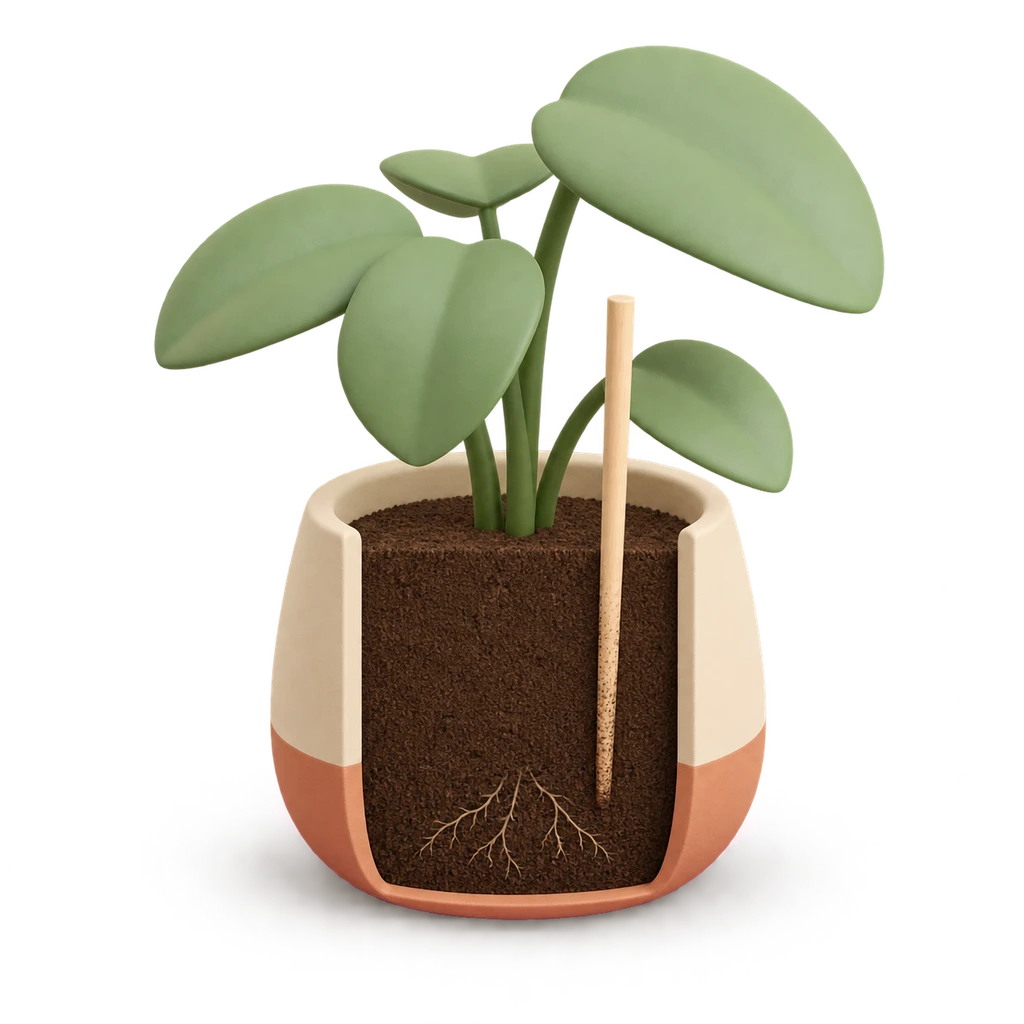
Potting mix dry to 1 cm: still moist
The finger test
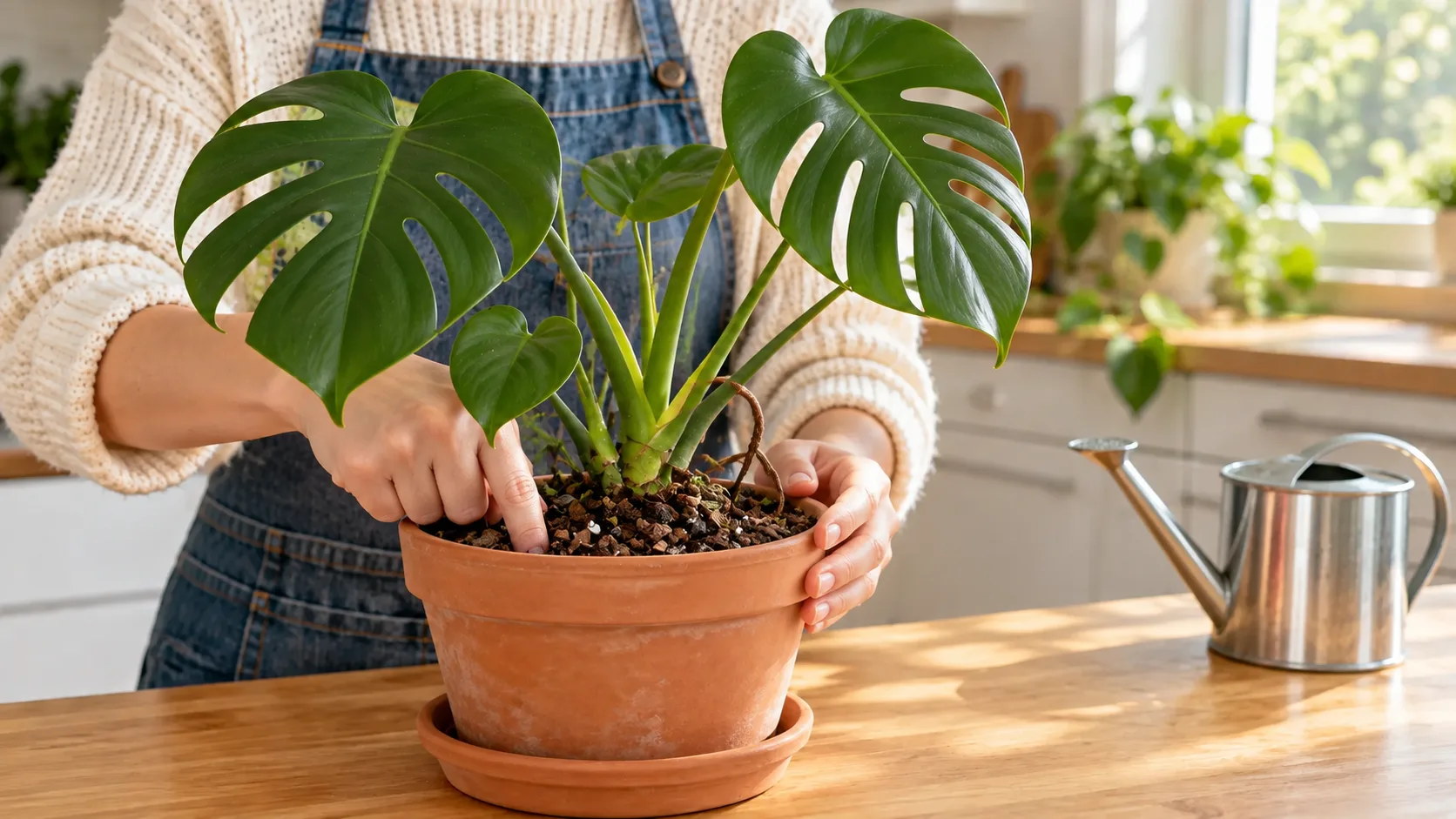
Push a finger or wooden skewer 2 cm into the potting mix: if it is dry, water; if it is still moist, wait. The condition of the mix decides, not the calendar.
That leaves one reliable method: push your index finger 2 to 3 cm (about 0.8–1.2 in) into the growing medium. If it is dry throughout that depth, water. If it is still moist or sticks to your fingers, wait two days and test again.
The second check is just as useful: the weight of the pot. Lift it just after watering, then again four or five days later. The difference is clear. After three or four cycles, your hand recognizes a dry pot without touching the soil. This is especially valuable for large plants, where the surface dries well before the bottom.
Water thoroughly in one go, until it drains
Water a monstera in one generous session, until water comes out through the pot's drainage holes. Pour slowly across the entire surface of the growing medium, rather than into one corner, and stop as soon as excess water runs out.
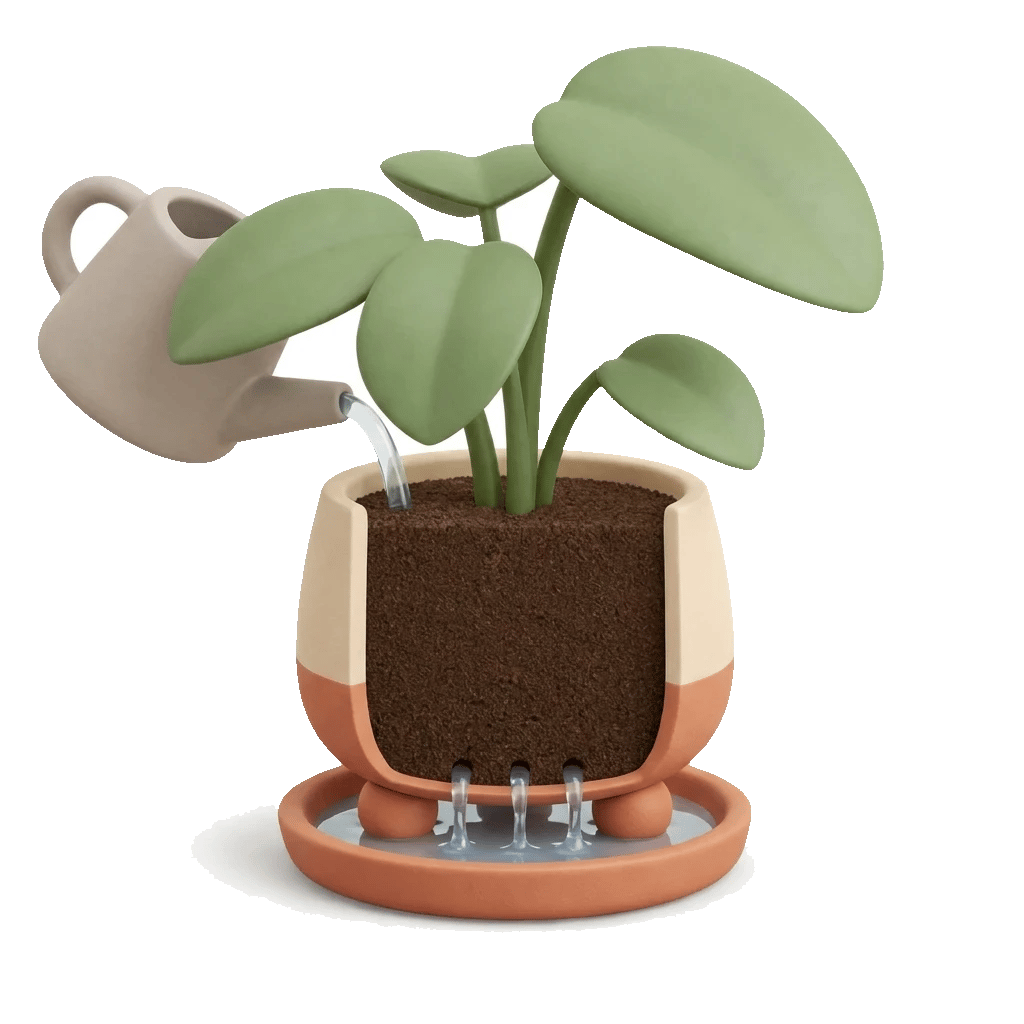
- pour slowly
- water drains out
Water until it drains
Pour until water runs out through the drainage holes: the root ball is wet all the way through.
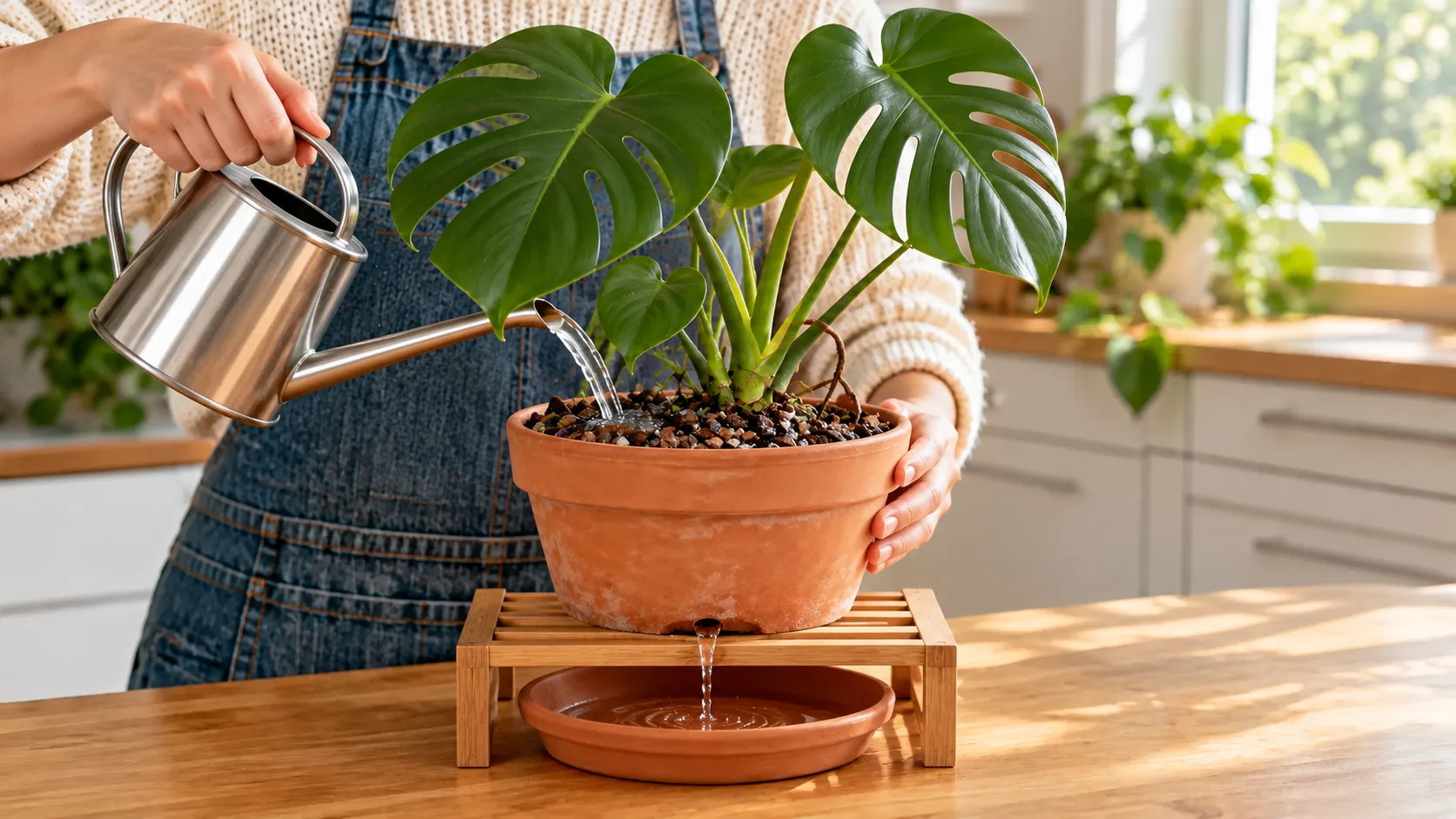
This drainage serves two purposes. It ensures that the root ball is moistened throughout its depth, including the roots at the bottom that do most of the work. It also flushes out mineral salts accumulated from fertilizer and tap water, which form the whitish crust on the surface.
The opposite habit, half a glass every two days, creates exactly what you want to avoid: a constantly damp upper layer, a bottom that never gets wet again, and roots confined to the top ten centimeters (about 3.9 in).
A pot without a drainage hole makes all this impossible. If your monstera sits in a sealed decorative container, keep it in a nursery pot with holes inside and lift that out for watering.
Always empty the saucer
Let the pot drain thoroughly, then empty the saucer. Water left in the saucer no longer benefits the growing medium: it only drowns the roots at the bottom.
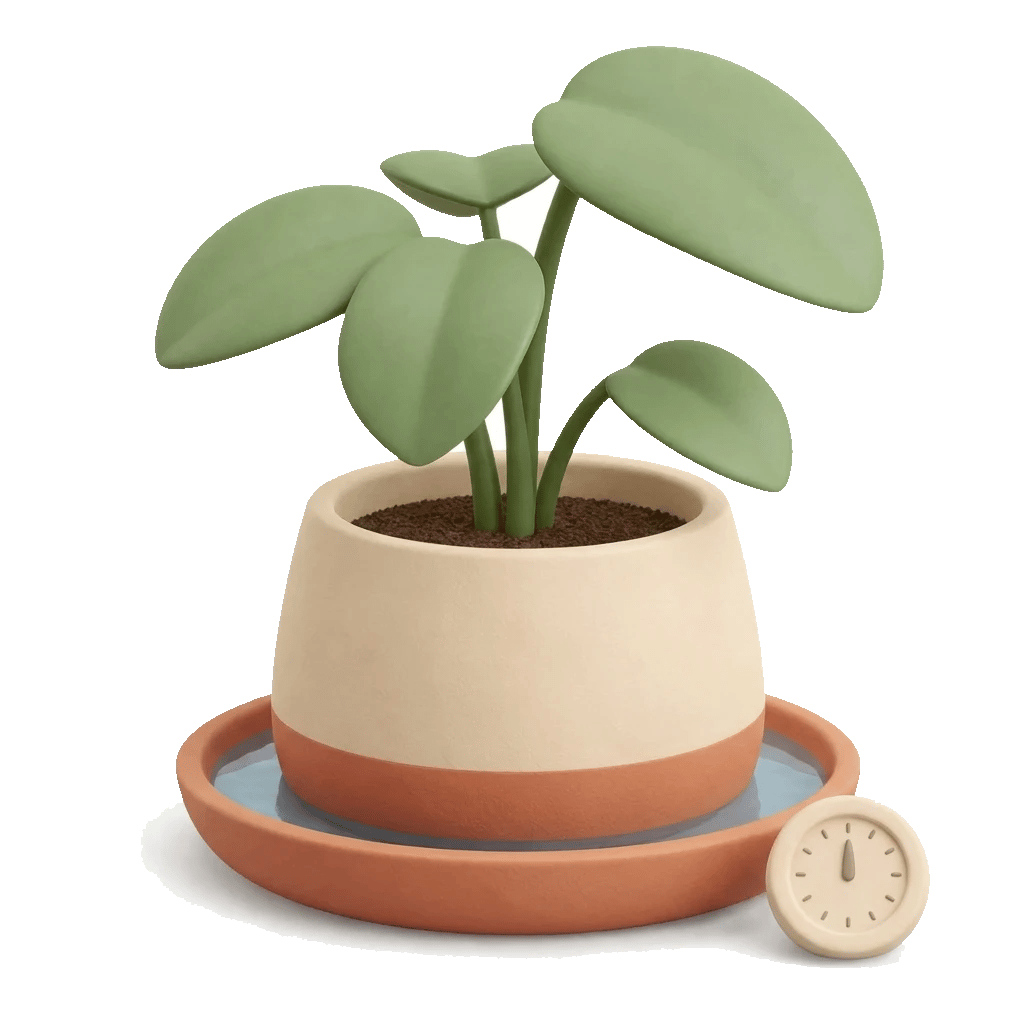
- standing water: empty it
- after draining
Empty the saucer
Empty the saucer once the pot has drained: standing water deprives the roots of air.
Approximate seasonal intervals
Allow roughly one watering a week in summer and one every 10 to 14 days in winter, where those seasons correspond to active growth and winter slowdown. These figures are a starting point to adjust using the finger test, never a rule. Match the periods below to your local light and growth conditions.
17 cL every 11 days
| Task | January | February | March | April | May | June | July | August | September | October | November | December |
|---|---|---|---|---|---|---|---|---|---|---|---|---|
| Watering | reduced | reduced | reduced | moderate | moderate | high | high | high | moderate | reduced | reduced | reduced |
| Growth | resting | resting | active | active | strong | strong | strong | strong | active | active | resting | resting |
| Feeding | no | no | yes | yes | yes | yes | yes | yes | yes | no | no | no |
| Repotting | no | no | favorable window | favorable window | favorable window | no | no | no | favorable window | no | no | no |
| Period | Approximate interval | What changes |
|---|---|---|
| Spring and summer | About 7 days | Active growth, long daylight hours, rapid evaporation |
| Autumn | About 10 days | Growth slows and the growing medium dries more slowly |
| Winter | 10 to 14 days, sometimes longer | Little light, almost no growth, reduced needs |
Heating complicates matters: it dries the air without increasing the roots' water consumption. Leaves may need more humidity while the root ball is still wet. In that case, mist or move a humidifier closer, but do not water.
Too much or too little water: different signs
Many gardeners water a plant already suffering from overwatering because its leaves droop in both cases. The table below distinguishes the two sets of symptoms.
| Sign | Overwatering | Underwatering |
|---|---|---|
| Yellow leaves | Soft, widespread yellowing, often at the bottom | Uncommon; edges are more often dry and brittle |
| Plant posture | Collapsed and does not recover after watering | Drooping, then straightens within a few hours of watering |
| Growing medium | Waterlogged for several days | Shrunken and pulled away from the pot walls |
| Smell around the pot | Stagnant soil, sometimes sour | None |
| Stem bases | Soft and brown | Firm |
The simplest test is recovery: a thirsty plant straightens within six to twelve hours of thorough watering. An overwatered plant stays the same or continues to deteriorate. In the latter case, stop watering and consult the overwatering guide before considering taking it out of its pot.

Bottom watering: useful, but not the only method
It is mainly useful when the growing medium has become water-repellent, meaning that water poured from above slides down the sides and comes out within ten seconds without wetting the root ball. The classic sign is shrunken soil with a gap between it and the pot.
Stand the pot in a basin containing 3 to 5 cm (about 1.2–2 in) of water and let it absorb water for 20 to 30 minutes, until the surface feels moist. Then lift it out and let it drain.
Its limitation is the direction of water movement. Entering only from below, water flushes nothing out: mineral salts rise and concentrate at the surface, where they eventually burn shallow roots. Plan a conventional watering from above, until water flows freely out, every three or four cycles.
Which water to use
Tap water is suitable in the vast majority of cases, on two conditions: leave it standing uncovered for 24 hours so the chlorine evaporates, and use it at room temperature. Cold water straight from the tap shocks tropical roots, particularly in winter.
In very hard-water areas, a whitish deposit forms on the growing medium's surface and around leaf edges. Monstera tolerates this better than many houseplants, but alternating with rainwater limits the build-up. Avoid water treated by a domestic water softener: it exchanges hardness minerals for sodium, which roots tolerate poorly.
Semi-hydroponics and stems kept in water
A monstera grown in clay pebbles or lava rock is maintained at a water level rather than watered conventionally. The reservoir should cover a quarter to a third of the container's height, never more: the upper roots stay exposed to air, allowing them to breathe. Let the reservoir empty completely before refilling, renewing the oxygen around the roots.
Fertilizer is essential with this method because the inert medium supplies nothing. A hydroponic solution diluted to half strength at each refill during the growing period is enough.
A simple stem in a vase survives for a long time but makes little progress. Without nutrients, it produces smaller and smaller leaves over the months. Change the water weekly to prevent bacterial growth, and plan to move it into growing medium or semi-hydroponics once its roots exceed 5 cm (about 2 in).
Frequently asked questions
How often should I water a monstera?
Roughly once a week in summer and once every 10 to 14 days in winter, where growth follows that seasonal pattern, but these are only approximate intervals. The only reliable guide is the finger test: water when the top 2 to 3 cm (about 0.8–1.2 in) of growing medium is dry. A large plastic pot in a cool room may last three weeks.
How can I tell if my monstera is overwatered?
Leaves turn yellow and soft, often starting at the bottom of the plant, and the growing medium stays waterlogged for several days after watering. A stagnant-soil smell around the pot signals that the roots are beginning to suffer. Let it dry completely before watering again.
How do I water a monstera properly?
Pour slowly over the entire surface of the growing medium until water runs through the drainage holes, then stop. Let the pot drain completely, then empty the saucer. One thorough watering is better than three small amounts spread through the week.
Is bottom watering better for a monstera?
It is mainly useful when the growing medium has become water-repellent and water slips down the sides without soaking in. Stand the pot in 3 to 5 cm (about 1.2–2 in) of water for 20 to 30 minutes, until the surface is moist. However, this concentrates mineral salts near the top of the pot: flushing from above is still needed every three or four waterings.
What water should I use for a monstera?
Tap water is suitable in the vast majority of cases, left standing uncovered for 24 hours and used at room temperature. Cold water straight from the tap shocks tropical roots. With very hard water, a white deposit appears on the surface: alternate with rainwater.
Can I keep a monstera in water permanently?
A stem with a node can live in a vase for a long time, but its growth stalls: without nutrients, it eventually produces smaller and smaller leaves. For long-term growing in water, switch to semi-hydroponics with an inert medium and diluted hydroponic fertilizer.