
Monstera light requirements: windows, shade and sun
Monstera light requirements: windows, shade and sun
In the forest, a monstera germinates in shade beneath the canopy, then climbs a trunk until it reaches the light. At home, that double life comes down to a simple rule: bright but filtered light, never full sun and never the back of the room.
Which window and how far away
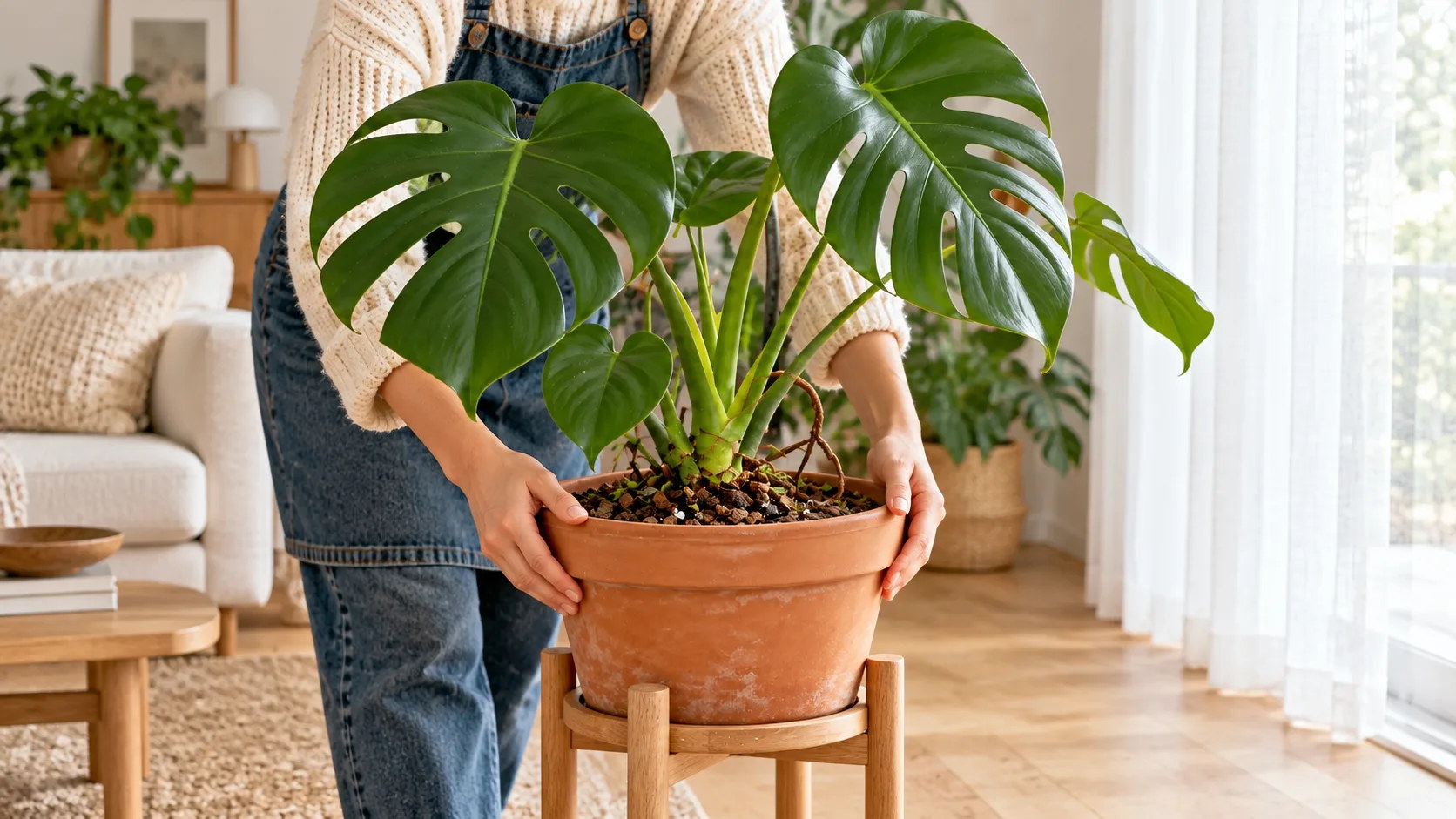
The right place for a monstera (Monstera deliciosa) is in bright indirect light, within 1.5 m (about 5 ft) of an east- or west-facing window. This best recreates the light beneath a forest canopy: plentiful, but diffused by the foliage above.
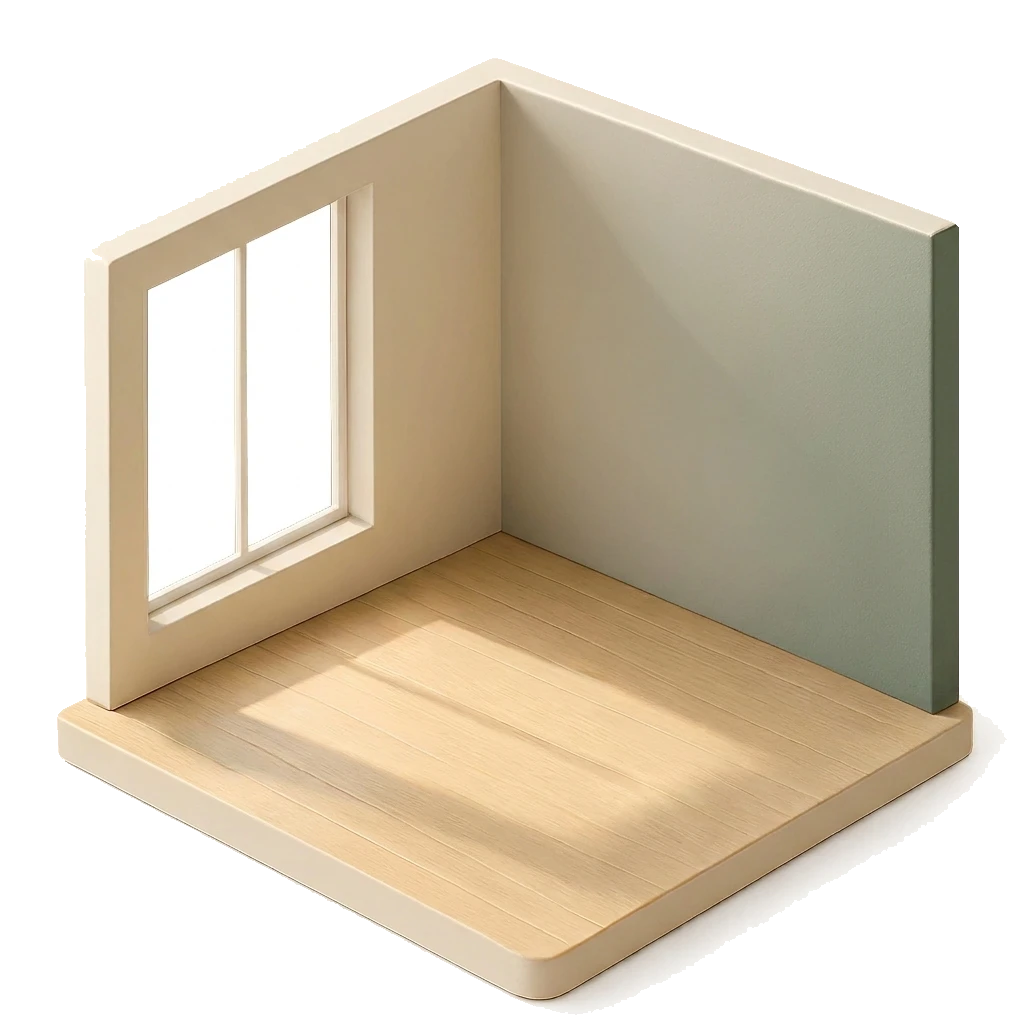
At 1 m from the window: bright light
Distance from the window
Move the plant around the room: for swiss cheese plant, the recommended zone is 0 to 1,5 m from the glass. Light levels fall very quickly with distance.
By window direction, using the northern-hemisphere conditions of the source guide; north and south reverse roles in the southern hemisphere:
| Window | Recommended distance | Precaution |
|---|---|---|
| East | 0 to 1 m (0 to about 3.3 ft) | None: morning sun is gentle |
| West | 0.5 to 1.5 m (about 1.6 to 5 ft) | Move it aside in summer: late-afternoon sun is strong |
| South | 1.5 to 2 m (about 5 to 6.6 ft), or just behind a sheer curtain | A sheer curtain is essential if the plant is in the direct line of the sun |
| North | Right by the glass | Slower growth and fewer splits |
The common impulse is to put the plant in a corner because it looks good there. That is almost always too dark: light levels fall dramatically as you move away from the glass, much faster than your eyes suggest, because human vision automatically compensates.
The shadow test
Hold your hand at leaf height, palm down, and look at the shadow it casts on the pot or floor around midday.
- A sharp shadow with clearly defined edges: direct light. Too much for a monstera in summer, but acceptable for an hour or two in the morning.
- A visible shadow with soft edges: bright indirect light. Exactly the target.
- A barely visible shadow: low light. The plant will survive, but no longer produce good leaves.
- No shadow at all: too dark. Move the plant.
This five-second test is more useful than any visual estimate. Repeat it in winter: in the northern hemisphere, a perfect spot in June can become too dim in December; use your local seasons elsewhere.
Light and leaf splits: the direct link
Leaf splits and holes depend largely on the light received. A split leaf takes considerable energy to produce; a plant short of light makes solid leaves that are smaller and fewer.
Leaf shape naturally changes as the plant ages: a young monstera's first leaves are solid and heart-shaped, with splits developing later. But an adult plant reverting to solid leaves is signaling an exposure problem, not becoming young again.
Monstera is a climbing vine: in its native habitat, its leaves become larger and more divided as it climbs towards the light. Providing a support does not replace light, but the two together noticeably speed up the transition to larger leaves.
Signs of too little light
Four symptoms almost always appear in this order:
- New leaves emerge smaller than the previous ones and without splits.
- Internodes lengthen: the distance between two leaves on the stem increases from 10 cm (about 4 in) to 20 or 25 cm (about 8 or 10 in). The plant is stretching in search of light, a response covered on our page about leggy plants.
- The plant leans strongly towards the window, enough to unbalance the pot.
- The potting mix dries more and more slowly, increasing the risk of root rot.
That last point catches many growers out: they keep watering at the same rate, the plant uses less water because it photosynthesizes less, and they diagnose overwatering when the original cause is low light.
Signs of too much direct sun
Direct summer sun leaves characteristic marks: bleached, whitish or pale-yellow patches, only on exposed leaves and exposed parts of leaves. After a few days, the centers of these patches turn brown and dry out.
Two details distinguish sunburn from another problem. The damage appears on the window side, never on leaves at the back of the plant. And it has no diffuse yellow halo, unlike fungal spots.
A monstera outside in summer
An acclimated monstera can spend summer outside very successfully in light shade. A north-facing balcony in the northern hemisphere, a spot beneath a tree or a sheltered terrace can work well. Outdoor light, even in shade, is much stronger than indoor light, and the plant often responds with a dramatic growth spurt.
Acclimation is the one step you cannot skip. Put the plant outside in full shade for three or four days, then in light shade, and allow two weeks before considering a brighter position. A monstera moved straight into open sun can scorch in a single day.
For timing, wait until the last cool nights have passed, generally around mid-May in France, and bring it in when night temperatures approach 10 to 12 °C (50 to 54 °F), around late September in most French regions. Follow temperatures rather than these months in another climate. Even a light frost is fatal: the foliage blackens within hours, followed by the stem.
Winter adjustments
Available light falls sharply in the darker season, November to February in the northern-hemisphere setting of the source guide. Three changes are enough.
Move the plant closer to the window, including to a south-facing window in the northern hemisphere where it might stand three meters (about 10 ft) away in summer. Low winter sun does not scorch it under these conditions.
Clean the glass. This really helps with a window dirtied by a rainy winter, yet it is easy to overlook.
Accept slower growth. One new leaf every three months instead of every month is normal. This is not the time to push growth with fertilizer, repot or worry about growth that should restart in spring, around March under those northern-hemisphere conditions.
Turning the pot
Give it a quarter turn every two to three weeks when you water. Without rotation, a monstera turns all its leaves in one direction and its stem develops a lasting lean towards the window. On a plant 1.5 m (about 5 ft) tall, this eventually becomes a real problem for the pot's balance.
Turning does not replace a support, but it distributes growth and prevents you from discovering one day that the plant no longer has a front.
Frequently asked questions
How much light does a monstera need?
Bright indirect light for several hours a day. In practical terms, the plant should be able to see a large patch of sky from its position, without direct sun striking its leaves for more than an hour or two in the morning. A monstera can survive in a dim room, but it will stop producing split leaves.
Can a monstera live outside?
It can spend summer outside in temperate climates, provided it stands in light shade and is gradually acclimated over two weeks. It cannot stay in the ground year-round in climates with cold winters: it suffers below 10 to 12 °C (50 to 54 °F), and even a light frost destroys the foliage, then the stem. Bring it inside before cool autumn nights.
Can my monstera stand in a south-facing window?
In the northern hemisphere, yes, but behind a sheer curtain or one meter (about 3.3 ft) to the side. Direct midday summer sun burns the leaf blade within hours, leaving bleached patches that turn brown and never recover. An east- or west-facing window is more suitable without extra screening.
Why do my monstera leaves have no holes?
Two reasons often occur together: the plant is still young and it receives too little light. Splits and holes appear once the plant has enough energy and support to climb. Move it closer to a window and wait for the next two or three leaves before judging.
Should I turn my monstera pot?
A quarter turn every two to three weeks is enough. Without this rotation, the plant leans strongly towards the light and may eventually tip over. Do it when you water, so it is easier to remember.
Can a monstera live in a room without a window?
Not for long. Without natural light, expect new leaves to become small, pale and unsplit within a few months, followed by an elongated stem. A grow light switched on for ten to twelve hours a day can compensate; an ordinary desk lamp cannot.