
Pests
Whiteflies
Do white insects fly up when you touch your plant? Identify whiteflies and recognize the damage caused by their larvae.
Whiteflies are small, piercing-sucking insects, 1 to 3 mm (0.04 to 0.12 in) long, that feed on sap, mainly under leaves, and fly up in a cloud when you shake the plant. The whitefly treatment describes a method intended to break their life cycle.
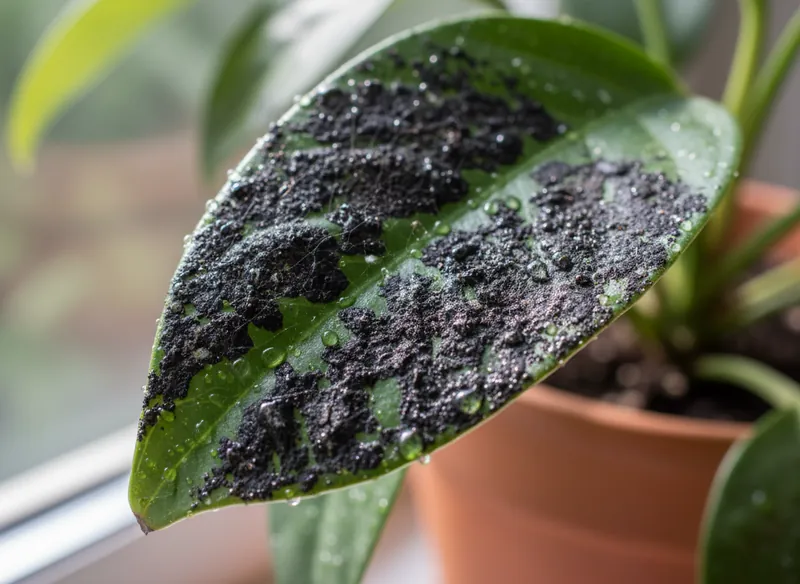
By sucking sap, they weaken the plant and excrete sticky honeydew that encourages sooty mold, a black fungus. An untreated infestation causes yellowing and leaf drop and slows growth.
Signs to check
- A cloud of white insects, 1-3 mm (0.04-0.12 in) long, flies up when you shake the plant.
- Oval, immobile larvae or eggs under the leaves.
- Leaves feel sticky from honeydew.
- A black, sootlike coating (sooty mold) appears on the leaves.
What you may notice
- Black coating (sooty mold) · A dry, powdery black coating resembling soot forms on leaves and stems.
What to do now
Whitefly treatment
- Isolate the infested plant immediately to keep whiteflies from spreading to others.
- Shower your plant. Use a stream of lukewarm water to rinse the leaf undersides thoroughly and dislodge as many adults and larvae as possible.
- The French source gives this black-soap solution: mix 1 to 2 tablespoons of liquid black soap into 1 liter (1.06 US qt) of lukewarm water. The spoon size is not specified.
- The source then calls for spraying the solution generously over the whole plant, especially under every leaf, where larvae and eggs hide.
- Place yellow sticky traps near the plant. The color attracts flying adults and helps reduce their population.
- The source calls for repeating the black-soap spray every 5 to 7 days for at least 3 to 4 weeks, with the stated aim of breaking the reproductive cycle and removing newly hatched insects.
Prevention
- Inspect the undersides of every new plant's leaves carefully before bringing it into your home.
- Quarantine new plants for 2 to 3 weeks.
- Check your plants once a week for early signs.
- Keep air circulating around your plants; whiteflies favor enclosed, poorly ventilated conditions.