
Cherry laurel (Prunus laurocerasus, )
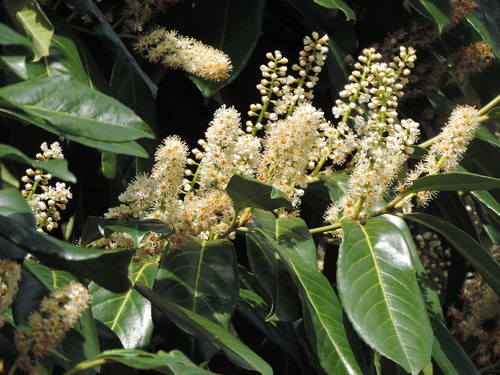

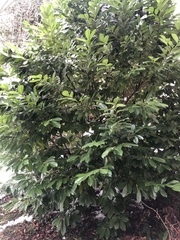
Cherry laurel (Prunus laurocerasus) is an evergreen shrub in the Rosaceae, native to the Black Sea region from the Balkans through the Caucasus to northern Iran. Widely planted as a dense, glossy-leaved hedge in temperate Europe, it releases a bitter-almond smell when a leaf is crushed, indicating cyanogenic compounds present throughout the plant.
Read moreCherry laurel, Common laurel and English laurel
Give plenty of ambient light without direct sun on the leaves.
Sun to deep shade


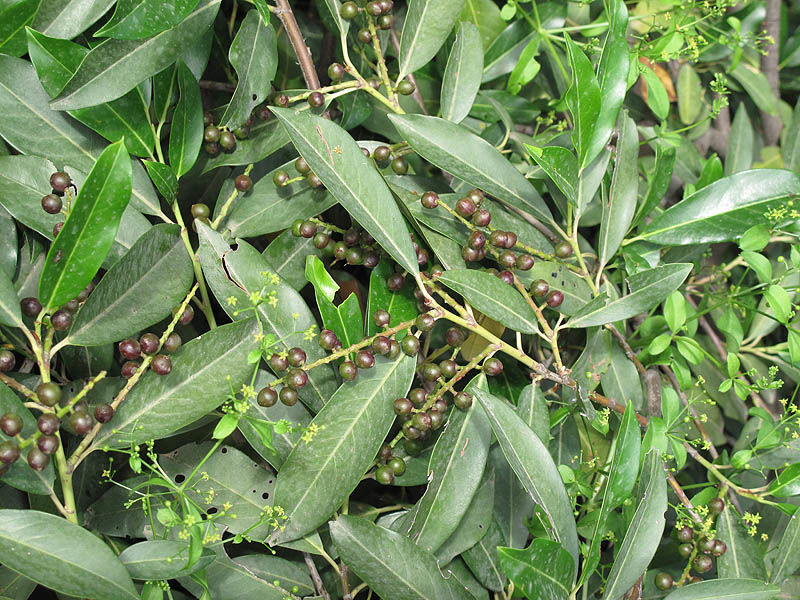
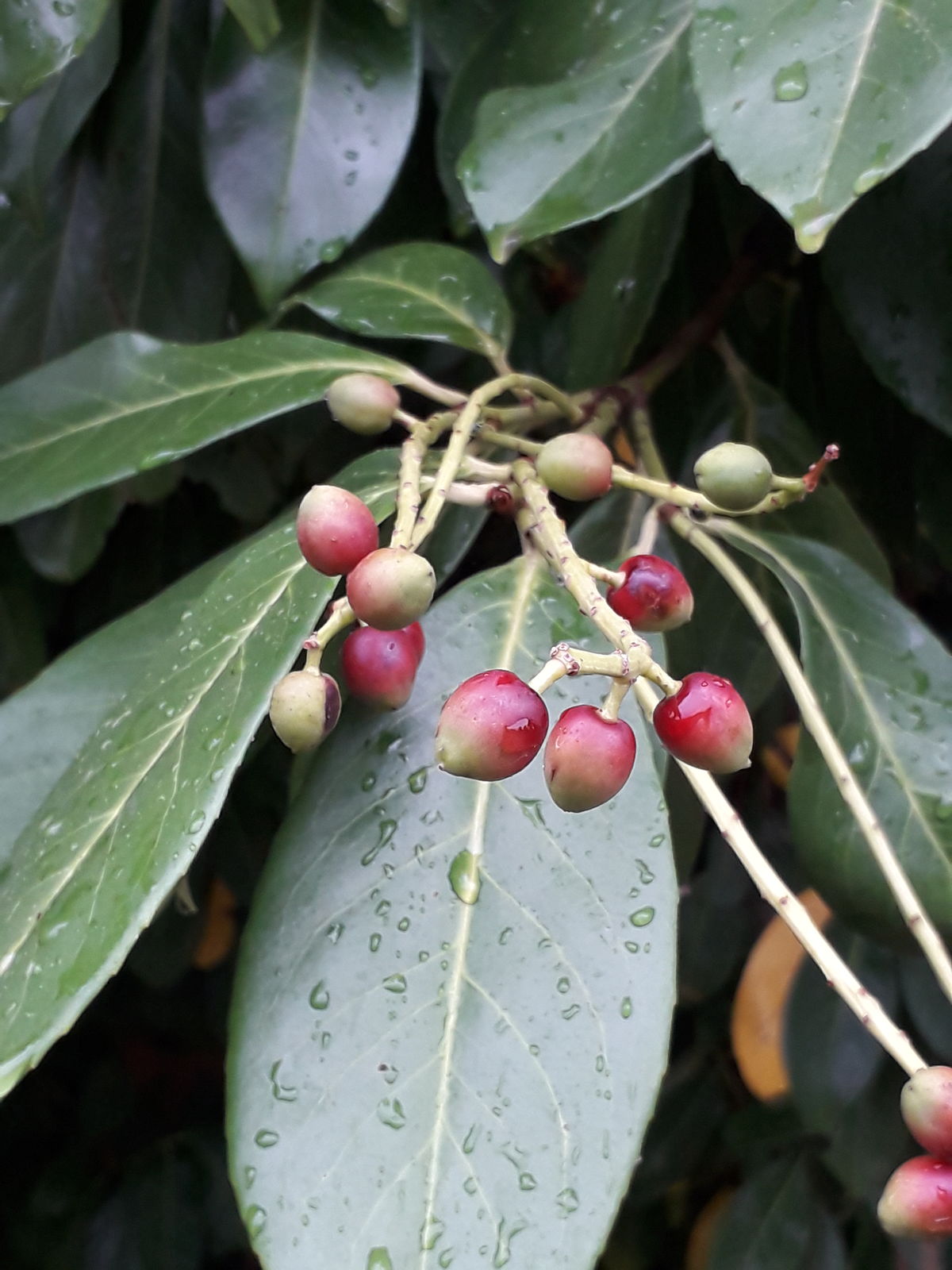
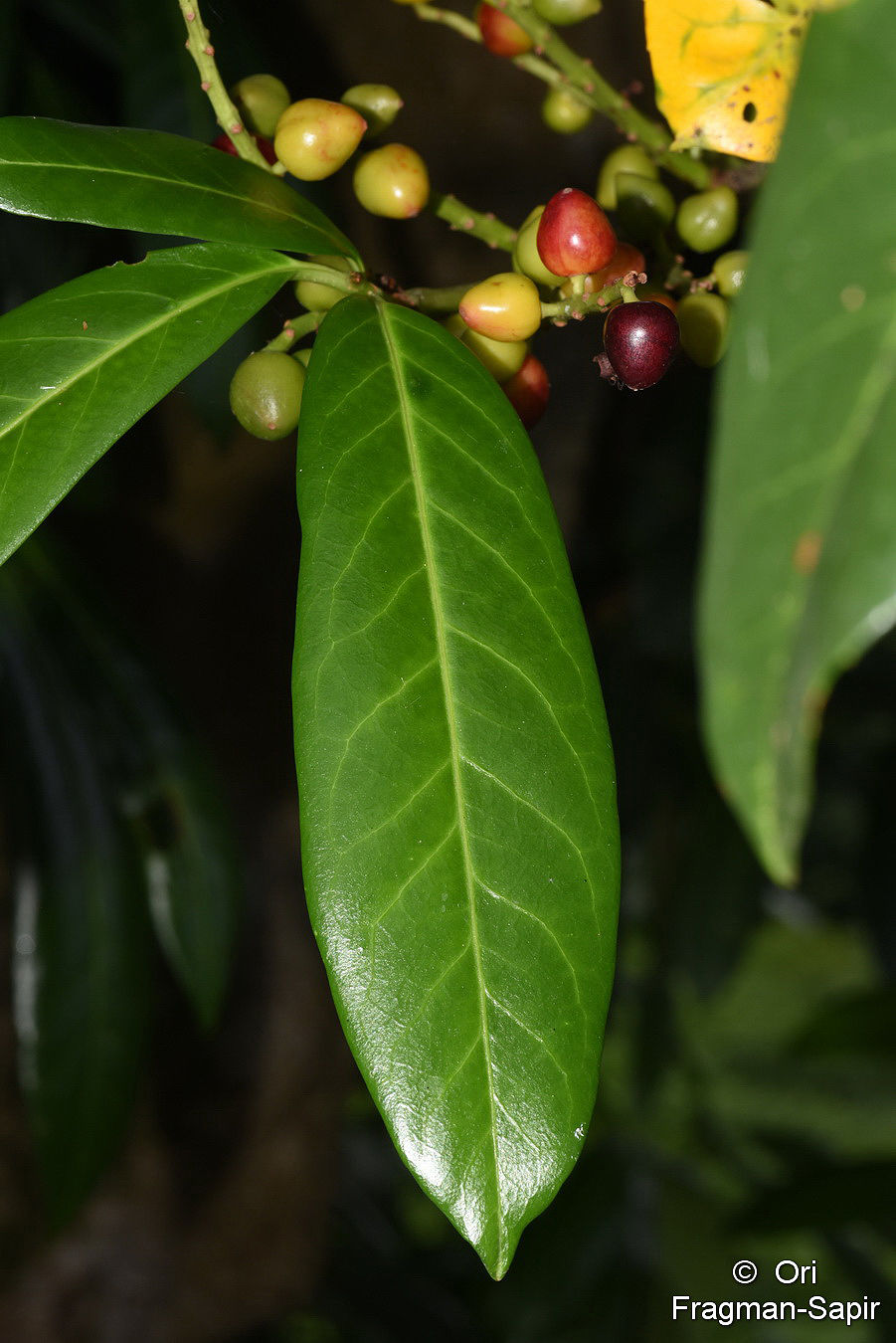
© photo
(c) edgeplot, some rights reserved (CC BY-NC-SA) · cc-by-nc-sa
iNaturalist User · cc0
Codrin Bucur · cc-by
Taken Jan 13, 2022 by Taïssir Marcé (cc-by-sa)
Taken Apr 5, 2022 by Jim Knopf (cc-by-sa)
Taken Feb 3, 2022 by Tristan Jaton-Maria (cc-by-sa)
© copyright of the Board of Trustees of the Royal Botanic Gardens, Kew.


Global distribution
Prunus laurocerasus is native around the Black Sea, from Albania and Bulgaria in southeastern Europe through northern Turkey and the Caucasus to northern Iran in southwestern Asia. Widely planted across temperate Europe, it has naturalized in several regions, where it is considered invasive.
- Native5
- Invasive3
- Turkey
- Bulgaria
- Albania
- Georgia
- Iran
- United Kingdom
- Belgium
- United States (Pacific Northwest)
Hexagons: regions where the plant occurs. Green dots: native range.1
Identity
Cherry laurel (Prunus laurocerasus L., 1753), also called common laurel or English laurel, is an evergreen shrub in the rose family, Rosaceae, and the genus Prunus. Its name combines leaves resembling those of the unrelated bay laurel, Laurus nobilis, with small, black, cherry-like fruits. 1 2
Mistaking cherry laurel leaves for bay leaves has caused food poisoning. Crushed cherry laurel foliage releases a bitter-almond smell, a useful distinction from culinary bay, which belongs to a different botanical family. 6 4
Compared with cherry and plum trees, its relatives in the same genus Prunus, cherry laurel alone produces the prunasin responsible for its cyanogenic odor.
Recognition
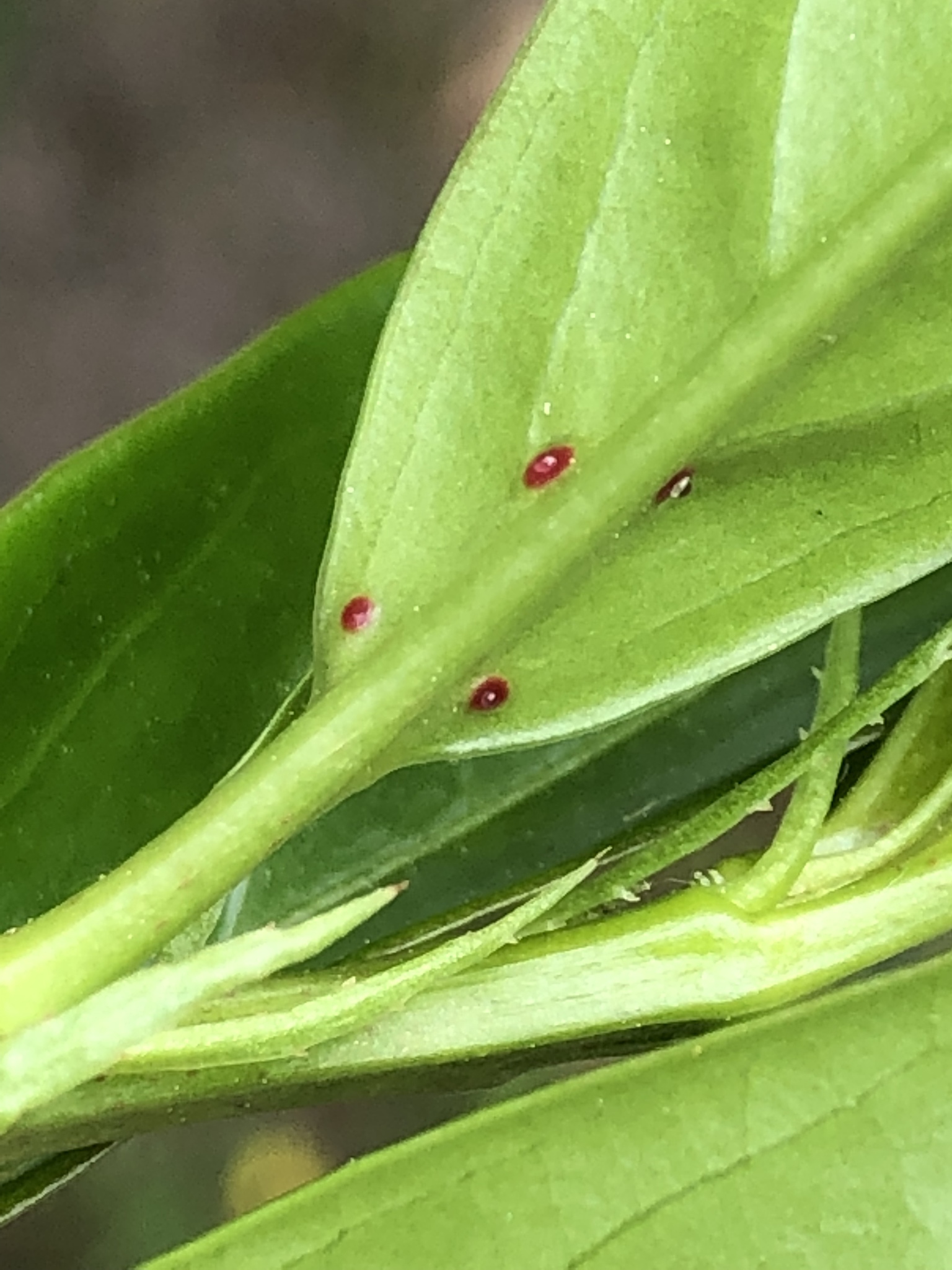
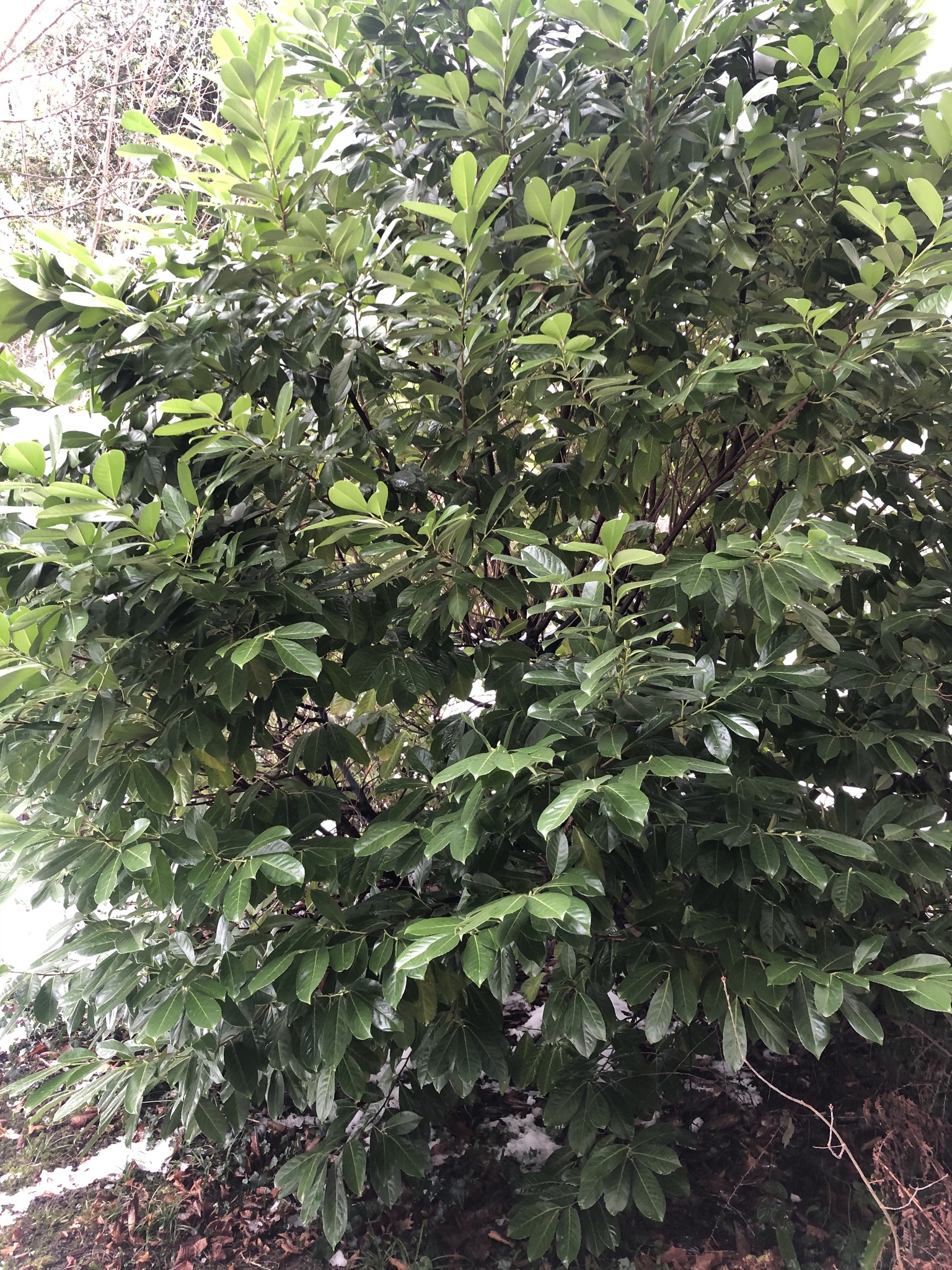
A dense framework of branches supports leathery, highly glossy evergreen leaves. The alternate leaves of Prunus laurocerasus commonly measure 10–25 cm (4–10 in) long and 4–10 cm (1.6–4 in) wide, with finely toothed margins and a bitter-almond smell when crushed. 9 2
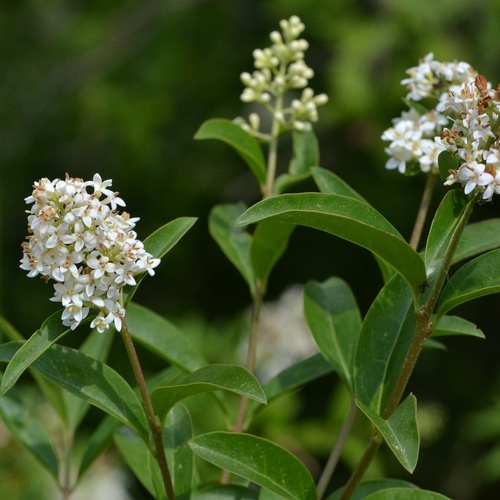
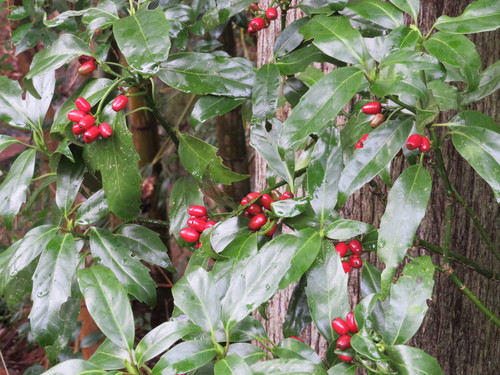
Upright spring flower clusters measure 7–15 cm (2.8–6 in) long, each carrying 30–40 small, fragrant flowers with five creamy-white petals and yellowish stamens. The resulting egg-shaped drupes are 1–2 cm (0.4–0.8 in) across, turning from green to red and finally glossy black when ripe in late summer or fall. 9 3
Clipped hedges usually stand 2–4 m (6.5–13 ft) tall; an old, unpruned specimen can become a small tree of 8–15 m (26–49 ft), occasionally taller. Smooth gray bark marked with lenticels is characteristic of Prunus. 2 4
Useful taxonomy
Linnaeus described cherry laurel in 1753. It subsequently appeared under the genus Cerasus and as Laurocerasus officinalis, before Prunus laurocerasus became the settled accepted name. Historical names and botanical varieties include:
- Cerasus laurocerasus (L.) Loisel.
- Padus laurocerasus Mill.
- Prunus laurocerasus var. latifolia L.H.Bailey
- Prunus laurocerasus var. rotundifolia L.H.Bailey
- Prunus laurocerasus var. schipkaensis Späth ex H.L.Späth (historical botanical name)
Use Prunus laurocerasus as the stable botanical reference. Names such as Rotundifolia and Schipkaensis now identify horticultural cultivars sold under those labels, distinct from the historical botanical varieties bearing the same names. 1 7
Habitat and range
Around the Black Sea, cherry laurel occurs naturally from Albania and Bulgaria in southeastern Europe through northern Turkey and the Caucasus to northern Iran in southwestern Asia. Its native habitats include moist woodland understories and forest edges at middle elevations. 1 7
Extensive ornamental planting across temperate Europe, including France, has helped cherry laurel become naturalized beyond its native range. In the United Kingdom, Belgium and the Pacific Northwest of North America, birds disperse its stones into forests. Dense evergreen growth can then suppress native regeneration; the species is considered invasive in these regions. 8 9
French gardens widely use cherry laurel for hedges. It has no generalized invasive designation there in the source account, but shaded forest edges warrant local attention because the shrub establishes readily in that habitat. This French context does not determine its status elsewhere. 7
Life cycle and reproduction
Spring brings upright, nectar-rich flower clusters visited by many foraging insects. Fruits ripen gradually from green through red to black between late summer and fall. Birds eat them and carry out most dispersal of the stones. 9 3
Mild weather and consistently moist soil support rapid growth. Plants spaced 60–80 cm (24–32 in) apart can form a dense hedge in three to five years. Without pruning, the shrub continues growing for decades and may eventually take on the form of a small tree. 2 3
Nurseries mainly propagate cultivars from semi-ripe cuttings taken in late summer, preserving their characteristics. Seed also works for the typical species after cold stratification of the stones, but produces more variable plants and is less useful for selected cultivars. 4 2
Uses and risks
Year-round evergreen screening is its main ornamental role. Regular clipping produces an opaque hedge, while rapid growth and tolerance of shade cast by nearby trees make cherry laurel useful where other hedge shrubs struggle. Pruning in early spring and late summer, using hand pruners rather than powered hedge trimmers, helps keep the base leafy, particularly in partial shade. 2 3
Cyanogenic glycosides, including prunasin, occur throughout the plant and are especially concentrated in leaves and stones. Crushing or chewing these tissues releases hydrogen cyanide, associated with a bitter-almond smell. Swallowing leaves or stones causes digestive upset and, in severe cases, breathing problems in humans, dogs, cats and horses; horses are considered particularly sensitive to cyanogenic glycosides. Ripe fruit flesh contains much less cyanide and is sometimes eaten in Turkey after the stone has been removed. 6 5
Varieties, look-alikes and related plants
Cultivars remain selections within the same species. Otto Luyken and Zabeliana have low, spreading growth suited to low hedges and ground cover. More vigorous, cold-hardy Rotundifolia and Schipkaensis suit larger hedges. Aureovariegata has yellow-edged foliage. 2
Several other shrubs share a laurel-like appearance:
- Bay laurel (Laurus nobilis) belongs to the unrelated Lauraceae; its leaves lack the bitter-almond smell and cyanogenic compounds;
- Laurustinus (Viburnum tinus) has smaller leaves and blue-black fruit, compared with the glossy black fruit of cherry laurel;
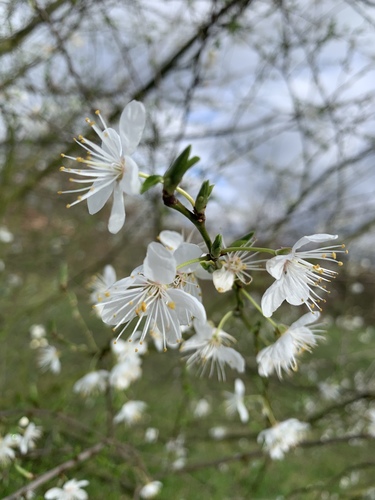
- Portuguese laurel (Prunus lusitanica) has smaller leaves on reddish leaf stalks.
Crushed foliage with a bitter-almond smell, together with upright clusters of black fruit, provides two useful characters for identifying a hedge shrub as Prunus laurocerasus. 9 4
Main sources
- Plants of the World Online / Kew, Prunus laurocerasus L.
- Royal Horticultural Society, Prunus laurocerasus - cherry laurel
- Missouri Botanical Garden, Prunus laurocerasus
- Plants For A Future, Prunus laurocerasus
- ASPCA, Cherry Laurel toxicity entry
- Veterinary Poisons Information Service, Cherry laurel and other cyanide containing plants
- INPN / MNHN, Prunus laurocerasus L., 1753 (cd_nom 116089)
- Invasive Alien Species in Belgium, Prunus laurocerasus
- Wikipedia (EN), Prunus laurocerasus
Frequently asked questions
Is cherry laurel poisonous?
Yes. Leaves, flowers, fruits and especially stones contain cyanogenic glycosides that release hydrogen cyanide when crushed or chewed. Swallowing leaves or stones causes digestive upset and sometimes breathing problems in humans, dogs, cats and horses.
Can you eat cherry laurel fruit?
Fully ripe, black, sweet fruit flesh is sometimes eaten in Turkey, but the toxic stone must be discarded. Unripe or bitter fruit indicates higher cyanide levels and should be avoided.
Is cherry laurel a true laurel?
No. It is a Prunus in the Rosaceae, unrelated to culinary bay laurel, Laurus nobilis, in the Lauraceae. Similar-looking leaves have caused dangerous food mix-ups.
Why do cherry laurel leaves smell like almonds?
The foliage contains cyanogenic compounds, including prunasin, which release a bitter-almond smell and hydrogen cyanide when a leaf is crushed or cut. This is both an identification clue and a warning of toxicity.
Is cherry laurel invasive?
In its native Black Sea range, it is part of the woodland flora. Introduced elsewhere, including the United Kingdom, Belgium and the Pacific Northwest of North America, it spreads through birds and forms dense understories that suppress native regeneration.
How tall does cherry laurel grow?
Clipped hedges generally stay 2–4 m (6.5–13 ft) tall. Left unpruned, an old plant can form a broad shrub or small tree reaching 8–15 m (26–49 ft), occasionally more.
Which cherry laurel cultivar suits a low hedge?
Otto Luyken and Zabeliana are compact, spreading cultivars suited to low hedges and ground cover. Rotundifolia and Schipkaensis are better suited to tall hedges and colder climates.
Similar plants
If you are unsure about a plant’s toxicity, ask a botanist or veterinarian for advice.