
common privet (Ligustrum vulgare, )
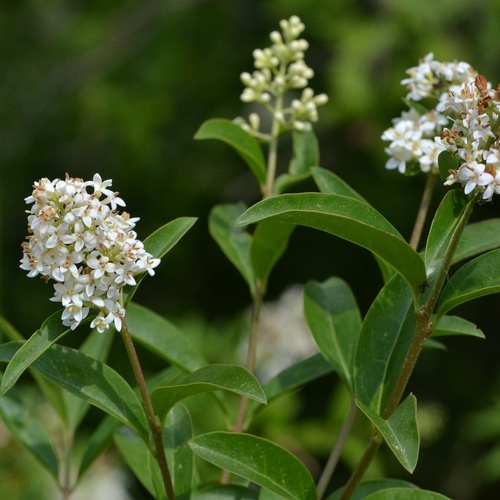
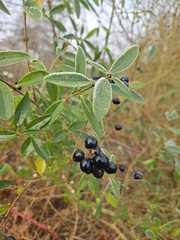
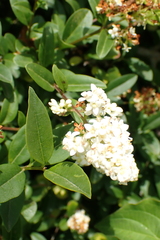
Common privet (Ligustrum vulgare L., 1753) is a semi-evergreen shrub in the Oleaceae and the only member of Ligustrum native to Europe. Wild plants grow at woodland edges and in hedges across a range extending from North Africa to northwestern Iran. It remains a widely planted hedge shrub despite its toxic black berries.
Read morecommon privet and wild privet
Allow a few hours of direct sun per day, preferably morning or evening.
Full sun to partial shade


© photo
(c) Petr Harant, some rights reserved (CC BY), uploaded by Petr Harant · cc-by
Daniel Atha · cc0
Robert H. Wardell · cc0
Taken Jul 19, 2010 by Tela Botanica − Cel ANONYME (cc-by-sa)
Taken Jul 11, 2020 by Nyunyshkin (cc-by-sa)
Taken Feb 5, 2022 by Annemarie Ahrens-Stehle (cc-by-sa)
Taken Feb 3, 2022 by Annemarie Ahrens-Stehle (cc-by-sa)
Taken Jan 12, 2021 by Jaime Ghuetu (cc-by-sa)
© copyright of the Board of Trustees of the Royal Botanic Gardens, Kew.




Global distribution
POWO/WCVP places the native range of Ligustrum vulgare from North Africa across Europe to northwestern Iran. It is the only member of Ligustrum native to Europe. Outside that range, it is widely planted as an ornamental hedge and has naturalized, sometimes invasively, in parts of temperate North America.
- Native5
- Invasive1
- Mainland France
- United Kingdom
- Central Europe
- North Africa
- Northern Iran
- North Carolina (United States)
Hexagons: regions where the plant occurs. Green dots: native range.1
Identity
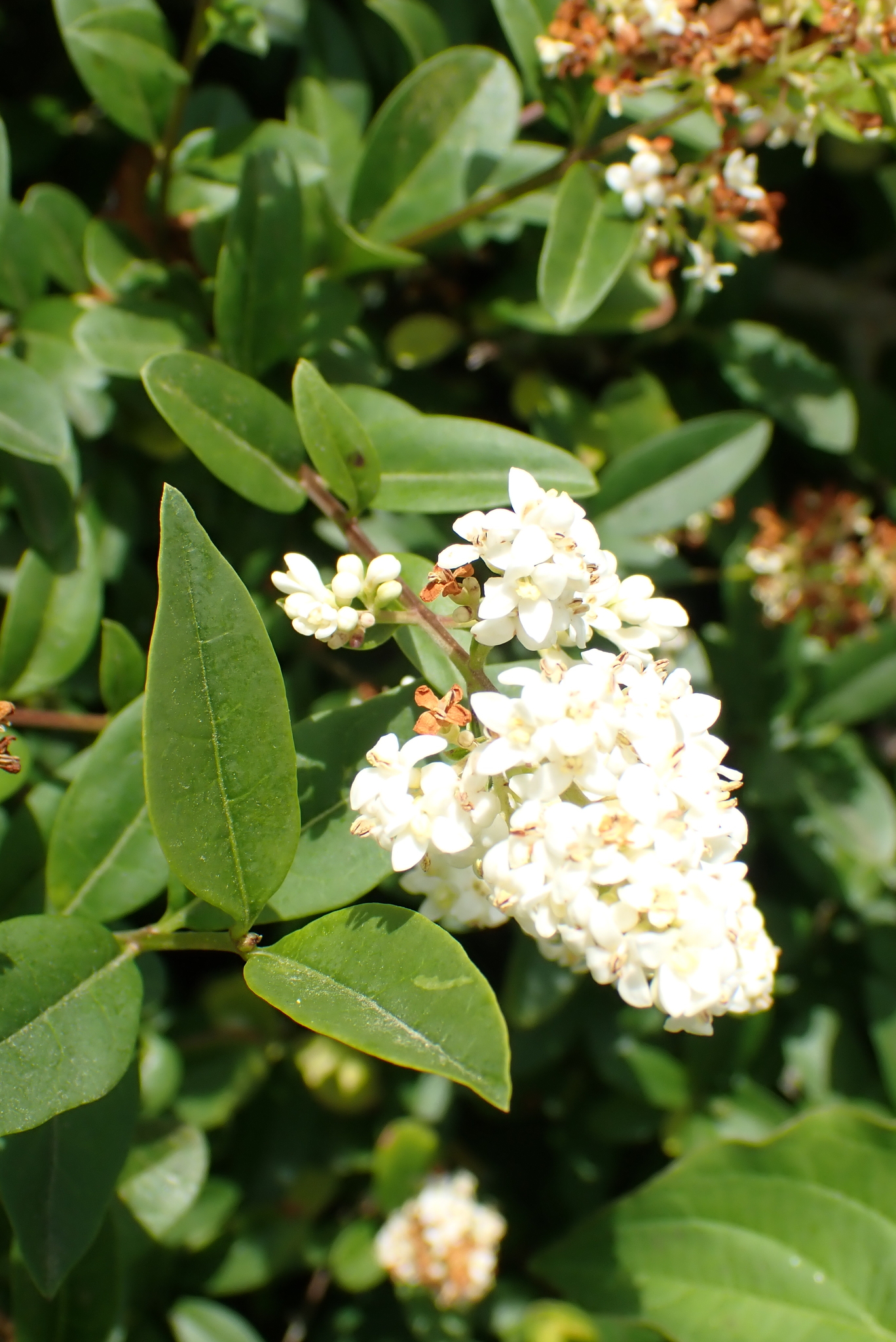
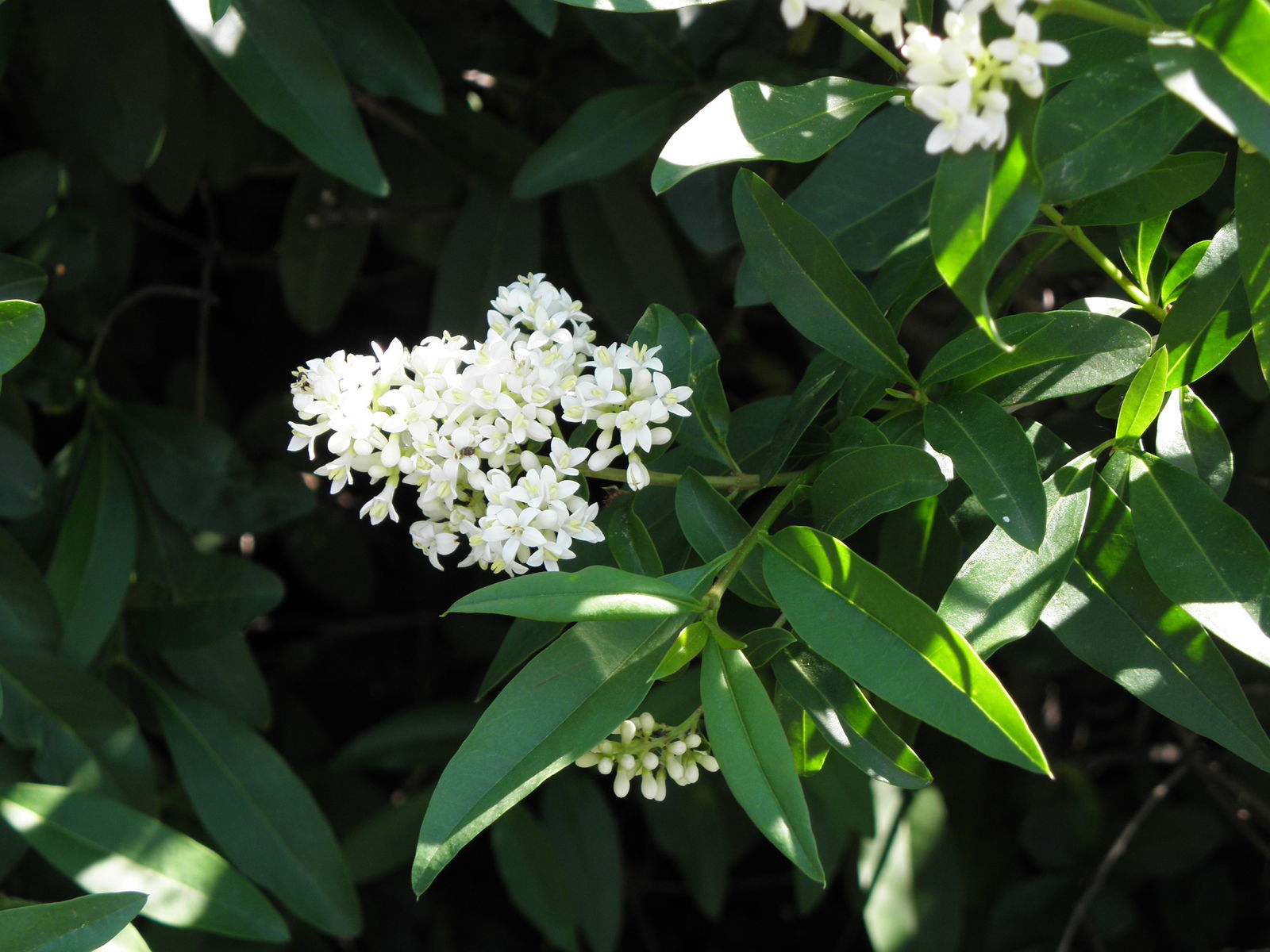
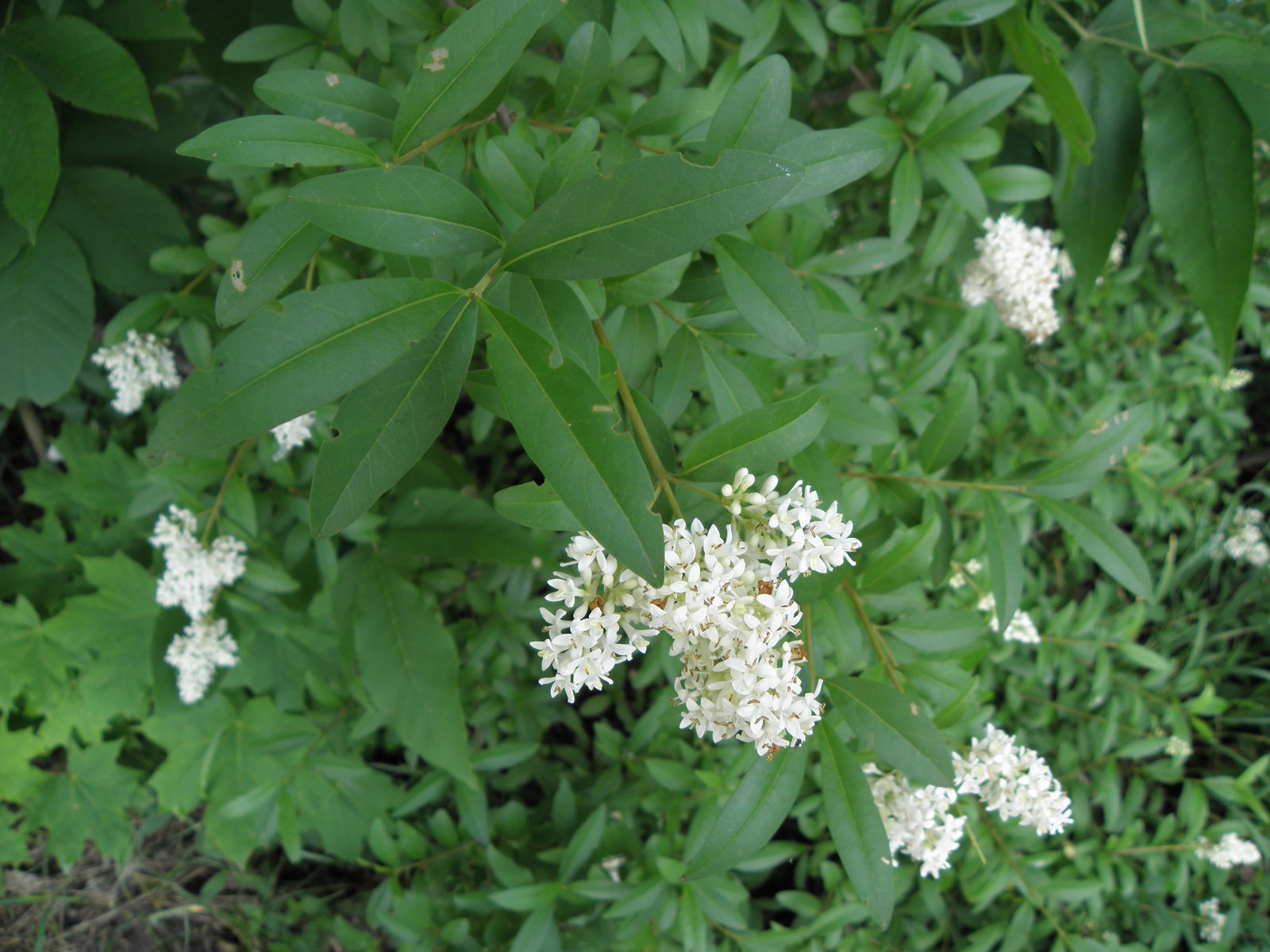
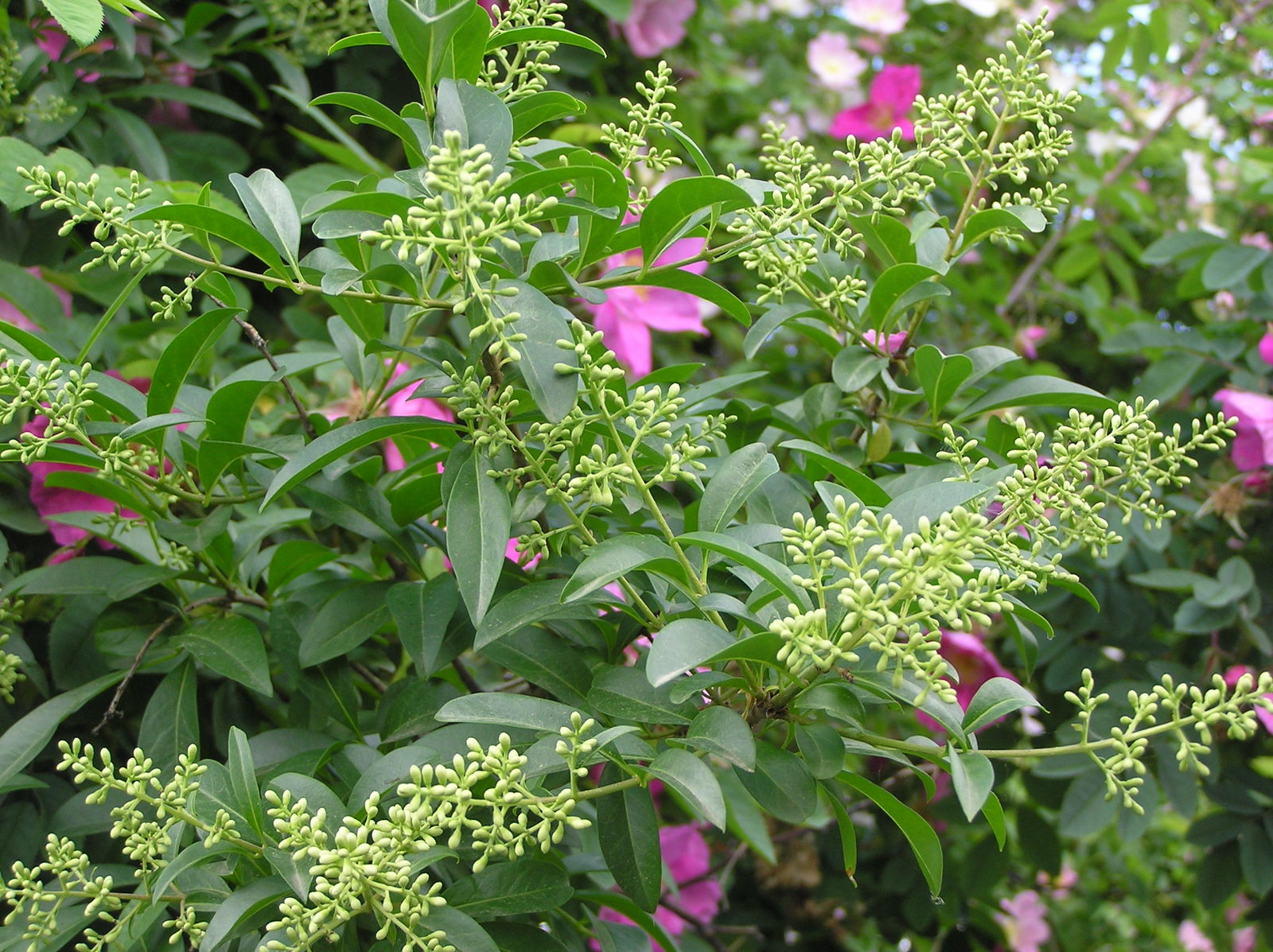
A familiar shrub of field hedges and woodland edges, common privet (Ligustrum vulgare L., 1753) belongs to the olive family, Oleaceae, and is the only member of Ligustrum genuinely native to Europe. Almost all the other privets planted as hedges come from Asia. POWO/WCVP places its native range from North Africa across Europe to northwestern Iran. 1 Three features usually help identify it before flowering: opposite leaves, a hedgerow habit and clusters of black berries.
The old French name raisin de chien, literally dog's grape, describes the clustered black berries, considered of no food value to people, unlike grapes. 6 The English name wild privet distinguishes this wild species from horticultural privets introduced later from Asia, such as Ligustrum ovalifolium. 4
Recognition
Unclipped, Ligustrum vulgare forms a dense shrub 2–5 m (6.6–16.4 ft) tall; repeated trimming keeps it much lower in a hedge. Its opposite, oval to lance-shaped leaves are about 3–6 cm (1.2–2.4 in) long, dark green and glossy above. 4 3
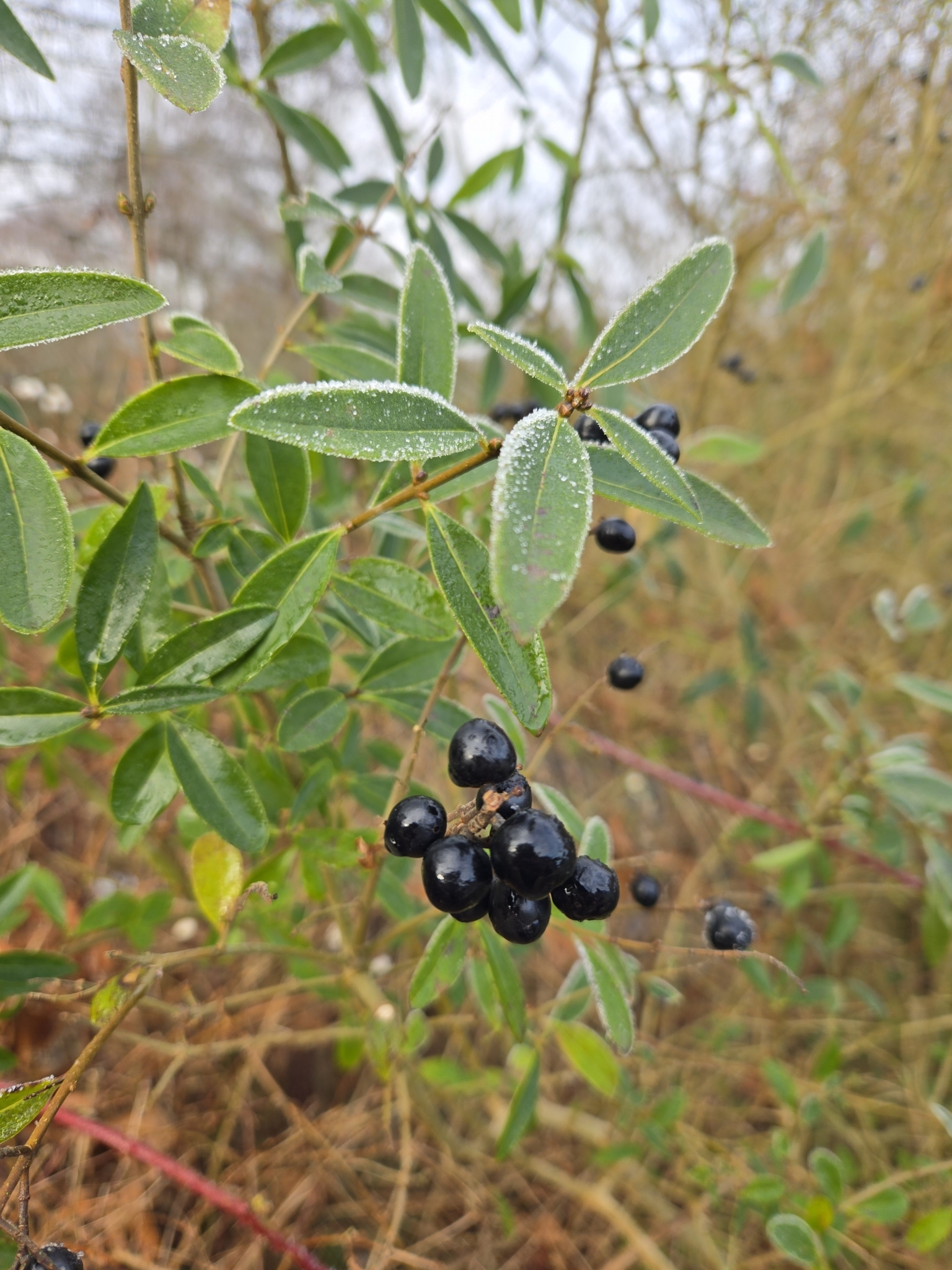
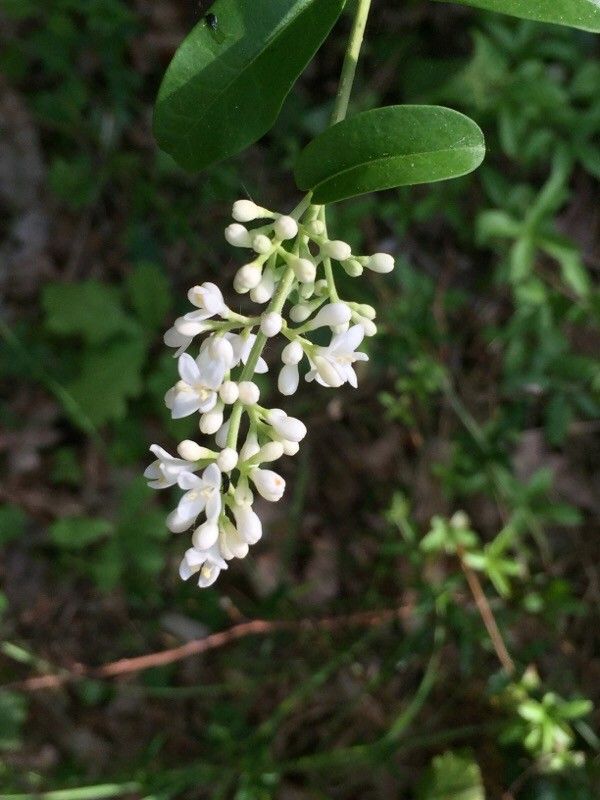
In June, in the Northern Hemisphere flowering pattern described here, small, strongly scented white flowers open in terminal panicles. Each tubular flower has four lobes. The glossy black berries that follow in fall form clusters and often remain after the leaves drop, providing a useful midwinter clue. 3
The foliage is semi-evergreen: it falls in cold winters but remains for much of the year in mild climates, which can make winter identification less straightforward. 4 Common privet bears opposite leaves and clustered berries. The similar-looking fruit of buckthorns (Rhamnus) can cause confusion: neither leaf arrangement nor fruit grouping alone is enough to distinguish them.
Taxonomy and names
The accepted name is Ligustrum vulgare L. WCVP places several horticultural forms once described separately within this species. They include Ligustrum vulgare f. xanthocarpum, with yellow rather than black fruit; f. pendulum, with drooping growth; and Ligustrum vulgare var. italicum, a Mediterranean form with more persistent foliage, treated as either a subspecies or a synonym depending on the source. 1
The most frequent horticultural confusion is with Ligustrum ovalifolium, California privet, introduced from Japan. It is now more widely planted for hedges than the European species because its foliage stays green for almost the whole year. Common privet is more prone to winter leaf loss and anthracnose, but remains favored for field hedges and ecological restoration. 3 4
Habitat and distribution
Within its native range, the species grows at the edges of open woodland, in hedges and in scrub, often near the coast. It shows a marked preference for calcareous soil at pH 6.5–8, rather than acidic ground. 2 This preference for lime-rich soil explains its frequent occurrence on chalky slopes and woodland edges in France and elsewhere in its European range.
Widely planted as an ornamental hedge in North America, Ligustrum vulgare has naturalized in disturbed habitats. Native plant organizations in some states consider it a species of concern. 4 In France it has no recorded invasive status and remains a characteristic part of field hedges. This French assessment should not be transferred to regions outside its native range.
Life cycle, ecology and cultivation
Fast growth in the first few years, particularly on fertile soil, explains common privet's popularity as a clipped hedge that establishes quickly. 2 It is propagated by seed, semi-ripe cuttings taken in late summer, or grafting to maintain a particular horticultural form.
Common privet feeds the caterpillars of the privet hawk-moth (Sphinx ligustri), a large moth whose scientific name comes directly from Ligustrum. Several bird species eat the fall berries and disperse their seeds in the process. 8
Uses and risks
Dense clipped hedges remain its main ornamental use. Common privet tolerates repeated cutting and poor soils, making it a garden staple long before introduced evergreen privets became widespread. 3 4
Traditionally, its leaves and bark supplied a yellow dye, while the berries yielded blue-green or black dyes. Flexible young shoots were used in basketry and woven living fences; the hard, fine-grained wood suited turning and the making of small tools. 2 In older herbal medicine, astringent leaves were applied externally to support wound healing. Internal use was discouraged because of allergic and toxic risks. 2
The foliage and especially the black berries are the main hazard. The ASPCA specifically lists Ligustrum japonicum as toxic to cats, dogs and horses: terpenoid glycosides cause gastrointestinal upset, incoordination and an increased heart rate. Its account of a different species should not be taken as a guarantee that common privet is safe. 5 French veterinary toxicology documents more severe poisoning in ruminants. Among the domestic species in the recorded cases, cattle have the highest mortality, with fever of 40–41°C (104–106°F), recumbency, colic, diarrhea and sometimes death within 4–48 hours. 7 In humans, eating ripe fruit most often causes vomiting alone, or no symptoms, a much lower toxicity than that seen in dogs or horses. 2
Cultivars and similar plants
Several horticultural selections are sold as common privet: 'Aureum', with golden foliage; 'Lodense', a compact dwarf form used for low borders; and 'Xanthocarpum' and 'Pendulum', two forms included in the species' botanical synonymy for their yellow fruit or drooping habit. 1
The most common confusion remains Ligustrum ovalifolium, now more widely planted for hedges than common privet itself because it stays green throughout the year in temperate climates. Neither growth rate nor the usual hedge planting distance of 30–50 cm (12–20 in) between plants is enough to distinguish them. Only the state of the leaves in midwinter reliably distinguishes common privet from its evergreen relative. 3 4
Main sources
- Plants of the World Online / Kew, Ligustrum vulgare L.
- Plants For A Future, Ligustrum vulgare database entry
- Missouri Botanical Garden Plant Finder, Ligustrum vulgare
- NC State Extension Gardener Plant Toolbox, Ligustrum vulgare
- ASPCA, Privet (Ligustrum japonicum) toxicity entry
- Tela Botanica / BDTFX, Ligustrum vulgare taxon account
- VetAgro Sup, ToxLab, privet toxicology account
- Woodland Trust, Privet Hawk-moth (Sphinx ligustri)
Frequently asked questions
Is common privet toxic?
Yes. Its leaves and especially its black berries contain terpenoid glycosides and alkaloids toxic to cats, dogs, horses and ruminants. Ingestion also poses a lower but real risk to humans.
Can common privet be confused with other privets?
Yes, very often with Ligustrum ovalifolium, California privet. This species is widely planted for hedges because it stays green almost all year, unlike common privet, which is more prone to winter leaf loss.
Does common privet lose its leaves in winter?
That depends on the climate. In cold winters it loses some or all of its leaves. In mild climates it retains much of its foliage, hence the description semi-evergreen.
How often should a common privet hedge be clipped?
Two trims a year, one in spring and another in late summer, are generally enough to maintain a dense hedge without leaving it bare at the base.
Is common privet invasive?
It is not reported as invasive in France, but it has naturalized problematically in some temperate parts of North America, where it colonizes disturbed habitats.
Which wildlife benefits from common privet?
Its flowers and leaves feed privet hawk-moth caterpillars, and several bird species eat its fall berries, making it a useful hedge for wildlife where it is native.
Similar plants
If you are unsure about a plant’s toxicity, ask a botanist or veterinarian for advice.