
Japanese laurel (Aucuba japonica, )
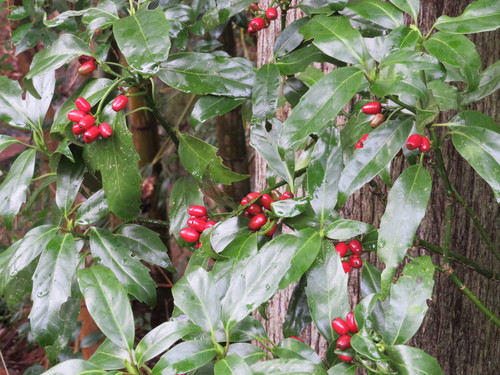
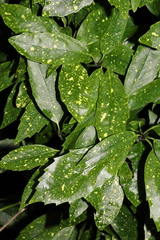
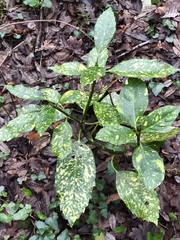
Japanese laurel (Aucuba japonica) is a dioecious evergreen shrub in the Garryaceae family, native to moist East Asian forests. It tolerates deep shade and urban pollution, forming a dense mound of leathery leaves, sometimes spotted with yellow. Only pollinated female plants bear red berries.
Read moreJapanese laurel, Spotted laurel, Gold dust plant and Japanese aucuba
Place in indirect light or in a shaded room.
Shade to partial shade; tolerates some gentle sun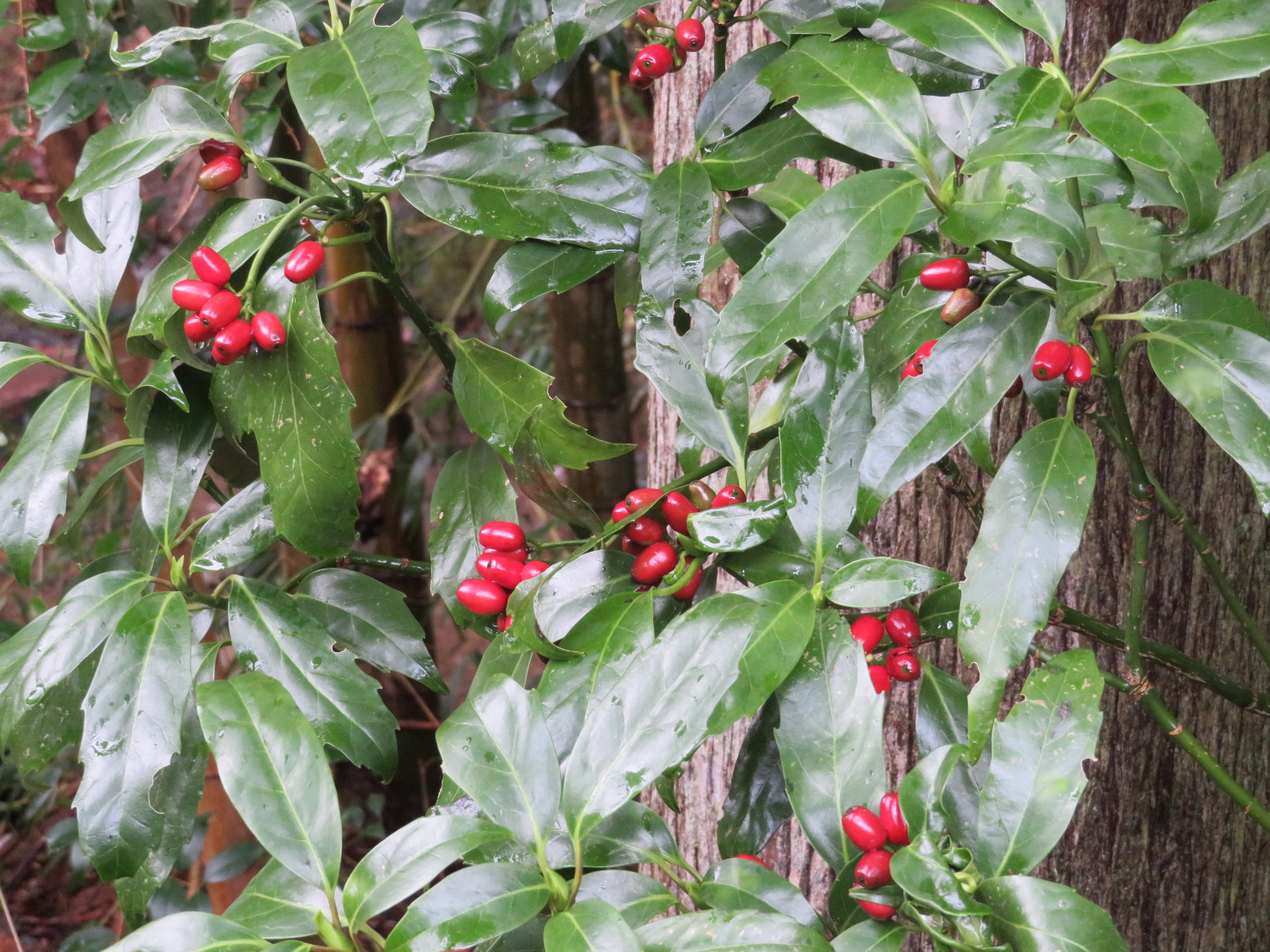



© photo
(c) Marco Mussita, some rights reserved (CC BY), uploaded by Marco Mussita · cc-by
Stephen James McWilliam · cc0
Jose Castro · CC BY-NC
Taken Jul 5, 2014 by Tela Botanica − Orlhac Laurent (cc-by-sa)
Taken Oct 18, 2019 by mohammad fazel dehkordi (cc-by-sa)
Taken Aug 22, 2020 by Sabaté Sant Jordi (cc-by-sa)
Taken Feb 27, 2022 by Tristan Jaton-Maria (cc-by-sa)
Taken Dec 26, 2020 by maire sofia (cc-by-sa)
© copyright of the Board of Trustees of the Royal Botanic Gardens, Kew.


Global distribution
Aucuba japonica is native to East Asia, from southeastern China and Taiwan to Korea and Japan, where it grows in moist woodland. Introduced to Europe in 1783, it became a widespread temperate garden shrub. It sometimes naturalizes in mild oceanic climates and is not regarded as invasive in France.
- Native4
- Introduced2
- Japan
- South Korea
- China
- Taiwan
- United Kingdom
- Ireland
Hexagons: regions where the plant occurs. Green dots: native range.1
Identity
Japanese laurel (Aucuba japonica Thunb., 1783), also called spotted laurel, Japanese aucuba or gold dust plant, is a dioecious evergreen shrub in the Garryaceae family. Carl Peter Thunberg Latinized the Japanese word aokiba as the genus name when he described the species in 1783. The epithet japonica refers to Japan. 1 7
Leathery, glossy foliage explains the shared common name “laurel,” but Japanese laurel is unrelated to culinary bay (Laurus nobilis) and cherry laurel (Prunus laurocerasus). Their names overlap; their botanical families do not. 4 6
Recognition
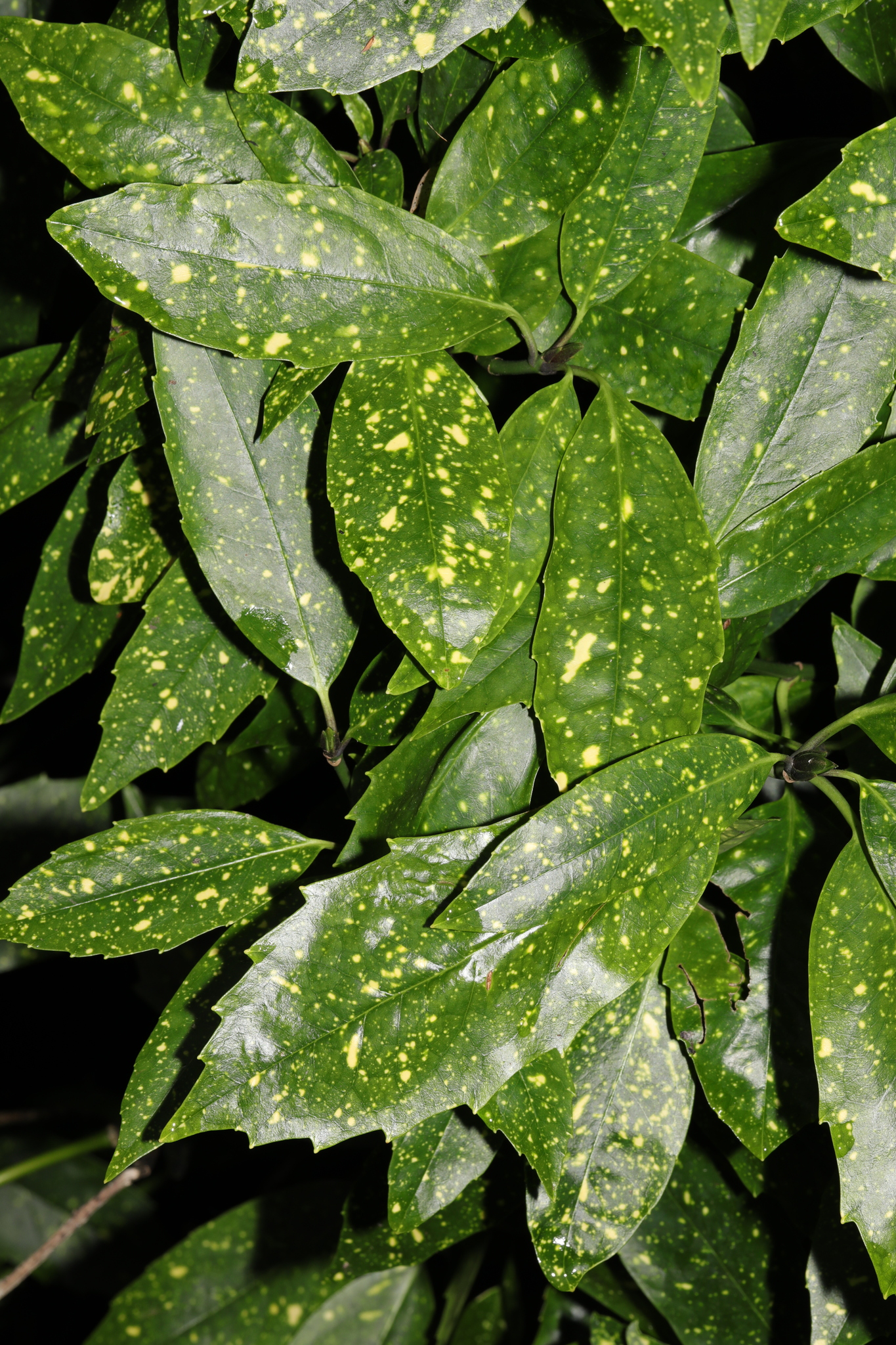
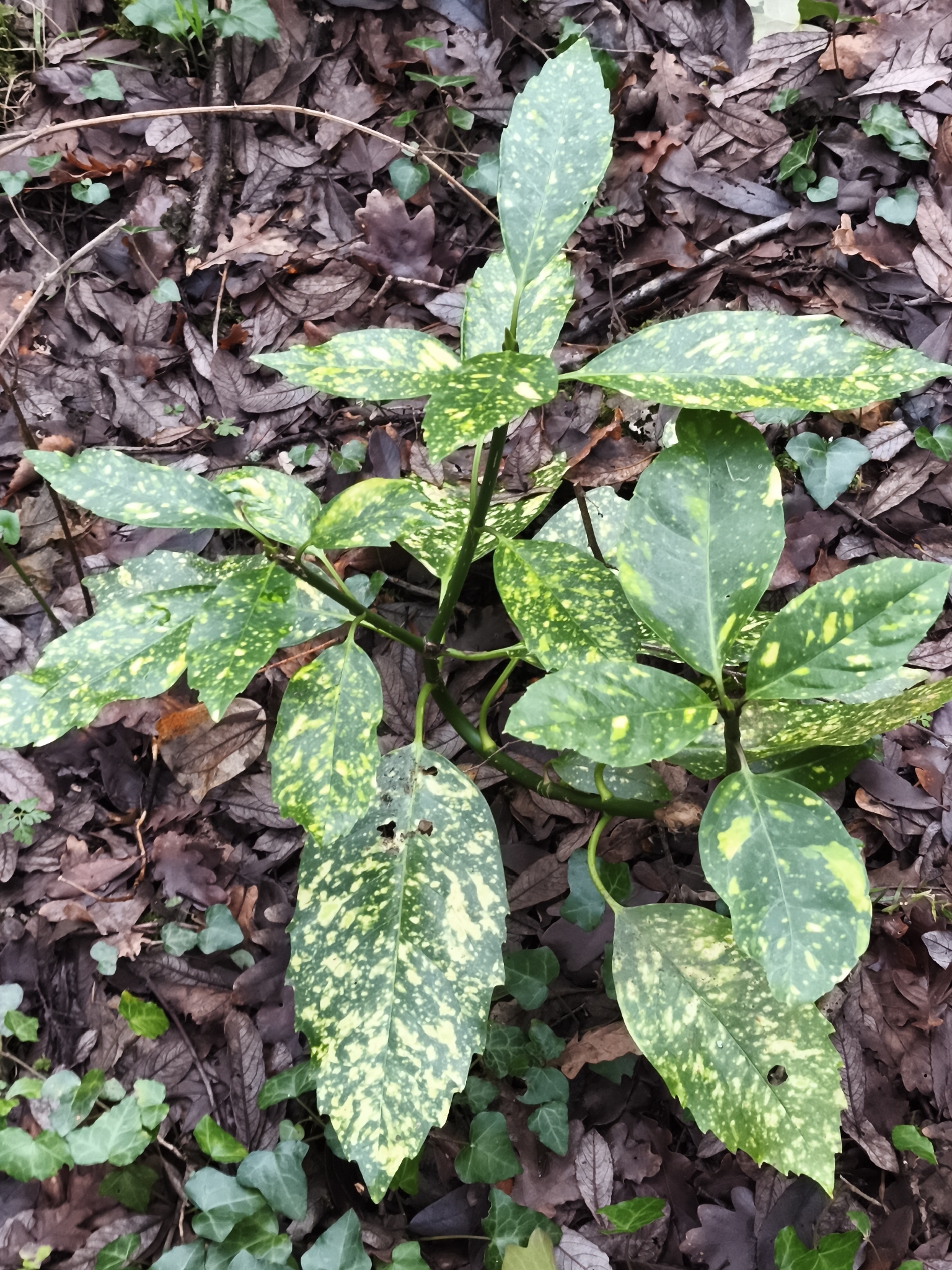
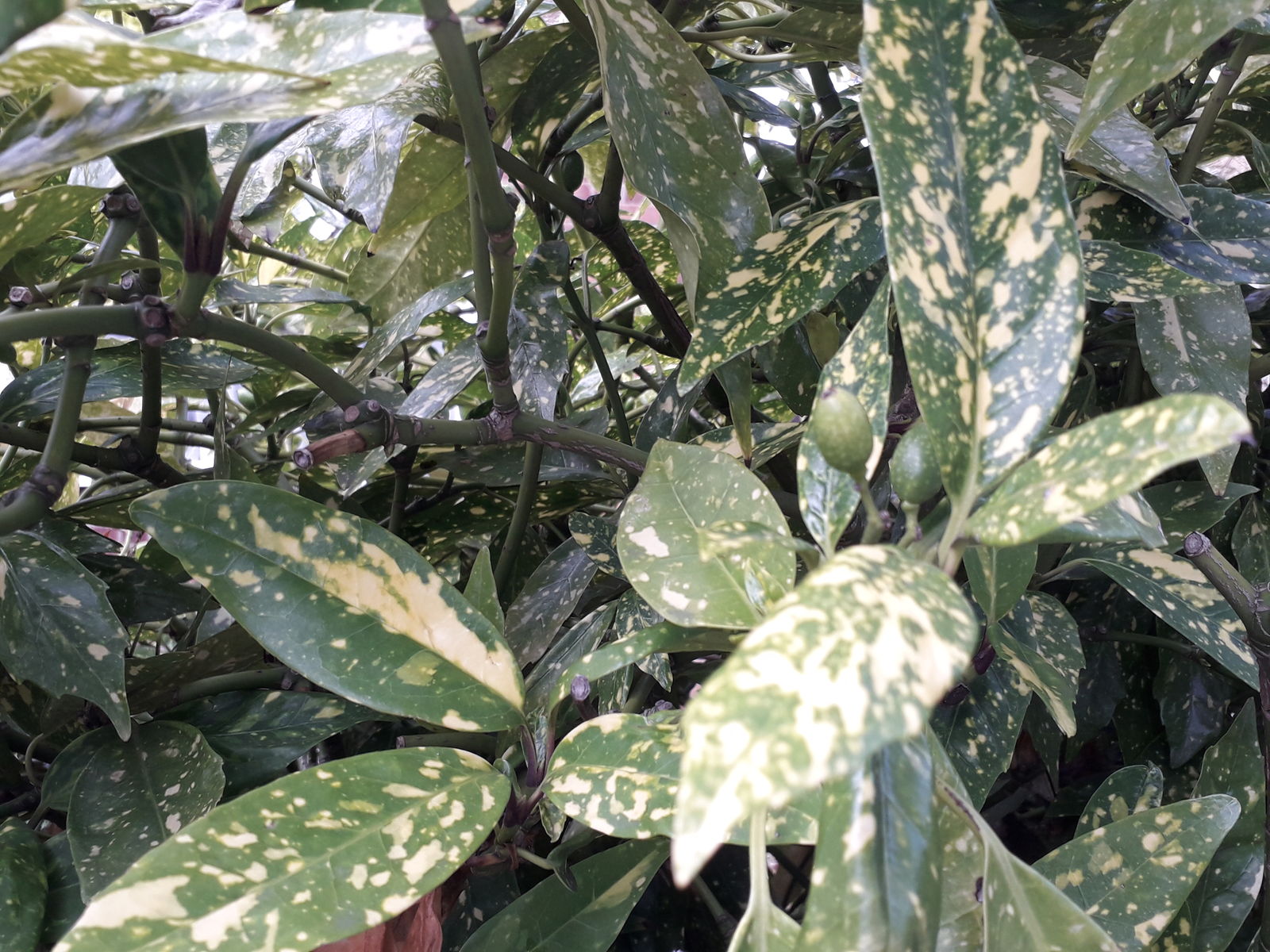
Aucuba japonica develops a dense, rounded mound, usually 1.5–3 m (5–10 ft) high, exceptionally 4 m (13 ft) in old specimens. Opposite, leathery, glossy leaves are elliptic to lance-shaped, 8–20 cm (3–8 in) long, with coarse teeth on the upper half. Wild-type foliage is plain green; garden cultivars often have yellow speckles. 3 7
Male and female flowers grow on separate plants. Each small purplish-brown flower has four petals. In Northern Hemisphere gardens they open in March–April, in upright panicles on males and shorter clusters in the leaf axils on females. An ordinary plant bears flowers of only one sex. 2 4
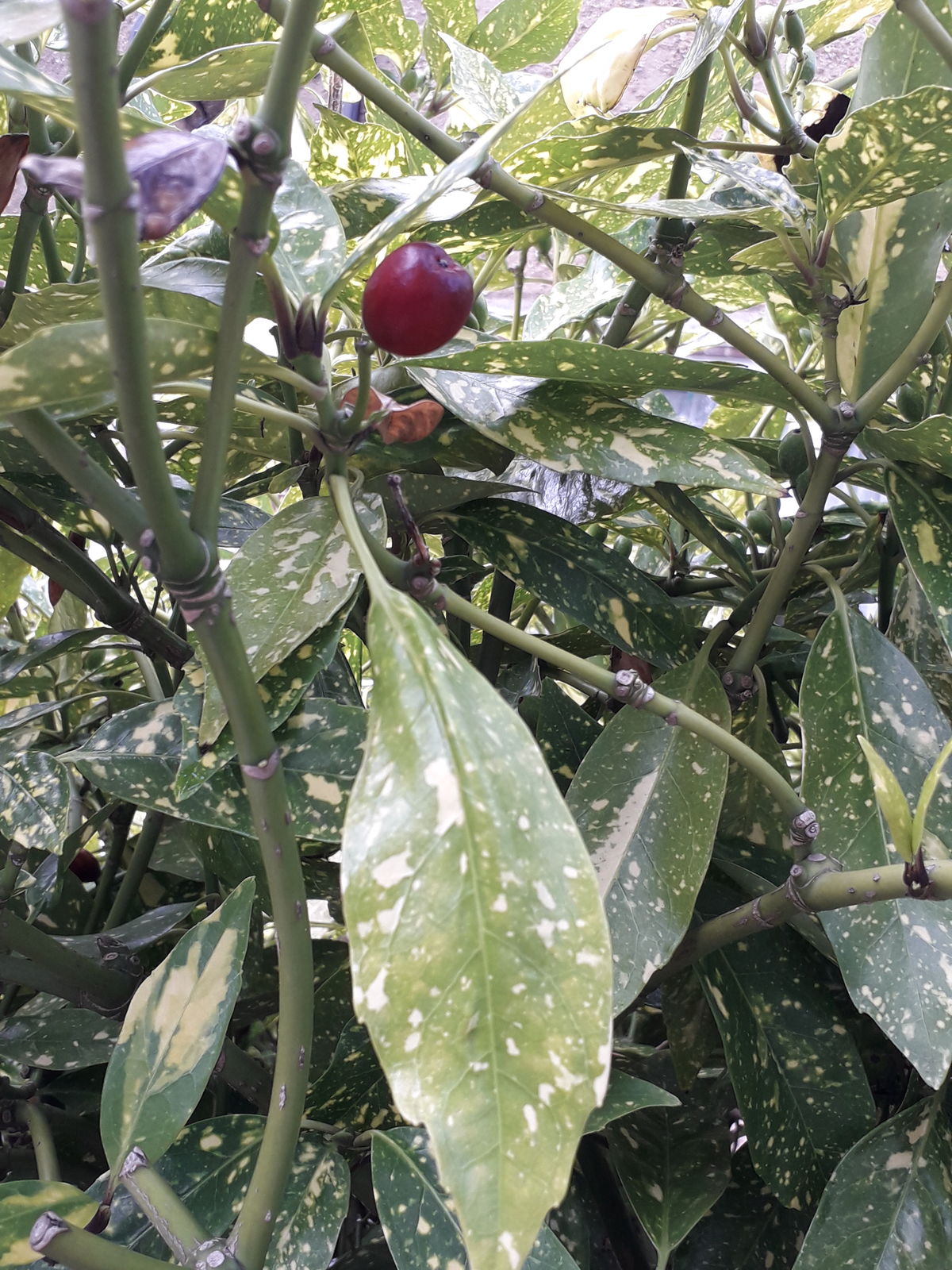
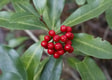
Bright red, egg-shaped drupes offer a particularly useful clue: they measure about 1–1.5 cm (0.4–0.6 in) and develop only on pollinated female plants, often lasting through winter into the next spring. Missing berries can simply mean the shrub is male or lacks a pollination partner. 7 4
Useful taxonomy
Botanists formerly placed Japanese laurel in Cornaceae, then in its own family Aucubaceae. Its current placement is in Garryaceae, order Garryales. These historical changes explain older gardening references to Aucubaceae without altering identification of the living shrub. 1 8
Botanical varieties and forms described under these names include:
- Aucuba japonica var. borealis Miyabe & Kudô, a botanical variety
- Aucuba japonica var. japonica, the typical variety
- Aucuba japonica f. variegata (Dombrain) Rehder, a variegated form
- Aucuba himalaica Hook.f. & Thomson, a related botanical name
Cultivar names such as Crotonifolia and Golden King describe horticultural selections rather than the botanical ranks listed above. Aucuba japonica remains the accepted scientific name to use when checking identity. 1 2
Habitat and range
Moist East Asian woodland is its native setting: southeastern China, Taiwan, Korea and Japan. The shrub occupies rich, damp forest understories, ravines, thickets and shaded stream banks. 1 3
John Graeffer brought a single variegated female plant to England in 1783. Without a male, this lineage failed to fruit for almost eighty years. Imports by Robert Fortune and other collectors in the 1850s–1860s finally brought a male to England; nurseryman Standish displayed the first fruiting in 1864. 7
European and North American gardens have since grown the shrub widely. It sometimes naturalizes in mild oceanic climates, but is not reported as invasive in France, where it remains a garden plant; that assessment concerns France specifically. 9 2
Life cycle and reproduction
Separate sexes determine ordinary Japanese laurel fruiting: a female needs pollen from a nearby male to produce berries. An isolated plant without a partner will not fruit simply because it grows older or receives better care. Self-fertile cultivars are an exception, described below. 7 2
Spring flowers rely on insects to carry pollen between nearby male and female shrubs. Flowering falls in March–April in the Northern Hemisphere regions described by the sources. Berries ripen in fall and often persist through winter, being relatively unappealing to local wildlife. 4 2
Semi-ripe stem cuttings provide the most reliable propagation method. The source describes September–February in its Northern Hemisphere context: even a small piece of shoot roots readily without special treatment. Layering also works, but takes about twelve months before the new plant can be separated. 5 7
Uses and risks
Late Victorian England made this ornamental shrub a suburban garden staple. It endured coal smoke and the shade of large trees, and London street vendors sold it in pots. 7 2
Dark borders and shaded back-of-garden hedges still benefit from its dense structure. In cold climates it can also grow in a sheltered container. Tolerance of alkaline soil, clay and sand makes it useful where few other shrubs thrive. 5 3
Iridoid glycosides, aucuboside and aucubin, occur throughout the plant and are concentrated in the berries. A French poison center recorded 78 berry ingestions compared with two leaf ingestions in its study period. Eating the berries most often causes nausea, vomiting and digestive pain, generally without serious effects beyond these common symptoms. 6 4
Varieties, look-alikes and related plants
Garden selections differ chiefly in sex and variegation. Crotonifolia has large golden splashes and is female and fruiting; similarly marked Golden King is male, so supplies pollen but no berries. Rozannie is a self-fertile female that can fruit alone. Salicifolia has narrow, entirely green leaves without variegation. 2
Three plants commonly cause identification mistakes:
- Prunus laurocerasus, cherry laurel, has bitter-almond-scented leaves and much greater cyanogenic toxicity;
- Laurus nobilis, culinary bay, is botanically unrelated despite the shared name;
- Skimmia japonica is another dioecious woodland shrub with red berries, but belongs to Rutaceae.
Odorless leaves, normally separate male and female plants, and exceptional tolerance of deep shade help distinguish Japanese laurel from these look-alikes. 4 1
Main sources
- Plants of the World Online / Kew, Aucuba japonica Thunb.
- Royal Horticultural Society, Aucuba japonica - Japanese laurel
- Missouri Botanical Garden, Aucuba japonica
- North Carolina State Extension, Aucuba japonica
- Plants For A Future, Aucuba japonica
- Lille Poison Control Center, Aucuba: a plant with poisonous berries
- Trees and Shrubs Online (Bean's), Aucuba japonica
- International Plant Names Index, Aucuba japonica Thunb.
- USDA PLANTS Database, Aucuba japonica Thunb.
Frequently asked questions
Is Japanese laurel poisonous?
The whole plant contains iridoid glycosides, aucuboside and aucubin, concentrated mainly in the berries. A French poison center recorded 78 berry ingestions and only two leaf ingestions during the study period; symptoms were generally mild and digestive.
Why does my Japanese laurel have no berries?
The species is dioecious: only female plants bear fruit, normally after pollination by a nearby male. The self-fertile cultivar Rozannie can fruit alone.
How much sun does Japanese laurel need?
Deep shade to partial shade suits it best, even beneath dense tree cover where few other shrubs grow. Hot direct sun, especially in the afternoon, scorches and blackens the leaves.
Does Japanese laurel tolerate pollution and alkaline soil?
Yes. Its tolerance was valued in Victorian London gardens exposed to coal smoke. It also tolerates alkaline soil, clay and sand.
How do you propagate Japanese laurel?
Semi-ripe stem cuttings are the simplest and most reliable method. The source describes taking them from September to February in a Northern Hemisphere setting; even a small piece of shoot roots easily without special equipment.
How can I tell Japanese laurel from cherry laurel?
Despite their similar common names, they are unrelated. Cherry laurel belongs to Rosaceae and has leaves with a bitter-almond smell; Japanese laurel belongs to Garryaceae, has odorless leaves and forms a denser shrub.
How big does Japanese laurel grow?
A mature shrub usually reaches 1.5–3 m (5–10 ft) tall and about as wide, exceptionally 4 m (13 ft). Slow growth makes it easy to contain without frequent pruning.
Similar plants
If you are unsure about a plant’s toxicity, ask a botanist or veterinarian for advice.