
American chestnut (Castanea dentata, )
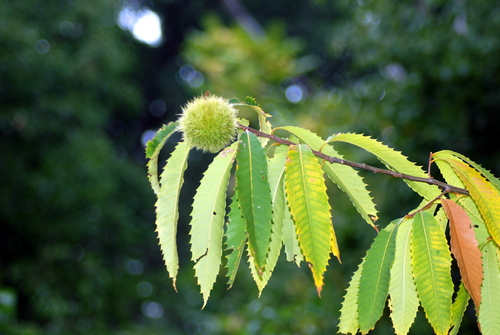
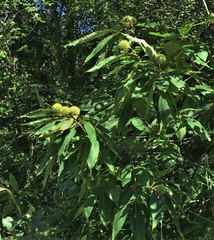
American chestnut (Castanea dentata) is a large deciduous Fagaceae tree once dominant in eastern North American forests. Fast-growing, it yielded rot-resistant timber and some of the genus’s sweetest nuts before chestnut blight, a fungal disease from Asia, devastated it in the twentieth century.
Read moreAmerican chestnut
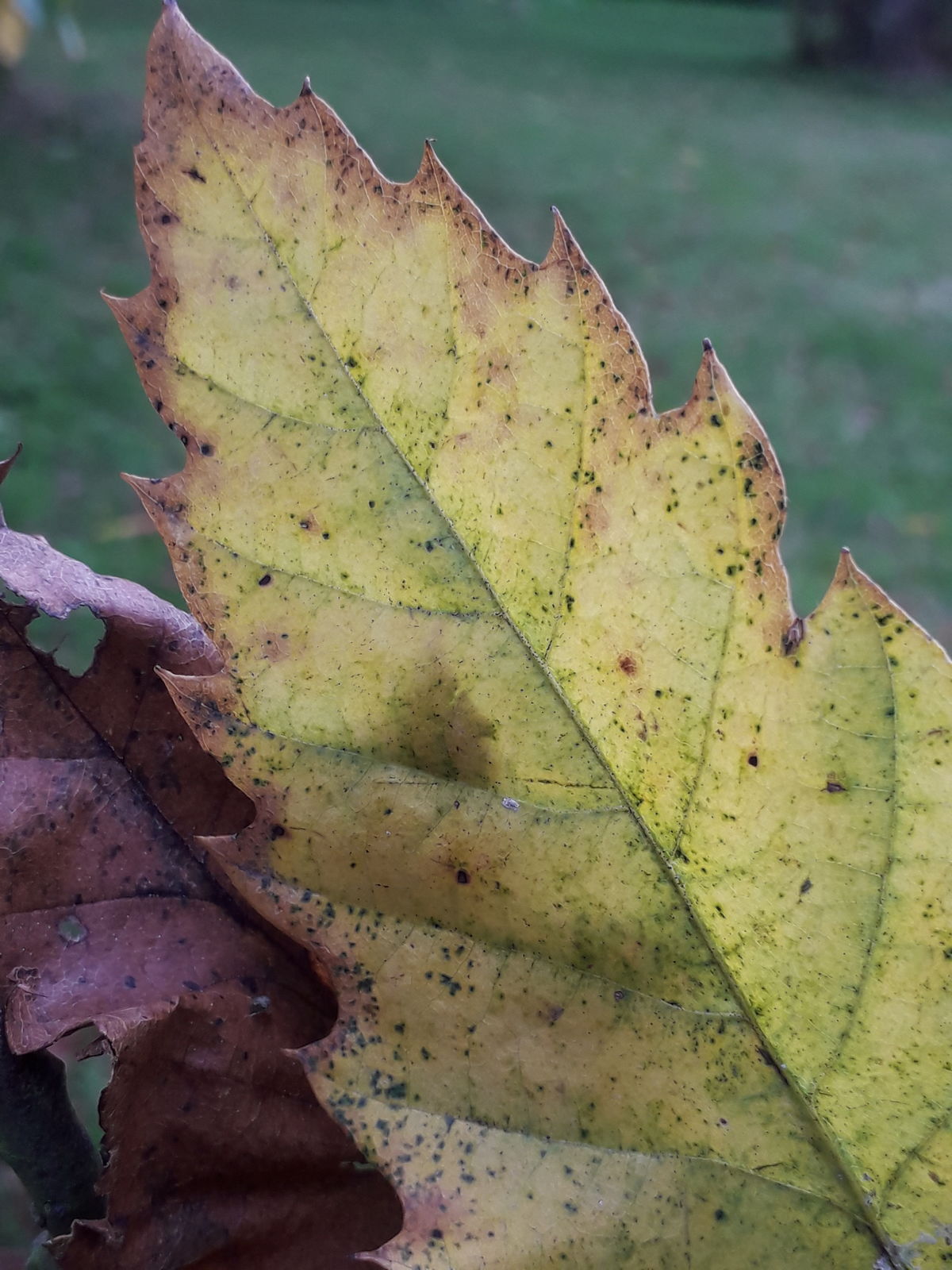
© photo
(c) Bob MacInnes, some rights reserved (CC BY) · cc-by
Kent P. McFarland · cc0
Daniel Atha · cc0
© copyright of the Board of Trustees of the Royal Botanic Gardens, Kew.




Global distribution
Its native range covered eastern North America from Maine and southern Ontario to Mississippi, and from the Atlantic coast to the Appalachians and Ohio Valley. Formerly dominant across much of its central and southern range in oak–chestnut forest, it now persists mainly as scattered stump sprouts following chestnut blight.
Identity
American chestnut (Castanea dentata (Marshall) Borkh., 1800) is a large deciduous tree in the genus Castanea, family Fagaceae, alongside oaks and beeches. The Latin epithet dentata, “toothed,” describes the regular, sharp teeth along each leaf margin. 1 2
Castanea dentata was among the most abundant broadleaved trees of eastern North America, with nearly four billion trees before the twentieth century. Chestnut blight, a fungal disease from Asia, destroyed almost all that population between its detection in 1904 and the middle of the century, a collapse over roughly fifty years. 6
Recognition
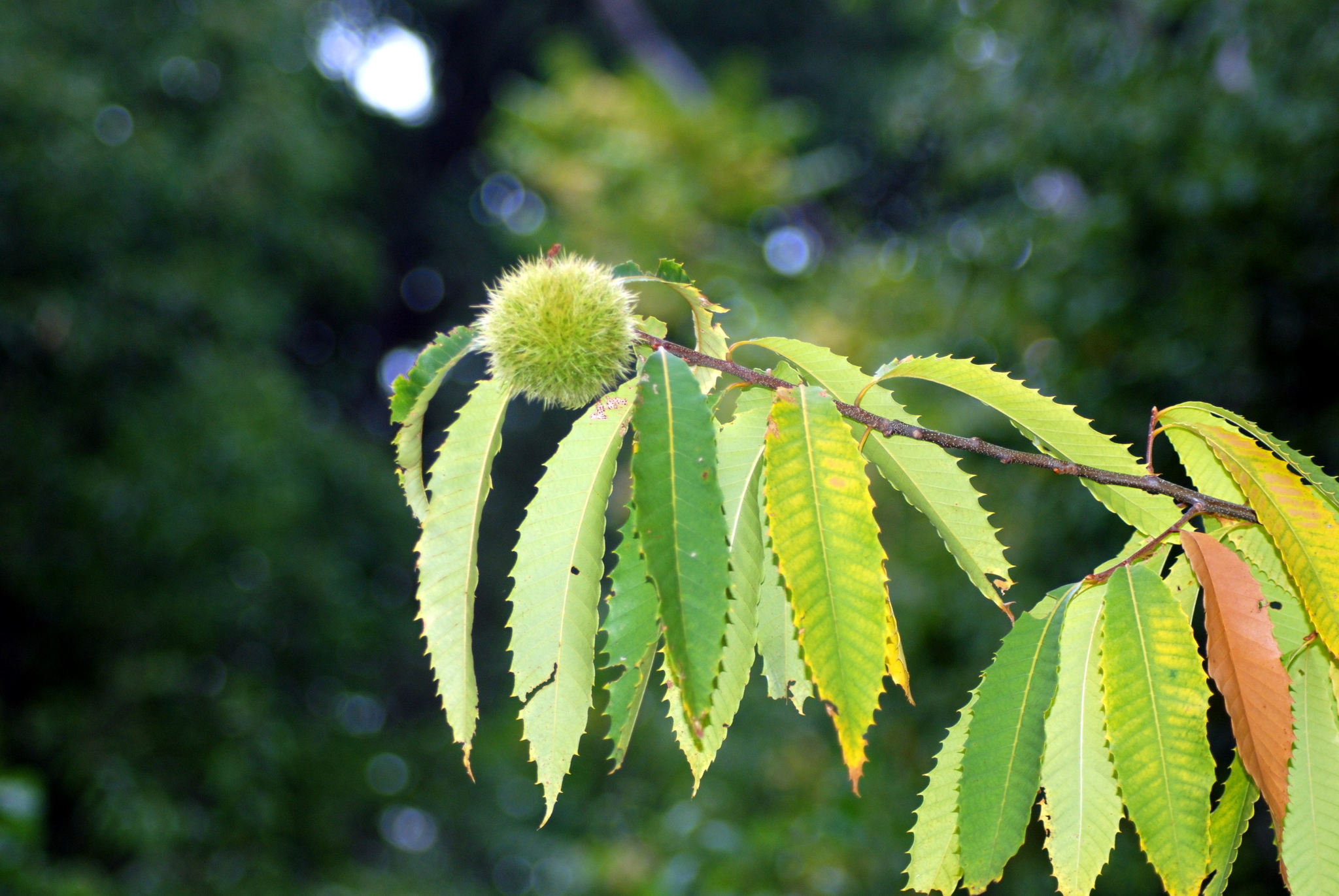
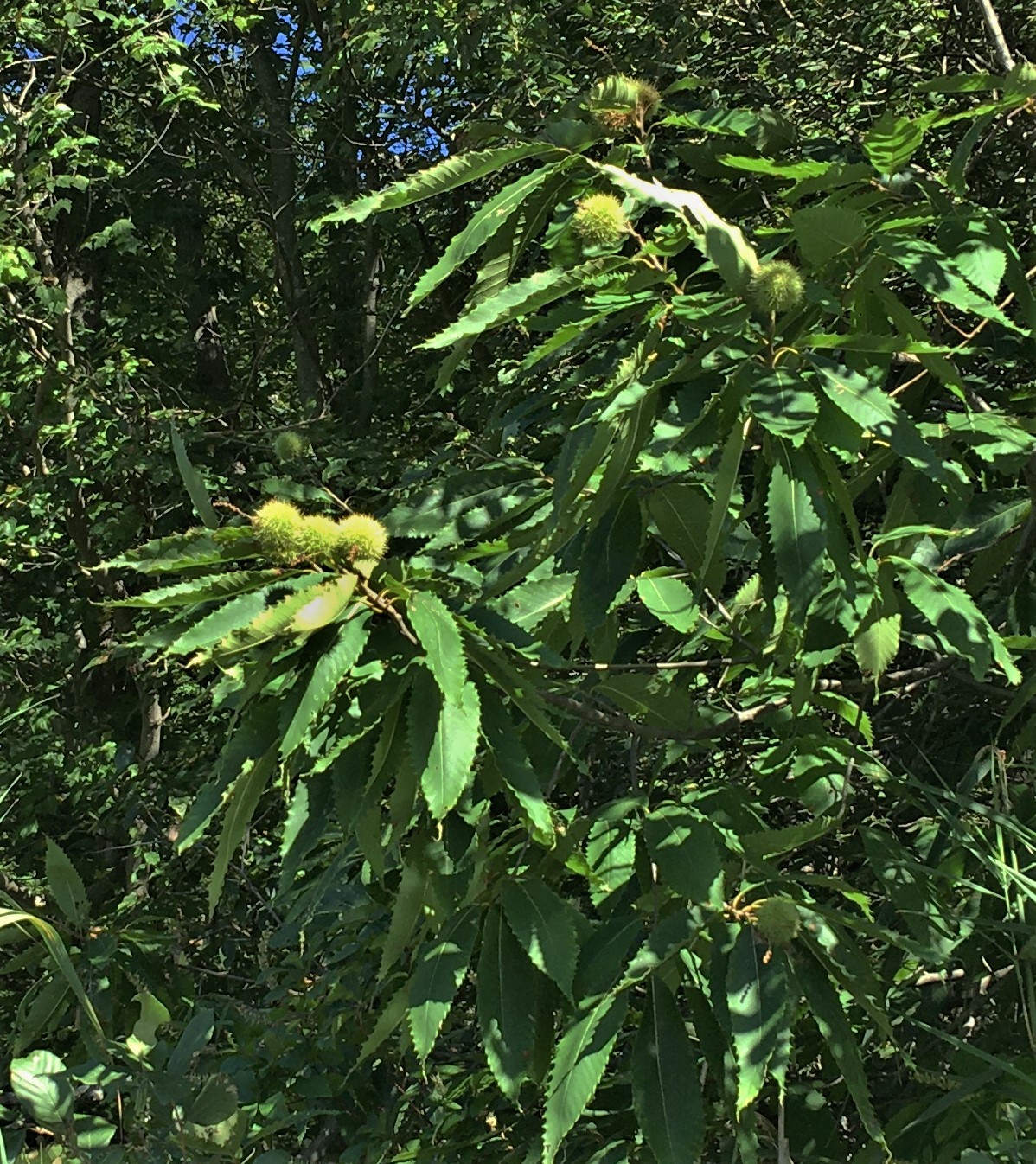
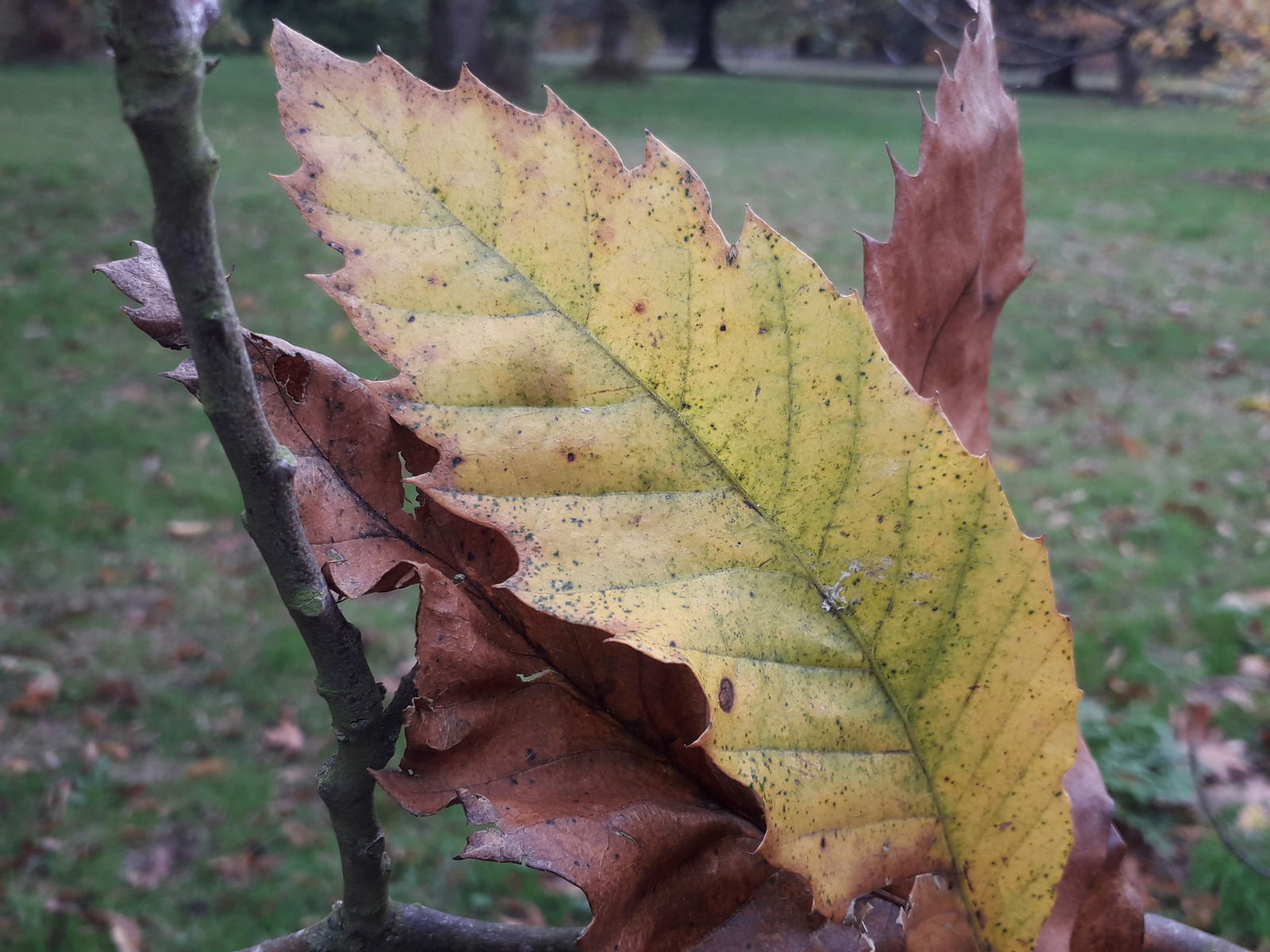
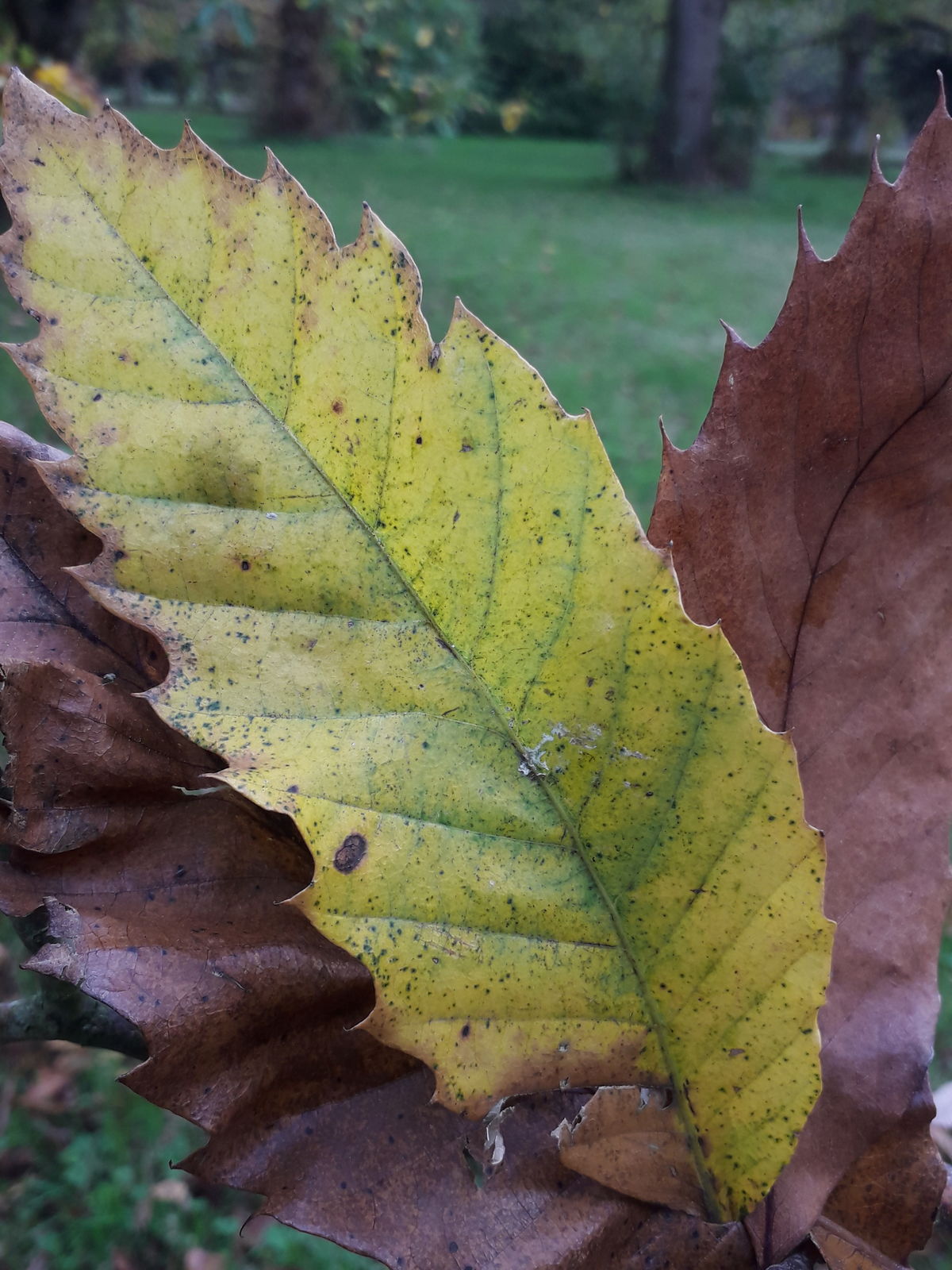
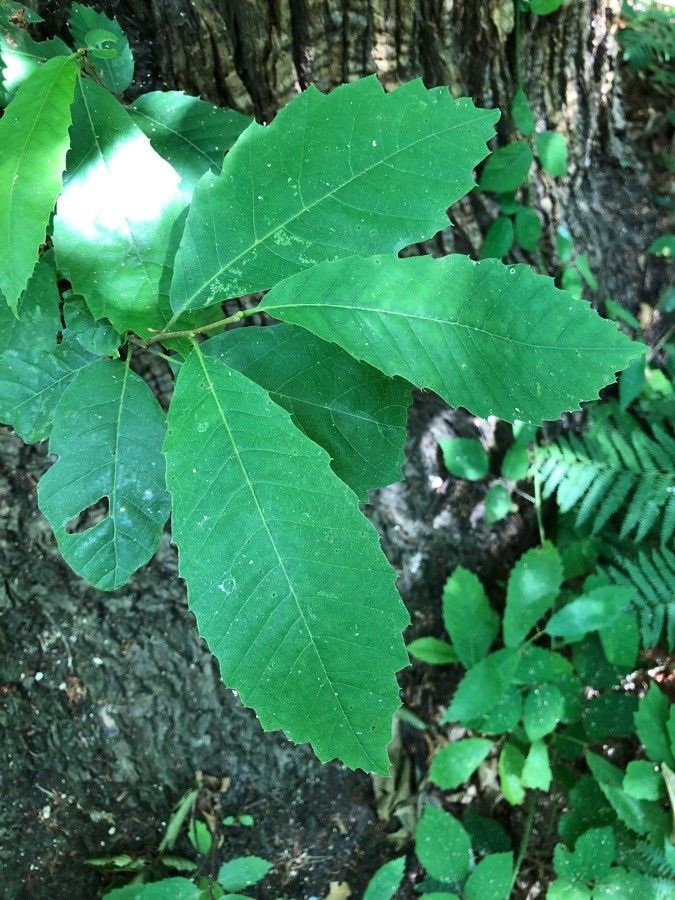
American chestnut commonly reaches 15–23 m (49–75 ft) tall at maturity, with a similar spread. Young trees and stump sprouts grow quickly. Lanceolate to oblong leaves are 10–23 cm (4–9 in) long and 4–7.5 cm (1.6–3 in) wide, dark green above, with regular teeth ending in fine, curved points. 2
The light-gray bark has broad, flat ridges, often spiraling slightly around the trunk. Brown to reddish young twigs bear conspicuous white lenticels. Hairless leaf undersides and young twigs help distinguish it from other chestnuts, including European sweet chestnut, which has a slight down in those places. 2
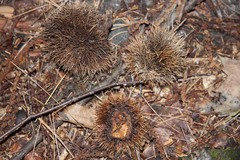
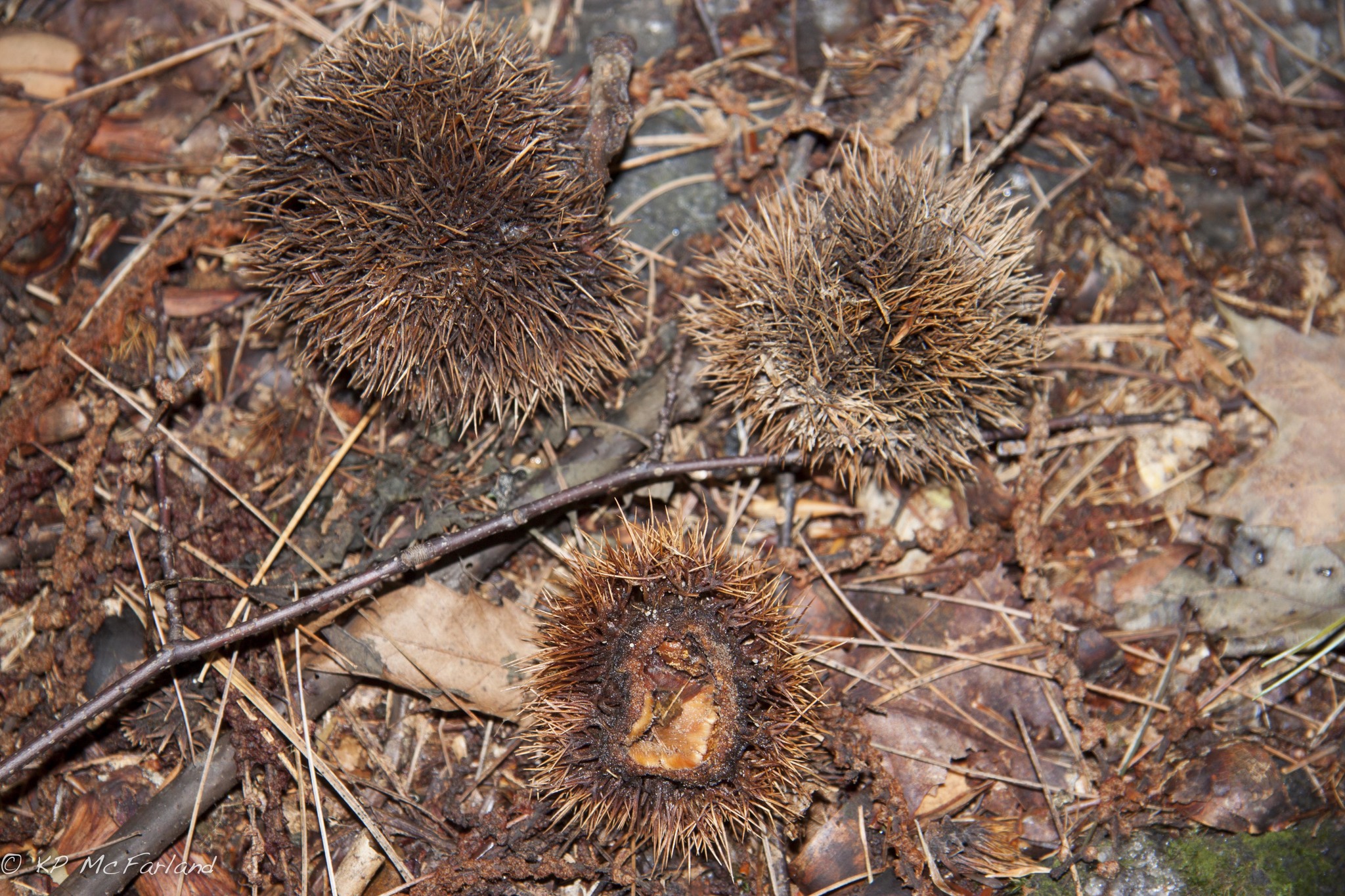
Upright, pale-yellow male catkins are 10–20 cm (4–8 in) long and open in early to midsummer, June–July in its native Northern Hemisphere range. Small female flowers form at the bases of the same shoots. Each spiny burr, 5–6.5 cm (2–2.6 in) wide, usually encloses two or three glossy brown nuts, among the sweetest in Castanea. 2 3
Useful taxonomy
POWO/WCVP accepts Castanea dentata (Marshall) Borkh., a combination published in 1800 from the basionym Fagus castanea var. dentata Marshall, 1785. Several older names have referred to the same species and are sometimes listed as synonyms:
- Castanea americana (Michx.) Raf. (historical synonym)
- Castanea sativa var. americana (Michx.) Sarg. (historical synonym)
- Castanea vesca var. americana Michx. (historical synonym)
- Castanea vulgaris var. americana (Michx.) A.DC. (historical synonym)
Other members of Castanea include sweet chestnut (Castanea sativa), native to Europe and western Asia, and Chinese chestnut (Castanea mollissima). The latter is naturally more tolerant of blight and widely used in crossbreeding programs with American chestnut. 1
Habitat and range
The species is native to eastern North America, from Maine and southern Ontario to Mississippi, and from the Atlantic coast to the Appalachians and Ohio Valley. It favors moist to dry deciduous forests on well-drained acidic soil, below pH 6. 2 1
Across much of its central and southern range, American chestnut once dominated Appalachian oak–chestnut forests. Chestnut blight reduced it largely to an understory shrub. The fungus Cryphonectria parasitica, introduced from Asia on nursery stock, was first detected at New York’s zoological park in 1904. Within roughly fifty years it killed nearly four billion trees. 6
The International Union for Conservation of Nature lists Castanea dentata as Critically Endangered, following the near-total collapse of the reproductive adult population across its native range. 5
Life cycle and reproduction
American chestnut is monoecious and self-incompatible: a tree bears both male and female flowers but cannot fertilize itself. It flowers in early to midsummer, June–July in its native range. Nectar-bearing male catkins chiefly attract insect pollinators, an unusual reproductive pattern among the predominantly wind-pollinated Fagaceae. 2
Burrs ripen in autumn, releasing nuts in September–October in its native range. Seed is the natural means of propagation, without deep dormancy after winter stratification. Grafting is used chiefly in conservation programs to multiply surviving trees thought to have partial resistance. 3
Blight kills the aboveground tree but spares its roots, an unusual survival mechanism among large North American broadleaved trees. One tree can produce stump sprouts for decades. Each sprout grows, becomes infected before reproductive age, and dies without bearing nuts. Unable to escape blight in time, the species persists beneath Appalachian forests without reestablishing itself in the canopy. 6
Uses and risks
Its rot-resistant, straight-grained timber long supplied cabin foundations, fences, shingles, flooring, railway ties and telegraph poles. Tannin-rich bark also served leather tanning. Before blight, the sweet nuts supported both wildlife and rural Appalachian economies. 6 3
The ASPCA lists the species as non-toxic to cats, dogs and horses. The only documented risk is mechanical: very sharp burr spines can injure hands or paws when fallen chestnuts are gathered. 4
Varieties, look-alikes and related plants
There is no stable ornamental cultivar of Castanea dentata, whose vulnerability to blight prevents routine horticultural use. Lines of interest instead come from restoration programs: Clapper and Graves, historic surviving trees used as partially tolerant parents; backcrossed lines derived from Chinese chestnut crosses; and Darling 58, a historical transgenic research line with a wheat gene that breaks down oxalic acid secreted by the blight fungus. 6
Two other species are regularly confused with it:
- Sweet chestnut (Castanea sativa) has slightly downy twigs and leaf undersides, unlike the hairless organs of American chestnut.
- Chinese chestnut (Castanea mollissima) has a more compact, spreading form and greater natural tolerance of blight, making it a frequent breeding parent.
Toothed leaves occur in all three species and offer little help in distinguishing them. Hairiness is more useful: absent in Castanea dentata and present as slight down in sweet and Chinese chestnuts. 2
Main sources
- Plants of the World Online / Kew, Castanea dentata (Marshall) Borkh.
- NC State Extension Gardener Toolbox, Castanea dentata (American Chestnut)
- Plants For A Future, Castanea dentata
- ASPCA, Chestnut (Castanea) toxicity entry
- IUCN Red List of Threatened Species, Castanea dentata assessment
- The American Chestnut Foundation, history of the American chestnut
Frequently asked questions
Is American chestnut poisonous?
No. The ASPCA lists Castanea dentata as non-toxic to cats, dogs and horses. The main risk is mechanical injury from the very prickly burrs around the nuts.
Has American chestnut disappeared?
Not completely. Blight kills the aboveground tree but not its roots, which continue producing stump sprouts. The IUCN lists it as Critically Endangered: it is functionally rather than completely extinct.
How can I distinguish American chestnut from sweet chestnut?
Hairiness is the most reliable distinction. Castanea dentata has hairless twigs and leaf undersides, whereas European sweet chestnut has a slight down on twig tips and beneath the leaves.
What is chestnut blight?
It is a disease caused by Cryphonectria parasitica, an Asian fungus detected in the United States in 1904. It killed nearly four billion American chestnuts in about fifty years.
Are any American chestnuts resistant to blight?
Backcrossing programs with Chinese chestnut aim to produce resistant trees while retaining American chestnut traits. Darling 58 is a transgenic research line carrying a wheat gene intended to help address blight.
Are American chestnuts edible?
Yes. They are among the sweetest nuts in Castanea, with around 7% fat and 11% protein. They long supported wildlife and rural Appalachian economies.
Why is American chestnut rarely planted in gardens now?
Its extreme vulnerability to blight makes it poorly suited to routine ornamental use. Most planting is for conservation and forest restoration, with trees spaced apart.
Similar plants
If you are unsure about a plant’s toxicity, ask a botanist or veterinarian for advice.