
Autumn clematis (Clematis terniflora, )
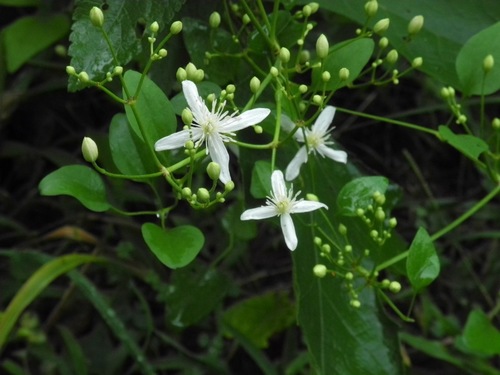
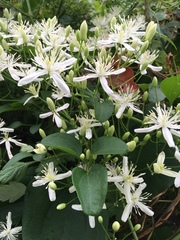
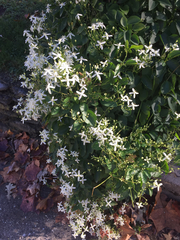
Autumn clematis (Clematis terniflora DC., 1817), also called sweet autumn clematis or senninsō in Japan, is a semiwoody Ranunculaceae vine native to China, Korea and Japan. Introduced to the United States as an ornamental in the late 19th century, it has become widely naturalized there. Its fragrant white flower clusters open in late summer, after most other garden clematis have finished flowering.
Read moreAutumn clematis, Sweet autumn clematis, Sweet autumn virginsbower, Yam-leaved clematis and Senninsō
Allow a few hours of direct sun per day, preferably morning or evening.
Full sun to partial shade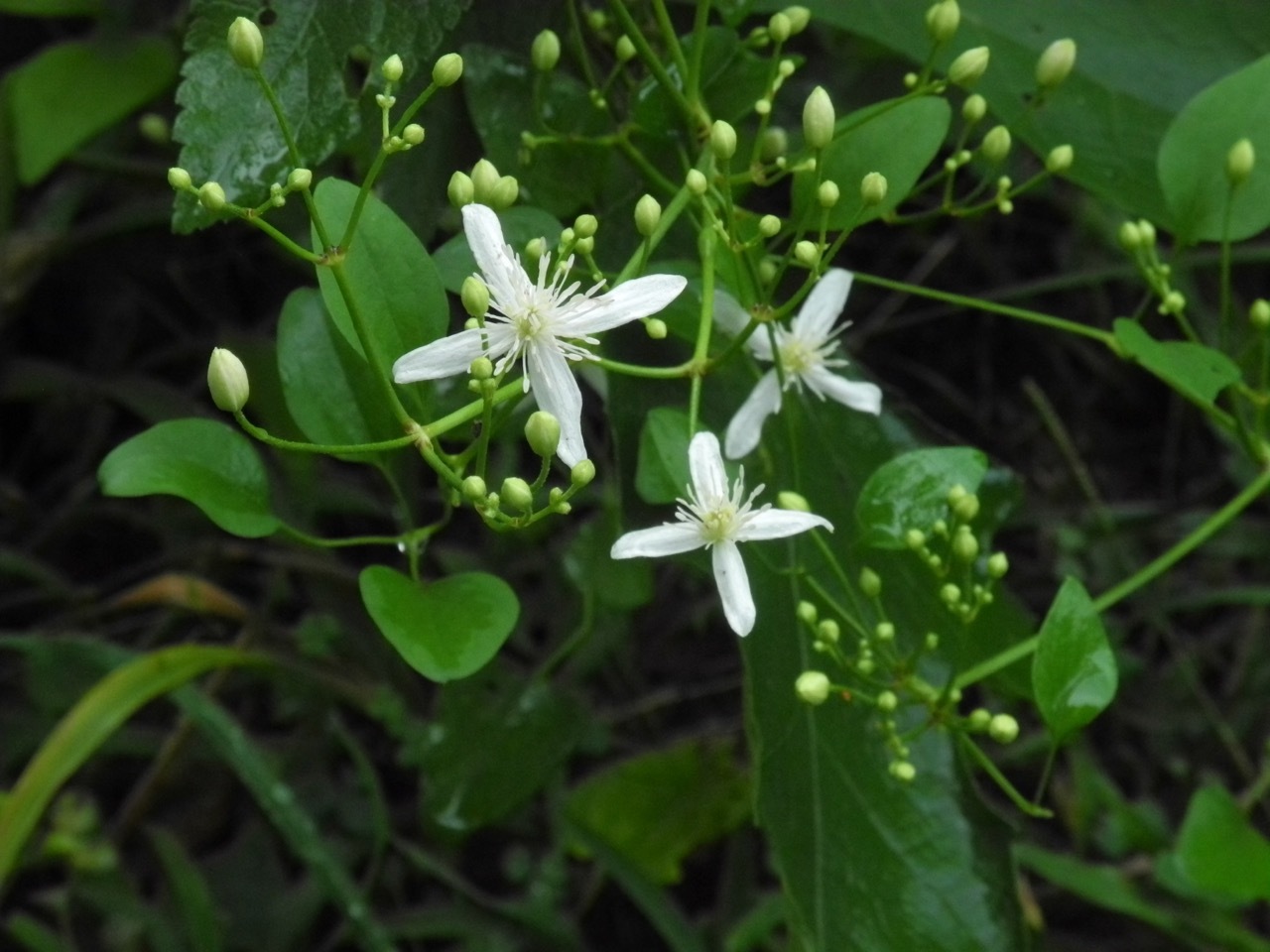
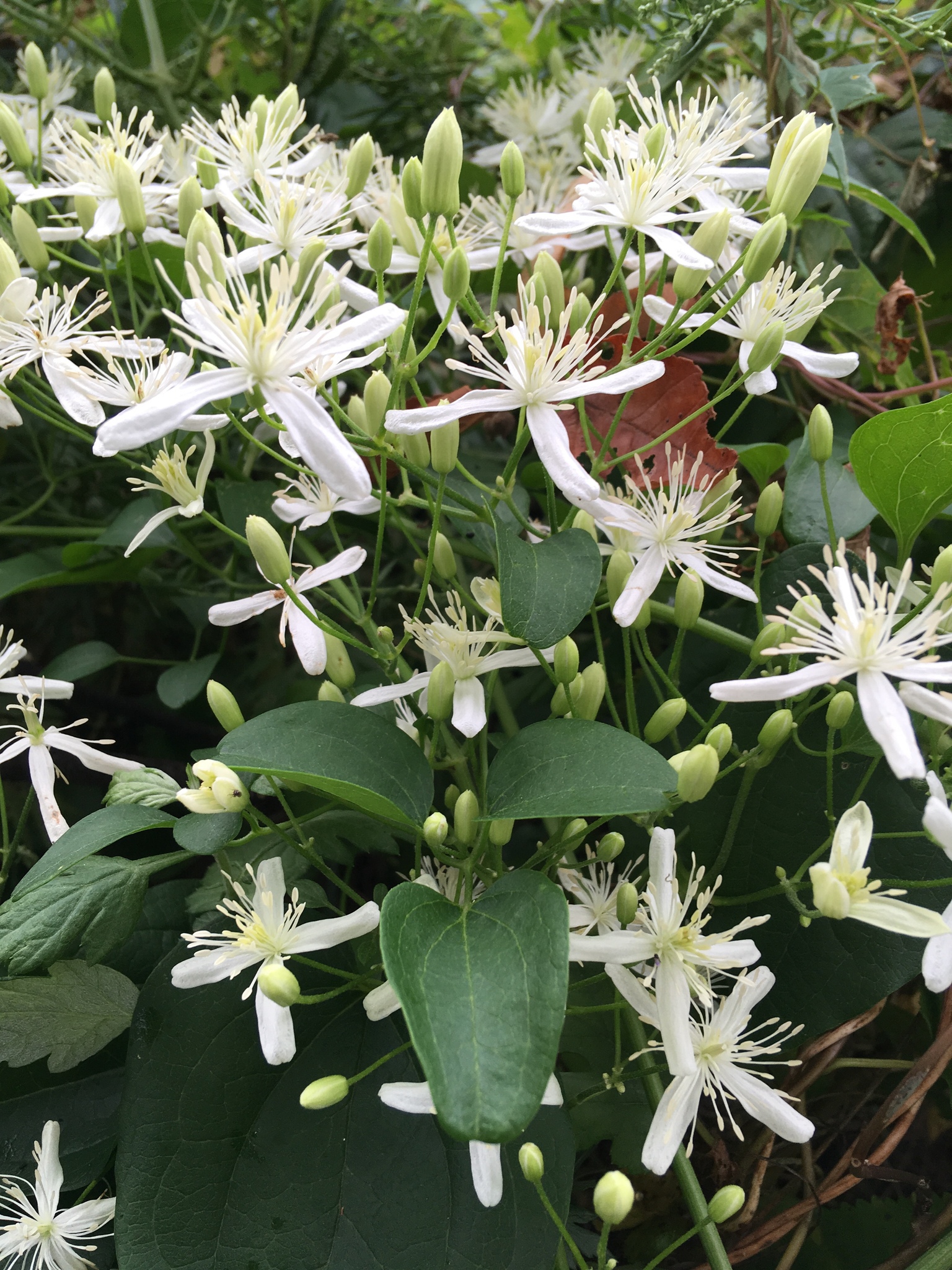
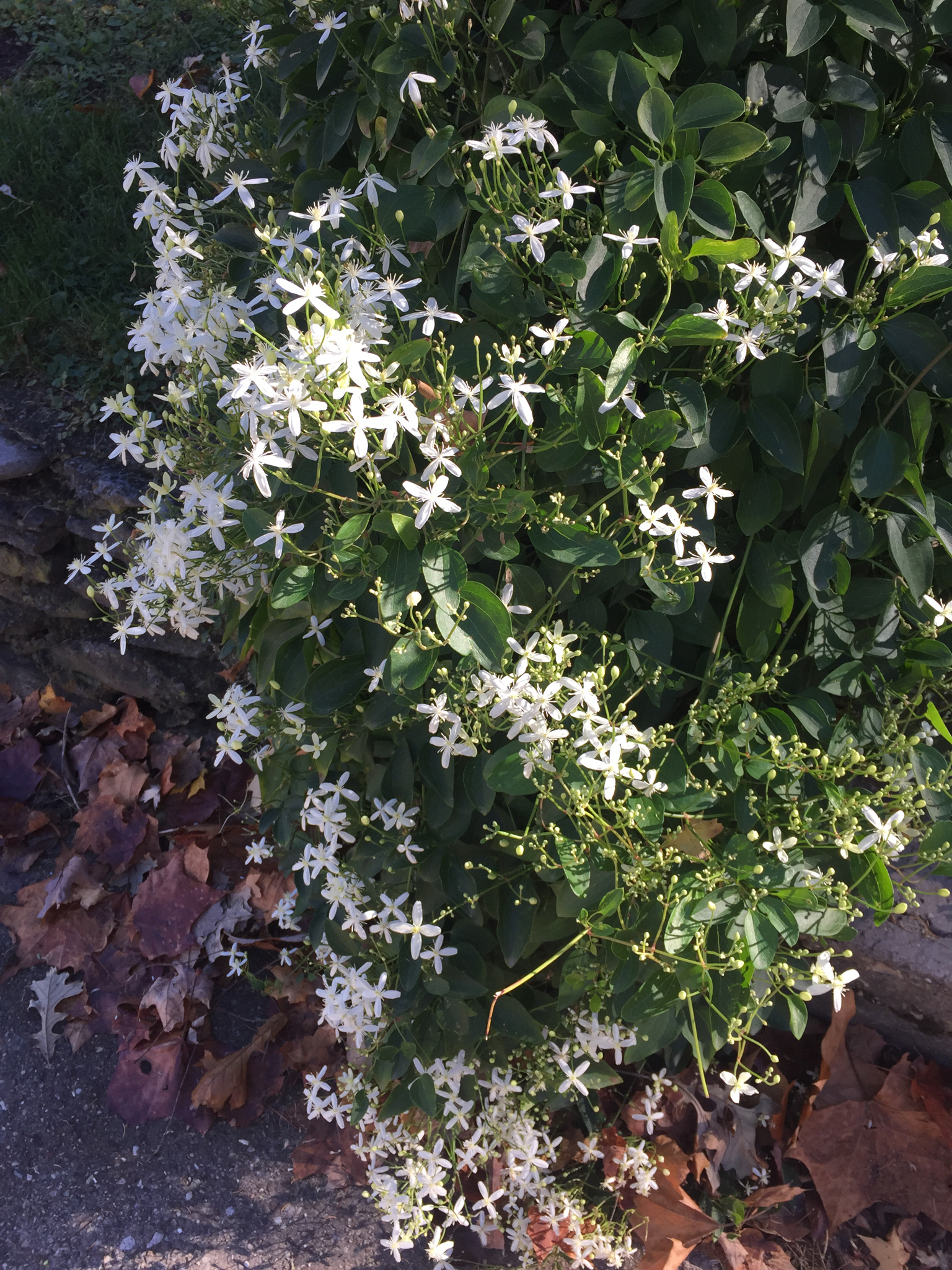


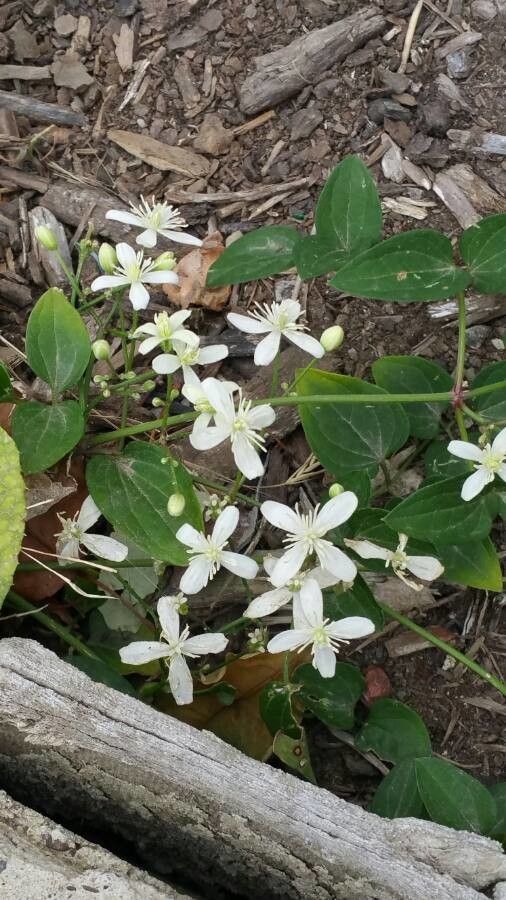
© photo
(c) Michael J. Papay, some rights reserved (CC BY), uploaded by Michael J. Papay · cc-by
Daniel Atha · cc0
Carrie Seltzer · cc0
Taken Sep 12, 2018 by Lisa J (cc-by-sa)
Taken Oct 31, 2018 by Lisa J (cc-by-sa)
Taken Aug 27, 2021 by Rita Rita (cc-by-sa)
Taken Aug 13, 2022 by Luna Cinder (cc-by-sa)
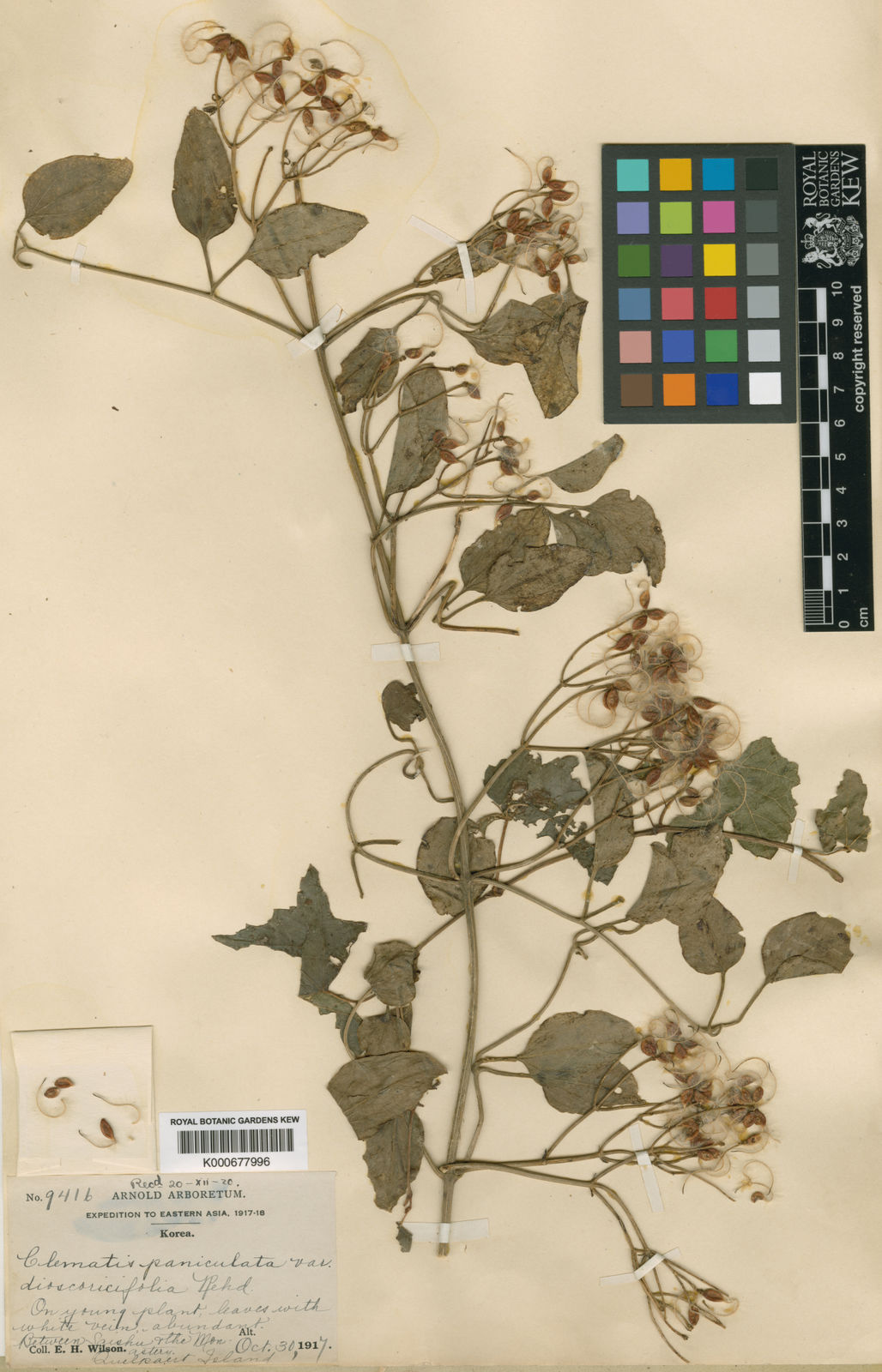
© copyright of the Board of Trustees of the Royal Botanic Gardens, Kew.




Global distribution
According to POWO/WCVP, Clematis terniflora is native to China, including Zhejiang where the type was collected, Korea, Japan south to the Nansei Islands and the Russian Far East. Introduced as a garden plant to the United States in the late 19th century, it has naturalized in several eastern and Midwestern states, where it is considered invasive. No invasive status is published for metropolitan France, where it remains a collectors’ plant.
- Native4
- Invasive1
- China
- Korea
- Japan
- Eastern Russia
- United States (East and Midwest)
Hexagons: regions where the plant occurs. Green dots: native range.1
Identity
Autumn clematis (Clematis terniflora DC., 1817) is an accepted species in the Ranunculaceae genus Clematis. POWO/WCVP retains this name for a vine described from Chinese specimens, with a native range extending from China through Korea and Japan to the Russian Far East. 1 2
The epithet terniflora refers to flowers grouped in threes, a feature visible in the cymes making up its panicles. The name sweet autumn clematis instead emphasizes fragrance and the flowering season, which comes later than that of many other garden clematis. Both names describe conspicuous features of the same Asian vine. 4 3
American gardens received it as an ornamental in the late 19th century. It has since become widely naturalized, and several eastern and Midwestern states consider it invasive. Metropolitan France has no published equivalent status, and the plant remains a collectors' climber there. These territorial distinctions matter when interpreting its reputation. 5 6
Recognition
Fast-growing, semiwoody stems are green and hairless, about 7 mm (1/4 in) thick. Leaf stalks coil around available supports, allowing the vine to cover a trellis, fence or neighboring shrub in a single season. Its rapid extension is accompanied by a dense framework of shoots. 6 4
Pinnately compound leaves have three to seven oval, hairless leaflets, most often five, measuring 3–5 cm (1–2 in) long. Very young seedlings may have toothed leaflet margins, but mature foliage develops entire margins, without distinct teeth. This change is a useful identification clue when comparing it with other climbing clematis, although age must be taken into account. 6 4
Late-summer flowering, often August to September in the Northern Hemisphere, produces three-flowered cymes assembled into large terminal and axillary panicles. Each flower is 2–3 cm (about 1 in) across and has four upward-facing, petal-like sepals; true petals are absent. The strong fragrance helps distinguish it from most horticultural clematis. 3 4
Useful taxonomy
De Candolle published the accepted name Clematis terniflora DC. in 1817. Clematis recta subsp. terniflora (DC.) Kuntze is a homotypic synonym, based on the same type specimen. The accepted species name remains the stable reference through these changes in rank and combination. 1
A persistent nursery confusion concerns Clematis paniculata Thunb., long used in the American horticultural trade for this plant. POWO treats that name as illegitimate and misapplied to Clematis terniflora. The true Clematis paniculata J.F.Gmel. denotes a different New Zealand species, rather than the Asian vine. The author citation is therefore useful when resolving an old label. 1
Another synonym, Clematis dioscoreifolia H.Lév. & Vaniot, explains yam-leaved clematis: the epithet compares its foliage with that of a yam in the genus Dioscorea. The accepted scientific name, supported by entire mature leaflet margins, provides a firmer identification than a nursery name alone. 1 6
Habitat and range
Forest margins, hillside thickets, upland meadows and coastal rocky places form its native habitats. In China, Korea and Japan it occurs from sea level to about 800 m (2,600 ft). That variety of open and edge habitats helps explain its ability to make use of many kinds of support. 7
After introduction to American gardens in the late 19th century, it escaped and naturalized along woodland edges, roadsides and riverbanks in many eastern and Midwestern states. The Atlas of Florida Plants lists it as a Category II invasive, a category for plants colonizing native plant communities without yet replacing them. 5 6
Metropolitan France has no published invasive status for Clematis terniflora, which remains cultivated in gardens there. Florida's Category II designation belongs to the introduced North American context; it does not describe the plant's status in its native range or in French collections. 5
Life cycle and flowering
Deciduous and perennial, Autumn clematis grows rapidly in spring before flowering in late summer, generally August to September depending on climate in the Northern Hemisphere. Flowers form on the current year's wood: spring pruning can therefore remove future buds and account for a missed flowering season. 4 6
Each fertilized flower becomes a small dry achene extended by a long feathery style, which aids wind dispersal. Silky seed heads often remain visible well after leaf fall, resembling those of other clematis with feathery fruits. The decorative effect thus outlasts the individual flowers. 4
Propagation uses seed, semiripe cuttings in late spring or winter layering of stems. Fresh seed germinates faster than stored seed, a practical distinction for deliberate propagation in a collection rather than simply allowing spontaneous seedlings to establish around the parent. 7
Once established, the root system withstands frost down to about −20 °C (−4 °F), corresponding to USDA hardiness zones 5–9. This tolerance helps explain cultivation in both continental and temperate gardens, despite the comparatively soft appearance of its seasonal shoots. 4
Uses, edibility and toxicity
Trellises, fences and old walls can carry this fragrant late-flowering vine, which blooms when few other climbers are still in flower. RHS includes it among vigorous climbers for temperate gardens, with an explicit warning about skin contact. Its ornamental value and its handling risks need to be considered together. 3
Ethnobotanical records mention young shoots or buds eaten in East Asia after prolonged cooking. That treatment partly neutralizes irritating compounds typical of the genus, but these occasional uses are not a general food recommendation. They do not make raw plant material suitable for tasting. 7
NC State Extension places Clematis terniflora among severe poisons, naming protoanemonin as the active irritant. Ingestion causes mouth pain and ulcers, with digestive disturbances in dogs, cats and horses. Sap can also cause dermatitis in sensitive people, so gloves are appropriate when handling or pruning it. 6 8
Vigor, management and invasive status
Vigorous growth can be useful in a French garden: the vine quickly conceals an unattractive support and adds late-season fragrance. The trade-off is annual pruning to prevent it from overwhelming a neighboring shrub. Its ornamental strengths therefore come with a continuing need to control the volume of growth. 3
Outside the native range, the same vigor presents documented problems. NC State Extension lists Autumn clematis as invasive and suggests the North American native Clematis virginiana as a less problematic alternative for gardens in the affected regions. A recommendation for those regions should not be assumed to apply everywhere. 6
Without a territorial source, there is no basis for assigning an invasive designation to this clematis in France; Category II refers specifically to Florida. In introduced North American settings, spotting and removing volunteer seedlings before fruiting helps limit their spread toward nearby hedges. 5 6
Main sources
- Plants of the World Online / Kew, Clematis terniflora DC.
- International Plant Names Index, Clematis terniflora DC.
- Royal Horticultural Society, Clematis terniflora - Sweet autumn clematis
- Missouri Botanical Garden Plant Finder, Clematis terniflora
- Atlas of Florida Plants, Clematis terniflora
- NC State Extension Gardener Plant Toolbox, Clematis terniflora
- Plants For A Future, Clematis terniflora
- ASPCA, Clematis toxicity entry
Frequently asked questions
Is Autumn clematis native to France?
No. POWO/WCVP places its native range in China, Korea, Japan and the Russian Far East. In France it is cultivated as a collectors’ plant, with no published invasive status.
Why is Autumn clematis considered invasive?
Introduced to the United States in the late 19th century, it has become widely naturalized in the East and Midwest. The Florida Plant Atlas lists it in Category II, meaning it invades native plant communities without yet replacing them.
Is Autumn clematis poisonous?
Yes. NC State Extension lists it as a severe poison, with protoanemonin as the irritant. Ingestion causes mouth pain and ulcers, while sap causes contact dermatitis in sensitive people.
How can I distinguish Autumn clematis from a native clematis?
For North American gardens, NC State presents Clematis virginiana as a less problematic native alternative. Autumn clematis has entire leaflet margins at maturity, although young plants often have toothed margins. This clue needs confirmation with other characters.
Why is this plant sometimes called Clematis paniculata?
The American horticultural trade long sold Clematis terniflora under Clematis paniculata Thunb., a name POWO now considers illegitimate. The true Clematis paniculata J.F.Gmel. is a distinct New Zealand species.
Can you eat the young shoots of Autumn clematis?
Some ethnobotanical sources mention young shoots or buds eaten after prolonged cooking in East Asia. This limited use should not override warnings about the toxicity of the raw sap.
Similar plants
If you are unsure about a plant’s toxicity, ask a botanist or veterinarian for advice.