
Chinese wisteria (Wisteria sinensis, )
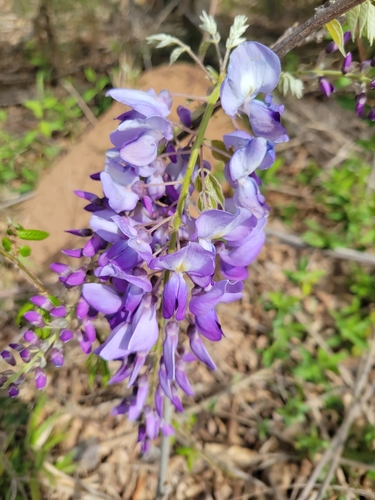

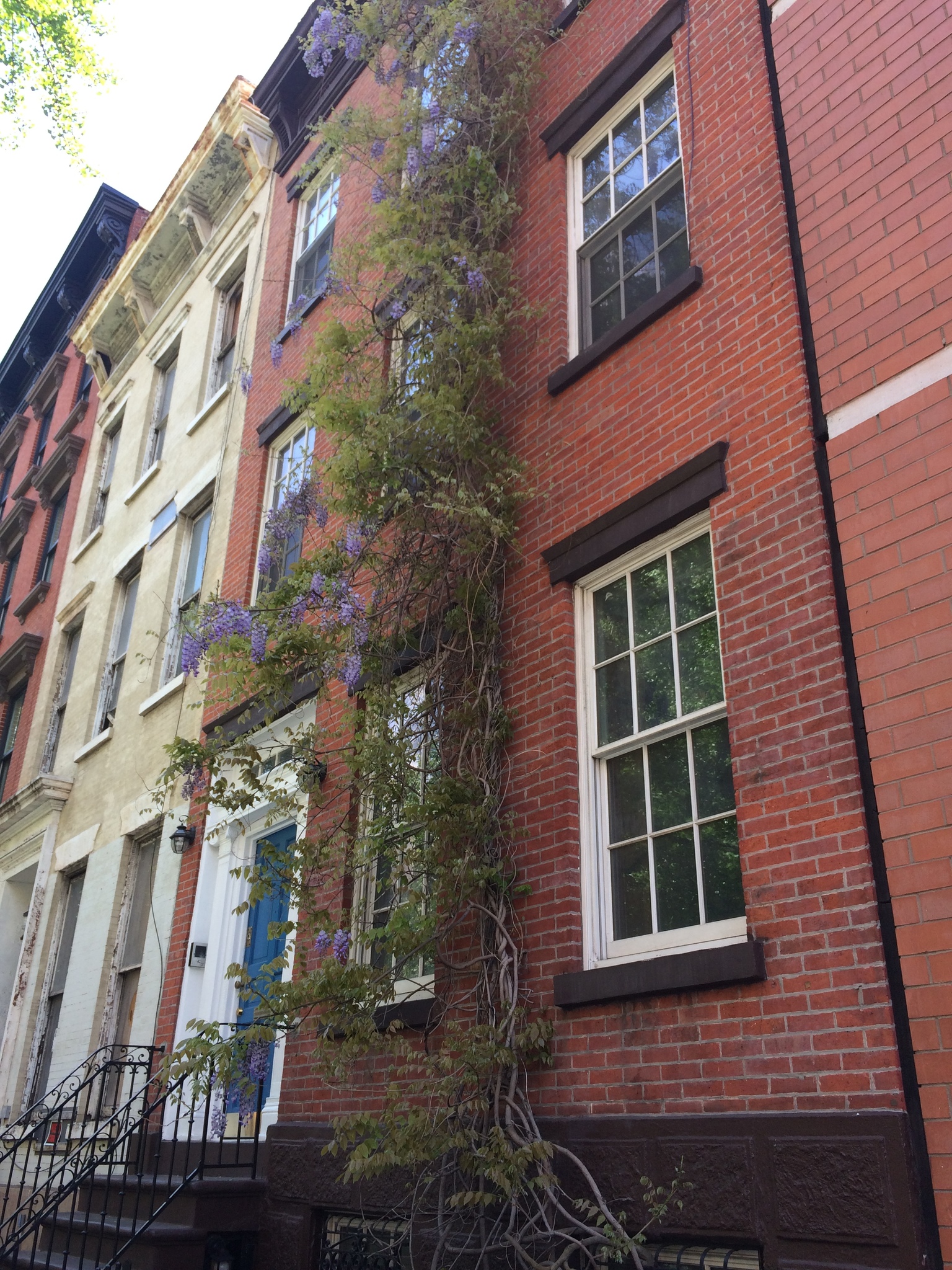
Chinese wisteria (Wisteria sinensis (Sims) DC.) is a deciduous woody vine in the Fabaceae family, native to central and southern China. Its fragrant flowers make a striking display over a pergola or facade, but vigorous growth, constricting stems and toxic seeds call for strong support, regular pruning and attention to its invasive status in each region.
Read moreChinese wisteria, Wisteria and Zi teng
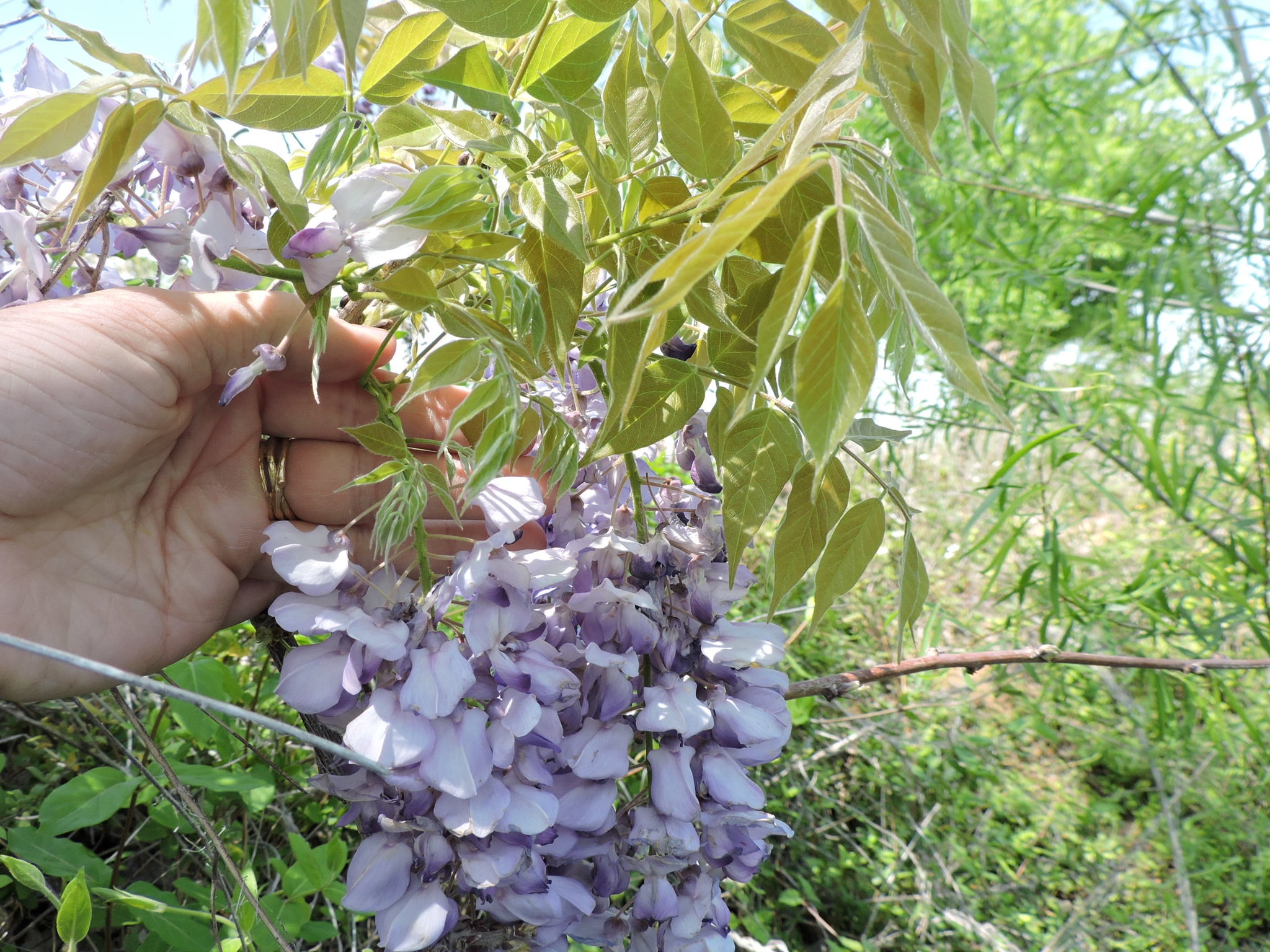


© photo
Anthony A Simmons · cc0
Dilrukshan Priyantha Wijesinghe · cc-by
Sam Kieschnick · cc-by
Taken May 20, 2021 by Dieter Albrecht (cc-by-sa)
Taken Mar 17, 2022 by AJ G (cc-by-sa)
Taken Apr 16, 2011 by Tela Botanica − Yoan MARTIN (cc-by-sa)
Taken Apr 21, 2022 by Ernst Fürst (cc-by-sa)
Taken Apr 23, 2019 by Jakob (cc-by-sa)
© copyright of the Board of Trustees of the Royal Botanic Gardens, Kew.


Global distribution
POWO/Kew places the native range in central and southern China. Widely cultivated in temperate Europe, including France, the plant is documented as invasive mainly outside France, particularly in the eastern and southeastern United States.
- Native1
- Introduced1
- Invasive1
- Central and southern China
- Hawaii
- Eastern United States
Hexagons: regions where the plant occurs. Green dots: native range.1
Identity
Chinese wisteria (Wisteria sinensis (Sims) DC., 1825) is a climbing member of the Fabaceae accepted by Plants of the World Online. Kew records publication of the accepted name in the 1825 Prodromus and places its native range in central and southern China. 1
The historical basionym Glycine sinensis Sims explains why older names can cause confusion: the accepted species now belongs to Wisteria. The general name wisteria describes the familiar garden climber, while Wisteria sinensis identifies this particular species. 1
Fragrant spring flower clusters are its chief attraction, but this is a substantial climber. RHS describes a large deciduous vine with twining stems, pinnate leaves and hanging clusters up to about 30 cm (12 in) long. 2
Recognition
Aging stems become thick, woody and twisted, sometimes almost trunklike. NC State describes a fast-growing vine several meters tall that can become massive on its support. 4
Alternate compound leaves usually carry 7–13 leaflets, elliptical to oval in shape. This range helps distinguish Chinese wisteria from Japanese wisteria, which often has more leaflets, but overlapping traits and hybrids prevent identification by leaf count alone. 4 6
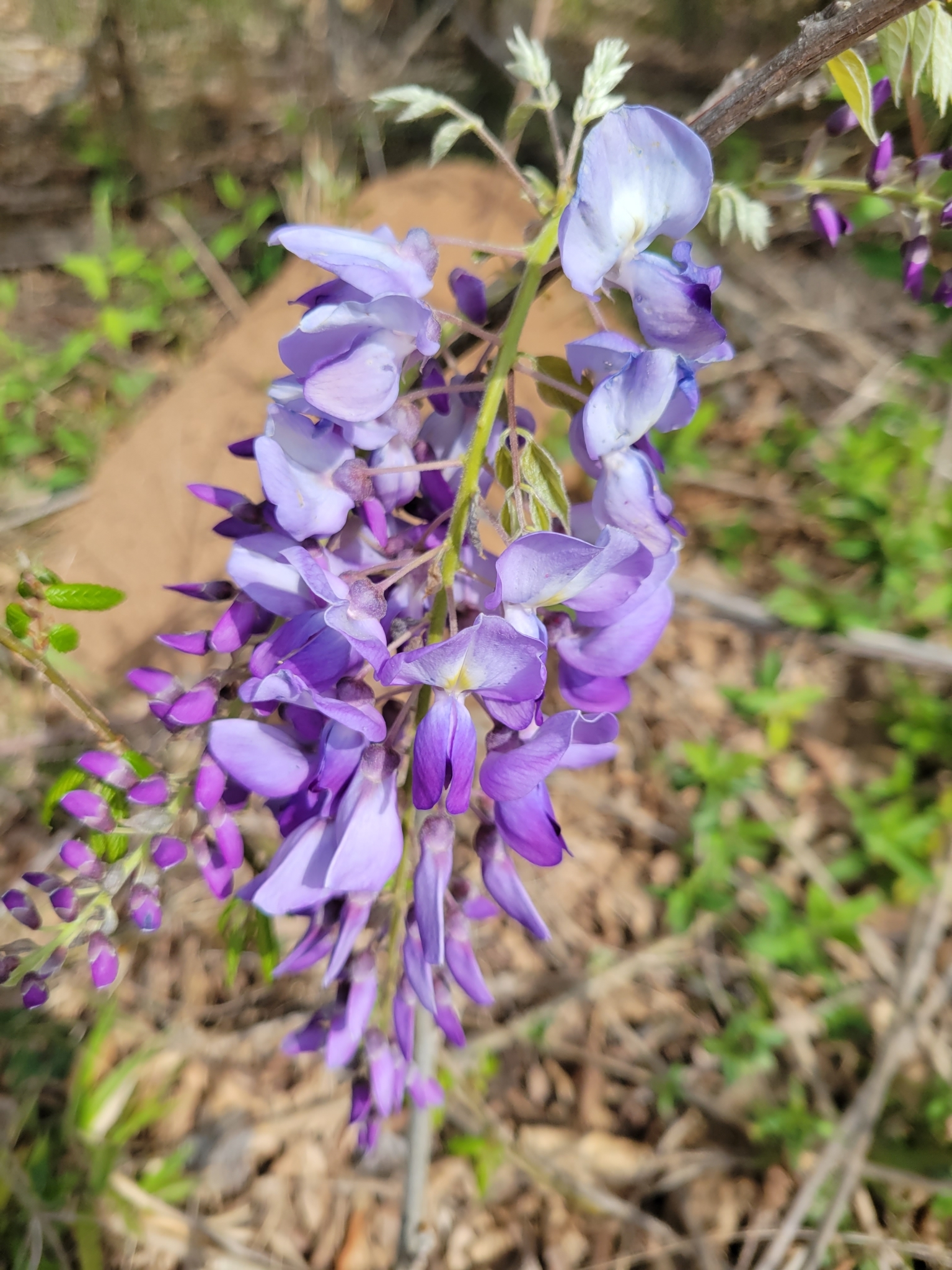
Spring brings hanging clusters of pea-shaped flowers, usually blue-violet, mauve, pink or white depending on the form. Flowers along a W. sinensis cluster often open fairly simultaneously, in contrast to the more gradual opening described for W. floribunda. 4 7
Velvety hanging pods follow flowering and may remain until fall or winter. Their resemblance to large bean pods is misleading and dangerous: seeds and pods carry the greatest poisoning risk. 4 9
Taxonomy, names and look-alikes
The accepted botanical name is Wisteria sinensis (Sims) DC. POWO lists historical synonyms including Glycine sinensis Sims, Wisteria chinensis (Sims) DC., Kraunhia sinensis and Millettia sinensis. These names still appear in older books and on plant labels. 1
Japanese wisteria, Wisteria floribunda, is the main source of confusion. Horticultural references distinguish the species by leaflet count, cluster length, the sequence of flower opening and sometimes the direction of twining. Treat that last feature cautiously: descriptions do not always use the same viewing convention. 6 7
Fertile hybrids further complicate identification. Mississippi State reports Chinese–Japanese wisteria hybrids in the southeastern United States, making escaped plants difficult to separate by species. Keep the original nursery label and assess several traits together. 6
Habitat, vigor and support
Central and southern China form the recorded native range, within a temperate biome. In European cultivation, Chinese wisteria grows in full sun to light partial shade, and can live a long time where soil drains well and permanent support is provided. 1 2
Its vigor has direct consequences for placement. RHS emphasizes choosing a site for a large, long-lived climber, while NC State stresses space and strong supports. Mature stems tighten, gain weight and become woody, potentially deforming a weak structure. 2 4
Keep stems away from gutters, light decorative trellises, weak wires and young trees. North American management sources describe stems tightly encircling trees, with smothering, distortion and breakage in invaded habitats. 6 7
Cultivation and support
Light, training and pruning shape successful cultivation of Chinese wisteria. RHS recommends well-drained soil and notes that flowering is best in full sun and reduced in light shade. Acidic, neutral or alkaline soil is suitable if water does not stagnate. 2 3
Twice-yearly pruning gives the best results according to RHS. In practical terms, shorten long shoots in summer, then trim the spurs again in late winter without removing the flower buds. 2 3
Excess nitrogen promotes stems rather than necessarily producing flowers. A grafted plant in a bright position, trained along a few main arms and pruned regularly, develops a clearer framework and a better display. NC State also notes that establishment and flowering can be slow. 4
Life cycle, flowering and propagation
Most flowers appear in spring, often before the leaves fully expand. The clusters of W. sinensis are generally shorter than the exceptionally long racemes of some Japanese wisterias, but numerous clusters stand out on a well-exposed framework. 2 4
Large seeds develop in pods after flowering. Where plants escape cultivation, spread is not limited to seed: USDA FEIS highlights vegetative growth, stems rooting at nodes and runners. 7
Seed propagation is seldom the best route for gardeners seeking flowers. Seedlings can remain juvenile for a long time and vary considerably. Horticultural sources favor grafting, layering or cuttings to retain the traits of a floriferous cultivar. 2 4
Toxicity, edibility and invasiveness
ASPCA lists Wisteria spp. as toxic to dogs, cats and horses, identifying lectin and wisterin glycoside as the toxic principles. Reported signs include vomiting, diarrhea and depression. 8
For people, Poison Control identifies seeds and pods as the most toxic parts, although all parts contain lectin and wisterin. Reported symptoms include mouth irritation, stomach pain, vomiting and diarrhea. NCBI Bookshelf also records human poisoning from Wisteria seeds and pods, particularly in children. 9 10
Descriptions of edible flowers require caution. NC State marks flowers as edible, and some culinary traditions use wisteria flowers, but safe use depends on species identification, plant part, preparation, quantity and avoiding confusion. Eating the flowers is not recommended here; pods and seeds must not be eaten. 4 9
Invasive status varies by territory. NC State describes Wisteria sinensis as invasive in North Carolina, while USDA FEIS documents Chinese and Japanese wisterias forming dense masses in the United States, displacing vegetation and constricting or shading trees. 4 7
For metropolitan France, no reliable national classification supports treating it as an invasive alien species. Nevertheless, a poorly placed plant can sucker, layer, overload its support and become very difficult to bring back under control. 2 7
Main sources
- Plants of the World Online / Kew, Wisteria sinensis (Sims) DC.
- Royal Horticultural Society, Wisteria sinensis
- Royal Horticultural Society, Wisteria genus guide
- NC State Extension Gardener Plant Toolbox, Wisteria sinensis
- NC State Extension Gardener Plant Toolbox, Wisteria
- Mississippi State University Extension, Wisteria
- USDA Forest Service FEIS, Wisteria floribunda and Wisteria sinensis
- ASPCA, Wisteria toxicity entry
- Poison Control, Virginia creeper and wisteria toxicity
- NCBI Bookshelf, Plant Family Information, Wisteria poisoning note
Frequently asked questions
Is Chinese wisteria invasive in France?
No national French classification treats Wisteria sinensis as invasive in metropolitan France. This does not contradict its documented invasive status in several parts of the United States.
Can you eat wisteria flowers?
Some horticultural sources describe the flowers as edible, but Poison Control notes that all parts contain lectin and wisterin, with seeds and pods the most toxic parts. Eating them is therefore not recommended.
Why is my Chinese wisteria not flowering?
Common causes include a young seed-grown plant, too much shade or nitrogen, pruning at the wrong time, or a plant that has not yet established.
How can I tell Wisteria sinensis from Wisteria floribunda?
Chinese wisteria usually has 7–13 leaflets, shorter flower clusters and more simultaneous flowering. Japanese wisteria often has more leaflets and longer clusters, although hybrids make identification uncertain.
Can I let Chinese wisteria climb a tree?
Only on a very mature tree, with close monitoring. The stems constrict their support and can deform branches; in invaded habitats, they help smother vegetation.
Similar plants
If you are unsure about a plant’s toxicity, ask a botanist or veterinarian for advice.