
Flowering dogwood (Cornus florida, )
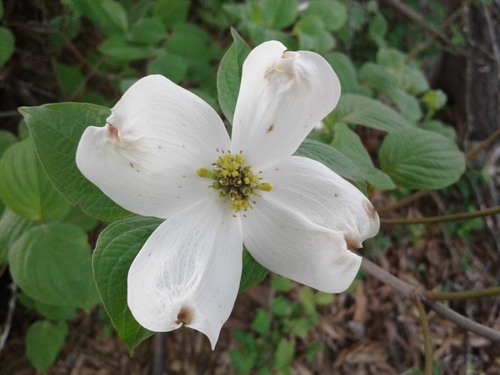
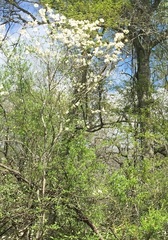
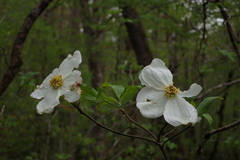
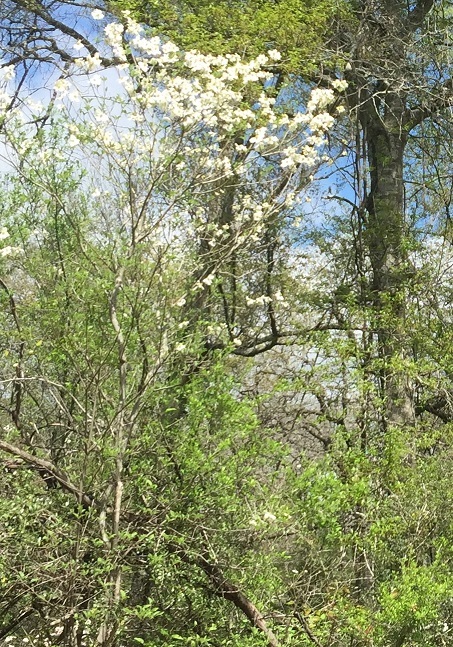
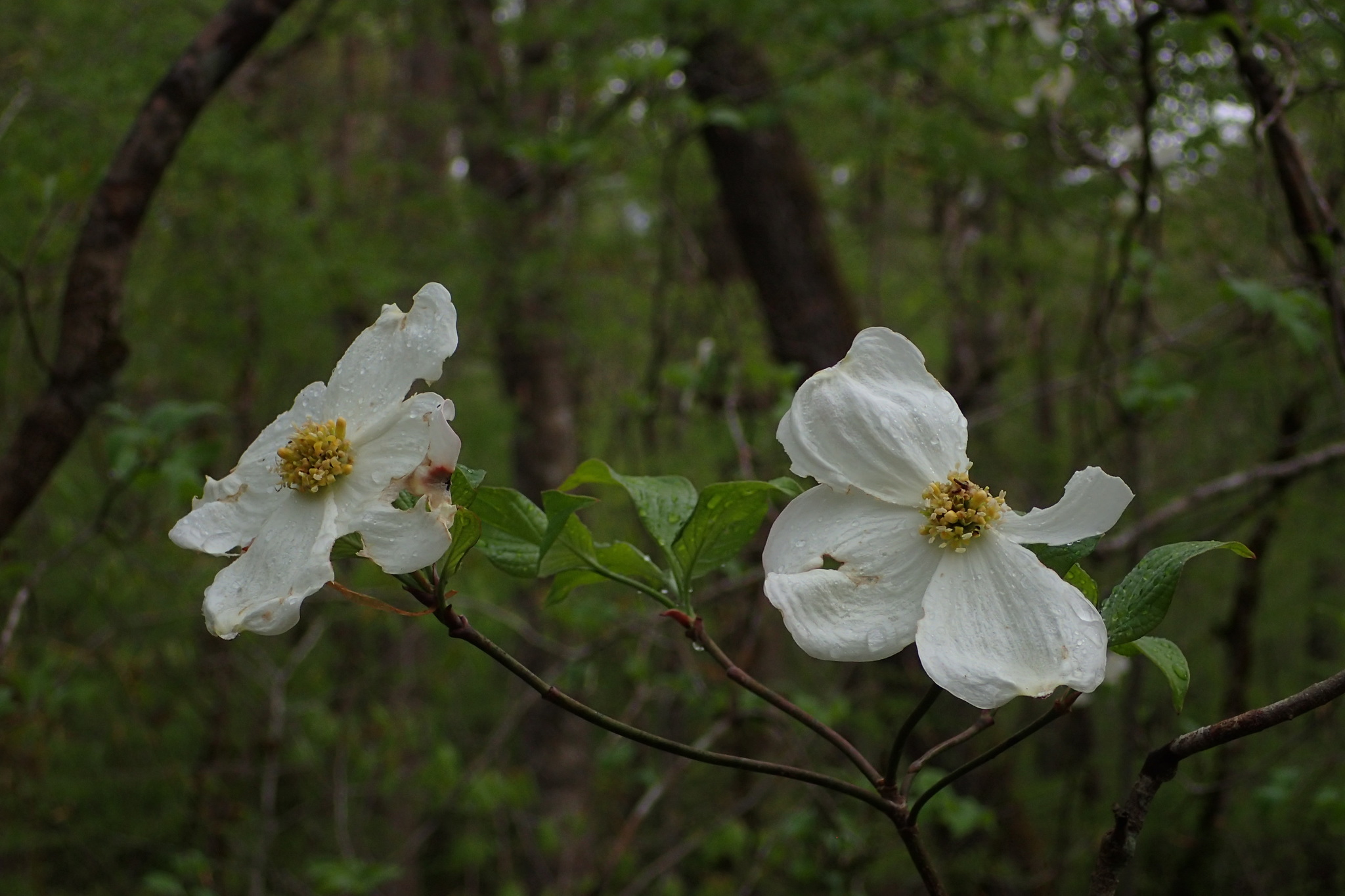
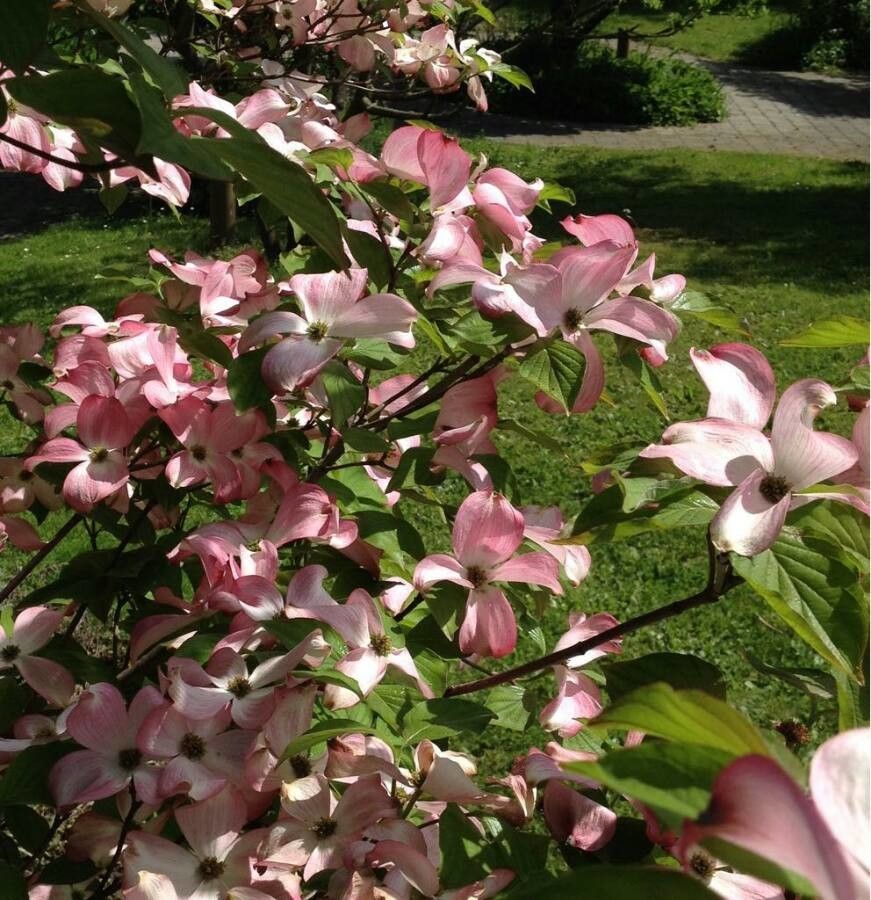
Flowering dogwood (Cornus florida) is a small deciduous tree in the Cornaceae family, native to eastern North America. Its spring display consists of four broad white or pink bracts surrounding tiny flowers, while its gray bark breaks into small square plates.
Read moreFlowering dogwood, American dogwood, Florida dogwood, White dogwood, White cornel and False boxwood
Give plenty of ambient light without direct sun on the leaves.
Partial shade to gentle sun; protect foliage from scorching sun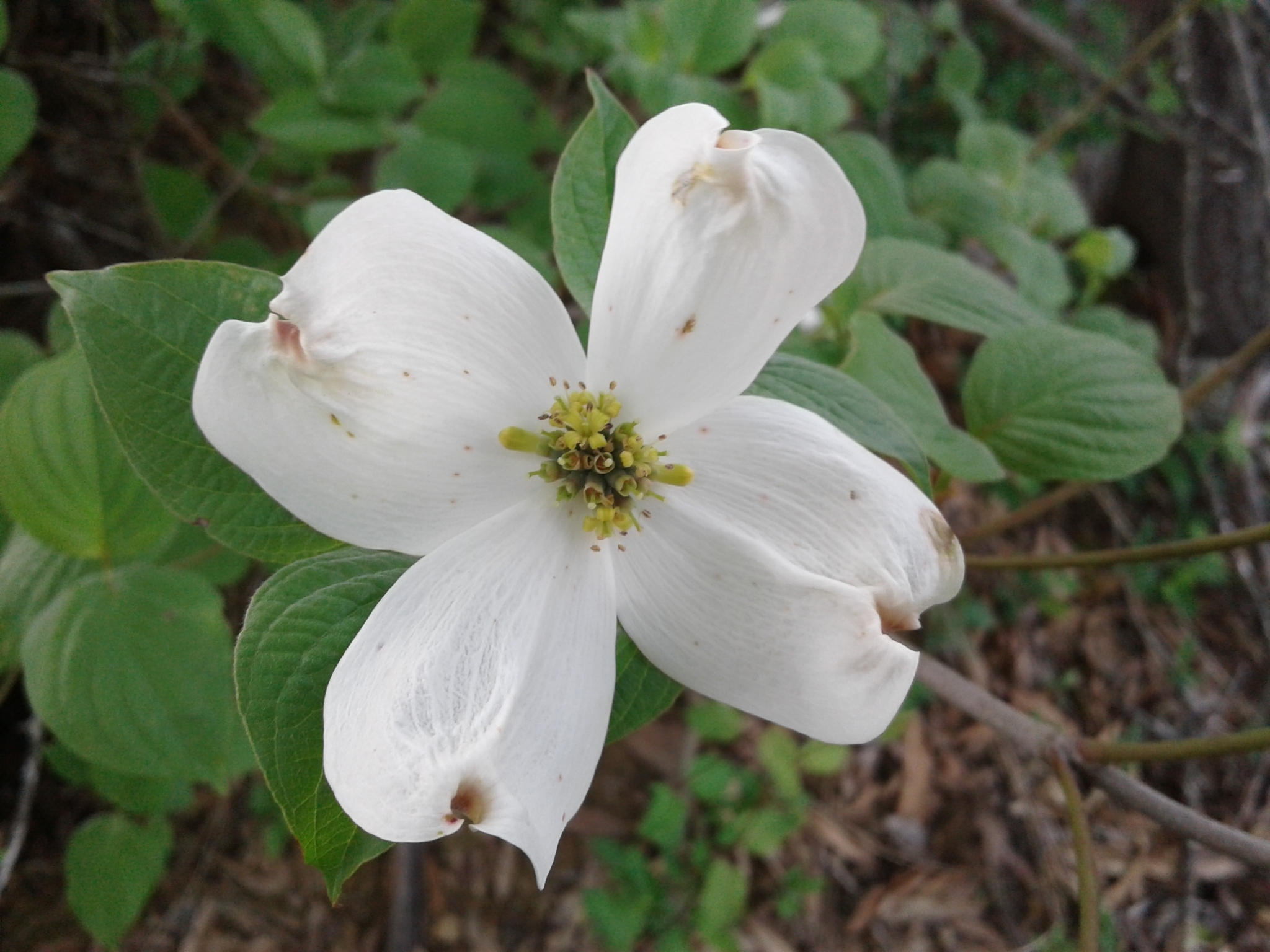


© photo
(c) Ryan_Diener, some rights reserved (CC BY-NC), uploaded by Ryan_Diener · cc-by-nc
Sandra D · cc0
Austin Pursley · cc0
Taken Oct 28, 2022 by Forest Switzerland (cc-by-sa)
Taken Oct 20, 2020 by Mia Concordia (cc-by-sa)
Taken May 27, 2020 by Paul Machto (cc-by-sa)
Taken Apr 11, 2022 by Jenn R (cc-by-sa)
Taken Apr 9, 2022 by Taylor (cc-by-sa)
© copyright of the Board of Trustees of the Royal Botanic Gardens, Kew.




Global distribution
The native range of Cornus florida extends from Ontario and southern Maine south to northern Florida, and west to Texas and Missouri. A disjunct population, treated as subspecies urbiniana, occurs in northeastern Mexico. Outside this range the species is mainly cultivated, with no documented invasive status.
- Native3
- United States
- Canada (Ontario)
- Mexico
Hexagons: regions where the plant occurs. Green dots: native range.1
Identity
Flowering dogwood (Cornus florida L., 1753) is a small deciduous tree in the Cornaceae family, reaching 6–10 m (20–33 ft) at maturity and native to eastern North America. Despite its epithet, it is not endemic to Florida: florida comes from the Latin floridus, meaning “flowering,” and describes its striking display rather than its range. The genus name Cornus comes from cornu, horn, referring to the hardness of the wood. 1 2
The English name dogwood may derive from the former use of bark decoctions to treat mange in dogs. Flowering dogwood belongs to the same genus as European Cornelian cherry (Cornus mas), which flowers in small yellow umbels well before leaf emergence. Their shared genus therefore includes trees with very different spring displays. 5
Recognition
Four large white or pink structures create the impression of petals, but they are actually bracts, modified leaves with a notch at each tip, sometimes marked reddish brown. They surround a compact cluster of around twenty true flowers, which are tiny, greenish and inconspicuous. The bracted head measures 8–10 cm (3–4 in) across and stands out well before the leaves have fully opened; the flowers themselves are too small to be conspicuous at a distance. 2 3
A typical tree grows 6–10 m (20–33 ft) tall with a similar spread. Its crown is low and tiered, and a freestanding specimen can become wider than tall. Gray to dark brown bark breaks into small square plates as it ages, making the trunk recognizable even in winter. Opposite, oval leaves turn deep red in fall. 3 4
The fruit forms clusters of two to ten drupes, bright red when ripe. They often remain after the leaves have fallen, providing a useful identification feature late in the season. 8
Useful taxonomy
Within Cornus, flowering dogwood belongs to subgenus Cynoxylon, the group with large bracts. Two entities are recognized under this name:
- Cornus florida subsp. florida, the more widespread form in eastern North America;
- Cornus florida subsp. urbiniana (Rose) Rickett, a disjunct northeastern Mexican population sometimes treated as a separate species.
Older literature includes the synonyms Benthamidia florida (L.) Spach and Cynoxylon floridum (L.) Raf. Reference databases such as POWO now use Cornus florida for the species; the other names persist mainly in botanical literature from the 19th and early 20th centuries. 1 7
Habitat and range
Eastern North American woodlands hold the main native range, from Ontario and southern Maine south to northern Florida, and west to Texas and Missouri. The tree grows in deciduous woodland understories, along forest edges and on wooded banks. An isolated population also occurs in northeastern Mexico. 7 8
Globally, the IUCN classifies the species as Least Concern, but local conservation status varies: it is listed as threatened in Vermont, vulnerable in New York State and endangered in Maine, with dogwood anthracnose responsible for much of the decline. Beyond its native range, it is mainly planted as an ornamental. Hardiness reaches roughly −25 °C (−13 °F) depending on the cultivar, spanning USDA zones 5–9, with no invasive status documented elsewhere. 6
Life cycle and reproduction
Spring flowering precedes or coincides with leaf emergence, a useful distinction from related species that flower later. The species has gametophytic self-incompatibility: a flower cannot fertilize itself. Cross-pollination must occur within 24–48 hours of opening for fruit to form; otherwise the flower aborts without setting fruit. 8
Seeds need 90–120 days of cold stratification at about 4 °C (39 °F) for reliable germination. Without that treatment, germination is poor and spread across several seasons. Ornamental cultivars are propagated almost exclusively by grafting, the reliable way to preserve the bract color or growth habit of a selected tree. 7
Uses and risks
Hard, dense, fine-grained wood once supplied tool handles, mallets, rake teeth and golf club heads. These uses took advantage of its resistance to abrasion, rather than the ornamental qualities for which the living tree is usually grown. 5
Several Indigenous North American nations used root-bark decoctions for fever, as an astringent and as a substitute for quinine when treating malaria symptoms during shortages. The root also yielded a red dye, while peeled twigs served as rudimentary toothbrushes. These are historical uses. 5
Toxicity is not the principal concern described for this species: Cornus florida is not listed as toxic to humans, dogs, cats or horses, and the bitter fruit discourages consumption in quantity. Trunk injuries from mowers or string trimmers are a greater threat to the tree, opening a route for dogwood anthracnose (Discula destructiva). This fungus has caused substantial mortality since the late 1970s, particularly in damp woodland understories and at higher elevations. 4 8
Fruit retained after leaf fall feeds dozens of bird species late in the season, while the foliage supports several moth caterpillars. Flowering dogwood is also the state tree and flower of Virginia, the state tree of Missouri and the state flower of North Carolina. Dogwoods were sent to Japan in 1915 in return for the cherry trees given to Washington in 1912, and the exchange was renewed in 2012 for its centennial. 8 4
Varieties, look-alikes and related plants
Widely grown cultivars include Cherokee Chief, with deep pinkish-red bracts, and Cherokee Princess, a standard white-bracted selection. Appalachian Spring was selected for resistance from a single tree that survived anthracnose. Cultivar identity matters when a particular bract color or resistance trait is the reason for planting. 4
A frequent look-alike is Cornus kousa, whose pointed, unnotched bracts appear after full leaf emergence. Its fleshy, raspberry-like fruit contrasts with the separate drupes of Cornus florida. Pacific Coast native Cornus nuttallii often bears six bracts rather than four, a difference visible across the tree without counting the tiny flowers. The Mexican subspecies urbiniana has glossier leaves and less pronounced fall color. 2 3
Main sources
- Plants of the World Online / Kew, Cornus florida L.
- Royal Horticultural Society, Cornus florida
- Missouri Botanical Garden Plant Finder, Cornus florida
- NC State Extension Gardener Toolbox, Cornus florida
- Plants For A Future, Cornus florida
- IUCN Red List, Cornus florida assessment
- USDA NRCS Plant Guide, Cornus florida
- USDA Forest Service FEIS, Cornus florida
Frequently asked questions
Is flowering dogwood toxic to dogs and cats?
No. Cornus florida is not listed among plants toxic to pets. Its red fruit is bitter and unappealing rather than dangerous, which also limits accidental consumption.
Why are dogwoods dying in some regions?
Dogwood anthracnose, caused by Discula destructiva, has caused substantial mortality since the late 1970s, especially at higher elevations and in damp woodland understories. Resistant cultivars such as Appalachian Spring were selected in response.
What is the difference between dogwood bracts and flowers?
The four large white or pink structures are bracts, modified leaves that attract pollinators. The true flowers are tiny and greenish, with around twenty clustered in the center.
How can I distinguish Cornus florida from Cornus kousa?
Cornus florida flowers early, before or as the leaves appear, and its bracts have notched tips. Cornus kousa flowers later, after the leaves have fully opened, with pointed bracts and a fleshy raspberry-like fruit.
Can flowering dogwood grow in full sun?
It tolerates full sun in cool climates where soil stays moist, but prefers partial shade in hot climates. Too much direct afternoon sun increases water stress and makes the tree more vulnerable to disease.
Are flowering dogwood fruits a danger to children?
The fruit is not listed as toxic, but its bitter taste makes it unappealing and substantial accidental consumption remains uncommon. It is not grown for human consumption.
Similar plants
If you are unsure about a plant’s toxicity, ask a botanist or veterinarian for advice.