
Turkish hazel (Corylus colurna, )
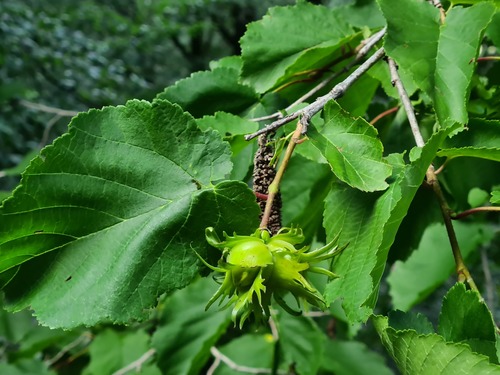

Turkish hazel (Corylus colurna L., 1753) is a tree in the Betulaceae family, native from the Balkans through Anatolia and the Caucasus to northern Iran. Unlike the bushy, suckering common hazel, it has a single trunk with corky bark and a distinctive pyramidal crown. Undemanding about soil and tolerant of drought and urban pollution, it is planted as a street tree and used as a rootstock for nut-producing hazels.
Read moreTurkish hazel, Turkish filbert, Byzantine hazel and Constantinople hazel
Allow a few hours of direct sun per day, preferably morning or evening.
Full sun; tolerates light partial shade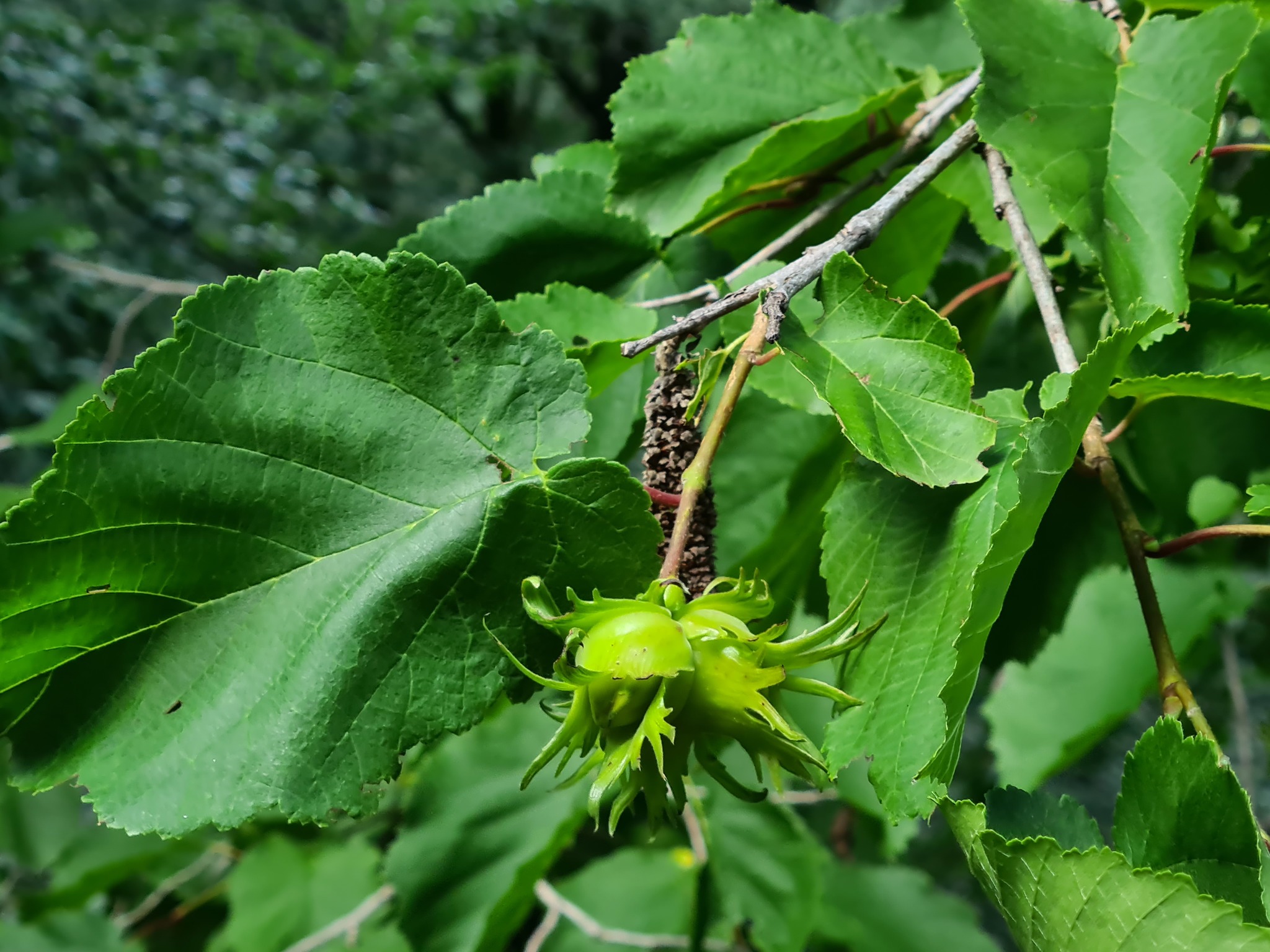


© photo
(c) ramazan_murtazaliev, some rights reserved (CC BY-NC), uploaded by ramazan_murtazaliev · cc-by-nc
Wikimedia Commons · CC BY-SA or Public Domain
Wikipedia · CC BY-SA
Taken Aug 27, 2021 by mohammad fazel dehkordi (cc-by-sa)
Taken Sep 7, 2020 by Jardins de Montchat (cc-by-sa)
Taken Aug 5, 2021 by Franz Muz (cc-by-sa)
Taken Sep 23, 2013 by Tela Botanica − Jean-Jacques HOUDRÉ (cc-by-sa)
Taken Jan 28, 2021 by Emma Franklin (cc-by-sa)
© copyright of the Board of Trustees of the Royal Botanic Gardens, Kew.




Global distribution
Corylus colurna is native from the Balkans through Anatolia and the Caucasus to northern Iran, in mountain forests often on limestone. It is now widely planted beyond its native range as a street tree in Western Europe and North America, without documented invasive naturalization.
- Native6
- Introduced1
- Turkey
- Iran
- Georgia
- Romania
- Bulgaria
- Bosnia and Herzegovina
- United States
Hexagons: regions where the plant occurs. Green dots: native range.1
Identity
Turkish hazel (Corylus colurna L., 1753) is a tree in the Betulaceae family, described by Carl Linnaeus in his Species Plantarum. POWO retains this as the accepted name in the genus Corylus. Other established English names include Turkish filbert, Byzantine hazel and Constantinople hazel. 1 8
The Byzantine and Constantinople names recall the route by which the tree reached Western Europe, rather than locating its botanical origin on the Bosporus. Seeds brought from Constantinople were grown in Vienna in the 1560s, before the tree reached England. Its French names referring to Byzantium, the Levant and Turkey reflect that same history of introduction. 7 5
Recognition
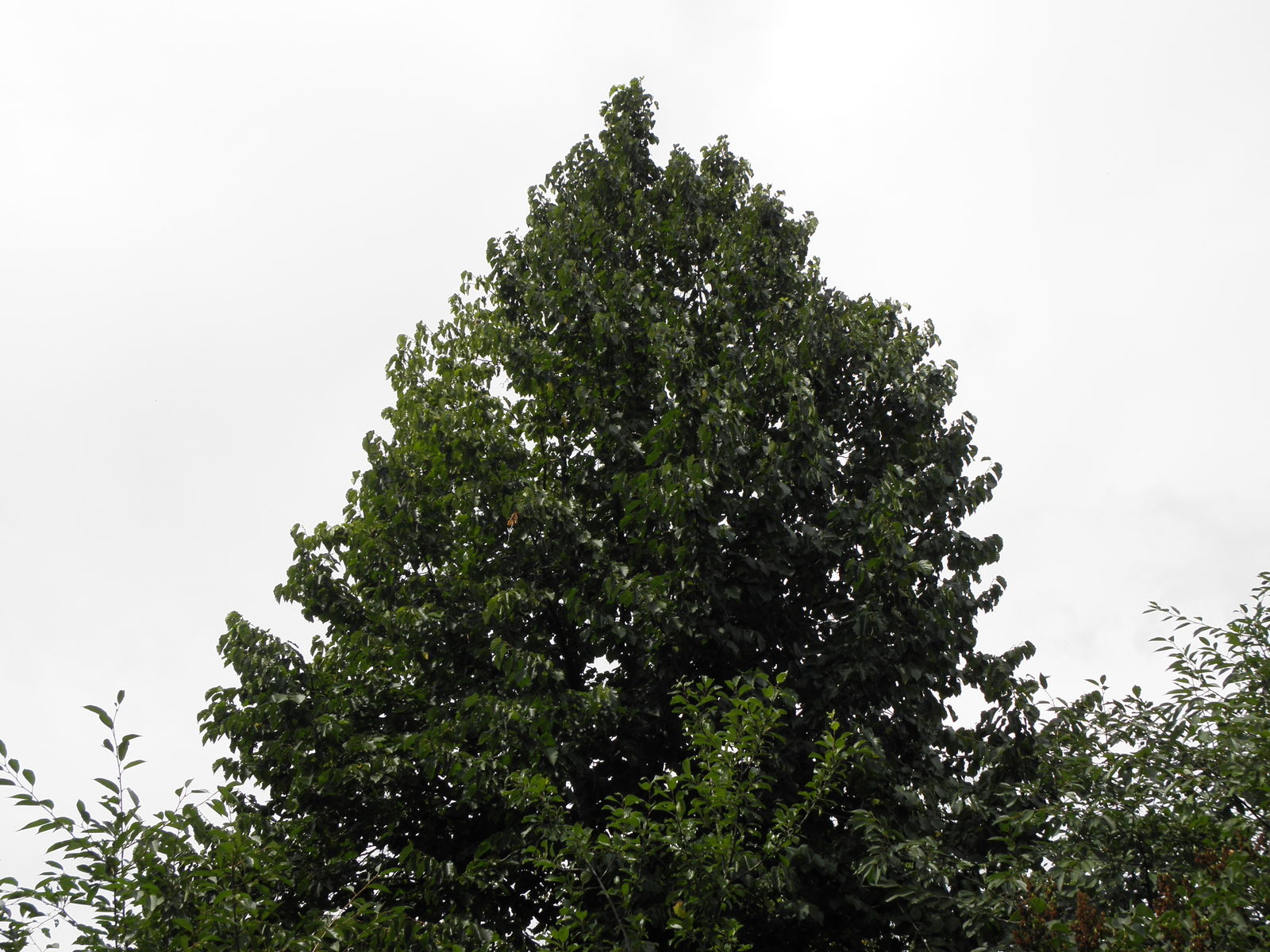
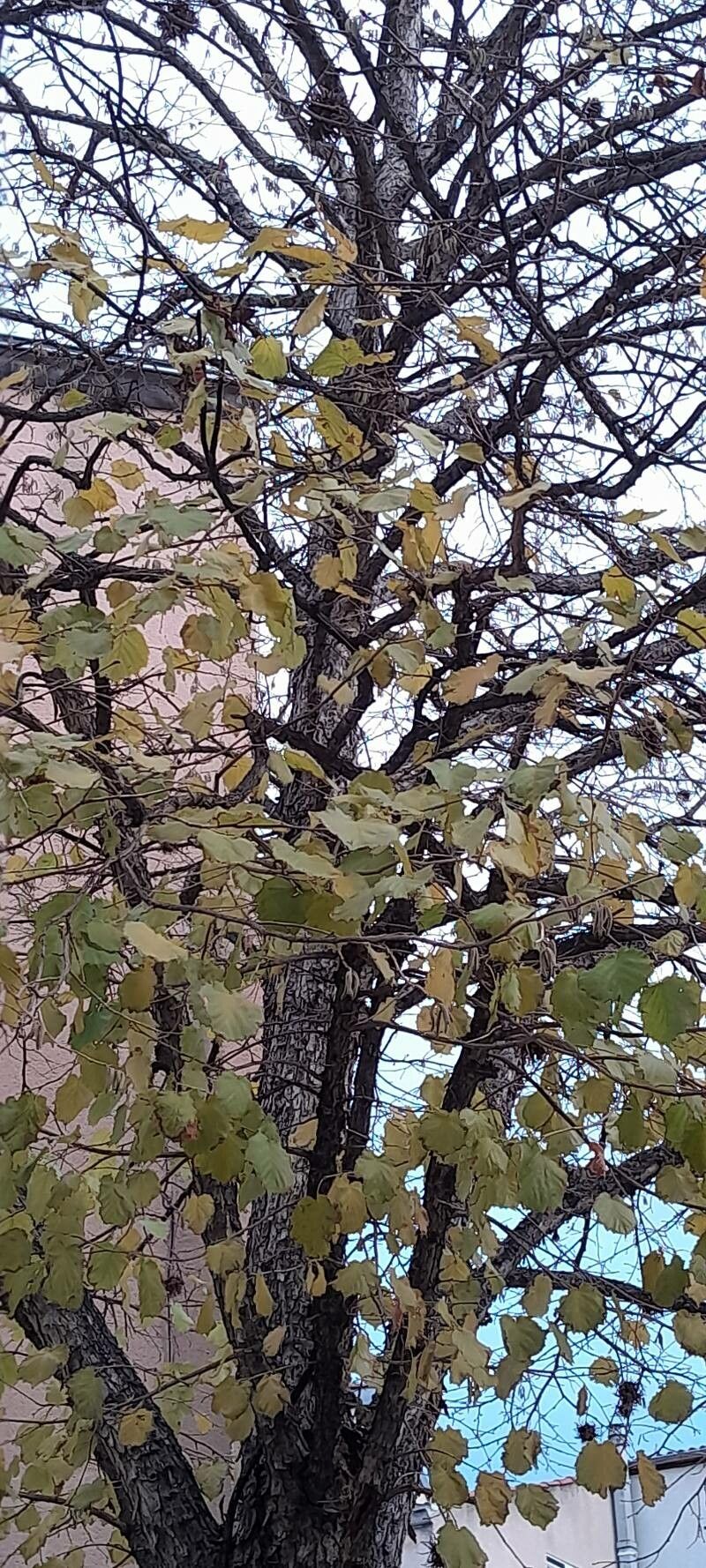
A single trunk and a narrow pyramidal crown distinguish young Turkish hazel from the bushy, suckering common hazel. The crown rounds out with age. Trees commonly reach 12–25 m (39–82 ft), with records exceeding 30 m (98 ft); the trunk of a century-old specimen can approach 1.3 m (4.3 ft) in circumference. 5 3
Thick gray-beige bark develops a corky, fissured texture, distinctive among hazels and in places resembling cork oak bark. It remains a useful field character even when leaves are absent. The rounded to oval leaves are 6–15 cm (2.4–6 in) long, doubly toothed and downy on both surfaces, with a clearly heart-shaped base and an abruptly tapering tip. 5 3
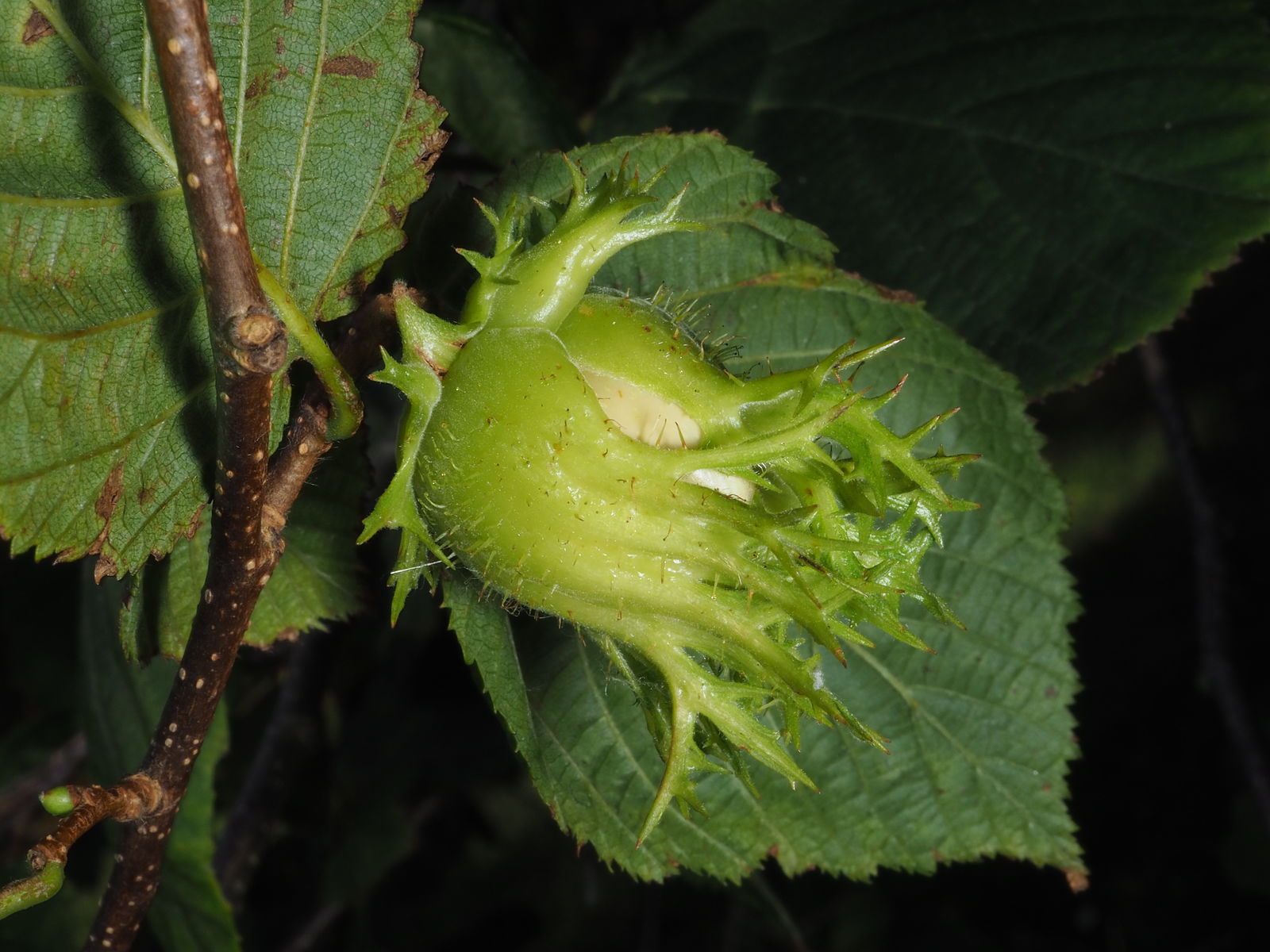
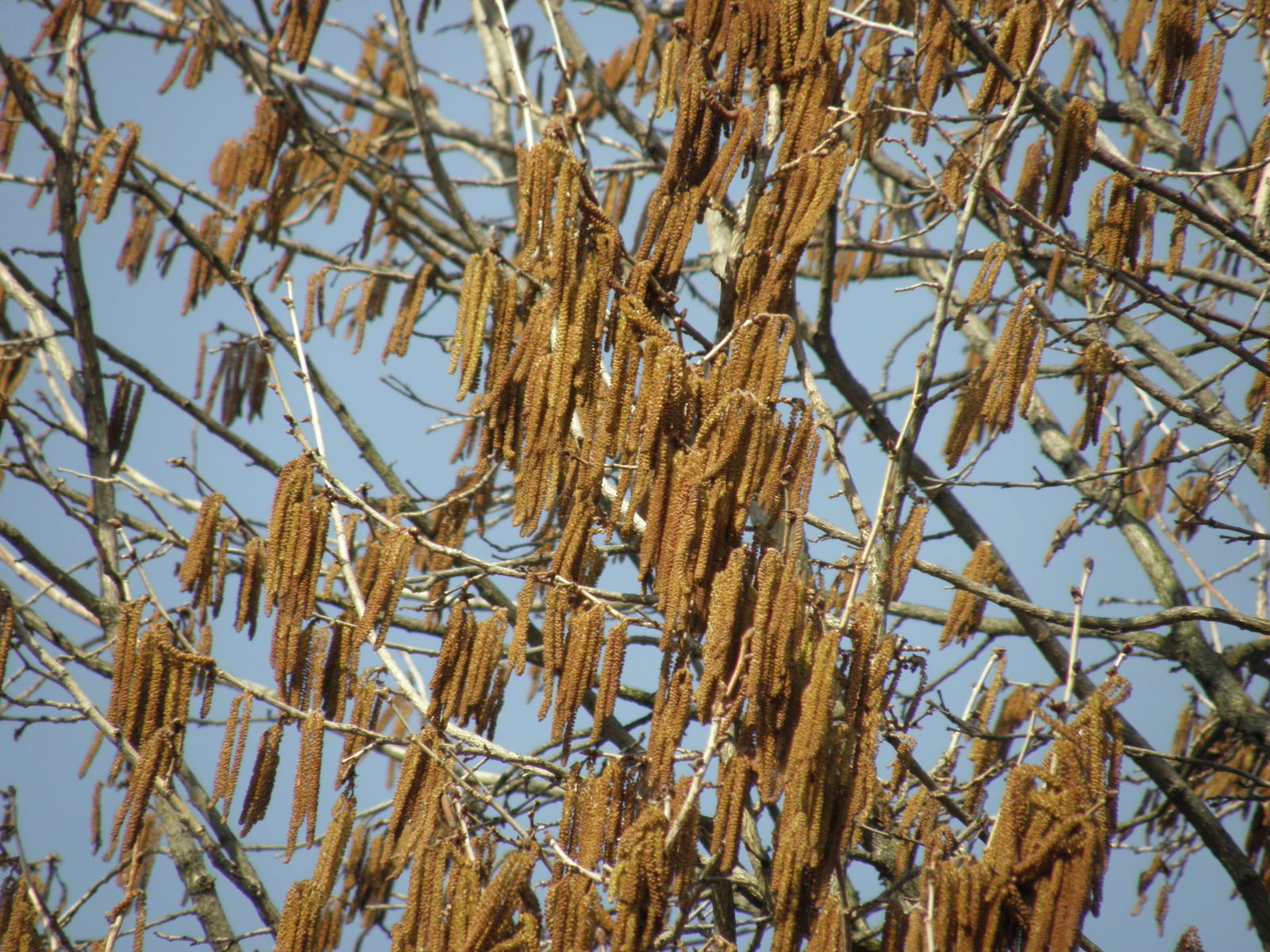
In late winter, before the leaves emerge, pale yellow male catkins 5–10 cm (2–4 in) long open in one of the year's earliest displays. Fruits later form clusters of 2–8, wrapped in a bristly, fringed involucre 3–4 cm (1.2–1.6 in) across. This covering is much more deeply divided than that of common hazel. 2 5
Useful taxonomy
No infraspecific variety is retained under Corylus colurna by POWO: the accepted species name covers the variation observed between the Balkans and northern Iran. The related Corylus jacquemontii, long treated as a variety of C. colurna, is now recognized separately and restricted to Himalayan forests. 1 8
Spontaneous hybridization with common hazel produces Corylus × colurnoides, called Trazel by breeder Jack Gellatly, who identified it among his Corylus colurna seedlings in British Columbia. Oregon State University released two clones from this program, 'Newberg' and 'Dundee', in 1990. A nut-bearing Corylus avellana cultivar grafted onto one of them gains roots that prevent suckering, unlike common hazel growing on its own roots. 6
Habitat and range
Mountain forests from the Balkans through Anatolia and the Caucasus to northern Iran form Turkish hazel's native range. Populations occur in Turkey, Georgia, Romania, Bulgaria and Bosnia and Herzegovina, among other countries. The tree often grows on limestone, at elevations up to 1,500 m (4,900 ft), rather than being confined to the places recalled in its common names. 5 7
The IUCN assesses Turkish hazel as Least Concern (LC). Only the Russian Caucasian population is reported to be declining, with no major threat identified globally. Beyond its native range, the species is widely planted along urban streets in Western Europe and North America. Invasive naturalization is not documented in the cited account. 9 3
Life cycle and reproduction
Male and female flowers occur on the same tree: pale yellow catkins stand alongside inconspicuous female flowers showing only red styles. This early flowering exposes the catkins to late frost in late winter or early spring in the native Northern Hemisphere range. Such damage does not harm an already established adult tree itself. 2 3
Seed propagation requires double stratification, warm followed by cold, and works best when seeds are sown immediately after the fall harvest. Young plants quickly develop a deep taproot that nursery lifting can damage, making establishment uncertain in trees already grown in the ground. Seed-grown trees rarely flower before 10–15 years. The nuts ripen in fall and have shells 2–3 mm (about 0.1 in) thick, much harder than those of common hazel. 4 8
Uses and risks
Rootstock production is the tree's leading horticultural use. The fibrous roots of Turkish hazel prevent suckering, a persistent problem in common hazel, whose shoots continually emerge around the trunk base. Grafting a fruiting Corylus avellana cultivar onto this rootstock therefore yields a single-trunked tree that is easier to harvest than a suckering bush. This practice is documented in Serbia and elsewhere. 11 5
Urban planting takes advantage of the tree's regular pyramidal crown and tolerance of compacted soil, drought and pollution. Its firm, moderately hard wood is also used in joinery and turning, a secondary use beside its role as rootstock. Plants For A Future lists no known hazards for the species; as with other nuts, excessive shell consumption may cause digestive problems in domestic animals. 3 4
Varieties, look-alikes and related plants
The notable horticultural group is Corylus × colurnoides, a hybrid with larger, better-quality nuts than the typical species. Its clones 'Newberg' and 'Dundee', however, proved highly susceptible to bacterial hazel blight in North America. This disease susceptibility limited their commercial distribution despite the useful features that had prompted selection. 6 10
Other hazels worth checking during identification include:
- common hazel (Corylus avellana), a bushy, suckering shrub with fewer nuts per cluster;
- Corylus chinensis, another tree-forming hazel from East Asia, also with exfoliating bark;
- Corylus jacquemontii, a Himalayan species formerly confused with C. colurna.
A single-trunked tree habit, corky bark and the absence of suckers remain the most reliable combination for distinguishing Turkish hazel from common hazel in the field. Compare these structural characters together rather than relying only on the broad similarity of the leaves. 8
Main sources
- Plants of the World Online / Kew, Corylus colurna L.
- Royal Horticultural Society, Corylus colurna details
- NC State Extension, Corylus colurna - Turkish Hazel
- Plants For A Future, Corylus colurna database entry
- Trees and Shrubs Online, Corylus colurna
- Trees and Shrubs Online, Corylus x colurnoides (Trazel)
- Wikipedia (French), Turkish hazel
- Wikipedia (EN), Corylus colurna
- IUCN Red List, Corylus colurna assessment
- Missouri Botanical Garden Plant Finder, Corylus colurna
- Đorđević et al., grafting Corylus avellana cultivars onto Corylus colurna rootstock, PMC
Frequently asked questions
Does Turkish hazel produce edible nuts?
Yes. The nuts are edible raw or roasted and taste similar to common hazelnuts. Their thicker shells, 2–3 mm (about 0.1 in), make commercial use negligible.
Why is Turkish hazel used as a rootstock?
Unlike common hazel, its fibrous roots do not produce suckers. Grafting a nut-bearing Corylus avellana cultivar onto Corylus colurna produces a single-trunked tree that is easier to harvest than a bush.
How can I tell Turkish hazel from common hazel?
Turkish hazel forms a single-trunked tree with corky bark and a pyramidal crown, while common hazel remains a bushy, suckering shrub. Turkish hazel also bears more nuts in each cluster.
Is Turkish hazel toxic to pets?
No. Plants For A Future lists no known hazards for this species. As with any nuts, excess consumption may cause digestive problems in pets.
Can Turkish hazel grow in a city?
Yes. This is one of its main uses. Its regular pyramidal crown and tolerance of compacted soil and pollution make it a frequent street tree in Europe and North America.
Why is this tree also called Byzantine hazel?
The name recalls its introduction to Western Europe in the 16th century through seeds brought from Constantinople, rather than a botanical origin on the Bosporus.
Why is Turkish hazel difficult to transplant?
Turkish hazel develops a deep taproot when young. Lifting it in a nursery often damages that root, which explains why larger transplanted trees may establish poorly.
Similar plants
If you are unsure about a plant’s toxicity, ask a botanist or veterinarian for advice.