
Tree crinum (Crinum asiaticum, )
Tree crinum (Crinum asiaticum L., 1753) is a bulbous perennial in the Amaryllidaceae, native to shores and damp forest edges from the Indian Ocean through tropical Asia to the southwestern Pacific. Its large bulb carries long, strap-shaped leaves and an umbel of strongly fragrant white flowers. All parts contain irritating alkaloids.
Read moreTree crinum, Giant crinum lily, Grand crinum lily, Poison bulb and Spider lily
Allow a few hours of direct sun per day, preferably morning or evening.
Full sun to light partial shade


© photo
(c) JeffreyGammon, some rights reserved (CC BY-NC), uploaded by JeffreyGammon · cc-by-nc
葉子 · cc0
iNaturalist User · cc-by-nc
Taken Feb 9, 2020 by Kara (cc-by-sa)
Taken Jul 22, 2021 by Ashshahril Labib (cc-by-sa)
Taken Feb 19, 2019 by claude Nevejans (cc-by-sa)
© copyright of the Board of Trustees of the Royal Botanic Gardens, Kew.


Global distribution
Crinum asiaticum is native to shores and damp forest edges from the Indian Ocean (India, Sri Lanka and Mauritius) through tropical and subtropical Asia (southern China, Taiwan and Southeast Asia) to the southwestern Pacific (northern Australia and Fiji). Introduced as an ornamental in other warm climates, it has locally naturalized in Florida and Louisiana, where it is not native.
- Native8
- Introduced1
- India
- Taiwan
- Vietnam
- Philippines
- Indonesia
- Australia (Northern Territory)
- Fiji
- Mauritius
- United States (Florida, Louisiana)
Hexagons: regions where the plant occurs. Green dots: native range.1
Identity
Tree crinum (Crinum asiaticum L., 1753), also known as giant crinum lily, grand crinum lily, spider lily or poison bulb, is a bulbous perennial in the genus Crinum. It belongs to the Amaryllidaceae rather than the Liliaceae family of true lilies. The genus name comes from Greek krinon, meaning lily, in reference to its large white flowers rather than a close botanical relationship. 1 2
Linnaeus described this species in Species Plantarum in 1753. It later acquired numerous synonyms, including Crinum toxicarium var. asiaticum, a name that points to toxicity recognized long before its current ornamental use. The English name poison bulb preserves that same warning despite its popularity in tropical gardens. 2 8
Recognition
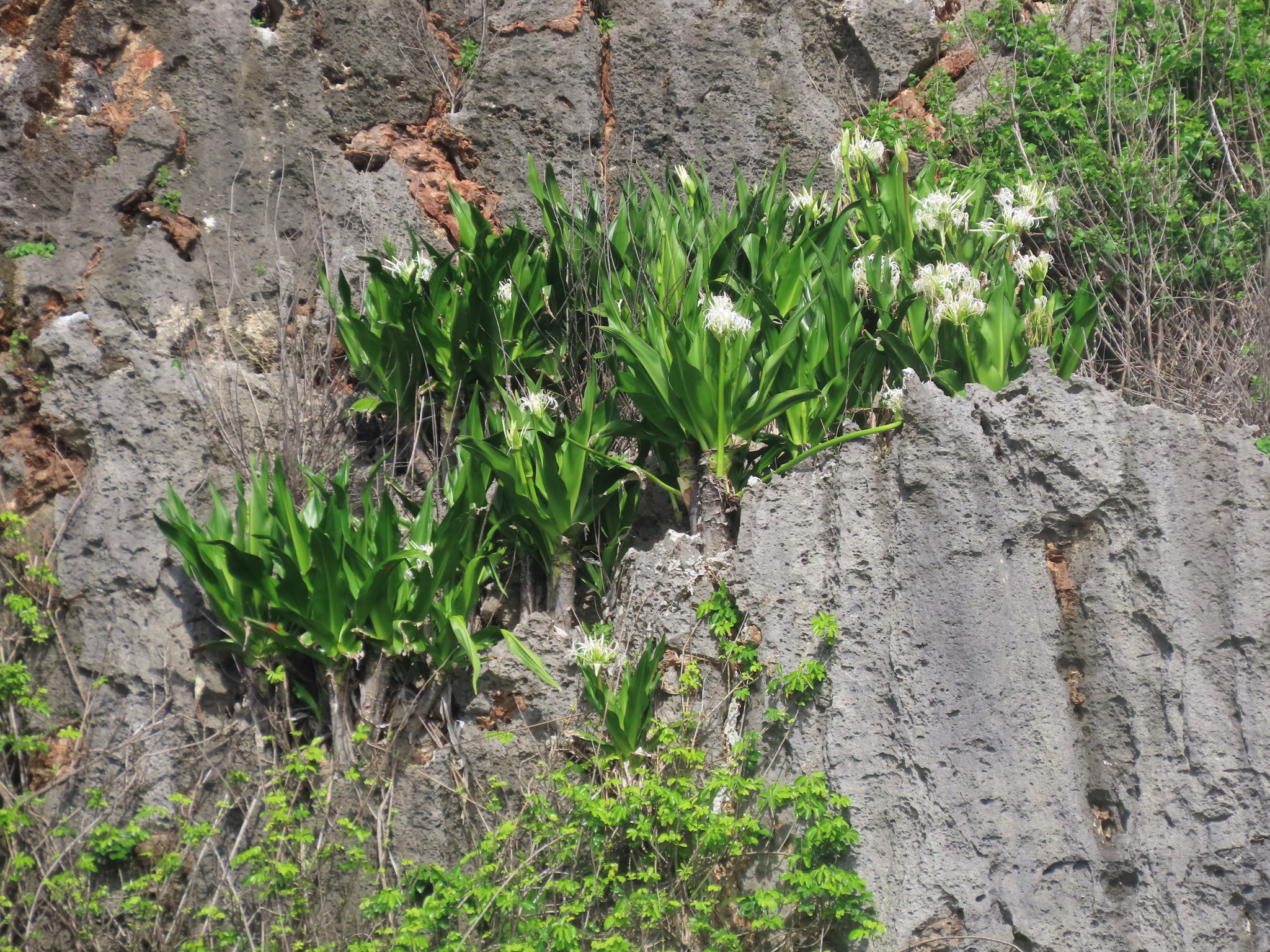
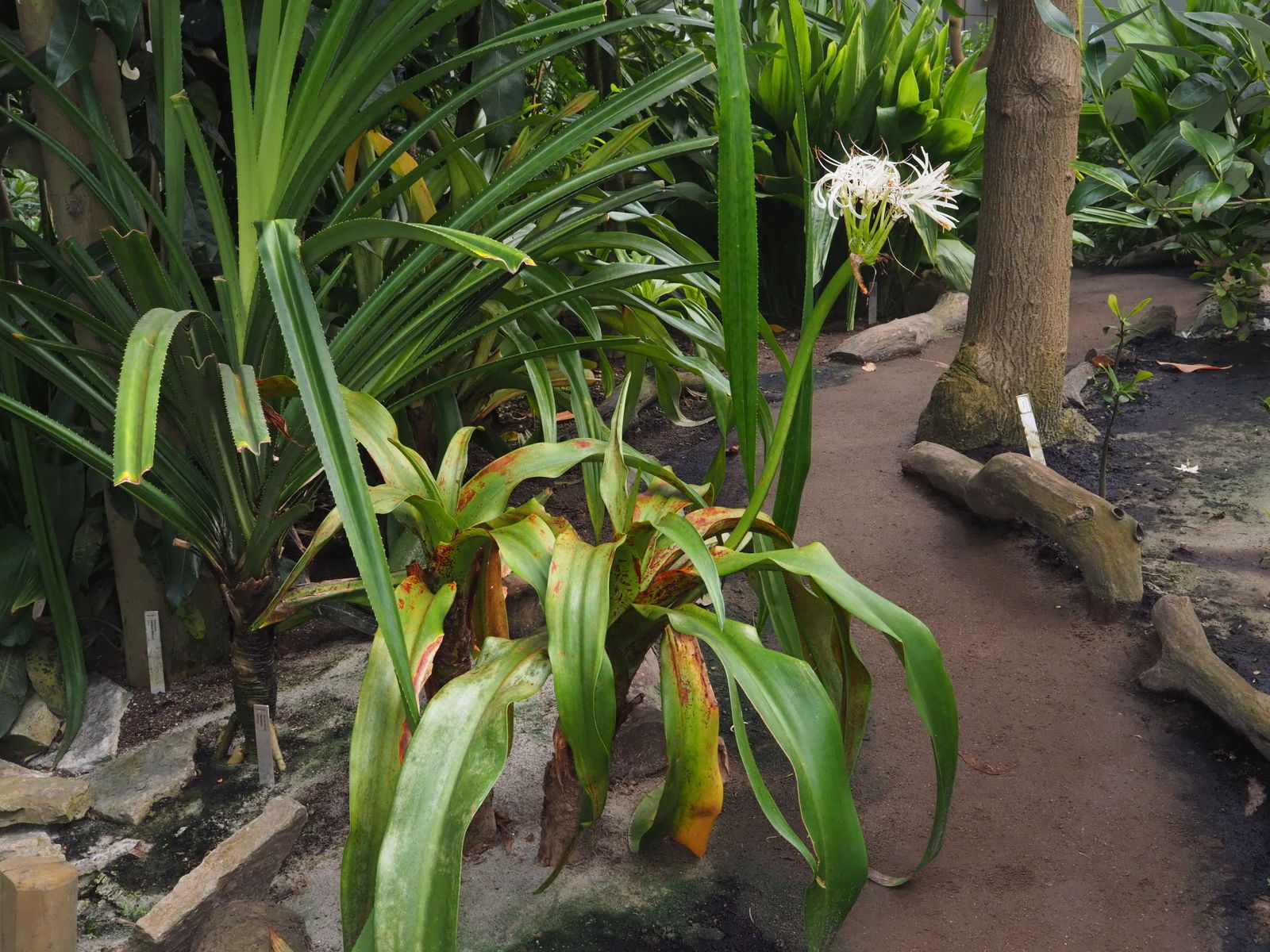
A dense rosette of large, fleshy, arching leaves gives Tree crinum its substantial outline. Established plants have leaves more than 1 m (3.3 ft) long. The bulky bulb is partly visible above ground and extends into a fibrous neck resembling a short trunk. In open ground, the plant reaches 1–1.8 m (3.3–6 ft) including its flower stalk, compared with only 20–40 cm (8–16 in) for a young bulb still developing roots. 4 3
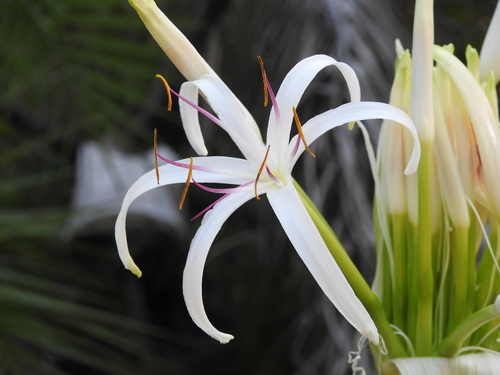
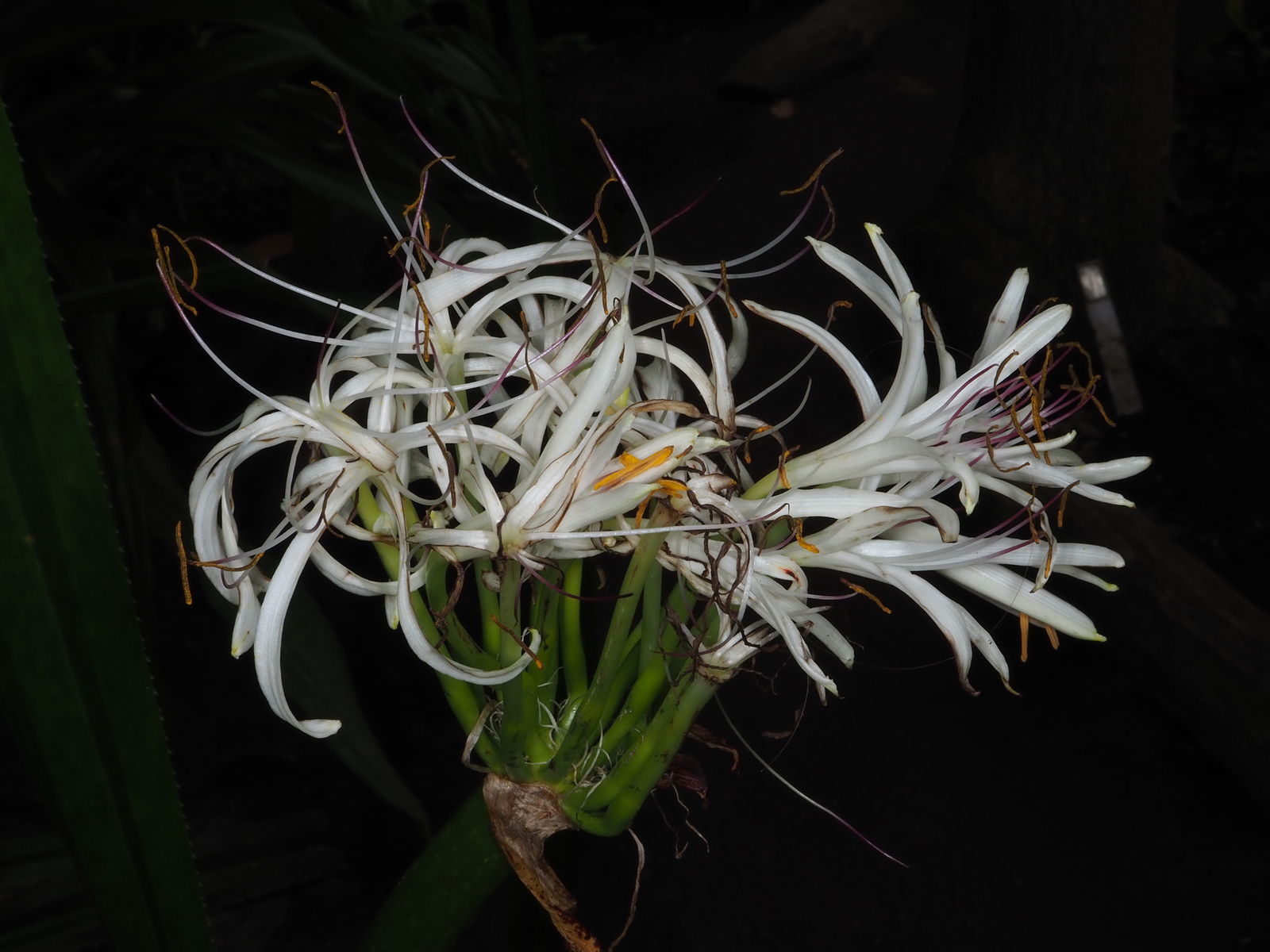
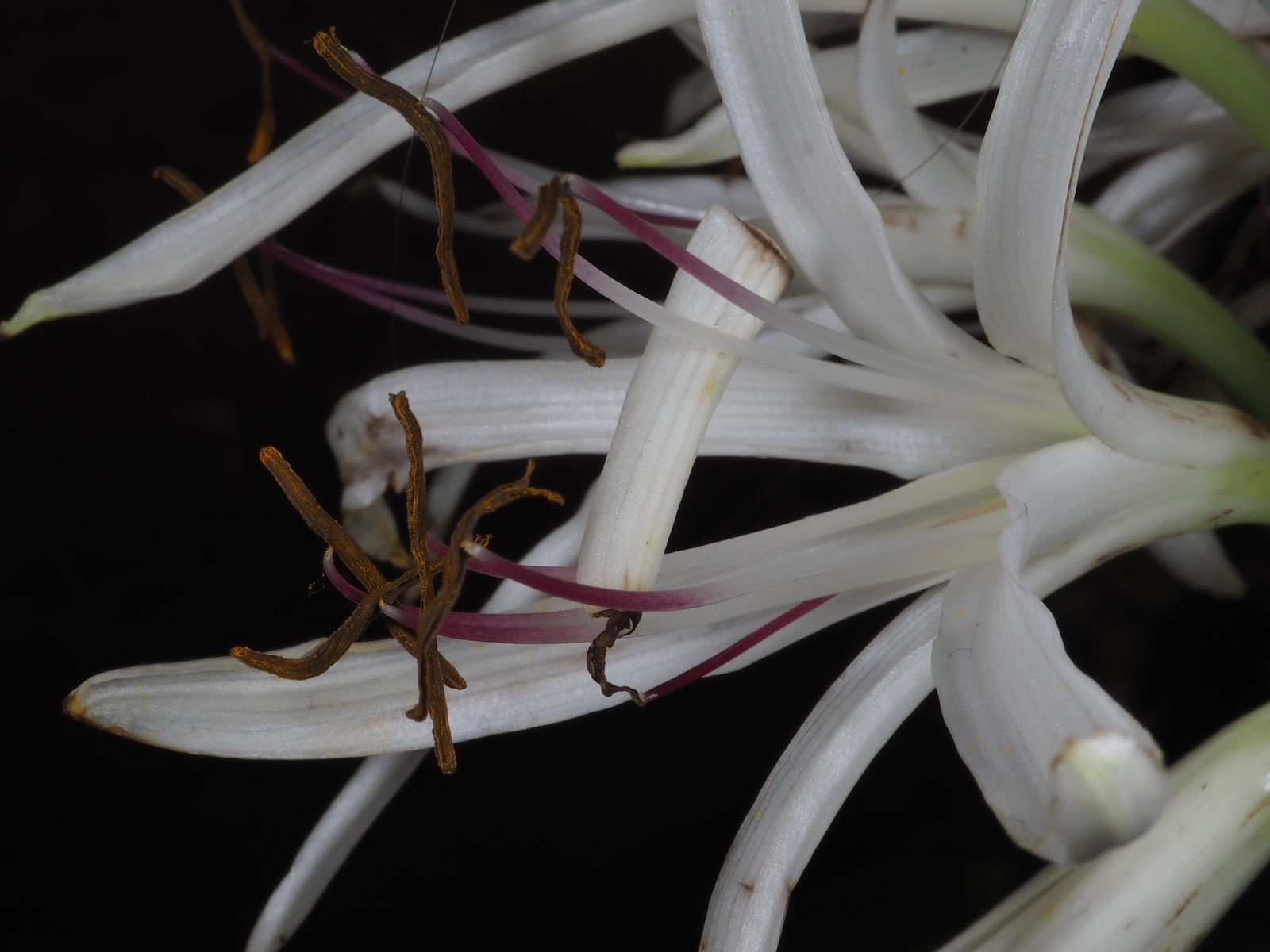
An upright, leafless stalk carries an umbel of 20–30 white flowers, sometimes flushed pale purple. Each flower measures 8–10 cm (3–4 in) across, with long, narrow, recurved tepals that explain the name spider lily. Leaves without a flower stalk do not rule out this species: depending on bulb maturity, the first flowers may take several years to appear. 4 3
Useful taxonomy
Geographic varieties of Crinum asiaticum are recognized by Plants of the World Online rather than treated as separate species. Crinum asiaticum var. japonicum Baker, known as hamayu, is native to Korea and southern Japan. Crinum asiaticum var. sinicum (Roxb. ex Herb.) Baker occurs in southeastern China and Taiwan, often with narrower leaves than the typical form. Crinum asiaticum var. pedunculatum (R.Br.) Fosberg & Sachet, from northern and eastern Australia and New Guinea, carries its umbel on a longer stalk. Distribution and slight differences in leaves or stalks distinguish these varieties, rather than toxicity or horticultural use. 1 2
For all three recognized varieties, the accepted species name remains Crinum asiaticum. The old synonym Bulbine asiatica is no longer accepted by Plants of the World Online. 1 2
Habitat and range
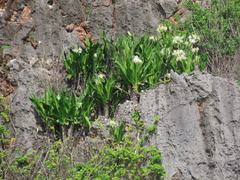
Sandy shores and damp forest edges across the Indo-Pacific form the native habitat of Crinum asiaticum. Its range runs from the Indian Ocean, including India, Sri Lanka and Mauritius, through tropical and subtropical Asia, including southern China, Taiwan and Southeast Asia, to the southwestern Pacific, notably northern Australia and Fiji. 1 5
Ornamental introductions into other warm climates have also led to naturalization in wet areas of Florida and Louisiana. The species is not native there: this more recent presence must be distinguished from its original Indo-Pacific range. 6 4
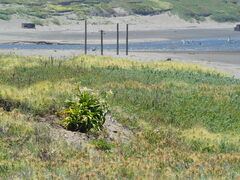
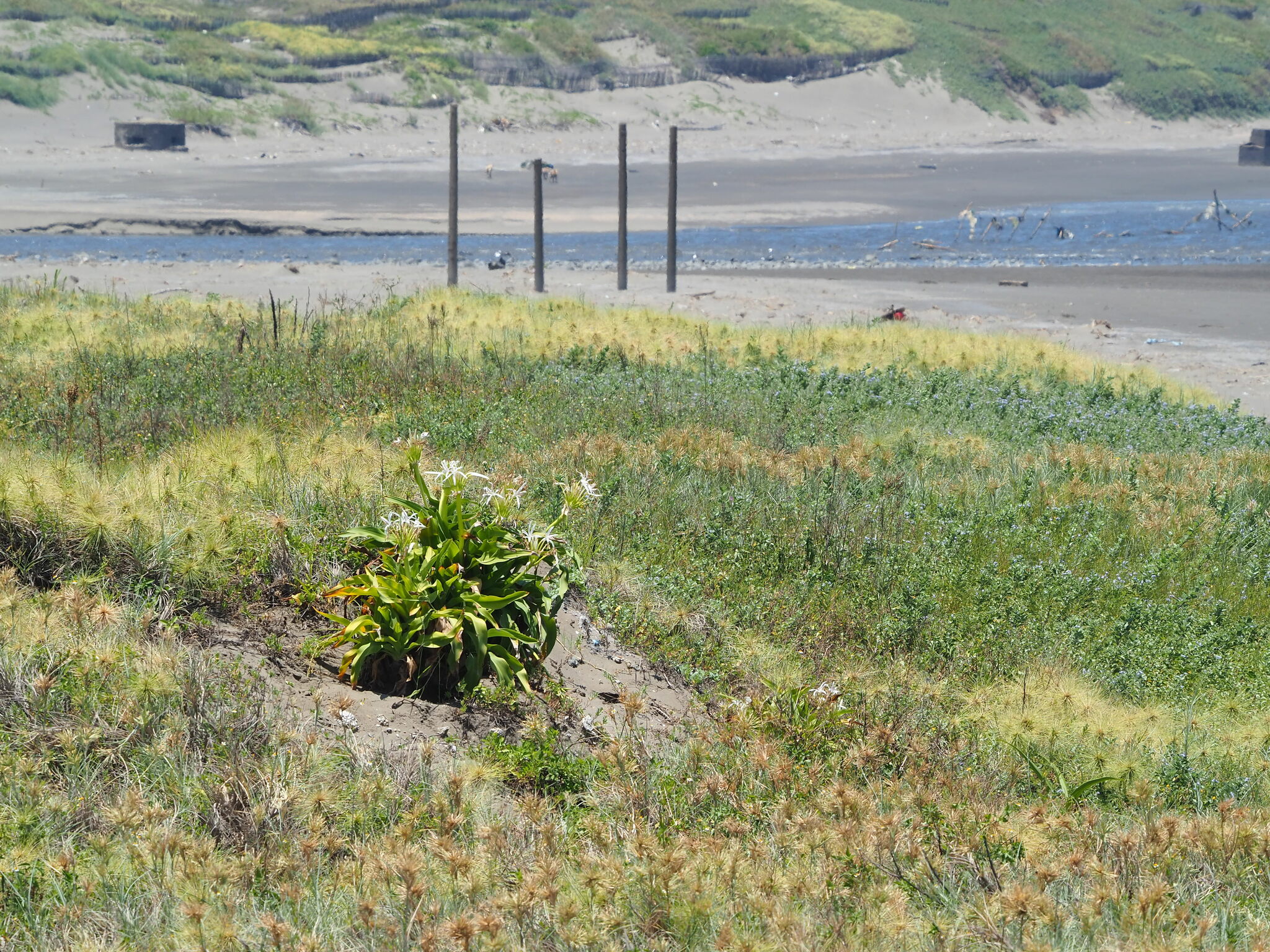
Along its native coastline, the bulb roots deeply in sand and helps reduce erosion on dunes exposed to wind and salt spray. This tolerance of coastal salt explains its popularity in seaside gardens well beyond its native range. 4
Life cycle and reproduction
Warm climates allow the bulb to retain its leaves year-round without a pronounced winter rest. Growth slows only below 18 °C (64 °F), both in pots and in open ground. Summer-to-autumn flowering depends chiefly on bulb maturity and available sunlight rather than the calendar alone. 4 3
Offsets formed around the mother bulb provide the main means of propagation. Dividing these offsets produces a flowering plant faster than sowing. Fresh seeds germinate well, but the bulb often needs several years to reach a size sufficient for its first flowers. 3
Outside the tropics, the bulb can withstand brief frosts down to around -5 °C (23 °F), broadly corresponding to USDA zones 9–11 in the horticultural sources consulted. Below this threshold, leaves blacken; regrowth from the bulb remains possible if it has not frozen deeply. 3 4
Uses and risks
Lycorine- and crinamine-type alkaloids occur throughout Crinum asiaticum, especially in the bulb and sap. Ingestion causes mouth irritation, excessive salivation and vomiting in people, cats and dogs. Contact with the sap alone can also irritate skin. These alkaloids explain the name poison bulb despite the widespread cultivation of the plant as an ornamental. 3 8
Traditional medicine has used the bulb in poultices for rheumatic pain and in decoctions for other external applications. These historical practices do not remove its toxicity when swallowed. More recent research tested Crinum asiaticum extract and isolated lycorine for antioxidant activity in human red blood cells subjected to oxidative stress. Their results were weaker than those of vitamin E used as a reference. 3 7
Varieties, look-alikes and related plants
Cream-white stripes distinguish the horticultural form Variegatum. This is a sales label rather than a separate botanical rank, and its variegation can be unstable between offsets. 4
Three plants account for the main identification problems. Hymenocallis littoralis has tepals joined at the base into a distinct cup, whereas those of Crinum asiaticum remain free to the base. Crinum bulbispermum often has flowers striped with a stronger pink. The horticultural hybrid Crinum × amabile has larger, more reddish flowers than the wild form.
The Chinese common name 文殊蘭 literally means “Manjushri’s orchid,” although this species belongs to the Amaryllidaceae rather than the Orchidaceae. It reflects an apparent resemblance rather than a family relationship. In Japan, the local variety is known as hamayu and is the emblematic flower of several coastal towns. 8 1
Main sources
- Plants of the World Online / Kew, Crinum asiaticum L.
- International Plant Names Index, Crinum asiaticum L.
- Plants For A Future, Crinum asiaticum
- Missouri Botanical Garden, Plant Finder, Crinum asiaticum
- USDA-ARS GRIN Global, Crinum asiaticum L. taxonomy detail
- Atlas of Florida Plants, Crinum asiaticum
- PubMed, antioxidant activity of Crinum asiaticum extract and lycorine
- Wikipedia (EN), Crinum asiaticum
Frequently asked questions
Is Tree crinum toxic?
Yes. Its bulb and sap contain lycorine- and crinamine-type alkaloids that cause mouth and skin irritation and vomiting if ingested, in people as well as cats and dogs.
Why is Tree crinum called poison bulb?
This English common name refers directly to the well-documented toxicity of the bulb, despite the widespread ornamental use of the plant in tropical and subtropical gardens.
Will Tree crinum flower indoors?
Flowering is possible in a large container in very bright light, but is more reliable outdoors in full sun. A young bulb or one kept in too much shade may take several years to flower for the first time.
How does Tree crinum differ from Hymenocallis?
Hymenocallis littoralis, often confused with Tree crinum, has flowers whose tepal bases form a distinct central cup. Crinum asiaticum lacks this cup and its tepals remain free to the base.
Can Tree crinum tolerate cold?
Horticultural sources report that the bulb withstands brief frosts down to about -5 °C (23 °F), but prolonged cold destroys the leaves and weakens the plant. In temperate climates, a container brought under cover in winter is the safest option.
How do you propagate Tree crinum?
Dividing offsets from the base of a mature bulb is the quickest method. Fresh seeds also germinate, but the first flowers may take several years to appear.
Does the Chinese name 文殊蘭 mean Tree crinum is an orchid?
No. This common name translates as “Manjushri’s orchid,” but Crinum asiaticum belongs to the Amaryllidaceae, not the Orchidaceae. The name reflects a similarity in outline rather than a botanical relationship.
Similar plants
If you are unsure about a plant’s toxicity, ask a botanist or veterinarian for advice.