
Alder buckthorn (Frangula alnus, )
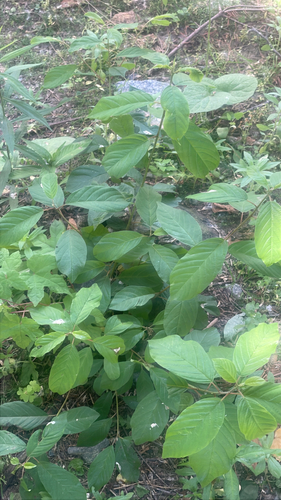
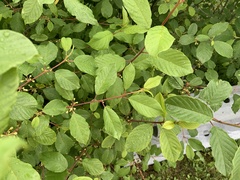
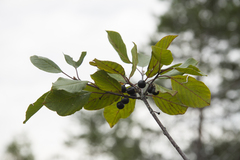
Alder buckthorn (Frangula alnus) is a deciduous shrub in the Rhamnaceae family, widespread across temperate Europe and western Asia. Thornless, with bright yellow wood beneath blackish bark, it grows in damp hedges, wooded peatlands and beside streams. Its bark has long been harvested as a laxative, but is violently purgative when fresh and requires a year of drying before traditional medicinal use.
Read moreAlder buckthorn, Glossy buckthorn and Breaking buckthorn
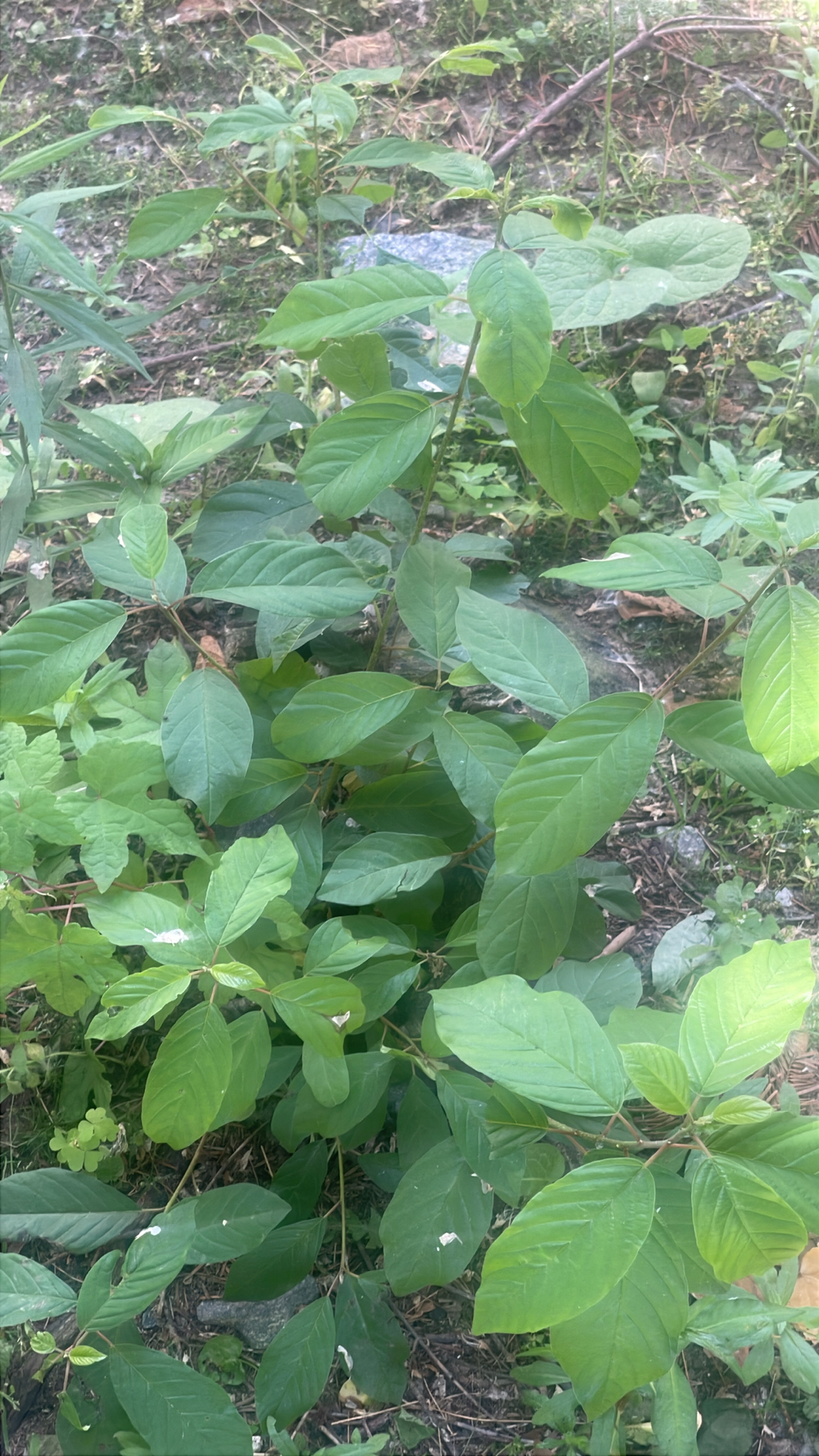
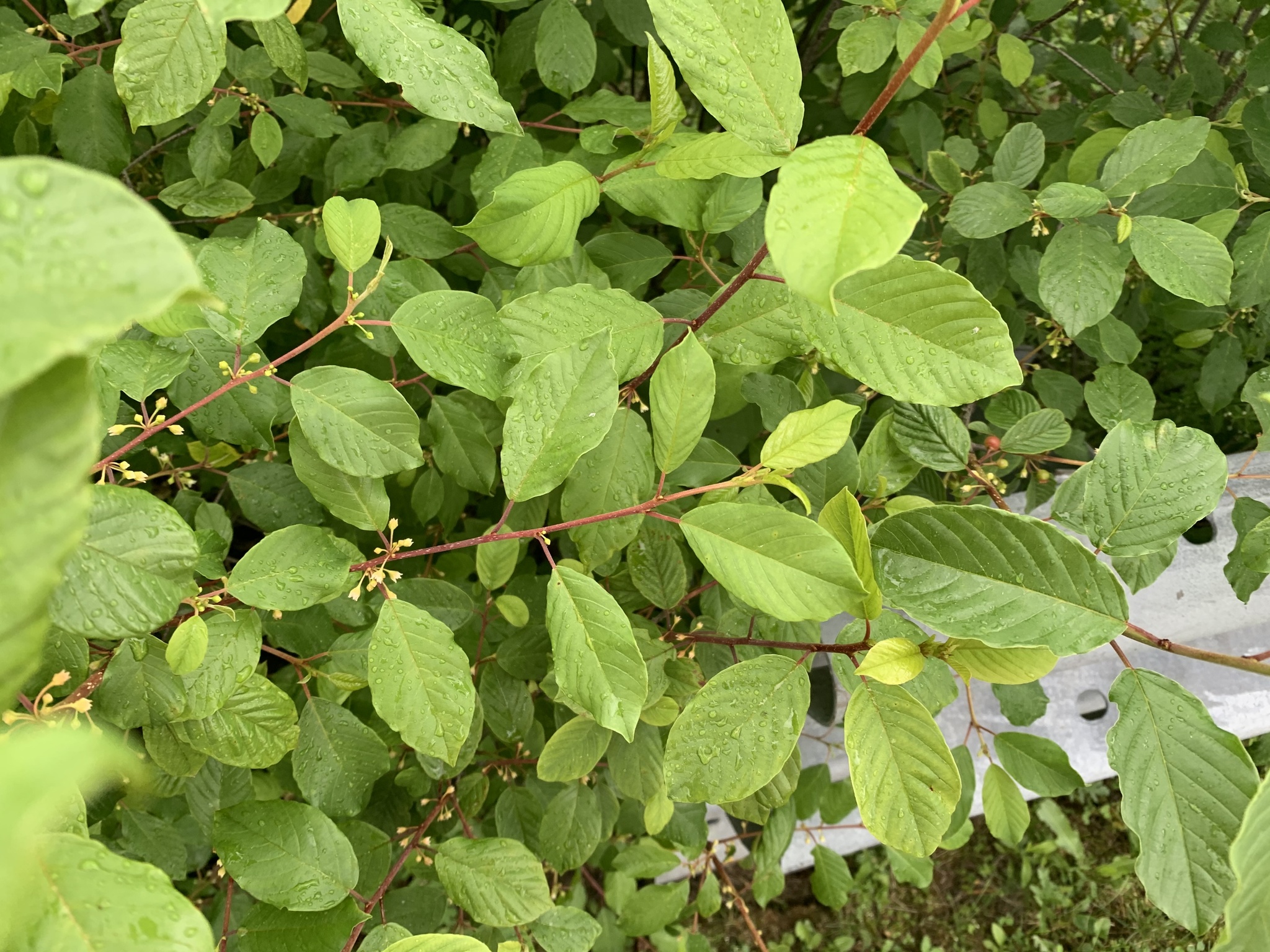
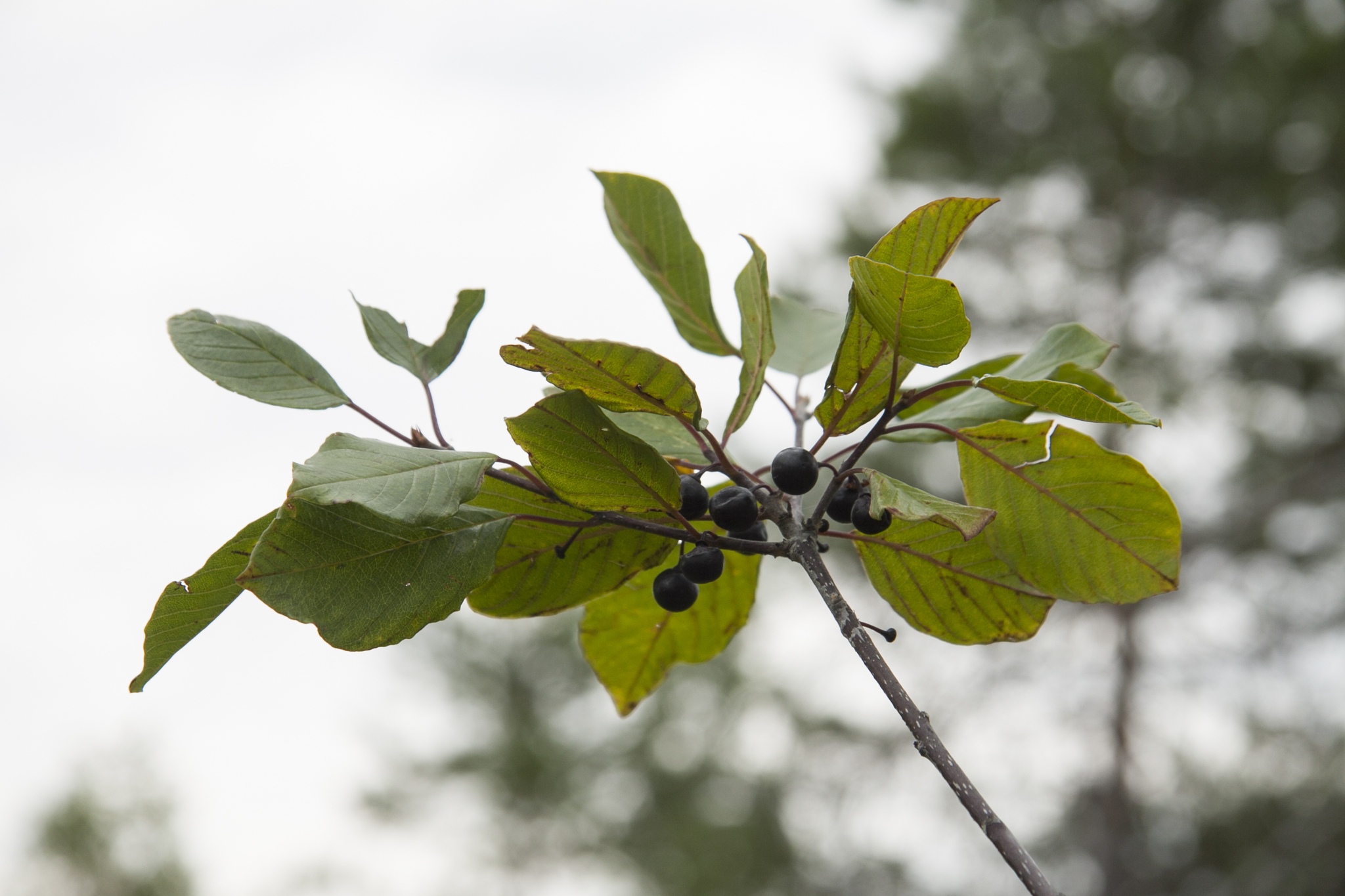


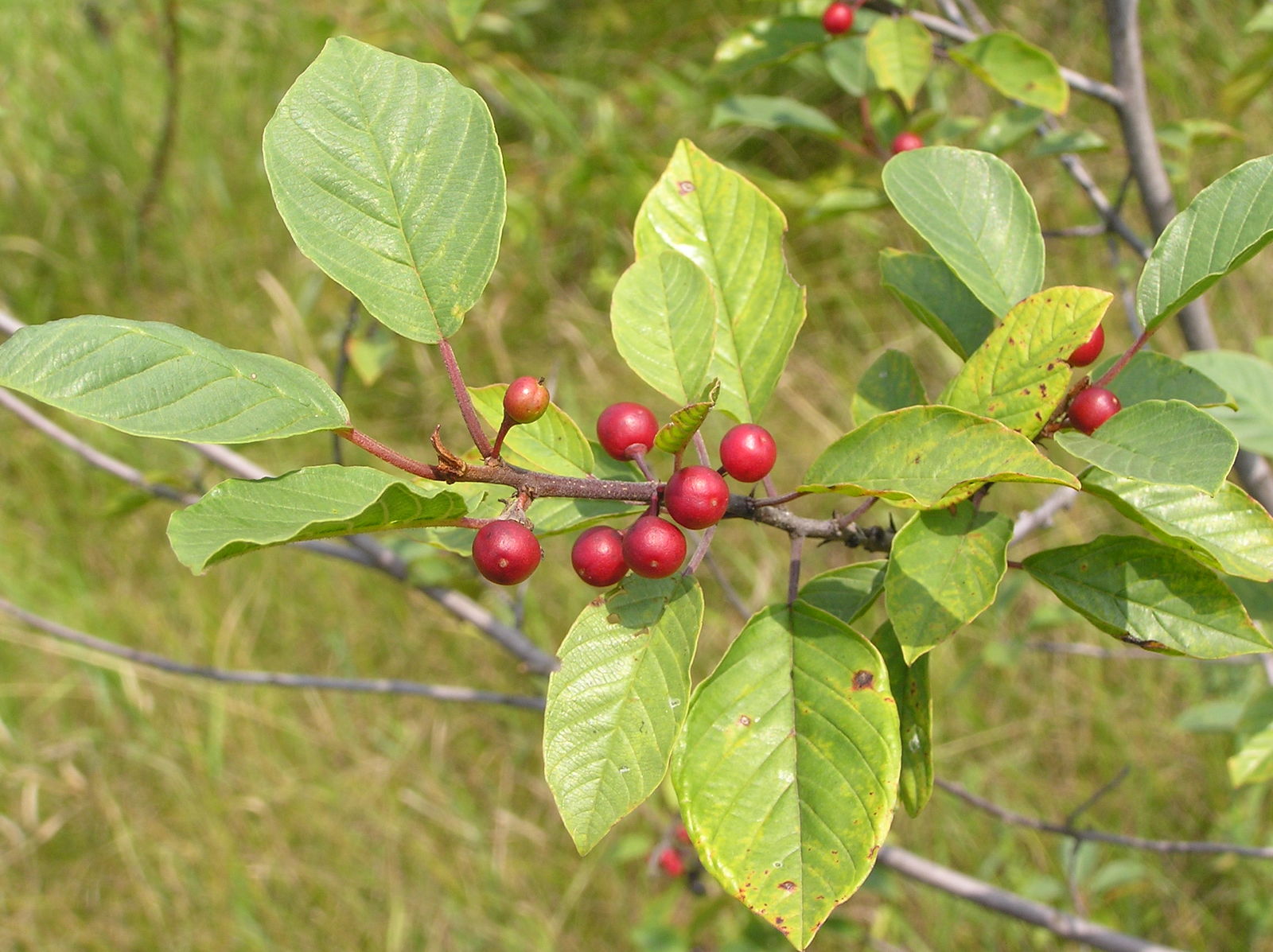
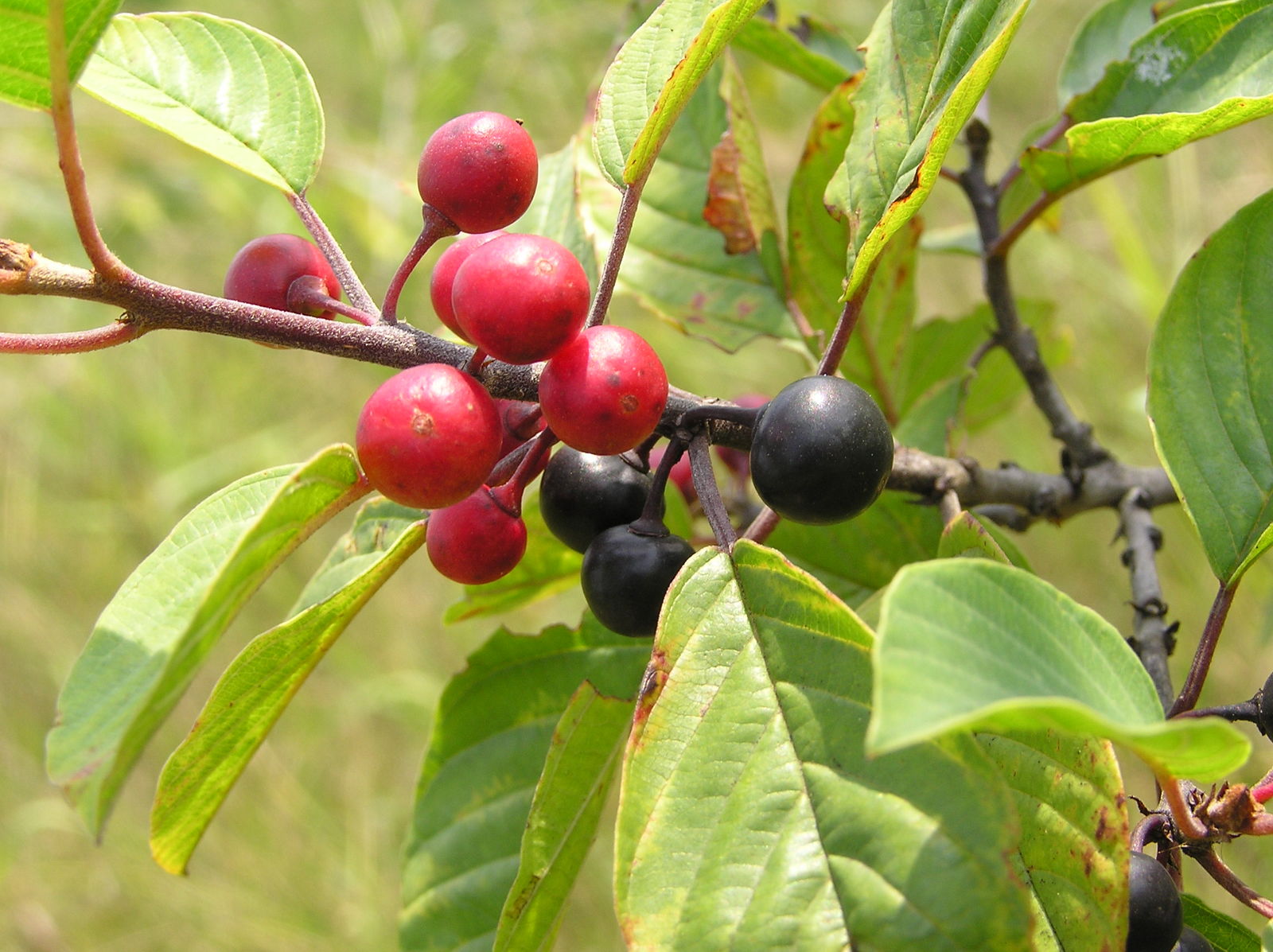
© photo
iNaturalist User · cc0
natalie · cc0
Полина Полежанкина · cc-by
Taken Feb 18, 2017 by Yoan MARTIN (cc-by-sa)
Taken Aug 17, 2011 by Tela Botanica − Yoan MARTIN (cc-by-sa)
Taken Jul 11, 2012 by Tela Botanica − Yoan MARTIN (cc-by-sa)
© copyright of the Board of Trustees of the Royal Botanic Gardens, Kew.




Global distribution
The native range of Frangula alnus spans temperate Europe north to the 68th parallel in Scandinavia, east to central Siberia and Xinjiang in China, and south to northern Morocco, Turkey and the Caucasus. Introduced to North America in the nineteenth century for hedges, it has naturalized widely and now forms locally invasive thickets.
- Native6
- Invasive2
- France
- United Kingdom
- Germany
- Switzerland
- Russia
- Morocco
- United States
- Canada
Hexagons: regions where the plant occurs. Green dots: native range.1
Identity
Alder buckthorn (Frangula alnus Mill., 1768), also called glossy buckthorn or breaking buckthorn, is a deciduous shrub in the genus Frangula, family Rhamnaceae. Carl Linnaeus first described it in 1753 as Rhamnus frangula. Philip Miller separated it from Rhamnus in 1768 on the basis of its bisexual, five-petaled flowers, contrasting with the separate male and female, four-parted flowers of Rhamnus. 1 10
The Latin verb frangere, meaning to break, gave Frangula its name, referring to the shrub's brittle wood. The epithet alnus recalls its waterside habitat, often shared with alder. Its French name, bourdaine, has an uncertain origin: the Centre national de ressources textuelles et lexicales traces it to an altered form of Old Norman borzaine, while leaving several competing explanations unresolved. 10 9
Recognition
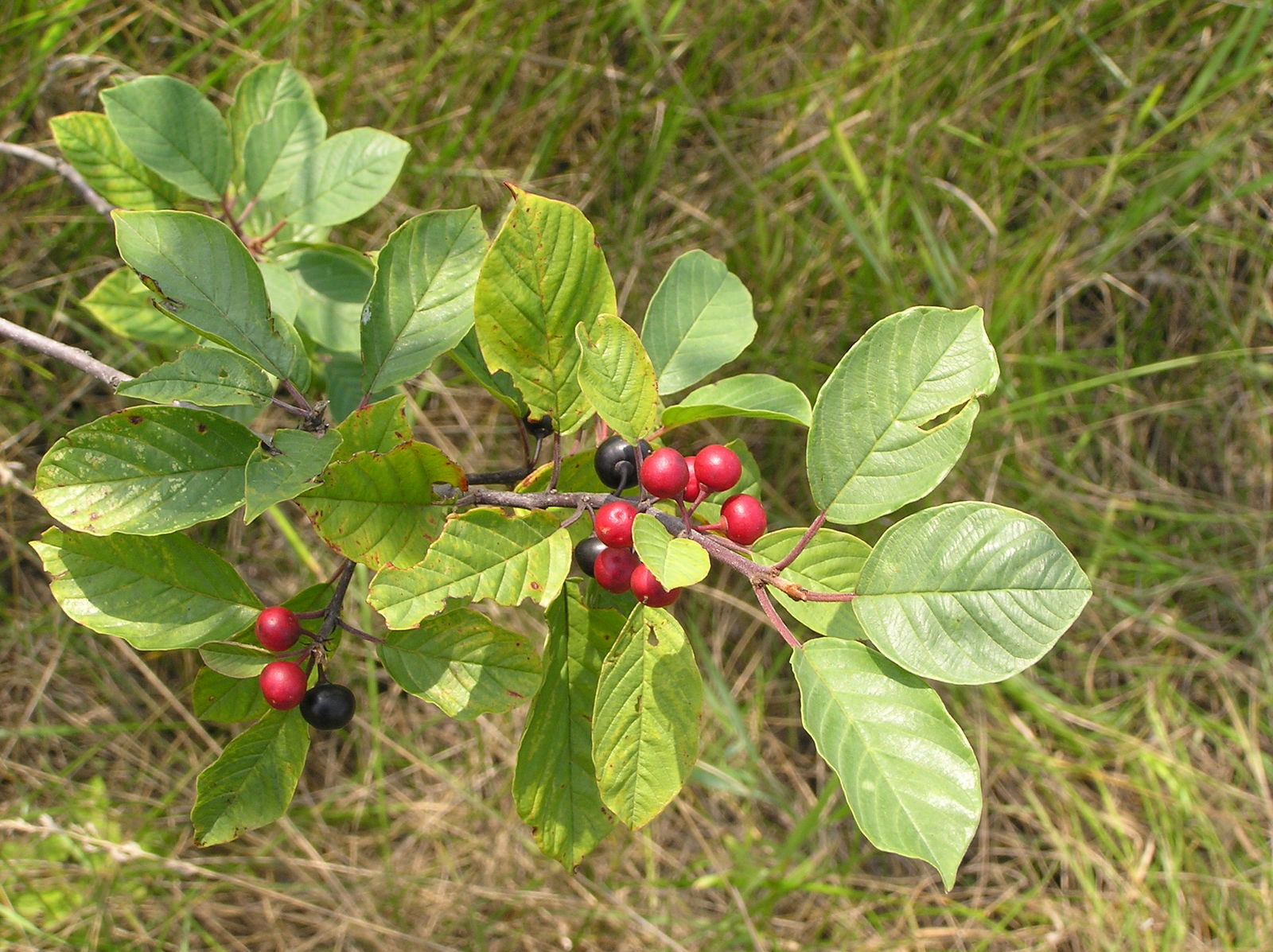
Thornless shoots immediately distinguish this deciduous shrub or small tree from its thorny relative, common buckthorn (Rhamnus cathartica). Unpruned alder buckthorn commonly reaches 2–6 m (7–20 ft), with specimens reported to 7 m (23 ft). Regularly clipped hedges rarely exceed 3 m (10 ft). 2 4
Dark brown to blackish outer bark, scattered with small pale lenticels, conceals lemon-yellow wood just beneath the surface. A shallow cut reveals this contrast, unlike most neighboring hedgerow shrubs, whose cut bark remains pale or brownish. 7 10
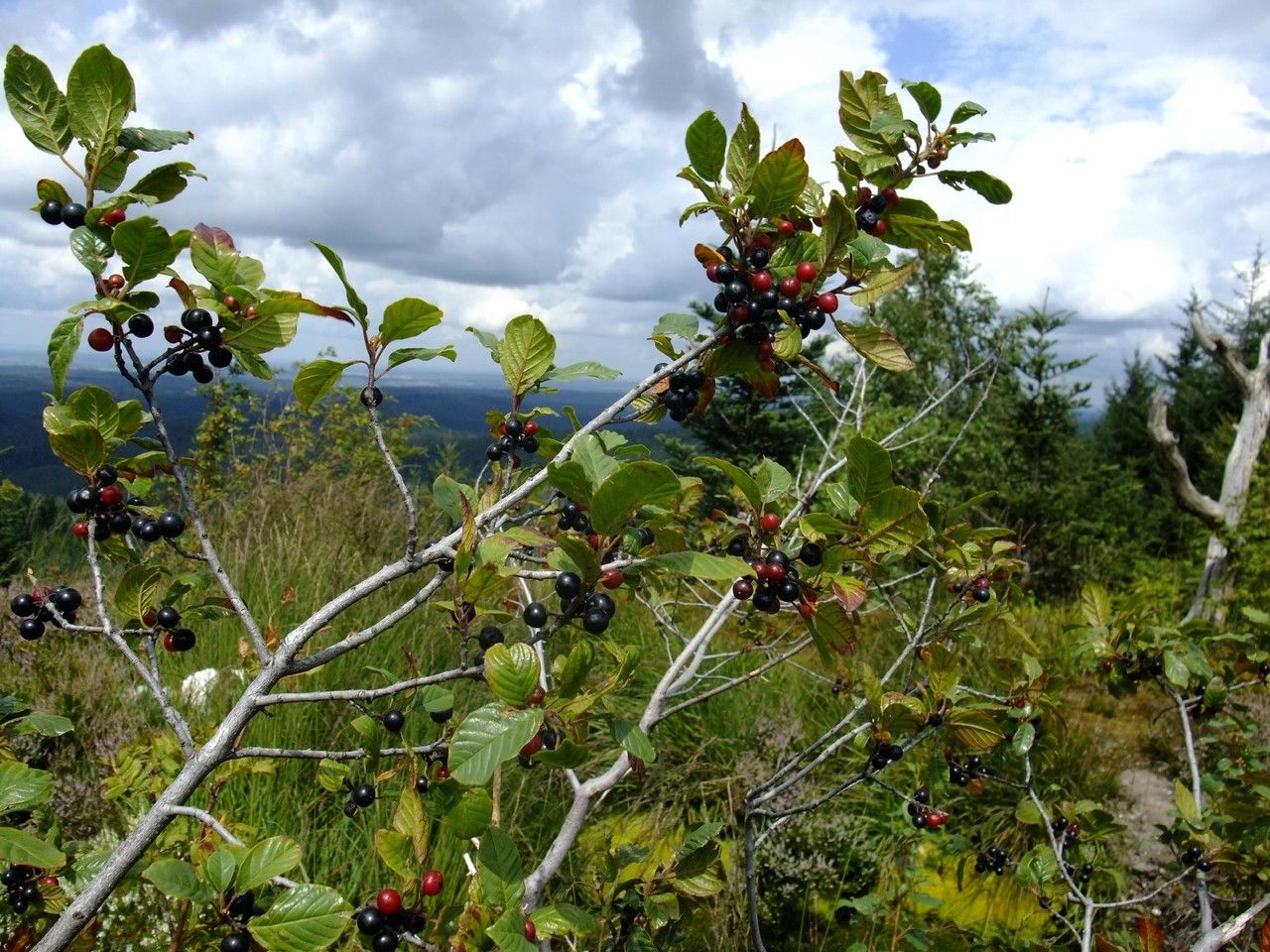
Alternate oval leaves measure 3–7 cm (1.2–2.8 in), with smooth, untoothed edges and 7–12 pairs of conspicuously grooved secondary veins. Tiny star-shaped flowers, 3–5 mm (0.12–0.2 in) across, have five greenish-white petals and open in small clusters in the leaf axils from May to July in its temperate Northern Hemisphere range. Berries 6–10 mm (0.24–0.4 in) across change from green through red to purplish black, with several stages often visible on one shoot. 7 10
Useful taxonomy
POWO/WCVP accepts Frangula alnus Mill. The older name Rhamnus frangula L. remains in use, particularly in pharmacognosy, where the dried bark is recorded as Cortex Frangulae. The main synonyms are:
- Rhamnus frangula L. (older scientific name)
- Frangula dodonei Ard. ex Soldano (botanical synonym)
- Frangula vulgaris Hill (botanical synonym)
Three visible garden features separate Rhamnus from the long-confused genus Frangula. Rhamnus has unisexual, four-parted flowers and frequently thorny shoots; Frangula has bisexual, five-parted flowers and consistently smooth shoots. Leaf arrangement also differs: opposite in Rhamnus, alternate in Frangula. 10
Habitat and range
Across its native range, Frangula alnus occupies almost all Europe, reaching the 68th parallel in Scandinavia, central Siberia and Xinjiang to the east, and northern Morocco, Turkey and the Caucasus to the south. In mainland France it occurs almost everywhere except the strictly Mediterranean region and Corsica, up to 1,000 m (3,280 ft). 1 6
Acidic to neutral soils that stay moist or waterlogged suit alder buckthorn: damp hedges, wooded peatland edges, alder-willow woods and stream or pond margins. It tolerates temporary waterlogging that many hedging shrubs cannot withstand, explaining its regular association with wetlands. 7 3
Nineteenth-century introductions for North American hedges were followed by naturalization and dispersal by birds eating the berries. Alder buckthorn is now considered invasive in the northeastern and midwestern United States, where dense thickets compete with native forest regeneration. 4
Life cycle and reproduction
Depending on climate, flowering extends from May to July in its temperate Northern Hemisphere range. Unlike dioecious common buckthorn, alder buckthorn bears bisexual flowers, pollinated by insects, especially bees. Each flower can therefore self-fertilize or receive pollen from a neighboring flower without an opposite-sex plant nearby. 10
Ripening berries change from green through red to purplish black in late summer and fall; each usually contains two or three brown seeds. Birds eating the fruit account for most seed dispersal, including well beyond the species' native range. 10
Garden propagation uses seed, cold-stratified in fall, or cuttings of semi-ripe shoots in summer. Cuttings reproduce the parent faithfully and root faster. Seeds germinate more slowly but produce genetically varied plants that are generally vigorous in moist soil. 3
Uses and risks
For centuries, alder buckthorn bark has served as a mild medicinal laxative after drying and aging for at least one year. Fresh bark is violently purgative and can cause severe abdominal pain. Its 3–7% anthraquinone content stimulates the colon wall roughly 8–12 hours after ingestion. 3
Unripe berries remain toxic if eaten by humans or dogs, causing vomiting and digestive upset. Charcoal from the wood was historically prized for gunpowder because it burns quickly and evenly. 2 10
In gardens, alder buckthorn provides rural hedging for damp ground and feeds caterpillars of the brimstone butterfly (Gonepteryx rhamni), for which it is one of very few European host plants. 4
Varieties, look-alikes and related plants
Ornamental selections include 'Asplenifolia', with finely divided, fernlike foliage unrelated to variegation. 'Columnaris', known as tallhedge buckthorn, has a narrow upright habit suited to compact screening hedges. 'Fine Line', also sold as 'Ron Williams', is a cross between those two, combining columnar growth with divided foliage. 8
Common buckthorn, Rhamnus cathartica, is the closest source of confusion. It has thorny shoots and opposite, finely toothed leaves with veins curved toward the tip; alder buckthorn has thornless shoots and alternate, entire leaves. Common buckthorn's separate male and female four-petaled flowers complete the field distinctions. Both shrubs nevertheless belong to the same family, have similar purgative properties and bear berries that turn black, helping explain their historically confused common names. 10
Main sources
- Plants of the World Online / Kew, Frangula alnus Mill.
- Royal Horticultural Society, Frangula alnus (alder buckthorn)
- Plants For A Future, Frangula alnus
- NC State Extension, Frangula alnus
- IUCN Red List, Frangula alnus assessment
- INPN, Frangula alnus Mill., 1768 (Bourdaine)
- Info Flora, Frangula alnus Mill.
- Missouri Botanical Garden Plant Finder, Frangula alnus 'Asplenifolia'
- CNRTL, etymology of bourdaine
- Wikipedia (EN), Frangula alnus
Frequently asked questions
Is alder buckthorn poisonous?
Yes, if eaten. Fresh bark and unripe berries are violently purgative in humans and dogs. Bark dried and aged for one year becomes a mild laxative with a long history in herbal medicine.
How can I tell alder buckthorn from common buckthorn?
Common buckthorn (Rhamnus cathartica) has thorny shoots, opposite leaves with curved veins, and separate male and female four-petaled flowers. Alder buckthorn has no thorns, alternate leaves and bisexual five-petaled flowers.
Why is alder buckthorn yellow beneath its bark?
A shallow cut through the blackish outer bark reveals lemon-yellow wood inside. This immediate contrast between dark bark and pale wood is one of the most reliable field identification features.
Where does alder buckthorn grow wild?
It grows in damp hedges, wooded peatlands, alder-willow woods and beside streams or ponds, on acidic to neutral soils. In France it occurs almost everywhere except the strictly Mediterranean region and Corsica.
Is alder buckthorn invasive?
It is native rather than invasive in Europe. Introduced to North America in the nineteenth century for hedges, it has become invasive in the northeastern and midwestern United States, spread by birds eating its berries.
Can alder buckthorn bark be used as a laxative?
Traditionally yes, but only after drying and aging for at least one year. Fresh bark is violently purgative and causes severe abdominal pain; medicinal use remains controlled and limited in duration.
Which ornamental cultivars are available?
'Asplenifolia' has finely divided leaves; 'Columnaris', called tallhedge buckthorn, has a narrow upright habit. 'Fine Line', a cross between them, combines columnar growth with divided foliage.
Similar plants
If you are unsure about a plant’s toxicity, ask a botanist or veterinarian for advice.