
Green ash (Fraxinus pennsylvanica, )
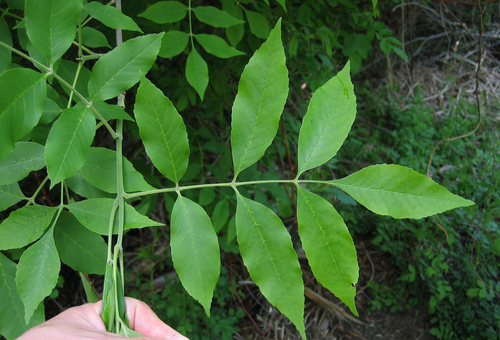
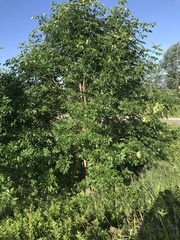
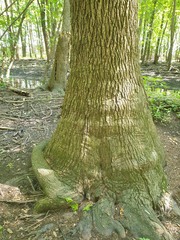
Green ash (Fraxinus pennsylvanica Marshall, 1785), also called red ash, is a large deciduous tree in the Oleaceae, native to eastern and central North America from Nova Scotia to southeastern Alberta and eastern Colorado. Its chestnut-brown buds and stalked leaflets distinguish it from European ash. Since the arrival of emerald ash borer, it has become one of North America’s most threatened trees.
Read moreGreen ash, Red ash and Water ash

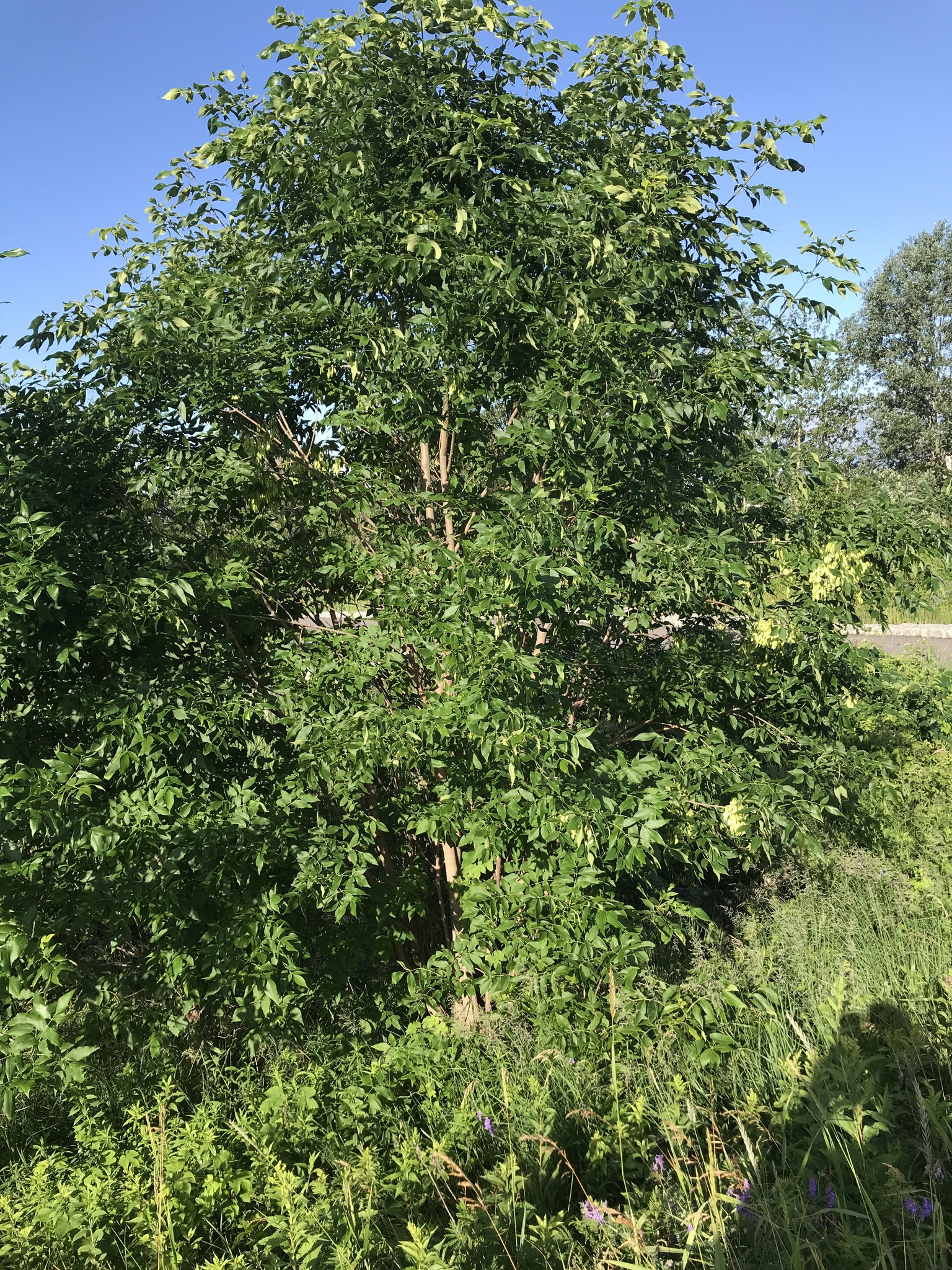



© photo
(c) Keith Kanoti, Maine Forest Service, USA, some rights reserved (CC BY) · cc-by
Allan Harris · cc0
Étienne Lacroix-Carignan · cc0
Taken Jun 19, 2022 by Alexander Baransky (cc-by-sa)
Taken Oct 5, 2022 by Kendra Vanderkruk (cc-by-sa)
© copyright of the Board of Trustees of the Royal Botanic Gardens, Kew.




Global distribution
Native from Nova Scotia to southeastern Alberta and eastern Colorado, south to northern Florida and southwest to Oklahoma and eastern Texas. It is also naturalized across much of the western United States, Argentina and Europe, from Spain to Russia. In France, its long-established introduction remains localized, notably in the Rhine forests of Alsace.
- Native2
- Introduced5
- Canada
- United States
- Argentina
- Spain
- Russia
- Germany
- Metropolitan France
Hexagons: regions where the plant occurs. Green dots: native range.1
Identity
Green ash (Fraxinus pennsylvanica Marshall, 1785) is an accepted species of Fraxinus in the olive family, Oleaceae. American botanist Humphry Marshall described it in 1785 from Pennsylvania specimens, the place commemorated in its scientific name. 1 4
Botanists formerly separated two forms: one with hairless twigs and glossy leaflets, called green ash, and another with hairy twigs, called red ash. That distinction involved Fraxinus pennsylvanica var. subintegerrima, now treated as a synonym of the species. Both English names remain in use for the same plant. 5 3
Among the six North American ash species compared here, Fraxinus pennsylvanica has the broadest continental distribution. Emerald ash borer, an insect introduced from Asia, nevertheless threatens its survival throughout that native range. 6 7
Recognition
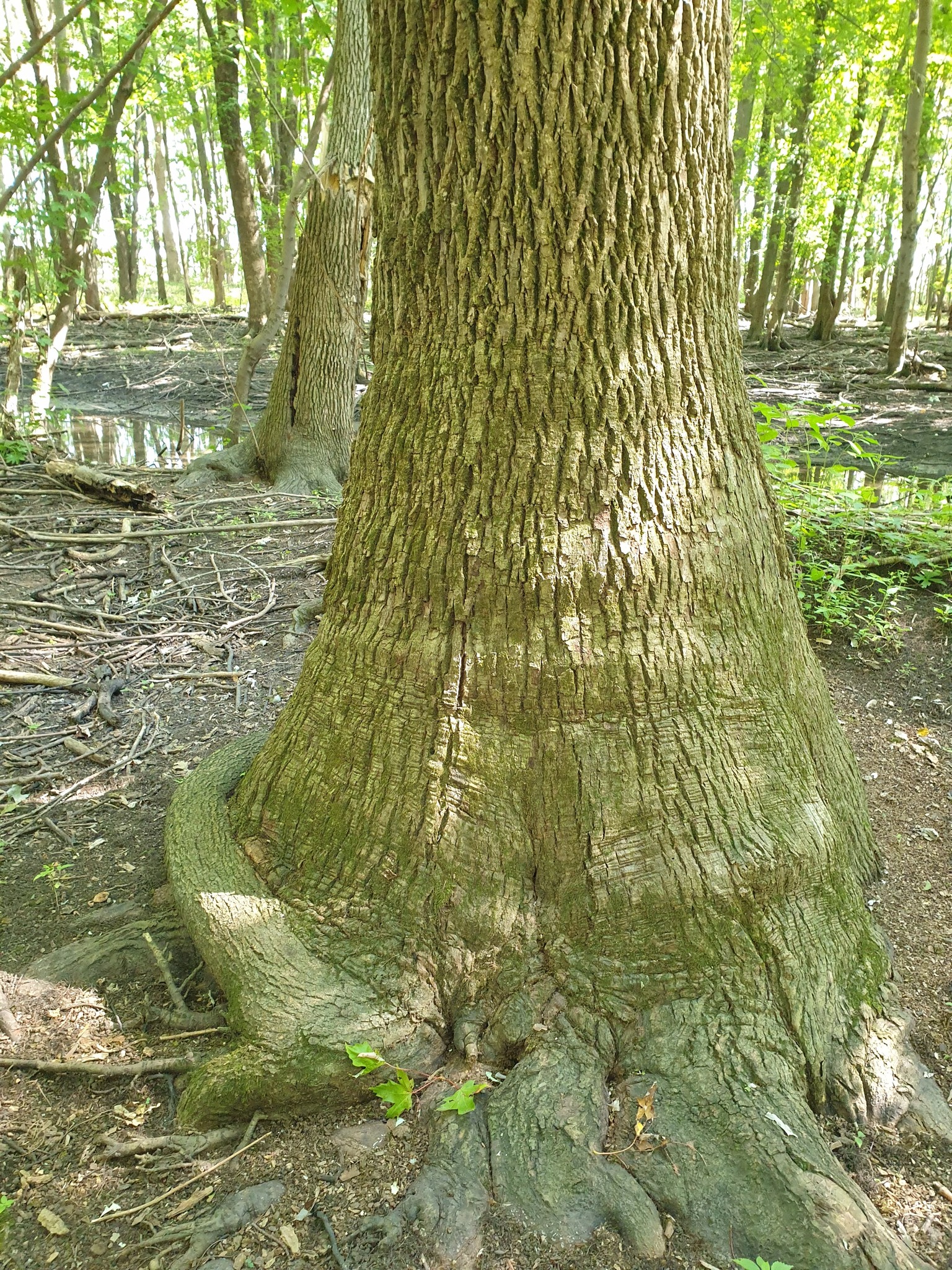
Typically reaching 15–21 m (49–69 ft) tall and 11–15 m (36–49 ft) wide, the tree begins with a pyramidal crown that becomes rounded and irregular with age. The largest recorded specimen, a forest tree in Missouri, stands 32 m (105 ft) tall with a trunk 1.34 m (4.4 ft) in diameter, nearly half as tall again as the usual maximum. Grayish-brown bark develops intersecting diamond-shaped ridges early; European ash stays smooth longer. 2 3
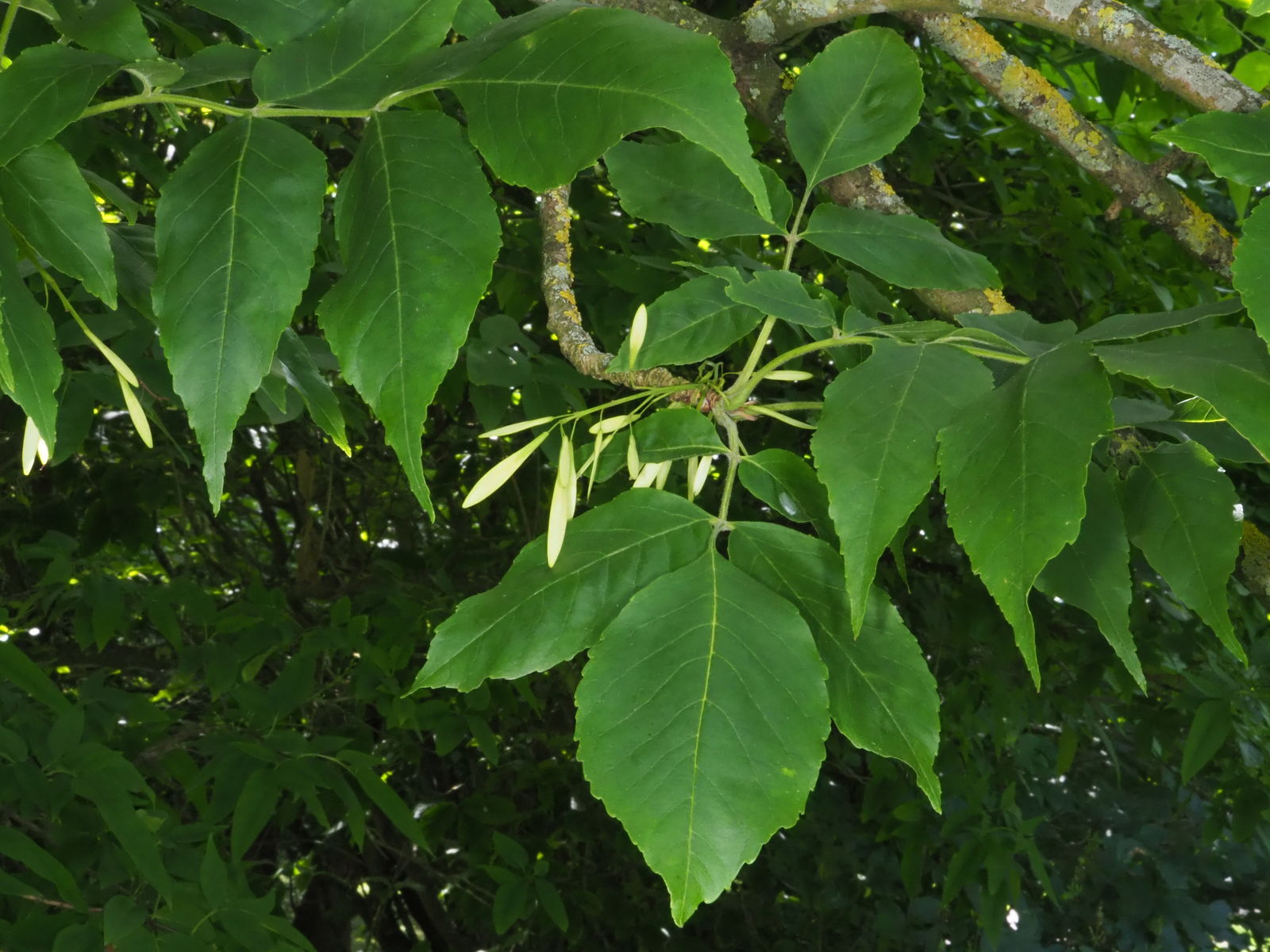
Compared with European ash, two features aid identification throughout the year: chestnut-brown buds, never black, and hairy current-season twigs, which become hairless with age. The 5–9 leaflets have short individual stalks, unlike the stalkless leaflets of European ash. Semicircular leaf scars have straight upper edges, with the bud immediately above. 6
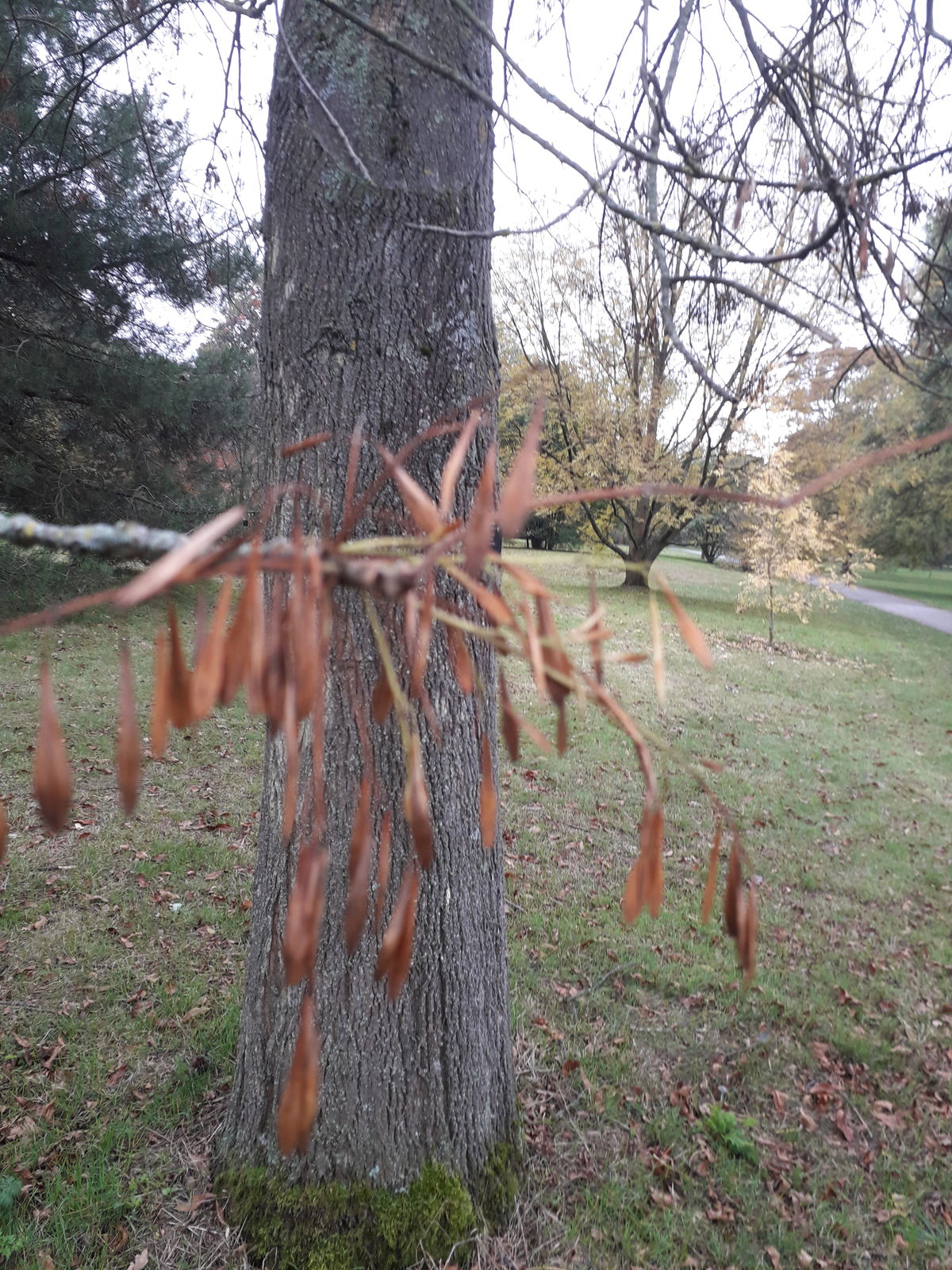
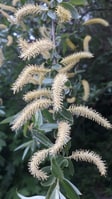
Petal-free, greenish to purplish flowers open in April–May in the native Northern Hemisphere range, with or just before the leaves. Male and female flowers occur on separate trees. The winged fruits, or samaras, measure 4–5 cm (1.6–2 in), turning from green to light brown and often notched at the wing tip. Hanging clusters persist through winter on female trees. 3 2
Useful taxonomy
Taxonomic references accept Fraxinus pennsylvanica Marshall in the Oleaceae. Synonyms reflect former morphological divisions: Fraxinus lanceolata Borkh., Fraxinus pennsylvanica var. subintegerrima (Vahl) Fernald and Fraxinus pennsylvanica f. viridis C.K.Schneid.. The last name recalls the common name green ash. 1
Forestry identification keys compare several other North American ashes: Fraxinus americana, with entire leaflet margins and crescent-shaped leaf scars; Fraxinus nigra, with brown-black buds and rusty veins; and Fraxinus latifolia, with broader leaflets and rounded samaras. Scientific names are especially useful in France, where these introduced species are absent from traditional floras. 6
Habitat and range
From Nova Scotia, green ash extends west to southeastern Alberta and eastern Colorado, south to northern Florida, and southwest to Oklahoma and eastern Texas. This covers much of eastern and central North America. It has also naturalized across much of the western United States, Argentina and Europe, from Spain to Russia. 1
French introductions for forestry or ornament date to the late nineteenth or early twentieth century, probably during the German annexation of Alsace, when foresters tested exotic trees in Rhine forests. Long confused with white ash or narrow-leaved ash, green ash was positively identified in 2003, at Schoenau and then Daubensand, using a stump with more than 90 growth rings. It regenerates naturally there but is outcompeted for light by European ash. The discovery’s authors considered an invasive designation disproportionate. 6 4
Within its native range, green ash grows almost exclusively in alluvial bottomlands, along streams and on periodically flooded ground. Established trees tolerate both temporary waterlogging and pronounced dry spells. 3
Life cycle and reproduction
As a dioecious species, each tree bears only male or only female flowers in small panicles, before or during leaf emergence. Wind carries the pollen. On female trees, samaras ripen from August to October in North America and disperse throughout winter, carried by wind and, beside rivers, water. 3
Seeds germinate after natural winter stratification on the ground. Once established in full light and moist soil, young trees grow rapidly with a pyramidal outline. Beneath a dense canopy, limited light sharply slows growth; trees lean and are crowded out by more competitive species. 2 6
Wildlife uses many parts of this tree. Seeds feed birds and small mammals, while rabbits, porcupines and beavers eat the bark. Its foliage supports caterpillars of Papilio glaucus, among other moths and butterflies. 3
Uses and risks
Hard, elastic wood, comparable to European ash, has long supplied furniture, tool handles and sporting goods. North American cities planted green ash extensively for shade and street trees after Dutch elm disease devastated American elms in the mid-twentieth century. This second urban monoculture repeated the earlier mistake: mass planting of one tree species leaves an entire city exposed to the same insect or fungus. 9
Ingestion toxicity is not reported for green ash in common domestic animals or humans, unlike many other ornamental street trees. 3
Tree health is the overriding concern. Emerald ash borer (Agrilus planipennis), an Asian beetle accidentally introduced to North America in the late 1990s, kills trees within three to five years of infestation, with mortality approaching 100% and almost no natural regeneration afterward. In 2017, the IUCN listed green ash as Critically Endangered, alongside four other North American ashes out of six assessed. It projected a decline of at least 80% over a century from a population near nine billion trees. New planting is no longer recommended in affected areas. 7 8 2
Varieties, look-alikes and related plants
Before emerald ash borer became widespread, North American nurseries offered urban selections including 'Marshall's Seedless', fruitless to reduce self-seeding; 'Summit', with a regular pyramidal crown; 'Patmore', a dense-crowned male selection; and 'Cimmaron', valued for orange to purple fall color. These cultivars retain the species’ botanical identity and are now rarely recommended for new planting. 2
European look-alikes include European ash (Fraxinus excelsior), with distinctly black buds and stalkless leaflets, and Fraxinus angustifolia subsp. oxycarpa, with small brown buds and narrow, sharply toothed leaflets. In North America, white ash (Fraxinus americana) is the closest comparison. Its leaflets have entire margins, and crescent-shaped leaf scars surround the bud rather than sitting below it. 6
Main sources
- Plants of the World Online / Kew, Fraxinus pennsylvanica Marshall
- Missouri Botanical Garden Plant Finder, Fraxinus pennsylvanica
- NC State Extension Gardener Plant Toolbox, Fraxinus pennsylvanica
- INPN / MNHN, Fraxinus pennsylvanica Marshall, 1785
- Tela Botanica / eFlore BDTFX, Fraxinus pennsylvanica
- Boeuf R., 2003, An overlooked exotic ash in Alsace, Bulletin SBCO 34
- IUCN Red List, Fraxinus pennsylvanica assessment 2017
- IUCN, Once-abundant ash tree and antelope species face extinction
- University of Missouri Extension, Green Horizons, ash as elm replacement
Frequently asked questions
Is green ash poisonous to dogs and cats?
No ingestion toxicity is documented for common domestic animals or humans. Its status for horses remains undocumented.
How can I tell green ash from European ash?
Green ash has chestnut-brown buds, hairy twigs and stalked leaflets. European ash has distinctly black buds, hairless twigs and stalkless leaflets.
Why is green ash no longer widely recommended for planting?
Emerald ash borer, an Asian beetle, kills the tree within three to five years of infestation. The IUCN has listed the species as Critically Endangered since 2017, so planting is discouraged in affected areas.
Does green ash grow in France?
Yes, locally. It was introduced to Alsace in the late nineteenth or early twentieth century and positively identified in the Rhine forests in 2003, without becoming invasive.
Are green ash and red ash different species?
Not in current botanical treatment. Botanists once distinguished a hairless form, green ash, from a hairy form, red ash, but both belong to Fraxinus pennsylvanica.
Is green ash threatened with extinction?
Yes. The IUCN listed it as Critically Endangered in 2017 alongside four other North American ashes, with a decline of at least 80% expected over a century because of emerald ash borer.
Where is green ash native in North America?
Its native range runs from Nova Scotia to southeastern Alberta, south to Florida and southwest to Oklahoma and eastern Texas, almost always along streams or on floodplains.
Similar plants
If you are unsure about a plant’s toxicity, ask a botanist or veterinarian for advice.