
Common snowdrop (Galanthus nivalis, )
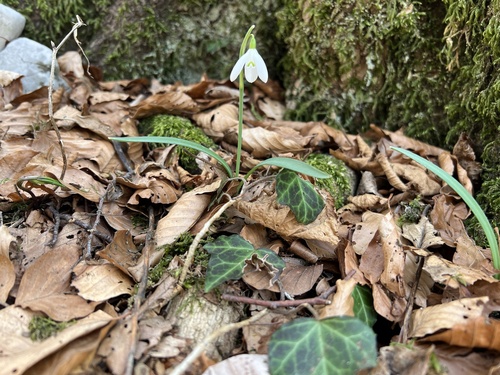


Common snowdrop (Galanthus nivalis L.) is a small deciduous bulbous plant in the Amaryllidaceae, among the first to flower in late winter. Its nodding white flowers, narrow gray-green leaves and short growing season distinguish it: it is active before most spring perennials fully emerge.
Read moreCommon snowdrop and Snowdrop
Place in indirect light or in a shaded room.
Cool-season sun to partial shade, especially beneath deciduous trees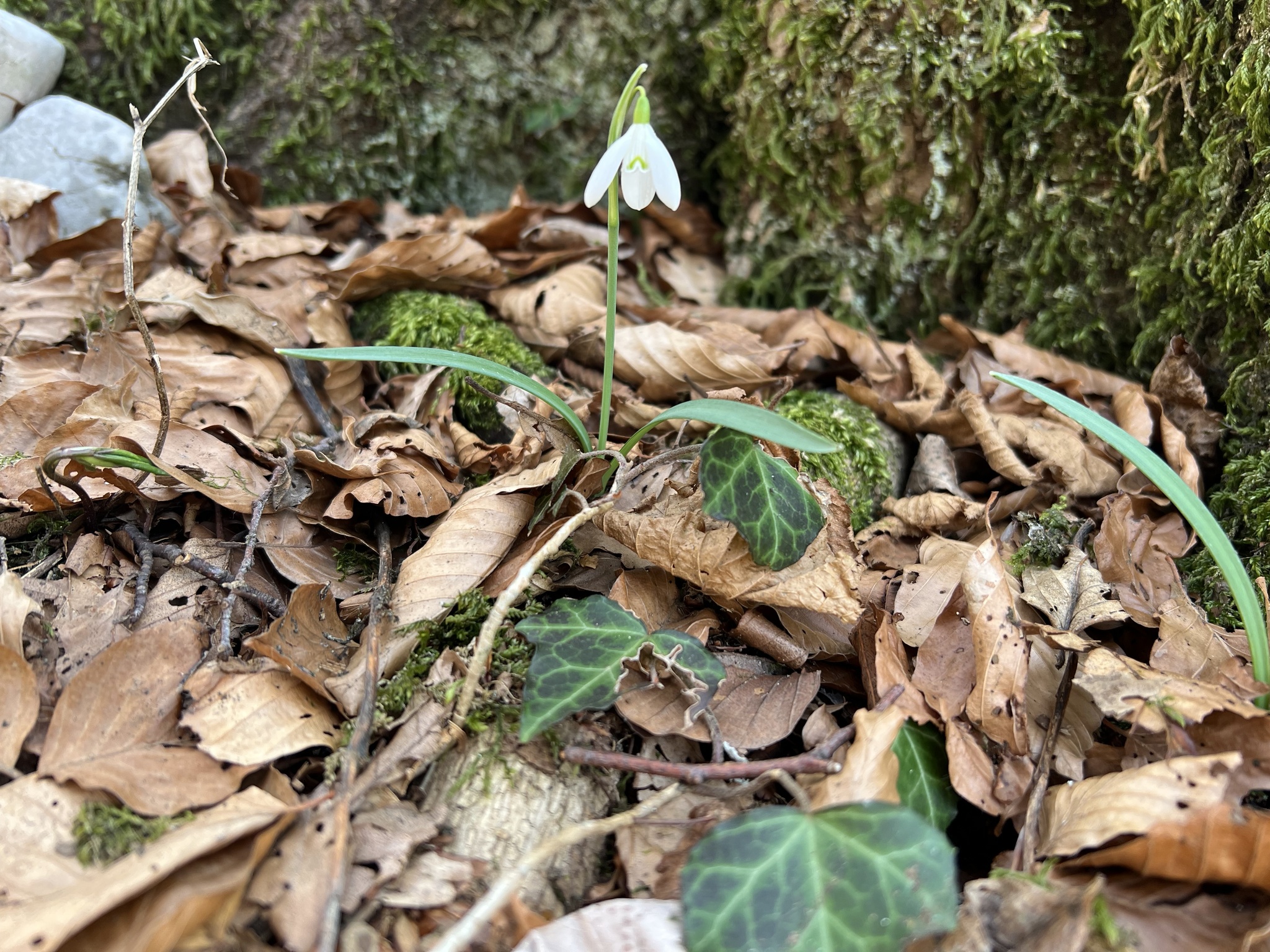



© photo
Mirko Ubović · cc0
iNaturalist User · cc-by-nc
Alexis Tinker-Tsavalas · cc-by
Taken Mar 15, 2022 by Michael Goldthwaite (cc-by-sa)
Taken Feb 8, 2022 by Martin Bishop (cc-by-sa)
Taken Mar 9, 2014 by Tela Botanica − r jot (cc-by-sa)
Taken Feb 5, 2022 by Annemarie Ahrens-Stehle (cc-by-sa)
Taken Feb 27, 2020 by Waldemar Zeja (cc-by-sa)
© copyright of the Board of Trustees of the Royal Botanic Gardens, Kew.



Global distribution
POWO records a native range from the Pyrenees to Ukraine. Common snowdrop is also naturalized in temperate regions outside that range, notably the British Isles and North America.
- Native4
- Introduced2
- France
- Spain
- Germany
- Ukraine
- Great Britain
- United States
Hexagons: regions where the plant occurs. Green dots: native range.1
Identity
Common snowdrop (Galanthus nivalis L.) is an accepted species of Galanthus in the Amaryllidaceae. POWO records a broad native range from the Pyrenees to Ukraine, while IPNI traces the name to Linnaeus’s publication in 1753. 1 3
The name Galanthus evokes a white flower and its hanging form. The epithet nivalis refers to snow, fitting its late-winter bloom. Snowdrop is a familiar common name, but it should not automatically include the neighboring snowflake genera Leucojum and Acis. 5 7
Species identity matters when choosing these small white bulbs. Galanthus nivalis has a short growth cycle, and planting advice for January or February in Northern Hemisphere gardens often concerns this species and the practice of planting in the green, while leaves are still present. 4 2
Recognition
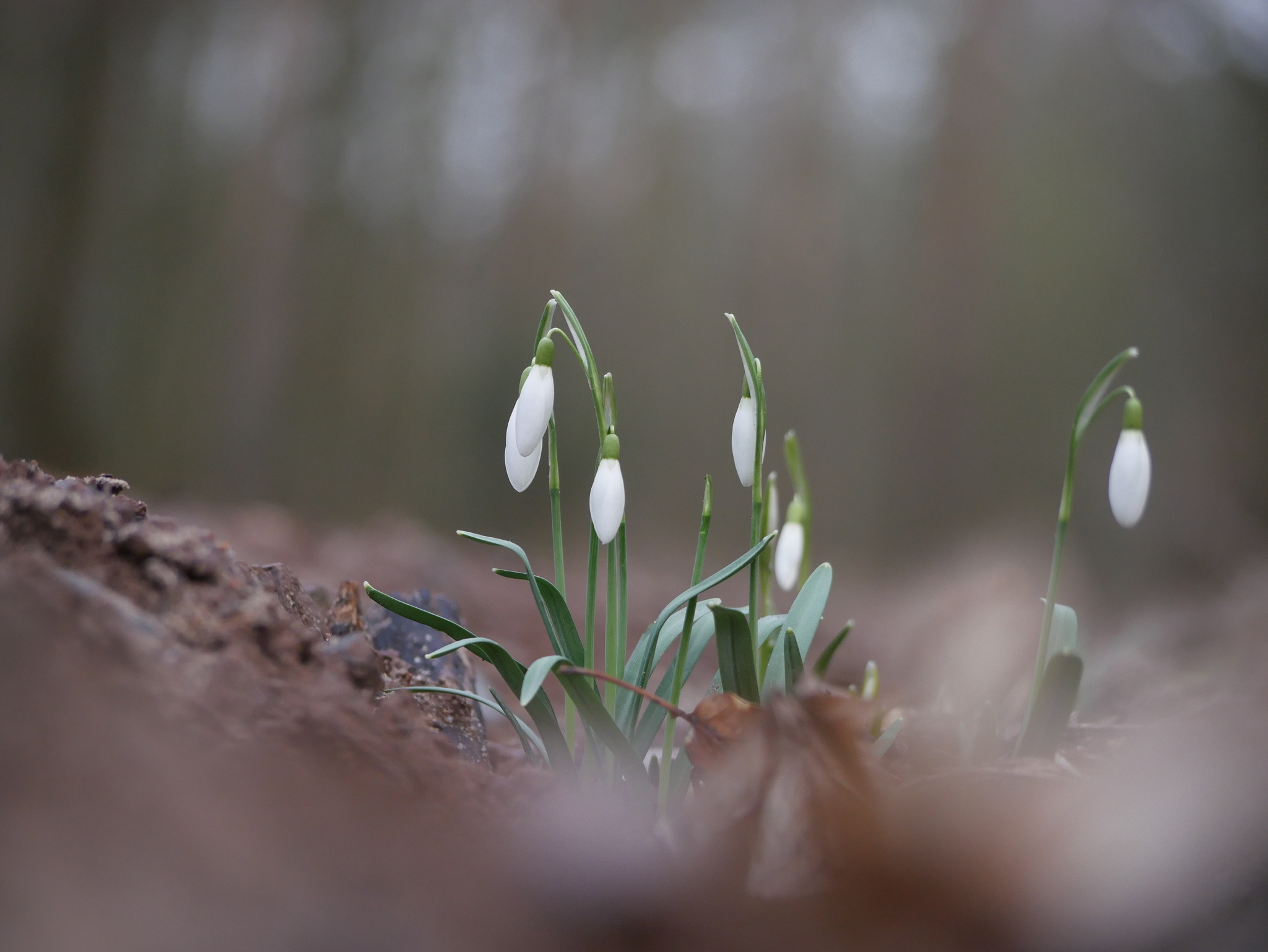
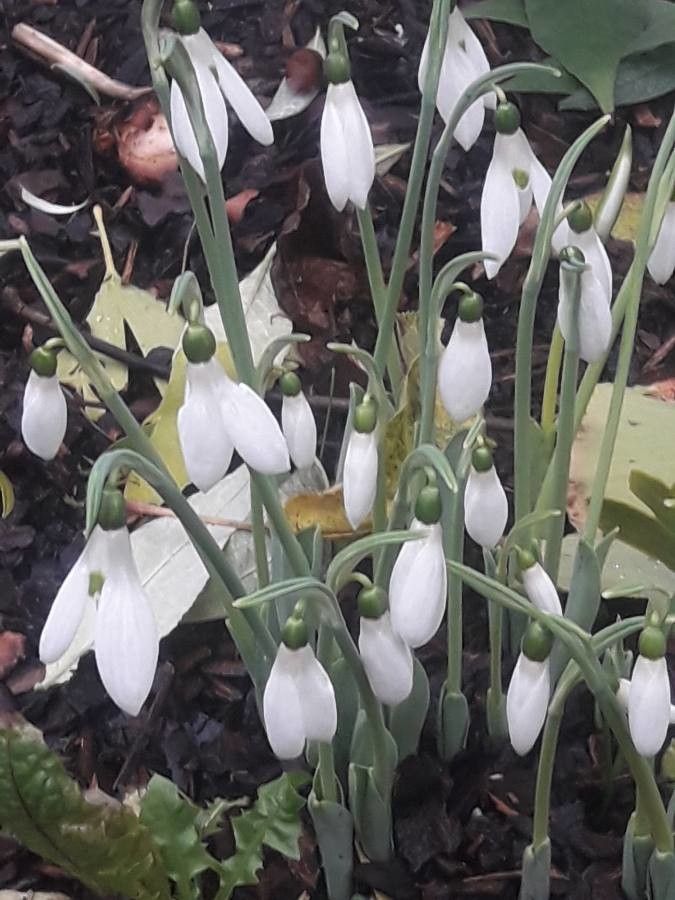
NC State describes a small bulbous plant about 10–25 cm (4–10 in) tall, with narrow, linear, gray-green basal leaves. Each bulb generally produces two or three leaves, followed by a green flower stalk bearing one solitary flower. 4 5
Nodding white flowers carry green markings on their inner segments. This feature separates common snowdrop from snowflakes, whose bell-shaped flowers are more regular and marked differently. In woodland, look for the combination of short stature, narrow leaves and a downward-facing flower. 4 6
Blooming falls between winter and spring, depending on climate. NC State places flowering in both seasons and notes its value to bees. This early appearance explains the snowdrop’s place in seasonal planting lists and birth-flower traditions. 4 5
Habitat and range
European populations of Galanthus nivalis extend from the Pyrenees to Ukraine, according to POWO, with numerous introductions beyond the native range. NC State also reports naturalization in several North American states. 1 4
In gardens, open woodland offers suitable conditions: light before trees leaf out, humus-rich soil, moisture during growth and a quiet summer dormancy. Moist banks and meadows that are not mown too early also suit it. 4 5
Naturalized colonies develop gradually. Clumps expand through offsets and may also self-seed, but their leaves must remain until they yellow. Early mowing or overly thorough tidying weakens the following year’s flowering. 4
Planting and naturalization
Fresh bulbs can be planted in fall, but snowdrops often establish better when planted in the green, just after flowering while the leaves remain. These small bulbs tolerate prolonged drying out of the ground poorly. 4 5
Plant groups in beds rather than isolated bulbs. Modest foliage later disappears, so leave room for spring or early-summer companions to take over without crowding the winter shoots. 4
Water according to the growth cycle: keep soil moist during rooting, leaf emergence and flowering, then use much less during dormancy. Constantly waterlogged soil can rot bulbs; extreme dryness during rooting weakens them. 4
Garden cleanup needs to follow the leaves as well as the flowers. After blooming, snowdrop leaves are still replenishing the bulb. Delay lawn mowing while they remain green, and avoid covering bed-grown clumps with thick mulch or overwhelming them with vigorous perennials. 4 5
Handle purchased dry bulbs as delicate living plants. A packet left in warmth for weeks establishes less readily than a leafy clump moved in the green. For a natural effect, place small, irregular groups beneath deciduous trees and let them thicken over successive winters rather than seeking an instant carpet. 4
Conservation and collecting
Although familiar in gardens, snowdrops belong to a genus closely followed by collectors. Wikipedia reports Near Threatened status for Galanthus nivalis and notes CITES protection for the genus. 5 8
Choose nursery-grown bulbs rather than collecting wild plants. Established garden clumps can be divided, but removing plants from natural habitats threatens local populations and may be prohibited in the relevant territory. 5 8
Horticultural snowdrop sales feature many cultivar names. These can matter greatly to enthusiasts, but Galanthus nivalis without a cultivar name refers first to the common species rather than a rare selection. 2 7
Keep cultivar identity alongside species identity when selecting plants. Galanthus nivalis denotes common snowdrop; double, green-marked or highly collected forms need separate horticultural consideration when a particular cultivar is specified. 2 5
Toxicity
Common snowdrop is not edible. NC State reports that its bulbs are toxic if eaten and contain phenanthridine alkaloids. Nausea, vomiting and diarrhea may follow ingestion in quantity. 4
Unlabeled bulbs create a practical risk for children, curious animals and adults handling them. Snowdrop bulbs resemble other small spring bulbs. Store them separately from food and plant them beyond the reach of young animals that dig. 4
Less dramatic toxicity than that of some large Amaryllidaceae bulbs still does not make Galanthus nivalis safe to eat. Treat it as a garden ornamental and take accidental ingestion seriously. 4 5
Main sources
- Plants of the World Online / Kew, Galanthus nivalis L.
- World Flora Online, Galanthus nivalis
- International Plant Names Index, Galanthus nivalis L.
- NC State Extension Gardener Plant Toolbox, Galanthus nivalis
- Wikipedia EN, Galanthus nivalis
- Wikipedia FR, Galanthus nivalis
- Wikidata, Galanthus nivalis
- CITES Appendix II, Galanthus spp.
Frequently asked questions
Is Galanthus nivalis the common snowdrop?
Yes. Galanthus nivalis is the common snowdrop, the familiar species grown in gardens and naturalized for late-winter flowering.
Can I plant snowdrops in February?
Yes, where this matches the local flowering season, especially in the green just after flowering while clumps still have leaves. Dry bulbs are usually planted in fall and should not be left to dry for long.
Are snowdrops poisonous?
Treat them with caution. NC State reports low toxicity when eaten in quantity, with possible nausea, vomiting and diarrhea.
Should I cut back snowdrop leaves after flowering?
No. The leaves replenish the bulb’s reserves. Leave them to yellow naturally.
Do snowdrops like full sun?
They tolerate cool-season sun but also thrive in light partial shade beneath deciduous trees.
How do snowdrops differ from Leucojum?
Leucojum has more regular bell-shaped flowers, often with green tips on every tepal. Galanthus nivalis has a nodding flower with marked inner segments.
Similar plants
If you are unsure about a plant’s toxicity, ask a botanist or veterinarian for advice.