
Saffron (Crocus sativus) (Crocus, )


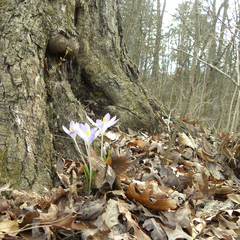
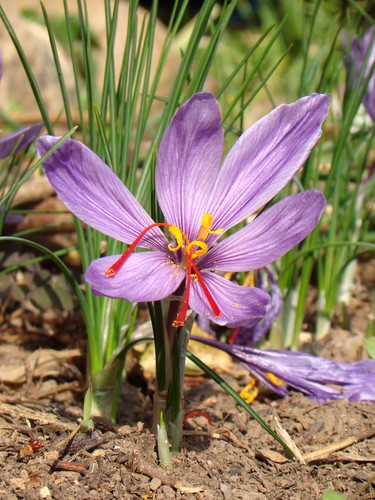
Crocus (Crocus) is a genus of corm-forming plants in the Iridaceae, recognized by cup-shaped flowers opening close to the ground in early spring or autumn, depending on the species. One species, Crocus sativus, supplies saffron from its red flower stigmas. It must be distinguished from Colchicum, also called autumn crocus, which belongs to another family and is highly toxic.
Read moreSaffron (Crocus sativus), Spring crocus and Autumn-flowering crocus


© photo
iNaturalist User · cc-by
Geoff Shuetrim · cc-by
M. Whitson · cc-by
© copyright of the Board of Trustees of the Royal Botanic Gardens, Kew.
Global distribution
Crocus is native to the Mediterranean basin, Europe, North Africa and Southwest Asia, with its range extending to Central Asia and Xinjiang depending on the species. Temperate regions where garden cultivars are simply planted must be distinguished from this wild native range.
- Native5
- Metropolitan France
- Italy
- Greece
- Turkey
- Iran
Hexagons: regions where the plant occurs. Green dots: native range.1
Identity
Crocus (Crocus L.) is a genus of corm-forming plants in the Iridaceae family and the order Asparagales. Small, cup-shaped flowers open close to the ground in very early spring or autumn, depending on the species. Linnaeus described the genus in 1753; it includes about a hundred wild species. 1 4
One of those species, Crocus sativus, supplies saffron, the spice taken from the red stigmas of its autumn flowers. The most familiar garden crocuses mainly descend from spring-flowering species such as Crocus vernus, planted in beds and rock gardens or naturalized in lawns. 3 2
Recognition
Six colored tepals, joined into a tube at the base, form the distinctive cup that opens in sunshine. Flowers range from purple and white to yellow and blue, often with stripes or two colors in species crocuses. The narrow, linear, dark green leaves have a fine white stripe along their center. 3 5
Below ground, the rounded storage organ is a corm, rather than a true bulb with scales like a tulip. Plants remain low, reaching 8–15 cm (3–6 in) in height. Each corm is replaced annually and produces small daughter corms around its edge. 1 3
One safety distinction is crucial: true crocuses have only three stamens, while Colchicum, also called autumn crocus, has six. In Crocus sativus, the three projecting orange-red stigmas are especially distinctive; these are the parts harvested as saffron. 4 2
Useful taxonomy
Linnaeus established Crocus in 1753, and the genus remains in the Iridaceae, alongside irises and gladioli. Botanists recognize about a hundred species, divided between spring-flowering and autumn-flowering taxa. Flowering in autumn alone therefore does not mean that a plant belongs to Colchicum. 1 4
Several species underpin horticultural and culinary uses:
- Crocus sativus, the autumn-flowering saffron crocus;
- Crocus vernus, a large-flowered spring crocus behind many cultivars;
- Crocus chrysanthus, an early species often bearing yellow flowers;
- Crocus tommasinianus, a purple species that naturalizes readily.
The accepted genus name, Crocus, provides a stable reference because garden cultivar names identify horticultural selections rather than separate wild species. The most important distinction lies outside the genus: Colchicum does not belong to the Iridaceae, despite the similarity between its flowers and those of true crocuses. 1 3
Habitat and range
Wild crocuses occur naturally in the Mediterranean basin, Europe, North Africa and Southwest Asia, with the genus extending eastward to Central Asia and Xinjiang depending on the species. They grow in meadows, alpine grasslands, scrub and well-drained rocky ground, from sea level to high mountains. 1 4
Sun and well-drained soil suit these plants, whose life cycle is adapted to climates with contrasting seasons. They flower and grow over a short period before entering summer dormancy, with the corm protected underground. This ecology explains both their hardiness and their sensitivity to waterlogged soil. 5 3
Beyond their native range, garden crocuses occur as cultivated or naturalized plants. Garden planting in France, the United States and Japan commonly uses autumn-planted corms for spring flowers. In suitable lawns, they can seed themselves or spread slowly through daughter corms. 2
Life cycle and reproduction
A short favorable season shapes the life of this hardy corm-forming perennial. For spring species, an autumn-planted corm roots through winter, flowers in late winter or early spring, then replenishes its reserves through the leaves before they yellow. Winter cold is necessary to trigger flowering. 5 3
Vegetative propagation is the simplest approach. Each corm produces small daughter corms around its edge, which can be separated when a clump becomes crowded and flowers less freely. Division maintains vigorous flowering over the years. Allowing the leaves to yellow completely before removing them remains essential for good regrowth. 2 5
Species crocuses can be raised from seed, but progress is slow: seedlings take several years to reach flowering size. For garden cultivars, dividing the daughter corms therefore remains the standard method of propagation, providing a practical alternative to waiting for seedlings to mature. 3 2
Uses and risks
Early color is the main ornamental attraction in beds, rock gardens, borders and containers, or as flowering carpets in lawns and beneath deciduous trees. Separately, Crocus sativus is grown for saffron. Hand-harvesting the three red stigmas from each autumn flower makes it one of the most expensive spices in the world. 2 4
Ingestion of true spring crocus has low toxicity and can cause mild digestive upset, including vomiting, diarrhea or salivation, generally without serious effects. As a precaution, keep the plants out of reach of cats and dogs rather than treating a low toxicity rating as a reason to allow chewing. 6
Mistaking Colchicum autumnale for a crocus can be life-threatening. Often called autumn crocus, it looks similar but belongs to the Colchicaceae. It contains colchicine, a highly toxic alkaloid: ingestion causes bloody vomiting and damage to the liver, kidneys and bone marrow, and can be fatal. Before harvesting or allowing contact with a child or animal, confirm that the plant is a three-stamen Crocus, rather than a six-stamen Colchicum. 7 6
Varieties, look-alikes and related plants
Garden crocuses are sold by species and cultivar, rather than as one undifferentiated group. Crocus vernus and Crocus chrysanthus supply most spring selections, Crocus tommasinianus is well suited to naturalizing, and Crocus sativus has its separate role as the autumn-flowering saffron crocus. 3 2
The plants most often confused with crocuses include:
- Colchicum autumnale, a toxic autumn look-alike with six stamens;
- Iris, dwarf irises in the same family but with distinctly different flowers;
- Tulipa, tulips, with true bulbs and taller, later flowers.
A rounded corm, three stamens and the fine white stripe on the leaves remain the most reliable characters for confirming a cup-shaped flower as Crocus. Together, they help distinguish it from the Colchicum with which it is most frequently confused. 4 5
Main sources
- Plants of the World Online / Kew, Crocus L.
- Royal Horticultural Society, Crocus search results
- Missouri Botanical Garden, Crocus vernus
- Encyclopaedia Britannica, crocus
- North Carolina Extension Gardener Plant Toolbox, Crocus
- ASPCA, Crocus (spring crocus) toxicity entry
- ASPCA, Autumn crocus (Colchicum autumnale) toxicity entry
Frequently asked questions
Is Crocus toxic to cats and dogs?
True spring crocus, in the Iridaceae family, has only low toxicity. Ingestion causes at most mild digestive upset, with vomiting or diarrhea. Colchicum, also called autumn crocus, is the dangerous and potentially fatal plant.
How can you tell Crocus from Colchicum?
Crocus belongs to the Iridaceae and has three stamens. Colchicum belongs to the Colchicaceae, has six stamens and contains colchicine, a powerful poison. Despite their similar appearance, they are very different plants.
Where does saffron come from?
Saffron comes from the three red stigmas of Crocus sativus, an autumn-flowering crocus. They are picked by hand, flower by flower, which explains the very high price of the spice.
When should you plant Crocus?
Plant spring-flowering crocus corms in autumn, 8–10 cm (3–4 in) deep, in well-drained soil and sun. They flower in late winter or early spring the following year.
Does Crocus come back every year?
Yes. It is a hardy, corm-forming perennial that returns every year and multiplies through small daughter corms. Let the foliage yellow before removing it to support continued flowering.
Why have my Crocus plants stopped flowering?
Declining flowering often results from overcrowded clumps, foliage removed too early or a site that has become too shady. Divide the daughter corms and replant in sun.
Can you grow Crocus in a pot?
Yes. Use a container with drainage holes and a sandy, free-draining mix, planting the corms close together in autumn. In cold regions, keep the pot frost-free while still allowing the cold period needed for flowering.
Species in this genus
Similar plants

If you are unsure about a plant’s toxicity, ask a botanist or veterinarian for advice.