
Saffron crocus (Crocus sativus, )
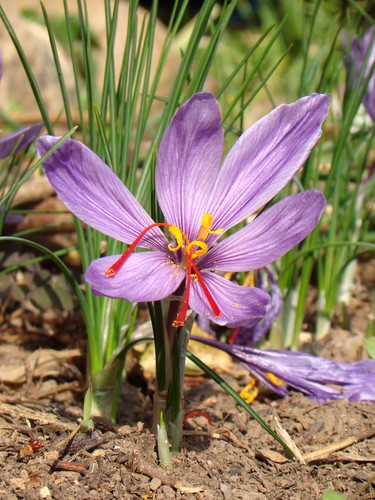
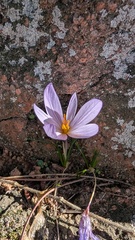

Saffron crocus (Crocus sativus) is a corm-forming geophyte in the Iridaceae family. Unknown in the wild, this cultigen probably arose through ancient selection of Crocus cartwrightianus in Greece. Its fall flowers produce three red stigmas used as saffron, while the corm lies completely dormant through summer.
Read moreSaffron crocus, Saffron and Autumn crocus
Place in full sun, with intense direct light all day long.



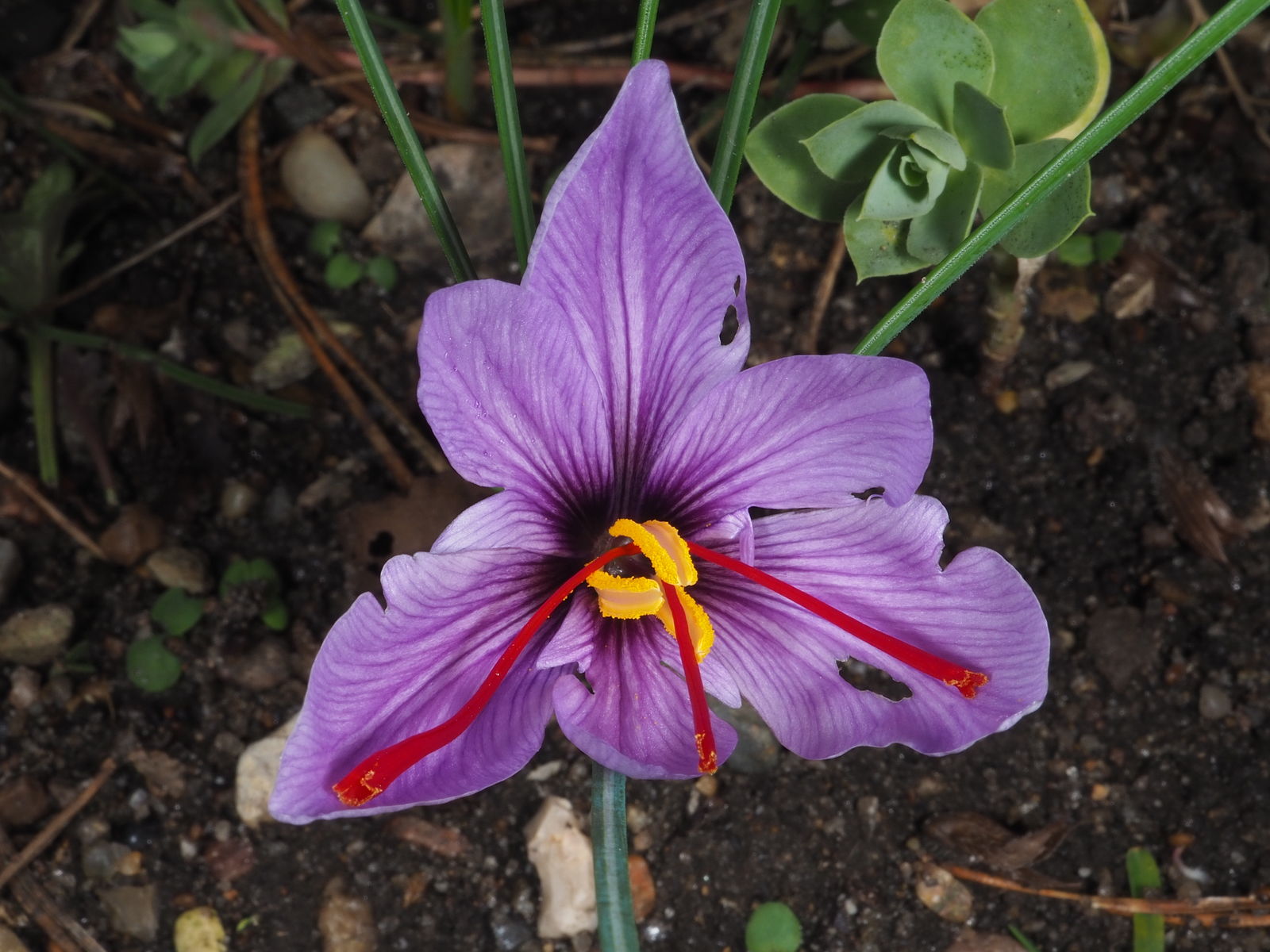
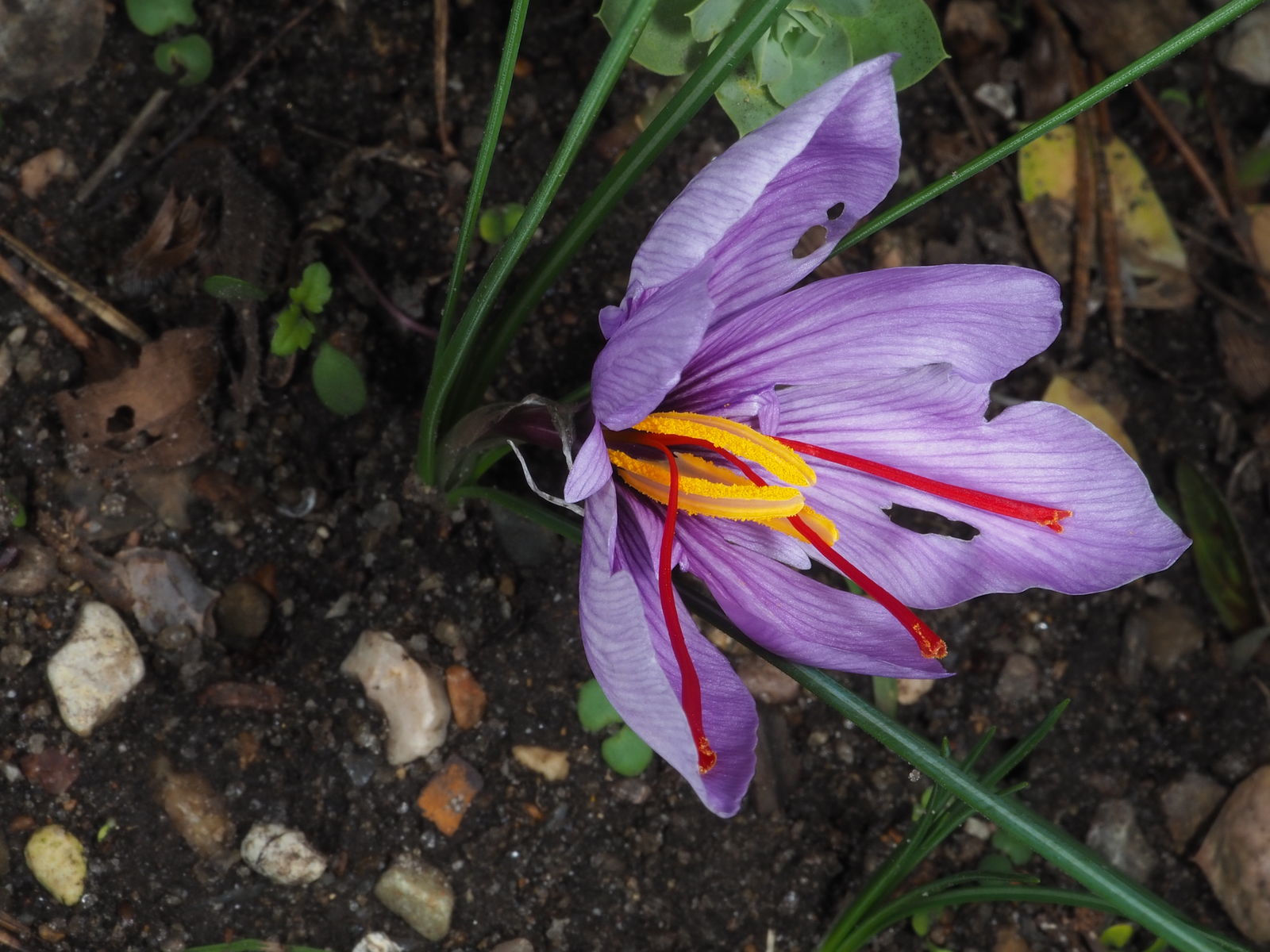
© photo
(c) Юрий Данилевский (Yuriy Danilevsky), some rights reserved (CC BY), uploaded by Юрий Данилевский (Yuriy Danilevsky) · cc-by
Andrea Monsalve · cc-by
Wikimedia Commons · CC BY-SA or Public Domain
Taken Sep 2, 2022 by Uta Groger (cc-by-sa)
Taken Oct 15, 2010 by Photoflora - Benoit BOCK (©)
Taken Jan 1, 1800 by Tela Botanica − Daniel MATHIEU (cc-by-sa)
Taken Jan 1, 1970 by Photoflora - L'Abbé COSTE (©)
© copyright of the Board of Trustees of the Royal Botanic Gardens, Kew.




Global distribution
With no wild populations, Crocus sativus has no natural range in the strict sense. Cultivation spread from the eastern Mediterranean to Iran, Spain, Kashmir, Morocco and several European regions. France has a long history of saffron production in the Gâtinais and Quercy.
- Cultivated7
- Greece
- Iran
- Spain
- India (Kashmir)
- Morocco
- Italy
- France
Hexagons: regions where the plant occurs. Green dots: native range.1
Identity
Saffron crocus (Crocus sativus L., 1753), also called saffron or autumn crocus, is a corm-forming geophyte in the Iridaceae family. Unlike most species of Crocus, it grows nowhere in the wild. It is a cultigen, probably derived from ancient selection of Crocus cartwrightianus in Greece. 1 7
The epithet sativus means “cultivated,” reflecting its horticultural origin. Each flower bears only three red stigmas, picked by hand and dried to make saffron. This labor explains why saffron remains the world’s most expensive spice by weight. 8
Recognition
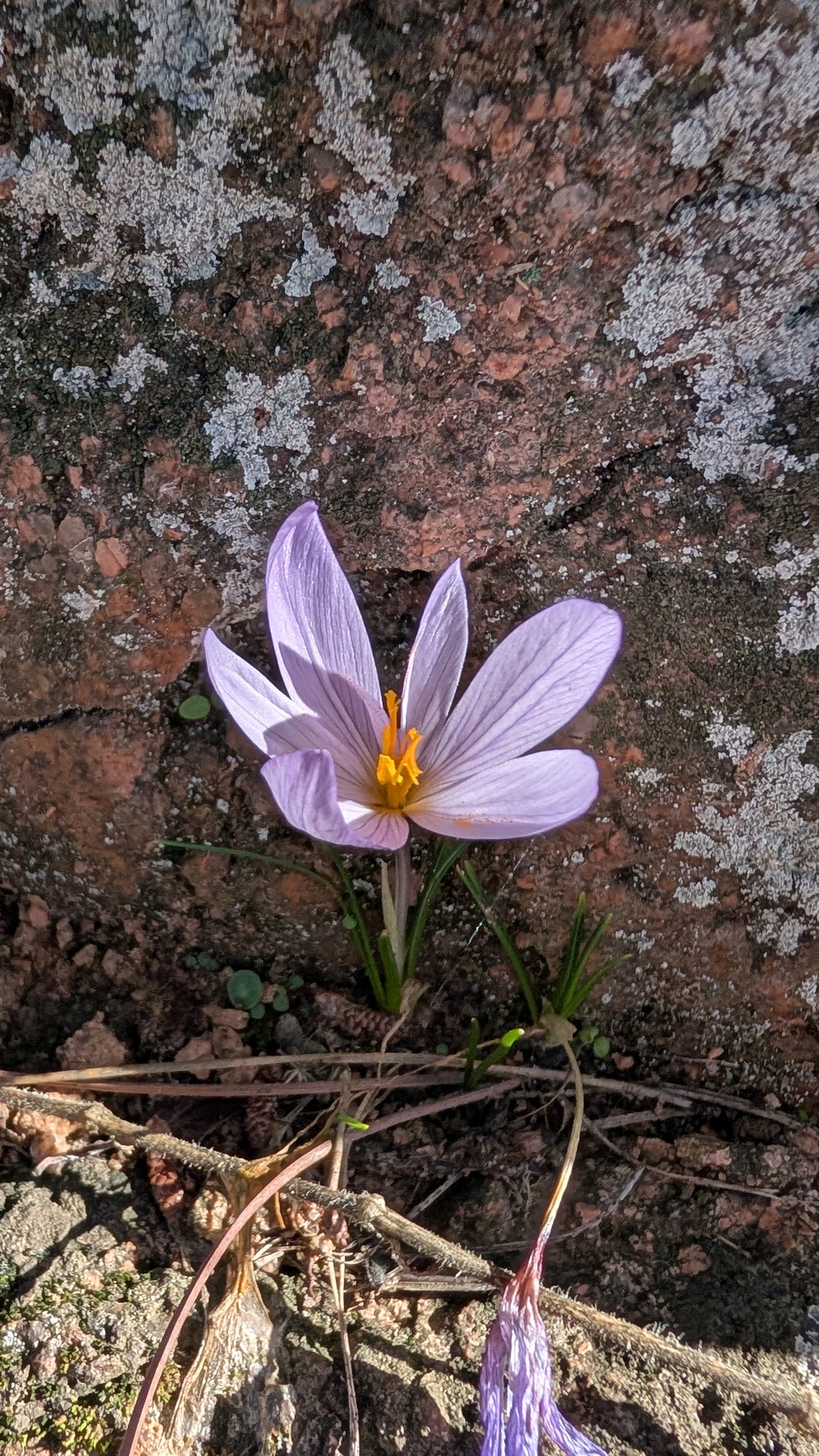
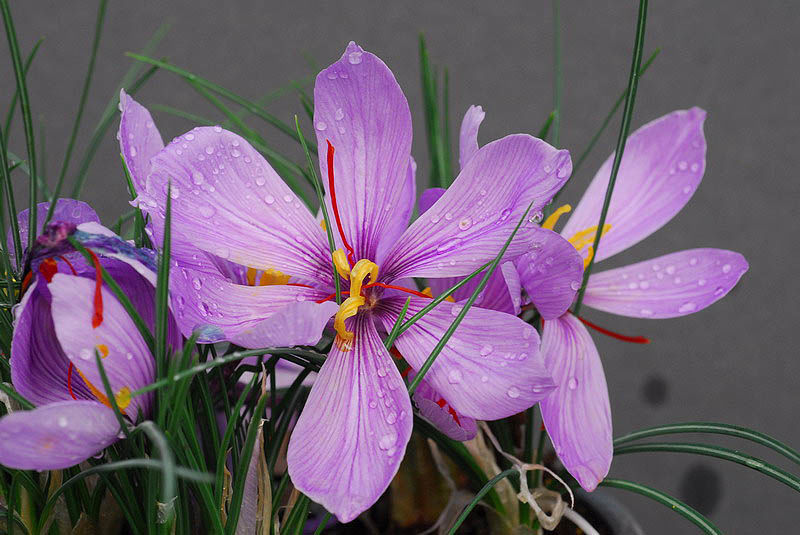
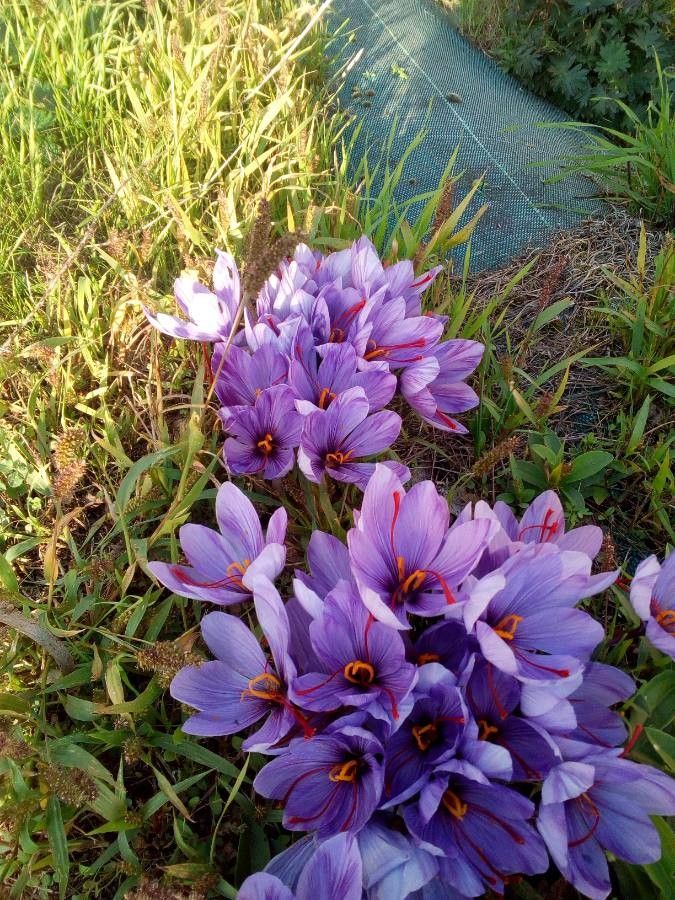
A violet to lilac cup opens at ground level with no visible stem, sometimes veined in darker mauve. Three yellow stamens surround a single style divided into three orange-red stigmas, conspicuously longer than the petals. 2 3
Narrow, linear, dark green leaves with a paler central stripe emerge with the flowers or just afterward, then persist until the following spring. The whole plant rarely exceeds 10–15 cm (4–6 in) in height. 5 3
Below ground, the storage organ is a flattened brown corm enclosed in fibrous tunics, rather than a bulb made of overlapping scales. Each corm develops small cormlets around it, the species’ only truly reliable means of propagation. 4
Useful taxonomy
Sterility defines Crocus sativus: this triploid has 24 chromosomes in three sets that cannot pair correctly during meiosis. It cannot form viable seed, which explains its dependence on corm division through millennia of cultivation. 7
Revisions of the genus have left several synonyms in use:
- Crocus sativus subsp. cartwrightianus (Herb.) K.Richt., historical taxonomic name
- Crocus sativus var. cashmerianus Royle
- Crocus sativus var. officinalis L.
- Crocus sativus subsp. pallasii (Maw) K.Richt.
The best-documented account of cultivated saffron’s origin links it to Crocus cartwrightianus, a wild species from Crete and mainland Greece. The accepted scientific name nevertheless remains Crocus sativus L. 1 7
Habitat and cultivation
Without wild populations, Crocus sativus has no natural range in the strict sense. Cultivation spread from the eastern Mediterranean to Iran, Spain, Kashmir, Morocco and several European regions. France historically produced saffron in the Gâtinais and Quercy. 8 7
Saffron crocus needs well-drained chalky or sandy soil in full sun, avoiding clay and waterlogging. Overly rich soil reduces production: the best harvests come from poor, stony ground. 4 2
Plant the corms 10 cm (4 in) deep and 10 cm (4 in) apart in late summer, before fall growth resumes. A corm stays productive for 3–5 years before it needs dividing. 7 2
Life cycle and saffron harvest
Summer passes with the corm dormant underground, sheltered from the heat, until the first fall rains awaken it. Flowers and leaves emerge almost together during a brief flowering window, often just two weeks in early to mid-fall. 3 5
Individual flowers remain open for only one to a few days. Their three stigmas must be picked by hand each morning before they wilt. Yield is tiny compared with the labor involved: 50,000–75,000 flowers produce about 450 g (1 lb) of dried saffron. 7 5
After flowering, the leaves persist and continue feeding the corm. They yellow and disappear the following spring, signaling the start of summer dormancy. 3
Quickly dried after picking, the stigmas keep for about 12 months in an airtight container away from light, preserving their aroma and color. 4
Uses and risks
Saffron adds color and fragrance to rice, paella and bouillabaisse; its stigmas also supply riboflavin. The plant has a history of traditional medicinal use, now largely superseded by modern medicine. 4
Raw corms are not intended for eating. In ordinary garden use, the plant is not classified as toxic to cats or dogs. The documented risk concerns high doses of dried saffron itself: 5–10 g (0.18–0.35 oz) can cause serious problems, far beyond normal culinary amounts. 4
The dangerous look-alike is autumn crocus (Colchicum autumnale), a highly toxic plant containing colchicine that shares this common name with saffron crocus. Check the flower: Crocus sativus has three stamens and a single style; Colchicum has six stamens and three styles. 7 6
Varieties, look-alikes and related plants
A sterile clone propagated by division for centuries, Crocus sativus has no registered cultivars in the strict horticultural sense. Names such as Krokos Kozanis in Greece, Azafrán de la Mancha in Spain and strains from Kashmir identify production regions rather than distinct botanical varieties. 8
Several fall-flowering ornamentals sold under the general name “autumn crocus” do not yield usable saffron and must not be confused with Crocus sativus. Colchicum remains the serious hazard among these look-alikes: its toxicity is unlike that of the other fall geophytes discussed here. 7
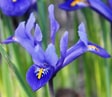
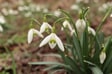
Small garden geophytes such as Iris reticulata, Galanthus nivalis and Narcissus pseudonarcissus sometimes share a bed, but flower in different seasons. None poses a risk of confusion with saffron crocus or Colchicum. 8
Main sources
- Plants of the World Online / Kew, Crocus sativus L.
- Royal Horticultural Society, Crocus sativus details
- Missouri Botanical Garden Plant Finder, Crocus sativus
- Plants For A Future, Crocus sativus
- NC State Extension Gardener Plant Toolbox, Crocus sativus
- ASPCA, Autumn Crocus toxic plant entry
- Wikipedia EN, Crocus sativus
- Wikipedia FR, Crocus sativus
Frequently asked questions
Is saffron crocus toxic to cats and dogs?
Not in ordinary garden use. Crocus sativus is not classified as toxic to cats or dogs. The documented risk involves very high doses of dried saffron itself, far beyond the quantities encountered in a garden.
Can saffron crocus be confused with autumn crocus?
Yes, and this is the most dangerous confusion. Colchicum autumnale is highly toxic and flowers in the same season. Check the flower: saffron crocus has three stamens and one style, while Colchicum has six stamens and three styles.
Why is saffron so expensive?
Each flower bears only three stigmas, picked individually by hand each morning over a flowering period of about two weeks. Between 50,000 and 75,000 flowers yield about 450 g (1 lb) of dried saffron.
How do you plant and divide saffron crocus corms?
Plant corms in late summer, 10 cm (4 in) deep and 10 cm (4 in) apart, in well-drained soil in full sun. A corm remains productive for 3–5 years before division during summer dormancy.
Does saffron crocus produce seeds?
No, or only extremely rarely. It is a sterile triploid that cannot form viable seed. Propagation relies entirely on dividing the small cormlets that develop around the parent corm.
When should saffron stigmas be harvested?
Harvest each morning during the brief fall flowering period, before the flowers wilt. Separate the three red stigmas and dry them quickly to preserve their aroma and color.
Can saffron crocus survive winter outdoors?
Yes. The corm is hardy to about −15 to −20 °C (5 to −4 °F) in well-drained soil. Excess summer moisture, rather than winter cold, is usually the greater threat.
Similar plants
If you are unsure about a plant’s toxicity, ask a botanist or veterinarian for advice.