
netted iris (Iris reticulata, )
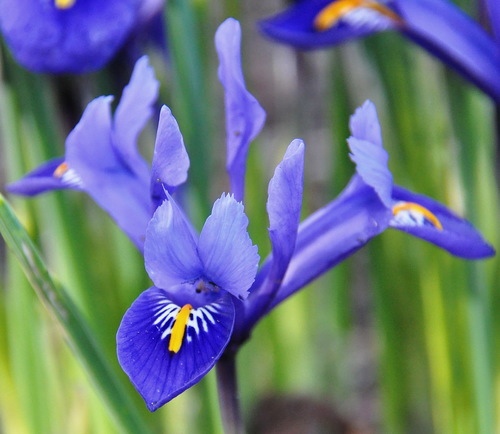
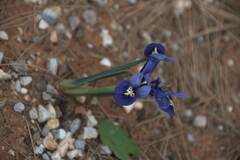
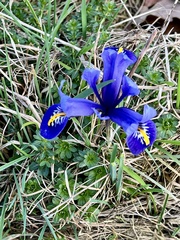
Netted iris (Iris reticulata M.Bieb.) is a small bulbous member of the Iridaceae, native to the Caucasus and western Asia. It flowers very early, often in February and March in Northern Hemisphere temperate gardens, before its leaves elongate fully. The bulbs then enter dry summer dormancy.
Read morenetted iris, reticulated iris, winter iris and early bulbous iris
Place in full sun, with intense direct light all day long.
Full sun in flower; partial shade from deciduous trees tolerated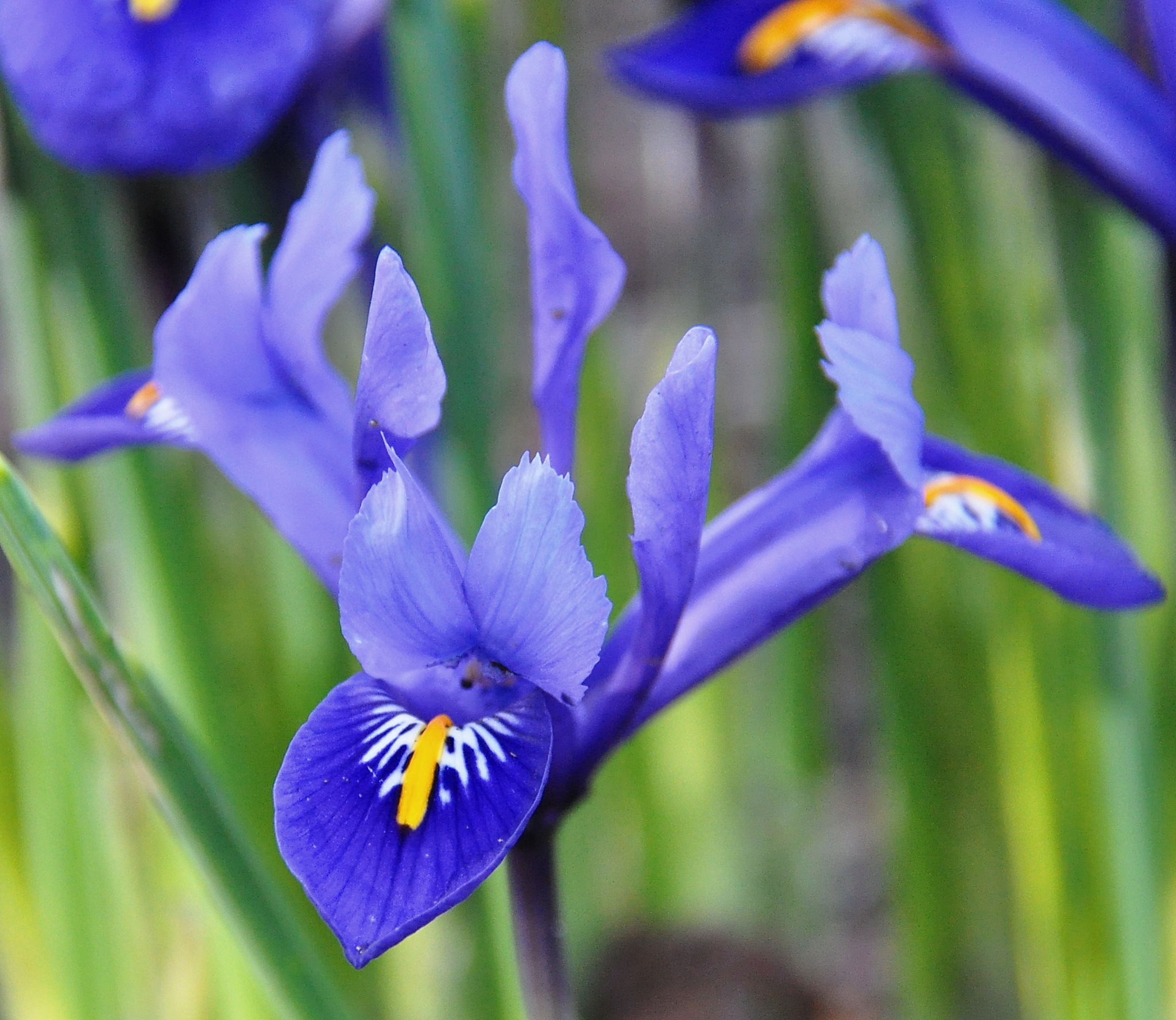


© photo
(c) Lotus Johnson, some rights reserved (CC BY-NC) · cc-by-nc
Felicia Seichter · cc0
Petr Harant · cc-by
Taken Mar 13, 2021 by Rico Mende (cc-by-sa)
© copyright of the Board of Trustees of the Royal Botanic Gardens, Kew.


Global distribution
POWO/WCVP places the native range from central and eastern Turkey to Iran and Turkmenistan, with native records also for Iraq, the North Caucasus and Transcaucasia. GBIF confirms the name in its Backbone Taxonomy. In France, it is treated as a cultivated garden plant, with no invasive classification established in the consulted references.
- Native6
- Introduced2
- Türkiye
- Iran
- Iraq
- North Caucasus
- Transcaucasia
- Turkmenistan
- Germany
- Western Himalayas
Hexagons: regions where the plant occurs. Green dots: native range.1
Identity
A fibrous mesh around the bulb gives the netted iris, Iris reticulata M.Bieb., its name. This accepted species belongs to the Iridaceae. POWO/Kew links its publication to Marschall von Bieberstein’s Flora Taurico-Caucasica in 1808 and describes a bulbous geophyte of the temperate biome. 1 2
The net belongs to the dry bulb coat, rather than to the flower. The alternative name reticulated iris describes the same mesh-like tunic. This underground feature separates the plant from large rhizomatous irises, which need different planting depths and water management. 2 3
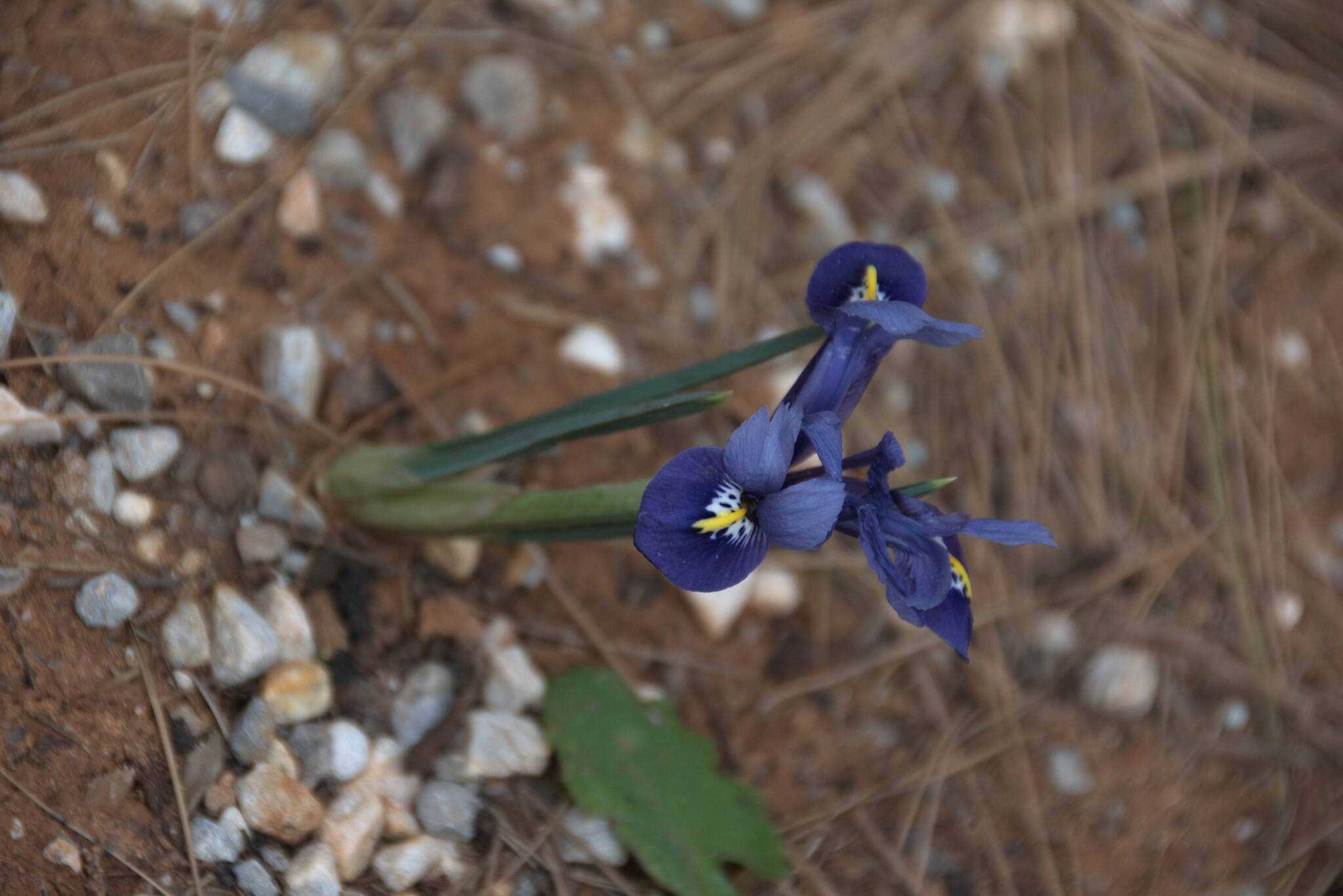
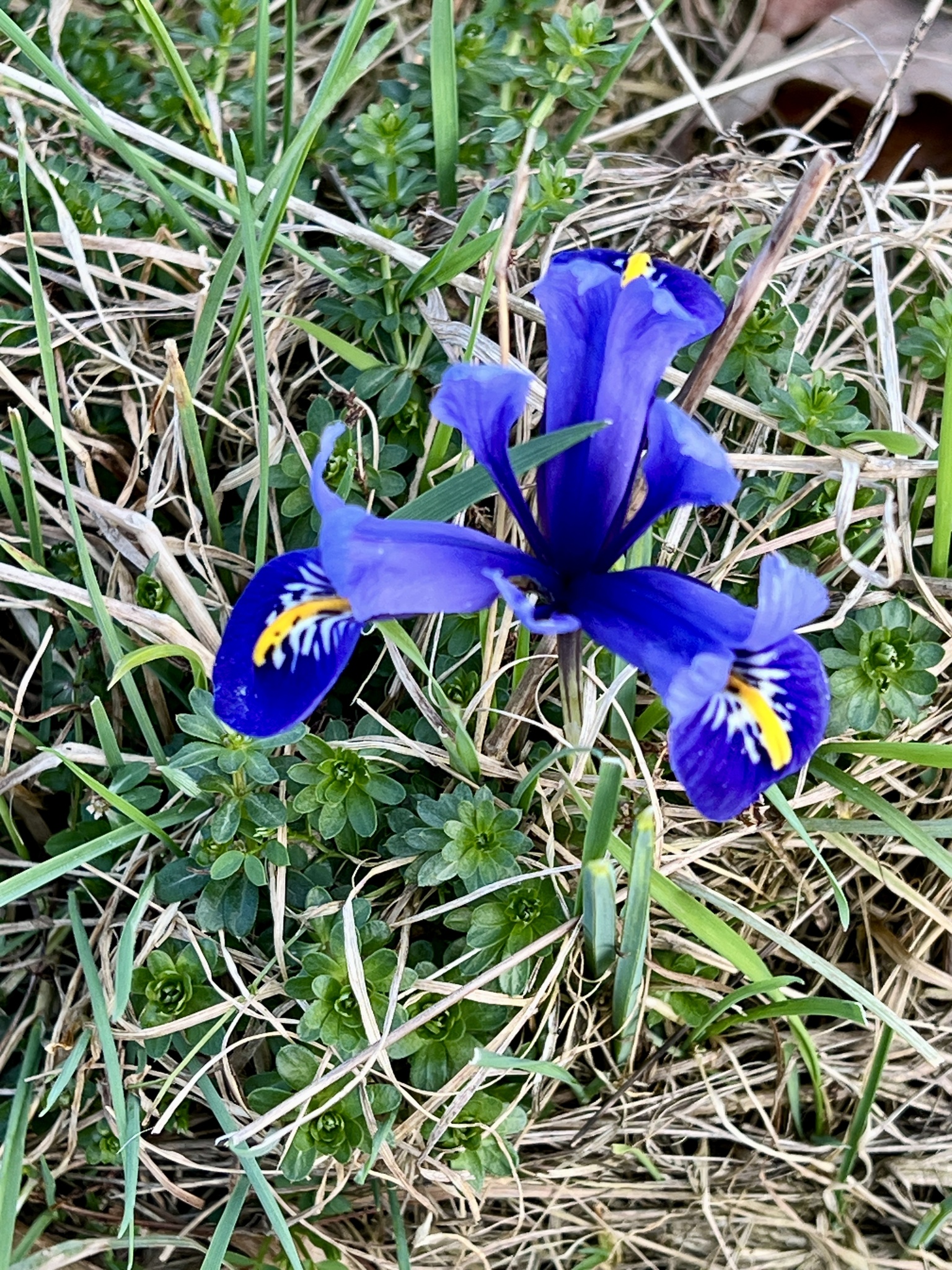
It is best known for flowering in late winter. RHS calls it an early bulbous iris: low-growing, scented and violet to purple, with yellow markings on the outer flower segments. In temperate gardens it can appear well before the larger border irises that flower in late spring and early summer. 4 5
Recognition
The plant is tiny at flowering. WFO describes a height of 7–17 cm (2.8–6.7 in) and a bulb covered by a netted fibrous tunic. One to three leaves arise from each bulb; initially short, they can lengthen to about 30 cm (12 in) after flowering. 2
Usually a single flower appears. Its perianth ranges from pale blue through violet and purple, with a darker zone and yellow signal on the outer falls. RHS describes fragrant, deep violet-purple flowers up to about 8 cm (3 in) across, on a plant around 15 cm (6 in) tall. 2 4
The leaves of Reticulata-group irises are narrow, stiff and almost square in cross-section. That combination helps distinguish them from crocuses, which can share their low stature and flowering season. Look for three drooping and three upright iris segments, a netted bulb and leaves that continue growing after the flower fades. 6 2
Taxonomy and the Reticulata group
The accepted botanical name is Iris reticulata M.Bieb. POWO lists homotypic synonyms including Iridodictyum reticulatum, Neubeckia reticulata and Xiphion reticulatum. Such names occur in specialist books and older catalogs but do not replace the accepted binomial used here. 1 3
POWO also records accepted infraspecific taxa, including Iris reticulata subsp. reticulata, subsp. isikgunerae, subsp. kurdica and subsp. selahattinii. For gardeners, the distinction matters chiefly because the botanical species is narrower than the broad horticultural Reticulata group. 1
RHS describes the Reticulata group as small bulbous irises with narrow leaves and solitary flowers, often blue, violet or yellow in early spring. Names such as 'Katharine Hodgkin', 'Harmony', 'J. S. Dijt', 'Pauline' and 'George' circulate within that group. They are cultivar or hybrid names and do not always indicate pure Iris reticulata. 6 5
Habitat and distribution
Central and eastern Turkey through Iran and Turkmenistan form the broad native range given by POWO/Kew. Its detailed records include Iran, Iraq, the North Caucasus, Transcaucasia, Turkmenistan and Türkiye. WFO gives the same broad native regions and records an introduction in the western Himalayas. 1 2
GBIF retains the taxon in its Backbone Taxonomy and records the English common names netted iris and winter iris. In metropolitan France, it is a cultivated horticultural plant rather than a native species, with no national invasive classification established in the consulted references. 3 1
Its origins help explain its garden needs. It tolerates cold, but heavy soil that remains wet during dormancy threatens the bulbs. A rock garden, gritty container, exceptionally well-drained border or deciduous-tree edge that dries after spring is a better setting than a flower bed watered through summer. 4 5
Life cycle, growing and summer drainage
The cycle is brief and distinct. Plant bulbs in fall so they root in the cool season, flower in late winter, then replenish the bulb through their leaves before the foliage yellows. RHS gives February–March flowering in its UK context, recommends sun and drainage, and notes that planting up to 15 cm (6 in) deep can improve repeat flowering. Follow the corresponding seasons locally. 5
During growth, keep the soil moist rather than saturated. A guide is 5–15 mm (0.2–0.6 in) per week if winter or early spring is dry; natural rainfall may already meet this need in many temperate gardens, including France. Once the leaves yellow, keep the bulb relatively dry until growth resumes in fall. 5 4
RHS cautions against treating Iris reticulata as a very long-term plant, especially where soil is not perfectly drained. Failure after one or two flowerings can reflect a wet summer, a pot without drainage, shallow planting or foliage cut off before it has replenished the bulb, rather than inadequate cold hardiness alone. 5
Separate bulbs or offsets in early fall. Seed can also be sown in pots in a cold frame, but takes longer to produce flowering plants and does not always reproduce cultivars faithfully. Division is the more direct way to retain a particular garden selection. 4 5
Uses and toxicity
Ornamental uses include rock gardens, outdoor pots, alpine troughs, small-bulb beds and low late-winter borders. Missouri Botanical Garden included Iris reticulata in its 2018 Plants of Merit list, reflecting its value in well-drained temperate gardens. 10 4
Keep the toxicity warning clear and proportionate. RHS marks the plant as harmful if eaten and advises gloves when handling it. The ASPCA lists Iris species as toxic to dogs, cats and horses, with salivation, vomiting, lethargy and diarrhea. Although the genus account identifies the highest concentrations in rhizomes, this bulbous species calls for keeping all storage tissues out of reach. 4 8
University of Utah Poison Control describes the genus as a stomach irritant. NC State also classifies irises as poisonous and includes contact dermatitis among their attributes. Do not eat the plant, prevent animals from digging up bulbs and wear gloves if your skin is readily irritated. 9 7
Cultivars, lookalikes and buying plants
Packets of reticulated irises do not always contain straightforward wild-species selections. RHS treats 'Katharine Hodgkin' as a Reticulata-group iris with large, pale blue, veined flowers and a yellow signal. Its older horticultural synonyms illustrate how commercial labels can bring together related species, hybrids and group names. 6
The main lookalikes fall into three groups: late-winter crocuses, other Reticulata-group bulbous irises such as Iris danfordiae or Iris histrioides, and taller, often later-flowering Dutch irises. Check the full name, expected height, flowering period, planting depth and summer drainage needs when buying. 5 4
Good bulbs should feel firm and dry, with a recognizable tunic and no smell of rot. Soft, marked or badly shriveled bulbs may flower poorly once and then disappear. For container growing, choose a terracotta pot with drainage holes and a gritty mix rather than a decorative bowl that cannot release excess water. 5
Main sources
- Plants of the World Online / Kew, Iris reticulata M.Bieb.
- World Flora Online, Iris reticulata M.Bieb.
- GBIF Backbone Taxonomy, Iris reticulata M.Bieb.
- Royal Horticultural Society, Iris reticulata early bulbous iris
- Royal Horticultural Society, How to grow bulb irises
- Royal Horticultural Society, Iris 'Katharine Hodgkin' (Reticulata)
- NC State Extension Gardener Plant Toolbox, Iris
- ASPCA, Iris toxicity entry
- University of Utah Poison Control, Iris
- Missouri Botanical Garden, Plants of Merit list including Iris reticulata
Frequently asked questions
Does netted iris have a rhizome?
No. Iris reticulata grows from a true bulb. Most large garden bearded irises are rhizomatous, which changes planting depth and water management.
When does netted iris flower?
RHS places flowering in February and March in its UK seasonal context. More generally, it is among the earliest irises of late winter and early spring, with timing varying by climate and position.
Why do my netted irises fail to return?
The commonest cause is inadequate drainage, particularly after flowering and through summer. RHS advises against treating them as very long-lived plants where drainage is less than excellent.
Should I water netted iris in summer?
Usually not. Watering is concentrated in the local fall, winter and early spring if the soil is dry; summer dormancy calls for a relatively dry growing medium.
Is netted iris toxic to animals?
Yes, as a precaution. The ASPCA lists Iris species as toxic to dogs, cats and horses, with digestive signs after ingestion. Keep the bulbs out of reach.
Can I grow netted iris indoors?
Only as a brief flowering display in a cool, bright room. To return in later years, the bulb needs an outdoor cycle with light, seasonal cold and dry summer dormancy.
How does netted iris differ from a crocus?
A crocus lacks the iris flower’s three drooping outer segments and three upright inner segments. Iris reticulata also has a netted bulb coat and very narrow leaves that continue elongating after flowering.
Similar plants
If you are unsure about a plant’s toxicity, ask a botanist or veterinarian for advice.