
Tulip (Tulipa, )


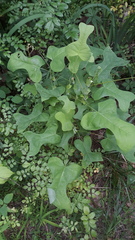
Tulip (Tulipa) is a genus of bulbous plants in the Liliaceae family, known for upright, cup-shaped spring flowers. It includes about 75 to 100 wild species, mainly from Central Asia and Türkiye, and thousands of garden cultivars in 15 horticultural divisions. Tulips were at the center of the famous Dutch tulip mania of the seventeenth century.
Read moreTulip, Species tulip, Garden tulip and Parrot tulip


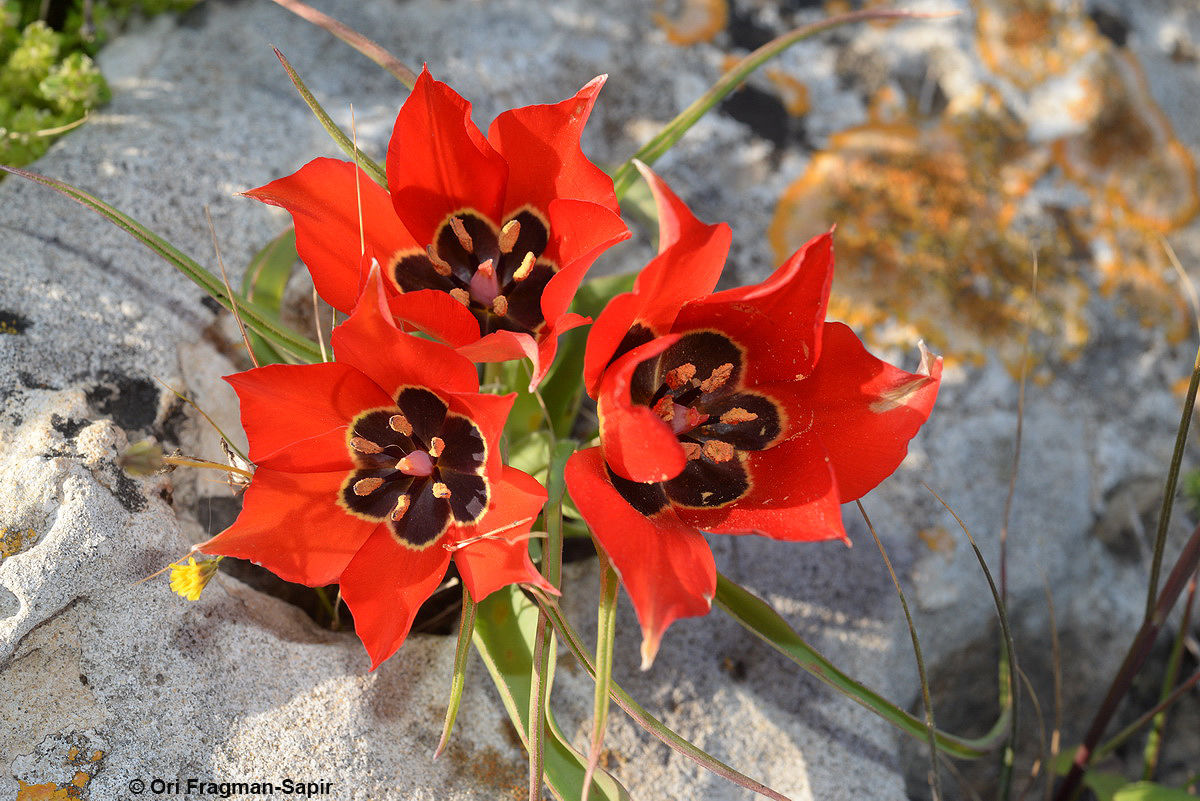
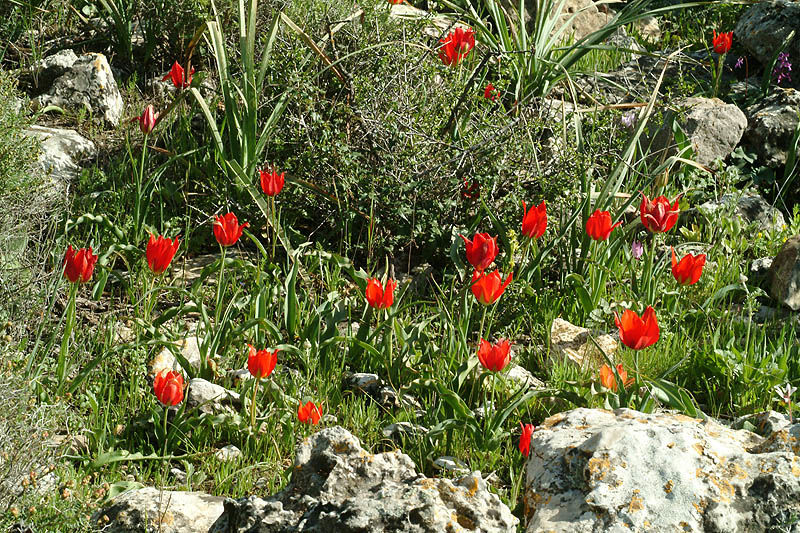

© photo
Alexander Dubynin · cc-by
Michael J. Papay · cc-by
Lindsey G. · cc-by
Taken Apr 18, 2020 by mohammad fazel dehkordi (cc-by-sa)
Taken Sep 7, 2022 by M. Hedayat (cc-by-sa)
Taken Apr 21, 2020 by Kienast Pierre (cc-by-sa)
Taken Jan 1, 1970 by Photoflora - L'Abbé COSTE (©)
© copyright of the Board of Trustees of the Royal Botanic Gardens, Kew.


Global distribution
Tulipa is native to southeastern and eastern Europe, the Mediterranean region and Asia, extending to Mongolia, with a center of diversity in Central Asia and Türkiye depending on the species. Temperate regions where garden cultivars are planted are distinct from this wild native range.
- Native4
- Türkiye
- Iran
- Kazakhstan
- Greece
Hexagons: regions where the plant occurs. Green dots: native range.1
Identity
Tulip (Tulipa L., 1753) is a genus of bulbous plants in the Liliaceae family and Liliales order. Its upright, cup-shaped flowers open at the top of a stem in spring. Linnaeus described the genus in 1753; it contains roughly 75 to 100 wild species, mainly native to Central Asia and Türkiye. 1 4
Beyond these wild species, breeders have produced thousands of cultivars arranged in 15 divisions, from tall bedding tulips to parrot forms with fringed petals. Tulips also have a place in economic history: they were the focus of seventeenth-century Dutch tulip mania. 4 2
Recognition
An upright cup of six free tepals is the clearest floral clue, usually borne alone on a bare stem. Cultivar colors range from bright red and yellow through pink, orange, near-black purple and white, sometimes with variegated or fringed petals. 3 5
A few broad, fleshy leaves sheath the stem and cluster near its base, often with a blue-green cast. The flower has six stamens and a three-chambered ovary, characteristic features of Liliaceae. Height varies greatly: a small species tulip may reach 15 cm (6 in), while tall bedding forms reach 70 cm (28 in). 3 5
Beneath the soil sits a true bulb with fleshy scales, rather than a solid corm like that of a crocus. After flowering, each bulb renews itself and produces small offset bulbs around its edge, allowing the plant to multiply. 1 3
Useful taxonomy
Linnaeus established Tulipa in 1753, and it remains in Liliaceae alongside lilies and fritillaries. Botanists recognize about 75 to 100 wild species, with their center of diversity in Central Asia and Türkiye. The Netherlands is chiefly a center for growing cultivars rather than the origin of that diversity. 1 4
Several species and groups help explain garden labels:
- Tulipa gesneriana, the garden tulip, lies behind many cultivars;
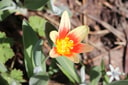
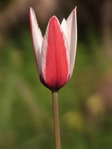
- Tulipa clusiana is a slender, bicolored species valued in rock gardens;
- Tulipa tarda is a small, naturalizing species with yellow star-shaped flowers;
- horticultural groups such as Triumph, Darwin Hybrid and Parrot classify cultivars by flower form and flowering season.
The accepted genus name, Tulipa, remains the stable reference: divisions and cultivar names describe garden selections rather than separate botanical species. A species tulip generally has a smaller stature and a greater ability to naturalize than the large garden hybrids. 1 3
Habitat and range
Wild Tulipa species come from southeastern and eastern Europe, the Mediterranean region and Asia, with the genus extending east to Mongolia. Central Asian and Turkish steppes and mountains hold much of its diversity. Mountain meadows, rocky slopes and well-drained stony ground are typical habitats. 1 4
Full sun and well-drained soil suit these plants, which are adapted to strongly contrasting seasons. Growth and flowering occupy a short favorable period, followed by summer dormancy, with the bulb sheltered underground during dry heat. This ecology helps explain both their hardiness and their sensitivity to waterlogged soil. 5 3
Outside the native range, garden tulip displays result from cultivation. In the Netherlands, France and the United States, bulbs are planted in fall for spring flowers; the Netherlands supports a global industry in bulbs and cut flowers. Only some species tulips naturalize persistently in temperate conditions. 2 4
Life cycle and reproduction
A hardy bulbous perennial, the tulip fits its growth into a short favorable season. Fall-planted bulbs root before winter and flower in spring; their leaves then replenish reserves before yellowing and dying back for summer. Winter cold is needed to trigger flowering, which makes cultivation more difficult in mild climates. Follow local seasons rather than a fixed calendar across hemispheres. 5 3
Offset division is the simplest means of propagation. Small daughter bulbs form around each parent bulb and can be separated during summer dormancy, then replanted in fall. Division helps maintain vigorous displays, since flowering in large cultivars often declines after one or two seasons. 3 2
Growing species tulips from seed is possible but slow: seedlings take several years to flower. For garden cultivars, separating offsets and regularly replacing bulbs remain the usual methods. Species tulips may also self-seed and naturalize where the soil suits them. 5 2
Uses and risks
Beds, borders and containers are familiar settings for tulips, while smaller species also suit rock gardens. They provide clear spring color and are major cut flowers, supporting seasonal bouquets and a worldwide horticultural industry centered on the Netherlands. In the seventeenth-century Dutch Republic, tulip mania became the first documented speculative bubble, with prices collapsing in 1637. 2 4
Animal safety requires care: tulips are toxic to cats, dogs and horses, according to the ASPCA. They contain tulipalin A and B and allergenic glycosides, concentrated in the bulb. Ingestion, especially of bulbs, causes digestive upset, excessive salivation and lethargy. Keep bulbs and flowers out of reach of animals and young children. 6 5
Repeated bulb handling can also cause contact dermatitis, known among horticulturists as “tulip fingers,” through exposure to the same allergenic substances. Wearing gloves during planting is usually enough to help prevent it. 6 4
Varieties, look-alikes and related plants
Garden selections are sold by horticultural group and cultivar. Triumph supplies many midseason tulips, Darwin Hybrids provide large, lasting bedding flowers, and the parrot tulip has fringed, marbled petals. Species such as Tulipa clusiana and Tulipa tarda form a distinct set of smaller tulips better suited to naturalizing. 3 2
Other spring bulbs can cause confusion:
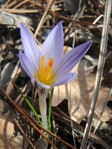
- Crocus is shorter, grows from a corm and flowers earlier;
- Narcissus is another spring bulb, but has a very different flower;
- Tulipa gesneriana is the garden tulip species associated with many cultivars.
To confirm a tulip, combine the true bulb with fleshy scales, a cup-shaped flower with six tepals, and fleshy blue-green leaves. Together these features distinguish it from a crocus or another early spring bulb. 4 5
Main sources
Frequently asked questions
Are tulips toxic to cats and dogs?
Yes. The ASPCA lists tulips as toxic to cats, dogs and horses. The bulb contains the highest concentration of tulipalin; swallowing it can cause digestive upset, excessive salivation and lethargy.
How do tulips differ from crocuses?
Tulips grow from true bulbs with fleshy scales and usually carry an upright cup-shaped flower with six tepals on a taller stem, flowering later. Crocuses are shorter, grow from solid corms and belong to the Iridaceae family.
When should I plant tulip bulbs?
Plant bulbs in fall, 10–15 cm (4–6 in) deep, in well-drained soil in sun. They flower the following spring after receiving the winter cold needed for flowering.
Do tulips come back every year?
Botanically, tulips are bulbous perennials, but flowering in large cultivars often weakens from the second year. Species tulips naturalize more readily and tend to return more reliably.
Why have my tulips stopped flowering?
Declining flowering often results from an exhausted bulb, leaves cut off too early or too much shade. Feed after flowering, let the foliage turn yellow and replace bulbs when needed.
What was tulip mania?
Tulip mania was a speculative bubble in the seventeenth-century Dutch Republic. Rare bulbs reached extraordinary prices before the market collapsed in 1637; it is regarded as the first documented financial bubble.
Species in this genus
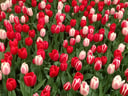
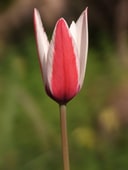
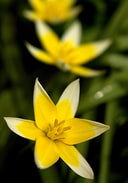
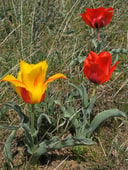

Similar plants

If you are unsure about a plant’s toxicity, ask a botanist or veterinarian for advice.