
Greig's tulip (Tulipa greigii, )
 +10
© photo
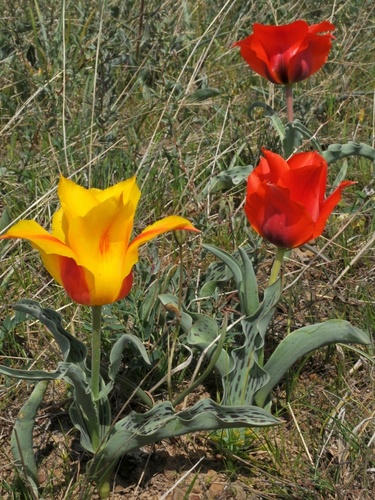
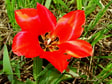
- photo 1 — (c) vladimir_epiktetov, some rights reserved (CC BY-NC), uploaded by vladimir_epiktetov · cc-by-nc · iNaturalist Taxon
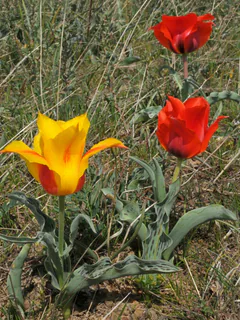
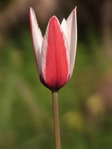
- photo 2 — (c) vladimir_epiktetov, some rights reserved (CC BY-NC), uploaded by vladimir_epiktetov · cc-by-nc · iNaturalist Taxon
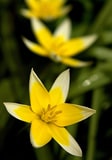
- photo 3 — Wikimedia Commons · CC BY-SA or Public Domain · Wikimedia Commons
Tulipa greigii Regel is a bulbous tulip in the Liliaceae family, native to Central Asia and Iran according to POWO. In gardens it is best known through the Greigii group: low-growing tulips with large cup-shaped flowers, often red, yellow or bicolored, and green leaves marked with purple or brown. It needs full sun, clear drainage and a relatively dry summer rest.
Read moreGreig's tulip and Greigii tulip
Allow a few hours of direct sun per day, preferably morning or evening.
Full sun, sheltered from strong winds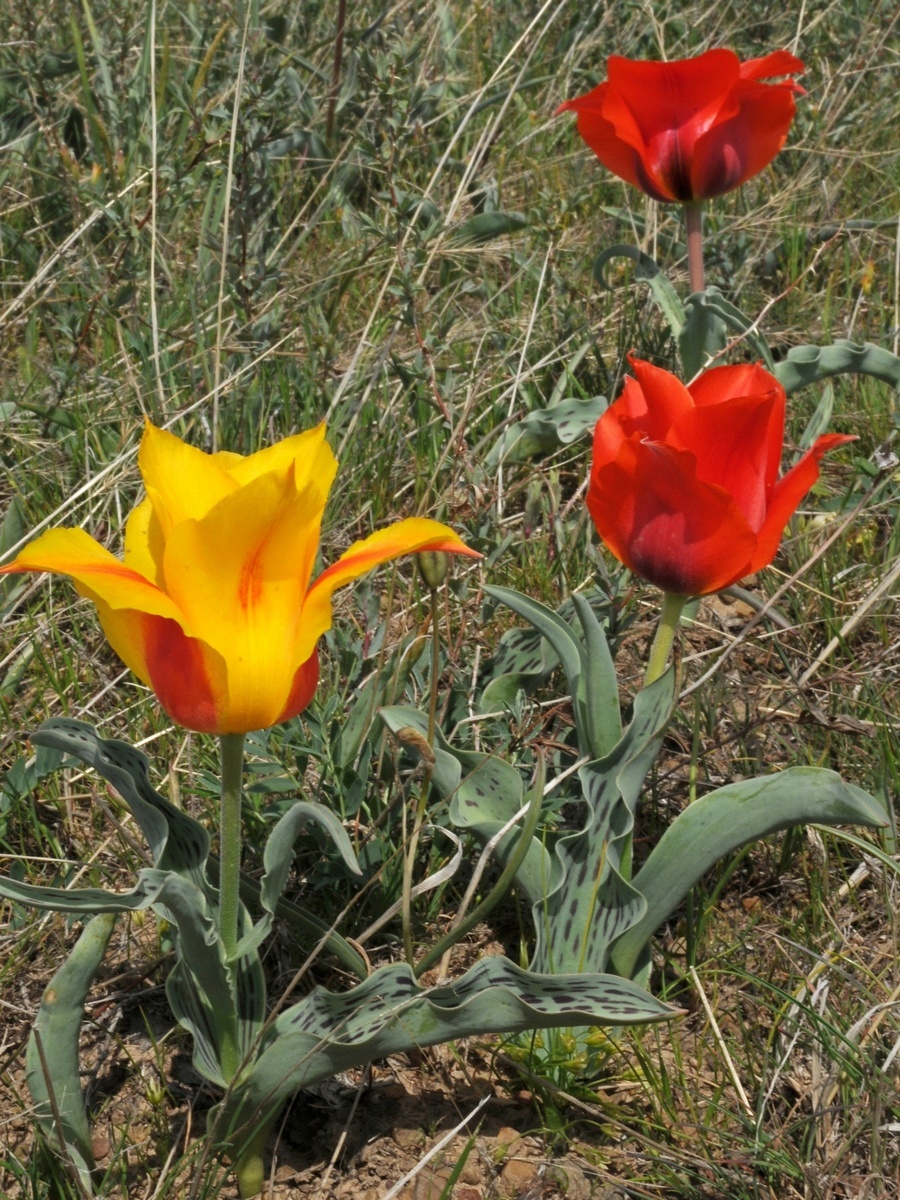

© photo
(c) vladimir_epiktetov, some rights reserved (CC BY-NC), uploaded by vladimir_epiktetov · cc-by-nc
Wikimedia Commons · CC BY-SA or Public Domain


Global distribution
POWO accepts Tulipa greigii Regel and lists its native range in Iran, Kazakhstan, Kyrgyzstan, Tajikistan and Uzbekistan. Kazakh treatments describe foothill and mountain sites on clay or stony slopes. No invasive status is retained for France, where it is primarily a cultivated ornamental bulb.
- Native5
- Iran
- Kazakhstan
- Kyrgyzstan
- Tajikistan
- Uzbekistan
Hexagons: regions where the plant occurs. Green dots: native range.1
Identity
Tulipa greigii Regel, 1873, is a species of Tulipa in the Liliaceae family. POWO/Kew accepts this name and places its native range in Iran, Kazakhstan, Kyrgyzstan, Tajikistan and Uzbekistan. 1
GBIF records species rank, the authority Regel and publication in Gartenflora in 1873. EPPO summarizes its horticultural use as a Central and western Asian plant cultivated as an ornamental bulb, with numerous cultivars. 2 3
The names Greig's tulip and Greigii tulip need two levels of interpretation. They can refer to the botanical species T. greigii, but are also used for Greigii tulips, a horticultural group derived from or closely related to it. The distinction avoids promising that a nursery cultivar will behave exactly like a wild population. 8 11
Recognition
As a bulbous geophyte, Tulipa greigii loses its visible growth after spring while the bulb remains dormant. Cultivated plants are generally low, often 15–30 cm (6–12 in), but ranges differ with species material, clone or cultivar. NC State gives about 15–45 cm (6–18 in), while Cambridge mentions plants reaching 50 cm (20 in). 7 6
Broad, marked leaves are among the strongest clues. They are green, alternate or stem-clasping, often with purple to reddish-brown spots, streaks or marbling on the upper surface. Cambridge emphasizes the broad striped leaves; RHS defines the Greigii group by leaves usually marked with purple or brown. 6 8
Flowers are large relative to plant height. They are solitary, cup-shaped or bowl-shaped and open wider in sunshine. Group colors mainly range from yellow to red, sometimes with contrasting margins; modern cultivars add pink, orange, white or bicolors. RHS describes 'Red Riding Hood' as compact with large red flowers and a dark base. 8 11
Seed production is usually secondary in ornamental planting. A capsule may form after flowering, but gardeners often remove the spent flower to limit seed expenditure and let foliage replenish the bulb. 9 11
Taxonomy and the Greigii group
For botanical identity, retain Tulipa greigii Regel. POWO lists synonyms including Tulipa karatavica, Tulipa krauseana and Tulipa mogoltavica, while GBIF traces the name to Gartenflora 22: 290 in 1873. 1 2
Kubentayev and colleagues explain that Regel first associated the plant with T. altaica var. karatavica, then described it as a separate species in the same year. Their treatment states that the name honors S. A. Greig, president of the Russian Society of Gardeners. 4
The Greigii group is a horticultural grouping rather than a botanical rank equivalent to species. RHS characterizes it by large single bowl-shaped flowers, mainly yellow to red and often with contrasting margins, in early or mid-spring, together with marked leaves. It can include cultivars and hybrids rather than only the pure species. 8 10
Similarities with Tulipa kaufmanniana and Tulipa fosteriana readily cause confusion. NC State specifically names both among plants commonly confused with T. greigii. All three groups include low to medium-height spring tulips, sometimes with marked foliage, and feature strongly in horticultural breeding. 7
Range, habitat and conservation
Iran and four Central Asian countries form the POWO native range: Kazakhstan, Kyrgyzstan, Tajikistan and Uzbekistan. EPPO summarizes this as Central and western Asia, a familiar description in horticulture. 1 3
The Kazakh treatment in PhytoKeys, distributed through Zenodo, records T. greigii in the Chu-Ili, Karatau, Kyrgyz Alatau, Moiynkum, Trans-Ili Kungey Alatau, Turkestan and western Tian Shan ranges. It describes clay or stony slopes up to 2,400 m (7,875 ft), as well as foothill sites. 4
This ecology helps explain its growing requirements. Many specialist tulips need spring drainage and a dry summer rest. RHS recommends well-drained soil and sunshine for tulips close to wild species, in rock gardens, gravel, alpine troughs or gritty container mixes; heavy, wet summer soil creates a rot risk. 10
Conservation has more than one scale. The Kazakh treatment reports a global “Least Concern” status under IUCN 2024, alongside category III inclusion in Kazakhstan’s Red Book. Frontiers also reports a Least Concern assessment in 2022. Availability of garden bulbs does not justify collecting wild plants. 4 5
Life cycle and cultivation
Seasonal growth follows the spring-bulb pattern. Dry bulbs are planted in fall, root during the cool season, produce spring leaves and flowers, then become dormant as foliage yellows. RHS recommends fall planting at roughly two to three times the bulb’s height; its September–November guidance applies to its Northern Hemisphere setting. 9
For Greigii cultivars, RHS gives a planting depth of 10–15 cm (4–6 in) in fertile, well-drained soil, protected from excessive water and strong winds. Missouri Botanical Garden also recommends fertile, organically rich soil, moderate moisture during growth, full sun and hot, dry summers. 8 11
Water according to the season. Moist soil is enough during growth; this is not a marsh plant. Container water must drain through, never remain in a saucer. Let leaves function until they yellow after flowering; once dormancy begins, moisture mainly increases rot risk. 9 10
Naturalizing depends more on drainage than on the label. RHS notes that specialist tulips can often increase when conditions suit them. Missouri also observes that species tulips frequently perform better as perennials than many hybrids, and 'Red Riding Hood' may outlast numerous commercial hybrids. 10 11
Containers, propagation and maintenance
Containers show off its low growth, early flowers and patterned leaves. Use drainage holes, sufficient depth to cover the bulbs and a freely draining mix. For container tulips, RHS recommends well-drained potting mix and shelter during rooting. 9
Propagate a cultivar through offsets. RHS recommends lifting and separating offsets for 'Red Riding Hood'; Missouri stresses leaving foliage until yellow when growing tulips as perennials. Seed remains an option for botanical work, but takes several years and does not preserve cultivars faithfully. 8 11
Pruning needs are minimal. Remove spent flowers if seed is unwanted, but keep green leaves. The marked Greigii foliage extends visual interest after flowering while restoring the bulb’s reserves. 9 11
Pest and disease problems are typical of tulips. RHS lists slugs, aphids, stem and bulb nematodes, squirrels, tulip fire and bulb rot in poorly drained ground. NC State adds bulb mites, narcissus bulb fly, snails, rodents, deer, other rots and storage molds. 8 7
Toxicity and safety
Treat Tulipa greigii as a toxic tulip, especially its bulbs. ASPCA lists Tulipa spp. as toxic to dogs, cats and horses, with tulipalin A and B as toxic principles. Reported signs include vomiting, depression, diarrhea and excessive drooling, with the highest toxin concentrations in the bulb. 12
NC State gives a similar warning for T. greigii: low to moderate toxicity, tulipalin A and B, digestive symptoms and the greatest concentration in bulbs. Leaves are not thereby edible; the risk is especially high when an animal digs up or chews a bulb. 7
For people, RHS warns that tulips can be harmful if eaten and bulbs may cause skin allergy. ASPCApro’s spring-bulb article also describes contact dermatitis and digestive effects associated with Tulipa, with tuliposide A, tulipalin A and tulipalin B concentrated in the bulb. Gloves are a practical precaution during large planting sessions. 8 13
Where dogs, cats or horses have access, fall planting and early spring are particularly risky periods, when bulbs or young shoots attract attention. Store bulb bags, forced displays and planting debris securely as toxic material. Suspected ingestion calls for a veterinarian or animal poison service promptly. 12 13
Cultivars, look-alikes and buying bulbs
'Red Riding Hood' offers a clear reference for gardeners: RHS describes a compact plant about 20 cm (8 in) tall with marked leaves and large solitary red flowers. Missouri assigns it to hybrid Greigii division 14, with a dark basal flower blotch and 3–5 heavily striped leaves. 8 11
NC State also lists 'Cape Cod', 'Rob Verlinden' and 'Toronto' among cultivars or varieties associated with T. greigii. These are horticultural selections for color, size, habit and foliage rather than proof that a plant is the wild species. 7
Cambridge notes extensive use of T. greigii in tulip breeding, with many descendants retaining similar leaf markings. A low tulip with marked leaves may therefore belong to the Greigii group without being the pure wild species. 6
Check four things when choosing bulbs: a complete name, firm bulbs of suitable size, absence of mold and the intended use. For lasting borders or rock gardens, choose species-type or Greigii tulips with well-drained soil. For a strong first-year display, planting density matters more than promises of naturalization. 10 11
Main sources
- Plants of the World Online / Kew, Tulipa greigii Regel
- GBIF Backbone Taxonomy, Tulipa greigii Regel
- EPPO Global Database, Tulipa greigii
- Kubentayev et al. 2024, taxonomic treatment Tulipa greigii Regel
- Frontiers in Plant Science 2024, Kazakhstan tulips chloroplast genomes
- Cambridge University Botanic Garden, Tulipa greigii
- NC State Extension, Tulipa greigii
- Royal Horticultural Society, Tulipa greigii 'Red Riding Hood'
- Royal Horticultural Society, How to grow tulips
- Royal Horticultural Society, Specialist tulips
- Missouri Botanical Garden, Tulipa 'Red Riding Hood'
- ASPCA, Tulip toxicity entry
- ASPCApro / Veterinary Medicine, Spring-blooming bulbs
Frequently asked questions
Is Tulipa greigii a species tulip?
Yes, the species Tulipa greigii Regel is. Many nursery plants, however, are cultivars in the Greigii group. Distinguish the wild species, its garden descendants and trade names.
Why is foliage so important in Greigii tulips?
Broad leaves marked with purple or brown are a feature of the group. They remain decorative after flowering and help distinguish these low tulips from more conventional border tulips.
Does Tulipa greigii return every year?
It can return more reliably than many border tulips in well-drained soil, sunshine and summers without excessive moisture. Cultivars still vary: some gardeners retain them, while others replace them for seasonal displays.
When should I plant the bulbs?
Plant in fall while bulbs are dormant. RHS guides recommend about 10-15 cm (4-6 in) deep, or two to three times the bulb’s height, in fertile, well-drained soil.
Is it toxic to cats, dogs and horses?
Yes. ASPCA lists Tulipa spp. as toxic to dogs, cats and horses, with the highest concentrations in the bulb. Keep bulbs away from animals and children.
Can I grow it indoors?
Only as a temporary forced display in a cool, very bright room. Long-term survival requires an outdoor cycle with seasonal cold, full spring sun and a well-drained summer rest.
How does it differ from Tulipa kaufmanniana?
Both groups are low-growing and may have marked foliage. Kaufmanniana tulips are often called water lily tulips because some flowers open very flat; Greigii tulips tend to have large bowl-shaped flowers above marked leaves.
Similar plants
If you are unsure about a plant’s toxicity, ask a botanist or veterinarian for advice.