
Water lily tulips (Tulipa kaufmanniana, )
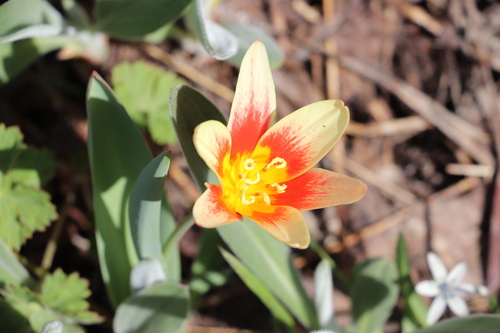

Water lily tulips (Tulipa kaufmanniana Regel) are small bulbous tulips in the Liliaceae family, native to Central Asia. In gardens they are best known through the Kaufmanniana group: very early, low-growing tulips, often bicolored, whose flowers open wide in sunshine like water lilies. They do best in full sun and well-drained soil, with a cool spring and a relatively dry summer rest.
Read moreWater lily tulips, Water lily tulip, Waterlily tulip and Kaufmanniana tulip
Place in full sun, with intense direct light all day long.



© photo
(c) Наталья Бешко, some rights reserved (CC BY-NC), uploaded by Наталья Бешко · cc-by-nc
Wikimedia Commons · CC BY-SA or Public Domain
Wikipedia · CC BY-SA
Taken Mar 15, 2009 by Photoflora - Jean-Luc TASSET (©)
© copyright of the Board of Trustees of the Royal Botanic Gardens, Kew.



Global distribution
POWO accepts Tulipa kaufmanniana Regel and places its native range in Central Asia. The 2024 Kazakh treatment gives Kazakhstan, Kyrgyzstan, Tajikistan and Uzbekistan, with sites in the western Tian Shan, Karatau and Kyrgyz Alatau. In France it is treated as a cultivated garden plant without invasive classification.
- Native5
- Kazakhstan
- Kyrgyzstan
- Tajikistan
- Uzbekistan
- Central Asia
Hexagons: regions where the plant occurs. Green dots: native range.1
Identity
Water lily tulips (Tulipa kaufmanniana Regel, 1877) belong to the genus Tulipa in the Liliaceae family. POWO/Kew accepts the species and records its first publication in Gartenflora in 1877. 1
IPNI records the same binomial, Regel’s authority, LSID 542962-1 and publication in Gartenflora followed by Acta Horti Petropolitani. GBIF confirms species rank and Liliaceae placement, and also records the French common name “Tulipe de Kaufmann.” 2 3
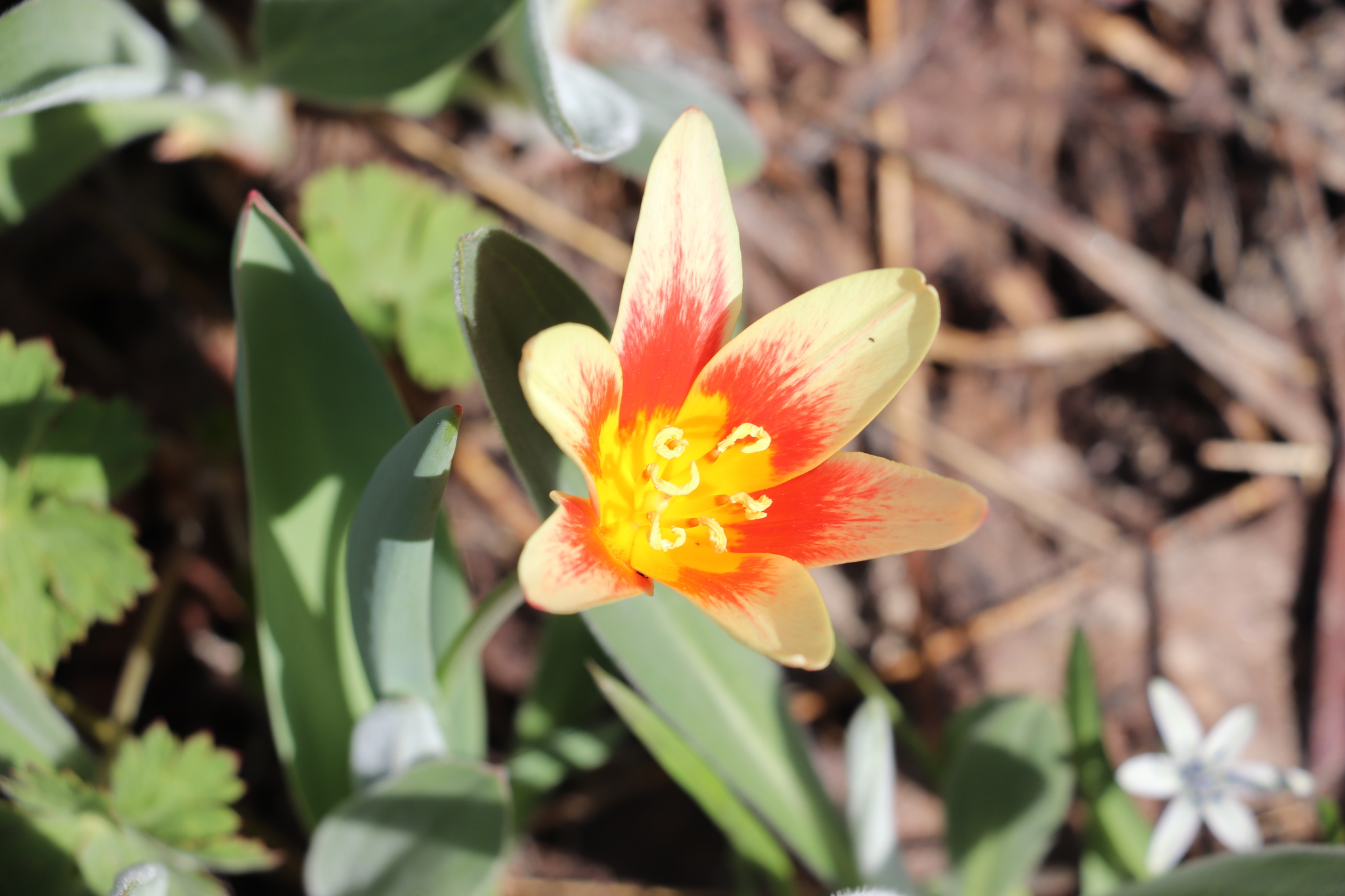
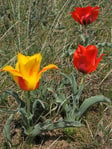
The names Water lily tulip and Waterlily tulip describe the horticultural appearance: flowers open very widely in sunshine, sometimes almost flat, rather than remaining upright cups. RHS uses “water lily tulip” for Tulipa kaufmanniana, describing a small bulbous perennial with broad glaucous leaves and early spring flowers varying from cream to yellow and red, with a yellow base. 7
Distinguish three garden identities: the botanical species T. kaufmanniana, Kaufmanniana group cultivars and commercial bulbs that may be hybrids. This prevents assuming a cultivar will behave exactly like a wild Tian Shan population. Kaufmanniana tulip refers to this familiar garden group as well as its species association. 7 16
Recognition
Being a bulbous geophyte, Tulipa kaufmanniana loses all aboveground growth after spring while the bulb rests underground. RHS describes a dwarf plant to about 20 cm (8 in), with broad glaucous leaves; its size category is 0.1–0.5 m (4–20 in) because cultivars and growing conditions affect stature. 7
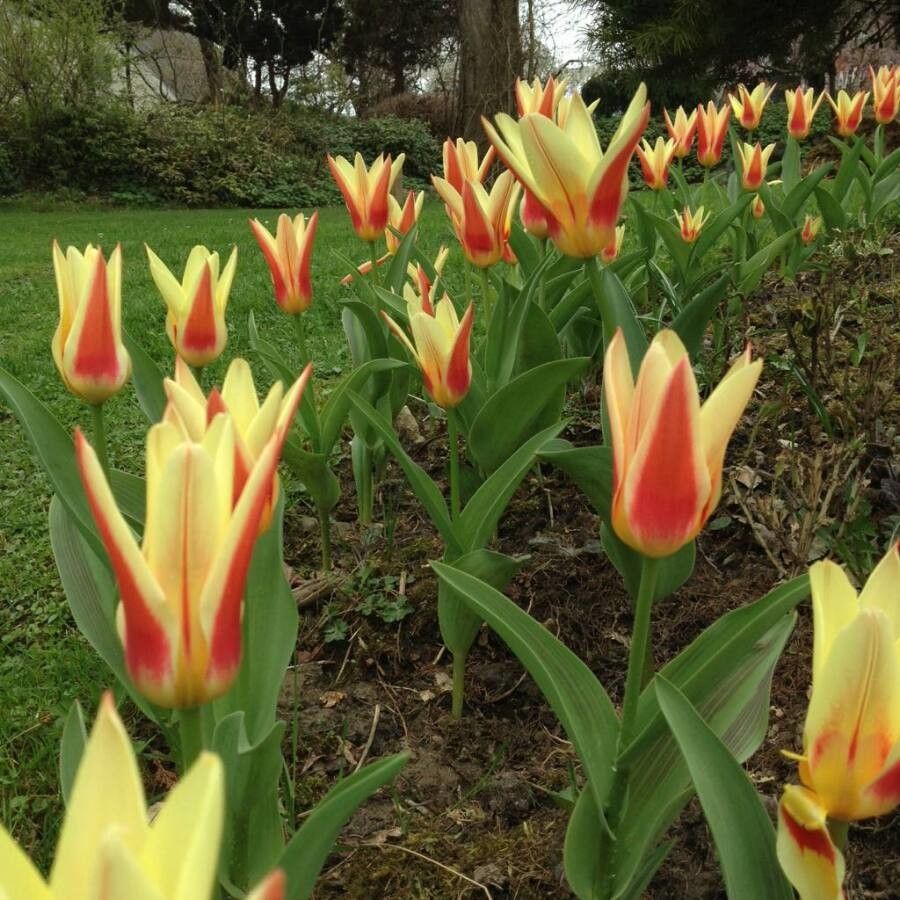
Leaves can be more decorative than those of a border tulip. They are broad, green to glaucous, and many garden Kaufmanniana tulips have purple or reddish-brown markings. RHS defines the group as small tulips, often with purple-marked foliage and single, frequently bicolored flowers in early spring. 7 8
Light changes the flower’s appearance. Single, solitary and large relative to the plant, it stays more closed in cool weather and opens flatter in sun. NC State illustrates the group as “water lily tulips” and lists cultivars including 'Showwinner', 'Giuseppi Verdi' and 'Scarlet Baby'. 12
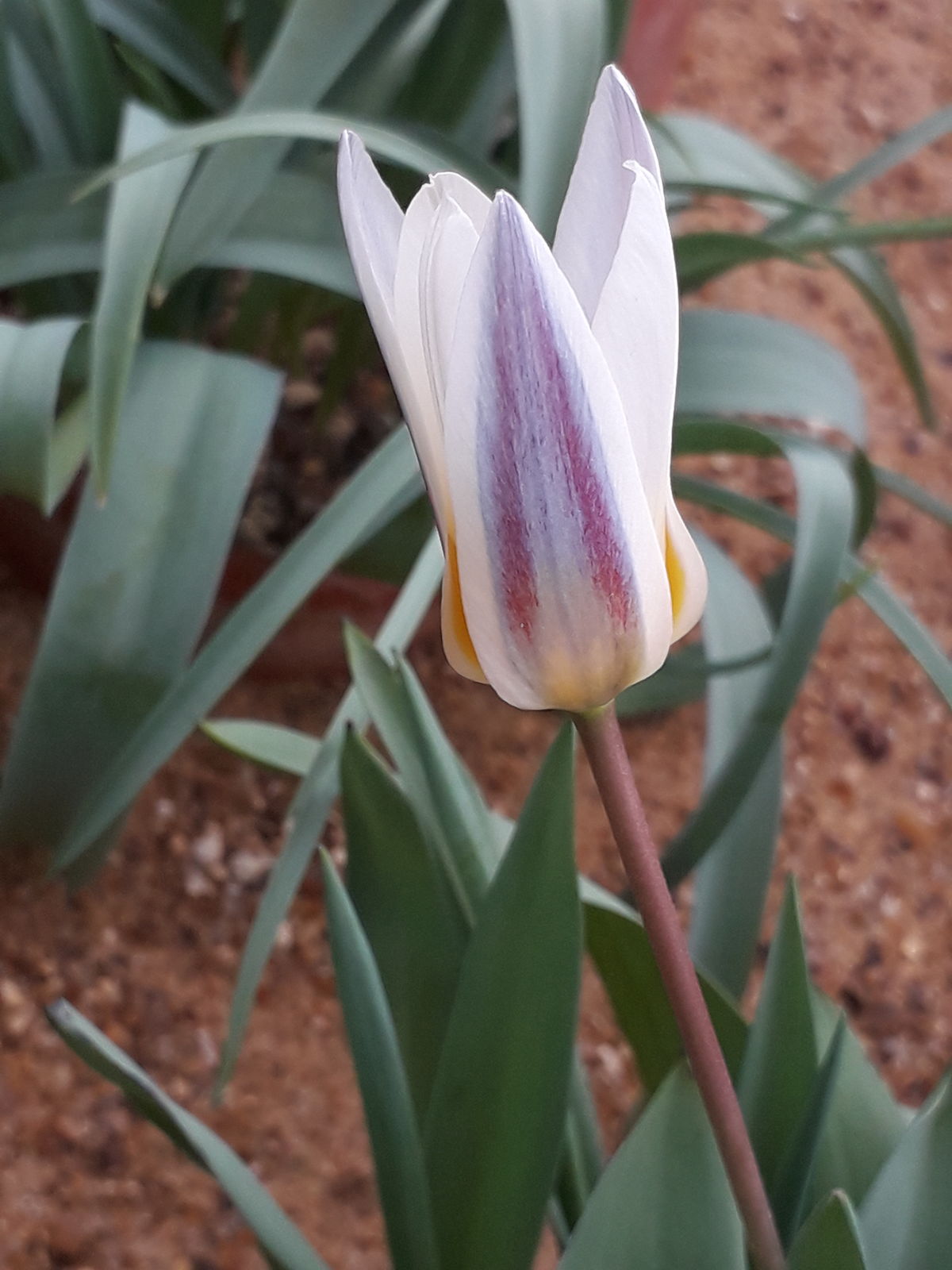
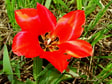
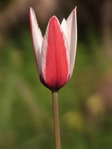
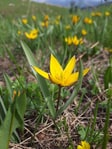
Colors include white, cream, yellow, red, pink and orange, depending on species material or cultivar. RHS describes T. kaufmanniana with cream, yellow and red flowers and a yellow base; 'Heart's Delight' adds a pink bicolor example, deep pink outside and pale pink inside, with a yellow base. 7 8
Capsules may develop after flowering, but seed production is seldom the aim in beds. Removing spent flowers helps retain energy in bulbs, while leaves should remain until fully yellow. 9
Taxonomy and the Kaufmanniana group
The species reference is Tulipa kaufmanniana Regel. POWO accepts it as a bulbous geophyte of the temperate biome; WFO also records the name, providing a second nomenclatural reference. 1 4
EPPO assigns code TULKA, preferred name Tulipa kaufmanniana, authority Regel and English common name “water-lily tulip.” This gives a consistent identification for horticultural and plant-health contexts. 5
Kubentayev and colleagues’ 2024 taxonomic treatment records Tulipa kaufmanniana Regel, Gartenflora 26: 194, with a type from Uzbekistan near the Chirchik River basin. It gives the general distribution as Kazakhstan, Kyrgyzstan, Tajikistan and Uzbekistan. 6
The Kaufmanniana group is not a botanical rank equivalent to species. RHS defines it horticulturally as small tulips, often with marked foliage and single, frequently bicolored early spring flowers. A cultivar such as 'Heart's Delight' belongs to this group without necessarily being the pure wild Tulipa kaufmanniana. 7 8
Classification within Tulipa is more complex than nursery labels suggest. Christenhusz and colleagues describe the interaction of cultural history, morphology and molecular evidence. Keep the binomial for the species and add the cultivar in quotation marks when one is known. 16
Native range, habitat and conservation
Central Asia is the native range of Tulipa kaufmanniana in POWO, which places its main growth in the temperate biome. This helps explain the brief cold-to-cool period of aboveground growth followed by a long underground rest. 1
The 2024 Kazakh treatment adds detail: Kazakhstan, Kyrgyzstan, Tajikistan and Uzbekistan, including the western Tian Shan, Karatau and Kyrgyz Alatau. It describes shaded slopes, meadows, scrub and, less often, rocky slopes from lower to upper mountain belts. 6
Pacific Bulb Society describes a western Tian Shan waterlily tulip with broad garden hardiness, often given as USDA 3–8. It suits cold temperate gardens provided its summer rest does not become waterlogged. 13
Conservation assessments need careful interpretation. POWO displays a prediction of non-threatened risk, whereas the Kazakh treatment reports a global Near Threatened status and inclusion in Kazakhstan’s Red Book. These are different assessments rather than a local French alert, and the wild species should not be treated as an expendable commodity. 1 6
In metropolitan France, T. kaufmanniana is treated here as cultivated. None of the sources used supports a national invasive designation; any naturalization remains localized horticultural persistence in favorable soil. 1 3
Life cycle, flowering and naturalization
Plant bulbs in fall during dormancy. For Tulipa kaufmanniana, RHS recommends 10–15 cm (4–6 in) depth in fertile, well-drained soil, protected from excessive moisture and strong winds. 7
Bloom comes very early for a tulip. The Kazakh treatment records species flowering in March–May and fruiting in June–July in its Northern Hemisphere setting. In temperate gardens, many Kaufmanniana cultivars begin in early spring, with timing varying by climate and exposure. 6 7
Bright weather reveals the water lily effect best. Flowers open progressively in sunshine and may close at night or in dull conditions, as many small tulips do. Missouri Botanical Garden describes 'Ancilla' tepals spreading horizontally in full sun to create the water lily appearance. 14
After flowering, the bulb’s replenishment becomes the crucial phase. RHS recommends deadheading, while retaining leaves until yellow. Cutting green foliage removes the means of building reserves for the following year. 9 7
Specialist tulips close to wild species often naturalize better than large border tulips. RHS explains that these smaller, more delicate tulips may increase when their needs are met. For Kaufmanniana, that means full sun, drainage, a cool spring and a relatively dry summer. 10 9
Offsets preserve a cultivar faithfully. RHS recommends separating bulbs when lifted in summer, replanting larger ones in fall and growing small ones on for a year in a nursery bed. Seed is useful for botanical work, but produces variable plants and takes several years. 8 9
Growing in gardens and containers
Reliable drainage makes cultivation straightforward. RHS recommends fertile, well-drained soil for T. kaufmanniana, with protection from excessive water and strong winds. Chalk, loam and sand can all suit it if water does not stand around the bulbs. 7
Full sun is the standard exposure given by RHS for both the species and 'Heart's Delight'. Light shade beneath deciduous trees may work if late-winter light remains strong, but persistent shade reduces flower opening and replenishment of bulbs. 7 8
RHS specialist-tulip guidance calls for freely drained soil in spring followed by a dry summer rest. Rock gardens, gravel gardens, alpine troughs and gritty container mixes fit this pattern, which also suits Water lily tulips. 10
Low growth makes container planting useful. A broad bulb bowl or terracotta pot with drainage holes and a potting-mix-and-grit blend performs better than a decorative outer pot without an outlet. After flowering, move it to a bright, rain-sheltered place until foliage yellows, then keep it much drier. 9 7
Match water to the growth cycle. Moist soil is enough during growth, and rainfall often supplies border plants. Constant watering during dormancy is a mistake: small species tulips tolerate a relatively dry summer better than containers managed like summer balcony annuals. 9 10
Fertilizer plays a supporting role. Light feeding as growth starts and after flowering can help retained bulbs replenish reserves. Excess nitrogen, wet soil and premature leaf removal can instead produce large, weak leaves without a lasting colony. 9
Diseases and pests
RHS lists potential problems for Tulipa kaufmanniana: slugs, aphids, stem and bulb nematodes, bulb-eating squirrels, tulip fire and rot in poorly drained soil. These familiar tulip risks can be especially costly in a small species collection. 7
Tulip fire is a key disease to recognize. RHS attributes it to Botrytis tulipae, describing twisted, spotted or withered leaves and mold in damp conditions. Long wet springs, dense planting and poor air circulation favor disease. 11
Preventive measures matter most: inspect bulbs before planting, reject soft or spotted bulbs, remove affected plants, allow suitable spacing and avoid replanting tulips in contaminated ground for several years. 11
Bulb rot is not an inevitable result of cold weather; the growing medium is often responsible. For 'Ancilla', Missouri Botanical Garden lists bulb and root rots especially in wet, poorly drained soil, along with viruses, aphids, slugs, snails, mice, voles and squirrels. 14
Physical protection may be more useful than treatment. Where squirrels or voles occur, adequate planting depth, a wire-mesh basket and removal of scented bulb scales from the surface can greatly reduce first-year losses. 7 14
Toxicity and safety
Water lily tulips must be treated as toxic tulips, especially the bulbs. ASPCA lists Tulipa spp. as toxic to dogs, cats and horses, with tulipalin A and B as toxic principles. Signs include vomiting, depression, diarrhea and excessive drooling, with the highest concentrations in the bulb. 17
RHS warns for T. kaufmanniana and Kaufmanniana cultivars that ingestion can be harmful and handling may cause skin allergy, recommending gloves. This is particularly relevant during large plantings, divisions and handling bulb bags. 7 8
ASPCApro’s veterinary article on spring bulbs states that Tulipa contains tuliposide A, tulipalin A and tulipalin B concentrated in bulbs, with possible contact dermatitis and digestive upset. Chewing a bulb therefore poses more concern than briefly touching a petal. 18
Keep bulbs out of reach, separate them from food onions, collect planting debris and wear gloves if your skin reacts. Contact a veterinarian or animal poison service if an animal chews or ingests plant material. 17 18
Cultivars, look-alikes and buying bulbs
Kaufmanniana catalogs emphasize three qualities: early flowering, low growth and spectacular opening. RHS characterizes the group as small tulips, often with purple-marked leaves and single, frequently bicolored flowers in early spring. 7
'Ancilla' illustrates a persistent water lily tulip. Missouri Botanical Garden describes a long-lived Kaufmanniana perennial with soft pink and red outside, white and red around a yellow center inside, often 20–25 cm (8–10 in) tall. University of Washington also reports a long-returning clump in full sun and well-drained soil. 14 15
'Heart's Delight' illustrates the compact bicolor style: RHS describes a 20 cm (8 in) plant with glaucous green leaves streaked purple, deep pink flower exteriors, pale pink interiors and a yellow base in early spring. It is an accepted cultivar rather than a wild species name. 8
NC State illustrates group diversity through names such as 'Showwinner', 'Giuseppi Verdi' and 'Scarlet Baby'. Cultivar names help select color, but do not replace checks for firm bulbs, full identity, drainage and protection from digging animals. 12
Confusion most often involves Tulipa greigii and Tulipa fosteriana. All three groups can be low, early and sometimes marked in the leaves. Kaufmanniana stands out chiefly through very flat flower opening and the “water lily” description used by RHS, EPPO and Missouri. 7 5 14
Avoid soft, spotted or moldy bulbs and those without a cultivar name. Small bulbs may survive but take longer to flower. For lasting planting, a few well-named lots in drained conditions are preferable to an anonymous mix watered throughout summer. 9 10
Common problems
Weak second-year flowering often has three causes: leaves cut too early, overly wet summer soil or insufficient spring sunshine. Kaufmanniana tulips can return, but only if bulbs have had time to rebuild reserves. 9 10
Cup-shaped flowers do not necessarily indicate a problem. These tulips open much better in direct sunshine and naturally remain more closed in cold, overcast or rainy weather. Growing conditions become an issue if the bed never receives strong light. 7 14
Soft bulbs and missing bulbs suggest different causes. Softness points to drainage or storage; disappearance suggests squirrels, field mice or voles. Replanting without correcting the cause risks losing the next batch too. 7 14
Twisted, spotted or scorched-looking leaves suggest tulip fire, especially after a wet spring. Remove affected plants carefully; suspect bulbs should not be composted near other tulips. 11
An indoor forced display is temporary. Water lily tulips may decorate a cool room for a few days, but rebuilding reserves requires outdoor conditions, strong light, cool nights and a dry rest. Warm indoor conditions quickly exhaust them. 9 7
Main sources
Taxonomic references used here are POWO/Kew, IPNI, GBIF, WFO, EPPO and Kubentayev and colleagues’ treatment of Kazakhstan’s tulips. 1 2 3 4 5 6
Cultivation, naturalization, planting, diseases and horticultural selection chiefly draw on RHS, NC State, Pacific Bulb Society, Missouri Botanical Garden and University of Washington Botanic Gardens. 7 8 9 10 11 12 13 14 15
ASPCA and ASPCApro provide the toxicity framework: tulips are toxic to cats, dogs and horses, with the greatest tulipalin concentrations in bulbs. 17 18
- Plants of the World Online / Kew, Tulipa kaufmanniana Regel
- International Plant Names Index, Tulipa kaufmanniana Regel
- GBIF Backbone Taxonomy, Tulipa kaufmanniana Regel
- World Flora Online, Tulipa kaufmanniana Regel
- EPPO Global Database, Tulipa kaufmanniana
- Kubentayev et al. 2024, taxonomic treatment Tulipa kaufmanniana Regel
- Royal Horticultural Society, Tulipa kaufmanniana water lily tulip
- Royal Horticultural Society, Tulipa 'Heart's Delight'
- Royal Horticultural Society, How to grow tulips
- Royal Horticultural Society, Specialist tulips
- Royal Horticultural Society, Tulip fire
- NC State Extension Gardener Plant Toolbox, Tulipa kaufmanniana
- Pacific Bulb Society, Legacy bulbs: Tulipa kaufmanniana
- Missouri Botanical Garden Plant Finder, Tulipa 'Ancilla'
- University of Washington Botanic Gardens, Tulipa kaufmanniana 'Ancilla'
- Christenhusz et al. 2013, Tiptoe through the tulips
- ASPCA, Tulip toxicity entry
- ASPCApro / Veterinary Medicine, Spring-blooming bulbs
Frequently asked questions
Is Tulipa kaufmanniana a species tulip?
Yes, Tulipa kaufmanniana Regel is an accepted species in POWO. Many garden plants, however, are Kaufmanniana group cultivars; they retain a species-tulip character without necessarily being the pure wild species.
Why are they called Water lily tulips?
The flowers open very wide in sunshine, sometimes almost flat, resembling miniature water lilies. In cold or dull conditions they may remain more cup-shaped.
Will they come back each year?
They can return for several years with sun, well-drained soil, foliage retained until yellow and a relatively dry summer. Kaufmanniana cultivars often last longer than many large border tulips, but success depends strongly on drainage.
When should I plant the bulbs?
Plant in fall during dormancy. RHS recommends 10-15 cm (4-6 in) deep for Tulipa kaufmanniana, in fertile, well-drained soil protected from excessive water.
Can I grow them in containers?
Yes, their low growth makes them well suited to pots. Use drainage holes, enough depth and a well-drained mix, outdoors or in a cold conservatory, then keep much drier after foliage yellows.
Are they toxic to cats and dogs?
Yes. ASPCA lists Tulipa spp. as toxic to dogs, cats and horses. Bulbs hold the highest toxin concentrations, so bulb bags and freshly planted containers pose particular risks.
How do they differ from Tulipa greigii?
Both groups are low-growing spring tulips. Kaufmanniana flowers often open very flat, hence the water lily name; Greigii tulips are often associated with more strongly marked leaves and large bowl-shaped flowers.
Similar plants
If you are unsure about a plant’s toxicity, ask a botanist or veterinarian for advice.