
Wild tulip (Tulipa sylvestris, )
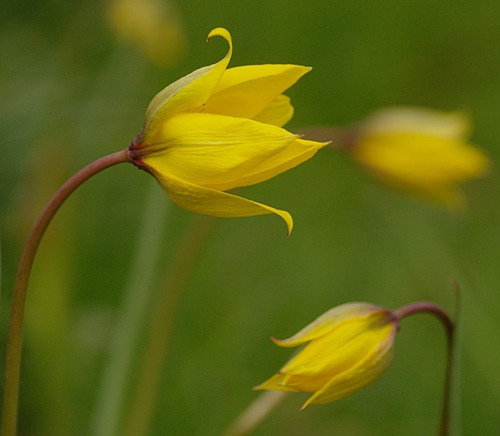
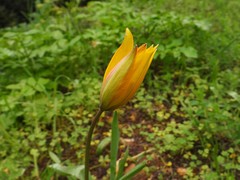
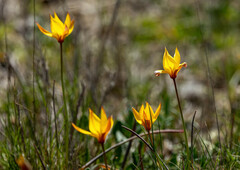
Wild tulip (Tulipa sylvestris L.) is a fragrant yellow species in the Liliaceae, associated with old gardens, vineyards and orchards rather than large bedding hybrids. It combines conservation importance in France with vigorous spread by underground runners and the toxicity precautions shared by tulips.
Read moreWild tulip, Woodland tulip and Florentine tulip
Allow a few hours of direct sun per day, preferably morning or evening.
Gentle full sun to light partial shade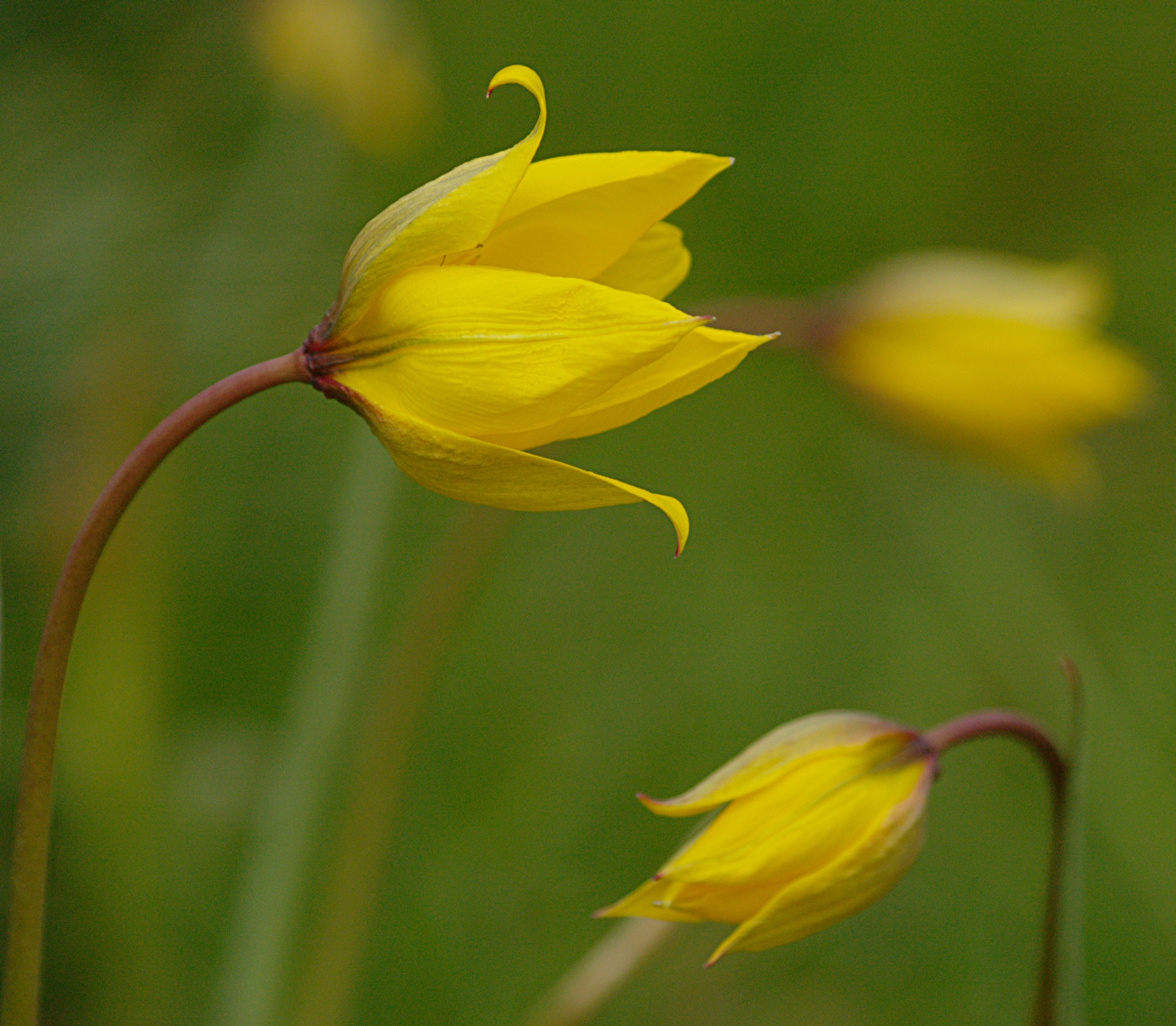



© photo
(c) AnneTanne, some rights reserved (CC BY-NC-SA) · cc-by-nc-sa
iNaturalist User · cc-by
Thibaud Aronson · cc-by-sa
Taken Jan 1, 1800 by Tela Botanica − Daniel MATHIEU (cc-by-sa)
Taken Apr 23, 2021 by Olivier MASSÉ (cc-by-sa)
Taken Apr 7, 2019 by Denis Bastianelli (cc-by-sa)
Taken Feb 20, 2017 by Yoan MARTIN (cc-by-sa)
Taken Mar 12, 2021 by Miguel A. C. (cc-by-sa)
© copyright of the Board of Trustees of the Royal Botanic Gardens, Kew.


Global distribution
POWO records a native range across the Mediterranean, southern and eastern Europe and Central Asia to Xinjiang, including France at species level. EPPO also records introductions in northern Europe and the northeastern United States, and ornamental cultivation.
- Native10
- Introduced4
- France
- Italy
- Spain
- Portugal
- Switzerland
- Greece
- Türkiye
- Iran
- Kazakhstan
- Xinjiang
- Great Britain
- Germany
- Netherlands
- Northeastern United States
Hexagons: regions where the plant occurs. Green dots: native range.1
Identity
Wild tulip (Tulipa sylvestris L., 1753) is an accepted species in the Liliaceae. POWO/Kew records its first publication by Linnaeus in Species Plantarum in 1753 and describes it as a bulbous geophyte. 1 2
Several names reflect its long association with different landscapes. English usage includes Woodland tulip and Florentine tulip; French floras and regional accounts record names meaning wild, woodland, French and yellow tulip, as well as Avant-Pâques. Tela Botanica and EPPO document that French vernacular diversity. 8 4
Compared with large bedding hybrids, this is a species or specialist tulip: smaller, more likely to naturalize in suitable conditions, and dependent on a complete seasonal cycle with spring light and summer rest. 6 7
Its appeal combines gardening and conservation. Fragrant yellow flowers suit old orchards, meadows and woodland edges, while wild populations of the type subspecies in France must not be collected. 9 11
Recognition
Spring shoots emerge from a bulb. RHS describes early-spring, fragrant, pointed yellow flowers on plants about 25 cm (10 in) tall in cultivation. The Conservatoire botanique national de Brest reports 30–50 cm (12–20 in) for the wild tulips covered by French conservation work. 5 11
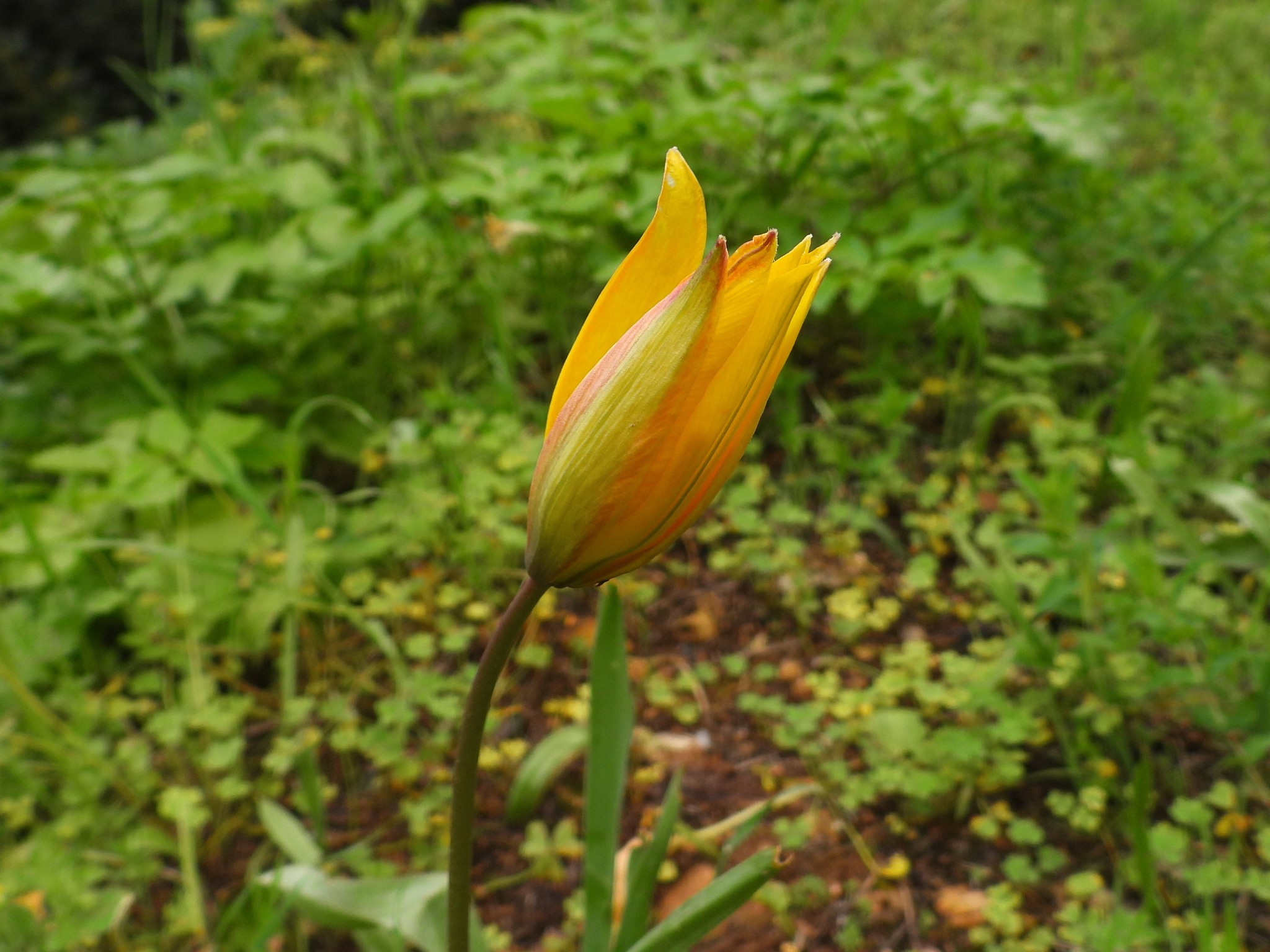
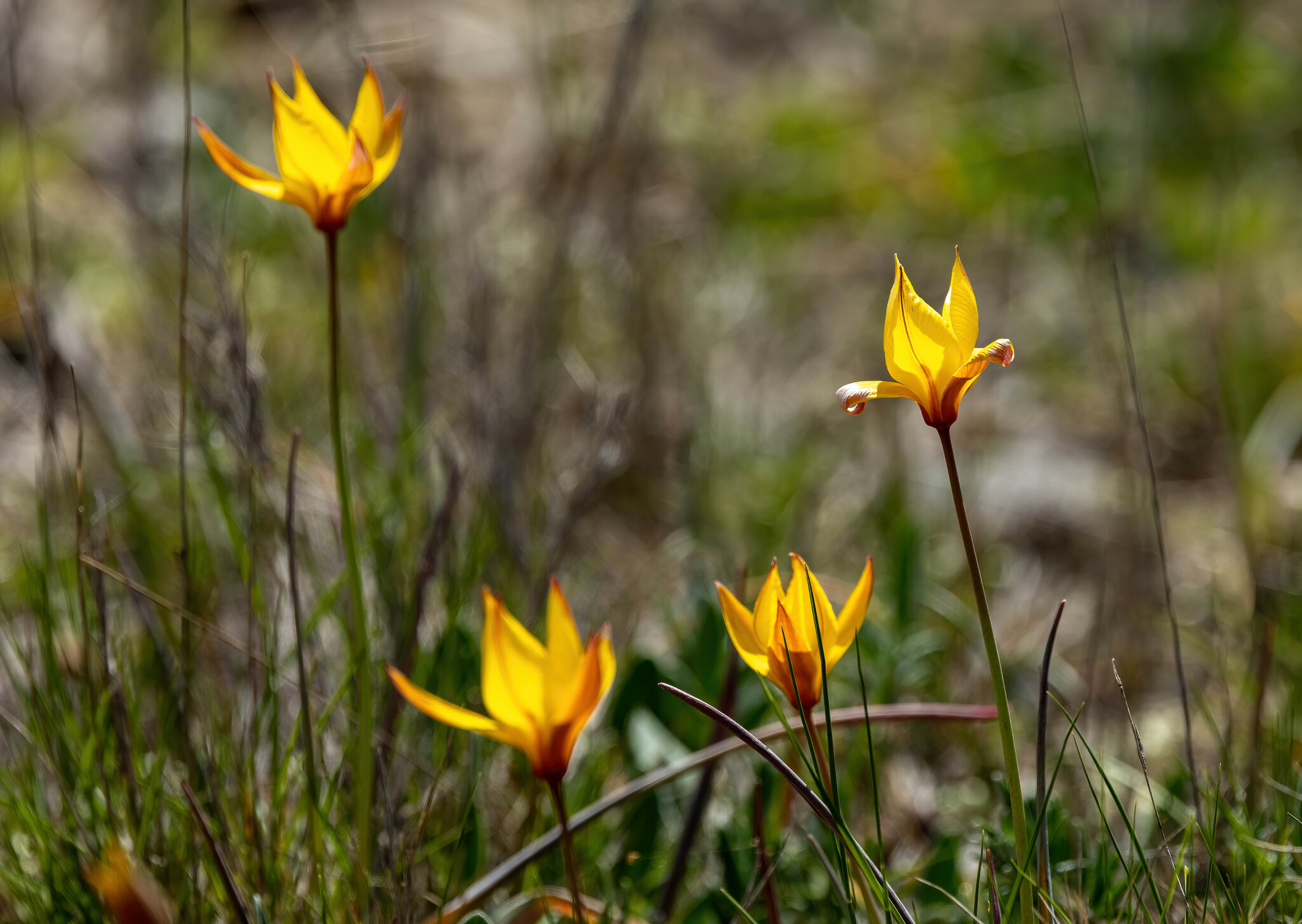
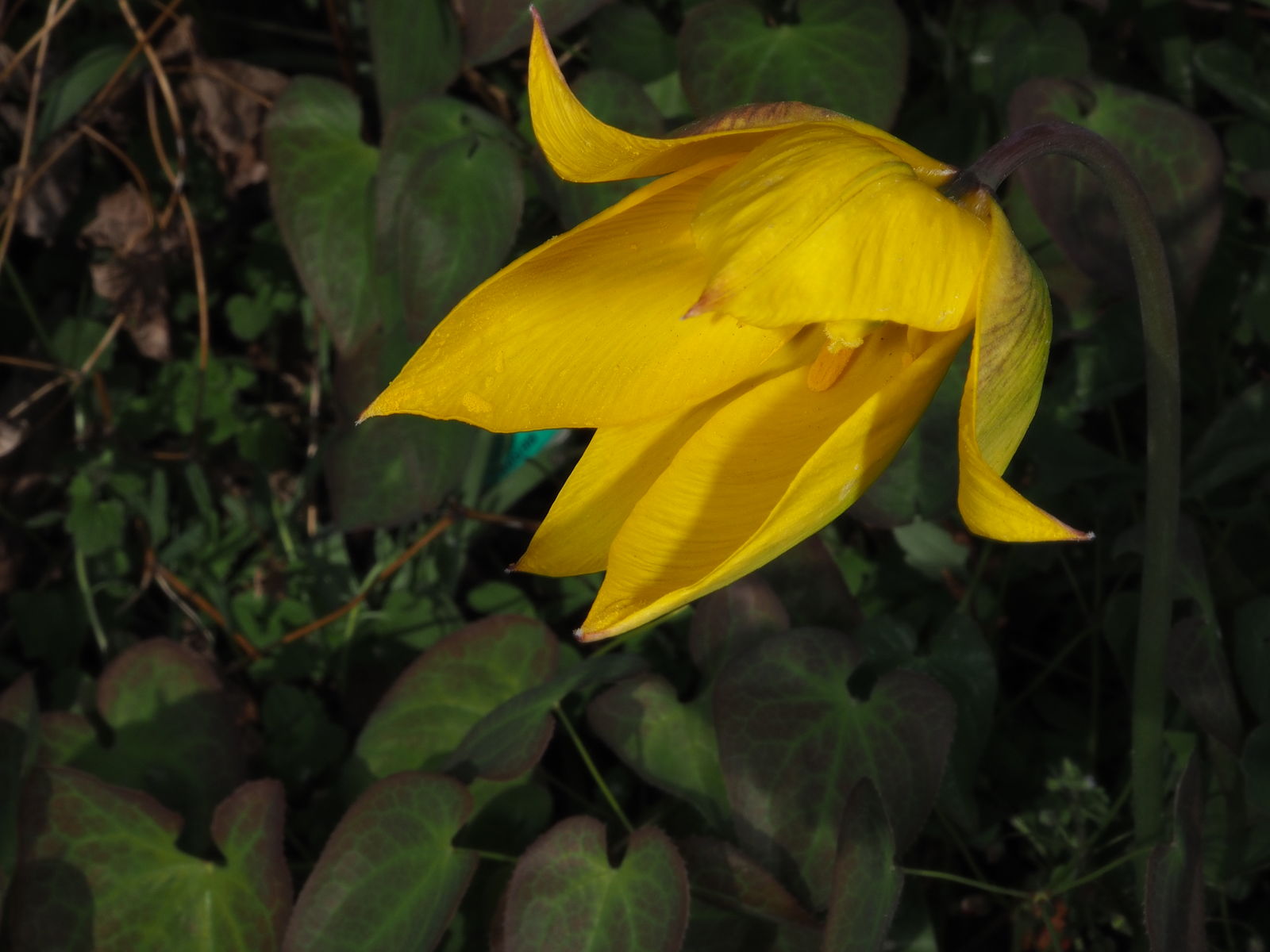
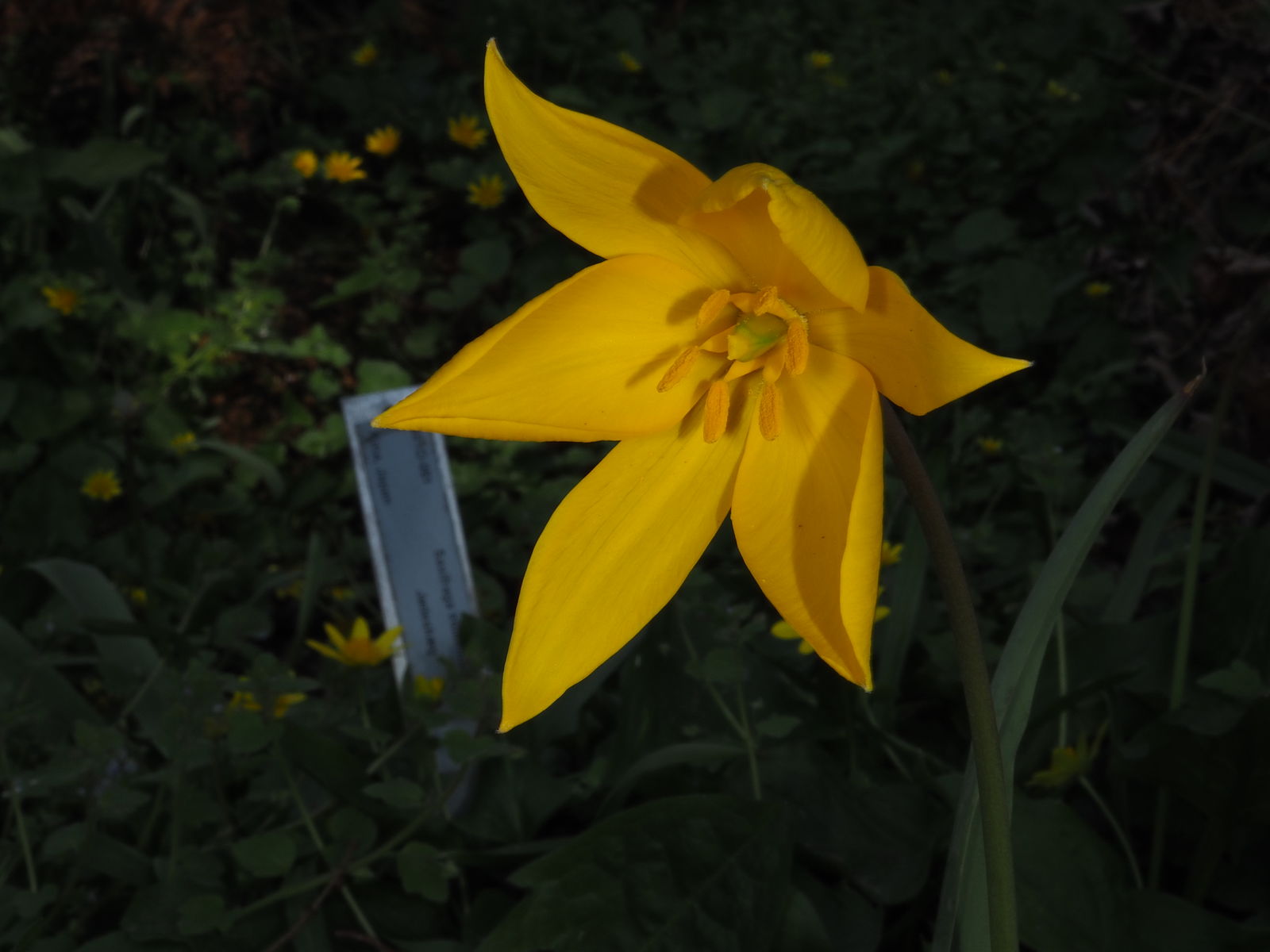
Before opening, the flower bud often nods or bends downward. In bright weather it opens farther into a yellow cup or star; green or red tints may mark the outside of the tepals, depending on the plant and subspecies. 5 12
Simple, unlobed leaves range from linear to lance-shaped and green to bluish green. Go Botany gives lengths of 25–35 cm (10–14 in) and widths of 1–2 cm (0.4–0.8 in), with parallel veins and at least one developed leaf on the flowering stem. 12
When fruit develops, it forms a capsule. Go Botany gives a length of 15–30 mm (0.6–1.2 in), useful for confirming the genus after flowering, although spring leaves and yellow flowers usually draw attention first. 12
Yellow color alone cannot establish identity: several small yellow tulips exist, and garden tulips can naturalize. Fragrance, narrow leaves, species-tulip form, a long-established habitat and underground spread together provide stronger evidence. 4 6
Taxonomy, subspecies and names
Kew accepts Tulipa sylvestris L. with three subspecies: T. sylvestris subsp. australis, subsp. primulina and subsp. sylvestris. The broad species is considered here because horticultural and general sources do not always identify the subspecies. 1
Tela Botanica retains Tulipa sylvestris L. and includes Tulipa gallica in its French synonymy. GBIF also attributes the name to Linnaeus and lists historical synonyms or homonyms, explaining variation in old catalog labels. 8 3
Under EPPO code TULSY, other scientific names include Tulipa gallica and Tulipa sylvestris subsp. sylvestris. EPPO also records numerous common names, including the French names for wild, woodland, yellow and French tulip. 4
A precise label matters more than a broad sales name. “Wild tulip,” “Florentine tulip” or the French “tulipe sauvage” may refer to the species, a subspecies or horticultural stock. Retaining the binomial and supplier details keeps garden cultivation distinct from wild conservation. 5 2
France: protection and farmed habitats
In mainland France, wild specimens need stricter safeguards than ordinary garden tulips. The national order of January 20, 1982 lists Tulipa sylvestris L. ssp. sylvestris in Annex I. Article 1 prohibits activities involving wild specimens including destruction, cutting, mutilation, uprooting, picking, removal, peddling, use, offering for sale, sale and purchase. 9
Protection of wild specimens does not prohibit growing lawfully purchased horticultural bulbs. It does mean leaving natural and seminatural populations undisturbed, including bulbs found in vineyards, orchards, meadows and roadsides. 9 10
ePhytia describes protection throughout mainland France and rarity in French crops, including unirrigated vineyards and orchards. The link with low-intensity agriculture matters: many sites are worked or historically managed land rather than closed woodland. 10
Vineyards in the Pays de la Loire region have an emblematic association with this tulip. The Conservatoire botanique national de Brest reports steep population declines since the 1970s, linked to changing practices, pesticide use and the loss of traditional work that also encouraged vegetative spread. 11
In that western French setting, flowering falls in early spring, from late March to early April. The same conservation account describes reproduction mainly through bulbils, although seeds can form. Garden plants benefit from an undisturbed spring growth period and maintenance delayed until dormancy. 11
Range, naturalization and invasiveness
Across its native range, the species extends through the Mediterranean, southern, central and eastern Europe to Xinjiang. POWO's detailed list includes France, Italy, Spain, Portugal, Switzerland, Türkiye, Iran, Kazakhstan and Xinjiang. 1
Introductions recorded by Kew include Great Britain, Germany, the Netherlands, Scandinavia and several northeastern US states. EPPO likewise summarizes a Mediterranean, Caucasian and Central Asian range with introductions in northern Europe and the northeastern United States. 1 4
Native range and introduction history explain why invasive status needs context. It can naturalize and spread by stolons outside its range or in old parks; French sources chiefly treat it as a rare, protected heritage plant rather than a nationally invasive alien species. 9 10
Underground runners remain a distinctive feature. RHS describes wild plants in damp, shaded places spreading by stolons, rather than only by bulbs beside the parent. In gardens this creates attractive but mobile colonies, best placed where that movement is acceptable. 6
Beyond France, any claim of “noninvasive” needs checking against local lists. GBIF and EPPO document naturalization outside the native range; avoid dumping bulbs or soil containing them beside sensitive habitats. 3 4
Life cycle, stolons and propagation
Cool-season activity alternates with summer dormancy in Tulipa sylvestris. Bulbs root in fall and winter, leaves emerge in spring, flowers follow, and foliage replenishes reserves before turning yellow. 7 13
Vegetative spread sets this tulip apart. RHS emphasizes stolons, while the Brest conservation account identifies bulbils as the main means of reproduction in monitored populations. This explains loose colonies that may appear away from the original planting point. 6 11
Raising plants from seed is possible but slower and less practical for gardeners. Tulip growing guides stress leaving leaves until they yellow so bulbs can flower again. For protected wild populations, conservation adds a separate rule: no wild collecting. 7 9
Container plants can also spread by stolons, although less dramatically. Small pots eventually crowd the bulbs and reduce flowering. Divide cultivated stock during dormancy, after foliage disappears, to avoid breaking active growth. 7 5
Meadow and orchard maintenance must accommodate the plant's cycle. Early mowing or deep cultivation during growth interrupts reserve building and may destroy bulbs and stolons. Persistent populations often combine spring light, open soil and late intervention. 11 10
Growing in gardens and containers
For private gardens, choose bulbs from reliable horticultural sources. Collecting wild bulbs in France conflicts with protection of the type subspecies and damages populations that are often already fragile. 9 11
An open orchard, bright woodland edge or spring meadow provides a useful model: light before trees fully leaf out, moisture during growth and a drier rest. RHS notes that T. sylvestris and T. sprengeri can grow in partial shade in moisture-retentive soil, unlike many drier rock-garden tulips. 7 6
Good drainage is still essential. NC State links tulip bulb and root rots to poorly drained soil and describes cool winters, moist springs and drier summers as favorable conditions. The same seasonal pattern suits cultivated wild tulip. 13
Fall is the planting season. Many horticultural bulbs suit a depth of 10–15 cm (4–6 in); slightly deeper planting in very light soil can limit rodent damage and stabilize temperature. Use a deep pot with drainage holes and a well-drained but reasonably nourishing mix. 7 13
After flowering, leave the green foliage in place. Remove only the spent flower if seed is unwanted; yellow, dry leaves signal readiness for dormancy, division or repotting. 7
Toxicity and precautions
Toxicity information applies to the genus Tulipa. ASPCA lists tulips as toxic to cats, dogs and horses, identifies tulipalin A and B, and notes higher concentrations in the bulbs. 14
Chewing or swallowing bulbs may cause excessive drooling, vomiting, diarrhea and lethargy, particularly with newly planted or stored bulbs. Digging dogs and curious cats therefore need close attention in gardens. 14 13
For people, the practical risks include ingestion and contact dermatitis. NC State describes low-severity human toxicity but possible irritation, redness, blisters and cracking after contact, with the highest concentration in the bulb. 13
ASPCApro links spring bulbs, including tulips, with tuliposides and tulipalins that can cause skin irritation and digestive signs. Gloves for extensive planting, secure bulb storage and avoiding food use are straightforward precautions. 15
French protection adds a conservation reason for restraint. Even where older accounts mention tulip bulbs as famine food, eating, collecting or moving wild specimens is not recommended. 9 8
Look-alikes and buying bulbs
Seen from a distance, yellow daffodils are an easy source of confusion. A tulip lacks a daffodil's central trumpet: it has six tepals, a cup that opens in sun and more flexible tulip leaves. 12
Other yellow species tulips can be mixed up with it, including forms of Tulipa tarda, T. batalinii, T. turkestanica and small hybrids sold in mixtures. A full botanical label matters when the aim is specifically to grow Tulipa sylvestris. 6 3
Trade names such as “Florentine tulip,” “woodland tulip” and “wild tulip” do not always ensure precise provenance. Favor suppliers stating the binomial, subspecies or horticultural origin, and avoid offers suggesting collection from wild French populations. 5 9
After two years in a garden, its behavior helps distinguish it from large bedding tulips. Conventional hybrids often return less reliably, while wild tulip may produce leaves and colonies through stolons. That persistence suits orchards and old gardens better than tightly designed borders. 6 7
A spontaneous tulip in an old French property should be documented without uprooting it. Photograph it, record the date and place, and contact a local botanical network, especially if a conservation site may be involved. 8 11
Common problems
Failure after planting often reflects compacted soil or excessive moisture during dormancy. Tulips accept seasonal moisture, but bulbs do not tolerate prolonged standing water. Drainage holes and a mineral component make a major difference in pots. 13 7
Poor flowering commonly follows premature leaf removal. Each green leaf feeds the bulb and its bulbils; in meadows, wait until foliage yellows before mowing low around the clumps. 7 11
Pests and diseases are shared with other tulips. Aphids, slugs, snails, nematodes, rodents, squirrels, viruses, rots and tulip fire can occur. Healthy planting stock and rotating planting sites reduce problems. 13 7
A spreading garden colony may be inconvenient in a small bed without representing a national ecological emergency in France. Partial lifting often leaves bulbils because the plant moves by stolons. Containment in a dedicated area during dormancy is more practical than intervention during growth. 6
At a wild or possibly wild site, management problems should not be addressed by private collecting. Legal safeguards and conservation plans are intended to prevent population losses from scattered interventions. 9 11
Main sources
- Plants of the World Online / Kew, Tulipa sylvestris L.
- International Plant Names Index, Tulipa sylvestris L.
- GBIF Backbone Taxonomy, Tulipa sylvestris L.
- EPPO Global Database, Tulipa sylvestris
- Royal Horticultural Society, Tulipa sylvestris wild tulip
- Royal Horticultural Society, Specialist tulips
- Royal Horticultural Society, How to grow tulips
- Tela Botanica eFlore, Tulipa sylvestris
- Légifrance, order of January 20, 1982 on protected plant species
- INRAE ePhytia, Tulipa sylvestris
- Conservatoire botanique national de Brest, regional wild tulip conservation plan
- Go Botany, Tulipa sylvestris wild tulip
- NC State Extension Gardener Plant Toolbox, Tulipa
- ASPCA, Tulip toxicity entry
- ASPCApro / Veterinary Medicine, Spring-blooming bulbs
Frequently asked questions
Is wild tulip protected in France?
Yes, for wild specimens of the type subspecies. The French national order lists Tulipa sylvestris L. ssp. sylvestris in Annex I, prohibiting activities including uprooting, collecting, selling and buying wild specimens.
Can I plant wild tulip in a garden?
Yes, using bulbs from horticultural suppliers or another authorized source, never collected from the wild. An open orchard, bright woodland edge or naturalistic bed suits it better than a heavily irrigated border.
How does it spread by runners?
RHS describes underground stolons rather than only daughter bulbs around the parent. These runners create loose colonies, sometimes some distance from the planting point.
Is it invasive?
The sources used here do not assign it national invasive status in France, where it is chiefly treated as rare or protected. Outside its native range or in old gardens, it can naturalize and spread locally.
Why does it sometimes fail to flower?
Colonies may produce many leaves but few flowers if light is insufficient, leaves are removed too early, young bulbs are immature or soil stays too wet in summer.
Is wild tulip toxic to pets?
Apply the precautions for Tulipa. ASPCA lists tulips as toxic to cats, dogs and horses, particularly because of compounds concentrated in the bulbs.
Can it be confused with a daffodil?
A nodding yellow bud may look similar at a distance, but a tulip has six tepals without the central trumpet of a daffodil. Leaves and bulbs also help confirm the genus Tulipa.
Similar plants

If you are unsure about a plant’s toxicity, ask a botanist or veterinarian for advice.