
Lady tulip (Tulipa clusiana, )
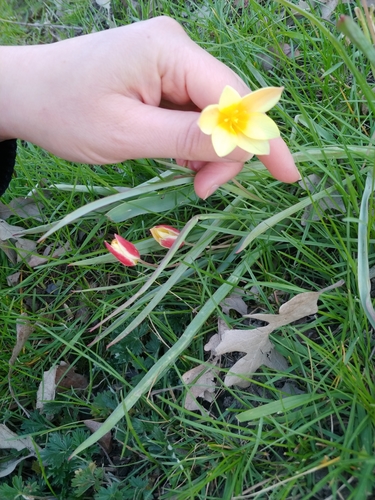


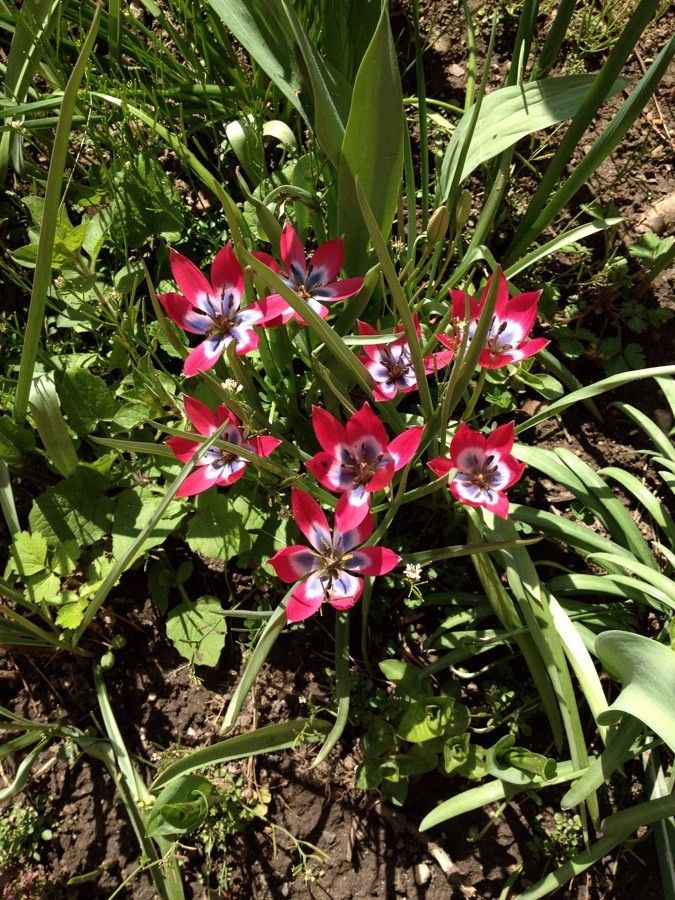
Lady tulip (Tulipa clusiana Redouté) is a small species tulip in the Liliaceae family, native from northern Iraq to the western Himalayas. Its slender flowers open into stars in sunshine. With good drainage and dry summers, it can naturalize more readily than many large bedding tulips.
Read moreLady tulip, Persian tulip and Clusius's tulip
Place in full sun, with intense direct light all day long.
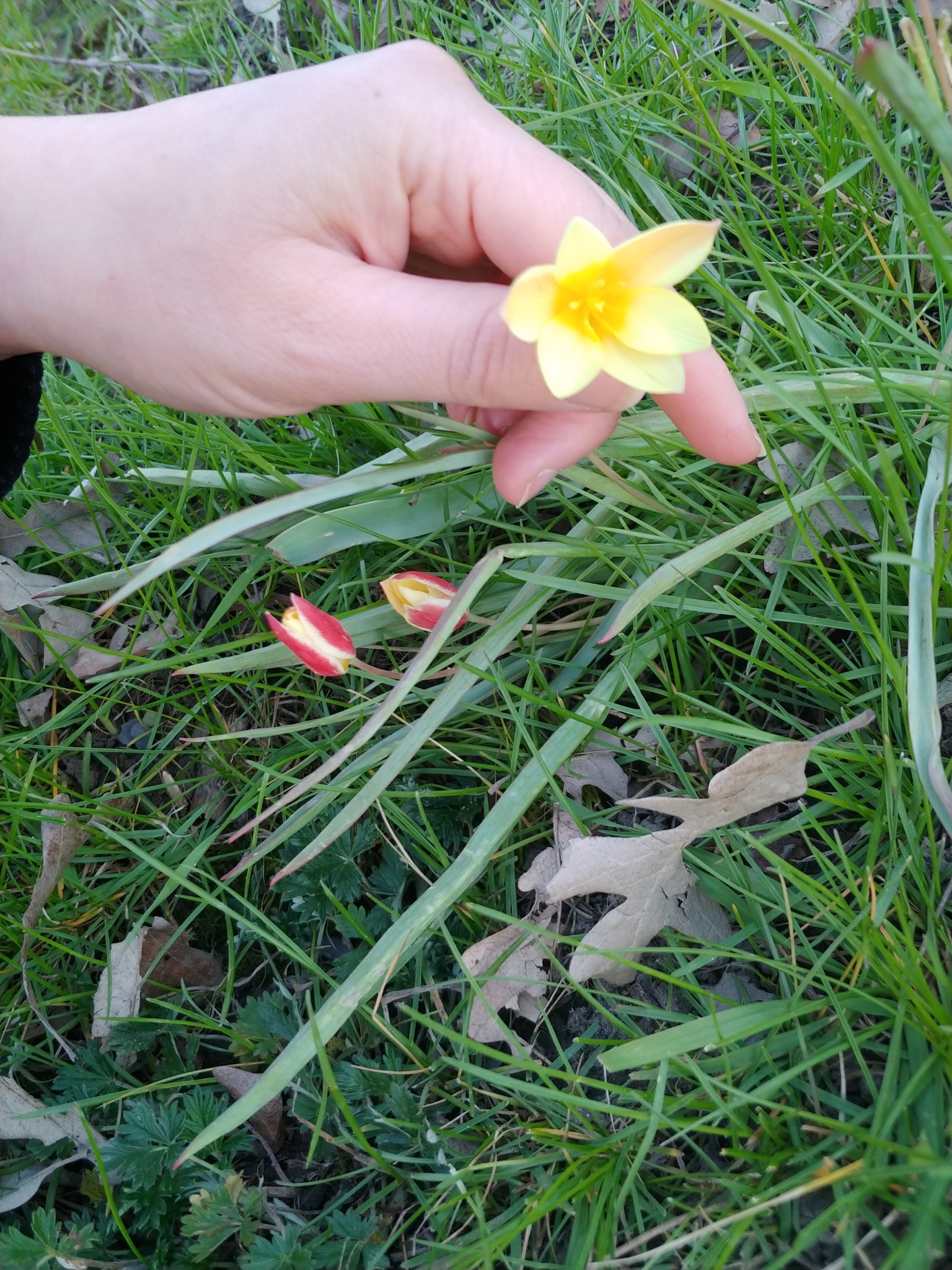


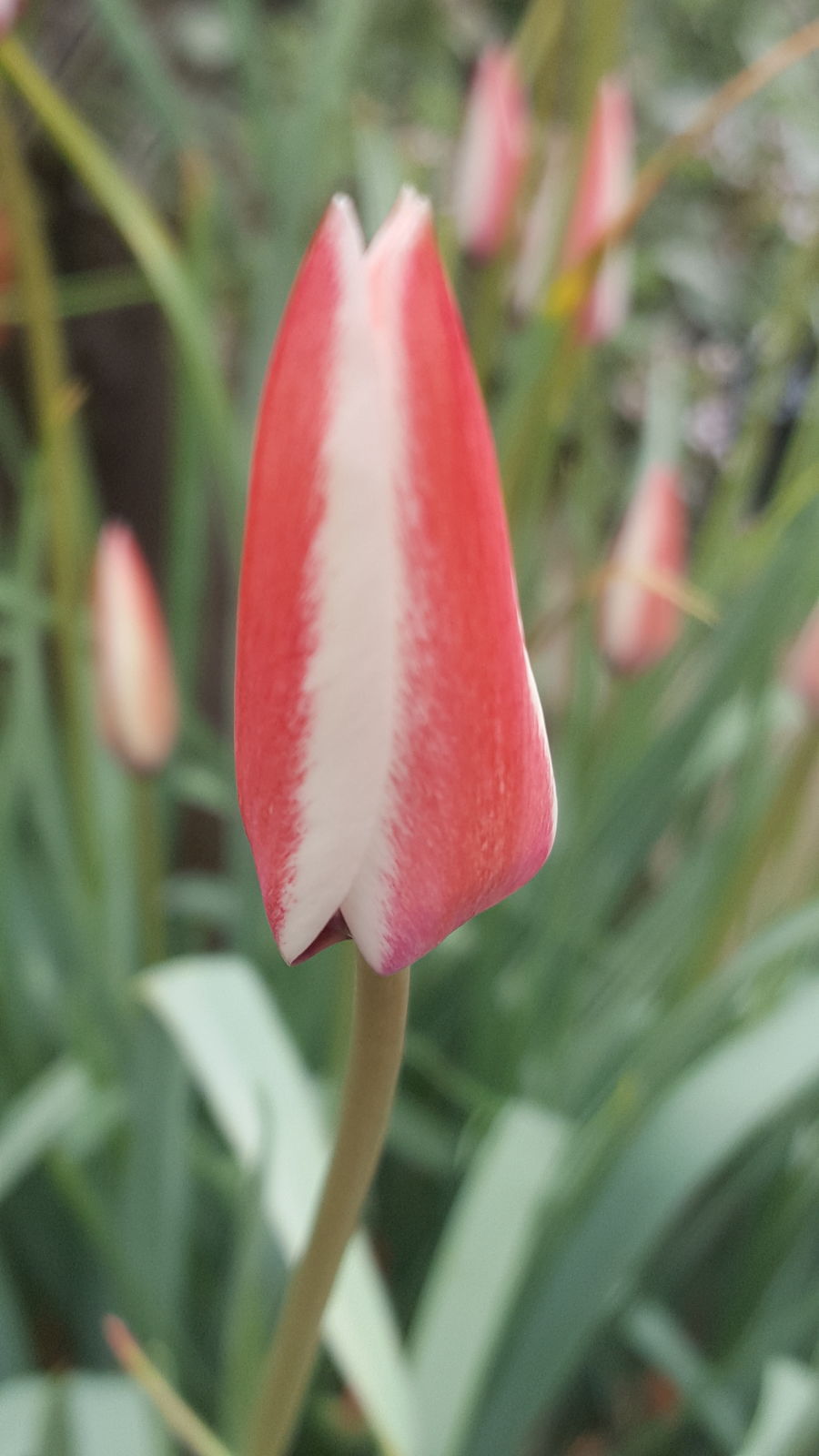

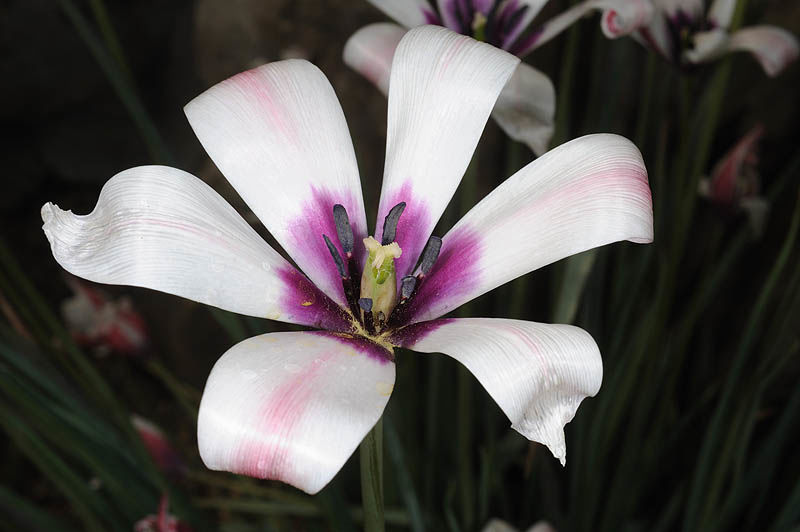
© photo
Chris Angell · cc-by
Wikimedia Commons · CC BY-SA or Public Domain
Taken Aug 22, 2022 by Maria Francesca Zobbi (cc-by-sa)
Taken Apr 16, 2022 by Enrico L. (cc-by-sa)
Taken Jan 1, 1970 by Photoflora - L'Abbé COSTE (©)
© copyright of the Board of Trustees of the Royal Botanic Gardens, Kew.




Global distribution
POWO places the native range of Tulipa clusiana from northern Iraq to the western Himalayas, including Afghanistan, Iran, Iraq, Pakistan and the western Himalayas. It is also listed as introduced in several Mediterranean regions and California. In France it is treated as introduced or cultivated, without an invasive designation.
- Native5
- Introduced6
- Afghanistan
- Iran
- Iraq
- Pakistan
- Western Himalayas
- France
- Portugal
- Spain
- Tunisia
- Türkiye
- California
Hexagons: regions where the plant occurs. Green dots: native range.1
Identity
Lady tulip (Tulipa clusiana Redouté, 1803) is an accepted species of Tulipa in the Liliaceae family. POWO/Kew links the name to Redouté's plate published in 1803 and describes the plant as a bulbous geophyte of the temperate biome. 1
Several common names refer to this plant. Persian tulip points to its western Asian origin, while Clusius's tulip commemorates Carolus Clusius, an important figure in European tulip history. EPPO records corresponding French names for the same taxon. 6 11
Among cultivated tulips, it belongs to the botanical or specialist types. Its shape is more slender, its stature lower and its capacity to naturalize often greater than that of large bedding hybrids. Buying Tulipa clusiana therefore gives a different plant from a standard border tulip sold only by color. 3 2
Recognition
Slender stems rise from a bulb to make a small clump. The RHS describes Tulipa clusiana as a bulbous perennial reaching about 30 cm (12 in), with two to five linear, blue-green leaves that may be slightly wavy. NC State gives a similar height of 23–30 cm (9–12 in), consistent with a low-growing species tulip. 2 5
Its flower begins as a cup and opens into a star in sunshine. The tepals have pointed tips; their exterior is often deep pink to red with white edges, while the interior stays white or cream. A purple or crimson basal mark and purple stamens may also be present. 2 5
Opening and closing reflect normal flower behavior. NC State notes that flowers close at night or in dull weather and open widely on bright days. The same clump may look tightly closed in the morning and distinctly star-shaped a few hours later. 5
Color patterns alone cannot establish the species. Cultivars may be white, pink, red or yellow, and selections such as Lady Jane, Cynthia, Peppermint Stick and Tinka change the overall effect considerably. Low stature, narrow leaves, a star-shaped open flower and the complete label are better clues than color alone. 2 5
Taxonomy and names
For Tulipa clusiana, POWO accepts Redouté as the author. Its long synonym list includes Tulipa aitchisonii, Tulipa rubroalba, Tulipa stellata, Tulipa hafisii and several historical forms and varieties. These names help explain differences among old catalogs, regional floras and sales labels. 1
EPPO likewise prefers the name Tulipa clusiana, although its system credits de Candolle. It also describes a western Asian range and introductions in the Mediterranean and California. The author cited here follows POWO; EPPO provides common-name and plant-health context. 6 1
Horticultural grouping adds another possible source of confusion. The RHS places Tulipa clusiana among miscellaneous or specialist tulips and includes selections from the same complex. Cultivar names describe garden variants rather than separate species. 2 3
Christenhusz and colleagues' study of Tulipa shows how cultural history, botanical classification and sometimes complex relationships intersect within the genus. For practical identification, retain the species binomial Tulipa clusiana, then add a cultivar name in single quotation marks when the label supplies one. 11
Habitat and range
Northern Iraq to the western Himalayas forms the native range recorded by POWO, which lists Afghanistan, Iran, Iraq, Pakistan and the western Himalayas. Lady tulip is a plant of temperate western Asia, rather than a garden tulip of exclusively European origin. 1
Introductions recorded by POWO include California, the East Aegean Islands, France, Portugal, Spain, Tunisia and Türkiye. EPPO also describes a western Asian ornamental introduced in the Mediterranean region. 1 6
In France, introduced or naturalized occurrence does not by itself establish invasiveness. The plant can persist locally where conditions are favorable, but the sources used here do not support a national invasive designation. That regional description does not establish its status elsewhere. 1 7
Seasonal conditions explain its cultivation needs: a cool, bright spring with enough moisture for growth, followed by a much drier summer. Beds irrigated throughout summer, heavy soils and pots that retain water are less suitable than rock gardens, gravel and freely draining borders. 2 3
Life cycle, cultivation and naturalizing
Dormant bulbs start their garden cycle with fall planting. For Tulipa clusiana, the RHS recommends mid- to late fall, at about 15–20 cm (6–8 in) deep, in fertile, freely draining soil that is preferably neutral or alkaline. Use the local fall season in either hemisphere. 2
Spring brings leaves, an elongating flower stem and then the open flower. After flowering, leave the foliage in place while it remains green: it replenishes the bulb. Removing leaves too early is a common reason for poor flowering the following year. 4 2
Specialist tulips need more particular conditions than large border tulips, but can also last longer where the site suits them. The RHS recommends very well-drained potting mix, rock gardens, gravel gardens or alpine troughs, with dry summer dormancy. NC State reports that Clusius's tulip naturalizes readily and can form larger colonies over time. 3 5
Propagation uses dormant bulb offsets or seeds. Seed is the slower option: the RHS and NC State commonly give 4–7 years to flowering. For most gardeners, dividing the bulbs formed around the parent is therefore the more practical method. 2 5
With containers, excess water presents more danger than dry cold. A terracotta pot or freely draining bulb bowl, a mineral layer and shelter from prolonged summer rain give better results than rich potting mix kept moist year-round. 2 4
Uses and toxicity
Rock gardens, sunny borders, gravel gardens, outdoor pots, alpine troughs and small naturalized colonies are its main ornamental settings. Missouri Botanical Garden presents Tulipa clusiana as a species tulip useful for naturalizing; the RHS also lists courtyard gardens, gravel, patios, rock gardens, borders and cut flowers. 8 2
Tulip toxicity deserves a clear warning. The ASPCA lists Tulipa spp. as toxic to dogs, cats and horses, naming tulipalin A and B as the toxic principles, with the greatest concentration in the bulb. Reported signs include vomiting, diarrhea, excessive salivation and lethargy. 9
Human exposure chiefly involves ingestion or repeated handling of bulbs. The RHS warns that the plant is harmful if eaten and can cause skin allergy. ASPCApro links tulips to contact dermatitis and digestive signs, with tuliposide A, tulipalin A and tulipalin B concentrated in the bulb. 2 10
Wear gloves when planting many bulbs, store them out of animals' reach and contact a veterinarian if an animal chews or swallows them. Flowers contain lower concentrations than bulbs, but this does not support using them as food. 9 10
Cultivars, look-alikes and buying
Bicolored flowers account for much of the appeal of clusiana cultivars. Lady Jane is probably the best-known name, while Cynthia, Peppermint Stick, Tinka and Honky Tonk also appear in catalogs. NC State lists several of these names, and the RHS highlights specialist tulip selections. 5 3
Incomplete labels create the most common identification problem. “Pink-and-white species tulip” might mean Tulipa clusiana, a clusiana cultivar or another small tulip. Keeping the full label helps track height, actual color and the ability to return in later years. 2 7
Compared with Tulipa gesneriana, lady tulip has a finer shape, lower stature and a stronger role as a naturalizing species tulip. It also differs from Tulipa sylvestris, which can favor shadier habitats and spread by stolons in some settings, and Tulipa kaufmanniana, often sold as a water lily tulip for its broadly open flowers. 3 4
Choose firm bulbs with no soft areas or mold and a precise name on the label. Large bulbs flower sooner; small offsets need time to grow. Where squirrels, field mice, voles or deer visit the garden, provide physical protection. 5 2
Common problems
Bulb rot is the most costly failure. Heavy soil, a pot without drainage or summer watering often causes it. Tulips appreciate a cool spring, but summer dormancy should remain relatively dry, especially for small rock-garden species. 3 4
Partly closed flowers do not necessarily indicate disease. Nighttime and cloudy-weather closure are normal in Tulipa clusiana. Cultivation becomes a concern if the site stays shaded all day or too cold during flowering. 5
Even an easy-growing tulip has pests. The RHS lists slugs, aphids, stem and bulb nematodes and squirrels, as well as tulip fire, rots, viruses and blue mold in storage. NC State also names mice, voles and deer as possible consumers of bulbs or plants. 2 5
When a plant flowers well once and then disappears, check summer drainage, whether the leaves remained until yellowing, and planting depth. A more mineral site with less irrigation and less competition often lets small bulbs multiply rather than decline. 2 3
Main sources
- Plants of the World Online / Kew, Tulipa clusiana Redouté
- Royal Horticultural Society, Tulipa clusiana lady tulip
- Royal Horticultural Society, Specialist tulips
- Royal Horticultural Society, How to grow tulips
- NC State Extension Gardener Plant Toolbox, Tulipa clusiana
- EPPO Global Database, Tulipa clusiana
- GBIF Backbone Taxonomy, Tulipa clusiana
- Missouri Botanical Garden Plant Finder, Tulipa clusiana
- ASPCA, Tulip toxicity entry
- ASPCApro / Veterinary Medicine, Spring-blooming bulbs
- Christenhusz et al. 2013, Tiptoe through the tulips
Frequently asked questions
Is lady tulip a botanical species?
Yes. POWO accepts Tulipa clusiana as a species, although many cultivars and horticultural forms associated with the clusiana group are also sold.
Why is it also called Persian tulip?
The name refers to its western Asian range and the horticultural history of tulips. POWO places the native range from northern Iraq to the western Himalayas.
Does it return more reliably than large tulips?
Often, if it grows in full sun, very well-drained soil and dry summers. Species tulips generally naturalize more readily than large bedding hybrids.
Do I need to lift the bulbs every year?
Not necessarily. In a well-drained rock or gravel garden they can stay in place. In heavy soil or a very wet pot, lifting in summer helps protect the bulbs.
Is lady tulip toxic to animals?
Treat it as toxic, following the warning for Tulipa. The ASPCA lists tulips as toxic to cats, dogs and horses, with the highest concentration in the bulbs.
Can I grow lady tulip indoors?
Only as a cool, temporary potted display. To return, the bulb needs an outdoor cycle with strong light, a cool season and dry summer dormancy.
Is Lady Jane the same as Tulipa clusiana?
Lady Jane is a cultivar associated with Tulipa clusiana, rather than the required name for the species. Keep the complete label for reliable identification.
Similar plants

If you are unsure about a plant’s toxicity, ask a botanist or veterinarian for advice.