
Late tulip (Tulipa tarda, )
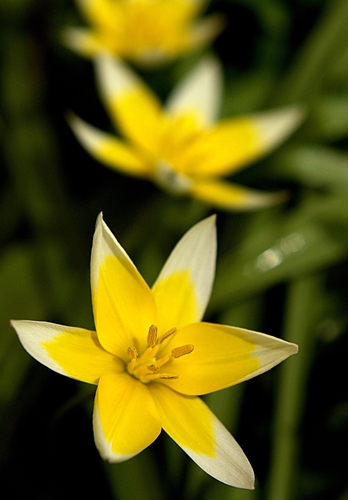

Late tulip (Tulipa tarda Stapf) is a small species in the Liliaceae, accepted by POWO/Kew and native to northwestern Iran and Central Asia. Several white, star-shaped flowers with broad yellow centers often share a short stem in spring, followed by summer dormancy with the bulb kept relatively dry.
Read moreLate tulip, Tarda tulip and Dasystemon Tarda
Place in full sun, with intense direct light all day long.


© photo
(c) Lotte Grønkjær, some rights reserved (CC BY-NC-SA) · cc-by-nc-sa
Ondřej Křivan · cc-by
Wikimedia Commons · CC BY-SA or Public Domain
© copyright of the Board of Trustees of the Royal Botanic Gardens, Kew.
Global distribution
POWO places the native range of Tulipa tarda in northwestern Iran and Central Asia, listing Iran, Kazakhstan and Kyrgyzstan. Missouri Botanical Garden links it to rocky subalpine meadows in Central Asia. In France it is treated as a cultivated garden plant, without invasive status.
- Native5
- Northwestern Iran
- Iran
- Kazakhstan
- Kyrgyzstan
- Central Asia
Hexagons: regions where the plant occurs. Green dots: native range.1
Identity
Late tulip (Tulipa tarda Stapf, 1933) is a small tulip species in the Liliaceae. POWO/Kew accepts it as a species first published in the Botanical Magazine in 1933 and describes it as a bulbous geophyte of temperate biomes. 1
The epithet tarda means “late,” reflected in the English common name used by both RHS and Missouri Botanical Garden. It still flowers in spring, though it may follow some of the very earliest small tulips. 3 6
Low-growing white stars with yellow centers suit rock gardens, front borders, gravel gardens and outdoor containers. RHS places the plant in division 15, the miscellaneous tulips, which includes species and botanical forms outside the main horticultural groups. 3 4
For gardeners, its small scale, low clusters of flowers and ability to return where summers are dry are central attractions. It serves a different purpose from Darwin, Triumph or Parrot tulips planted for a large display in one season. 6 11
Recognition
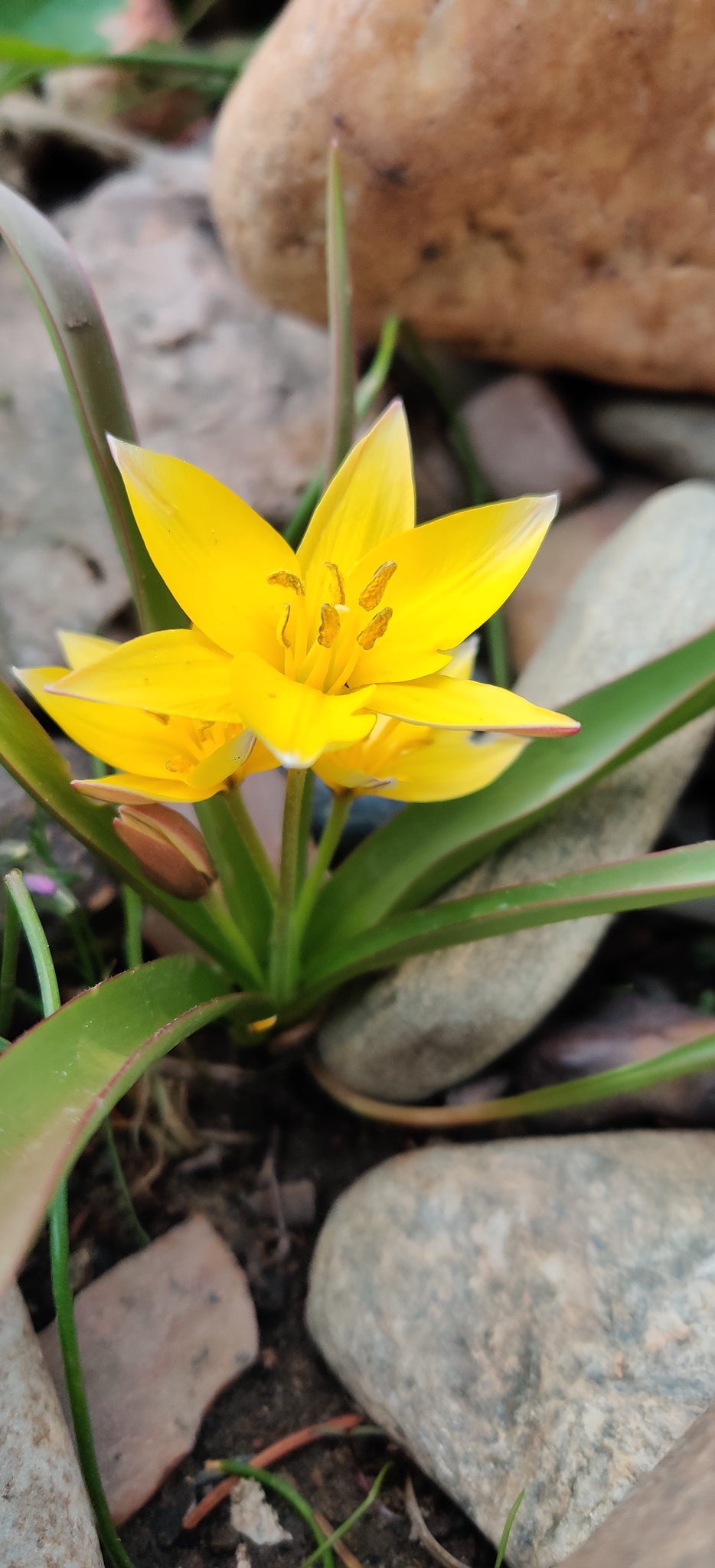
Mature plants remain exceptionally short. RHS gives about 15 cm (6 in) in height, Missouri Botanical Garden about 8–15 cm (3–6 in), and Chicago Botanic Garden describes stems around 15 cm (6 in) tall, confirming its rock-garden proportions. 3 6 7
Narrow, glossy green leaves frame the flowers. RHS mentions bright green foliage with sometimes reddish edges; Missouri Botanical Garden gives leaf lengths up to about 13 cm (5 in). The foliage naturally disappears after replenishing the bulb. 3 6
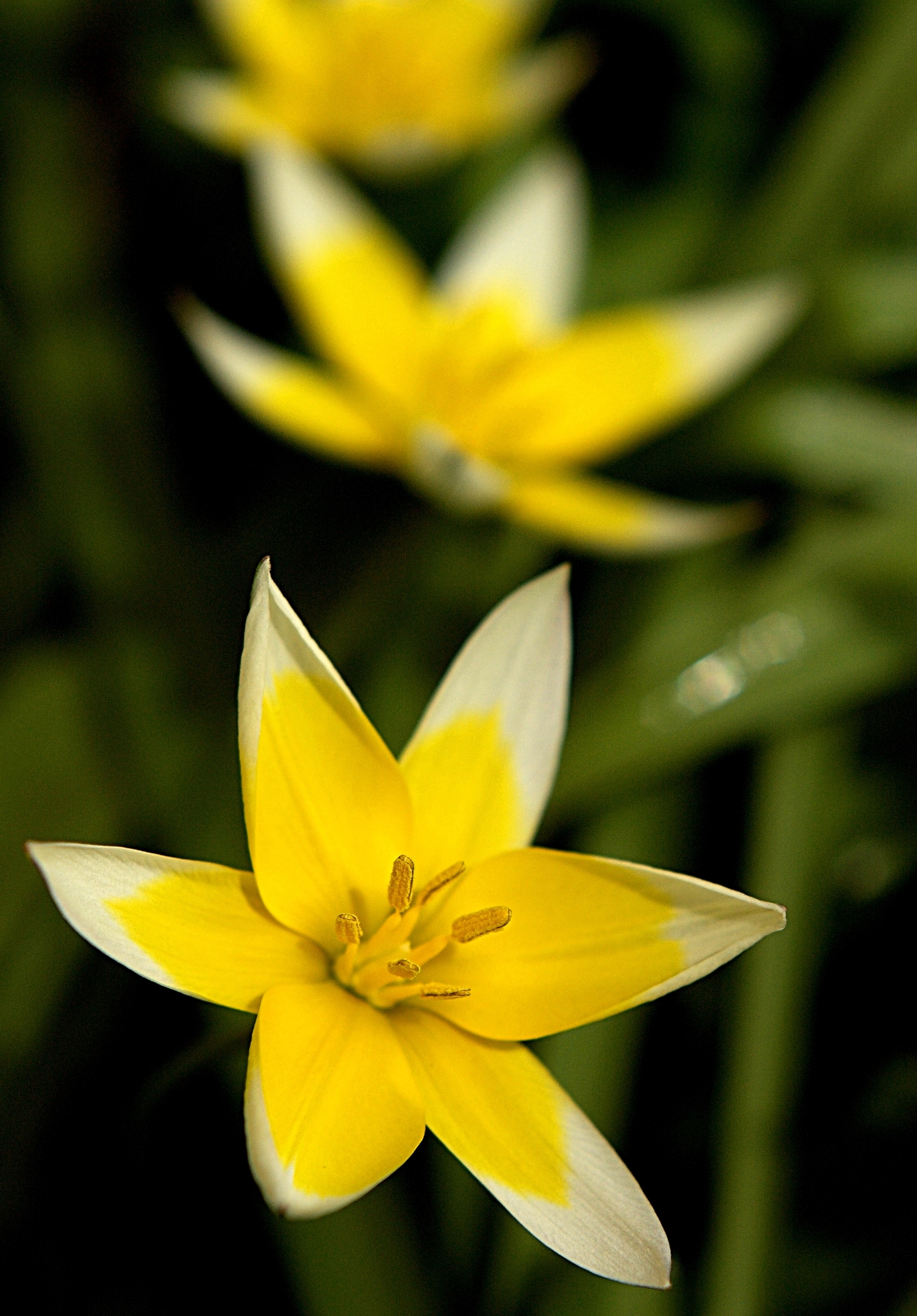
Star-shaped flowers provide the clearest clue: white tepals surround a broad yellow eye or center. Missouri Botanical Garden describes 3–6 upward-facing flowers per stem, about 6 cm (2.4 in) across; RHS likewise gives clusters of up to six. 6 3
The outside of the tepals may be darker. RHS describes white flowers flushed bronze externally, with bright yellow covering the lower half inside. White, yellow and brown summarize those shades. 3
Light controls how fully the star opens. Like many small species tulips, it shows the clearest star shape in bright sunshine; a more closed cup in dull weather does not necessarily indicate disease. 3 4
Taxonomy, names and Dasystemon
Kew's accepted name is Tulipa tarda Stapf. POWO lists Tulipa urumiensis Stapf as a rejected heterotypic synonym and T. urumiensis var. tarda as a homotypic synonym, explaining the names that coexist in catalogs and databases. 1
Conservation information on POWO adds a useful qualification: some data appear under Tulipa urumiensis. This does not require a garden label to change, but shows that alternative taxonomic treatments persist in the literature. 2
World Flora Online and GBIF also index Tulipa tarda Stapf, although the GBIF page links it with a treatment involving Tulipa urumiensis. Keep the complete label and check which botanical reference a supplier follows. 10 9
The trade name Dasystemon Tarda needs careful interpretation. Tulipa dasystemon is a related Central Asian taxon, and Pacific Bulb Society describes this group of small yellow mountain tulips. POWO does not make it the accepted name for T. tarda; Tulipa tarda Stapf remains the reference name here. 12 1
Christenhusz and colleagues' study of Tulipa places horticultural history, synonyms, hybridization and shifting classifications together. Useful synonyms should be acknowledged without turning a trade label into an accepted botanical name. 13 11
Range, habitat and conservation
Northwestern Iran and Central Asia form the native range recorded by POWO, with Iran, Kazakhstan and Kyrgyzstan in its distribution list. This is a tulip of continental temperate regions, not a French native species. 1
Rocky subalpine meadows in Central Asia are the native habitat described by Missouri Botanical Garden. They explain its suitability for well-drained slopes, gravel and pockets of humus-bearing soil between rocks. 6
RHS summarizes the origin as Central Asia and advises protection from excessive moisture. Small species tulips often tolerate dry cold better than heavy, saturated soil during dormancy. 3 4
Flora of North America notes that many planted tulips persist briefly but rarely become fully naturalized in the North American flora. The references used here do not support assigning T. tarda national invasive status in France. 11 8
Under the synonym Tulipa urumiensis, POWO also displays a confident extinction-risk prediction of “not threatened.” A prediction cannot replace local field assessment, but gives no basis for an unsupported claim of global threat. 2
Life cycle and naturalization
Fall planting starts the cycle with a dormant bulb. RHS recommends 10–15 cm (4–6 in) planting depth in fertile, humus-rich, well-drained soil; Missouri Botanical Garden gives a similar 10–13 cm (4–5 in). 3 6
Roots develop during the cool season, then foliage and flower stems emerge in spring. Missouri Botanical Garden and Chicago Botanic Garden place flowering in March–April in their Northern Hemisphere context; RHS describes opening from early spring. 6 7 3
Green leaves should remain after flowering. Both Missouri Botanical Garden and Chicago Botanic Garden advise waiting until they yellow: this stage replenishes the bulb and supports the following season's flowers. 6 7
Persistence and naturalization are major attractions, but depend on the site. Missouri Botanical Garden describes good perennial performance in suitable conditions and recommends rock gardens, front borders and naturalized planting around trees or shrubs. 6
Offsets provide the simplest garden propagation. RHS recommends lifting and separating daughter bulbs; collectors can also raise specialist tulips from seed, with a longer wait for flowering. 3 4
Growing in rock gardens and containers
Full sun is the preferred position. RHS specifies a sheltered sunny site, and Missouri Botanical Garden recommends average, well-drained soil in sun. Keep this low plant near the front, away from neighbors that would cover it. 3 6
The soil needs more than dryness alone. Missouri Botanical Garden notes that although most tulips favor somewhat gritty soil, this species seems to prefer well-drained humus-rich ground. Aim for moderate organic matter, an airy structure and no standing water. 6
A sunny pocket of stony, slightly humus-rich soil suits it in a rock garden. In borders, keep it in front: a 10–15 cm (4–6 in) clump quickly disappears behind vigorous perennials. 3 7
Containers need drainage holes. A terracotta pan, alpine trough or draining pot allows control of summer rest. Keeping the mix moist all year is a trap, especially beside thirstier summer plants. 4 5
Water in step with the bulb's cycle. Keep the mix moist during rooting and active growth, then reduce watering sharply once leaves yellow. In garden soil receiving normal spring rainfall, extra irrigation is rarely needed. 6 5
Toxicity and safety
Genus-level toxicity information applies to this species. ASPCA lists Tulipa spp. as toxic to dogs, cats and horses, identifies tulipalin A and B, and lists vomiting, diarrhea, excessive drooling and lethargy, with the greatest concentration in bulbs. 14
RHS also warns of harm from ingestion and possible skin allergy with Tulipa tarda, recommending gloves or protection when handling it. Planting, dividing and sorting numerous bulbs are the main contact situations. 3
Spring-flowering tulip bulbs pose risks throughout the year, as ASPCApro explains: during fall planting, spring growth or indoor container display. Bulbs in an accessible garage or bag therefore present more danger than an isolated garden flower. 15 14
Store bulbs beyond animals' reach, use gloves if skin reacts and contact a veterinarian after chewing or ingestion. No food use is recommended for Tulipa tarda. 14 3
Look-alikes and buying bulbs
Labels cause the most frequent confusion. Packages may say “Tarda,” “Tulipa tarda,” “late tulip,” “botanical tulip” or “Dasystemon Tarda.” Seek the full binomial while recognizing that horticultural catalogs do not always follow POWO exactly. 1 3
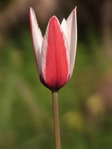
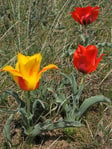
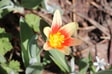
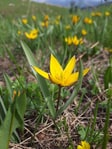
Its low clusters of white-and-yellow flowers distinguish it from Tulipa clusiana, which is often taller and more slender, with pink or red and white bicolored flowers. Labels and color and size details also help separate it from the small, multiflowered T. turkestanica. 3 4
Separating it from Tulipa dasystemon is harder because the trade has used the names together. Pacific Bulb Society describes T. dasystemon from Central Asia to northwestern China, whereas POWO lists Iran, Kazakhstan and Kyrgyzstan for T. tarda. The names should not be merged without a supporting source. 12 1
Choose firm bulbs without soft patches or mold and with a precise name. Small species bulbs often cost less than large cutting hybrids, but need a more specific site: sun, drainage, little competition and a dry rest. 3 6
Groups make a stronger display than single bulbs. One multiflowered stem can form a miniature bouquet, while a colony of 10–20 bulbs produces the yellow-and-white starry effect sought in rock gardens. 7 6
Common problems
Bulb rot is the main threat. RHS links it to poor drainage; Missouri Botanical Garden also mentions occasional molds, stem rot and basal rot. Soft bulbs, failure to sprout and shrinking clumps are typical warning signs. 3 6
Pests can also cause damage. RHS lists slugs, aphids, stem and bulb eelworms, and squirrels eating bulbs. Digging damage is especially conspicuous around such small plants in pots or troughs. 3
Weak flowering often reflects growing conditions: shade, prematurely cut foliage, wet summer soil or crowded bulbs. Moving to full sun, improving soil structure and dividing during dormancy address these common causes. 6 5
Tulip fire still deserves attention in Tulipa plantings. Small species tulips are not automatically immune; distorted, spotted leaves, stems or flowers warrant removing affected material and avoiding tulips in that position for a time. 3 5
If plants fail after one good year, examine summer conditions. A dry, well-drained rock garden suits them better than a perennial bed irrigated through summer. Tulipa tarda persists when its geophyte rhythm is respected, but may be short-lived when treated like an annual bedding plant. 4 6
Main sources
- Plants of the World Online / Kew, Tulipa tarda Stapf
- Plants of the World Online / Kew, Tulipa tarda general information
- Royal Horticultural Society, Tulipa tarda late tulip
- Royal Horticultural Society, Specialist tulips
- Royal Horticultural Society, How to grow tulips
- Missouri Botanical Garden Plant Finder, Tulipa tarda
- Chicago Botanic Garden Plant Finder, Tulipa tarda
- EPPO Global Database, Tulipa tarda
- GBIF Backbone Taxonomy, Tulipa tarda Stapf
- World Flora Online, Tulipa tarda Stapf
- Flora of North America, Tulipa
- Pacific Bulb Society, Tulipa species two
- Christenhusz et al. 2013, Tiptoe through the tulips
- ASPCA, Tulip toxicity entry
- ASPCApro / Veterinary Medicine, Spring-blooming bulbs
Frequently asked questions
Is late tulip a species tulip?
Yes. POWO accepts Tulipa tarda Stapf as a species, and RHS places it among miscellaneous or species tulips in division 15.
Why do some packages say Dasystemon Tarda?
It is a frequent horticultural label linked to older treatments or confusion within the dasystemon complex. The accepted name followed here is Tulipa tarda.
How much sun does late tulip need?
Full sun opens the flowers most fully and allows the small bulb to rebuild reserves. Dense shade leads to poor flowering.
Will late tulip naturalize?
Yes, in suitable conditions. Missouri Botanical Garden describes good perennial performance at a suitable site, requiring sun, well-drained soil and a reasonably dry summer rest.
Must I lift the bulbs every year?
Not necessarily. They can stay in well-drained rock or gravel gardens. In heavy soil or wet pots, summer lifting helps protect the bulbs.
Can I grow late tulip in pots?
Yes, especially in pots with drainage holes, alpine pans or troughs containing well-drained soil. Avoiding saturation during dormancy is essential.
Is late tulip toxic to pets?
Apply the precautions for Tulipa. ASPCA lists tulips as toxic to cats, dogs and horses, with the highest toxin concentrations in the bulbs.
Similar plants

If you are unsure about a plant’s toxicity, ask a botanist or veterinarian for advice.