
Sausage tree (Kigelia africana, )
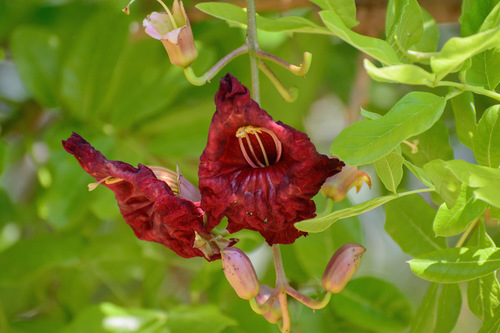

Sausage tree (Kigelia africana) is the only species in its genus, in the Bignoniaceae family, native to tropical and southern Africa. Its long, woody, cylindrical fruits hang from slender stalks and can weigh several kilograms. Fruit bats pollinate its night-opening flowers; the raw fruits are toxic, although processed fruits have traditional uses.
Read moreSausage tree
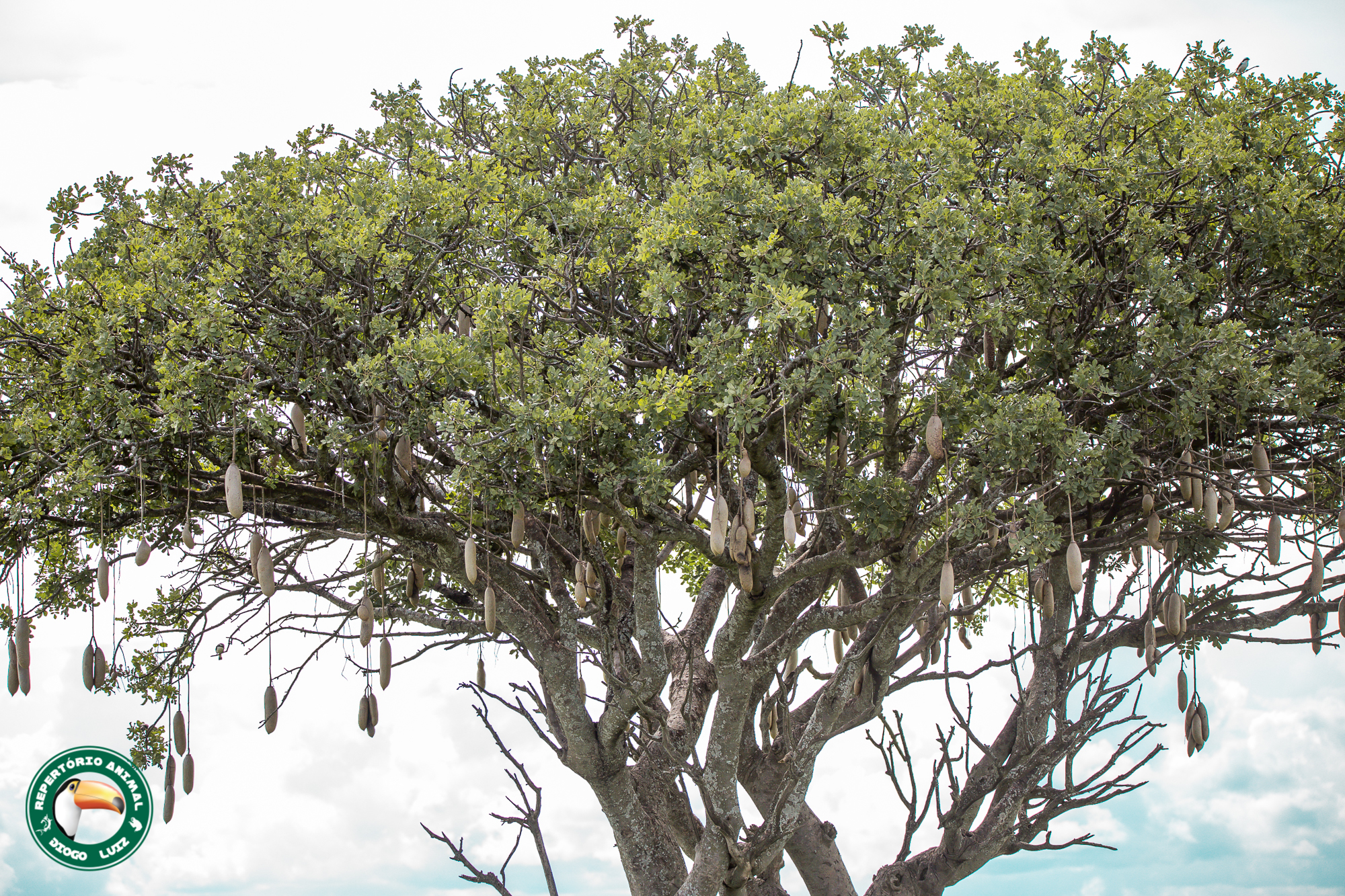


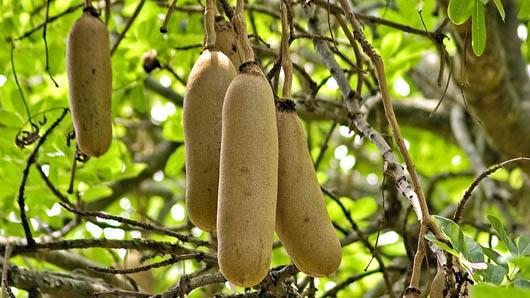
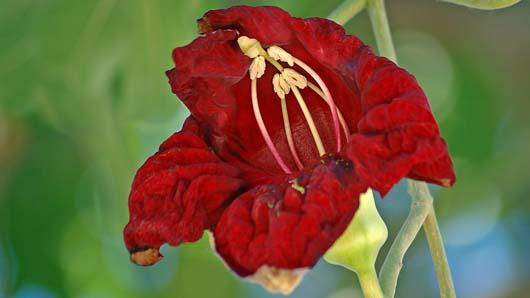
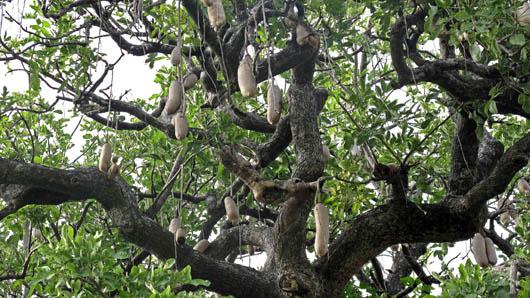
© photo
(c) Miguel A. Casado, some rights reserved (CC BY-NC), uploaded by Miguel A. Casado · cc-by-nc
Tony Rebelo · cc-by-nc
Diogo Luiz · cc-by
Taken Aug 26, 2022 by ramos luis m. (cc-by-sa)
Taken Nov 6, 2019 by Muhammad Falah (cc-by-sa)
Taken Apr 14, 2017 by Tela Botanica − Melis ANTONINO (cc-by-sa)
Taken May 9, 2019 by Prakash Rudraraju (cc-by-sa)
Taken Sep 9, 2020 by Pépin d'ALMEIDA (cc-by-sa)
© copyright of the Board of Trustees of the Royal Botanic Gardens, Kew.


Global distribution
The native range covers most of tropical and southern Africa, from Senegal and Sudan to KwaZulu-Natal in South Africa, with populations recorded in more than thirty countries. It has been introduced as an ornamental in tropical Asia, the Indian Ocean region and Australia. In mainland France it is confined to greenhouses and botanical collections.
- Native6
- Introduced2
- Senegal
- Nigeria
- Sudan
- Kenya
- Tanzania
- South Africa
- India
- Mauritius
Hexagons: regions where the plant occurs. Green dots: native range.1
Identity
Sausage tree (Kigelia africana (Lam.) Benth., 1849) is the sole species of Kigelia, a genus in the Bignoniaceae family. 1 7
A Mozambican vernacular term for the sausage-shaped fruit gave rise to Kigelia. The epithet africana reflects a distribution across much of the continent. Lamarck first described the species as Bignonia africana in 1785; George Bentham transferred it to Kigelia in 1849, creating the combination accepted today. 1
The name sausage tree describes the long, cylindrical hanging fruits. They give the tree its most recognizable outline for much of the year. 2
Recognition
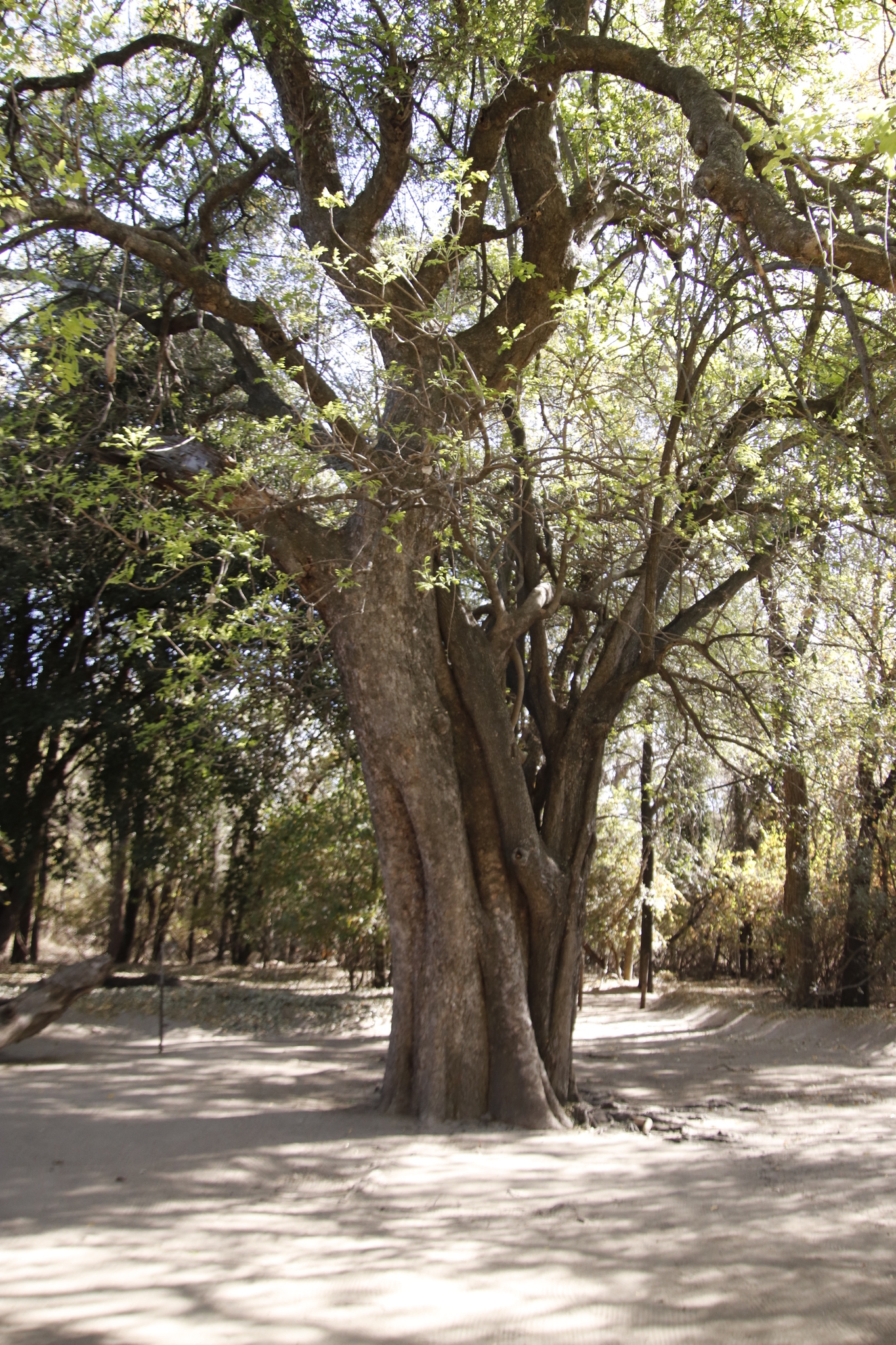
A dense, rounded crown and semi-evergreen foliage characterize Kigelia africana. It commonly reaches 10–20 m (33–66 ft), with exceptional trees reported at 23–25 m (75–82 ft). Its short, stout trunk has light-brown bark that flakes away in thin plates. 2 3
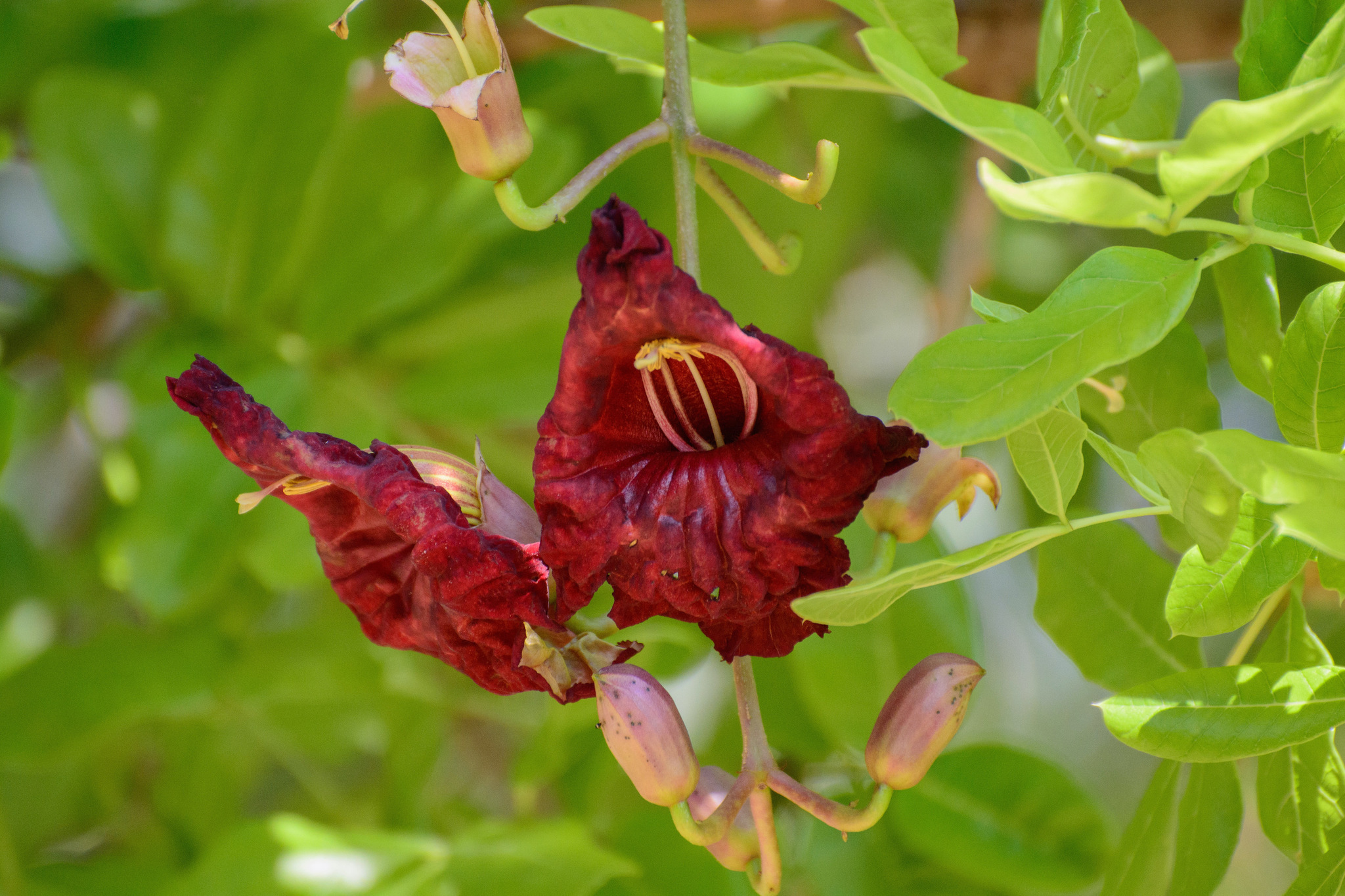
Compound leaves cluster near branch tips, each with three to five pairs of leathery, glossy leaflets. Long, drooping panicles can approach 1 m (3.3 ft) and carry trumpet-shaped flowers 5–12 cm (2–5 in) across. Maroon to purple with yellow veins, the flowers have a musky scent that attracts epauletted fruit bats, the principal night pollinators. Charaxes butterflies and several nectar-feeding birds also visit after the flowers open. 2 3
Huge woody berries, gray to brown, hang from long stalks. A fruit can reach 1 m (3.3 ft) long and 18 cm (7 in) across, weighing as much as 12 kg (26 lb). There is no second species in the genus with which to compare this fruit: Kigelia is monotypic. 3 4
Useful taxonomy
The accepted combination, Kigelia africana (Lam.) Benth., derives from Lamarck’s original Bignonia africana Lam. 1785. Two subspecies are recognized: the widespread Kigelia africana subsp. africana and the East African Kigelia africana subsp. moosa (Sprague) Bidgood & Verdc.. 1
Older synonyms include Kigelia pinnata (Jacq.) DC., long used in horticultural and pharmacological writing, and Kigelia aethiopum (Fenzl) Dandy. About ten other regional names were described separately before being brought together under one taxon. Kigelia pinnata still appears frequently in recent medical publications, explaining its persistence outside current taxonomic databases. 1 7
Habitat and range
Across tropical and southern Africa, the native range stretches from Senegal and Sudan to KwaZulu-Natal in South Africa, with populations recorded in more than thirty countries. Sausage tree grows in moist savanna, gallery forest and along waterways, from sea level to about 3,000 m (9,840 ft), in areas receiving 900–2,000 mm (35–79 in) of annual rainfall. 4 2
The International Union for Conservation of Nature lists sausage tree as Least Concern. Its broad continental range buffers it against an overall decline, although agricultural deforestation and overharvesting for cosmetics and traditional medicine exert local pressure in West Africa. 6
Outside Africa, cultivation as an ornamental curiosity occurs in tropical and subtropical climates, including India, Mauritius and Australia. In frost-prone temperate places such as mainland France, it needs a heated greenhouse or botanical collection because it lacks frost resistance. 3
Life cycle and reproduction
Night-opening flowers develop successively along hanging panicles, which carry several dozen blooms. Each flower opens for only one night before fading, restricting its pollination window to nocturnal visitors. Epauletted fruit bats perform most pollination; dark color, musky scent and night opening are characteristic adaptations to bat visitors. 2
Seeds need no obligatory pretreatment and germinate in 10–25 days in warm, moist substrate, although success rates are often low. There are roughly 9,700 seeds per kilogram (2.2 lb). Young trees grow quickly in favorable climates, about 1 m (3.3 ft) a year, producing a shade-giving outline within 4–5 years. Flowering starts at about 6 years. Fruits take several months to ripen before falling or rotting on the ground, contributing to natural regeneration. 4
Uses and risks
Raw or immature fruit is toxic and purgative to humans. It can cause mouth blisters and skin blisters after prolonged contact, and is never eaten unprocessed. Dried, roasted or fermented fruit traditionally flavors some beers, while roasted seeds serve as famine food during shortages. 2 4
Traditional African medicine uses the bark, leaves and fruit for ulcers, wounds, skin conditions and some digestive or respiratory complaints; extracts also enter commercial skin cosmetics. Unlike the unprocessed fruit, foliage and bark have no documented toxicity in contact with domestic animals. 4 3
Medium-density wood provides boards, dugout canoes and tool handles. Roots yield a yellow dye, while hollowed fruits traditionally become rodent traps or carved objects. Vigorous, spreading roots mean trees must be planted well away from foundations. 4 2
Varieties, look-alikes and related plants
Established horticultural cultivars comparable to those of familiar houseplants are absent from Kigelia africana. The recognized division is botanical, between the typical subspecies and East African subsp. moosa. Specimens sold as collection curiosities are otherwise young seedlings kept in pots, with no particular varietal status. 1
Since Kigelia contains a single species, confusion mainly concerns the scientific name in use. Many publications, especially pharmacological ones, retain Kigelia pinnata, which can suggest two separate taxa even though it denotes the same tree. From a distance, the silhouette and hanging fruits can also suggest other large African trees, such as Adansonia digitata; its fruit, however, is an oval capsule rather than a long cylinder.
Main sources
- Plants of the World Online / Kew, Kigelia africana (Lam.) Benth.
- PlantZAfrica / SANBI, Kigelia africana
- Useful Tropical Plants, Kigelia africana
- World Agroforestry Database, Kigelia africana species profile
- CABI Compendium, Kigelia africana (sausage tree)
- IUCN Red List, Kigelia africana assessment
- GBIF, Kigelia africana (Lam.) Benth. species record
Frequently asked questions
Is sausage tree poisonous?
Raw or immature fruit is toxic and purgative to humans and can cause mouth and skin blisters. Dried, roasted or fermented fruit has traditional culinary uses or flavors some beers.
Why do Kigelia africana fruits look like sausages?
The fruit is a long, cylindrical woody berry hanging from a slender stalk, like a sausage suspended from a branch. A ripe fruit can weigh up to 12 kg (26 lb).
What pollinates sausage tree flowers?
Epauletted fruit bats carry out most night pollination. Charaxes butterflies and several nectar-feeding birds also visit the flowers after they open.
Are Kigelia africana and Kigelia pinnata the same species?
Yes. Kigelia pinnata is a synonym of Kigelia africana. It remains common in pharmacological literature despite the taxonomic revision that brought these names under one accepted species.
Can sausage tree grow outdoors in a temperate climate?
It needs a container in a heated greenhouse or bright conservatory where frost occurs. The species is highly frost-sensitive and cannot survive outdoors in a temperate climate.
Is sausage tree threatened?
The IUCN lists it as Least Concern because of its wide continental range, despite local declines caused by agricultural deforestation and overharvesting in West Africa.
How old is sausage tree when it first flowers?
First flowering generally begins at about 6 years, following rapid juvenile growth of roughly 1 m (3.3 ft) per year.
Similar plants
If you are unsure about a plant’s toxicity, ask a botanist or veterinarian for advice.