
Peyote (Lophophora williamsii, )
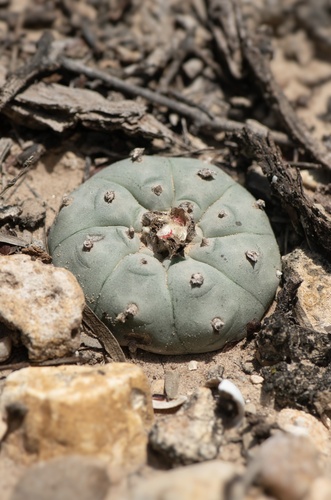
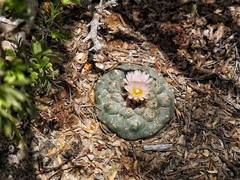

Peyote (Lophophora williamsii) is a small, rounded, spineless cactus in the Cactaceae, native to the deserts of southern Texas and northeastern Mexico. It grows extremely slowly and its stem contains psychoactive alkaloids, including mescaline, associated with Indigenous ritual use extending back several thousand years. The IUCN classifies the species as Vulnerable, and its legal status varies widely between countries.
Read morePeyote, Mescal, Mescal buttons, Dumpling cactus and Devil’s root
Give plenty of ambient light without direct sun on the leaves.
Partial shade to filtered light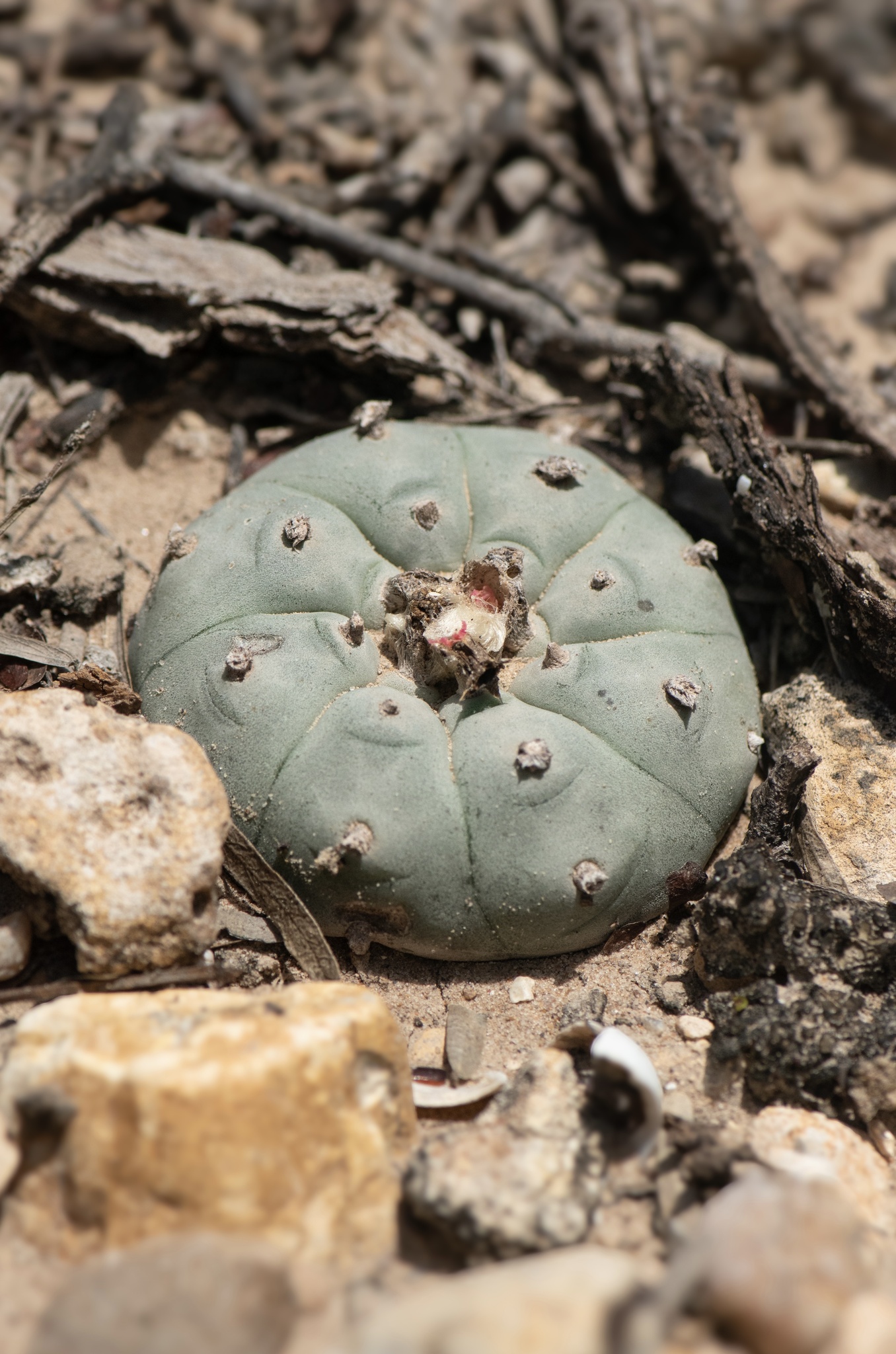


© photo
(c) Aidan Campos, some rights reserved (CC BY-NC), uploaded by Aidan Campos · cc-by-nc
José Francisco Colorado-Dapa · cc-by-sa
Juan Cruzado Cortés · cc-by-nc-sa
Taken Apr 26, 2022 by Fabrice Rubio (cc-by-sa)
Taken Jul 29, 2022 by Fabrice Rubio (cc-by-sa)
© copyright of the Board of Trustees of the Royal Botanic Gardens, Kew.


Global distribution
Lophophora williamsii is native to southwestern and southern Texas and northeastern Mexico, extending south to Jalisco according to POWO. No naturalized or invasive status outside that range is reported here; its worldwide presence in collections reflects cultivation under varying legal restrictions rather than spontaneous escape.
Identity
Peyote (Lophophora williamsii (Lem. ex J.F.Cels) J.M.Coult., 1894), also called Mescal, Mescal buttons, Dumpling cactus and Devil’s root, belongs to the Cactaceae. Plants of the World Online accepts it as a species of Lophophora. Charles Lemaire originally described the plant; John Merle Coulter transferred it to its present genus in 1894. The accepted name provides a consistent reference across older botanical and pharmacological literature. 1
The name peyote comes through Spanish from Nahuatl peyōtl. Linguists connect it with peyōni, meaning “to glisten” or “to sparkle,” probably referring to the silky appearance of the woolly areoles at the stem's crown. 7
Its stem contains several dozen alkaloids, particularly mescaline, which accounts for its psychoactive character. Indigenous ritual use extends back more than three thousand years, with archaeological remains from caves in Texas documenting that history. 8
Recognition
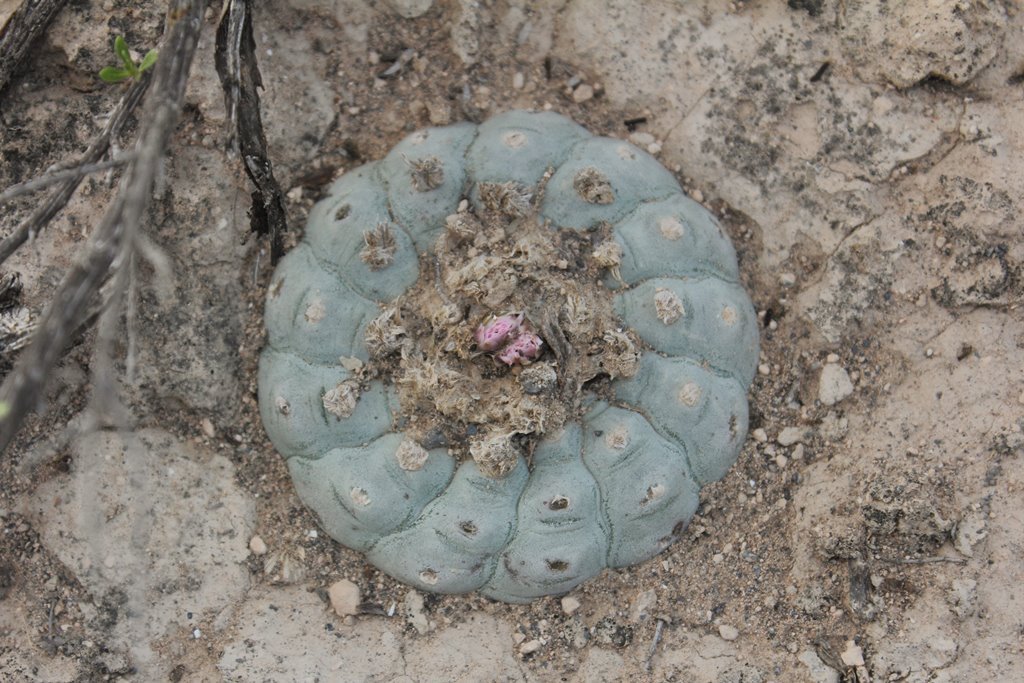
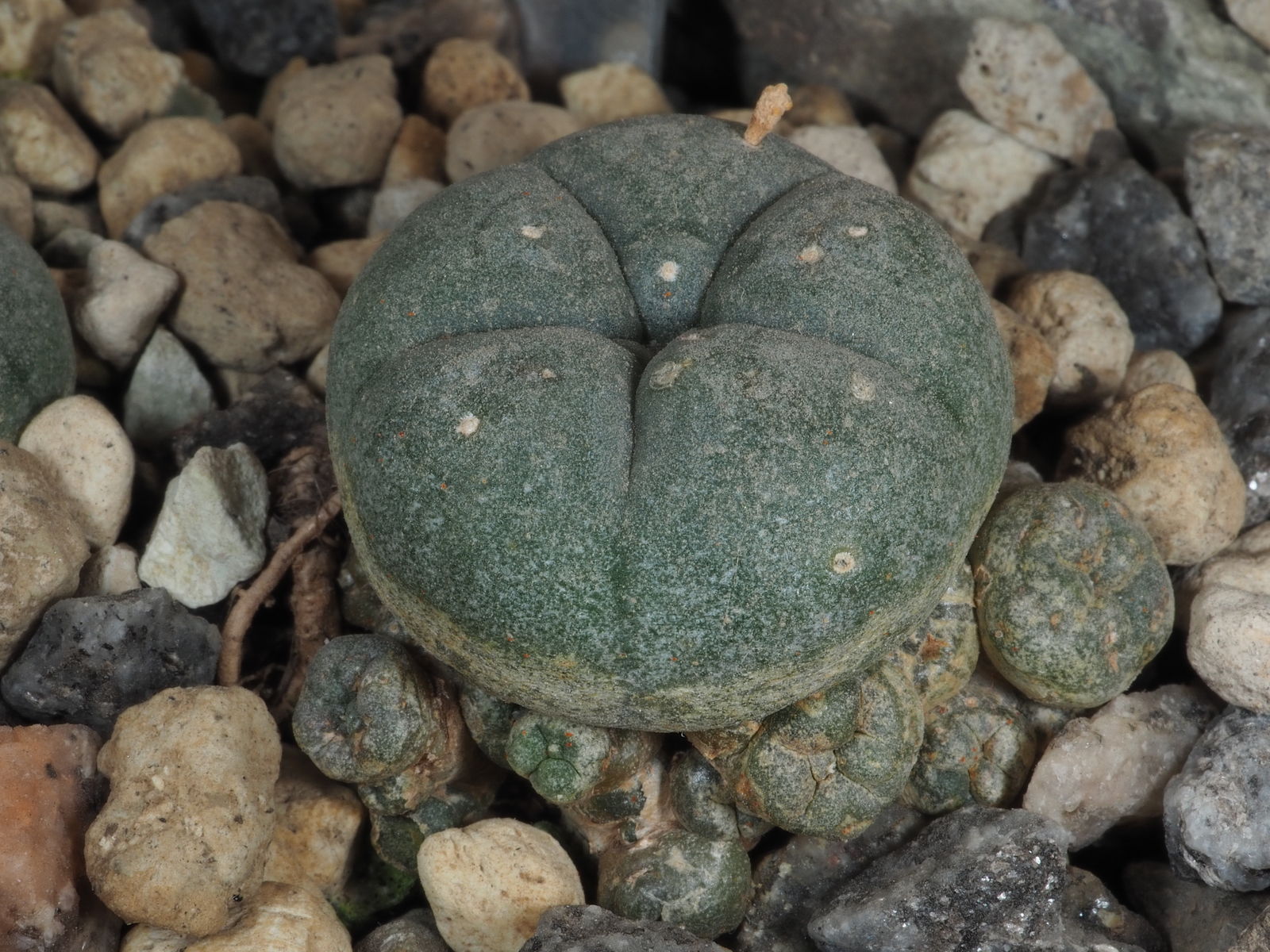
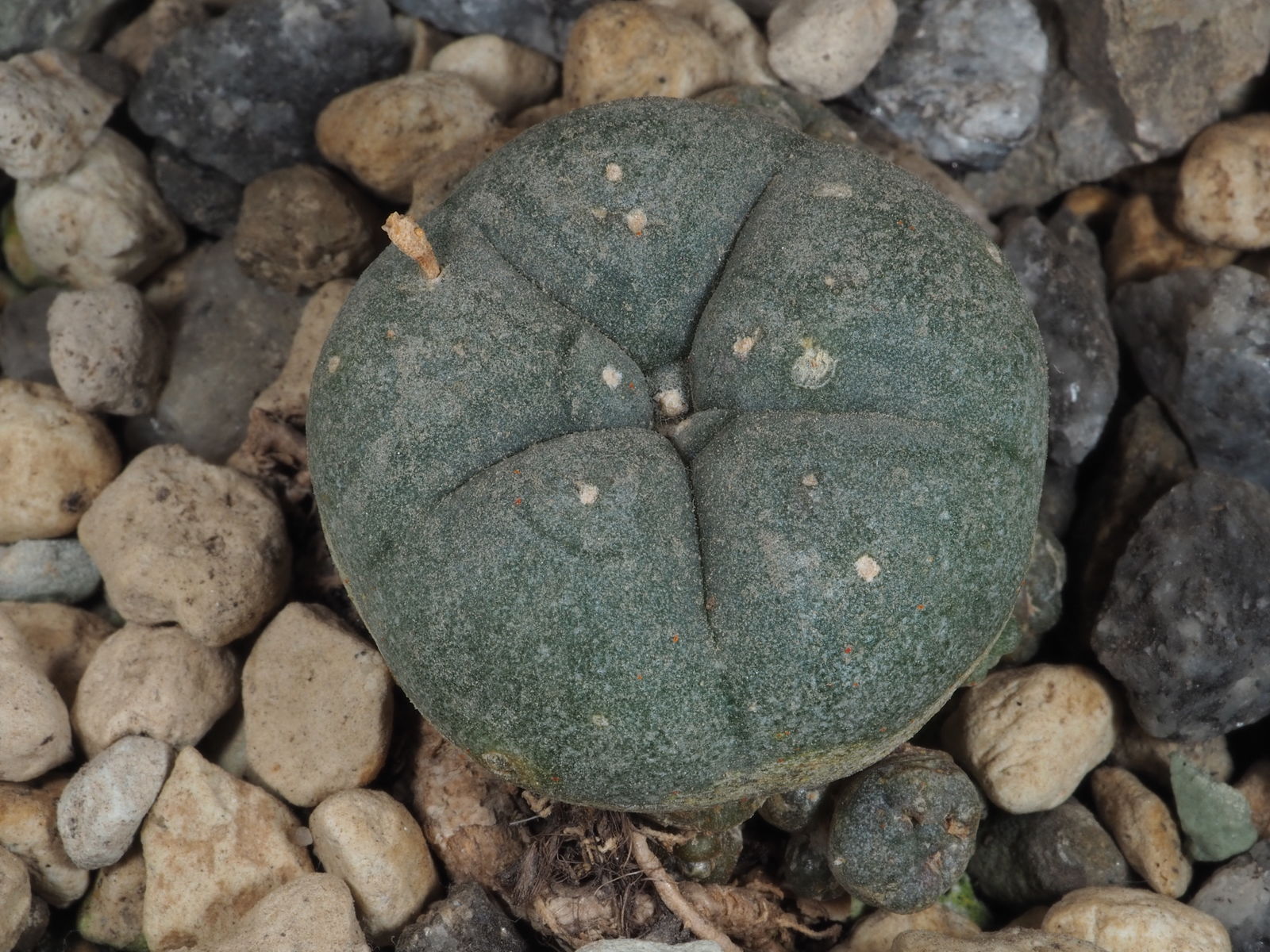
A rounded, spineless stem with a flattened crown and central depression gives peyote its distinctive outline. Woolly areoles surround the growing point. NC State Extension lists a height of 5–8 cm (2–3 in) and a diameter of 7.5–13 cm (3–5 in); botanical accounts also describe exceptional specimens approaching 20 cm (8 in) tall. The stem ranges from grayish green near its base to ashy green toward the crown. 3 5
Below ground, a fleshy turnip-shaped root measures 6–12 cm (2.5–5 in) long and often exceeds the exposed stem in bulk. An older plant may produce several heads from the same root, forming a compact cluster of closely packed stems. The small visible crown therefore gives an incomplete impression of the whole plant. 5
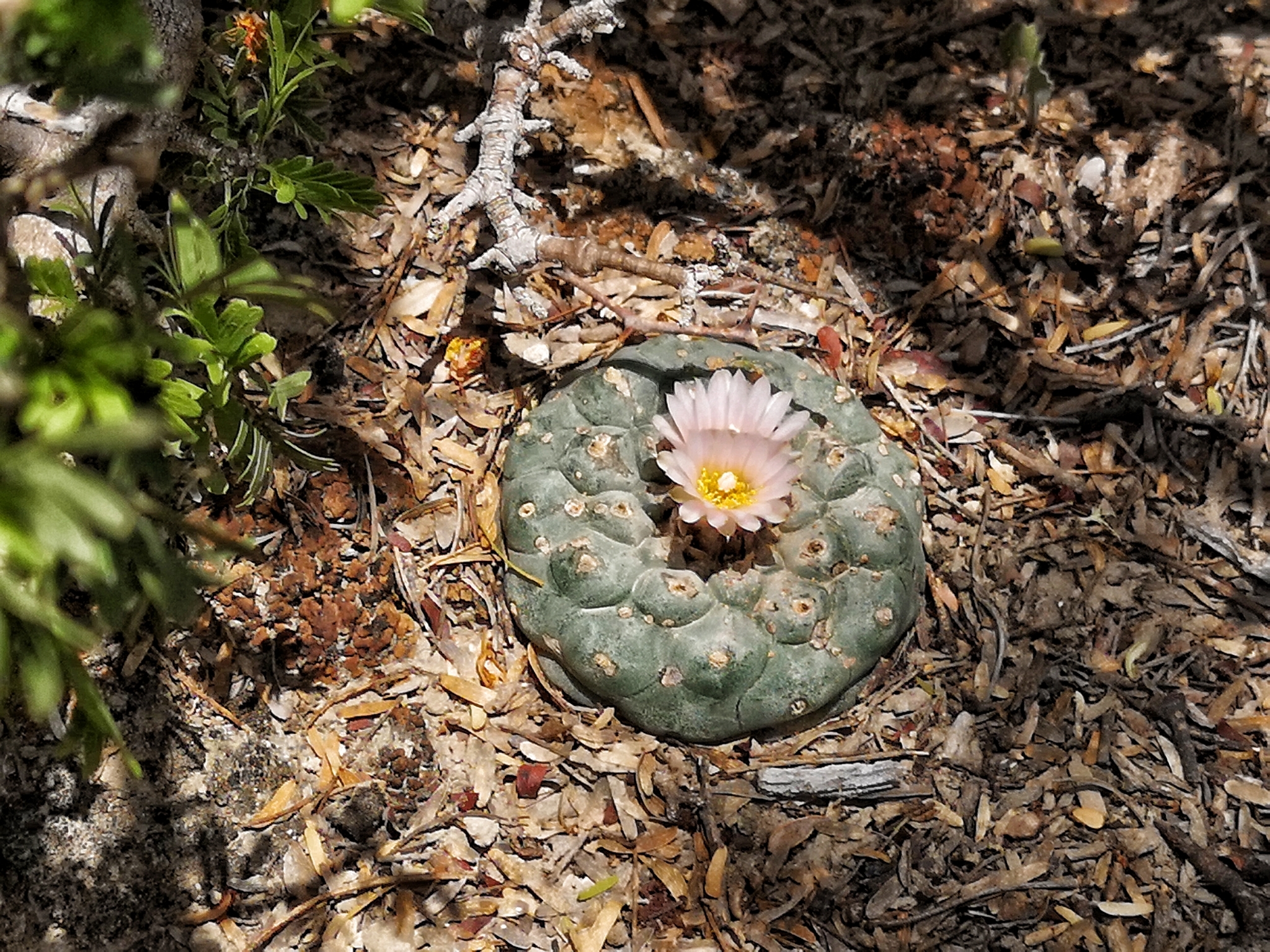
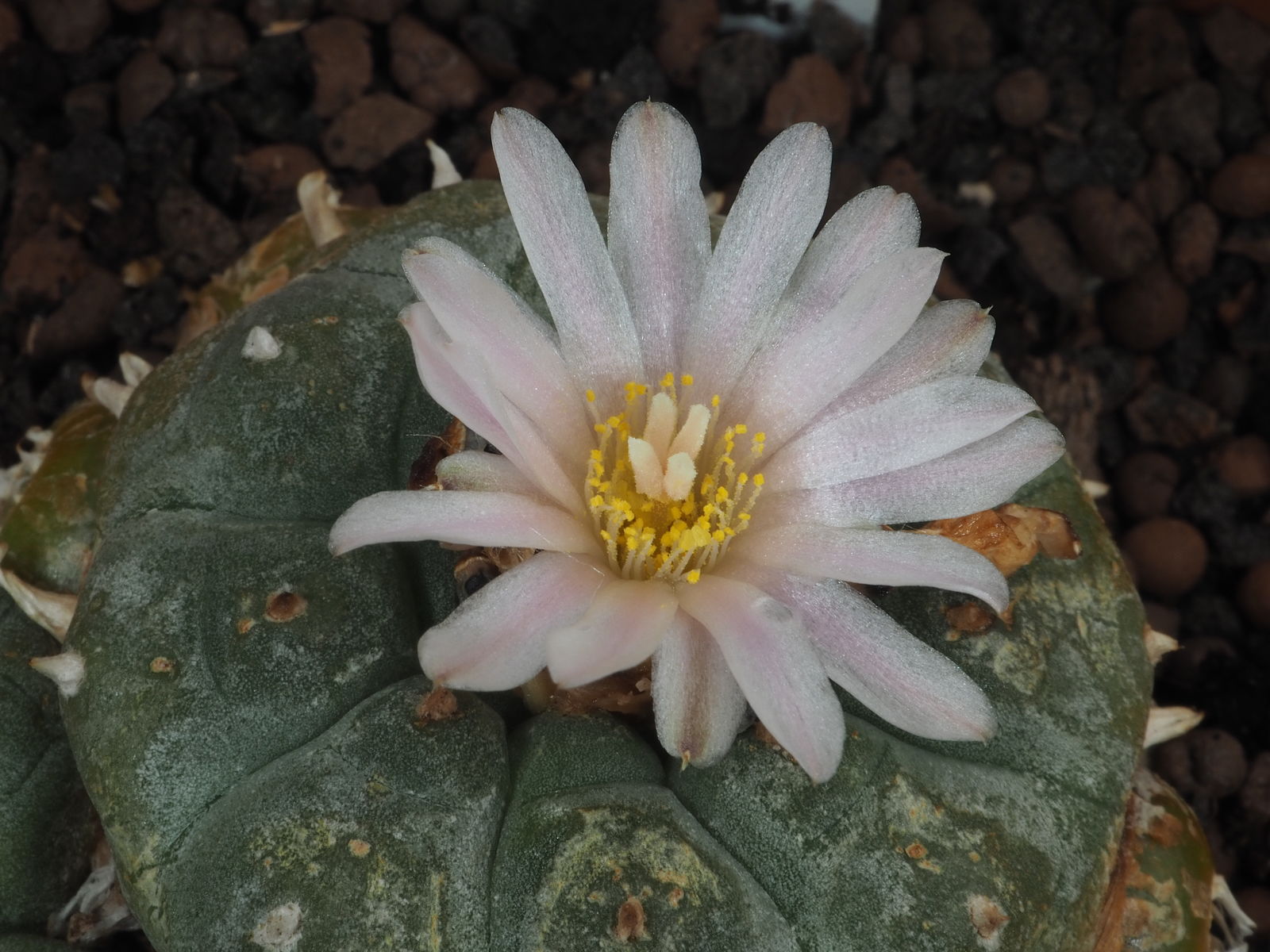
Flowering is reported from May through September in the Northern Hemisphere conditions described by the sources; those months are not a universal calendar. Solitary or paired flowers are pink to white, sometimes yellow, and 1.3–2.5 cm (0.5–1 in) across. They open in daylight and each lasts only two or three days. The small pink to red berry can take up to a year to ripen after flowering. 3 4
Useful taxonomy
POWO recognizes two widely accepted species in Lophophora: L. williamsii and L. diffusa. The latter occupies a more restricted range in Querétaro and Hidalgo. Peyote's older names include Echinocactus williamsii Lem. ex J.F.Cels, the original name, followed by Anhalonium lewinii Henn. and Lophophora lewinii (Henn.) Rusby, which persisted in pharmacological writing. Specialist collections also use Lophophora jourdaniana Haberm. and Lophophora williamsii var. cristata Houghton for particular forms.
These five historical names explain why descriptions and labels can differ even when they refer to the same accepted species. The stable botanical reference remains Lophophora williamsii; a seller's label alone does not establish a separate species or variety. 1
Habitat and distribution
The native range extends from southwestern and southern Texas into northeastern Mexico, reaching south to Jalisco according to POWO. Plants grow alone or in groups in the Chihuahuan Desert, on dry, limestone-rich, highly mineral soils at elevations of 100–1,900 m (about 330–6,230 ft). Thorny shrubs commonly shelter them from direct sun. The open desert setting should not obscure the importance of that protective cover. 1 4
The IUCN assessed peyote as Vulnerable in 2017. Wild collecting for ritual use directly reduces some local populations, especially in Texas. The cited account reports neither naturalization nor invasive status outside the native range. Its worldwide presence largely reflects specialist cultivation under varying legal restrictions, rather than garden escapes of the kind associated with some ornamental cacti. 2
Life cycle and reproduction
Peyote is among the slowest-growing cacti: a wild plant may take up to 30 years to flower. Cultivated plants generally reach that stage in 6–10 years. Grafting onto a rootstock such as Echinopsis pachanoi, the San Pedro cactus, can shorten the interval to about 3 years. These are different growing circumstances, not interchangeable estimates of the species' natural maturation time. 3
After pollination, a flower develops into a small fleshy fruit that takes several months to mature. Seeds germinate in warm, moist substrate, although emergence can be slow and uneven. Older plants also reproduce vegetatively by developing multiple heads from the same root. Both processes contribute to the clustered appearance sometimes seen in mature plants. 4
Uses and legal context
Indigenous peoples of North America have used peyote ritually for more than three thousand years, as archaeological remains from Texas caves attest. The Native American Church regards it as a sacrament in its ceremonies. The literature describes a specific religious exemption in the United States; it is not general permission for anyone to possess, grow or consume peyote. 8
Legal treatment differs sharply between countries. France provides one documented example: peyote was classified as toxic in 1957, as a narcotic in 1966, legalized again in 1990, then reclassified as a narcotic by the order of August 18, 2004. That order covers the plant itself and active alkaloids beyond mescaline alone. This French history describes a jurisdiction-specific legal framework; it does not establish the law where an English-speaking reader lives. 6
Preparation, dosing and consumption instructions are outside this botanical and historical account. Any practical decision depends on the applicable local law, rather than the plant's appearance as a small collectible cactus. 6
Toxicity and precautions
NC State Extension’s “Poisonous to Humans” section classifies toxicity after ingestion as low in humans. It lists stomach pain, vomiting, diarrhea, dilated pupils, blurred vision and hallucinations after ingestion of fresh or dried above-ground material. These human symptoms do not establish a veterinary assessment for cats or dogs. Keep the plant away from pets as a precaution. 3
Mescaline and other alkaloids, including lophophorine, account for peyote’s psychoactive character. Their presence does not establish a safe dose or predict effects in a child or an animal species. After accidental ingestion, contact a poison control center for a person or a veterinarian for an animal rather than trying to assess a dose yourself. 3
Varieties, look-alikes and related species
Specialist succulent collections sometimes use 'Cristata' for a crested, fasciated form corresponding to the former Lophophora williamsii var. cristata, now treated by POWO as a synonym. 'Jourdaniana' is another historical name, applied to multiheaded clumps. Neither name represents a separate accepted botanical species or variety. Their continued use reflects collection history and appearance. 1
The closest source of confusion is Lophophora diffusa, a neighboring species from Querétaro with less pronounced ribs and a more yellow-green stem. Young Ariocarpus and Astrophytum can also be rounded and sparsely spined. A documented scientific identity and provenance are more reliable than the general outline of a stem, particularly in young or atypical specimens.
Main sources
- Plants of the World Online / Kew, Lophophora williamsii (Lem. ex J.F.Cels) J.M.Coult.
- IUCN Red List, Lophophora williamsii assessment (Terry, 2017)
- North Carolina Extension Gardener Plant Toolbox, Lophophora williamsii
- Native Plant Information Network / Lady Bird Johnson Wildflower Center, Lophophora williamsii
- Flora of North America via eFloras, Lophophora williamsii
- Légifrance, order of August 18, 2004 amending the narcotics list (peyote)
- Merriam-Webster, peyote (Nahuatl etymology)
- Orsolini et al., The Endless Trip among the NPS Users, Frontiers in Psychiatry (2017)
Frequently asked questions
Is growing peyote legal in France?
No. The French order of August 18, 2004 classifies peyote as a narcotic, making cultivation and possession prohibited there despite its appearance as an ordinary succulent cactus. This describes French law, not the law in every country.
Is peyote toxic to cats and dogs?
Keep peyote away from cats and dogs and seek veterinary advice after ingestion. NC State’s “Poisonous to Humans” section describes low toxicity and symptoms in humans; it does not provide a clinical assessment specific to cats or dogs.
Why does peyote grow so slowly?
Wild plants often take up to thirty years to reach flowering age. Cultivation can shorten that interval to six to ten years, and grafting reduces it further.
How can peyote be distinguished from Lophophora diffusa?
Lophophora diffusa, a related species from Querétaro, has less pronounced ribs and a more yellow-green color. Documented provenance remains the most reliable distinction between the two.
Is wild peyote threatened?
Yes. The IUCN has classified it as Vulnerable since its 2017 assessment because of intensive wild collecting and declining populations, especially in Texas.
Where does the name peyote come from?
It comes from Nahuatl peyōtl, linked to the root peyōni, meaning “to glisten” or “to sparkle,” probably referring to the silky appearance of the woolly areoles on the stem.
Can peyote be grafted?
Yes, grafting is an established horticultural practice. A peyote scion on a rootstock such as Echinopsis pachanoi can reach maturity in about three years, compared with several years from seed.
Similar plants
If you are unsure about a plant’s toxicity, ask a botanist or veterinarian for advice.