
Indian pokeweed (Phytolacca acinosa, )
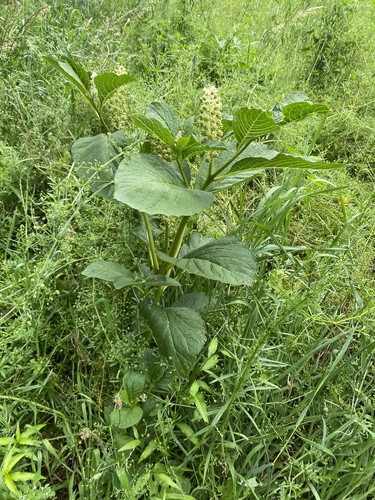
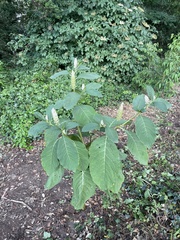
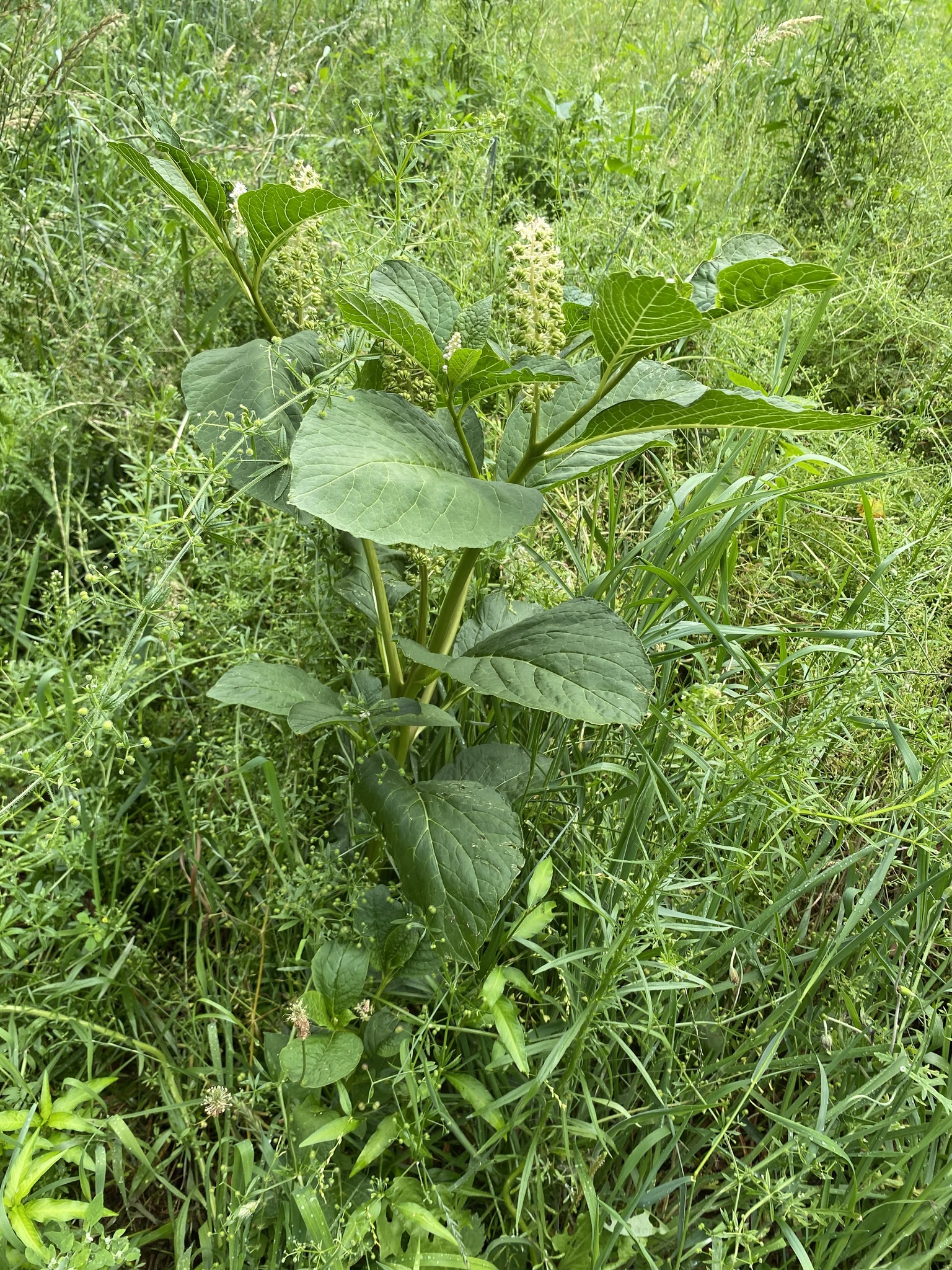
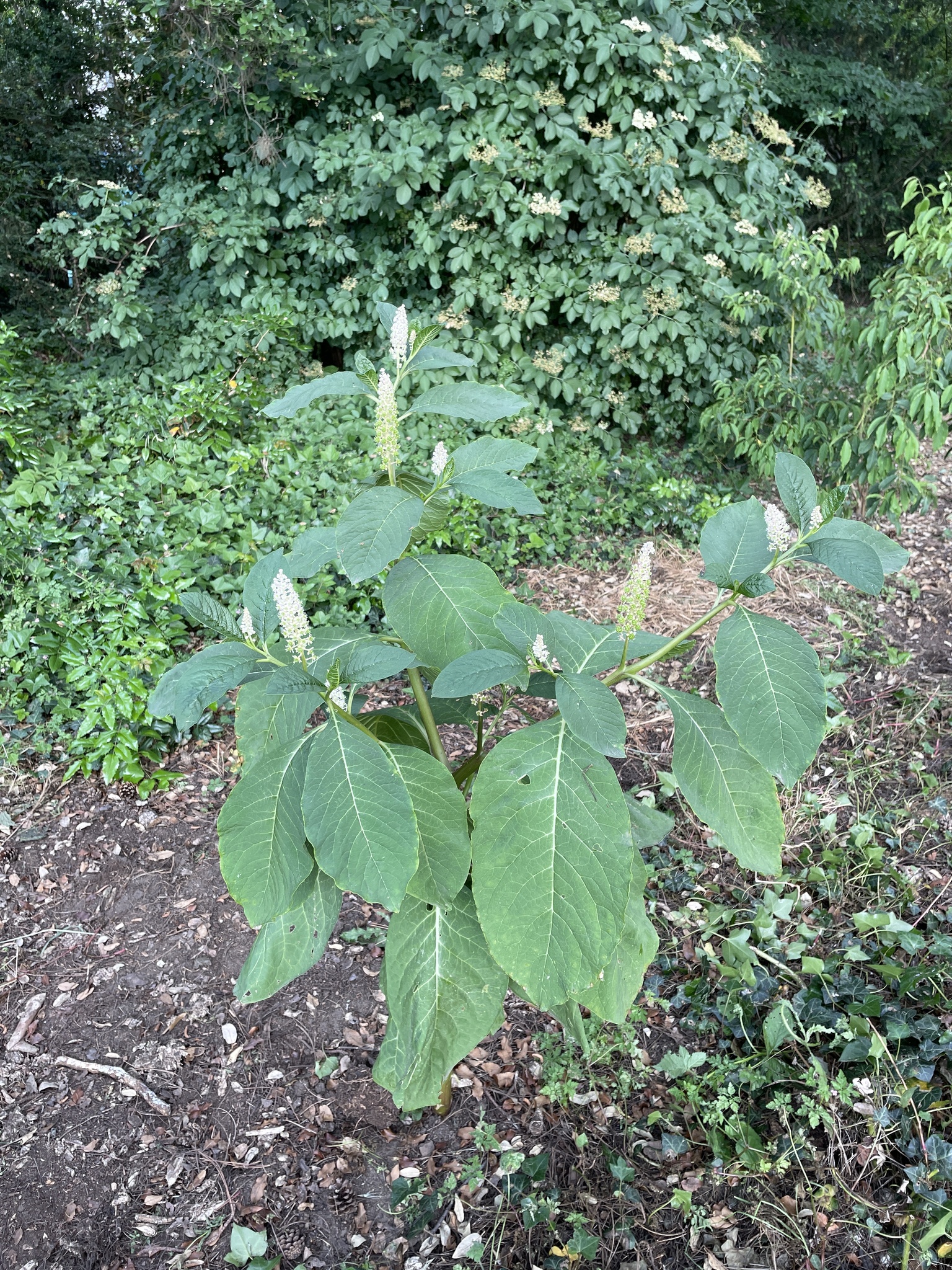
Indian pokeweed (Phytolacca acinosa) is an herbaceous perennial in the Phytolaccaceae family, native from the Himalayas to China and Japan. Upright flower clusters, a fleshy root sometimes mistaken for ginseng and toxicity throughout the plant make careful identification essential, including where it has naturalized in Europe.
Read moreIndian pokeweed and Indian poke


© photo
Radosław Puchałka · cc0
Henry Miller · cc-by
Taken Aug 7, 2021 by Miri Bewersdorff (cc-by-sa)
Taken Oct 26, 2016 by Tela Botanica − Dominique BLANC (cc-by-sa)
Taken Aug 9, 2022 by Waldemar Zeja (cc-by-sa)
Taken Jan 8, 2022 by Lisa Wiebrecht (cc-by-sa)
Taken Jun 3, 2020 by Maarten Vanhove (cc-by-sa)
© copyright of the Board of Trustees of the Royal Botanic Gardens, Kew.




Global distribution
The native range covers temperate eastern Asia, from Himalayan foothills in northern Pakistan through Nepal and Bhutan to most of China, Korea, Japan, Taiwan and northern Vietnam. Introduced to Europe and North America for historical food and dye uses, it has naturalized locally; these introductions remain distinct from its more restricted original range.
- Native7
- Introduced5
- China
- India
- Nepal
- Bhutan
- Japan
- South Korea
- Vietnam
- Metropolitan France
- Germany
- Switzerland
- Croatia
- United States
Hexagons: regions where the plant occurs. Green dots: native range.1
Identity
Indian pokeweed (Phytolacca acinosa Roxb., 1814), also called Indian poke, is an herbaceous perennial in the Phytolaccaceae family. Scottish botanist William Roxburgh described it in 1814 in the catalog of the Calcutta botanical garden. The accepted name has remained unchanged despite persistent horticultural synonyms. 2 1
The epithet acinosa comes from Latin acinus, a grape, describing the fleshy fruits packed into dense clusters. The synonym Phytolacca esculenta, associated with Belgian horticulturist Louis Van Houtte, recalls the early European use of young shoots as food, before the toxicity of mature plants was better documented. 6
Native to temperate eastern Asia, this species reached Europe and North America in the 19th century for its young shoots and the dye obtained from its fruits. It has since naturalized in places and is considered potentially invasive in parts of its secondary range. 8
Recognition
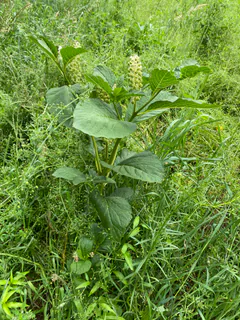
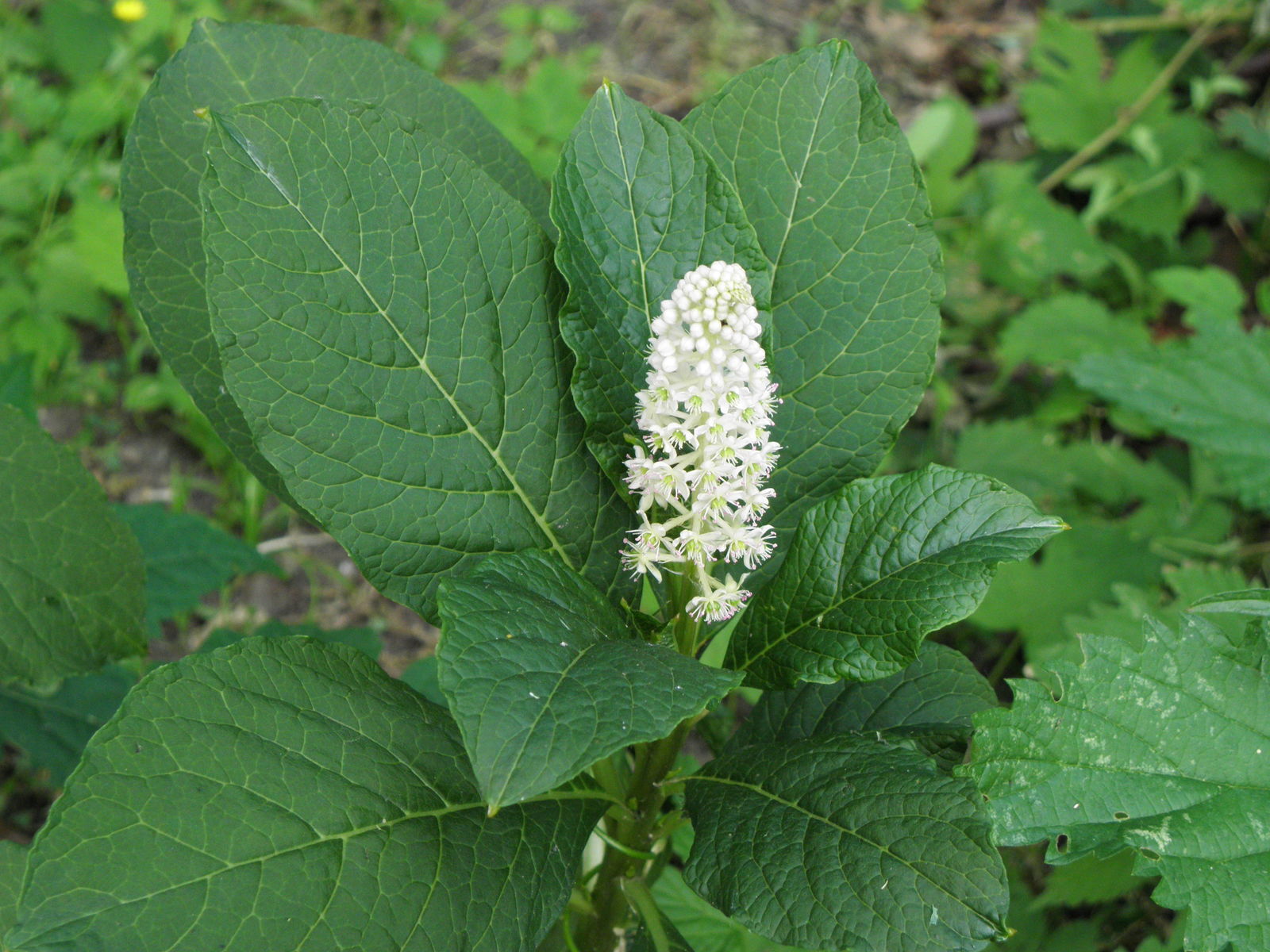
Upright clumps reach 1–2 m (3–6.5 ft), supported by fleshy, furrowed stems that range from green to purple. Leaves are elliptical to lance-shaped, sometimes broad, reaching 35 cm (14 in) long and 19 cm (7.5 in) wide, with wedge-shaped bases and tapering tips. 4 7
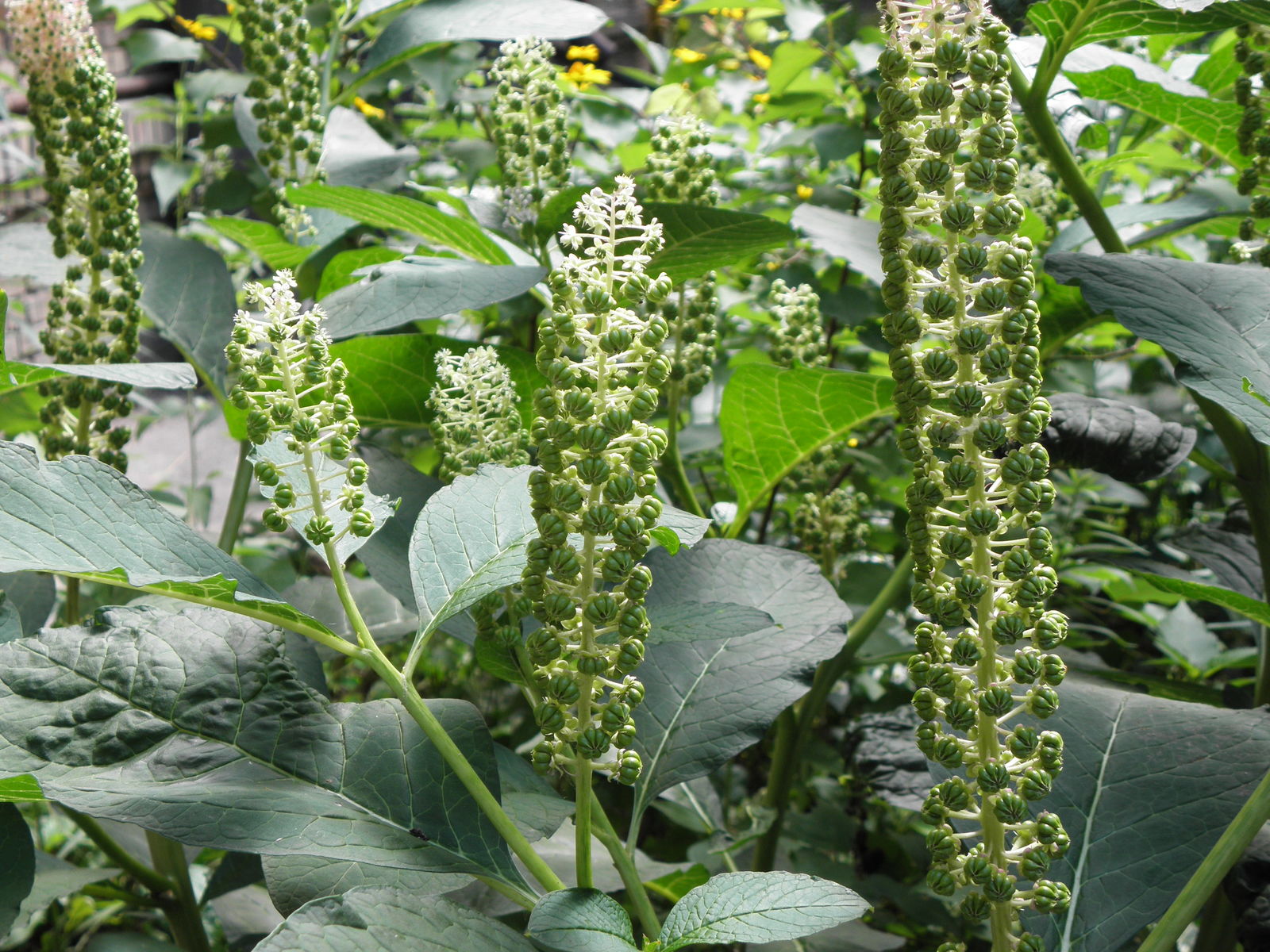
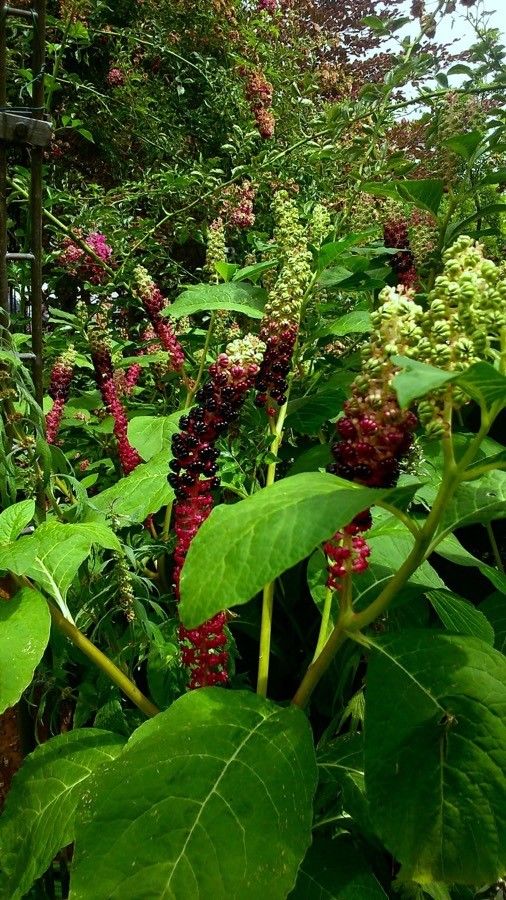
White to greenish-white flowers form dense, upright clusters, 5–30 cm (2–12 in) long. The clusters remain vertical through fruiting, a more dependable distinction than counting stamens: those of Phytolacca americana bend and droop. Each P. acinosa flower has five tepals, eight stamens and eight free carpels that remain separate; the American species has ten stamens and carpels united into a single berry. 7
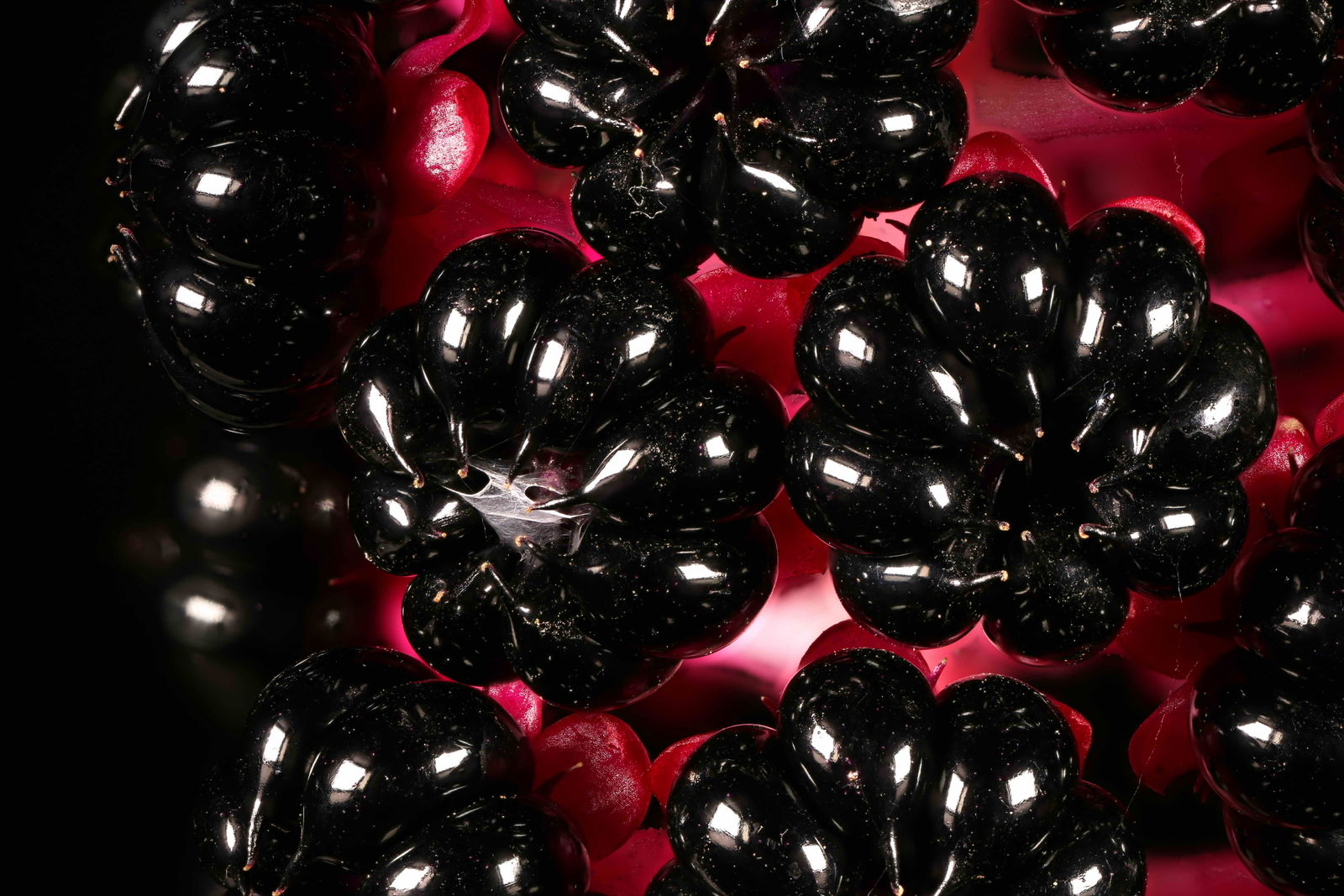
Ripening fruits turn from green to purplish black, remaining upright on the spike instead of bending toward the ground. The thick, fleshy root resembles ginseng in shape. That resemblance has caused documented poisoning among inexperienced foragers. 5
Useful taxonomy
Phytolacca acinosa Roxb. remains the accepted name. Its synonyms largely involve combinations within the genus: Phytolacca esculenta (Van Houtte) Maxim., Phytolacca acinosa var. kaempferi (A.Gray) Makino, Phytolacca insularis Nakai and Sarcoca acinosa (Roxb.) Skalický.
These four names still appear in East Asian regional floras, particularly in Japan and Korea, where kaempferi sometimes denotes local populations without independent taxonomic status. The binomial Phytolacca acinosa provides a stable reference: neither Kew nor the International Plant Names Index adopts any of those four synonyms as the accepted name. 1 2
Habitat and range
Across temperate eastern Asia, its original range includes Himalayan slopes from northern Pakistan through Nepal and Bhutan, most of China, Korea, Japan, Taiwan and northern Vietnam. It occupies valleys, wooded slopes and forest edges at 500–3,400 m (1,640–11,150 ft), also spreading into cultivated land and roadsides. 1 3
Historical introductions for food and dye were followed by naturalization in France, Germany, Switzerland, Croatia and as far as Wisconsin, often in hedges or urban edges. A recent study describes Indian pokeweed as naturalized with invasive tendencies in its secondary range. Its establishment remains less extensive than that of Phytolacca americana, which is already more widespread in similar habitats. 8 6
Life cycle and reproduction
Flowering runs from June through August, with fruiting continuing into September in the seasonal setting described by the source. Strong seed dormancy means germination follows scarification or prolonged cold. Establishment can therefore be slow despite effective dispersal by birds that eat the ripe fruits. 8
Rich, moist soil supports annual regrowth from the persistent fleshy rootstock, rebuilding substantial biomass in a single season. This rapid growth also underlies interest in contaminated-soil remediation. On polluted mine spoil at Xiangtan in China, researchers measured up to 19,300 µg/g of manganese in dry leaves, placing the species among the best-documented manganese hyperaccumulators. 9
Horticultural propagation uses stratified seed or rootstock division in spring or fall. Division establishes more quickly and reproduces the parent more faithfully than seed, whose germination is irregular. 3
Uses and risks
Chinese and Indian traditional medicine uses roots and young shoots for edema, coughs, urinary disorders and certain infections. Recent research reports anti-inflammatory, antimicrobial and antitumor activity in root extracts. These findings have not established a validated clinical use. 4
Every part remains poisonous. Saponins, including esculentosides, triterpenoids and the alkaloid hypaphorine irritate oral and digestive mucous membranes. Severe poisoning causes neurological symptoms, falling blood pressure and cardiac effects, appearing 20 minutes to three hours after ingestion. Confusing the root with ginseng is the best-documented cause of accidental poisoning, notably in Vietnam. 5 4
Very young shoots are sometimes boiled, drained and eaten as a vegetable in Asia. Leaves become poisonous as they age, and no home preparation completely eliminates the risk. 3
Varieties, look-alikes and related plants
A substantial horticultural cultivar range has never developed, but ethnobotanical literature repeatedly mentions two old forms: a white-flowered form, whose root was sometimes eaten after prolonged soaking, and a red-flowered form, whose root was considered even more poisonous. Neither should be regarded as safe food. 3
American pokeweed (Phytolacca americana) is the most frequent look-alike. Drooping clusters and ten stamens distinguish it from the upright clusters and eight free carpels of the Asian species. Phytolacca polyandra poses a similar identification problem in Asia. A wild root resembling ginseng must never be collected without absolute certainty about its identity. 7 5
Main sources
- Plants of the World Online / Kew, Phytolacca acinosa Roxb.
- International Plant Names Index, Phytolacca acinosa Roxb.
- Plants For A Future, Phytolacca acinosa (Indian Poke)
- Frontiers in Pharmacology, Traditional uses, botanical description, phytochemistry and pharmacological activities of Phytolacca acinosa
- National Institute for Food Control (Vietnam), Prevention of Phytolaccaceae poisoning
- Tela Botanica / eFlore, Phytolacca acinosa Roxb.
- Flora of China via eFloras, Phytolacca acinosa
- MDPI Plants, Reproductive Biology and Germination Ecology of Phytolacca acinosa in Its Secondary Range
- PubMed, Manganese uptake and accumulation by the hyperaccumulator plant Phytolacca acinosa Roxb.
Frequently asked questions
Is Indian pokeweed poisonous?
Yes. All parts contain saponins, triterpenoids and an alkaloid that irritate mucous membranes. Substantial ingestion can cause severe digestive symptoms and, in serious cases, neurological and cardiac problems.
Can you eat Indian pokeweed shoots?
Very young shoots are sometimes boiled, drained and eaten as a spring vegetable in Asia. Older leaves become poisonous, and no home preparation guarantees that all risk has been removed.
How can you tell Indian pokeweed from American pokeweed?
Cluster position is the most reliable clue: upright throughout development in Phytolacca acinosa, drooping in Phytolacca americana. Stamen and carpel numbers also differ: eight in the Asian species and ten in the American species.
Why is the root of Indian pokeweed dangerous?
Its fleshy shape resembles ginseng, causing documented poisoning among foragers who mistook it for an edible medicinal root. No similar-looking wild root should be collected without absolute certainty of identification.
Is Indian pokeweed invasive in France?
It has naturalized in several European countries, including France, but is less established than Phytolacca americana. Recent studies describe it as potentially invasive in its secondary range; it has no formal regulatory invasive-species designation in France.
Does Indian pokeweed have medicinal uses?
The root is used in traditional Chinese and Indian medicine for edema, coughs and urinary disorders. Recent studies report anti-inflammatory and antimicrobial activity in extracts, without establishing a validated clinical use.
Where does Indian pokeweed come from?
Its native range extends from the Himalayas to China, Korea and Japan. It was later introduced to Europe and North America for its young shoots and fruit dye, before naturalizing locally.
Similar plants
If you are unsure about a plant’s toxicity, ask a botanist or veterinarian for advice.