
Swiss stone pine (Pinus cembra, )

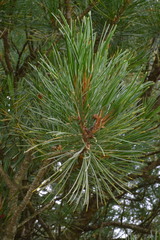
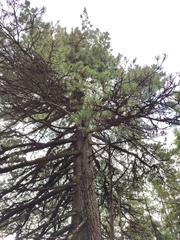
Swiss stone pine (Pinus cembra) is a conifer in the Pinaceae family native to the subalpine belts of the Alps and Carpathians, where it often forms the upper tree line with European larch. Its needles grow in bundles of five, and its cones never open on the tree. The wingless seeds depend almost entirely on the spotted nutcracker for dispersal.
Read moreSwiss stone pine, Swiss pine, Arolla pine and Austrian stone pine



© photo
(c) Sébastien SANT, some rights reserved (CC BY-NC), uploaded by Sébastien SANT · cc-by-nc
Irene Saltini · cc0
Igor Balashov · cc-by
Taken May 13, 2022 by William Coville (cc-by-sa)
Taken Aug 16, 2020 by Giode Tonpino (cc-by-sa)
Taken Oct 24, 2013 by Tela Botanica − Yoan MARTIN (cc-by-sa)
Taken Feb 2, 2022 by Rober Steve (cc-by-sa)
© copyright of the Board of Trustees of the Royal Botanic Gardens, Kew.




Global distribution
Pinus cembra is native only to the Alps, from southeastern France to Austria and Slovenia, and the Carpathians, especially the Polish and Slovak Tatras and Romania. It has also been grown ornamentally in northern Europe and the United Kingdom since the 18th century, without forming spontaneous populations there.
- Native8
- France
- Switzerland
- Austria
- Italy
- Poland
- Slovakia
- Romania
- Ukraine
Hexagons: regions where the plant occurs. Green dots: native range.1
Identity
Swiss stone pine (Pinus cembra L., 1753), also called Swiss pine or Arolla pine, is a conifer in the genus Pinus and the Pinaceae family. It is one of the few European pines growing in the subalpine belt, at 1,200–2,300 m (3,900–7,500 ft), where it often forms the upper tree line alongside European larch. 1 2
German-speaking Alpine communities know it as Zirbelkiefer or Zirbe, names associated with its aromatic timber and traditional spirits. Linnaeus adopted the scientific epithet cembra in 1753 from Italian cembro, already used for the tree in the Italian Alps. 5 6
Recognition
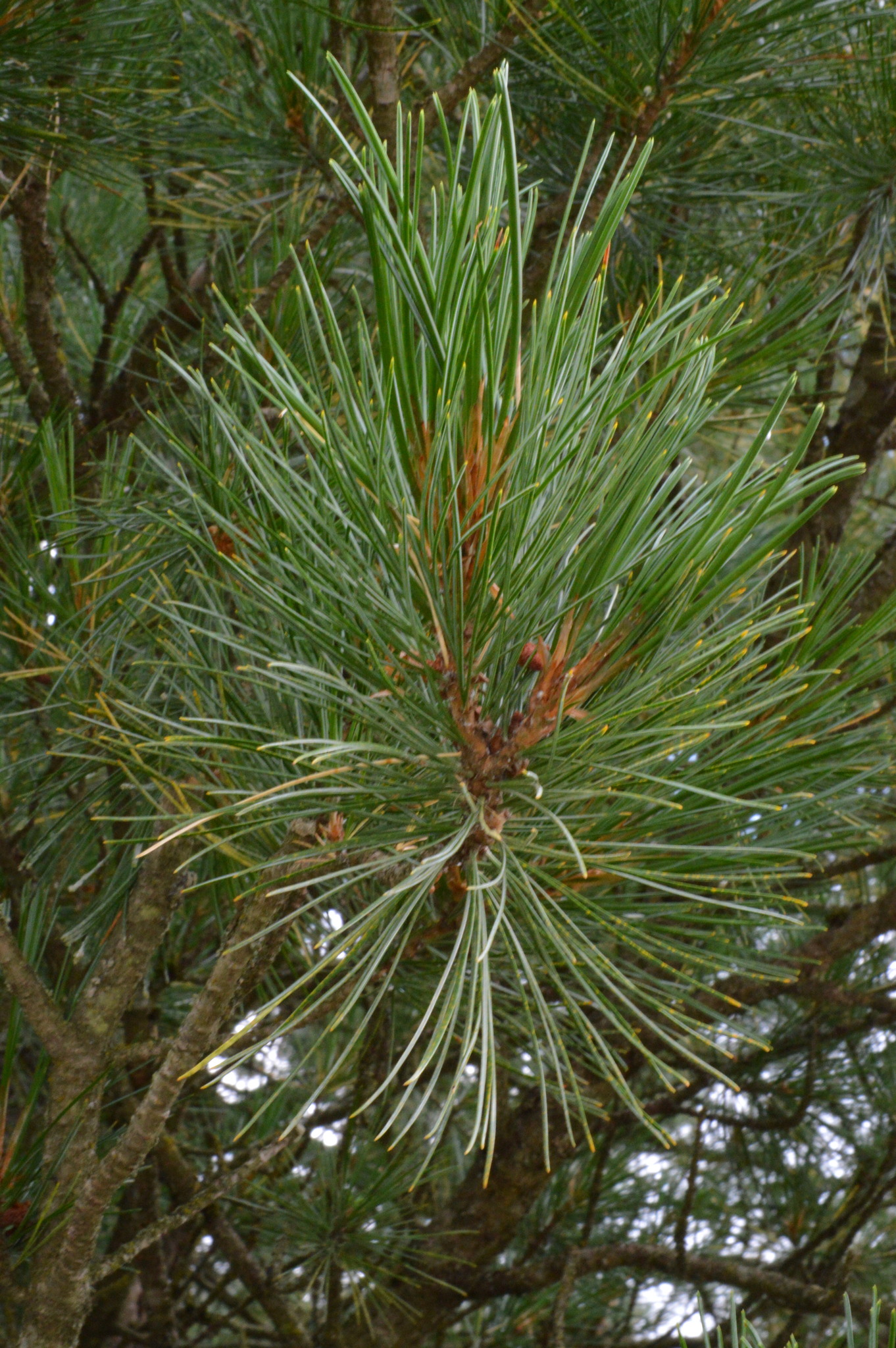
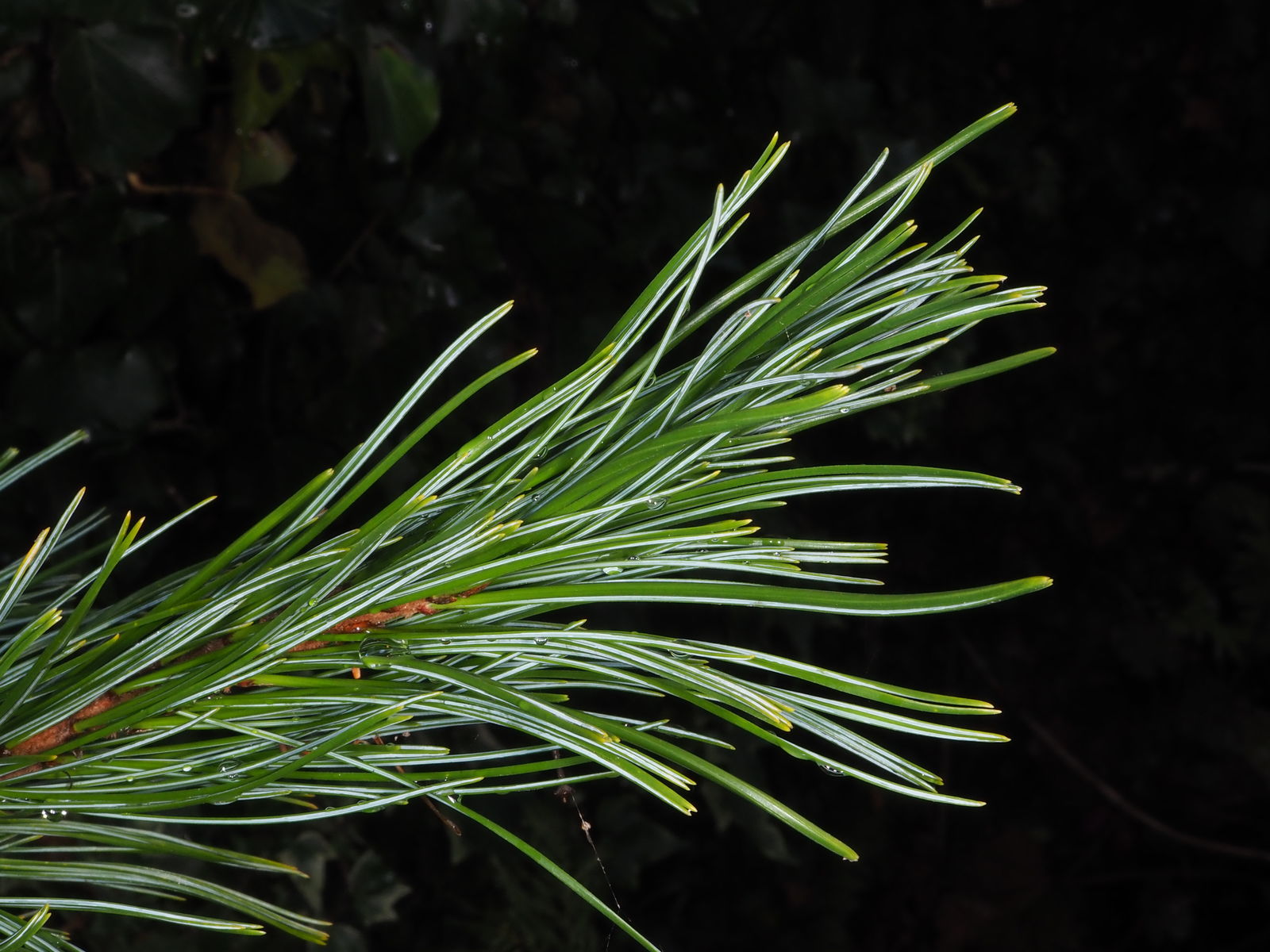
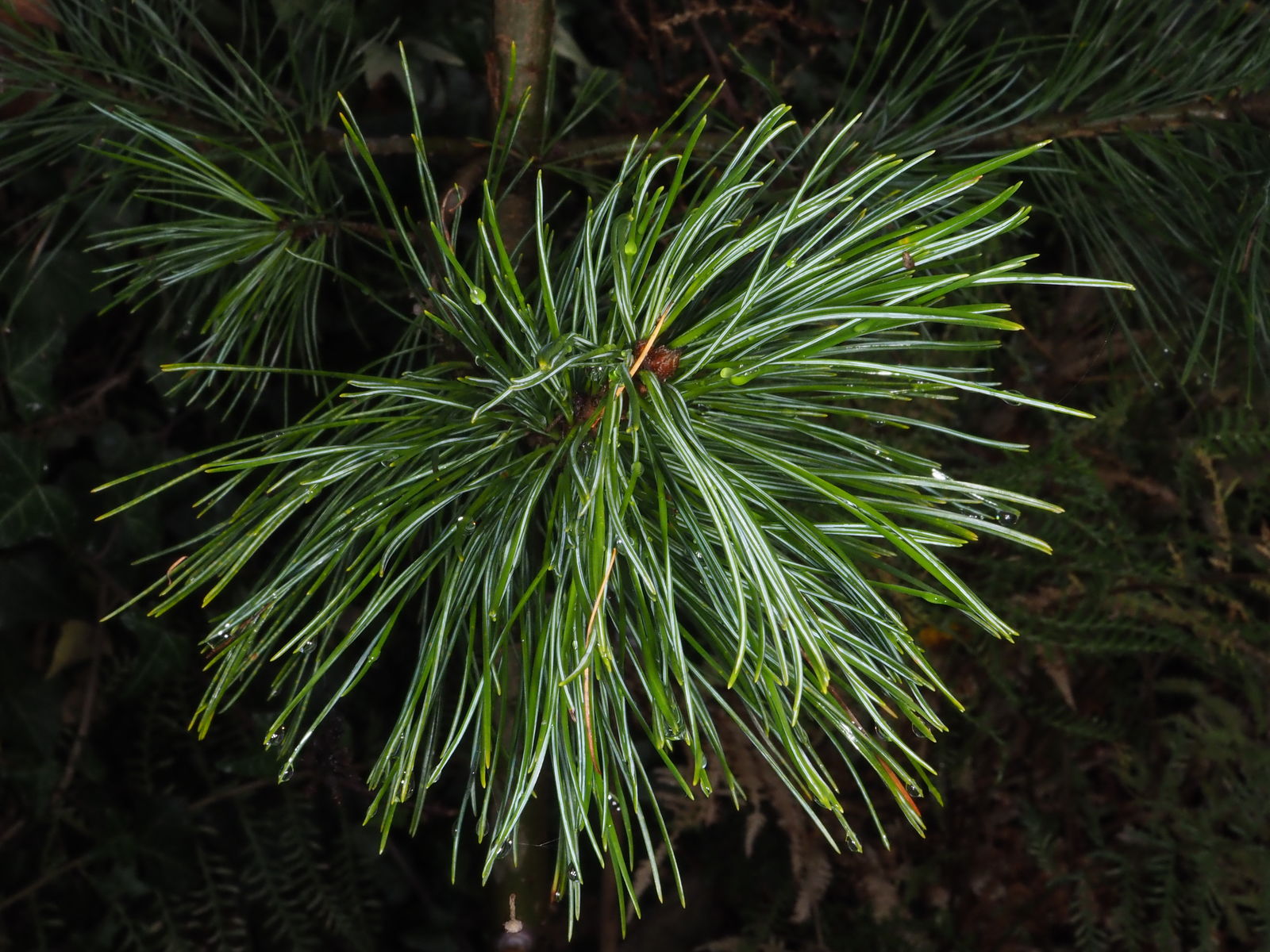
Count the needles in each bundle: Swiss stone pine bears them in groups of five, rather than two as in Scots pine or black pine. The dark green to bluish needles measure 4–9 cm (1.5–3.5 in), have fine white stomatal lines and remain on a branch for 3–5 years. 6 4
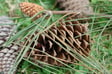
Egg-shaped cones measure 5–8 cm (2–3 in) and change from purplish green to purplish brown at maturity. They never open on the tree: their scales detach as they fall to the ground, taking the seeds with them. The seeds measure 8–12 mm (0.3–0.5 in) and lack wings, an unusual feature among pines that prevents them from dispersing unaided on the wind. 2 4
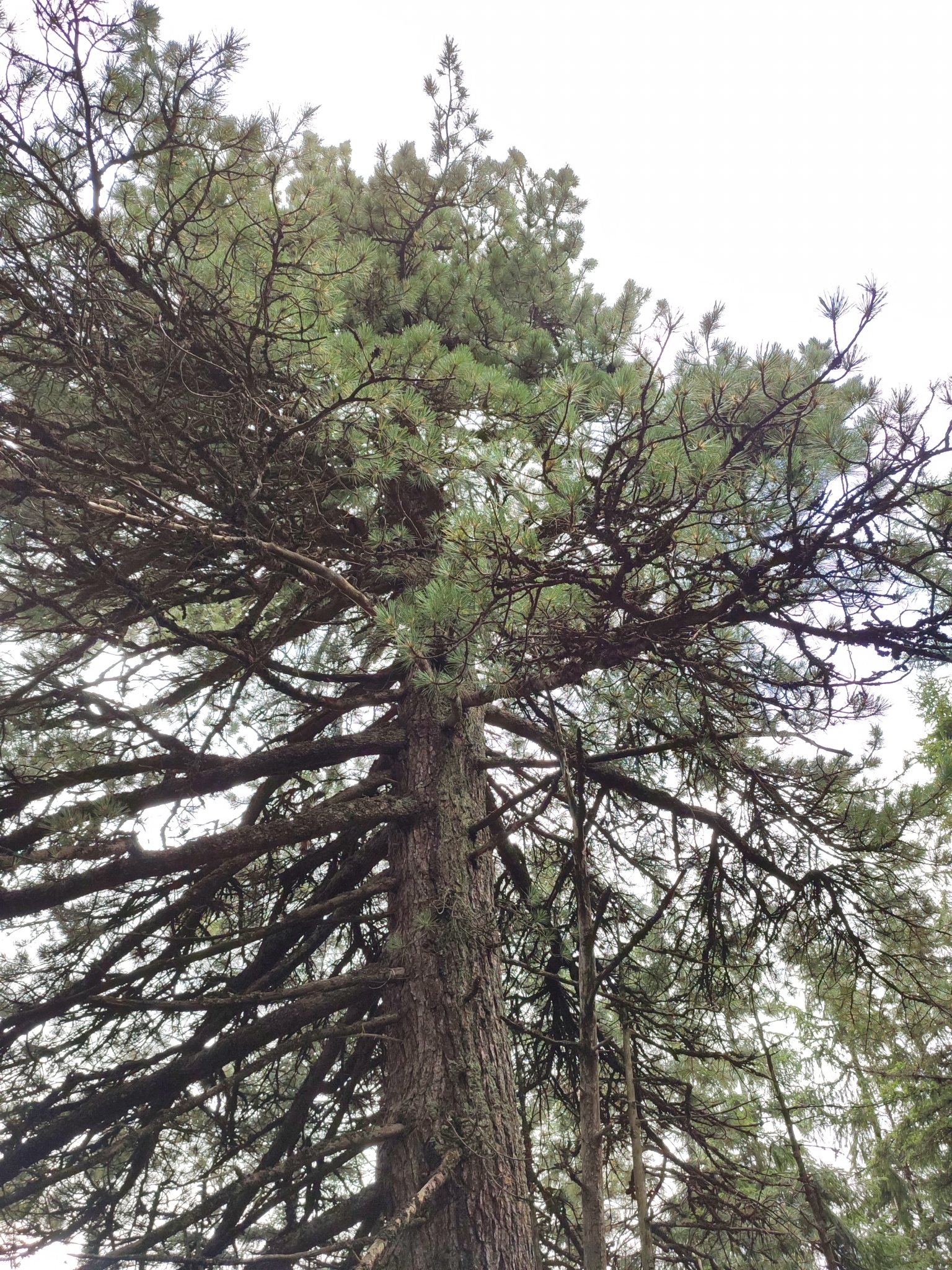
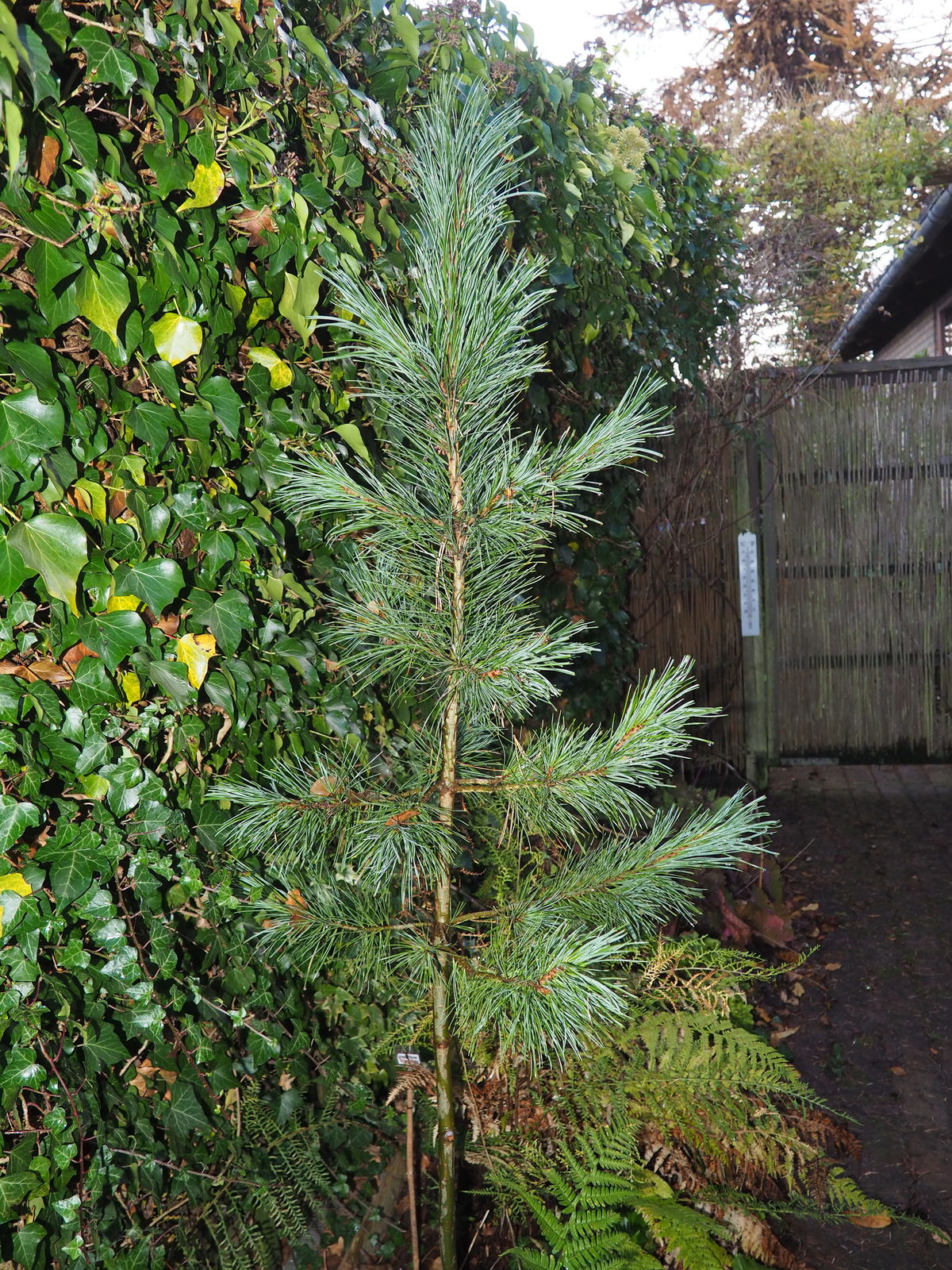
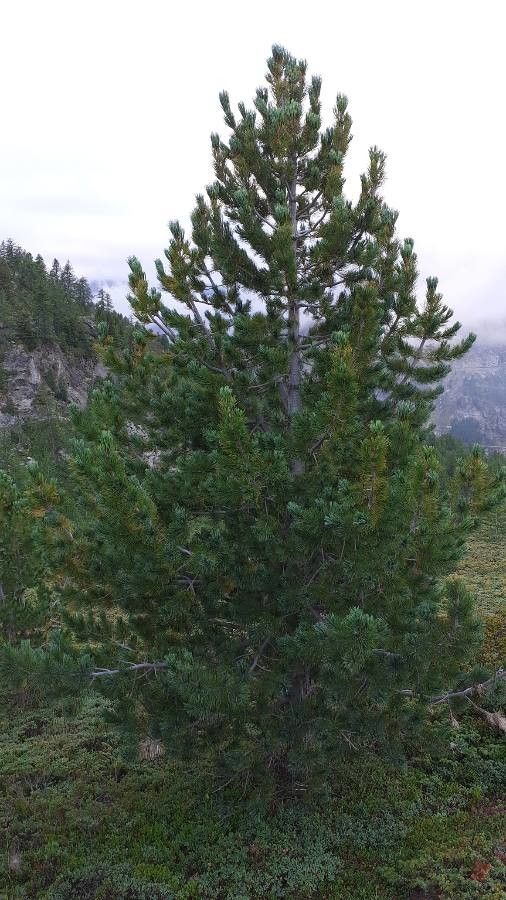
Cultivated trees commonly reach 10–20 m (33–66 ft), with records up to 25 m (82 ft) in the native range. Young trees have a dense, narrowly conical outline. Near the upper tree line, the form often becomes contorted, branching from the base or pressed down by snow. 2 3
Useful taxonomy
POWO/WCVP accepts Pinus cembra L., published in 1753. Several related Asian populations were long included as varieties before being recognized as separate species:
- Pinus cembra var. sibirica (Du Tour) G.Don, now Pinus sibirica
- Pinus cembra var. pumila Pall., now Pinus pumila
- Pinus cembra var. mandschurica (Rupr.) Carrière, assigned to a related Far Eastern species
- Pinus cembra f. columnaris Hellm. ex Beissn., a direct synonym of the typical species
The distinction involving sibirica is especially useful: Siberian pine has larger cones, faster growth and three resin canals per needle, compared with two in Swiss stone pine. Although botanically distinct, the two species remain close relatives and share the same nutcracker-mediated seed dispersal strategy. 1 7
Habitat and range
Alpine and Carpathian mountains hold the native populations. The Alpine range extends from southeastern France to Austria and Slovenia; the Carpathian range includes the Polish and Slovak Tatras. Swiss stone pine occupies the subalpine belt, generally at 1,200–2,300 m (3,900–7,500 ft) and rarely below 1,500 m (4,900 ft), often in mixed woodland with European larch. 2 6
Away from its mountain setting, summer heat and humidity at low elevations are poorly tolerated. It is not recommended south of USDA zone 7 and clearly favors cool, rainy climates. Cultivation in northern Europe and the United Kingdom dates to the 18th century, and some trees planted before 1800 remain alive. In its native range, Swiss stone pine commonly exceeds 500 years, making it one of Europe's most enduring conifers. 4 6
Life cycle and reproduction
Each Swiss stone pine carries separate male and female cones, making the species monoecious. Male cones release windborne pollen in early summer, while female cones remain on the branch. Fertilization does not produce an immediate crop: cones take two full years to mature, compared with one season in most European pines. 2 4
Ripe cones remain closed, falling whole or slowly breaking apart on the tree. Seed dispersal depends almost entirely on the spotted nutcracker (Nucifraga caryocatactes). These birds collect seeds, sometimes carry them several kilometers and bury them as winter food reserves. Forgotten caches germinate in spring. This dependence on nutcrackers explains much of the pine's present distribution at the tree line. 6 3
An isolated tree generally produces its first cones only at 30–50 years, though appropriate mycorrhizal inoculation can bring production forward in a nursery. Annual growth is very slow, often below 30 cm (12 in) even under favorable conditions. 3
Uses and risks
Soft, aromatic timber that is easy to work has made Swiss stone pine a traditional Alpine wood for carving and furniture, especially in Val Gardena since the 17th century. Its cones also enter a regional spirit, Zirbenschnaps. 6 3
Oil-rich seeds can be eaten raw or cooked and have a slight resinous flavor. The species is not classified as toxic to cats or dogs. However, its wood, sawdust and resin can cause contact dermatitis in sensitive people. 3
As an ornamental, this is a specialized choice for cool-climate gardens. Growth often below 30 cm (12 in) a year and intolerance of summer heat make it less suitable as a lowland tree in warmer southern regions. Its mountain origins remain relevant when choosing a planting site. 4
Varieties, look-alikes and related plants
Nurseries offer a few selections, including 'Stricta', with a narrowly columnar habit, and 'Glauca', with more distinctly blue foliage. The variegated 'Aureovariegata', whose needles have golden-yellow markings, remains rarer. 4
Frequently confused species include:
- Pinus sibirica, long treated as a Swiss stone pine variety, with larger cones and three resin canals per needle;
- Pinus pumila, a shrubby, creeping Far Eastern pine rather than an upright tree;
- Pinus strobus, another five-needle pine, but with elongated, hanging cones that open normally at maturity.
Bundles of five needles immediately rule out Europe's two-needle pines. Closed cones and wingless seeds then distinguish Swiss stone pine from most other five-needle pines. Examining both foliage and mature cones is therefore more useful than relying on the general outline of a tree alone.
Main sources
- Plants of the World Online / Kew, Pinus cembra L.
- Missouri Botanical Garden, Pinus cembra
- Plants For A Future, Pinus cembra
- NC State Extension, Pinus cembra (Swiss Stone Pine)
- Tela Botanica / BDTFX, Pinus cembra L.
- Trees and Shrubs Online, Pinus cembra
- International Plant Names Index, Pinus cembra L.
- USDA GRIN Global Taxonomy, Pinus cembra L.
Frequently asked questions
How long does Swiss stone pine live?
It is among the longest-lived European conifers. Trees commonly reach 500–1,000 years in natural populations in the Alps and Carpathians.
Why are Swiss stone pine seeds wingless?
Unlike most pines, whose winged seeds travel on the wind, Swiss stone pine has heavy, wingless seeds. Their dispersal depends almost entirely on spotted nutcrackers, which carry and bury them as food stores.
Is Swiss stone pine toxic to cats and dogs?
No, it is not classified as toxic to these animals. However, wood, sawdust and resin can cause contact dermatitis in sensitive people.
How does Swiss stone pine differ from Siberian pine?
Pinus sibirica was long treated as a variety of Swiss stone pine. Siberian pine has larger cones and three resin canals per needle, compared with two in Swiss stone pine.
Can Swiss stone pine grow at low elevations?
It tolerates the heat and humidity of lowland summers poorly. It is not recommended south of USDA hardiness zone 7 and performs better in a cool, rainy climate resembling its mountain habitat.
Why do Swiss stone pine cones never open?
The scales remain joined until they fall, carrying the seeds to the ground. This closed-cone behavior leaves most seed dispersal to spotted nutcrackers rather than the wind, unlike most pines.
When does Swiss stone pine first produce cones?
An isolated tree in the ground generally begins producing cones at 30–50 years. Appropriate mycorrhizal inoculation in a nursery can bring this first crop forward.
Similar plants
If you are unsure about a plant’s toxicity, ask a botanist or veterinarian for advice.