
Mugo pine (Pinus mugo, )
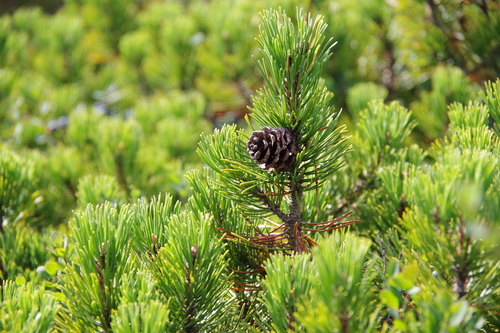
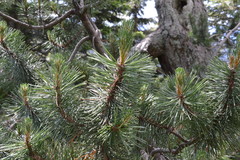
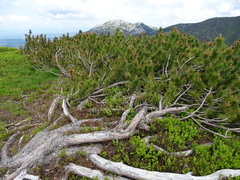
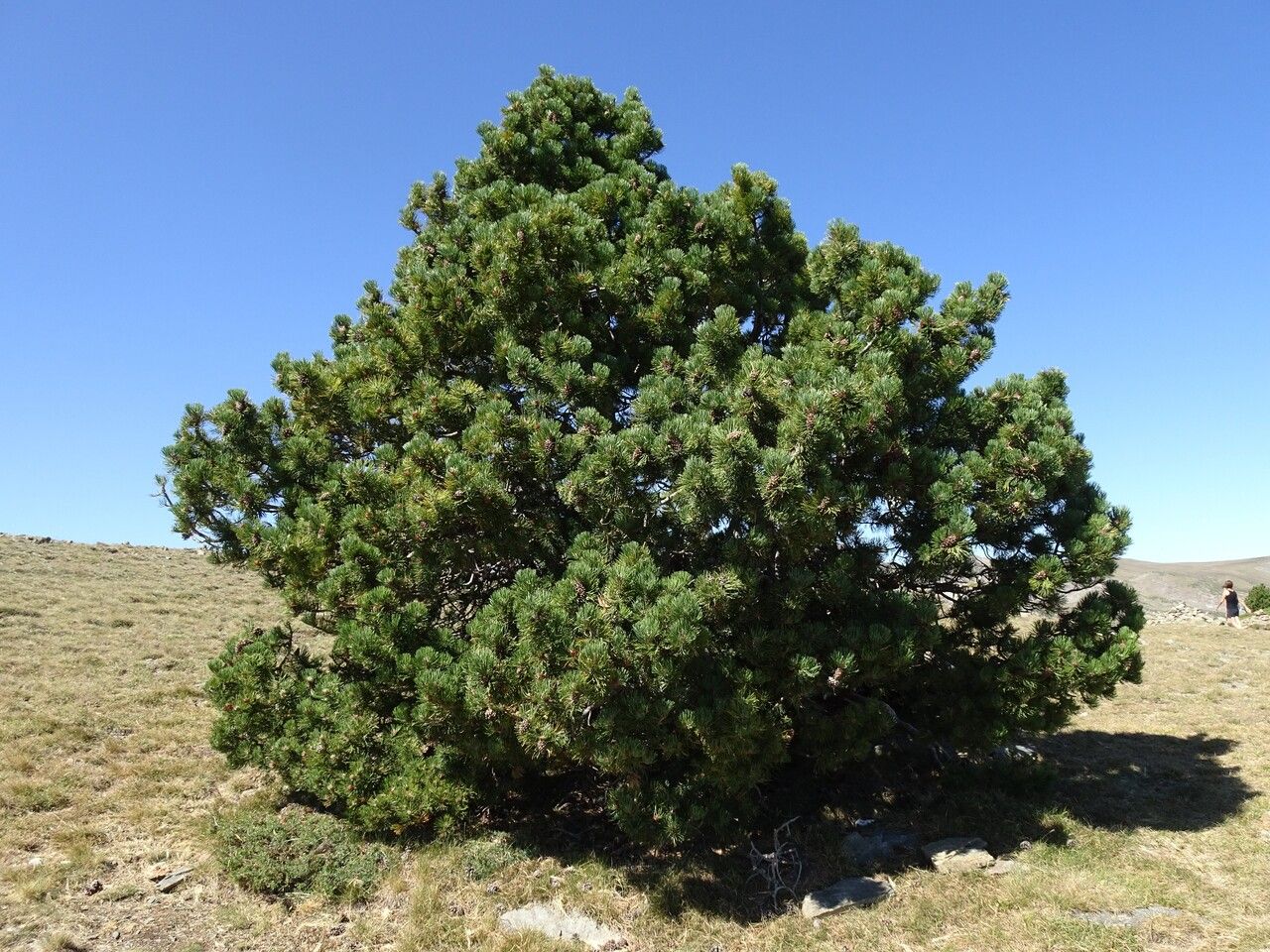
Mugo pine (Pinus mugo) is a conifer in the Pinaceae family native to the mountains of central and southeastern Europe, from eastern France to the Carpathians and northern Balkans. Unlike other European pines, it usually grows as a spreading shrub with prostrate, twisted stems, forming dense subalpine thickets near the upper forest limit.
Read moreMugo pine, Mountain pine, Dwarf mountain pine, Scrub mountain pine, Swiss mountain pine and Creeping pine
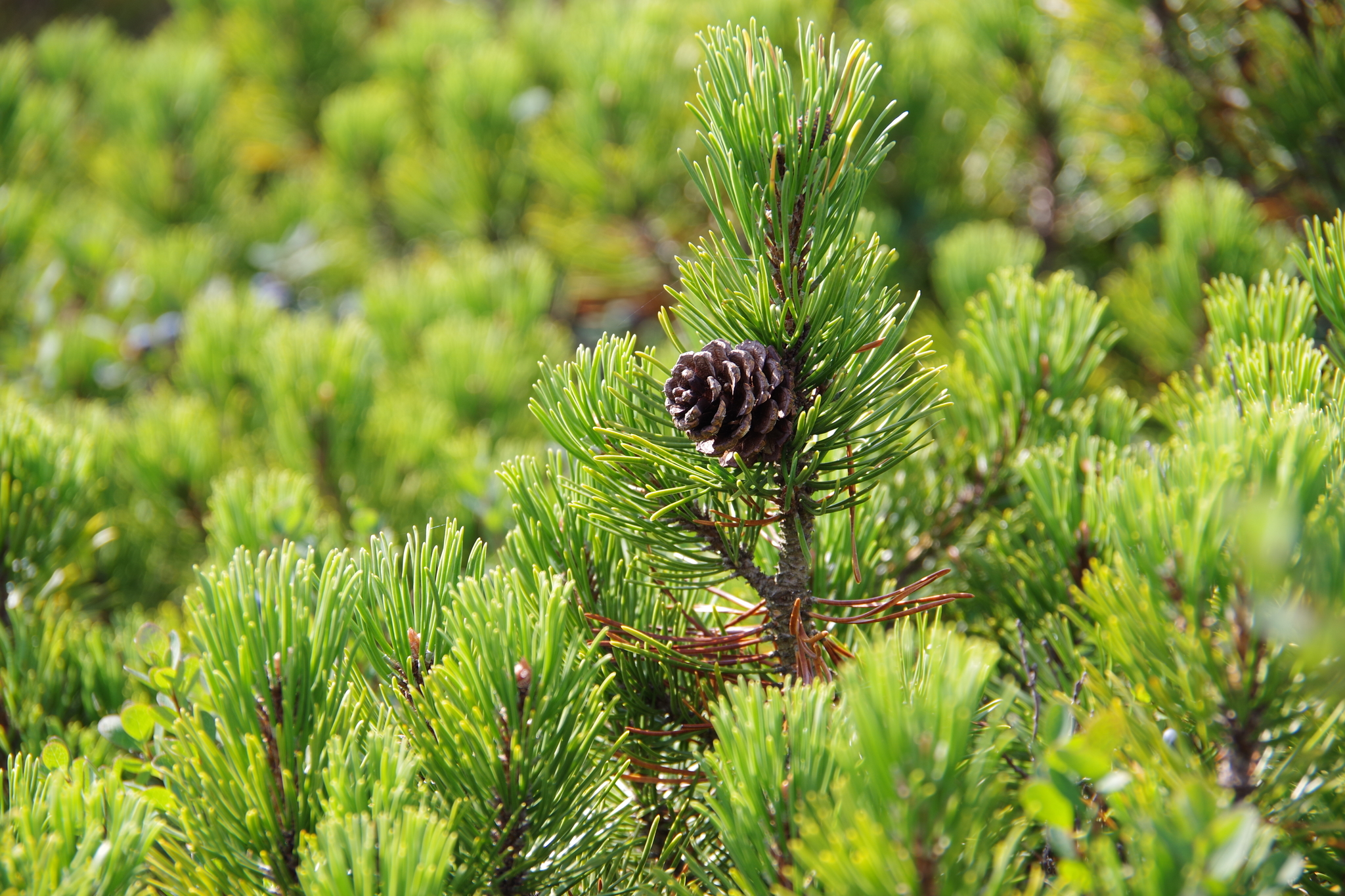


© photo
(c) miwa98, some rights reserved (CC BY-NC) · cc-by-nc
Irene Saltini · cc0
Grzegorz Grzejszczak · cc-by-sa
Taken May 15, 2021 by Dieter Albrecht (cc-by-sa)
Taken Aug 18, 2021 by Alain Bigou (cc-by-sa)
Taken Jul 19, 2020 by Alain Bigou (cc-by-sa)
Taken Dec 3, 2020 by Jacques Zuber (cc-by-sa)
© copyright of the Board of Trustees of the Royal Botanic Gardens, Kew.




Global distribution
Pinus mugo is native to the mountain ranges of central and southeastern Europe, from eastern France to the Carpathians, central Italy and the northern Balkans, with notable populations in Austria, Switzerland and Romania. It is also widely cultivated as an ornamental conifer far beyond this range.
- Native6
- France
- Switzerland
- Austria
- Italy
- Romania
- Slovenia
Hexagons: regions where the plant occurs. Green dots: native range.1
Identity
Mugo pine (Pinus mugo Turra, 1764), also known as mountain pine, dwarf mountain pine, scrub mountain pine, Swiss mountain pine and creeping pine, is a conifer in the genus Pinus, family Pinaceae. POWO/WCVP accepts this name for a species of central and southeastern European mountains: eastern France, the Alps, Carpathians, central Italy and northern Balkans. 1 4
The epithet mugo comes from an Italian vernacular name for this pine, rather than a botanist or discovery site. Nursery descriptions calling it a dwarf can be misleading: the typical species exceeds 3 m (10 ft) in natural thickets, while cultivars such as ‘Mops’ and ‘Gnom’ remain truly compact. 6 2
Recognition
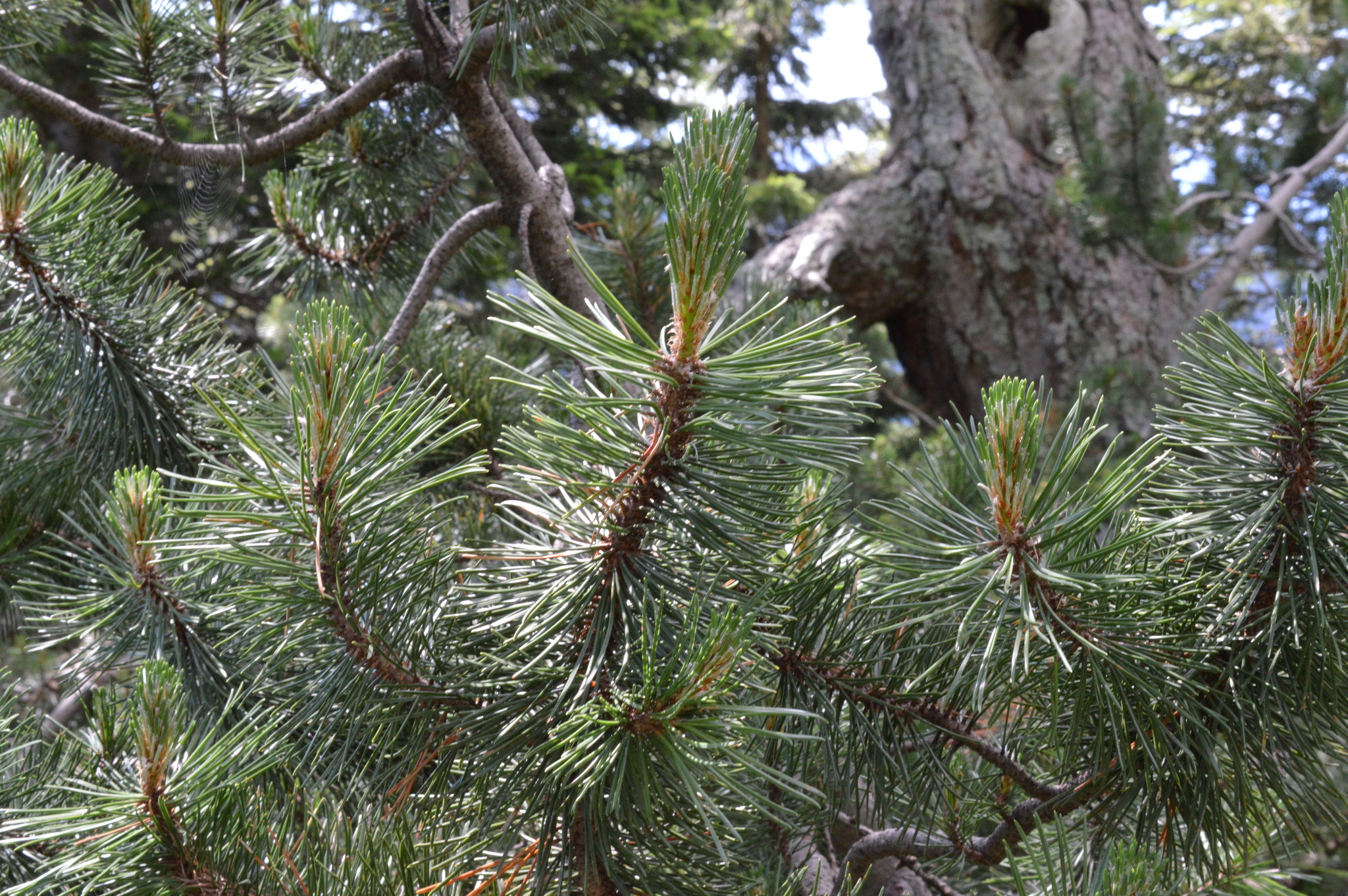
Its growth habit identifies mugo pine before needles or cones need inspection. Unlike other European pines, it typically forms a spreading shrub with prostrate, twisted stems branching from the base. This low tangled form, called krummholz, dominates wind-battered summits. Upright trees occur but are rare; the shrubby form predominates across most of its native range. 6 2
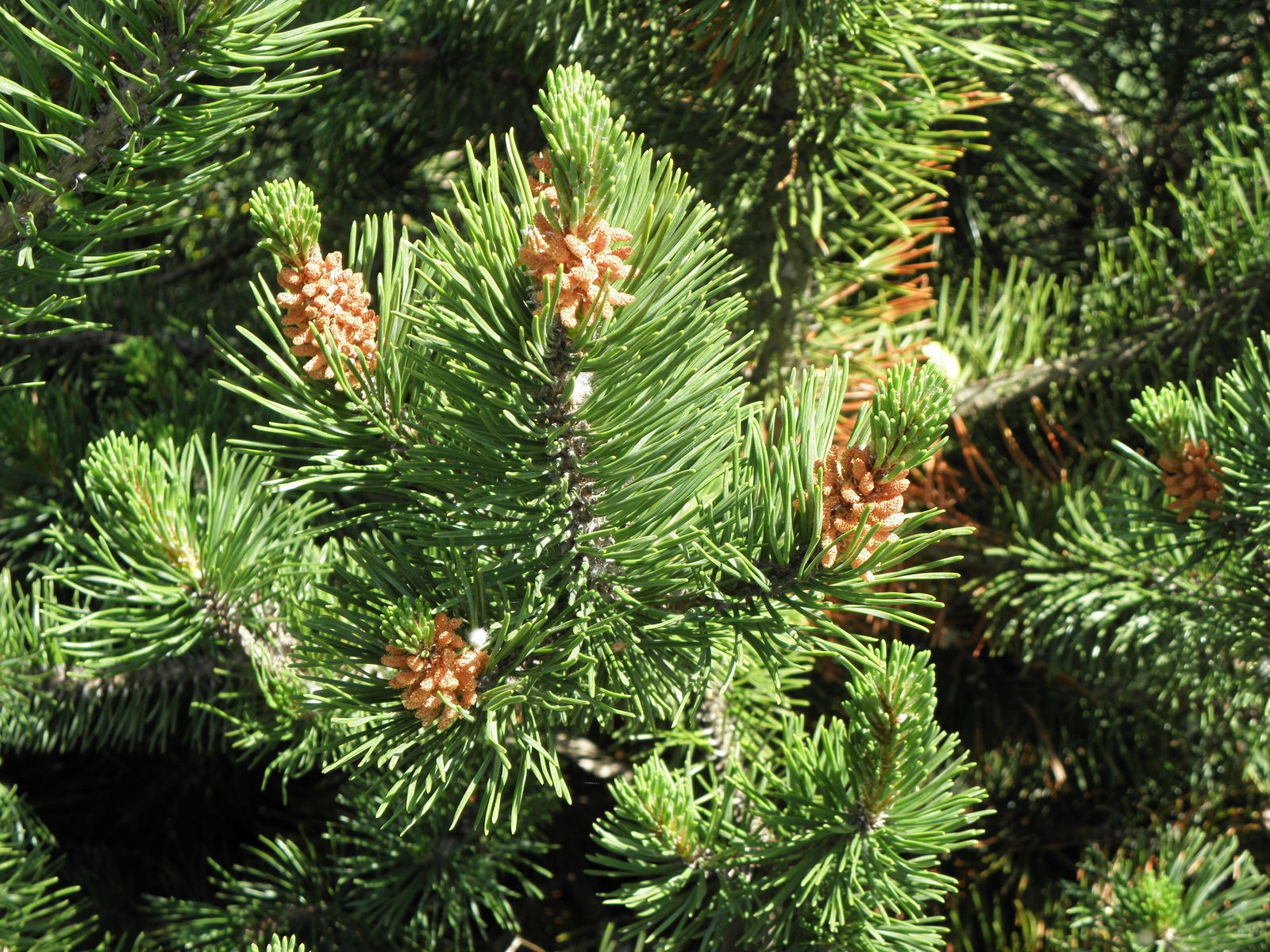
Cultivated mugo pines commonly reach 1–3 m (3–10 ft) tall and 4–8 m (13–26 ft) across, with the largest reported at 5 m (16 ft) tall. Bright to dark green needles grow in pairs, measure 2.5–7.5 cm (1–3 in) and remain on branches for 5–10 years, substantially longer than those of Scots pine. 2 5 6
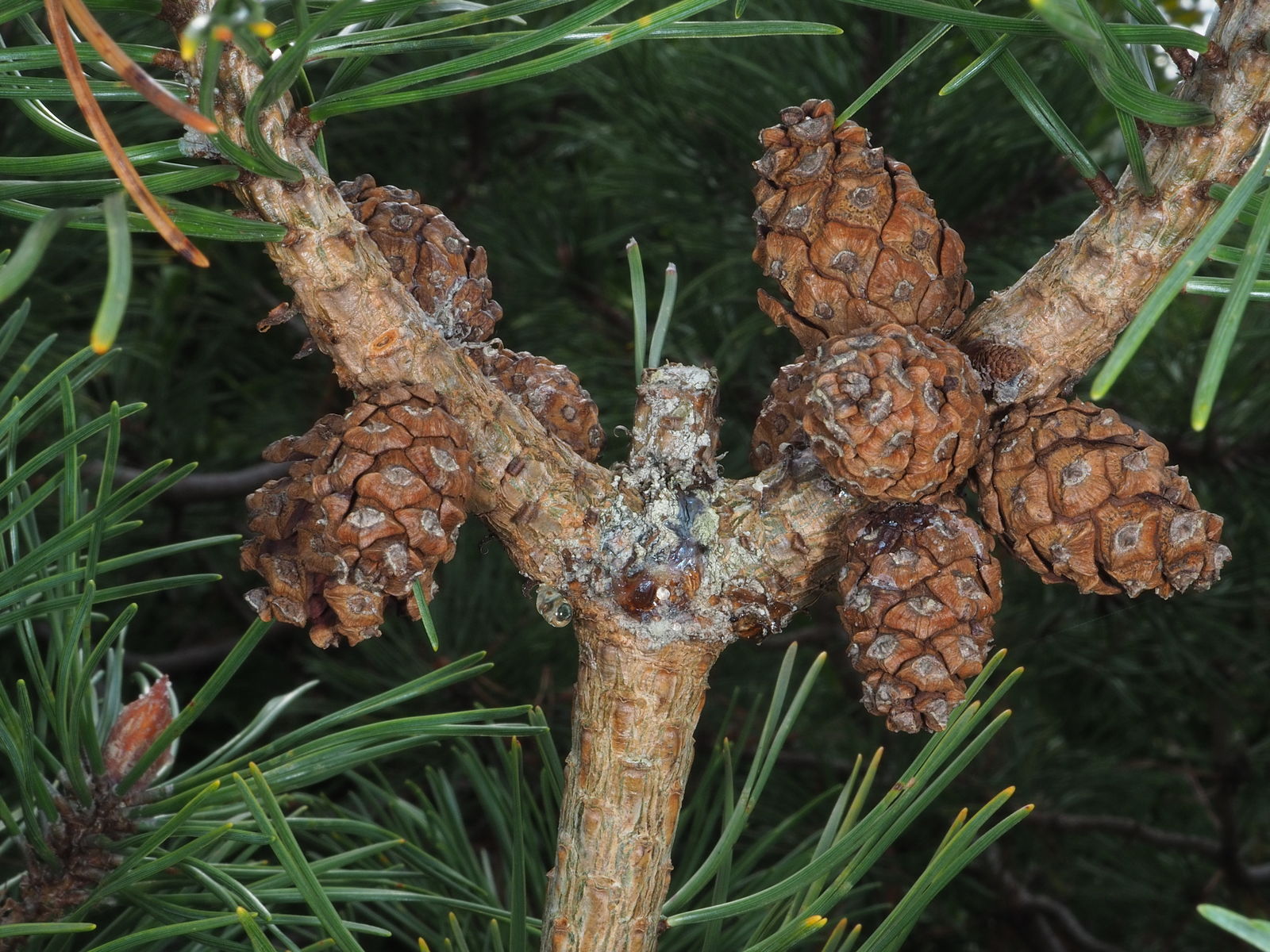
Glossy brown, egg-shaped cones measure 2–5 cm (0.8–2 in) when mature. Each scale has a shield-like exposed face with a distinct central bump, sometimes displaced downward depending on the variety. This separates mugo pine from Scots pine, whose cone-scale face remains flat without a prominent bump. 6 4
Useful taxonomy
Delimiting the Pinus mugo complex has long challenged botanists. More than a hundred names have been published for its local forms, ranging from prostrate high-elevation shrubs to more upright populations. 6
These closely related taxa need distinguishing:
- Pinus mugo subsp. pumilio (Haenke) Franco, a synonym within the species and a trade name for its most prostrate forms;
- Pinus uncinata Ramond ex DC., long treated as a subspecies of Pinus mugo, now recognized as a distinct species of the Pyrenees and western Alps, with conspicuously hooked cone scales;
- Pinus mugo subsp. rotundata (Link) Janch. & H.Neumayer, a mid-elevation bog form assessed separately by the IUCN.
The name pumilio, like borsigiana in Monstera, appears both in botanical synonymy and in the horticultural trade for more compact plants. The accepted name Pinus mugo Turra remains the reliable reference. 1
Habitat and range
Central and southeastern European mountains hold the native populations: eastern France, the Alps, Carpathians, central Italy and northern Balkans. Particularly notable populations occur in Austria, Switzerland and Romania. 1 4
Rocky heaths, scree and steep subalpine slopes, often at the upper forest limit, support this pine where few other woody plants withstand the wind and cold. Populations assigned to subspecies rotundata also occupy mid-elevation bogs, a habitat especially vulnerable to drainage. 4 5
For Pinus mugo as a whole, the International Union for Conservation of Nature assigns Least Concern, reflecting a wide range and a broadly stable population. Subspecies rotundata is instead Endangered: drainage and afforestation have reduced its bog habitat, although this local decline does not determine the species-wide assessment. 8
Life cycle and reproduction
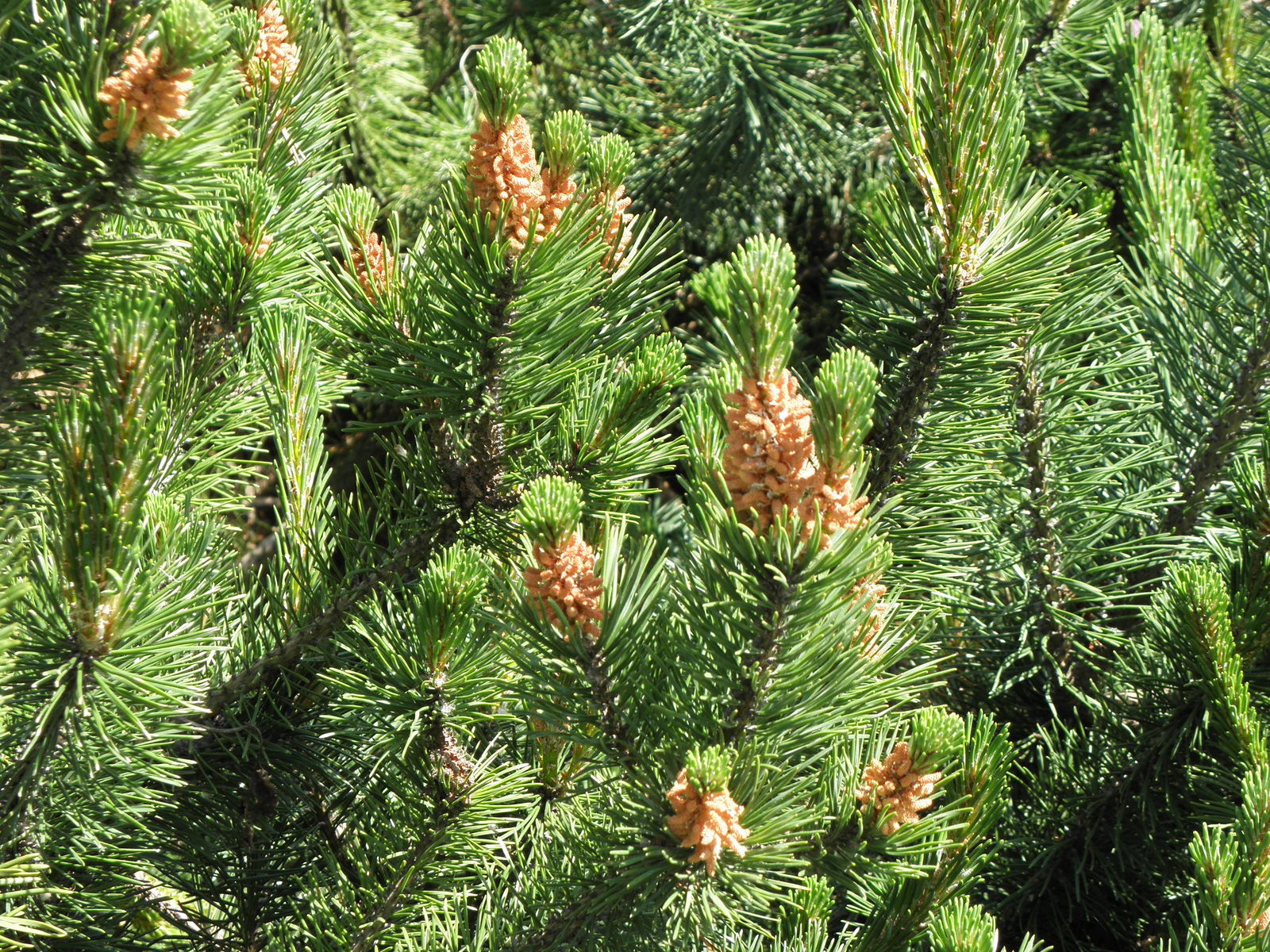
Each Pinus mugo plant bears separate male and female cones, making it monoecious. Female cones form late in the season and mature the next year, turning from green to glossy brown before releasing wind-borne winged seeds. In cultivation, plants grown in the ground first produce cones at about 10–15 years, long before reaching their full mature size. 4
Decades of slow growth are needed for a planted specimen to fill its mature space. This gradual development helps explain the popularity of dwarf cultivars in landscape planting. 7 2
Nurseries propagate the typical species from seed, without complex stratification. Only grafting reliably preserves a particular cultivar such as ‘Mops’ or ‘Gnom’. 3 5
Uses and risks
Mountain thickets of mugo pine protect steep soils against erosion and reduce avalanche initiation on the most exposed slopes. 5
Needles and young shoots yield an essential oil used in balsamic preparations traditionally regarded as antiseptic and expectorant for mild respiratory complaints. Mugo pine oil also appears in balms for muscular pain. 5
Cats and dogs are not classified as at risk of poisoning from this species, although swallowed needles and resin may irritate the mouth, as with most pines. Pine scale and sawflies usually cause minor problems on cultivated plants. More serious shoot blight calls for removing affected wood to eliminate the infection before it spreads through the plant. 4
Varieties, look-alikes and related plants
Rounded and compact, ‘Mops’ holds the Royal Horticultural Society’s Award of Garden Merit and rarely exceeds 1 m (3.3 ft) in 20–50 years. For rock gardens or containers, ‘Gnom’ forms a larger dome, about 1.8 m (6 ft) high, growing just as slowly. Selections such as ‘Carsten’s Wintergold’ turn golden yellow in winter. 3 6
Other pines commonly confused with mugo pine include:
- Pinus sylvestris, an upright, single-trunked tree with orange upper bark and cone scales lacking a prominent bump;
- Pinus uncinata, its closer relative, with a more tree-like habit and clearly hooked cone scales;
- Pinus nigra, always tree-like, with longer and stiffer needles.
In the field, mugo pine’s low, multi-stemmed, spreading habit alone rules out most of these look-alikes without close cone inspection.
Main sources
- Plants of the World Online / Kew, Pinus mugo Turra
- Royal Horticultural Society, Pinus mugo - mountain pine
- Royal Horticultural Society, Pinus mugo 'Mops'
- NC State Extension, Pinus mugo (Mugo Pine)
- Plants For A Future, Pinus mugo
- Trees and Shrubs Online, Pinus mugo
- Missouri Botanical Garden Plant Finder, Pinus mugo
- IUCN Red List, Pinus mugo assessment (Farjon, 2017)
Frequently asked questions
Is mugo pine a tree or a shrub?
It is usually a spreading shrub with prostrate stems and several trunks arising from the base. A small-tree habit is possible but rare, unlike the single-trunk form of other European pines.
How can I tell mugo pine from Scots pine?
Mugo pine forms a low, multi-stemmed thicket, while Scots pine remains an upright tree with orange bark higher on its trunk. Mugo pine cone scales have a distinct central bump that Scots pine lacks.
What is the difference between mugo pine and Pinus uncinata?
Long treated as a subspecies of mugo pine, Pinus uncinata is now recognized as a distinct species. It has a more tree-like habit and conspicuously hooked cone scales.
Is mugo pine toxic to cats and dogs?
It is not classified as toxic to these animals. However, needles and resin may irritate the mouth if eaten, as with most pines.
Is mugo pine threatened?
The IUCN lists the species as a whole as Least Concern. Only subspecies rotundata, restricted to mid-elevation bogs, is assessed separately as Endangered.
Can mugo pine grow in a small garden?
Yes, if you choose a dwarf cultivar such as ‘Mops’ or ‘Gnom’. The typical species forms much larger natural thickets and is better suited to broad banks or sloping ground.
What is mugo pine essential oil used for?
Distilled from needles and young shoots, it is used in balsamic preparations traditionally regarded as antiseptic and expectorant, as well as balms for muscular pain.
Similar plants
If you are unsure about a plant’s toxicity, ask a botanist or veterinarian for advice.